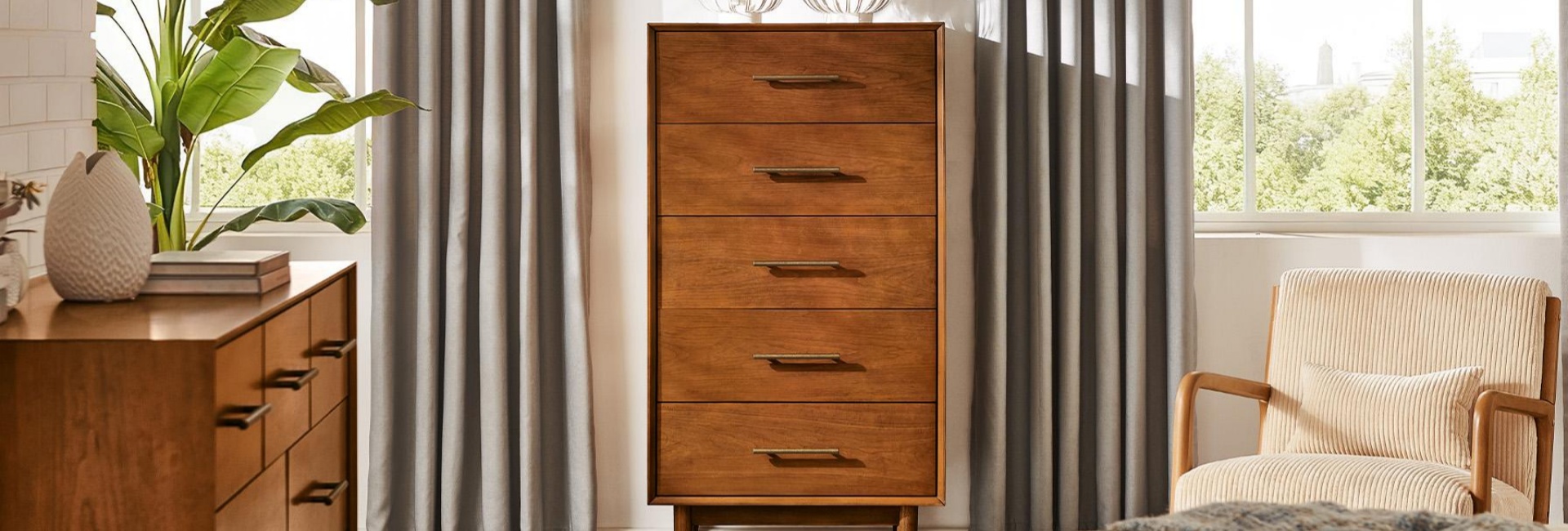
When comparing a low dresser vs tall dresser, consider how much wall space you have, what you need to store, and how you prefer to access your clothes. A low dresser is generally wider and offers a larger top surface, while a tall dresser or chest uses vertical space to provide storage in a narrower footprint. Neither style is automatically better. The right choice should fit your room, provide enough usable drawer space, and feel comfortable to use every day.
Table of Contents
- What Is the Difference Between a Low Dresser and a Tall Dresser?
- Low Dresser vs Tall Dresser: Size and Space Requirements
- Low Dresser vs Tall Dresser: Which Offers Better Storage?
- Which Dresser Is More Comfortable for Everyday Use?
- Low Dresser vs Tall Dresser: Which Works Better in a Small Bedroom?
- How to Match a Low or Tall Dresser with Your Bed
- How to Style a Low Dresser vs a Tall Dresser
- What to Consider Before Choosing a Low or Tall Dresser
- FAQs
- Is a Low Dresser Better Than a Tall Dresser?
- What Is the Typical Height of a Low Dresser?
- How Tall Is a Tall Dresser?
- Does a Tall Dresser Save More Space?
- Which Dresser Holds More Clothes?
- Is a Low Dresser a Good Choice for a Small Bedroom?
- Should a Dresser Be the Same Height as the Bed?
- How Much Space Should You Leave in Front of a Dresser?
What Is the Difference Between a Low Dresser and a Tall Dresser?
The main difference between a low dresser and a tall dresser is their overall shape. A low dresser is generally wider and shorter, with drawers arranged in two or more columns. A tall dresser, often called a chest of drawers, is narrower and has drawers stacked vertically.
These designs affect how much wall space the furniture needs, how the drawers are organized, and how much usable surface you have on top.
Common Dimensions of Low and Tall Dressers
There is no single industry-wide size that defines every low or tall dresser. Dimensions vary by drawer count, design, and manufacturer, but the following ranges can help when planning a bedroom layout.
These are general planning ranges, not fixed standards. Some low dressers are narrower, and some tall chests fall outside these measurements. Always check the actual product dimensions before choosing a piece.
Depth is worth checking because it may not differ much between the two styles. A tall chest can occupy less wall width while extending just as far into the room as a low dresser.
How Their Designs Affect Everyday Use
A low dresser usually has a larger top surface. You can use it for a table lamp, jewelry tray, framed photos, or a mirror above the furniture. Its wider drawers may also make it easier to arrange folded clothing side by side.
A tall dresser uses less horizontal wall space and organizes clothing in a vertical stack. It can fit into a narrower area beside a closet or along a short wall. However, its upper drawers may be less convenient to reach, depending on the user's height and the dresser's dimensions.
The main distinction is how each design distributes storage: a low dresser spreads it across the wall, while a tall dresser concentrates it vertically.

Skugga 63-Inch Oak 6-Drawer Dresser
View Product
Low Dresser vs Tall Dresser: Size and Space Requirements
The dimensions of a dresser influence how comfortably you can move around your bedroom. A piece may fit against the wall but still interfere with a closet door, bedroom entrance, or the space needed to open its drawers.
Before comparing finishes and styles, consider the width, height, depth, and clearance required for each option.
Compare Width, Height, and Depth
Width is often the biggest difference between these two dresser styles. A low dresser may need a long, uninterrupted wall, while a tall chest can fit into a narrower space.
For example, the Hernest Skugga 63-Inch Oak 6-Drawer Dresser measures 63 inches wide, 18.1 inches deep, and 34.3 inches high. It has six drawers, each measuring 23.9 inches wide, 13.8 inches deep, and 5.9 inches high internally. Its construction combines American solid oak with engineered wood and oak veneers, with solid wood fluting, a wire-brushed finish, and dovetail-jointed drawers.
By comparison, the Hernest Kaden 26-Inch Mid-Century 5-Drawer Chest measures 26.8 inches wide, 18.1 inches deep, and 52.2 inches high. Its five drawers have listed interior dimensions of 23.22 inches wide, 12.2 inches deep, and 5.31 inches high. The chest uses rubber wood and engineered wood with cherry veneers, with kiln-dried wood, beveled drawer fronts, antique bronze hardware, and dovetail-jointed drawers.
Both pieces have the same listed depth, but their widths differ by more than 36 inches. This comparison shows why checking all three measurements matters: choosing a tall chest does not necessarily mean choosing a shallower piece.
Height also affects placement. A low dresser may fit beneath a window, while a tall chest could cover part of the window or interfere with wall-mounted decor. Measure from the floor to the window sill, including any trim or other features.
Floor Space vs. Vertical Space
A tall dresser can be useful when horizontal space is limited. Its narrower footprint may leave more room for a nightstand, laundry basket, or other bedroom furniture.
However, a smaller footprint does not mean the dresser will always feel less noticeable. A tall piece can create a stronger vertical presence, particularly in a bedroom with low ceilings or limited open wall space.
A low dresser needs more horizontal room, but its lower profile leaves more open wall space above the furniture. It also provides a larger surface for everyday items or bedroom decor.
Consider two common situations:
-
A narrow bedroom with limited wall space: A tall chest may fit beside a closet or in a corner without taking up a long stretch of wall.
-
A bedroom with a wide, open wall: A low dresser can fill the space more naturally and provide a larger surface.
Choose based on both the available space and how you use the rest of the bedroom.
How to Measure Your Bedroom
Measure the intended location before choosing a dresser. A few measurements can help prevent problems with placement and delivery.
-
Measure the available wall width. Record the distance between nearby walls, doors, windows, and other furniture. Leave some space around the dresser rather than assuming it should fill the entire wall.
-
Measure the available depth. Measure from the wall to the nearest furniture or walking path. Remember that drawers extend beyond the closed front when opened.
-
Check the height limit. Measure from the floor to the window sill, ceiling, or any wall feature that could interfere with the dresser.
-
Plan for drawer access. Leave enough room to pull out the drawers and stand in front of them comfortably. Around 36 inches is a useful planning target where space allows, but the required clearance depends on the drawer extension and room layout.
-
Check the delivery route. Measure doorways, hallways, staircases, and elevator openings if applicable. The furniture must fit through the route into the bedroom, not just in its final location.
You can also mark the dresser's width and depth on the floor with painter's tape. This makes it easier to see how much space it occupies in relation to the bed and nearby furniture.

Kaden 26-Inch Mid-Century 5-Drawer Chest
View Product
Low Dresser vs Tall Dresser: Which Offers Better Storage?
A tall dresser does not automatically hold more clothing than a low dresser. Storage depends on the number of drawers, their interior dimensions, and how well their proportions accommodate the items you own.
A wide dresser may have fewer vertical levels but broader drawers. A tall chest may offer more separate compartments within a smaller footprint. To compare them fairly, look beyond the drawer count.
Drawer Size and Configuration
Low dressers often have multiple drawer columns. Depending on the design, they may combine smaller upper drawers with wider or deeper lower drawers. This arrangement can accommodate different types of clothing in separate sections.
Tall chests typically arrange drawers in a vertical stack. The drawers may be narrower, but the layout makes use of limited wall width.
The most suitable drawer configuration depends on what you plan to store:
-
T-shirts and everyday tops: Medium-width drawers make it easier to arrange folded clothing in rows.
-
Jeans and sweaters: Look for enough interior height and depth to hold bulkier items without excessive stacking.
-
Socks and accessories: Smaller drawers can keep compact items separated.
-
Workout clothes and sleepwear: Several medium-sized drawers can help divide clothing by category.
Do not assume that a dresser with more drawers has more usable storage. A piece with six shallow drawers may hold less than one with fewer but deeper compartments.
Wide Drawers vs. Stacked Drawers
Wide drawers are useful when you prefer to see several folded items at once. Depending on their interior dimensions, they can also accommodate larger clothing categories such as jeans, sweaters, or bedding accessories.
However, very wide drawers can become difficult to organize if everything is placed in one compartment. Drawer dividers or smaller storage boxes can help keep items separated.
Stacked drawers create more individual storage zones. You can assign separate drawers to T-shirts, sleepwear, and accessories. This can make it easier to maintain an organization system, although narrower drawers may limit how many items fit side by side.
For shared bedrooms, consider whether each person needs a separate section. A dresser with clearly divided drawer areas may be more convenient than one with a few large compartments.
How to Compare Actual Storage Capacity
To estimate how much clothing a dresser can hold, compare its interior drawer measurements rather than relying on the overall furniture dimensions.
Pay attention to:
-
Interior width: Determines how much clothing can fit across the drawer.
-
Interior depth: Affects how many folded items fit from front to back.
-
Interior height: Matters for bulky clothing and stacked items.
-
Number of usable drawers: A higher drawer count does not always mean more total storage.
-
Drawer configuration: Consider whether the proportions match the items you intend to store.
If you store bulky sweaters or thick denim, drawer height may matter more than the total number of drawers. If you have many smaller clothing categories, the number and arrangement of separate compartments may be more important.
Which Dresser Is More Comfortable for Everyday Use?
A dresser should make your daily routine easier, not force you to reach awkwardly or move other furniture whenever you need something. Drawer accessibility is an important difference between a low dresser and a tall dresser.
Drawer Accessibility and Reach
A low dresser generally keeps its drawers within a relatively compact vertical range. You may find it easier to access the top surface and upper drawers without reaching overhead.
A tall chest places more storage at a higher level. The upper drawers may be convenient for someone who can comfortably reach them, but the highest drawer can be awkward for shorter users.
The bottom drawers also deserve consideration. Both styles can require bending or crouching, depending on their height and drawer arrangement.
Think about how often you use each drawer. Items you reach for every morning are best stored at a comfortable height rather than in the highest or lowest compartment.
Choosing a Dresser Based on Your Height
Your height can influence which dresser feels more convenient.
If you are shorter, check whether you can comfortably reach the upper drawers of a tall chest. Look at the height of the top drawer and consider whether you can pull it open and see inside without stretching.
Taller users may find a higher dresser more comfortable for some tasks because it can reduce the need to bend when accessing upper drawers. However, the lower drawers will still require bending.
If multiple people share a dresser, consider who may have the most difficulty reaching the upper or lower drawers. A layout that works for one person may not be equally comfortable for everyone.
Organizing Frequently Used Clothing
The placement of clothing within the drawers can make either style more practical.
For a low dresser, keep everyday clothing in the upper drawers and less frequently used items in the lower ones. If the dresser has wide drawers, use dividers to separate different categories.
For a tall chest, the middle drawers are often a convenient place for frequently used clothing. Seasonal accessories or occasional-use items can go in the highest and lowest drawers.
Low Dresser vs Tall Dresser: Which Works Better in a Small Bedroom?
A small bedroom does not automatically require a tall dresser. The right choice depends on the room's shape, the location of the bed, and how much wall space remains available.
A tall chest can help when horizontal space is limited. A low dresser may be more suitable when there is a long, open wall and you want a larger surface without adding much visual height.
When a Tall Dresser Makes More Sense
A tall dresser is worth considering when:
-
You have a narrow wall between a closet and a doorway.
-
A wide dresser would interfere with the bed or walking path.
-
You need several drawers but have limited horizontal wall space.
-
You want to keep more open floor area available for movement.
A narrow chest can also work beside a wardrobe or in an unused corner, provided there is enough room to open the drawers fully.
Before choosing one, check the ceiling height and nearby wall features. A tall piece can still feel crowded if it is placed in a tight corner or directly beside another large piece of furniture.
When a Low Dresser Is a Better Fit
A low dresser may work better in a small bedroom when there is one relatively long wall that is not needed for a closet, door, or window.
Its lower height leaves more open wall space above the furniture. It can also serve as a surface for a mirror, lamp, or everyday accessories, reducing the need for an additional table.
However, measure the actual wall and make sure the dresser will not narrow the path between the bed and the furniture.
Clearance and Furniture Placement
In a compact bedroom, clearance is just as important as the dresser's dimensions.
If the dresser faces the bed, account for the distance between the dresser's front edge and the bed frame. You need enough space to walk through comfortably and pull out drawers without hitting the bed.
Also check whether bedroom and closet doors can open fully, whether drawers block frequently used pathways, and whether the dresser covers an electrical outlet or heating vent.
A dresser that fits against the wall but blocks a frequently used walkway may not be a practical long-term choice.
How to Match a Low or Tall Dresser with Your Bed
A dresser should look balanced with the bed, but it does not need to match its exact height or width. Consider the scale of both pieces, the available wall space, and how much visual weight each one adds to the room.
Pairing a Low Dresser with a King or Queen Bed
A wide dresser can complement a queen or king bed by giving a larger bedroom wall some visual balance. It can also provide a convenient surface for a mirror or artwork.
For a queen bed, a low dresser around 50–60 inches wide may be worth considering if the wall has enough space. A king bed can often accommodate a wider dresser, but the available room layout should determine the final size.
These are visual planning suggestions rather than strict matching rules. A dresser does not have to be as wide as the bed to look appropriate. Leave enough space around it so the furniture does not appear squeezed against the wall.
Matching Dresser Height with Bed Height
The height of your bed can affect how a dresser looks in the room.
A low platform bed paired with a tall chest creates a noticeable difference in height. That contrast can work well when the furniture is arranged thoughtfully, but it may feel unbalanced if the chest is placed too close to the bed.
A low dresser can create a more horizontal look alongside a lower bed. For a taller bed, either style can work. Focus on the overall proportions and how the dresser relates to other furniture rather than trying to match the mattress height exactly.
Balancing Bedroom Furniture Proportions
Consider the room as a whole. If the bed has a tall upholstered headboard, a low dresser can balance its height by adding a horizontal line elsewhere in the room. If the bed has a simple, low frame, a tall chest can introduce vertical interest.
Color and material can also help connect the furniture. A warm wood dresser can complement neutral bedding, while a darker finish can add contrast to a light-colored room.
How to Style a Low Dresser vs a Tall Dresser
The top surface and surrounding wall space create different styling opportunities for each dresser type. A low dresser gives you more room to arrange decorative objects, while a tall chest often benefits from a simpler approach.
Mirror and Artwork Placement
A mirror above a low dresser is a practical option because the furniture leaves more open wall space. You can choose a wall-mounted mirror or lean a suitable mirror against the wall if its design and installation instructions allow.
Artwork can also work well above a low dresser. Consider the width of the furniture when choosing the artwork size. A very small frame may look disconnected from a wide dresser, while an oversized arrangement can make the wall feel crowded.
A tall dresser leaves less open wall space above it. If you want to add artwork or a mirror, check the available height and make sure the arrangement does not feel cramped.
Decorating a Wide Dresser Top
A low dresser's broad surface gives you room to create small decorative groupings.
Try combining a table lamp, a tray, and one or two framed pieces. Varying the height of the objects can make the arrangement more interesting without filling the entire surface.
Keep everyday function in mind. If you use the dresser to store watches, jewelry, or other accessories, leave enough open space for those items. Too many decorative objects can make the surface harder to use and clean.
Styling Around a Tall Dresser
A tall dresser already adds vertical emphasis to a room, so it usually needs less decoration around its top.
A small lamp, a compact decorative object, or a simple framed piece nearby can help connect it to the rest of the bedroom. Avoid placing too many items on top, particularly if you need to reach the upper drawers regularly.
Whatever style you choose, make sure decorative objects are stable and do not interfere with the furniture's use or safety.
What to Consider Before Choosing a Low or Tall Dresser
Once you have narrowed down the size and layout, review the construction, stability, and delivery requirements. These details can affect how well the dresser works in your home over time.
Stability and Anti-Tip Safety
Tall furniture deserves particular attention because its height and design can increase tip-over concerns. However, dressers of any height should be installed and used according to the manufacturer's safety instructions.
When buying a dresser, check whether anti-tip hardware is included and follow the manufacturer's installation instructions. Secure the furniture to a suitable wall structure using the specified hardware. Do not allow children to climb on drawers or use them as steps.
Materials and Construction
The materials and construction details influence a dresser's appearance, weight, and maintenance requirements.
Solid wood, engineered wood, and wood veneers serve different purposes in furniture construction. Solid wood shows natural grain variations, while engineered wood provides a manufactured panel structure. Veneers are thin layers of wood applied to a supporting surface to create a particular wood appearance.
Look at the complete material description rather than assuming that a product described as oak or cherry is made entirely from solid wood.
Drawer construction matters, too. Check how the drawers are joined, what type of slides or hardware are used, and whether the product page provides information about recommended weight capacity.
For everyday care, follow the manufacturer's instructions for the specific finish. Avoid assuming that every wood surface can be cleaned or polished in the same way.
Delivery, Assembly, and Installation
A dresser's dimensions matter before and during delivery. A piece that fits the bedroom wall may still be difficult to move through a narrow hallway or stairwell.
Before ordering, measure the entire delivery route, including:
-
Front and interior door openings.
-
Hallways and tight turns.
-
Staircase width and ceiling clearance.
-
Elevator doors and interior dimensions, if applicable.
-
The final space where the dresser will be placed.
Also check the product's packaging dimensions and assembly requirements. Some furniture arrives fully assembled, while other pieces require the legs, base, or additional components to be fitted.
Review the manufacturer's delivery measurements and assembly instructions before ordering so you can prepare the room and access route.
A low dresser is generally more suitable when you have enough wall width and want a larger surface. A tall dresser may work better when horizontal space is limited and vertical storage suits your routine. Compare the actual dimensions, drawer interiors, and clearance requirements before deciding.
FAQs
Is a Low Dresser Better Than a Tall Dresser?
A low dresser may suit a bedroom with enough wall space and a need for wide drawers or a larger top surface. A tall dresser is more suitable when horizontal space is limited. The better option depends on your room layout and storage needs.
What Is the Typical Height of a Low Dresser?
Many low dressers are around 28–36 inches high, although dimensions vary by design. Check the product specifications rather than relying on a general size range, especially if you plan to place the dresser beneath a window.
How Tall Is a Tall Dresser?
Tall dressers and chests commonly fall around 42–60 inches high. Some designs may be shorter or taller, depending on the number of drawers and overall proportions.
Does a Tall Dresser Save More Space?
A tall dresser usually takes up less wall width than a low dresser with a similar storage purpose. However, it may have a similar depth and still requires enough vertical clearance. It saves horizontal space, not necessarily every kind of space.
Which Dresser Holds More Clothes?
Neither style automatically holds more clothing. Compare the number of drawers, interior width, depth, and height. A wide dresser may have larger drawers, while a tall chest may offer more separate compartments in a narrower footprint.
Is a Low Dresser a Good Choice for a Small Bedroom?
It can be, especially if the room has a long, open wall. A low dresser can provide storage without adding much vertical visual weight. Measure the available width and drawer clearance to make sure it does not block the walkway.
Should a Dresser Be the Same Height as the Bed?
No. A dresser does not need to match the bed's height. Focus on the overall proportions of the room and whether the furniture looks balanced together. A difference in height can create visual interest when the layout is well planned.
How Much Space Should You Leave in Front of a Dresser?
Around 36 inches is a useful planning target when space allows. This helps provide room to stand and open drawers. The exact amount depends on the dresser's depth, drawer extension, and available walking space in your bedroom.