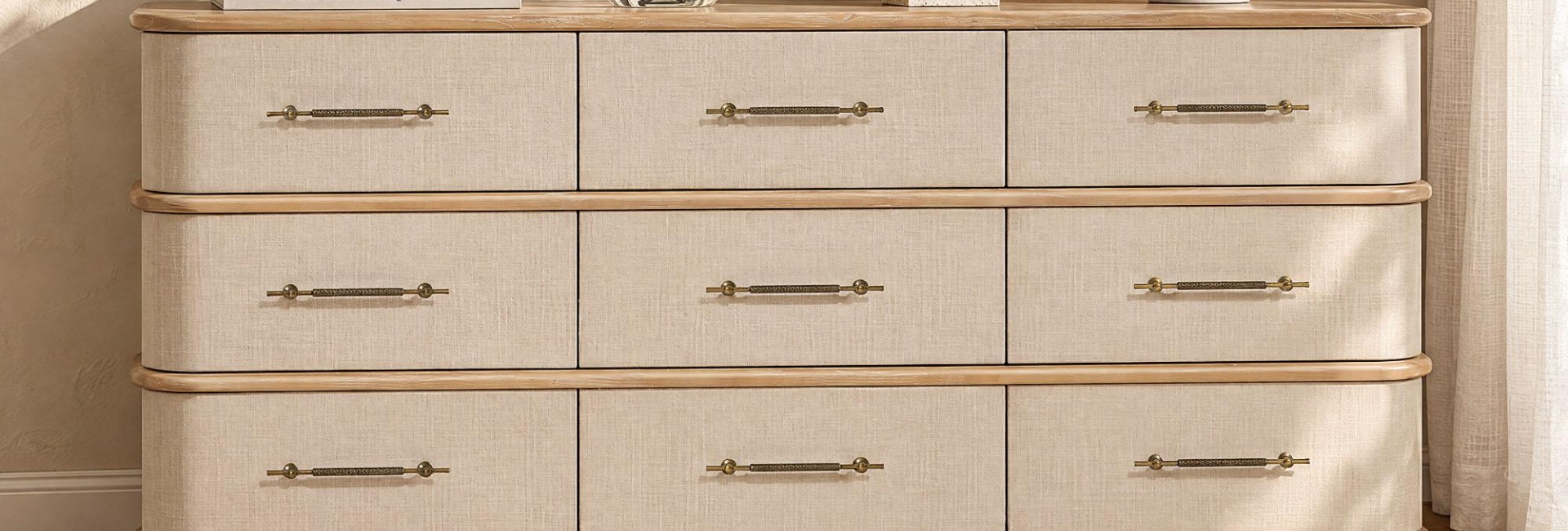
An extra wide dresser can provide more horizontal storage, accommodate multiple drawers, and create a larger surface for bedroom decor. But choosing the right one involves more than finding a dresser with enough width. You also need to consider available wall space, drawer configuration, furniture proportions, and room layout. Whether you're furnishing a spacious primary bedroom or looking for additional clothing storage, understanding these details will help you choose an extra wide dresser that feels practical rather than oversized.
Table of Contents
- What Is an Extra Wide Dresser?
- How to Choose the Right Extra Wide Dresser Width
- How to Choose the Best Drawer Layout for an Extra Wide Dresser
- Is an Extra Wide Dresser Suitable for a Small Bedroom?
- What to Look for in an Extra Wide Dresser's Construction
- How to Style the Top of an Extra Wide Dresser
- Where to Place an Extra Wide Dresser in Your Bedroom
- What to Check Before Buying an Extra Wide Dresser
- FAQs
- How Wide Should an Extra Wide Dresser Be?
- Is a 72-Inch Dresser Considered Extra Wide?
- Is an Extra Wide Dresser Suitable for a Small Bedroom?
- Is a 6-Drawer or 8-Drawer Extra Wide Dresser Better?
- How Much Space Should Be Left in Front of an Extra Wide Dresser?
- Can an Extra Wide Dresser Fit Under a Window?
- Is an Extra Wide Dresser Better Than Two Smaller Dressers?
- Can You Put a TV on Top of an Extra Wide Dresser?
- How Do You Organize an Extra Wide Dresser?
What Is an Extra Wide Dresser?
An extra wide dresser is a horizontal storage unit designed with a wider frame than a conventional bedroom dresser. Its extended shape provides room for multiple drawers, wider storage compartments, and a larger top surface.
There isn't one universally regulated measurement that defines an extra wide dresser. For practical shopping purposes, a width of approximately 65 inches or more is a useful starting point. Some furniture retailers classify models over 64 inches as extra wide, although product labels can vary.
The main distinction isn't simply the number of inches. A wider design changes how storage is arranged and how much wall space the furniture occupies.
Extra Wide Dresser vs. Standard Dresser
A standard dresser generally has a more compact horizontal footprint, while an extra wide dresser occupies a longer section of wall. Wider models can distribute storage across multiple columns, providing more room for different drawer configurations.
Here are some example dimensions to help you compare:
These ranges are examples for comparing furniture sizes, not fixed industry categories. Actual dimensions and drawer arrangements vary between designs.
A wider top surface also provides room for a table lamp, decorative tray, framed photographs, and other everyday items. However, a larger exterior doesn't automatically mean more usable storage. Frame thickness, drawer depth, and interior dimensions all affect how much clothing a dresser can hold.
How to Choose the Right Extra Wide Dresser Width
Choosing the right width starts with the space available in your bedroom. An extra wide dresser should fit the intended wall without making other furniture difficult to access.
Measure Your Available Wall Space
Start by identifying the wall where you plan to place the dresser.
Measure the usable horizontal space between nearby obstacles rather than relying on the total wall length. Closet doors, windows, bedside tables, and architectural details can reduce the available area.
Pay attention to:
-
Doors: Check whether bedroom or closet doors can open fully without hitting the dresser.
-
Windows: Consider the window sill, trim, and access to window handles.
-
Outlets: Make sure the furniture won't make electrical outlets difficult to reach.
-
Nearby furniture: Account for nightstands, bed frames, wardrobes, and other pieces.
-
Baseboards: Check whether the back of the dresser can sit properly against the wall.
A useful method is to mark the proposed dresser width on the wall or floor using painter's tape. This creates a visual outline of the furniture footprint and helps you judge whether the proportions feel right.
For example, a 78-inch dresser might fit on a 100-inch wall, but that doesn't necessarily mean it will look balanced if a nightstand and floor lamp also occupy the same section.
Consider the entire furniture arrangement before settling on a size.
Match the Dresser Width to Your Bedroom Size
The right width depends on your storage needs and how much uninterrupted wall space is available.
A 65–72-inch dresser can provide additional storage without filling most of the wall. This range may work well when a smaller dresser doesn't offer enough drawer space but a longer piece would interfere with other furniture.
A 73–80-inch dresser offers more room for a wider drawer arrangement. An 80-inch dresser, for example, may suit couples sharing one storage unit or households that need separate sections for different clothing categories.
The Grant 80-Inch Fluted 9-Drawer Dresser is a practical option for bedrooms with enough wall space for a wider storage unit. Measuring 80 inches wide, 18.9 inches deep, and 33.1 inches high, it features nine drawers with interior dimensions of 23 inches wide, 14.8 inches deep, and 5.1 inches high. Its ash veneer finish and fluted drawer fronts add natural wood texture, while dovetail joints and soft-close metal glides provide functional details for everyday use.
An 81–90-inch dresser requires more careful planning. Its longer frame may work well in a spacious primary bedroom with a substantial empty wall, but it can dominate a room where the bed, nightstands, and other furniture already occupy much of the available space.
Consider the dresser's relationship with your bed, too. A wider piece can help balance a larger bed visually, while a narrow dresser may look undersized against an otherwise substantial furniture arrangement.
The dresser doesn't need to match the bed's width exactly. Choose proportions that allow both pieces to fit naturally within the room.
Consider Dresser Depth and Height
Width often gets the most attention when shopping for a wide bedroom dresser, but depth and height affect everyday usability just as much.
A deeper dresser may provide room for bulkier folded clothing, but it also extends farther into the bedroom. Measure from the wall to the nearest furniture or walking area to determine how much depth you can accommodate.
Remember that the drawers extend beyond the front of the dresser when opened. Account for their full extension, not just the closed furniture dimensions.
Height also changes how a wide dresser looks and functions. A lower, longer dresser creates a more horizontal appearance and leaves additional wall space for artwork or a mirror. A taller design positions storage higher and changes the overall proportions of the room.
When comparing models, check all three measurements rather than making a decision based on advertised width alone.
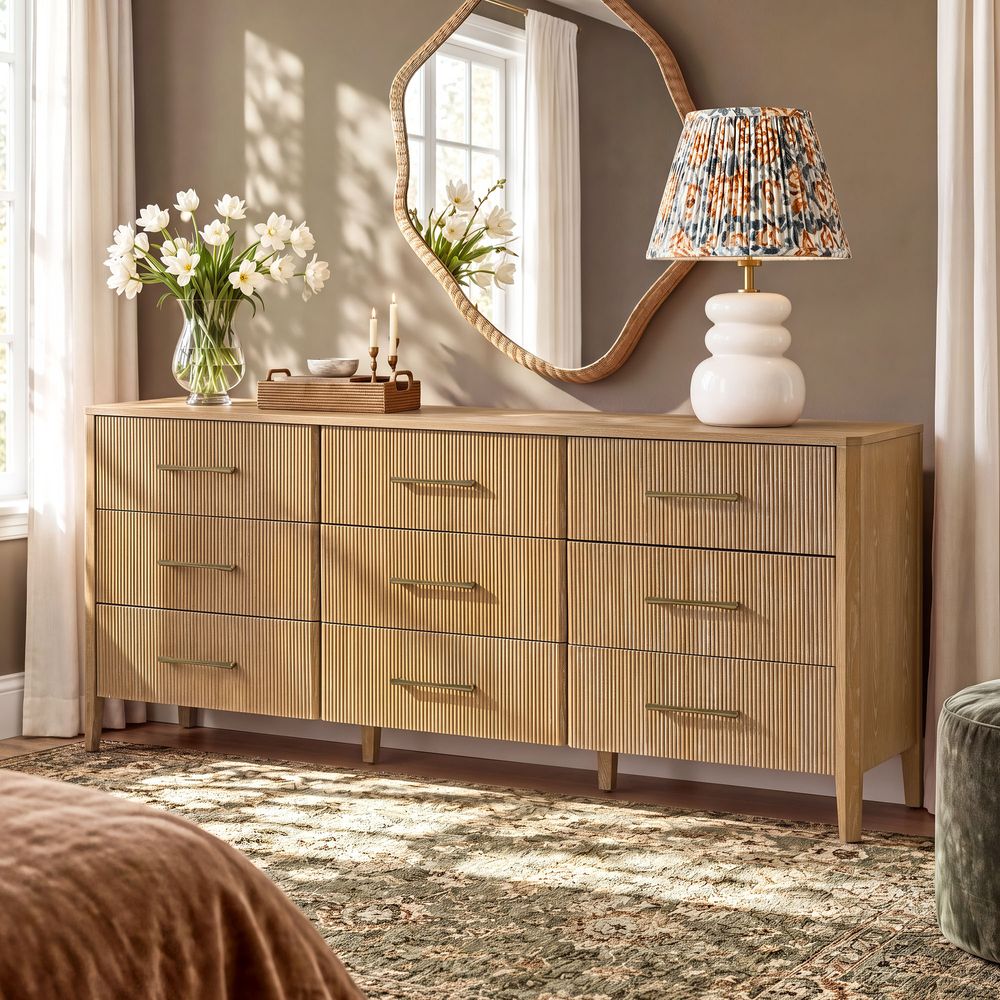
Grant 80-Inch Fluted 9-Drawer Dresser
View Product
How to Choose the Best Drawer Layout for an Extra Wide Dresser
An extra wide dresser can have several drawer configurations, and the number of drawers doesn't always determine how much useful storage it provides.
The right arrangement depends on what you plan to store, how frequently you use those items, and whether the dresser will be shared.
Extra Wide Dressers with 6, 8, or 9 Drawers
Six-, eight-, and nine-drawer configurations are common options, but their layouts can vary considerably.
For example, an extra wide 6 drawer dresser might have two rows of three drawers, while another model may arrange its drawers into two wider columns. An eight-drawer version may provide more separate compartments, but some drawers could be smaller.
Don't assume that a nine-drawer dresser automatically holds more than a six-drawer model.
Drawer width, depth, and usable interior height determine how much clothing each compartment can accommodate. A dresser with several shallow top drawers and a few deeper bottom drawers may be more useful than one with identical drawers throughout.
Wide Drawers vs. Multiple Smaller Drawers
One important difference between extra wide dressers is how the available horizontal space is divided.
Wide drawers can accommodate larger stacks of folded clothing, such as jeans, sweatshirts, and sweaters. They can also reduce the number of separate compartments you need to open when putting away laundry.
However, larger drawers aren't always easier to organize. When clothing is stacked too deeply, smaller items can become difficult to find.
Multiple smaller drawers provide more separation. They work well for socks, underwear, accessories, and other belongings that benefit from individual storage areas.
For many households, a combination of wider and smaller drawers provides a practical balance.
Organize Storage Across a Wider Dresser
The additional horizontal space can make it easier to create separate storage zones, particularly when two people share one dresser.
For example, you could divide the left and right sections between two people, with the center drawers reserved for shared items.
A simple arrangement might look like this:
Drawer dividers can also help separate smaller belongings inside wider compartments.
Before deciding on a layout, consider how you put away laundry and retrieve clothing every day. Keep frequently used items within easy reach, while seasonal clothing can occupy less convenient storage sections.
Is an Extra Wide Dresser Suitable for a Small Bedroom?
An extra wide dresser isn't automatically unsuitable for a small bedroom. A long dresser placed against an uninterrupted wall may work better than a smaller but deeper piece positioned in a busy part of the room.
Focus on usable floor space, drawer clearance, and the surrounding furniture rather than bedroom square footage alone.
Check Wall Length Before Choosing a Wide Dresser
A small bedroom may have one relatively long wall with very little other furniture around it. That space could accommodate an extra wide dresser even when the overall room feels compact.
By contrast, a larger bedroom with several windows, doorways, and built-in storage may have fewer suitable locations.
If the dresser will occupy the same wall as a bed or nightstands, consider how much room remains for other pieces. A long dresser that leaves no space for a bedside table or access to a closet may not be practical.
Keep Enough Walking and Drawer Clearance
The space needed to use the dresser is an important consideration in a small bedroom.
You need enough room to walk in front of it, pull out the drawers, and access nearby furniture.
As a general planning guideline, aim for around 36 inches of clearance between the dresser and opposing furniture when space allows. The actual distance needed depends on the drawer extension, bed position, and how people move through the room.
Pay particular attention to:
-
Whether fully extended drawers interfere with the bed.
-
Whether open drawers block closet access.
-
Whether two people can comfortably move through the space.
-
Whether the dresser prevents bedroom or closet doors from opening.
One practical test is to mark the dresser's depth and width on the floor, then use a piece of cardboard to represent the drawer extension. This makes it easier to identify potential conflicts before the furniture arrives.
Balance the Visual Weight of an Extra Wide Dresser
A wide dresser naturally occupies a large visual area. In a smaller bedroom, its finish, height, legs, and overall design can influence how spacious the room feels.
A design with a simple front, clean lines, and proportionate height may look less bulky than one with heavy decorative details.
Lighter finishes, visible legs, and simpler hardware can help the furniture feel less visually heavy. Darker designs can also work when balanced with lighter bedding, wall colors, and surrounding decor.
Leaving some negative space around the furniture helps maintain a balanced bedroom without making the dresser feel crowded.
What to Look for in an Extra Wide Dresser's Construction
A wider dresser needs to support its frame, drawers, and stored belongings across a longer horizontal structure. Construction details are therefore important when comparing different designs.
Two dressers with similar exterior dimensions may have different materials, drawer mechanisms, and support systems.
Center Support and Frame Stability
When examining an extra wide dresser, look at how the base and frame support the longer structure.
Some designs incorporate center support legs, internal reinforcement, or additional rails to help distribute weight. Others use different structural arrangements based on their materials and overall construction.
A center support isn't automatically required for every wide dresser. Its suitability depends on the frame design, material thickness, length, and intended load.
Check the following:
-
Whether the base has sufficient support across its length.
-
Whether the frame feels solid and properly assembled.
-
Whether the top panel is supported appropriately.
-
Whether the manufacturer provides weight limits.
-
Whether drawers remain properly aligned during operation.
Don't judge structural quality by appearance alone. A thick-looking top or heavy frame doesn't necessarily reveal how well the internal components are constructed.
Drawer Slides and Weight Capacity
Drawer slides become particularly important when an extra wide dresser contains larger drawers.
A wide drawer may hold a substantial amount of clothing, especially when used for sweaters, jeans, or other heavier items. Its slides need to support the intended load while allowing smooth opening and closing.
Look for information about:
-
Full-extension or partial-extension drawer slides.
-
Smoothness of movement.
-
Drawer alignment.
-
Soft-close mechanisms, when available.
-
Manufacturer-stated drawer weight capacity.
Full-extension slides allow more of the drawer interior to become accessible. This can be useful with wider or deeper compartments where items near the back might otherwise be difficult to reach.
Soft-close hardware is another convenience, but it shouldn't replace checking the actual slide construction and load capacity.
If the product description doesn't specify the drawer weight limit, contact the manufacturer instead of assuming all drawers can accommodate heavy storage.
Materials and Surface Construction
The materials used in an extra wide dresser influence its appearance, maintenance requirements, and long-term performance.
Solid wood, wood veneer, and engineered wood describe different types of furniture construction.
Solid wood offers natural grain variation and a material character that many buyers appreciate. However, wood responds to changes in moisture and humidity, which can cause gradual dimensional movement.
Wood veneer uses genuine wood as its visible surface. It is typically bonded to a supporting substrate, such as plywood, MDF, or another engineered wood panel. This construction allows selected wood appearances to be used across larger furniture surfaces.
Engineered wood is a broad category that includes different types of manufactured panels. Its quality depends on the specific panel, construction method, finish, and hardware used.
For a slightly narrower option, the Walter 75-Inch Linen-Blend 9-Drawer Dresser measures 75 inches wide, 18.1 inches deep, and 34 inches high. It combines Mindi wood and engineered wood with Mindi veneers, while its linen-blend fabric-wrapped exterior adds a softer texture to the design. The nine-drawer layout provides separate storage compartments, with wider middle drawers and slightly narrower side drawers for organizing different clothing and personal items.
Check the materials used for the top, sides, drawer fronts, drawer boxes, and supporting frame. These details provide a clearer picture of the dresser's construction than its exterior appearance alone.
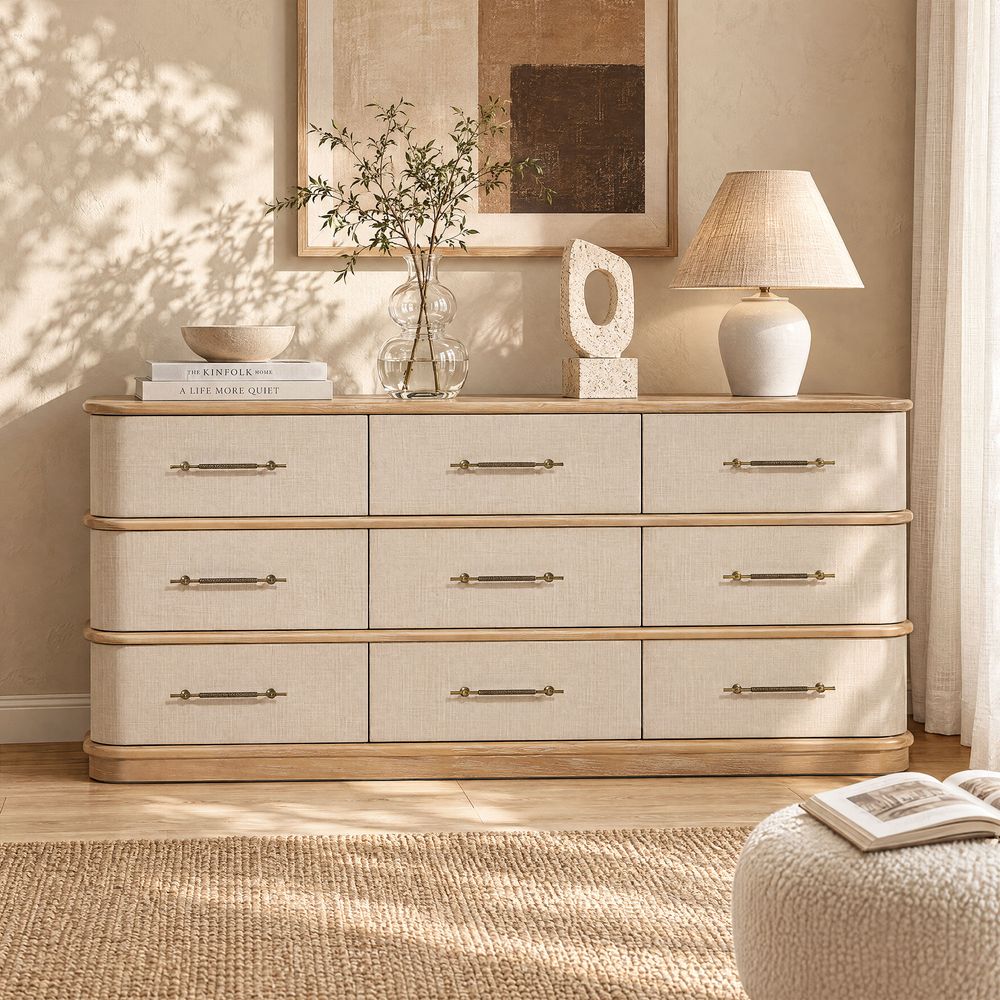
Walter 75-Inch Linen-Blend 9-Drawer Dresser
View Product
How to Style the Top of an Extra Wide Dresser
An extra wide dresser offers more than clothing storage. Its larger top surface can become a useful display area for bedroom accessories, lighting, and decorative pieces.
The goal is to create a balanced arrangement without making the dresser difficult to use.
Use Mirrors and Artwork to Fill the Wider Wall Space
A mirror or piece of artwork above an extra wide dresser can help connect the furniture with the surrounding wall.
The scale of the wall decor matters. A very small mirror centered above a long dresser may look disconnected, while an oversized piece that nearly matches the full dresser width could make the arrangement feel crowded.
Consider a mirror or artwork that complements the dresser's proportions while leaving some visible wall space around it.
A large horizontal mirror can reinforce the dresser's long shape. Alternatively, two or three smaller framed prints can create a more flexible arrangement.
Consider the existing bed frame, lighting, and wall color when choosing the finish and shape of the wall decor.
Create Separate Decorative Zones
The length of an extra wide dresser makes it easier to arrange decorative objects in separate groups.
Instead of placing accessories at regular intervals across the entire surface, create a few visual zones.
For example:
-
One side: A table lamp with a small decorative object.
-
Center: A mirror, framed artwork, or a low decorative tray.
-
Other side: A vase, books, or a small collection of personal items.
The arrangement doesn't need to be perfectly symmetrical. A larger lamp on one side can be balanced with a vase and books on the other.
Combining objects of different heights can also create visual interest without requiring too many accessories.
Keep the Wide Surface Functional
A larger dresser top creates more opportunities for decoration, but it should still serve a practical purpose.
Leave enough open space for items you use regularly, such as a jewelry tray, watch holder, or small container for personal accessories.
Avoid turning every section into a display area. Too many objects can make dusting difficult and reduce the space available for everyday use.
Also consider what you'll place above the dresser. A mirror should be installed securely, and a television should only be placed on furniture specifically designed and rated to support it, following the manufacturer's safety instructions.
Where to Place an Extra Wide Dresser in Your Bedroom
Because an extra wide dresser occupies more horizontal space than a smaller model, choosing the right wall affects both accessibility and the overall bedroom layout.
Across from a King or Queen Bed
Placing an extra wide dresser across from the bed is a common arrangement in larger bedrooms.
A longer dresser can balance the visual presence of a substantial bed and create a convenient location for folded clothing, accessories, and everyday belongings.
Consider the distance between the bed and the dresser, including the space occupied by a footboard or bench at the foot of the bed.
Along a Long, Uninterrupted Wall
A long, uninterrupted wall can be a practical location for an extra wide dresser.
It allows the furniture to sit naturally without competing with doorways, windows, or other large pieces. This arrangement also provides room for a mirror or artwork above the dresser.
Consider how the dresser relates to other bedroom storage. A wide dresser placed near a wardrobe or closet should not make those storage areas difficult to access.
Under a Window or Alongside a Closet
Placing an extra wide dresser beneath a window can make good use of an otherwise empty wall, especially when the dresser has a suitable height.
Measure from the floor to the bottom of the window trim, not just the window glass. Include handles, sill projections, and other details that could interfere with the furniture.
The dresser should not prevent you from opening the window or reaching its controls.
When positioning a dresser beside a closet, check the closet door's swing and access to the full opening. For sliding closet doors, make sure the dresser doesn't obstruct either side of the opening.
What to Check Before Buying an Extra Wide Dresser
Even after finding a dresser with suitable dimensions and a practical drawer layout, confirm a few additional details before placing an order.
A longer piece of furniture requires careful planning for transportation, assembly, and installation.
Measure Doorways, Hallways, and Staircases
One overlooked part of purchasing an extra wide dresser is making sure it can actually reach the bedroom.
The dresser might fit perfectly against the intended wall but still be too large to move through an entryway or around a narrow staircase.
Measure the following areas:
-
Main entrance and interior door frames.
-
Hallways and narrow passageways.
-
Staircase width and landing space.
-
Elevator doors and interior dimensions, if applicable.
-
The bedroom doorway and any tight turns leading to it.
Also check the product's shipping and packaging dimensions if the dresser is delivered assembled.
An assembled dresser and a flat-packed dresser may have very different transportation requirements. If the product requires assembly, confirm whether it can be assembled in the room where it will be used and whether the components can pass through the available entrance.
Check Assembly and Wall anchoring Requirements
Extra wide dressers can be heavy and may require more than one person to assemble or position safely.
Review the assembly instructions before purchasing so you understand whether the dresser requires additional tools, special hardware, or professional installation.
Wall anchoring deserves particular attention.
When choosing an extra wide dresser, check whether the required anti-tip hardware is included and whether the installation instructions are appropriate for your wall type.
If you have children at home, anchoring is especially important. Avoid allowing children to climb, sit, or hang on the drawers, regardless of how wide or heavy the furniture appears.
Compare Overall Dimensions and Storage Capacity
Before making your final decision, look beyond the advertised width.
Compare these details across the models you're considering:
If possible, compare the usable interior dimensions rather than relying on exterior measurements alone. Also check the manufacturer's specifications for weight limits and included hardware.
Before ordering, make sure the dresser fits your intended space, provides enough usable storage, and can be delivered and installed without unnecessary complications.
FAQs
How Wide Should an Extra Wide Dresser Be?
An extra wide dresser is generally a dresser measuring around 65 inches or more across, although naming conventions vary between furniture retailers. Common options include 65–72-inch, 73–80-inch, and 81–90-inch models. Choose a width based on your available wall space and storage requirements rather than a fixed bedroom-size rule.
Is a 72-Inch Dresser Considered Extra Wide?
Yes, a 72-inch dresser generally falls within the extra wide category. It provides a longer storage surface than many conventional dressers and may accommodate multiple drawer sections. Before buying, check its depth, height, and actual interior drawer dimensions.
Is an Extra Wide Dresser Suitable for a Small Bedroom?
It can be, provided the bedroom has enough uninterrupted wall space and clearance in front of the drawers. A lower-profile design may help balance the furniture's horizontal size. Measure the complete footprint, including open drawers, before making a decision.
Is a 6-Drawer or 8-Drawer Extra Wide Dresser Better?
Neither configuration is automatically better. A six-drawer dresser may provide larger compartments for folded clothing, while an eight-drawer model can offer more opportunities to separate different categories. Compare the actual drawer dimensions and storage layout before choosing.
How Much Space Should Be Left in Front of an Extra Wide Dresser?
Approximately 36 inches is a useful planning target for the space between a dresser and opposing furniture when room allows. However, you should also check the drawer extension and the walking space remaining when the drawers are open. The appropriate clearance depends on your room layout and the dresser's dimensions.
Can an Extra Wide Dresser Fit Under a Window?
Yes, provided its height allows it to sit beneath the window sill and trim without blocking access. Check the window handles and opening mechanism as well. The dresser should not prevent you from operating the window comfortably.
Is an Extra Wide Dresser Better Than Two Smaller Dressers?
It depends on your bedroom layout and storage preferences. One extra wide dresser creates a continuous horizontal surface and keeps storage in one location. Two smaller dressers provide more flexibility in placement and may work better when the available wall space is divided.
Can You Put a TV on Top of an Extra Wide Dresser?
Only when the furniture is specifically designed and rated to support a television. A wider surface doesn't automatically mean it is suitable for electronics. Check the manufacturer's instructions and follow appropriate television and furniture anchoring recommendations.
How Do You Organize an Extra Wide Dresser?
Start by dividing the drawers into storage categories. Use wider drawers for larger folded garments and smaller compartments for socks, underwear, and accessories. For shared bedrooms, consider assigning separate sections to each person and using dividers to keep smaller items organized.