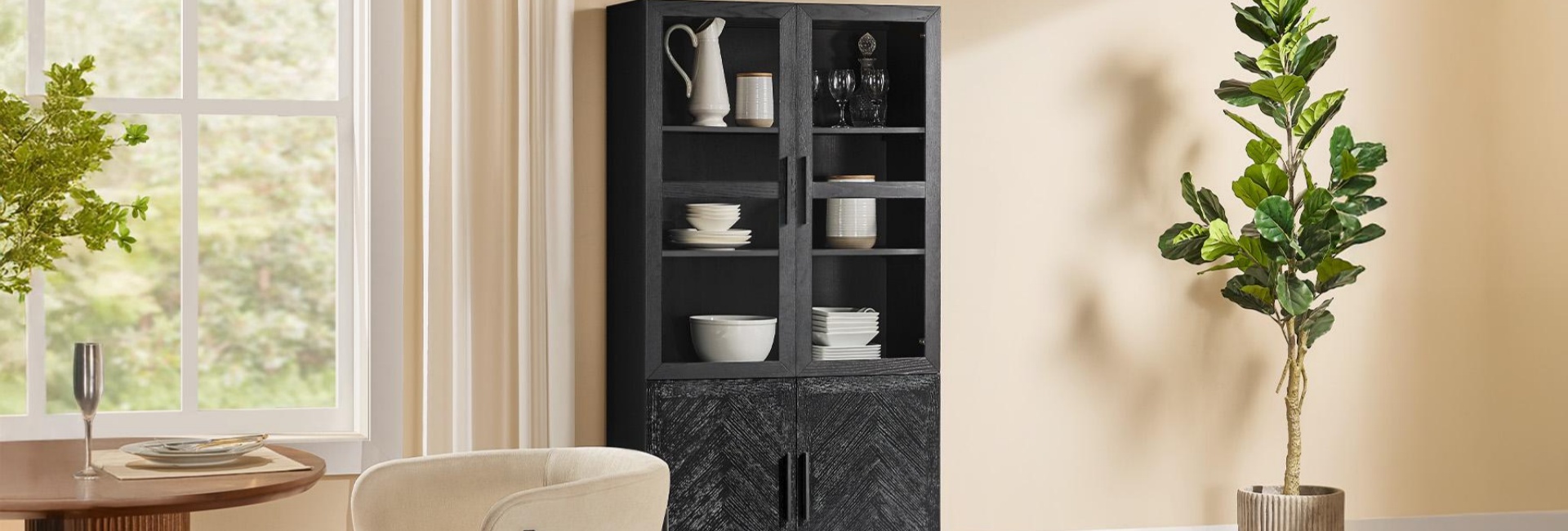
A living room storage cabinet should provide space for everyday belongings without making the room feel crowded. The right design depends on what you need to store, how much room is available, and how the cabinet will fit with your existing furniture. A low cabinet beneath artwork, a tall unit beside a sofa, and a glass-front design for displaying collectibles all serve different purposes. This guide explains how to choose a cabinet based on your living room layout, storage needs, and daily routines.
Table of Contents
- What Should You Consider Before Choosing a Living Room Storage Cabinet?
- Which Storage Cabinet Styles Work Well in Living Rooms?
- How Should You Place a Storage Cabinet in Your Living Room?
- Which Storage Layout Works Best for Your Living Room?
- What Should You Check Before Buying a Living Room Storage Cabinet?
- How to Maintain a Living Room Storage Cabinet
- FAQs
- What Type of Storage Cabinet Is Best for a Living Room?
- How Deep Should a Living Room Storage Cabinet Be?
- Should I Choose a Tall or Low Storage Cabinet for My Living Room?
- Are Glass-Door Cabinets Practical for Living Rooms?
- How Do I Make a Small Living Room Look Less Cluttered?
- How Do I Choose a Storage Cabinet That Matches My Living Room Furniture?
What Should You Consider Before Choosing a Living Room Storage Cabinet?
Before comparing furniture styles, think about what you want the cabinet to do. A unit for board games and blankets has different requirements from one used to display ceramics or organize media accessories.
Identify Your Living Room Storage Needs
Start with the belongings that need a permanent place in your living room. These might include:
-
Books, magazines, and board games
-
Remote controls, chargers, and electronic accessories
-
Blankets, cushions, and spare linens
-
Decorative objects, ceramics, and collectibles
-
Documents and miscellaneous household supplies
The size and type of these items affect the interior layout you need. Books may require deeper shelves and adequate weight support, while smaller accessories are easier to organize in drawers. Blankets and board games need larger compartments with enough clearance.
It also helps to separate frequently used belongings from items you rarely access. Everyday accessories should be easy to reach, while seasonal decorations and spare linens can go in less accessible sections.
Measure Your Available Living Room Space
Measure the width, depth, and height of the area where the cabinet will sit. A piece that looks suitable in a product photograph may occupy more room than expected once it is placed beside a sofa or television.
Depth is particularly important in smaller living rooms. A cabinet that projects too far into the room can narrow walking paths or interfere with nearby seating. Hinged doors and drawers also need enough clearance to open fully.
Nearby windows, outlets, baseboards, and heating vents may affect placement. A tall cabinet, for example, may not fit comfortably beneath a low window even when its width is suitable.
Consider Your Existing Furniture
A storage cabinet should work with the proportions and finishes of the furniture already in the room.
A wide, low cabinet may complement a long sofa, while a narrow vertical unit can fit beside a seating area without using much horizontal wall space. Wood finishes, hardware, and decorative details also influence how the pieces look together.
Matching every finish is not necessary. A dark wood cabinet can introduce contrast against lighter upholstery, while a natural oak or ash finish may suit a room with warm, neutral furnishings.
Which Storage Cabinet Styles Work Well in Living Rooms?
Living rooms have different layouts and storage requirements, so there is no single cabinet style that suits every space. The most useful options are those that fit the available wall area and provide the right balance of concealed storage and display space.
Low Cabinets for Long Walls and Seating Areas
Low cabinets are generally wider than they are tall. Their horizontal proportions make them suitable beneath wall art, along longer walls, or near a seating area.
The top surface can hold table lamps, framed photographs, books, or decorative objects. Enclosed compartments provide room for board games, media accessories, and blankets.
This style works particularly well when you have enough horizontal wall space but want to maintain relatively open sightlines. It may be less suitable when the room has limited wall width and requires more vertical storage.
Tall Cabinets for Vertical Storage
A tall living room storage cabinet makes use of wall height without occupying as much horizontal space as a sideboard. It can accommodate books, decorative objects, household supplies, and belongings that need to stay behind doors.
Tall designs are worth considering when a room has limited floor space but a suitable section of wall remains available. Their height does create a stronger visual presence, so ceiling clearance and nearby furniture matter.
The Valborg 47-Inch Oak Cabinet measures 47.1"W x 15.9"D x 75.9"H, with a tall profile that makes use of vertical wall space. Made with American solid oak and engineered wood with oak veneers, it features a dark brown finish and arched details that add character to the living room. Behind its glass-front doors, adjustable shelves provide space for books, ceramics, and decorative pieces of different heights, keeping them visible while maintaining an organized look.

Valborg 47-Inch Oak Cabinet
View Product
Sideboards for Wide Storage Surfaces
Sideboards are typically wide and relatively low, with enclosed compartments and a broad top surface. Although traditionally associated with dining rooms, they can also work in living rooms.
Their compartments can hold board games, books, linens, media accessories, and other household belongings. The top provides space for lamps, artwork, or decorative arrangements.
A sideboard can be a suitable choice for a long, open wall or behind a sofa when there is enough clearance. Its depth and door swing should not interfere with nearby seating or the main walking route.
Display Cabinets for Decorative Belongings
Display cabinets suit living rooms where you want selected belongings to remain visible. Glass doors and interior shelves provide space for ceramics, collectibles, glassware, and books while keeping them inside an enclosed unit.
Some designs combine glass-front sections with solid doors or drawers, giving you separate areas for decorative objects and everyday belongings.
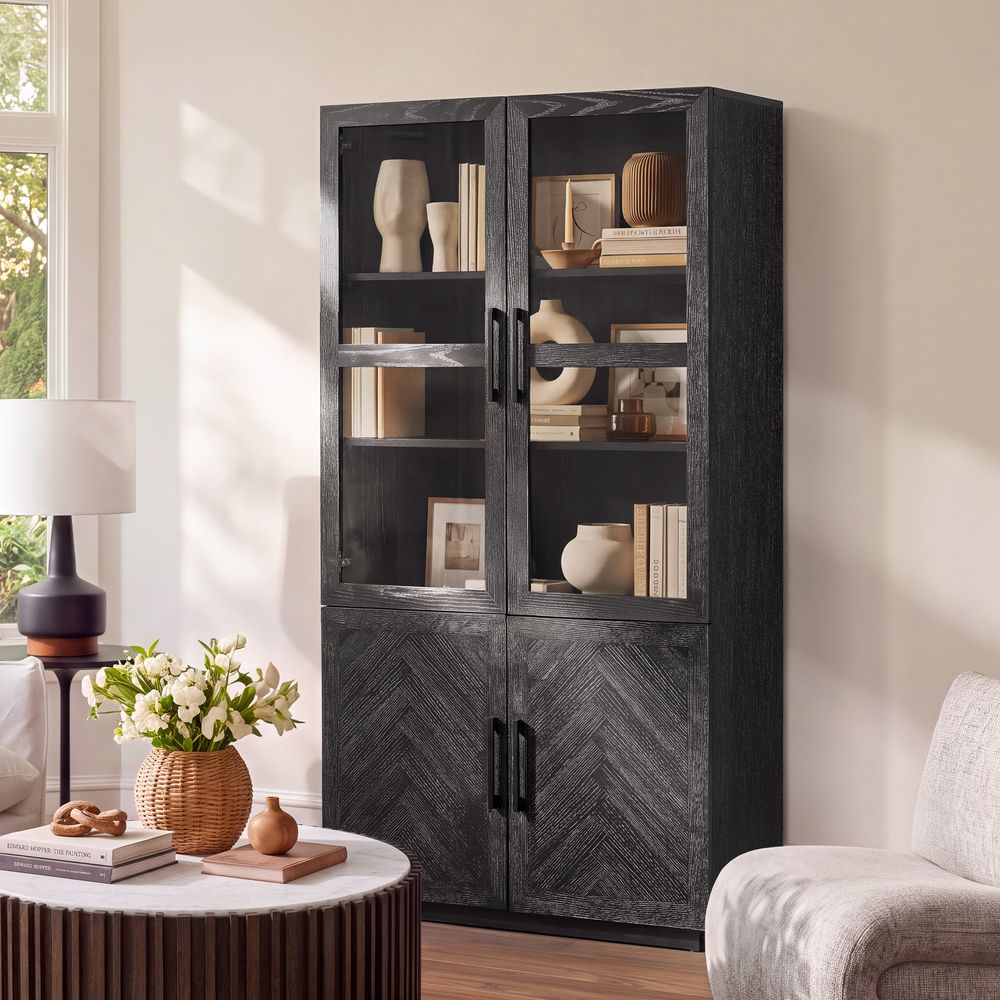
The Fiske 37-Inch Chevron Cabinet measures 37.2"W x 15.9"D x 72.6"H. Its three adjustable glass-front shelves provide room for books and decorative pieces, while the enclosed lower section keeps everyday belongings out of sight. The black oak finish and chevron detailing add a decorative touch, making it a good fit for living rooms with simpler furniture.
Console Cabinets for Narrow Areas
Console cabinets often have a slimmer or shallower profile than sideboards. They can fit behind a sofa, along a narrow wall, or near a living room entrance where a deeper cabinet might restrict movement.
Some designs combine drawers, open sections, and cabinet doors. Their storage capacity varies, so interior measurements are important when you plan to store larger belongings.
Fiske 37-Inch Chevron Cabinet
View Product
How Should You Place a Storage Cabinet in Your Living Room?
The position of a cabinet affects both the room's layout and how convenient it is to use. Its dimensions should work with nearby furniture, walking paths, and everyday activities.
Behind the Sofa
A low cabinet can fit behind a sofa when there is enough space between the seating and the wall or walkway. It provides additional storage and a surface for lamps, books, or decorative objects.
Its height should relate to the sofa back. A cabinet that is much taller may look disconnected from the seating arrangement, while excessive depth can reduce the space available for movement.
Beside the TV
A cabinet beside the television can hold media accessories, games, remote controls, and decorative objects. Its proportions should work with the existing TV console rather than making one piece look noticeably out of scale.
If you plan to store electronic equipment inside, ventilation and cable access are important. Devices that generate heat may require an open or appropriately ventilated compartment. Check the equipment dimensions and cable routes before choosing a closed cabinet.
Beneath a Window or Wall Art
A low cabinet can make use of the space beneath a window or artwork without blocking the main view across the room.
Before choosing one, compare its height with the window sill and the position of nearby furniture. Leave enough room for curtains, window operation, and any heating vents beneath the window.
Along an Empty Wall
A longer wall can accommodate a sideboard or low storage cabinet, while a narrower section may suit a tall unit.
Artwork, mirrors, wall lights, and nearby seating all affect how much visual space is available. Leaving some open wall area around the cabinet can help prevent the arrangement from feeling crowded.
In a Living Room Corner
A corner can accommodate a compact or tall cabinet when the room has limited uninterrupted wall space.
Measure both walls that meet at the corner, along with the cabinet's depth and door clearance. A piece that fits neatly into the corner may still interfere with nearby seating when its doors open.
Which Storage Layout Works Best for Your Living Room?
The exterior appearance of a cabinet is only part of the decision. Its shelves, drawers, and door configuration determine what you can store and how easily you can access it.
Drawers for Small Everyday Accessories
Drawers are useful for remote controls, charging cables, stationery, small game components, and other belongings that can easily become scattered.
They separate smaller items from larger belongings and keep them out of sight. Compare the internal width, depth, and height rather than relying only on the cabinet's exterior dimensions.
Adjustable Shelves for Different-Sized Items
Adjustable shelves provide more flexibility when you store objects of different heights. You can change the spacing to accommodate books, baskets, vases, or decorative pieces.
They are useful when the cabinet needs to serve different purposes over time. Shelf support and weight limits still matter, particularly when storing heavy books or equipment.
Open Shelves for Frequently Used Items
Open shelves keep books, baskets, and decorative objects within easy reach. They can also make a cabinet look less visually enclosed.
However, everything remains visible and exposed to dust. Grouping similar belongings or using baskets can help keep the shelves organized.
Solid Doors for Concealed Storage
Solid doors are suitable for mixed household belongings that do not need to be displayed. Cords, paperwork, board games, and spare accessories can stay out of sight.
This configuration works well in shared living rooms where several people use the same storage space.
Glass Doors for Display
A glass door storage cabinet allows you to display selected objects while keeping them inside an enclosed space.
It works well for ceramics, glassware, collectibles, and decorative books. The main consideration is that the contents remain visible, so mixed everyday belongings may make the cabinet look cluttered. Glass also needs regular cleaning to remove fingerprints and dust.
What Should You Check Before Buying a Living Room Storage Cabinet?
Once you have selected a suitable style and location, compare the product details that affect its fit, storage capacity, and everyday use.
Overall and Interior Dimensions
Compare the cabinet's full width, depth, and height with the available space in your living room.
Interior dimensions are equally important. A cabinet may have a generous exterior width but less usable storage space because of its frame, dividers, or door construction.
Measure larger belongings before buying, especially baskets, board game boxes, speakers, and decorative objects.
Shelf Weight Capacity
Do not assume that every shelf can support the same weight as the entire cabinet. The manufacturer's stated capacity may apply to the complete product or an individual component.
This matters if you plan to store heavy books, collections, or electronic equipment. Distribute heavier belongings on lower shelves when possible and avoid exceeding the listed capacity.
Door and Drawer Clearance
Measure the space required to open doors and drawers fully. Hinged doors extend into the room, while drawers need enough room to slide out without hitting a sofa, coffee table, or nearby furniture.
This is especially important in smaller living rooms, where a cabinet can fit against the wall but still be inconvenient to use.
Materials and Construction
Living room storage cabinets may use solid wood, engineered wood, wood veneers, or combinations of these materials.
Solid wood has natural variations in grain and color. Engineered wood provides a manufactured core, while wood veneer uses a thin layer of natural wood over a supporting material.
Overall quality depends on the materials, construction, finish, and how the cabinet is used and maintained—not simply whether one material appears in the product description.
Hinges, drawer joints, adjustable shelves, leveling feet, and supporting components are also worth examining.
Assembly and Wall Anchoring
Check whether the cabinet arrives fully assembled or requires assembly. Larger furniture may need to pass through hallways, doorways, and stairwells before reaching the living room, so delivery dimensions and access requirements matter. Tall or top-heavy furniture should be anchored according to the manufacturer's instructions.
How to Maintain a Living Room Storage Cabinet
Regular cleaning and proper care can help maintain a cabinet's finish and condition. The appropriate method depends on its materials, so follow the manufacturer's care instructions.
Wood and Wood Veneer
Dust wood surfaces with a soft, clean cloth. For routine cleaning, use a slightly damp cloth only when the care instructions allow it, and dry the surface afterward.
Avoid leaving water or spills on the finish. Direct sunlight and strong heat can also affect wood and wood finishes over time. Try not to place a cabinet directly beside a fireplace, radiator, or other strong heat source.
The Canadian Conservation Institute's guidance on wooden furniture explains how light and changes in humidity can affect wood.
For veneered surfaces, avoid abrasive pads and harsh cleaning products unless the manufacturer specifically approves them. The Timber Veneer Association of Australia's cleaning guidance also advises against leaving veneered surfaces damp or using harsh chemicals.
Glass Doors
Use a suitable glass cleaner and a soft, non-abrasive cloth, following the product's care instructions. Clean fingerprints and dust regularly, especially on frequently touched surfaces.
Apply cleaner to the cloth rather than spraying it directly onto the cabinet. This helps keep moisture away from seams and surrounding wood surfaces.
Hardware and Daily Cleaning
Check hinges, handles, and other hardware occasionally. If a door starts to sit unevenly or a handle becomes loose, consult the assembly or adjustment instructions before attempting repairs.
Avoid placing wet items directly on cabinet surfaces. Coasters or protective pads can help prevent scratches and marks from everyday objects.
FAQs
What Type of Storage Cabinet Is Best for a Living Room?
The right choice depends on your storage needs and available space. Low cabinets suit long walls and help maintain open sightlines. Tall cabinets provide vertical storage, while display cabinets are useful for collectibles and decorative objects. Sideboards can work well when you need a wider storage surface.
How Deep Should a Living Room Storage Cabinet Be?
There is no single depth that works for every living room. Choose a cabinet that accommodates your belongings without making the walkway or seating area uncomfortable. Compare both exterior and interior depth before buying.
Should I Choose a Tall or Low Storage Cabinet for My Living Room?
A tall cabinet is worth considering when you need vertical storage and have enough ceiling clearance. A low cabinet may be more suitable beneath artwork, below a window, or along a long wall where you want to keep sightlines open. Compare the proportions with your existing furniture before deciding.
Are Glass-Door Cabinets Practical for Living Rooms?
Glass-door cabinets can be practical when you want to display collectibles, ceramics, or decorative objects behind an enclosed front. They require regular glass cleaning, and the contents remain visible. A design combining glass doors with a lower solid-door section can provide both display and concealed storage.
How Do I Make a Small Living Room Look Less Cluttered?
Choose storage that fits the room rather than simply adding the largest cabinet available. Closed doors can conceal mixed belongings, while a tall, relatively narrow cabinet may use vertical space when a wide unit will not fit. Keep frequently used items accessible and avoid placing furniture where it interrupts the main walking route.
How Do I Choose a Storage Cabinet That Matches My Living Room Furniture?
Look at the room's existing finishes, colors, shapes, and proportions. A cabinet does not have to match the sofa or coffee table exactly, but its wood tone, hardware, and overall style should feel connected to the rest of the room. A contrasting finish can also create a focal point when its size and visual weight suit the space.