Storage cabinets come in different shapes, sizes, and configurations, from tall units with adjustable shelves to low sideboards and glass-front display cabinets. Each type offers different storage options and works better in certain spaces. Understanding these differences can help you choose a cabinet that fits your room, organizes everyday belongings, and works with your existing furniture. This guide covers common cabinet styles, their uses, and what to consider when choosing one.
Table of Contents
- What Are the Main Types of Storage Cabinets?
- What Are the Different Types of Storage Cabinets by Installation?
- How to Choose a Storage Cabinet Based on Your Room
- Which Cabinet Door and Storage Design Should You Choose?
- How to Choose the Right Storage Cabinet
- How to Care for Different Types of Storage Cabinets
- FAQs
- What Are the Three Main Types of Cabinets?
- What Is the Difference Between a Storage Cabinet and a Sideboard?
- What Type of Storage Cabinet Is Best for Small Spaces?
- Are Glass-Door Cabinets Good for Storage?
- What Is the Difference Between Freestanding and Built-In Cabinets?
- Are Tall Storage Cabinets Suitable for Living Rooms?
- What Materials Are Best for Storage Cabinets?
- How Do I Choose Between Open Shelves and Closed Storage?
What Are the Main Types of Storage Cabinets?
Storage cabinets can be classified by their shape, function, and interior layout. Some prioritize enclosed storage, while others combine shelves, drawers, and display areas. These categories can overlap. For example, a tall cabinet with glass doors may also serve as a display cabinet.
The following are seven common types of storage cabinets found in residential spaces.
1. Tall Storage Cabinets
Tall storage cabinets use vertical space to provide enclosed storage without requiring a wide floor footprint. They usually feature multiple shelves and doors, with some designs incorporating drawers or open compartments.
Their height makes them suitable for living rooms, bedrooms, hallways, and other areas where floor space is limited. Depending on the interior layout, they can hold books, folded linens, household supplies, decorative accessories, and other everyday items.
Before choosing one, check the shelf spacing and interior dimensions. Adjustable shelves offer more flexibility for storing items of different heights, such as vases, baskets, and household supplies.
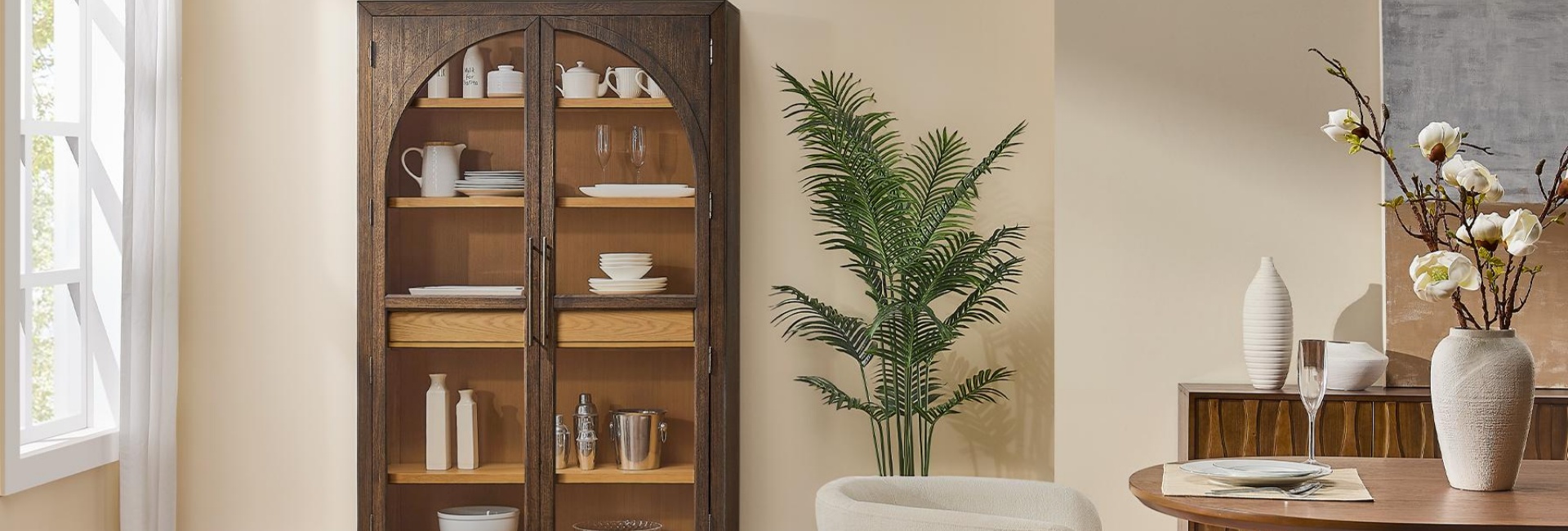
For a living room or display area, the Valborg 47-Inch Oak Cabinet combines a tall profile with glass-front storage. Its 75.9-inch height makes use of vertical space, while the glass doors allow books, decorative objects, and selected belongings to remain visible. The dark brown finish, arched accents, and combination of American solid oak and engineered wood with oak veneers also give it a more decorative role than a basic utility cabinet.

Valborg 47-Inch Oak Cabinet
View Product
2. Accent Cabinets
Accent cabinets are smaller furniture pieces that combine everyday storage with decorative details. They often feature distinctive shapes, textured doors, decorative hardware, or noticeable wood finishes.
They work well in living rooms, entryways, bedrooms, and dining areas. Their interiors can hold remote controls, books, accessories, table linens, and other household items that you prefer to keep out of sight.
Their compact proportions also make them suitable beside a sofa, against an empty wall, or near an entryway where a full-size cabinet might take up too much space.
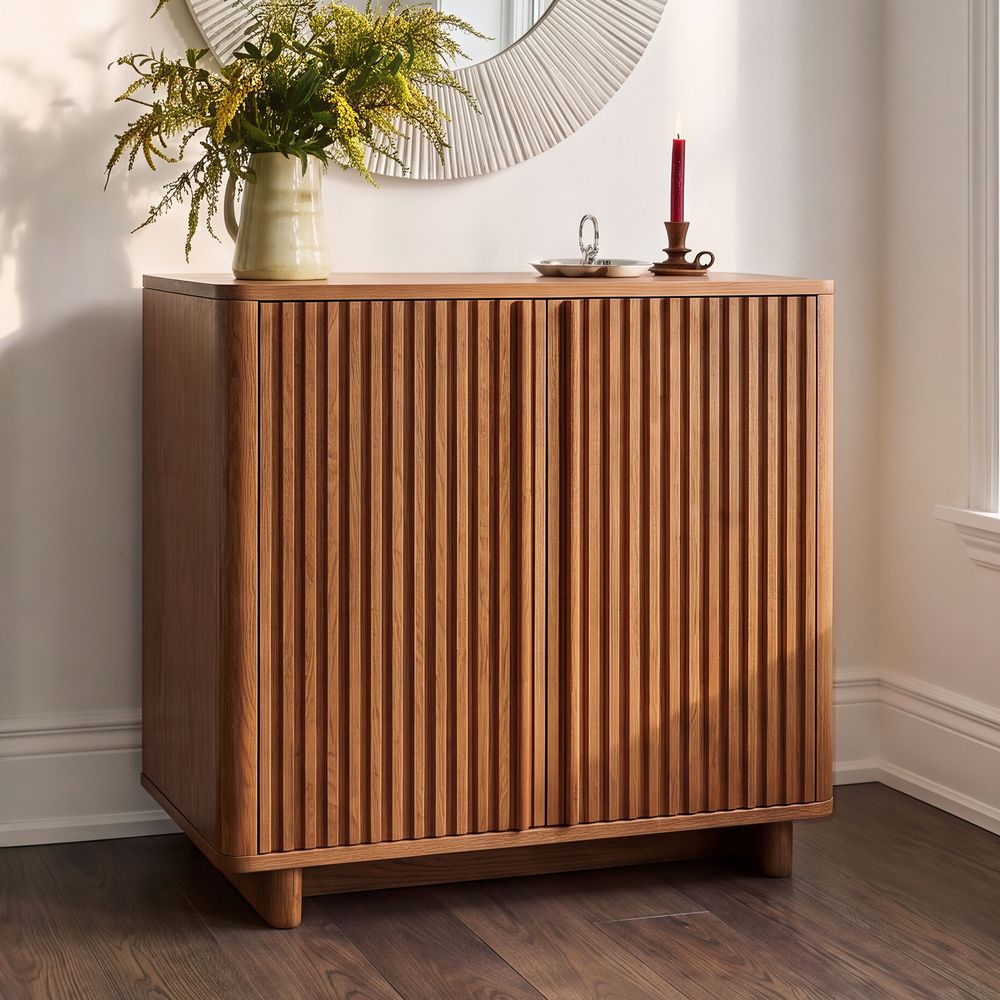
The Sabina 31-Inch Ash Wood Cabinet is an example of this type. Its compact proportions make it suitable for a living room corner or a smaller wall area where additional storage is needed without introducing a large furniture piece. Square fluting and a wire-brushed finish add texture to its exterior, while adjustable shelving helps accommodate household items of different sizes. Its combination of American solid ash wood and plywood, with ash wood veneers also gives it a distinct natural wood appearance.
When choosing an accent cabinet, consider both its storage capacity and its relationship with nearby furniture. A piece that is too wide or tall can dominate a small room, while a suitable profile can fill an unused area without making the layout feel crowded.
Sabina 31-Inch Ash Wood Cabinet
View Product
3. Display Cabinets
Display cabinets are designed to keep selected belongings visible while providing enclosed storage. They commonly feature glass doors and interior shelves, with some models also including built-in lighting.
They are suitable for glassware, decorative objects, collectibles, books, and other items you want to show rather than conceal.
Glass-front cabinets work well in living and dining rooms. A dining room cabinet might hold serving dishes and glassware, while a living room version could display books, pottery, or collectibles.
Common configurations include:
-
Full-height display cabinets: Provide multiple levels of storage and make use of vertical space.
-
Corner display cabinets: Fit into corners and use areas that might otherwise remain empty.
-
Glass-door cabinets with drawers: Combine visible display space with concealed storage for smaller items.
-
Low display cabinets: Provide a horizontal surface for additional decor while keeping displayed belongings within easy reach.
Glass doors do not completely prevent dust from entering, and fingerprints may be more noticeable than on solid cabinet fronts. However, they allow you to see stored items without opening the cabinet, which is useful when presentation matters.
4. Sideboards and Buffets
Sideboards and buffets are generally wider and shorter than tall storage cabinets. They traditionally provide storage for dining-related items, including dinnerware, table linens, serving dishes, and glassware.
Their broad top surfaces also provide space for lamps, framed artwork, decorative trays, or seasonal arrangements.
Although commonly associated with dining rooms, sideboards can also work in living rooms and entryways. A sideboard behind a sofa, for example, can store household items while providing a convenient surface for lighting and accessories.
The terms sideboard and buffet are often used interchangeably in modern furniture shopping. Their designs and proportions can vary, so compare actual dimensions, storage layouts, and intended functions rather than relying on the name alone.
Pay particular attention to width and depth. A cabinet may look compact in a product photograph but extend too far into a dining area or narrow walkway.
5. Corner Cabinets
Corner cabinets are designed to fit where two walls meet. Their angled or triangular shapes help use floor space that can be difficult to furnish with conventional rectangular cabinets.
They are useful in small living rooms, dining areas, bathrooms, and kitchens. Depending on the design, they may feature open shelves, solid doors, glass fronts, or rotating interior components.
Some corner units use rotating shelves to make items stored farther inside easier to reach. Others have fixed shelves and narrower front openings.
Before purchasing one, measure both walls meeting at the corner. Also check the cabinet's depth, front width, and door-opening clearance. A cabinet that fits neatly into the corner may still interfere with nearby furniture when its doors swing outward.
6. Wall-Mounted Cabinets
Wall-mounted cabinets attach directly to a wall rather than resting on the floor. They make use of vertical wall space and leave more floor area available for walking, cleaning, and other furniture.
They are commonly used in bathrooms, kitchens, laundry areas, and compact rooms. Some have fully enclosed interiors, while others combine cabinet doors with open shelves.
Installation requirements need careful attention. The wall structure, mounting hardware, cabinet weight, and expected contents all affect whether a particular installation is suitable.
Check the manufacturer's stated load limits and installation instructions before placing dishes, books, or other heavy belongings inside. Not every wall-mounted cabinet is designed to support substantial loads.
7. Modular Storage Cabinets
Modular storage cabinets consist of separate units or components that can be arranged in different combinations. Some systems use stackable sections, while others allow multiple cabinets to sit beside one another.
They are useful when storage requirements may change over time. For example, a home office may initially need one cabinet for documents but later require additional compartments for equipment and supplies.
Modular units can also create a consistent appearance across a larger room. However, check whether individual units are designed to be stacked or connected. Similar-looking cabinets are not necessarily compatible with one another.
For a smaller room, a few well-sized modules may be more practical than one oversized unit. For a larger wall, combining coordinated sections can provide additional storage without relying on a single large cabinet.
What Are the Different Types of Storage Cabinets by Installation?
Besides their style and function, storage cabinets can be classified by how they are positioned or installed. This affects available floor space, installation requirements, and how easily the furniture can be moved.
Freestanding cabinets offer flexibility because they can generally be relocated without modifying the room. However, tall or heavy furniture may still need wall anchoring to reduce tip-over risks.
Built-in cabinets are designed for a particular space and can make use of alcoves, wall openings, or areas beneath staircases. They require more planning and installation work, and are less convenient to relocate.
Wall-mounted cabinets provide storage without taking up floor space, but their installation depends on wall construction, mounting hardware, and the cabinet's loaded weight.
These installation categories can overlap with the styles described earlier. For example, a display cabinet may be freestanding, while a bathroom storage cabinet may be wall-mounted.
How to Choose a Storage Cabinet Based on Your Room
The right cabinet depends on what you need to store, how frequently you use those items, and how much space is available.
Living Room
Living rooms often need a combination of concealed storage and display space. Books, board games, remotes, media accessories, and decorative objects may all need somewhere to go.
A tall storage cabinet or display cabinet works well when you want to use vertical space. A low accent cabinet or sideboard may be more suitable beneath wall art or along a longer wall.
For smaller living rooms, consider a cabinet with a narrower depth so it does not interfere with walking paths. Glass-front doors can also provide enclosed storage while keeping selected decorative objects visible.
For example, the Sabina 31" Ash Wood Cabinet is suited to smaller living room arrangements where a compact accent cabinet is more appropriate than a full-height unit. For rooms with more vertical space available, the Valborg 47" Oak Cabinet offers a taller glass-front design for both storage and display.
Bedroom
Bedroom storage cabinets can hold folded clothing, accessories, spare bedding, books, and personal belongings.
A tall cabinet may be useful when wardrobe space is limited, while a smaller accent cabinet can provide additional storage without taking up as much wall space.
Consider the cabinet's depth and door clearance, particularly when placing it near a bed, closet door, or walking area. For clothing and larger bedding items, compare the interior dimensions and shelf spacing rather than relying on overall height alone.
Dining Room
Dining rooms often benefit from sideboards, buffets, and glass-door display cabinets.
Sideboards are suitable for storing table linens, serving accessories, and frequently used dining items. Display cabinets are more appropriate when you want glassware, decorative dishes, or collectibles to remain visible.
A combination of enclosed compartments and adjustable shelves can accommodate different dining items. Also consider the clearance needed for chairs and people moving around the table. A deep cabinet can make an already compact dining area feel restrictive.
Entryway
Entryways need storage that is convenient without obstructing the entrance.
Small accent cabinets can hold keys, mail, accessories, and other everyday items. Narrow cabinets may also work in hallways where available floor space is limited.
Measure the distance between the wall and the main walking path before choosing a cabinet. Check that doors can open without blocking the front door or nearby interior doors.
Bathroom
Bathrooms require more attention to moisture than most other rooms.
Linen cabinets and wall-mounted storage units can hold towels, toiletries, and spare household supplies. Adjustable shelves can accommodate bottles and folded items of different sizes.
Check whether the cabinet materials and finish are suitable for humid environments. Repeated exposure to standing water can damage some wood-based materials and finishes over time.
Choose cabinetry intended for bathroom conditions, and avoid placing general-purpose furniture where it may be regularly exposed to water splashes or excessive humidity.
Which Cabinet Door and Storage Design Should You Choose?
Two cabinets with similar external dimensions can function quite differently depending on their doors and interior layouts. Consider how you plan to use the cabinet before deciding on a configuration.
Solid Doors
Solid doors are useful when you want to keep everyday belongings out of sight. They create a less cluttered appearance and work well for household supplies, accessories, and miscellaneous items.
They are a practical choice for rooms where the contents do not need to be displayed.
Glass Doors
Glass doors provide visibility while keeping items inside an enclosed cabinet.
They are suitable for collections, decorative dishes, and glassware. However, fingerprints and dust may be more noticeable on glass, so the interior needs some organization to maintain a tidy display.
Drawers
Drawers work well for smaller belongings that might otherwise become difficult to find on a large shelf.
They are useful for remote controls, stationery, accessories, and other items that benefit from being separated into smaller groups.
When comparing cabinets, check drawer depth, internal height, and the clearance needed to pull them out fully.
Open Shelves
Open shelves offer convenient access and make stored items easy to see. They are commonly used for books, decorative objects, baskets, and frequently used accessories.
Their main limitation is exposure to dust and visual clutter. Using baskets or grouping similar items can help keep the shelves organized.
Adjustable Shelves
Adjustable shelves allow you to modify the vertical space inside a cabinet.
This is useful when storing objects of different heights. You may need more clearance for tall vases or bottles but closer spacing for books and smaller accessories.
Check how the shelves are supported and whether the manufacturer specifies individual shelf weight limits. A shelf's position can change, but its load capacity should not be assumed to increase.
How to Choose the Right Storage Cabinet
Once you have narrowed down the cabinet styles, compare the practical details before purchasing.
1. Measure the Available Space
Measure the width, height, and depth of the area where the cabinet will sit. Include baseboards, nearby doorways, windows, heating vents, and other obstacles.
Allow enough clearance for doors to swing open and drawers to extend fully. For narrow hallways and smaller rooms, even a few extra inches of depth can affect how comfortably people move around the furniture.
It is also worth measuring the delivery route. Check entrance doors, stairways, hallway turns, elevators, and room doorways against the packaged dimensions when available.
2. Consider Storage Capacity
The cabinet's external dimensions do not tell you exactly how much usable storage space is inside.
Compare interior width, depth, shelf spacing, and drawer sizes. A thick cabinet frame or decorative front may reduce the actual opening available for storage.
Consider the largest objects you intend to store. Serving platters, tall vases, and folded blankets may need more room than everyday accessories.
3. Check Materials and Construction
Storage cabinets are commonly made using solid wood, plywood, veneers, MDF, particleboard, metal, and combinations of these materials. Each construction method has different characteristics.
-
Solid wood: Offers natural grain and can be finished or repaired in various ways.
-
Plywood: Uses layered wood construction and can provide a stable panel material.
-
Wood veneers: Use a thin layer of real wood over a supporting substrate, providing a natural wood appearance.
-
MDF and particleboard: Are engineered wood products commonly used in furniture panels and finished cabinet components.
-
Metal: Is frequently used in utility and industrial storage furniture.
A cabinet does not need to be made entirely from solid wood to be a practical choice. What matters is understanding which materials are used in the frame, doors, shelves, and supporting components.
4. Consider Weight Capacity and Stability
A cabinet needs to support its intended contents without exceeding the manufacturer's recommended limits.
Check the overall weight capacity and any separate shelf or compartment ratings. These figures are not necessarily interchangeable.
For tall cabinets, stability is another important consideration. A loaded cabinet can become top-heavy, especially when heavier belongings are placed on upper shelves.
Follow the product's anchoring instructions and use the supplied hardware where applicable.
You can find more guidance in the CPSC's furniture anchoring and tip-over safety information.
5. Match the Cabinet to Your Interior Style
A storage cabinet is often a noticeable piece of furniture, particularly in a living or dining room.
Consider how its finish, shape, and detailing relate to other pieces in your space.
Wood finishes can introduce warmth and texture, while glass doors create a display-oriented appearance. Fluted fronts, curved details, and decorative hardware can add visual interest without relying on bright colors or elaborate ornamentation.
You do not need to match every furniture finish exactly. Instead, coordinate wood tones, proportions, and overall design. A dark wood cabinet can create contrast in a room with lighter furniture, while a natural ash finish can complement a more restrained, neutral interior.
How to Care for Different Types of Storage Cabinets
Regular care helps maintain a cabinet's appearance and functionality. The right approach depends on its materials and finish, so follow the manufacturer's care instructions.
For wood and wood-veneer surfaces, use a soft, dry or lightly damp cloth as appropriate for the finish. Wipe up spills promptly, and avoid leaving wet containers directly on wood surfaces. Coasters and protective mats can help reduce the risk of moisture marks.
For glass-front cabinets, use a suitable glass cleaner according to its instructions. Avoid spraying cleaning products directly onto wood joints or hardware. Periodically check door hinges, drawer hardware, shelf supports, and wall fasteners. Keep heavier belongings on lower shelves to help maintain a balanced arrangement, particularly in taller cabinets.
FAQs
What Are the Three Main Types of Cabinets?
A common way to classify cabinets by their basic configuration is base cabinets, wall cabinets, and tall cabinets. Base cabinets sit on the floor and often support a countertop or other work surface. Wall cabinets attach above the floor, while tall cabinets extend upward to provide additional enclosed storage. These terms describe cabinet placement and proportions rather than every possible furniture style. Accent cabinets, display cabinets, and sideboards can have different configurations within these broader categories.
What Is the Difference Between a Storage Cabinet and a Sideboard?
A storage cabinet is a broad term for furniture designed to organize and store household belongings. It can be tall, short, narrow, wide, or designed for a particular room. A sideboard is generally a lower, wider cabinet with a substantial top surface. It is traditionally associated with dining rooms, where it stores dinnerware, linens, and serving accessories. Although both provide enclosed storage, sideboards are usually more horizontal in proportion and often serve a decorative or serving-related role as well.
What Type of Storage Cabinet Is Best for Small Spaces?
Tall cabinets, narrow freestanding cabinets, corner units, and wall-mounted cabinets can all work well in smaller rooms. The right option depends on the available space. A tall cabinet uses vertical space, while a wall-mounted design keeps the floor clear. A corner cabinet may fit an otherwise unused area. Measure the available width and depth carefully, and make sure doors and drawers can open without obstructing nearby furniture or walkways.
Are Glass-Door Cabinets Good for Storage?
Yes. Glass-door cabinets provide enclosed storage while keeping the contents visible. They are suitable for glassware, decorative dishes, books, and collectibles that you want to display. The doors also help reduce direct exposure to dust compared with fully open shelving. However, glass-front designs require regular cleaning, and the interior needs some organization to maintain a tidy display.
What Is the Difference Between Freestanding and Built-In Cabinets?
Freestanding cabinets are independent furniture pieces that sit on the floor and can generally be moved to another location. Built-in cabinets are installed as part of a room's structure and are usually fitted to a specific wall, alcove, or opening. Freestanding units offer more flexibility, while built-ins can make better use of a permanent space. Your decision should depend on whether you value portability or a more integrated storage arrangement.
Are Tall Storage Cabinets Suitable for Living Rooms?
Yes. Tall cabinets can provide storage for books, decorative objects, media accessories, and other household belongings without requiring a wide floor footprint. Glass-front designs are useful when you want to display selected items, while solid-door cabinets are better suited to concealing miscellaneous belongings. Measure the ceiling height and surrounding furniture before choosing a model, and check whether wall anchoring is required.
What Materials Are Best for Storage Cabinets?
The right material depends on the cabinet's intended use, location, appearance, and budget. Solid wood offers natural grain and can be refinished in some cases. Plywood and engineered wood provide additional construction options, while veneers create the appearance of natural wood over a supporting substrate. For bathrooms and other humid spaces, prioritize materials and finishes specifically suited to those conditions rather than assuming every wood cabinet is moisture-resistant.
How Do I Choose Between Open Shelves and Closed Storage?
Choose open shelves when you want easy access to frequently used items or want to display books and decorative objects. Closed storage is more suitable when you prefer to conceal everyday belongings and keep the room looking less cluttered. A cabinet combining both designs can provide a balance. You can display selected objects on open shelves while keeping less frequently used items behind doors.