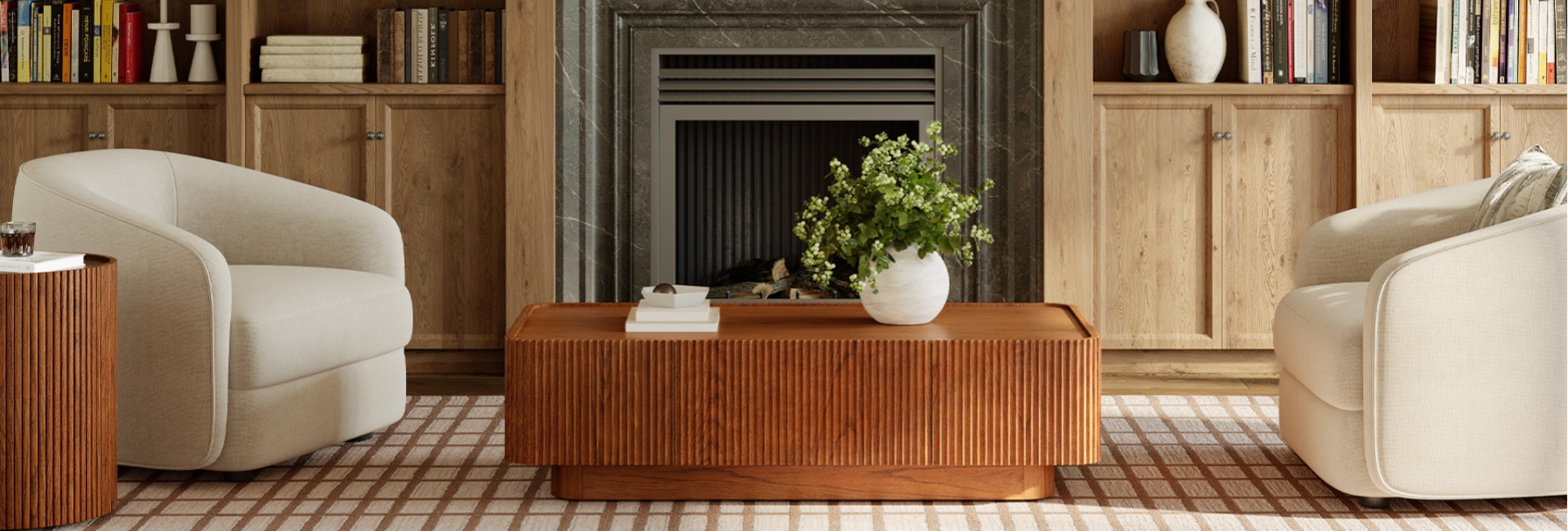
A coffee table for the living room isn't a law, but it's close to a habit. Most of us grew up with one parked in front of the sofa, holding the remote, a half-finished coffee, and whatever book we meant to finish. The honest answer to whether you need one is no, you don't have to. But a well-chosen table can change how a room feels and functions in ways people underestimate until they live without one.
This guide covers what a coffee table actually does, when it's worth skipping, which shapes and materials make sense, and how to size one so it earns its footprint. We'll also look at lift-top models that quietly do the work of several pieces of furniture and answer a question everyone asks at some point: why is it even called a coffee table?
Table of Contents
- Quick Answer
- Why a Coffee Table Anchors the Living Room
- Do You Have to Have a Coffee Table?
- What Else Can a Coffee Table Be Used For?
- The Case for a Lift-Top Coffee Table
- Choosing the Shape: Round, Rectangular, or Square
- Why Oak Works So Well for a Living Room Coffee Table
- Why Is It Called a Coffee Table?
- What Size Coffee Table Do You Need?
- Styling a Coffee Table Without the Clutter
- Our Take: Build the Living Room Around How You Live
- FAQs
- Should a living room have a coffee table?
- What is the function of a coffee table?
- What are the best coffee tables for a living room?
- How big should a coffee table be compared to a sofa?
- What is the standard coffee table height?
- What can I use instead of a coffee table?
- Why is it called a coffee table?
- Are lift-top coffee tables worth it for small living rooms?
Quick Answer
No, you don't need a coffee table. What you really need is a convenient surface within reach of your seating.
A coffee table makes sense when you have enough floor space, want to anchor the seating arrangement, and regularly use a central surface for drinks, snacks, books, remotes, or everyday activities. If your living room is small or high-traffic, an ottoman, nesting tables, or side tables may work better.
As a starting point:
Length: Choose a table about two-thirds the length of your sofa.
Height: Aim for a tabletop level with the sofa seat or about 1–2 inches lower.
Clearance: Leave roughly 15–18 inches between the table and seating.
Small rooms: Consider a round, nesting, or lift-top design to make better use of limited space.
Why a Coffee Table Anchors the Living Room
The simplest way to understand a coffee table is to picture the room without it. The sofa floats, the rug looks untethered, and every drink, phone, and remote ends up on the floor or balanced on an armrest. That's the function of a coffee table in one sentence: it gives the seating area a center of gravity.
The feature people often miss most isn't the storage. It's the landing spot. Life happens on a coffee table, and the room can feel strangely incomplete when there's nowhere for that life to land.
The Daily Landing Zone
Think of everything that passes through your hands during a single evening on the couch. The water glass. The laptop. The dog's chew toy. The charging cable you keep meaning to put away. Without a table, those objects scatter to the floor, the sofa cushions, and the nearest windowsill.
A coffee table captures that motion. It keeps the living space calmer without interrupting the rhythm of daily life. The surface does the quiet work of saying, "put it here," so the room doesn't turn into a scatter plot by 9 p.m.
A Natural Gathering Point
When friends come over, everyone gravitates toward the table. Snacks, drinks, and board-game boxes find a home on its surface, and conversation circles it. A coffee table is one of those rare pieces of furniture that facilitates connection without demanding attention.
Designers often think of the sofa, table, and surrounding seating as a single arrangement, and the relationship matters. A table placed roughly in the middle of the seating group pulls the arrangement together and makes the space feel intentional rather than assembled. Living rooms with coffee tables often read as finished, even when the rest of the decor is minimal.
Do You Have to Have a Coffee Table?
Short answer: no. A living room can work perfectly well without one. The better question is whether a table earns its place in your specific room.
Furniture should answer to how you live, not to a checklist. If you constantly reach for a surface from the sofa, a coffee table can be useful. If you keep bumping into one or rarely use it, removing it may make the room better.
When Skipping the Table Makes Sense
Skip the coffee table if your living room is on the smaller side and a central piece would make movement uncomfortable. If your layout is a thoroughfare, a table in the middle can interrupt the walk from the kitchen to another part of the house.
Open-concept rooms can also benefit from restraint. If a kitchen island and dining table already provide large horizontal surfaces, adding another one in the middle of the living area may make the space feel visually busy. In that situation, a couple of slim side tables can provide the same convenience with less visual weight.
Households with toddlers or a lot of rough-and-tumble play may also prefer to avoid a hard central edge. An upholstered ottoman or low pouf gives you a softer surface and can be easier to move when the floor needs to become play space.
What to Use Instead
Ottoman with tray
Nesting tables
Storage bench or trunk
Slim console behind the sofa
None of these are "cheating." They're simply different answers to the same problem a coffee table solves.
What Else Can a Coffee Table Be Used For?
Most people buy a coffee table to hold a coffee cup, then discover it does a lot more. The flat top at the center of the room is prime real estate, and once you start looking, the uses pile up.
A Workspace and a Dining Spot
A lift-top coffee table can turn the living room into a place to work or eat. Raise the top and you've got a desk-like surface for answering email or helping a kid with homework while the TV plays in the background. Lower it again and dinner from a tray feels more comfortable than balancing a plate on your lap.
In small apartments where the dining table is also the work desk and craft station, a lift-top model earns its keep by serving several purposes. The same footprint can support work, casual meals, storage, and everyday living.
Decor, Plants, and Family Life
Beyond utility, the table is a stage. A vase, a stack of art books, a candle, and a small tray of coasters can turn a flat plane into a personality statement you can redo with the seasons.
It can also become the family hub in ways people don't plan for. It's where the puzzle gets built, where the LEGO village expands, and where movie-night snacks gather. With hidden storage underneath, it's also where the clutter can go when company's coming.
For pet owners, a drawer or compartment can keep treats, leashes, and grooming gear close without leaving them scattered around the room.
The Case for a Lift-Top Coffee Table
If you have one hesitation about a coffee table, it's usually footprint. A standard table gives you a surface. A lift-top can give you a surface, a desk-like work area, a casual dining spot, and storage within roughly the same footprint.
For apartments, studios, and rooms where the sofa also serves as the office, a lift-top can be a particularly practical choice. You're not necessarily adding another piece of furniture; you're asking one piece to do more.
How the Lift-Top Works Day to Day
The mechanism is straightforward: the top lifts and moves toward you, usually with hinges or a spring-assisted mechanism, creating a raised work surface. You're not hunched over a low table; the raised top brings the surface closer to a comfortable working height.
When you're finished, the top returns to its original position.
This is the kind of feature that makes sense if you've ever balanced a laptop on a cushion and regretted it.
Hidden Storage That Earns the Footprint
Underneath a lift-top surface, some designs include compartments or drawers for the things that otherwise drift across the room: remotes, chargers, magazines, throw blankets, or games. Side drawers can keep smaller items within easy reach.
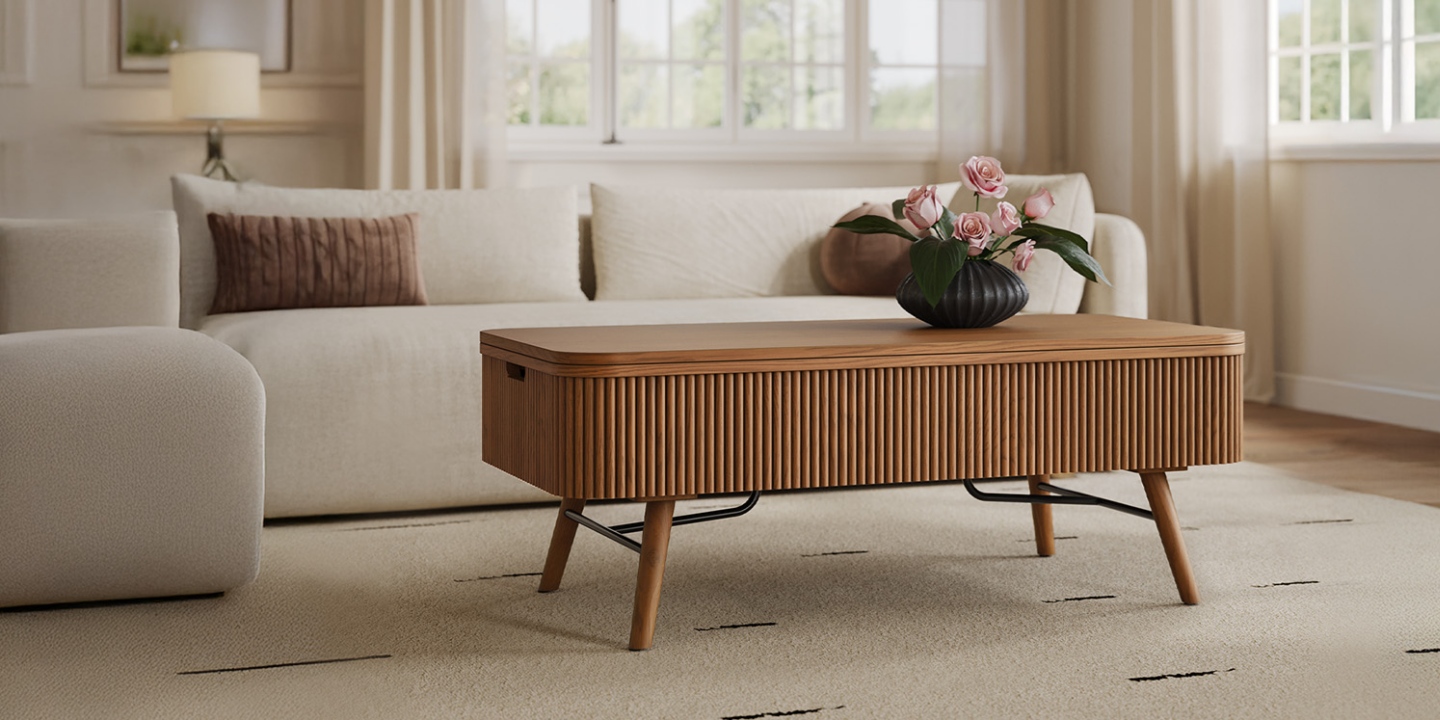
A practical example is the Magnus 47" Lift-Top Oak Rectangular Coffee Table. Its rectangular profile combines a lift-top work surface with storage, making it useful when the living room needs to support more than one activity. At 47.2 inches long, it provides a substantial surface for a standard three-seat sofa while keeping storage close at hand.
Choosing the Shape: Round, Rectangular, or Square
Shape does more than fill a footprint. It sets the tone of the room and affects how people move around it.
Round Tables for Tight and Family Rooms
A round table softens a room. With no corners, there's less of a sharp edge to walk into, which can be useful in homes with kids or pets. The curved outline also encourages movement around the table and works particularly well with curved or compact seating arrangements.
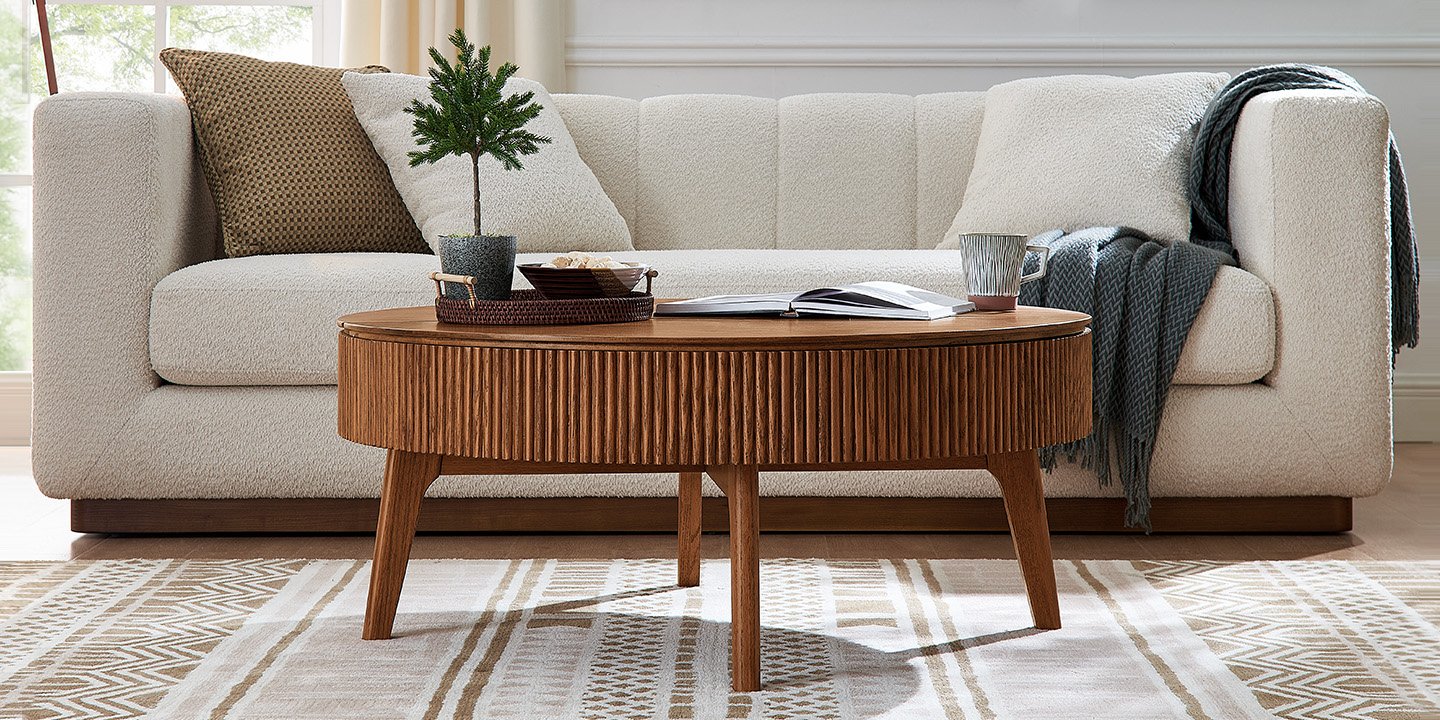
If you like the warmth of wood but want the gentleness of a circle, the Magnus 39" Lift-Top Oak Round Coffee Table is one example. It's a 39.4-inch round oak table with tapered solid-oak legs, a lift-top, and hidden storage. The round silhouette works well in a busier family room where keeping traffic moving matters, while the lift-top gives the table another job when you need a work or casual dining surface.
Rectangular and Square for Structured Layouts
A rectangular table grounds a long sofa and creates a clean, structured look, which is why it's such a common choice in living rooms. Square tables suit symmetrical setups and open layouts but can crowd a small room quickly. An oval table offers a middle ground, softening the corners of a rectangle while still spanning a longer seating group.
A simple starting point is to relate the table shape to the seating arrangement:
Why Oak Works So Well for a Living Room Coffee Table
Walk into ten living rooms and you'll see ten different table materials, but wood remains a reliable choice for everyday use. A wooden coffee table in the living room adds warmth and visual texture, while natural grain can help disguise the small marks that come with daily life.
Solid Oak vs. Veneer
Oak is popular for furniture because it is durable, stable when properly prepared, and visually versatile. It also takes finishes well, allowing the same material to work across traditional, contemporary, and mid-century-inspired interiors.
When comparing solid wood and veneer, look at the construction rather than assuming one label tells the whole story. Solid wood is exactly what it sounds like: the component is made from solid timber. Veneer is a thin layer of real wood applied over another material, often an engineered wood core.
Veneer isn't automatically inferior. It can provide the look and feel of real wood while improving dimensional stability in larger panels. What matters is where each material is used and how the overall piece is constructed.
When shopping for an oak coffee table, look for clear information about the materials used in the top, legs, frame, and storage components rather than relying only on the word "wood."
Keeping Wood Looking Good
Wood is forgiving, but it has rules. Use coasters for hot or wet glasses, wipe spills promptly, and keep the table away from prolonged direct sunlight when possible to reduce uneven fading.
Felt pads under decorative objects can help prevent scratches, and following the manufacturer's care instructions is better than applying oil or wax automatically. Different finishes require different maintenance.
A wooden table that gets a little regular care can stay attractive for years without looking overly precious.
Why Is It Called a Coffee Table?
The exact history of the modern coffee table is less settled than the name suggests. Earlier furniture included low tables used for tea, meals, games, and socializing, and the modern coffee table developed from several furniture traditions rather than one single invention.
The term "coffee table" became established in the early 20th century as low tables became increasingly associated with casual living spaces. One frequently repeated account credits F. Stuart Foote of the Imperial Furniture Company in Grand Rapids, Michigan, with creating a low table by shortening the legs of an existing table. However, the broader history is more complicated than a single inventor story, and the attribution should be treated as one commonly repeated account rather than a definitive origin.
The low profile also has connections to different low-table traditions, including Japanese furniture and other cultures where people traditionally sat close to the floor. It is safer to think of the modern coffee table as the result of several design influences rather than a piece with one definitive origin story.
A Name That Outgrew Its Drink
Here's the funny part: almost nobody uses a coffee table mainly for coffee. It holds books, remotes, kids' toys, laptops, and the occasional actual cup.
The name describes the social setting the furniture became associated with, not a rule about what you are supposed to put on it. So if you've ever eaten takeout from one while wondering why it's called a coffee table, you're in good company.
What Size Coffee Table Do You Need?
Sizing is one of the easiest parts of choosing a coffee table to get right. Start with the sofa, then work outward to clearance and height.
How Long Should a Coffee Table Be?
A useful starting point is a table about two-thirds the length of your sofa.
For example, a 90-inch sofa pairs well with a coffee table around 60 inches long. The exact proportion can change depending on the sofa's shape, the number of seats, and the rest of the room, but the two-thirds guideline is a practical place to begin.
A table that is much shorter can look visually lost in front of a large sofa. A table that is too long can crowd the seating and make the room harder to navigate.
How Much Clearance Should You Leave?
Aim for roughly 15–18 inches between the coffee table and the surrounding seating.
That gives you enough room to sit comfortably and move around the table without making the gap feel disconnected. If your room is particularly narrow, prioritize a comfortable walkway over hitting an exact measurement.
How Tall Should a Coffee Table Be?
Most coffee tables are around 16–18 inches tall, which works with the seat height of many sofas.
As a general rule, the tabletop should be level with the sofa seat or about one to two inches lower. A table that is significantly taller can feel more like a dining surface and may interrupt sightlines. One that is very low can make reaching for drinks or books unnecessarily awkward.
If you're choosing a lift-top model, check both the closed and raised heights. The table should work as a normal coffee table when closed and bring the raised surface to a comfortable working or eating position when open.
Styling a Coffee Table Without the Clutter
A styled table looks intentional; a stuffed one looks like a yard sale. The difference is restraint.
The Tray Trick
Put a tray in the center and treat it as the "stuff" zone: remotes, a small dish for coins, and the coaster stack. Everything inside the tray reads as contained; everything outside it can be decor rather than daily clutter.
A tray is also useful if you're using an ottoman instead of a traditional coffee table because it creates a more stable surface for drinks and small objects.
Seasonal Swaps
You don't need a dozen accessories to make a coffee table look finished. Try three basic elements: a small stack of books, one decorative object such as a vase or bowl, and one living or seasonal element.
Swap those pieces throughout the year rather than adding more. Spring might mean fresh greenery, fall could bring a small pumpkin or amber glass, and winter might call for evergreen branches or a heavier candle.
The table stays interesting without becoming another storage surface.
Our Take: Build the Living Room Around How You Live
So, which one should you buy?
If your room has the floor space, you want a visual anchor, and you'll use the surface every day, a coffee table is probably worth having. If the room is tight, the layout is high-traffic, or you prefer softer edges, an ottoman or side tables may be the better choice.
If you do buy one, choose the version that solves more than one problem. A wooden lift-top table with useful storage can provide a surface, a work area, a casual dining spot, and a place to hide everyday clutter without requiring several separate pieces of furniture.
The Magnus 47" Lift-Top Oak Coffee Table is a practical option for a larger or more structured seating arrangement, while the Magnus 39" Lift-Top Oak Coffee Table offers a round profile for tighter or more active living spaces.
You don't have to have a coffee table. But when the one you choose actually fits how you live, the room can stop feeling like it's missing something and start feeling like yours.
FAQs
Should a living room have a coffee table?
Not necessarily. A coffee table works well when you have enough floor space and want a central surface for drinks, books, remotes, and everyday activities. In a small or high-traffic room, side tables, nesting tables, or an ottoman can work just as well.
What is the function of a coffee table?
A coffee table provides a convenient surface within reach of the seating and helps visually anchor the living room. Depending on the design, it can also provide storage, a work surface, a casual dining surface, or space for decor.
What are the best coffee tables for a living room?
The best coffee table depends on your sofa, room size, and how you use the space. As a starting point, choose one about two-thirds the length of your sofa, roughly 16–18 inches tall, and leave about 15–18 inches of clearance around it. Storage or lift-top features can be especially useful in smaller rooms.
How big should a coffee table be compared to a sofa?
A practical starting point is about two-thirds the length of the sofa. For a 90-inch sofa, that means a coffee table around 60 inches long. Adjust the size if your room layout, sectional shape, or walking space calls for something different.
What is the standard coffee table height?
Most coffee tables are around 16–18 inches tall. The tabletop generally works best when it is level with the sofa seat or about one to two inches lower.
What can I use instead of a coffee table?
You can use an ottoman with a tray, side tables, nesting tables, a storage bench or trunk, or a slim console behind the sofa. These alternatives can be particularly useful when the room is small, open, or frequently used as a walkway.
Why is it called a coffee table?
The modern coffee table developed from several earlier low-table traditions and became established as a furniture type in the early 20th century. The name reflects its association with casual living and socializing rather than a requirement that the table be used primarily for coffee.
Are lift-top coffee tables worth it for small living rooms?
They can be, especially when one piece needs to support several activities. A lift-top can provide a raised work or dining surface while offering storage and returning to a standard coffee-table height when closed. The main trade-off is that the lifting mechanism can make the table heavier and mechanically more complex than a standard design.