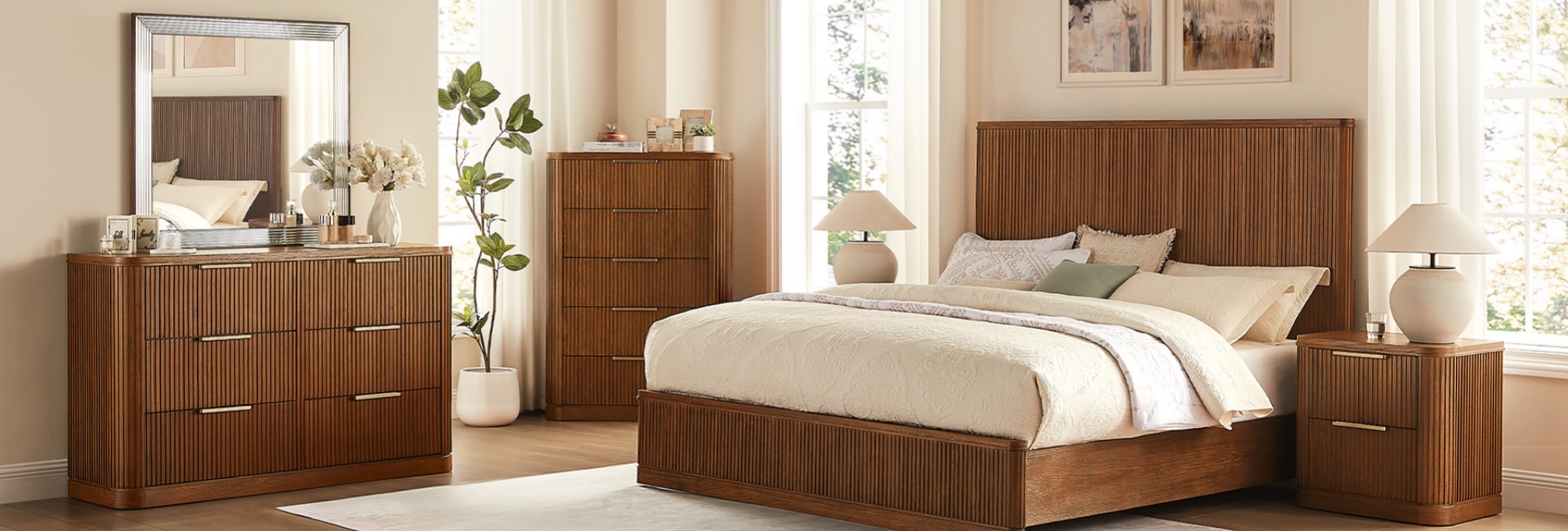
Shopping for bedroom storage often comes down to one basic question: chest vs dresser. The difference is easier to understand than the names make it sound.
A dresser is generally wide and low, with a broad top that works well with a mirror and everyday items. A chest of drawers is generally taller and narrower, stacking storage vertically to use less floor space. Both can hold folded clothes, but they fit different rooms and routines.
Before choosing, look at three things: the wall where the piece will sit, the amount of floor space you can spare, and how you use your clothes storage every day.
Table of Contents
- Chest vs Dresser: The Quick Answer
- Chest vs Dresser: The Core Difference
- How Each Piece Uses Floor and Wall Space
- Standard Dimensions: Chest vs Dresser at a Glance
- Different Types of Dressers and Chests
- Dresser vs Chest of Drawers: Does the Name Change the Rules?
- The Difference Between a Dresser and a Chest in Daily Use
- Which Holds More: A Chest or a Dresser?
- How to Choose Between a Dresser and a Chest of Drawers
- Pairing a Dresser and Chest in the Same Bedroom
- Build Quality and Materials That Earn the Space
- Safety: Anchor Tall Storage to the Wall
- FAQs
- What is a chest vs. a dresser?
- Is a tall dresser called a chest?
- Which holds more, a chest or a dresser?
- Can you use a chest of drawers as a dresser?
- What are the standard dimensions of a dresser vs. chest of drawers?
- Can you have both a dresser and a chest in the same bedroom?
- How do I choose between a dresser and a chest of drawers?
Chest vs Dresser: The Quick Answer
Choose a dresser if: you have a wide wall, want a mirror or a large surface, and prefer drawers that are easy to reach.
Choose a chest if: floor space is limited, you have a narrow wall or corner, and you want to add storage without spreading furniture across the room.
Choose both if: you need more clothing storage and have enough room for one wide piece plus one vertical piece.
The basic distinction is simple: a dresser uses horizontal space, while a chest uses vertical space. That difference affects everything from room layout to drawer access.
Chest vs Dresser: The Core Difference
A dresser is wider than it is tall and usually has two or more columns of drawers. Its low profile gives you a broad surface for a mirror, lamp, tray, or everyday items.
A chest of drawers is taller than it is wide and typically has drawers stacked in one vertical column. It takes up less wall width, making it useful in smaller bedrooms, guest rooms, corners, and narrow spaces.
For this guide, dresser means a low, wide storage piece, while chest means a tall, narrow drawer unit.
How Each Piece Uses Floor and Wall Space
The easiest way to choose between them is to look at the actual wall you have available rather than the furniture you wish would fit.
Why a Dresser Spreads Out
A dresser takes up more horizontal wall space but relatively little vertical space. Many dressers fall around 30 to 36 inches tall and 48 to 72 inches wide, although individual designs vary.
That low profile works well on a long bedroom wall, especially if you want to place a mirror above it. The broad top can also hold a lamp, jewelry tray, framed photos, or the items you use while getting ready.
The trade-off is width. A 60-inch dresser needs about five feet of usable wall space before you even consider drawer clearance and nearby furniture. If a wall is interrupted by a door, window, closet opening, or another piece of furniture, a wide dresser may be difficult to place without disrupting the room's circulation.
Why a Chest Stacks Up
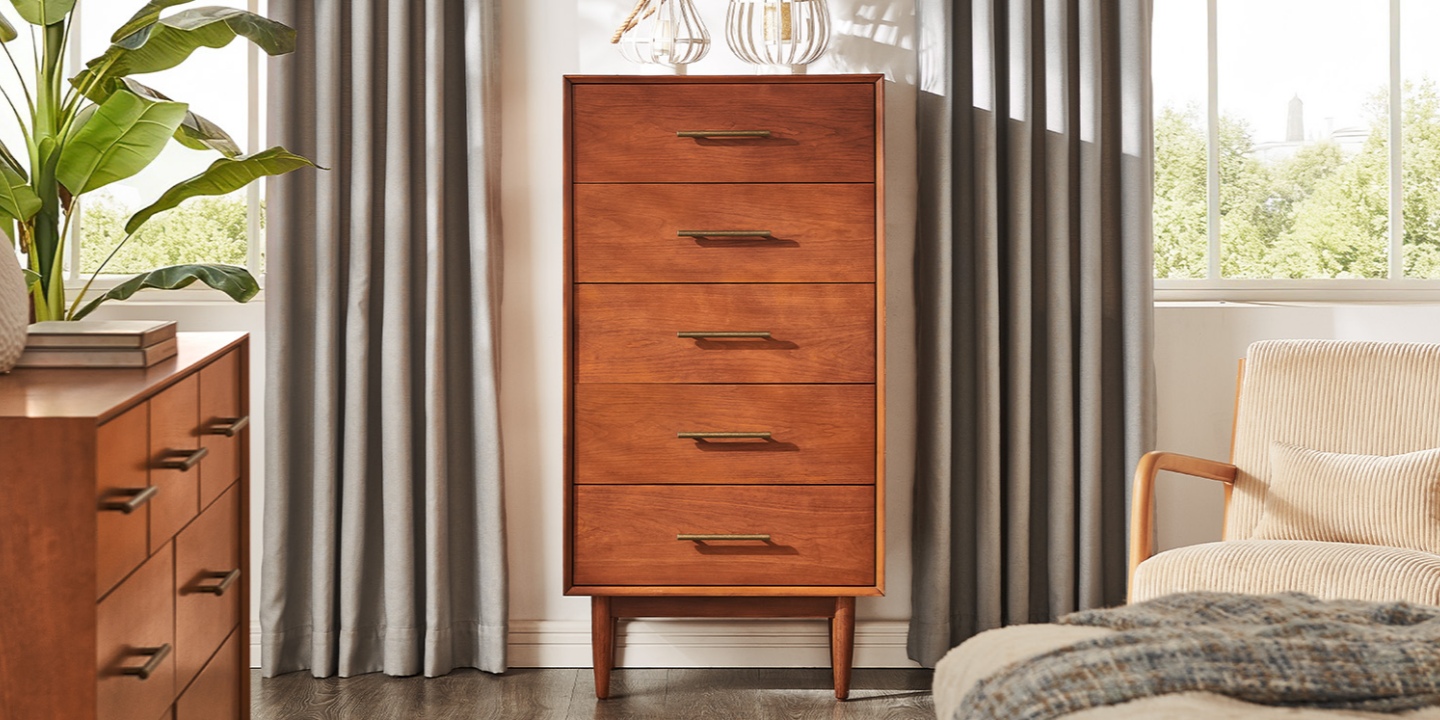
A chest solves the opposite problem. Many chests fall around 40 to 60 inches tall and 30 to 40 inches wide, with some designs being considerably narrower.
Instead of spreading across the wall, a chest uses vertical space that might otherwise go unused. That makes it useful beside a closet, in a bedroom corner, or along a narrow stretch of wall.
The Kaden 26" Mid-Century 5-Drawer Chest is a good example of this approach. Its 26-inch width keeps the footprint compact while five drawers provide useful folded-clothing storage. The narrow profile makes sense when you need additional storage but do not have room for another wide case piece.
The trade-off is reach. Upper drawers sit higher than those of a typical dresser, so they may be less convenient for children or for clothing you access several times a day. A chest top is also smaller and higher, so it is better suited to a lamp or decorative object than a full grooming setup.
Standard Dimensions: Chest vs Dresser at a Glance
Exact dimensions vary by manufacturer and design, but these ranges are useful for initial room planning.
Treat these numbers as planning ranges rather than fixed standards. Always check the exact product dimensions, including drawer projection, before deciding where a piece will go.
Also measure the route into the room. A dresser may fit perfectly against a bedroom wall but still be difficult to move through a narrow hallway, doorway, or stairwell.
Different Types of Dressers and Chests
Once you understand the wide-versus-tall distinction, the furniture terminology becomes easier to follow.
Horizontal and Double Dressers
A horizontal dresser is the familiar low, wide design with multiple rows of drawers. A double dresser is generally wider and often has two groups of drawers.
These pieces work well in primary bedrooms because they provide substantial storage and a large surface without taking up much vertical wall space. A double dresser can also be a practical choice for two people sharing a bedroom when each person needs dedicated drawer space.
Vertical Chests, Tallboys, and Lingerie Chests
A vertical chest stacks drawers upward rather than spreading them across the wall.
A tallboy is generally a particularly tall version of this format. A lingerie chest is typically narrower, with smaller drawers suited to items such as underwear, socks, accessories, and other compact clothing.
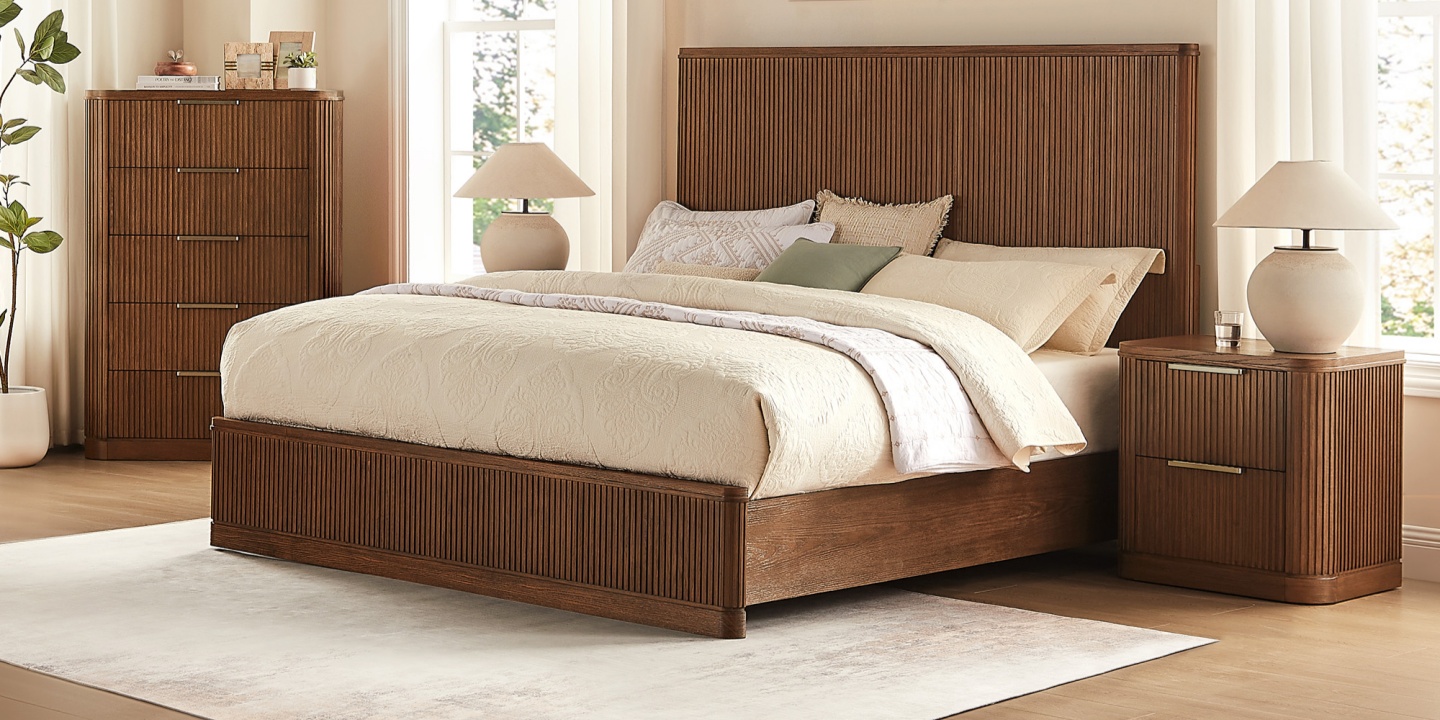
The Finnley 38" Fluted 5-Drawer Chest shows how a vertical chest can remain visually light even with several drawers. Its compact proportions make it suitable for a bedroom corner or other narrow area where a wider case piece would be difficult to place.
Gentleman's, Bachelor's, and Media Chests
Some chest designs are built around more specific storage needs.
A gentleman's chest typically combines drawers with a cabinet or hanging section for clothing that benefits from additional organization.
A bachelor's chest is a smaller, narrower drawer piece that can work in compact bedrooms or other areas where a full-size dresser would be too large.
A media chest is designed around television use, often incorporating cord access, open shelving, or storage for electronics and accessories.
These examples show why furniture labels can overlap. The layout and dimensions tell you more about how a piece will work than the name on the product listing.
Dresser vs Chest of Drawers: Does the Name Change the Rules?
Not really. "Dresser vs chest of drawers" is essentially the same comparison using a longer name for the chest.
A chest of drawers is generally a tall, narrow drawer unit. A dresser is generally lower and wider. Some retailers may call a vertical piece a "tall dresser," but that does not change how much wall or floor space it requires.
When shopping, use the dimensions as your guide.
If a piece is around 40 inches or more in height and has a narrow vertical drawer layout, it will function more like a chest. If it is wide, low, and designed around a broad top, it will function more like a dresser.
The Difference Between a Dresser and a Chest in Daily Use
Dimensions tell you whether a piece will fit. Your daily routine tells you whether you will enjoy using it.
Mirror and Top-Surface Needs
A dresser is usually the better choice if you want a mirror directly above your storage.
Its low height and broad top create a natural grooming area. There is also enough room for a lamp, tray, fragrance, jewelry, or other items that you use regularly.
A chest has a smaller and higher top. You can still hang a mirror above one, but the proportions are less convenient for a traditional sit-down or standing vanity setup.
If a mirror is part of your bedroom plan, start with a dresser.
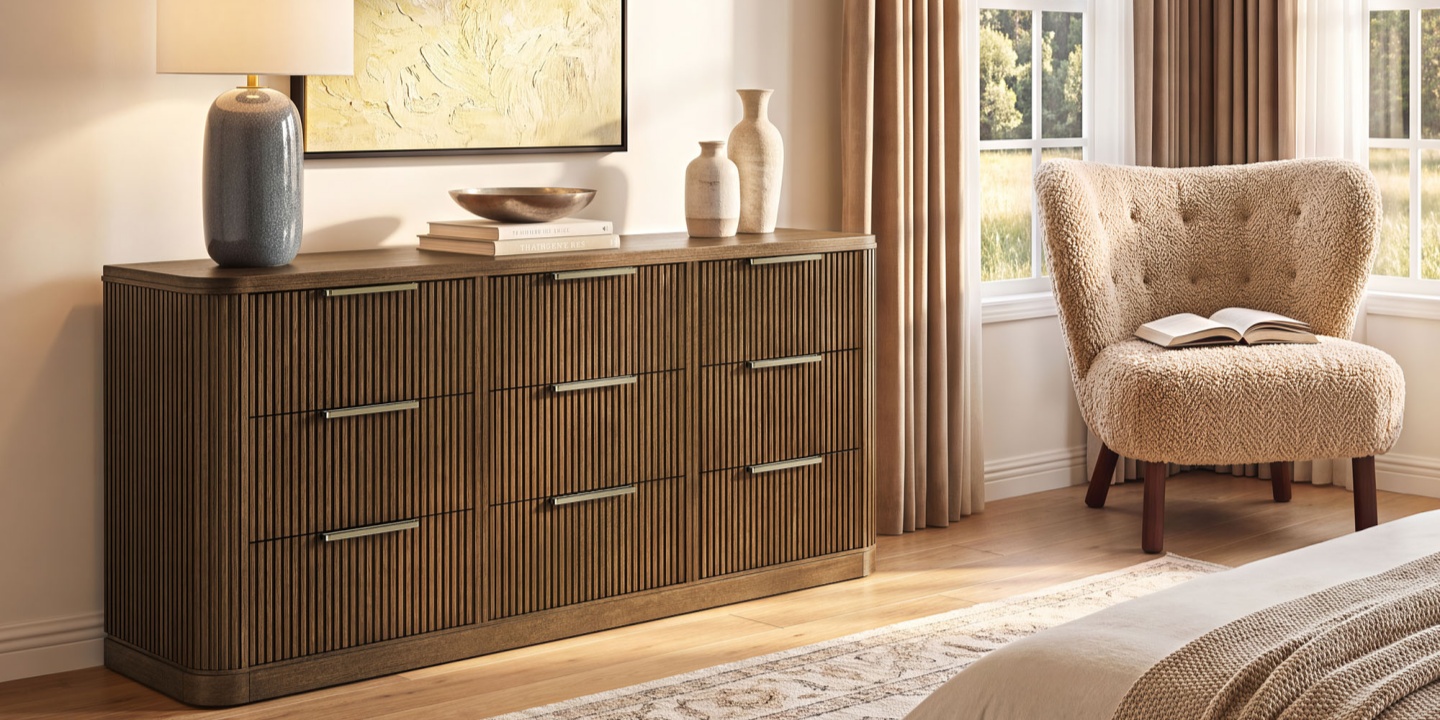
The Finnley 76" Fluted 9-Drawer Dresser illustrates the advantage of a wide format. With nine drawers spread across a broad body, it provides substantial storage while leaving plenty of top surface for a mirror and everyday essentials.
Reach, Access, and Who Uses It
Dresser drawers are generally easier to reach because they sit lower. That can make a dresser the more practical option for children, shorter users, or anyone who frequently opens the top drawers.
A chest puts more of its storage at waist height or above. That is not necessarily a problem, but it does make the upper drawers better candidates for items you use less often.
Think about what you actually store.
A wide dresser makes it easier to spread out larger clothing items such as jeans, sweaters, and bedding. A narrower chest can make it easier to separate smaller categories such as socks, underwear, and T-shirts.
Neither layout is inherently better. The right choice depends on what you reach for most often.
Is a Tall Dresser Called a Chest?
Usually, yes. A tall, narrow piece with drawers stacked vertically is generally called a chest of drawers, chest, or tallboy.
The term "tall dresser" is sometimes used in retail listings, but the furniture may function exactly like a chest. That is why it is better to check width, height, drawer arrangement, and depth instead of relying on the product title.
Which Holds More: A Chest or a Dresser?
A dresser usually offers more total storage, while a chest provides more storage relative to its floor footprint.
A wide dresser can accommodate more drawer width and often makes better use of a long bedroom wall. A double dresser can hold a substantial amount of folded clothing in one piece.
A chest, on the other hand, stacks its drawers vertically. It may provide comparable storage while occupying much less wall width.
So the better question is not simply "Which holds more?"
Ask:
How much wall width do I have?
How much floor space can I give up?
What types of clothing am I storing?
How often do I need the upper drawers?
Do I need a large top surface?
If wall width is the main limitation, a chest can deliver more useful storage without taking over the room. If accessibility and surface area matter more, a dresser is usually the better fit.
How to Choose Between a Dresser and a Chest of Drawers
Use your room and routine as the decision filter.
Once you know which format makes sense, measure the actual space.
Start with wall width and furniture depth. Then check the clearance in front of the drawers. Around 36 inches of open space is a useful planning target for comfortable movement and drawer access, although the exact clearance depends on the room layout and furniture.
Do not forget the delivery route. Measure doorways, hallways, stair turns, and other tight points between the entrance and bedroom.
Pairing a Dresser and Chest in the Same Bedroom
You do not always have to choose one.
For a larger bedroom, a dresser and chest can complement each other. Put the dresser on the main wall where its broad top and low profile make sense. Then use a chest in a corner, beside a closet, or along another narrow section of wall.
This arrangement separates different storage needs.
The dresser can handle everyday clothing, a mirror, and morning essentials. The chest can hold overflow storage, seasonal clothing, accessories, or items you do not need to reach as often.
The result is more storage without requiring two wide pieces of furniture.
Build Quality and Materials That Earn the Space
Once you have chosen the right shape, construction quality becomes more important.
Look at how the frame, drawers, hardware, and finish are made rather than judging a piece only by its appearance.
Dovetail drawer joints are one useful construction detail. They create a mechanically strong connection between drawer sides and fronts and are commonly associated with better-built case furniture.
Soft-close drawer slides are another practical feature. They reduce slamming and make drawers quieter and more controlled during everyday use.
Kiln-dried wood can also be worth looking for. Properly dried wood is more stable than wood with excessive moisture, which matters as furniture moves through normal seasonal changes in humidity.
Veneer and solid wood should not be treated as a simple "good versus bad" choice, either. A quality veneer over a stable core can provide an attractive finish and good dimensional stability, while solid wood can add natural variation and a substantial feel. What matters is how the materials are used and how well the piece is constructed.
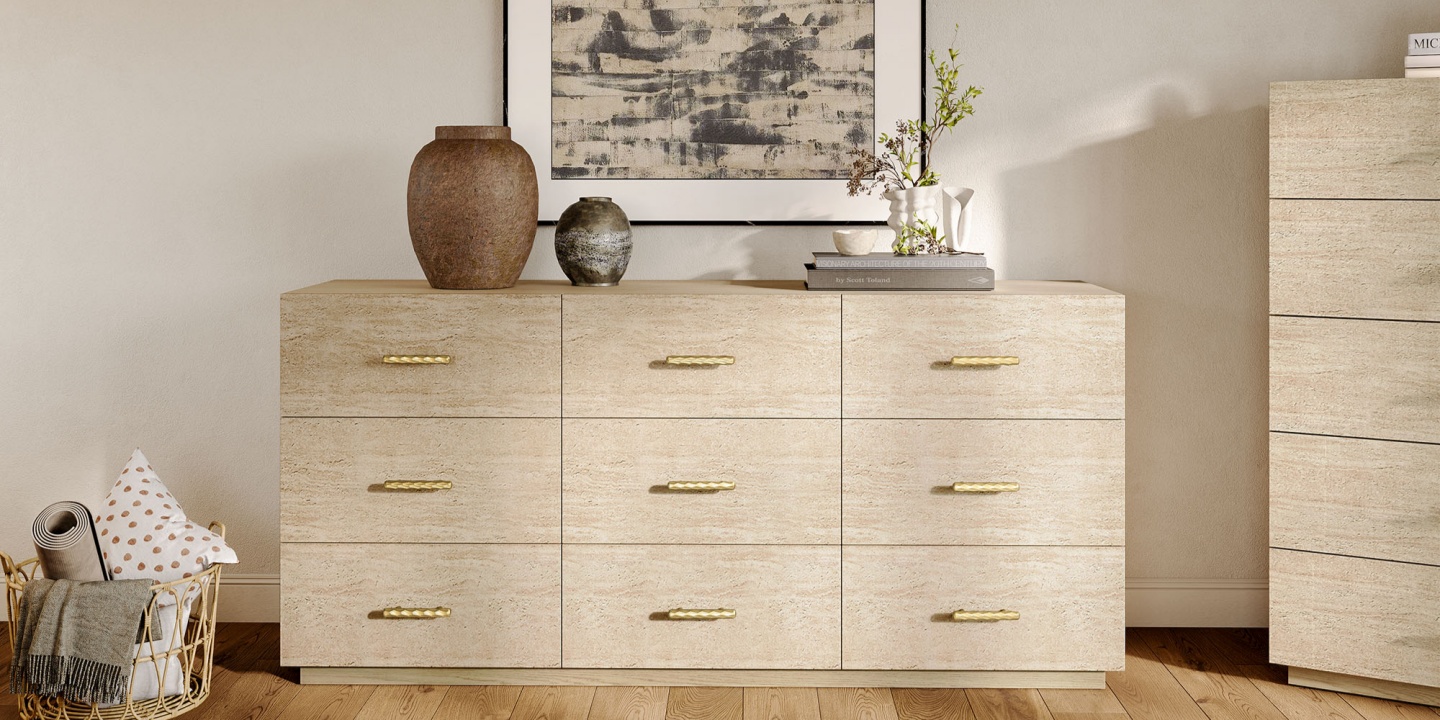
The Renata 80" Travertine-Textured 9-Drawer Dresser is a good example of how material and construction can work together. Its textured American oak veneer creates a distinctive surface, while nine dovetail drawers and soft-close rails focus on everyday function. The point is not that one material is automatically superior; it is that construction details matter once you are comparing furniture in the same category.
Safety: Anchor Tall Storage to the Wall
Tall furniture should be anchored, especially in homes with children or pets.
The U.S. Consumer Product Safety Commission's Anchor It campaign provides guidance on securing dressers, chests, and other furniture to the wall. Follow the manufacturer's anchoring instructions and install the anti-tip hardware as soon as the furniture is placed.
Hernest chests and dressers are supplied with anti-tip hardware. Check the instructions for your specific piece and use the recommended anchoring method.
Also consider the practical side of moving large furniture. A wide dresser can be heavy and awkward to maneuver, so clear the delivery path before it arrives and avoid trying to move a large case piece alone.
FAQs
What is a chest vs. a dresser?
A dresser is generally wide and low, with multiple columns of drawers and a broad top. A chest, or chest of drawers, is generally taller and narrower, with drawers stacked vertically. Both store folded clothing, but they use bedroom space differently.
Is a tall dresser called a chest?
Usually. A tall, narrow piece with vertically stacked drawers is commonly called a chest of drawers, chest, or tallboy. Some retailers use "tall dresser," so check the dimensions and drawer layout rather than relying only on the name.
Which holds more, a chest or a dresser?
A dresser usually offers more total drawer space, while a chest provides more storage within a smaller floor footprint. A wide dresser is better when you have plenty of wall space; a chest is more efficient when horizontal space is limited.
Can you use a chest of drawers as a dresser?
Yes. A chest can provide the same basic folded-clothing storage as a dresser. The main trade-off is the smaller, higher top, which makes it less convenient for a traditional mirror and grooming setup.
What are the standard dimensions of a dresser vs. chest of drawers?
Many dressers are around 30–36 inches tall, 48–72 inches wide, and 18–22 inches deep. Chests are often around 40–60 inches tall, 30–40 inches wide, and 15–20 inches deep. Individual furniture designs vary, so always check the exact dimensions before buying.
Can you have both a dresser and a chest in the same bedroom?
Yes. A dresser can provide a broad, low surface and everyday-access storage, while a chest adds vertical capacity in a corner or narrow area. Using both can be an efficient solution when a single dresser is not enough.
How do I choose between a dresser and a chest of drawers?
Start with your available wall space. Choose a dresser if you have a wide wall, want a mirror, or need a broad surface. Choose a chest if floor space or wall width is limited and you want to add vertical storage. Then check drawer access, storage habits, and delivery clearance before buying.