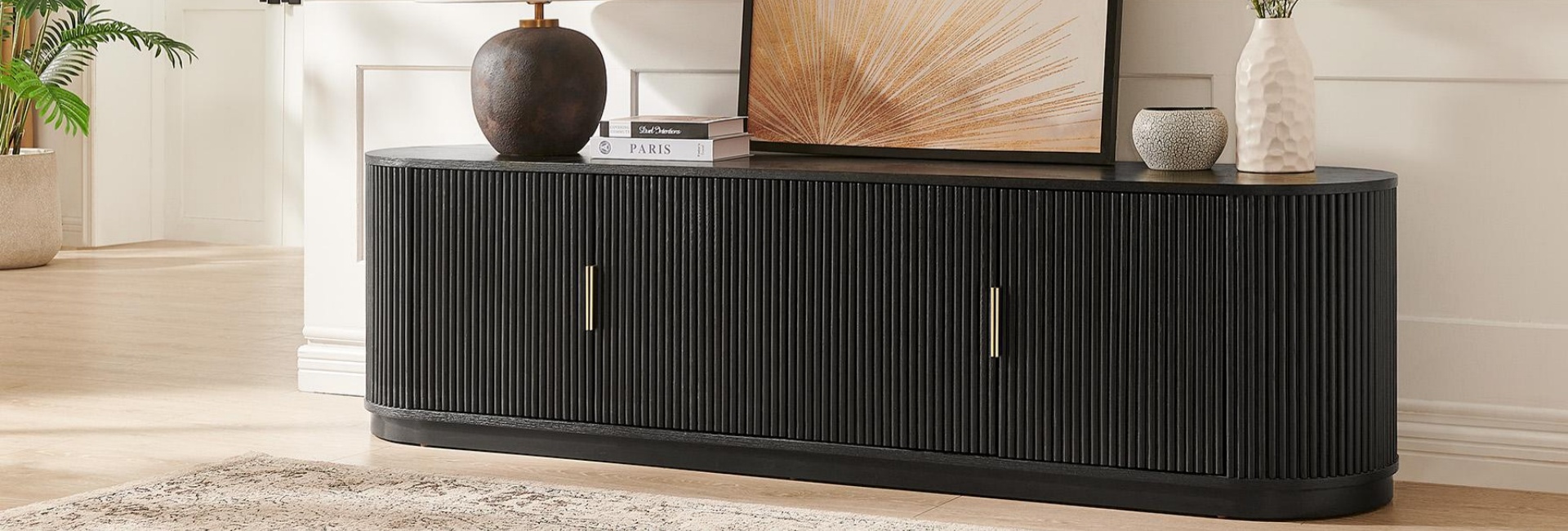
Minimalist TV stands combine simple silhouettes with practical storage, making them suitable for living rooms where visual clutter needs to be kept under control. They do not have to be small or completely free of decorative details. Instead, balanced proportions, understated finishes, and thoughtful storage help create an organized entertainment area without making the room feel empty.
When choosing a minimalist TV stand, consider more than its appearance. TV dimensions, viewing height, room layout, materials, and equipment storage all affect how well a console works in your home.
Table of Contents
- What Makes a TV Stand Truly Minimalist?
- Popular Minimalist TV Stand Ideas for Different Living Spaces
- How to Choose the Right Minimalist TV Stand Size
- Which Materials and Finishes Work Best for Minimalist TV Stands?
- How Much Storage Should a Minimalist TV Stand Have?
- How to Style Minimalist TV Stands Without Creating Clutter
- Floating vs. Freestanding Minimalist TV Stands: Which Is Better?
- Common Mistakes to Avoid When Choosing Minimalist TV Stands
- Conclusion
- FAQs
- Are Minimalist TV Stands Suitable for Small Living Rooms?
- Should a Minimalist TV Stand Be Wider Than the TV?
- Are Floating Minimalist TV Stands Better Than Freestanding Designs?
- What Materials Are Best for Minimalist TV Stands?
- How Do You Hide Cables With a Minimalist TV Stand?
- Can Minimalist TV Stands Provide Enough Storage for Gaming Equipment?
- What Is the Difference Between a Minimalist TV Stand and a Modern TV Stand?
What Makes a TV Stand Truly Minimalist?
Minimalist furniture focuses on simple forms, restrained details, and practical design. A well-designed minimalist TV stand removes unnecessary decoration while retaining the features that make it useful.
Several characteristics help define this style.
Clean Lines and Simple Silhouettes
Minimalist TV stands typically feature straight horizontal lines, smooth surfaces, and clearly defined shapes. They avoid excessive ornamentation, elaborate moldings, and complicated decorative patterns.
A long, rectangular console with flat cabinet fronts, for example, creates a simpler appearance than an entertainment center with multiple display shelves and decorative upper sections.
Understated Hardware
Handles and hardware influence how visually busy a cabinet looks. Recessed pulls, small metal handles, and push-to-open mechanisms help maintain a relatively uninterrupted front surface.
However, minimalist designs can also incorporate subtle decorative details. A simple brass handle or a small metal accent can introduce contrast without overwhelming the overall design.
Restrained Colors and Finishes
Neutral shades such as white, beige, gray, and natural wood are common choices. Dark finishes, including black oak and walnut, can also work well when the overall design remains simple.
Choose a finish that complements the room's flooring, wall color, and surrounding furniture.
Balanced Proportions
Proportion matters because a television naturally becomes a major focal point in a living room. A console that is too narrow, too tall, or visually heavy can make the TV wall feel unbalanced.
Consider the relationship between the television, console, wall, and surrounding furniture when comparing different designs.
Minimalist furniture does not have to be small. An 80-inch or wider console can still look understated when its silhouette is simple and its surface is relatively uncluttered.
Popular Minimalist TV Stand Ideas for Different Living Spaces
Modern minimalist TV stands come in several configurations. The right design depends on your storage needs, available floor space, and preference for concealed or accessible equipment storage.
Floating Minimalist TV Stands
A floating TV stand attaches directly to the wall rather than resting on the floor. The open space underneath keeps more of the floor visible, which can help a room feel less crowded.
This design can work well in contemporary living rooms, compact apartments, and entertainment areas where floor space is limited.
Floating consoles are available with drawers, cabinet doors, or open compartments. Some have completely enclosed fronts, while others combine concealed storage with accessible shelves.
Before choosing a floating minimalist TV stand, check the wall construction and installation requirements. The mounting system must be compatible with the wall material and the loaded weight of the console. Some walls may require additional reinforcement.
Also plan the position of electrical outlets and cable openings before installation. Without a suitable cable route, wires may remain visible underneath the console.
Low-Profile Minimalist TV Stands
A low-profile TV stand has a relatively short height and an elongated horizontal shape. Its proportions create a grounded look without adding too much visual weight to the TV wall.
This style can work particularly well with large televisions, contemporary interiors, and living rooms with low sofas. The lower cabinet also leaves more visible wall space above the furniture.
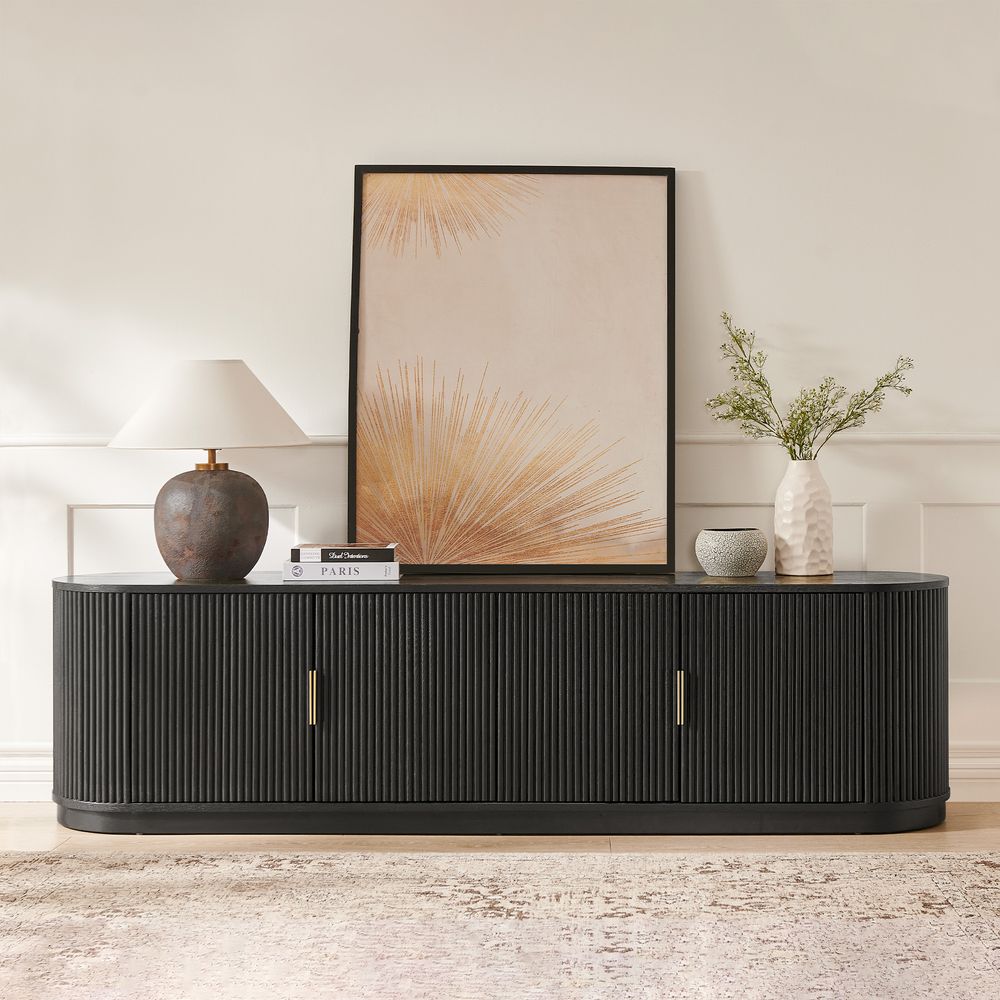
For example, Hernest's Rolf 84-Inch Oak Media Console measures 84 inches wide and 22.4 inches high, making it an option for living rooms that need a long console without a tall cabinet profile.
Its oak finish, rounded edges, and fluted detailing add texture, while the light brass handles introduce a subtle contrast. The combination gives the piece a slightly retro character while keeping its overall silhouette relatively simple.
When choosing a low-profile design, consider the television's height as well. A console that looks attractive in a product image may position the screen too low or too high once paired with your sofa.
Rolf 84-Inch Oak Media Console
View Product
Minimalist TV Stands With Closed Storage
Closed storage is useful for keeping everyday accessories out of sight.
Cabinet doors and drawers provide space for remote controls, game controllers, cables, manuals, and other small items. Flat-front doors and understated hardware help maintain a simple exterior.
If you use several electronic devices, look for adjustable shelves or compartments with suitable internal dimensions. These features make it easier to organize equipment of different sizes.
Minimalist TV Stands With Open Shelving
Open shelving provides convenient access to media devices, streaming equipment, and gaming accessories. It can also break up the solid cabinet structure, making a large console look less bulky.
However, open compartments require some organization. Multiple devices, loose cables, and miscellaneous accessories can make the area look busy.
A combination of closed cabinets and one or two open compartments offers a practical alternative. You can keep smaller belongings concealed while leaving frequently used equipment accessible.
How to Choose the Right Minimalist TV Stand Size
A minimalist TV stand should support the television securely while maintaining balanced proportions within the room. Three measurements are particularly important: width, height, and depth.
Match the Console Width to Your TV
Television sizes are measured diagonally, not horizontally. A 65-inch television, for example, does not have a screen that is 65 inches wide.
For a standard 16:9 screen, approximate screen widths are:
These figures describe the screen area, not the complete television with its frame or feet.
Before buying a TV stand, measure the actual width of your television and check the position of its base. Some TVs have two feet near the outer edges, while others use a central pedestal.
The complete base or both feet must fit securely on the console surface. Also check that the stand has a suitable weight capacity.
A console slightly wider than the TV often creates a more balanced arrangement and provides additional space for a soundbar or a small decorative object. However, the ideal width also depends on the wall and surrounding furniture. A very wide console may overwhelm a narrow wall, while a console that barely accommodates the TV can look disproportionate in a large living room.
Check the Height Against Your Seating Position
TV stand height affects screen position and viewing comfort.
Start by sitting on your main sofa in your usual viewing position and measuring the height of your eyes from the floor.
The center of the television screen should generally be close to your seated eye level. This is also consistent with the viewing-position guidance in Philips' TV placement guide.
When calculating the required console height, use the television's actual screen height rather than its diagonal measurement.
For example, if your television has a screen height of approximately 32 inches, its center is about 16 inches above its supporting surface. If your seated eye level is 40 inches, a console around 24 inches high would place the screen center close to that level.
This is a starting calculation. The position of the TV feet, screen within its frame, seating angle, and reclining position can affect the final result.
If you plan to wall-mount the television, you can choose the console height more independently, while still considering the proportions of the overall arrangement.
Consider the Console Depth
Depth is easy to overlook when comparing minimalist TV stands.
A shallow design may suit a small living room, but it might not accommodate a wide television base, soundbar, gaming console, or other equipment.
Measure the deepest part of your TV base and any devices that will sit inside or on top of the console. Leave enough room for plugs and cables, which may extend beyond the back of electronic equipment.
Also consider how far the console projects into the room. A deep cabinet may interfere with walkways or sit too close to a sofa or coffee table.
For smaller rooms, choose a console that provides sufficient internal space without extending too far into the available floor area.
Which Materials and Finishes Work Best for Minimalist TV Stands?
The material and finish of a TV console influence how it looks alongside flooring, walls, sofas, and other furniture.
Minimalist interiors often use a limited color palette, but different materials and textures can still create visual interest.
Natural Wood Finishes
Oak and walnut are popular choices for wooden minimalist TV stands because their natural grain adds warmth without requiring elaborate decoration.
Light oak works particularly well in rooms with white walls, neutral upholstery, and natural textiles. Its lighter appearance can help create a relaxed, open atmosphere.
Walnut and darker wood finishes create a stronger visual presence. They can complement beige sofas, warm lighting, and other furniture with rich wood tones.
When selecting a wood finish, consider the existing flooring and larger furniture pieces. Matching every wood tone exactly is not necessary, but their undertones should work together. For example, a warm brown console may look disconnected in a room dominated by cool gray finishes unless another element ties the palette together.
White, Beige, and Light Neutral Finishes
White and beige minimalist TV stands suit bright, contemporary interiors.
These finishes can blend with light-colored walls, making the television cabinet feel less visually dominant. A combination of light wood and beige can also add depth compared with an entirely white cabinet.
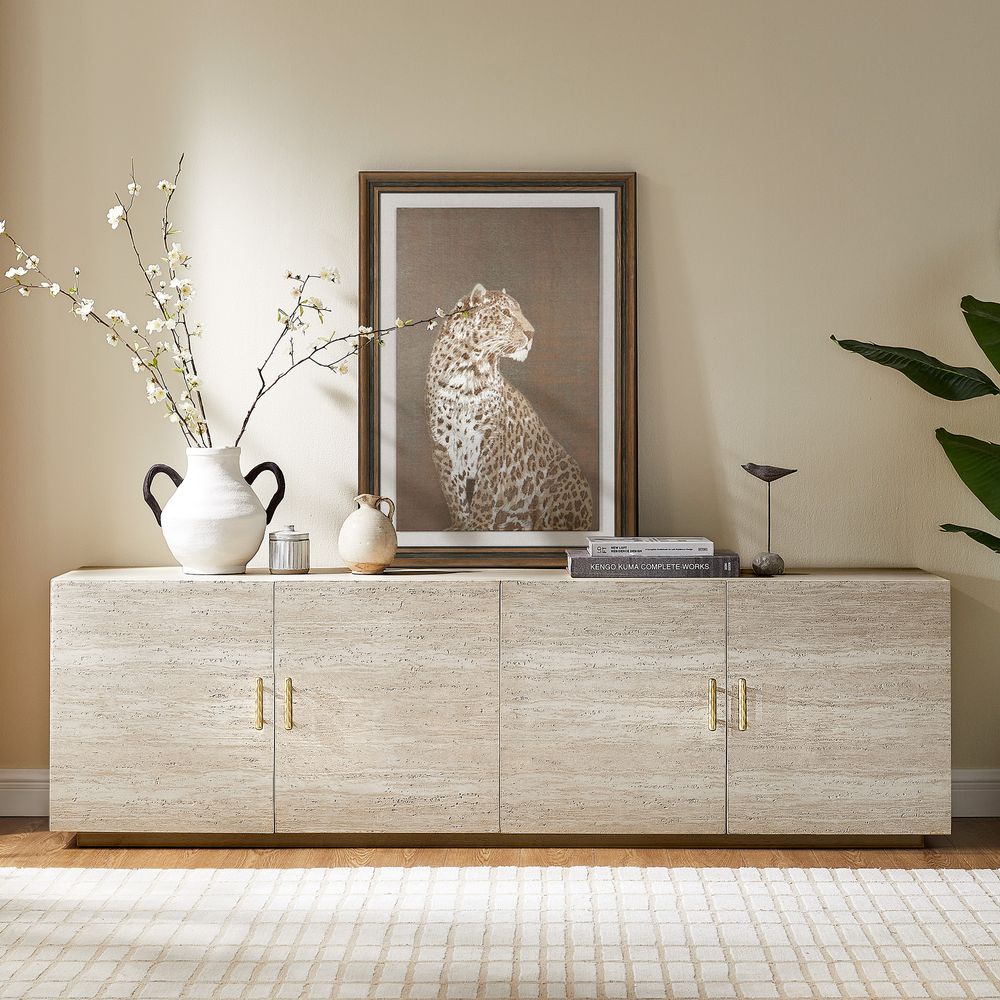
For a warmer, more textured interpretation of minimalism, Hernest's Renata 84-Inch Travertine-Textured Media Console combines a light gray oak finish with beige resin and a travertine-inspired surface.
Its elongated cabinet shape and enclosed storage keep the overall design streamlined, while the textured surface and hammered brass-toned hardware add visual depth. These details make it a suitable option for organic modern and contemporary living rooms that favor neutral colors and natural-looking materials.
Black and Dark Finishes
Black oak, dark brown, and other deep finishes create contrast against light walls.
A dark console can also visually connect with the television's black screen, allowing the two pieces to feel more integrated when the TV is switched off.
However, dark furniture may look heavy when combined with a dark wall, bulky surrounding furniture, and limited natural light.
Pair a black minimalist media console with lighter walls, warm wood flooring, or neutral upholstery to balance the darker finish.
Renata 84-Inch Travertine-Textured Media Console
View Product
How Much Storage Should a Minimalist TV Stand Have?
Minimalist design should make everyday organization easier without sacrificing useful storage.
Before choosing a console, list the devices and accessories you actually use. Common items include:
-
Streaming devices and media players.
-
Gaming consoles and controllers.
-
Soundbars and audio equipment.
-
Routers and other connected devices.
-
Remote controls, batteries, and cables.
-
DVDs, games, and other media accessories.
The amount of space required depends on the size and number of these items.
Check Internal Storage Dimensions
Compare the internal dimensions of the compartments with your equipment rather than relying only on the exterior dimensions of the furniture.
A cabinet may look spacious from the outside but have limited usable space because of internal dividers, shelf placement, or hardware.
Consider Remote Access and Device Placement
Gaming consoles, media players, and certain audio devices may be easier to use in open compartments.
This arrangement provides easier access to ports, buttons, and remote-control signals.
If you plan to store a device behind a solid cabinet door, check how its remote communicates with the device. Infrared remotes generally require a clear signal path, while other devices may use different wireless technologies.
Plan for Ventilation and Cable Management
Electronic equipment produces heat during operation. Placing devices in tightly enclosed compartments can restrict airflow, particularly when several devices are stacked together.
Check the ventilation requirements in the manufacturer's instructions for each device. Allow the required clearance around vents and avoid covering ventilation openings.
The same consideration applies to televisions. Sony's ventilation guidance explains why ventilation openings should remain unobstructed and why the specific TV manual should be consulted for clearance requirements.
Cable management also deserves attention. Look for rear cutouts, openings between compartments, and enough space for plugs to connect without forcing cables into tight bends.
Both Hernest consoles mentioned earlier include four cord cutouts in the back panel, allowing cables to pass through the rear rather than hanging visibly over the front or sides.
Keep in mind that cable openings help organize wires but do not automatically provide sufficient ventilation. Electronic equipment still needs appropriate airflow.
How to Style Minimalist TV Stands Without Creating Clutter
A simple console can still look busy if its top surface becomes overcrowded. A few carefully chosen accessories can add personality while leaving enough room for everyday use.
Keep Decorative Objects Limited
Choose a small selection of accessories rather than filling the entire surface. A ceramic vase, a short stack of books, or one sculptural object can add character without taking up too much space.
Vary Height and Shape
Combine objects with different heights to create visual interest. For example, a low decorative bowl and a taller vase can work together without requiring many accessories.
Coordinate Materials
If the console has a natural oak finish, accessories made from ceramic, linen, stone, or muted metal can complement its appearance.
For a travertine-inspired surface, neutral ceramics and warm-toned decorative pieces can reinforce the material palette.
Keep the TV and Equipment Areas Clear
Avoid placing accessories where they interfere with the TV base, soundbar, or equipment controls.
Use cable clips or organizers to keep loose wires out of sight, particularly when the television and console are positioned separately.
Consider the Entire TV Wall
Artwork, wall-mounted lighting, curtains, and nearby furniture all influence how the TV area looks. Consider these elements together before adding decorative shelves or larger accessories around an already wide screen.
Floating vs. Freestanding Minimalist TV Stands: Which Is Better?
Both installation types can create a minimalist appearance, but they suit different homes and practical requirements.
A floating minimalist TV stand is worth considering when you want to keep the floor visible and have a suitable wall for installation.
A freestanding console may be more practical if you prefer flexible furniture placement, need substantial enclosed storage, or expect to move house.
Neither design is automatically better. Your wall construction, storage requirements, and room arrangement should guide the decision.
Consider Stability and Household Safety
A minimalist appearance should never come at the expense of stability.
Make sure the console is designed to support the weight of your TV and equipment. Follow the manufacturer's assembly and installation instructions.
In homes with young children, televisions and furniture should also be secured appropriately. The U.S. Consumer Product Safety Commission's Anchor It! guidance recommends anchoring televisions and furniture to help prevent tip-over incidents.
Keep cords away from areas where children can pull on them, and avoid placing tempting objects on higher furniture surfaces.
For floating consoles, verify the appropriate mounting hardware and wall support before installation. Consult a qualified installer if you are unsure about the wall construction or load requirements.
Common Mistakes to Avoid When Choosing Minimalist TV Stands
Even a well-designed piece of furniture can look out of place if it does not suit the room or television. Keep these points in mind before purchasing.
1. Choosing a Console That Is Too Narrow: Check that the TV's complete base fits securely and that the console has sufficient weight capacity.
2. Prioritizing Appearance Over Storage: Choose a storage layout that accommodates your devices and accessories without making frequently used equipment difficult to access.
3. Ignoring Equipment Ventilation: Check the ventilation requirements of your electronic devices before placing them inside enclosed compartments.
4. Forgetting Cable Access: Consider the location of electrical outlets and whether the console has suitable openings for connecting your equipment.
5. Choosing a Finish That Conflicts With Existing Furniture: The console does not need to match every item in the room, but its color and material should work with the undertones of your flooring, walls, and larger furniture pieces.
6. Adding Too Many Decorative Accessories: Use a limited selection of decorative objects to keep the TV stand surface from becoming overcrowded.
7. Skipping Measurements Before Ordering: Measure the TV, available console space, walkways, and internal storage compartments. Also check the product's weight capacity, delivery dimensions, and installation requirements.
Conclusion
Choosing a minimalist TV stand comes down to balancing appearance with everyday function. Consider your TV dimensions, viewing height, storage requirements, and room layout before deciding between a floating or freestanding design.
Whether you prefer a low-profile wooden console, a cabinet with concealed storage, or a design with open shelving, look for proportions and finishes that complement the rest of your living room. A suitable combination can keep your entertainment area organized without making the space feel empty.
FAQs
Are Minimalist TV Stands Suitable for Small Living Rooms?
Yes. Minimalist TV stands can work well in small living rooms because their simple silhouettes and restrained finishes help reduce visual clutter. Floating models leave more floor area visible, while slim freestanding consoles provide storage without taking up as much depth. Choose a design that fits your TV dimensions and does not obstruct walkways.
Should a Minimalist TV Stand Be Wider Than the TV?
A TV stand is often slightly wider than the television because the additional surface space creates visual balance and can accommodate accessories such as a soundbar. However, there is no fixed width difference for every setup. Check that the TV's feet or base fit securely and that the overall proportions suit your wall.
Are Floating Minimalist TV Stands Better Than Freestanding Designs?
Neither is universally better. Floating TV stands create an open appearance beneath the cabinet and can work well in contemporary or compact spaces. Freestanding models are generally easier to move and offer more flexibility in placement. Your wall construction, installation preferences, and storage needs should determine which style is more suitable.
What Materials Are Best for Minimalist TV Stands?
Wood, engineered wood with wood veneers, and neutral finished surfaces are all common options. Oak and walnut add natural grain and warmth, while white and beige finishes create a lighter appearance. Stone-inspired textures can also work in contemporary interiors. Consider the room's existing materials, your preferred finish, and the care instructions for the specific furniture.
How Do You Hide Cables With a Minimalist TV Stand?
Choose a console with rear cable cutouts or built-in cable management openings. Group related cables using clips or sleeves, and route them toward nearby outlets. Keep power cables and connections accessible when needed. If your television is wall-mounted, plan the cable route before installation to avoid visible wires between the screen and console.
Can Minimalist TV Stands Provide Enough Storage for Gaming Equipment?
Yes. Many minimalist TV stands combine closed cabinets with open compartments for gaming consoles, controllers, and accessories. Before purchasing, compare the internal compartment dimensions with your devices and check their ventilation requirements. Open shelves may be preferable for equipment that generates substantial heat or needs regular access.
What Is the Difference Between a Minimalist TV Stand and a Modern TV Stand?
Modern TV stands cover a broad range of contemporary furniture styles, including pieces with decorative panels, mixed materials, geometric details, and bold finishes. Minimalist TV stands place greater emphasis on simple silhouettes, restrained decoration, and visual balance. A modern TV stand can be minimalist, but not every modern design follows minimalist principles.