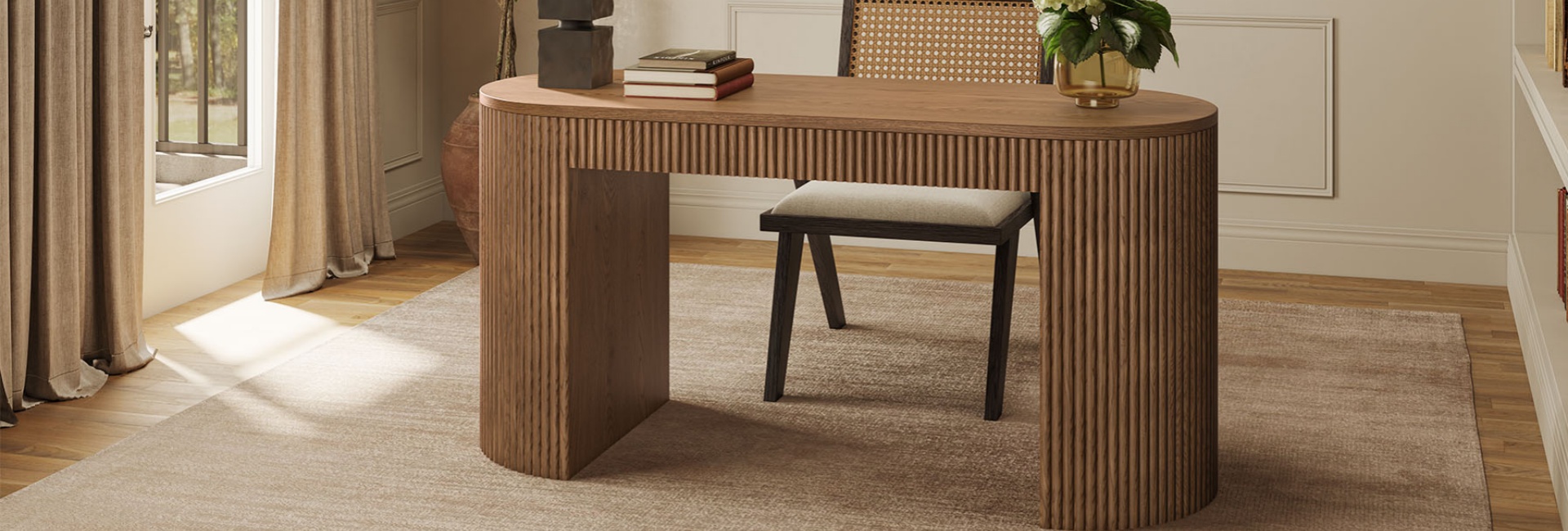
A home office does not need a separate room, custom built-ins, or a perfectly styled backdrop to work well. It needs a desk that fits your daily tasks, storage for the things you use, reliable lighting, and a layout that makes sense for your space.
The best home office ideas start with a few practical questions. Do you work from home every day, manage household paperwork, study, or use a laptop occasionally? Is your workspace in a spare bedroom, an unused corner, or one end of the living room? Your answers will help determine which furniture you need and how much room to leave for everything else.
Home office inspiration can help you explore different layouts and materials, but a room that looks appealing in a photograph may not suit your routine. A large desk can overwhelm a small bedroom, open shelving can expose piles of paperwork, and a window can create screen glare at certain times of day.
Start with the furniture, storage, and lighting. Once those essentials are in place, you can add colors, textures, and personal details without making the room harder to use.
Table of Contents
- 1. Plan Your Home Office Around the Way You Work
- 2. Choose a Home Office Desk That Fits Your Tasks
- 3. Make a Small Home Office Work Without Wasting Floor Space
- 4. Use a Bookcase to Organize Work Materials and Display Personal Items
- 5. Choose Cabinet Storage for Items You Want to Keep Out of Sight
- 6. Plan Lighting for Screens, Reading, and Video Calls
- 7. Choose Colors and Materials That Work Together
- 8. Create a Video-Call Background That Looks Natural
- 9. Adapt Your Office to a Guest Bedroom, Living Room, or Shared Space
- 10. Add Personal Details Without Creating More Clutter
- 11. Home Office Design Trends to Consider in 2026
- 12. A Practical Plan for Putting Your Home Office Together
- FAQs
- What are some must-haves for a home office?
- What are the key trends for home offices in 2026?
- What is a good home office setup?
- How can I create a home office in a small space?
- How do I choose the right home office desk?
- Is a bookcase useful in a home office?
- How can I make a home office look less cluttered?
- Where should I put a desk for the best natural light?
- How do I make a home office fit into a living room or guest bedroom?
- What colors work well in a home office?
1. Plan Your Home Office Around the Way You Work
Before shopping for a desk or bookcase, identify what your workspace needs to accommodate. A laptop and notebook require less surface area than two monitors, a keyboard, printed documents, and several ongoing projects. Someone who handles household bills may need file storage, while a creative workspace may need room to spread out materials.
Separate everyday essentials from occasional supplies
Make a short list of the items you use most often, such as your computer, notebook, pens, headphones, charging cables, and desk lamp. These should be easy to reach without covering the entire desktop.
Less frequently used items, including spare paper, archived documents, and extra cables, can go into drawers, baskets, or a nearby cabinet. This distinction helps you decide whether a desk with built-in drawers will be enough or whether you need another storage piece.
Measure the entire work area
Measure the available width and depth, then account for the chair, door swings, outlets, windows, and nearby furniture. If the desk will sit beneath a shelf or wall-mounted cabinet, check the vertical clearance too.
A desk may fit against a wall but still obstruct a closet or leave too little room to pull out a chair. Mark the proposed footprint on the floor with painter's tape before buying. It is an inexpensive way to see how the furniture will affect movement through the room.
2. Choose a Home Office Desk That Fits Your Tasks
The desk is usually the main piece of furniture in a home office, so its dimensions and storage should reflect how you work. A wider surface can help accommodate multiple monitors and paperwork, while a shallower desk may be easier to fit into a bedroom or shared living space.
Choose a larger desk for equipment and paperwork
If your work involves multiple screens, printed documents, or several projects at once, look for enough usable surface area to keep your keyboard and writing space clear.
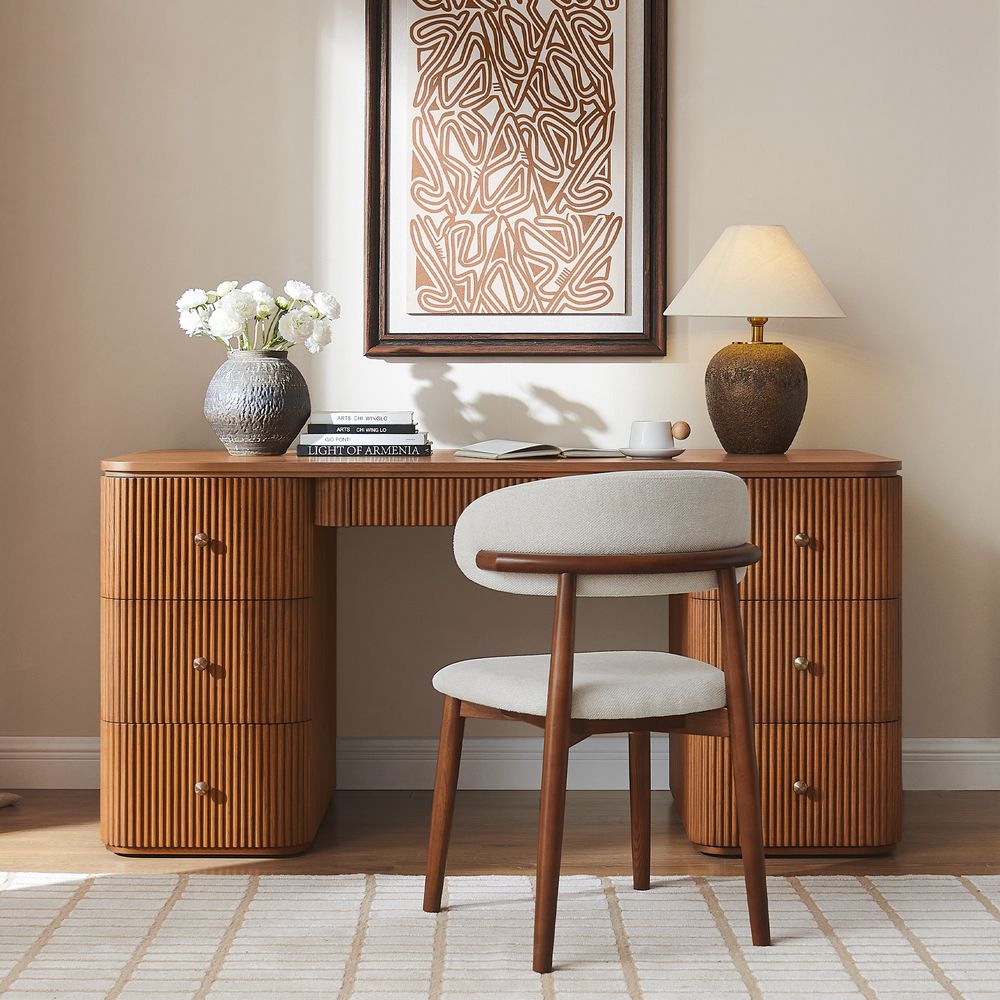
The Hernest Lundbord 64-Inch Desk measures 63.8 inches wide by 29.3 inches deep and 30.9 inches high. Its warm brown oak finish, solid wood fluting, refined handles, and symmetrical design give it a substantial presence. Seven drawers provide separate places for office supplies, notes, and paperwork.
The desk is crafted from American oak wood and plywood with oak veneers, and its drawers feature dovetail joints. Its recommended weight capacity is 300 pounds, according to the product specifications.
Before choosing a desk of this size, consider the space needed for your monitors, keyboard, and accessories. The 29.3-inch depth provides room for a range of work setups, but you should still compare it with your available floor space and equipment dimensions.
Consider a shallower desk for a multipurpose room
A workspace in a living room or guest bedroom needs to support work without dominating the room. A streamlined design and a more restrained depth can make the desk easier to incorporate into an existing layout.
The Hernest Himmel 60-Inch Desk measures 60 inches wide by 25 inches deep and 30.3 inches high. Its brown oak finish, rounded corners, and waterfall design create a softer outline. Three integrated drawers offer space for frequently used supplies.
The desk is crafted from solid wood and plywood with American oak veneers, and its drawers feature dovetail joints. Its recommended weight capacity is 200 pounds.
Compared with the Lundbord, the Himmel is 4 inches shallower, which may make it easier to accommodate in a shared room. However, the right choice still depends on your equipment. Measure your monitor stand, keyboard, and other accessories before deciding how much desktop depth you need.

Himmel 60-Inch Desk
View Product
3. Make a Small Home Office Work Without Wasting Floor Space
Small home office ideas work best when every piece has a clear purpose. An unused corner, alcove, or section of a bedroom can become a functional workspace without a renovation or a room full of furniture.
Choose a location that supports daily work
Look for a spot with a nearby outlet, reasonable daylight, and enough clearance to sit down comfortably. A straight desk against a wall is often easier to fit than a corner-shaped model, particularly when the room also needs space for a bed, dresser, or seating.
In a bedroom, keep closet doors and walking paths clear. In a living room, check whether the chair can be tucked away when the desk is not in use. These practical details matter more than filling an empty corner with furniture.
Use vertical space instead of adding more furniture
When floor space is limited, wall-mounted shelves can hold books, notebooks, and small supplies without taking up additional room. Keep everyday items within easy reach and reserve higher shelves for things you use less frequently.
You can also use one bookcase to define the office area, provided it does not block natural light or make the room feel cramped. Avoid adding a separate shelving unit, cabinet, and divider before determining what the desk itself can store.
Create a visual boundary
A small workspace can feel distinct from the rest of the room without a physical partition. A rug beneath the desk, artwork on the wall, or a different paint color can establish a boundary while preserving an open layout.
Choose one approach that works with the room. For example, a desk against a muted accent wall may be enough to distinguish the work area from a nearby bed or sofa.
4. Use a Bookcase to Organize Work Materials and Display Personal Items
A bookcase is especially useful when you need reference books, binders, and frequently used materials close at hand. It can also display a few personal objects, but its primary purpose should remain clear: making things easier to find.
Organize shelves by function
Group books and folders by subject or frequency of use. Keep frequently consulted materials on accessible shelves and use labeled boxes or baskets for small items such as charging cables, notepads, and stationery.
Leave some open space between groups. Shelves do not need to be filled from end to end, and a few carefully placed objects can make the arrangement easier to maintain.
Place heavier books on lower shelves and follow the manufacturer's load limits. For tall freestanding furniture, use the supplied anti-tip hardware where provided and follow the installation instructions.
Decide what belongs on open shelves
Open shelving works well for items you want to access quickly or display. It is less suitable for loose paperwork, spare electronics, and miscellaneous supplies that accumulate over time.
If you need both types of storage, use a bookcase for books and selected objects, then place less attractive or rarely used supplies in a closed cabinet. This combination is particularly practical when the office shares a bedroom or living room.
Keep the display simple
Repeat a few colors or finishes rather than matching every object. Wood shelves, neutral storage boxes, dark book covers, and a plant can work together without looking overly coordinated.
If your desk already has pronounced wood grain or detailed drawer fronts, keep the shelves relatively restrained. The furniture can provide most of the visual interest while the bookcase keeps everyday materials organized.
5. Choose Cabinet Storage for Items You Want to Keep Out of Sight
A home office does not always need a traditional filing cabinet. A storage cabinet can hold paperwork, spare supplies, electronics, and household items while fitting into a bedroom or living room.
Choose the cabinet according to what you plan to store. Adjustable shelves are useful when items vary in height, glass doors keep selected objects visible, and solid doors conceal supplies that do not need to be on display.
Use glass doors for books and selected display pieces
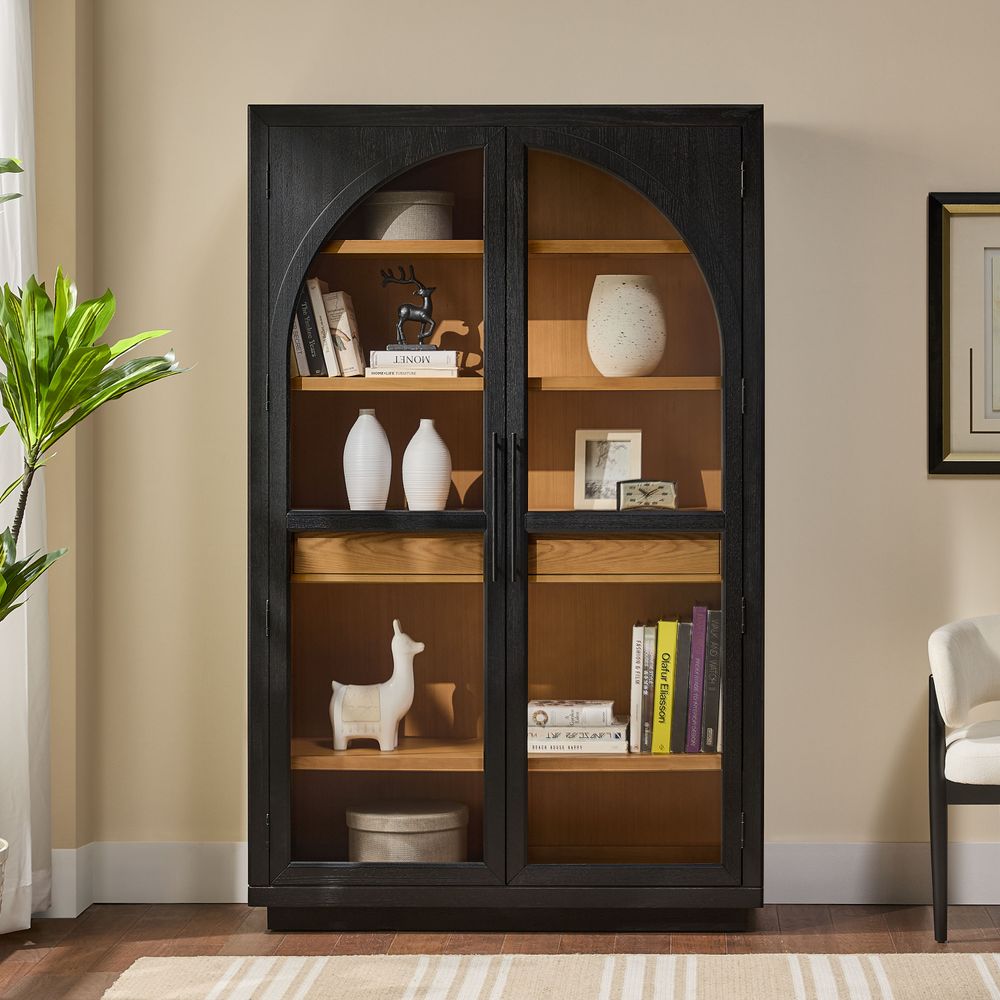
The Hernest Valborg 47-Inch Oak Cabinet measures 47.1 inches wide by 15.9 inches deep and 75.9 inches high. Its black oak finish, arched details, glass doors, and tall profile make it a distinctive storage piece.
The cabinet is crafted from American solid oak and engineered wood with oak veneers. Its product specifications list a recommended weight capacity of 200 pounds. It arrives fully assembled, with handles to be fitted. Anti-tip hardware is included, and Hernest recommends using it to help protect against tipping.
Its tall profile makes measuring particularly important. Check ceiling clearance, delivery access, and the space between the cabinet and nearby furniture before ordering. Inside, use the shelves for books, organized boxes, and a limited selection of display pieces. Glass-front storage looks best when the visible contents are kept reasonably tidy.
Consider a textured cabinet for a lighter palette
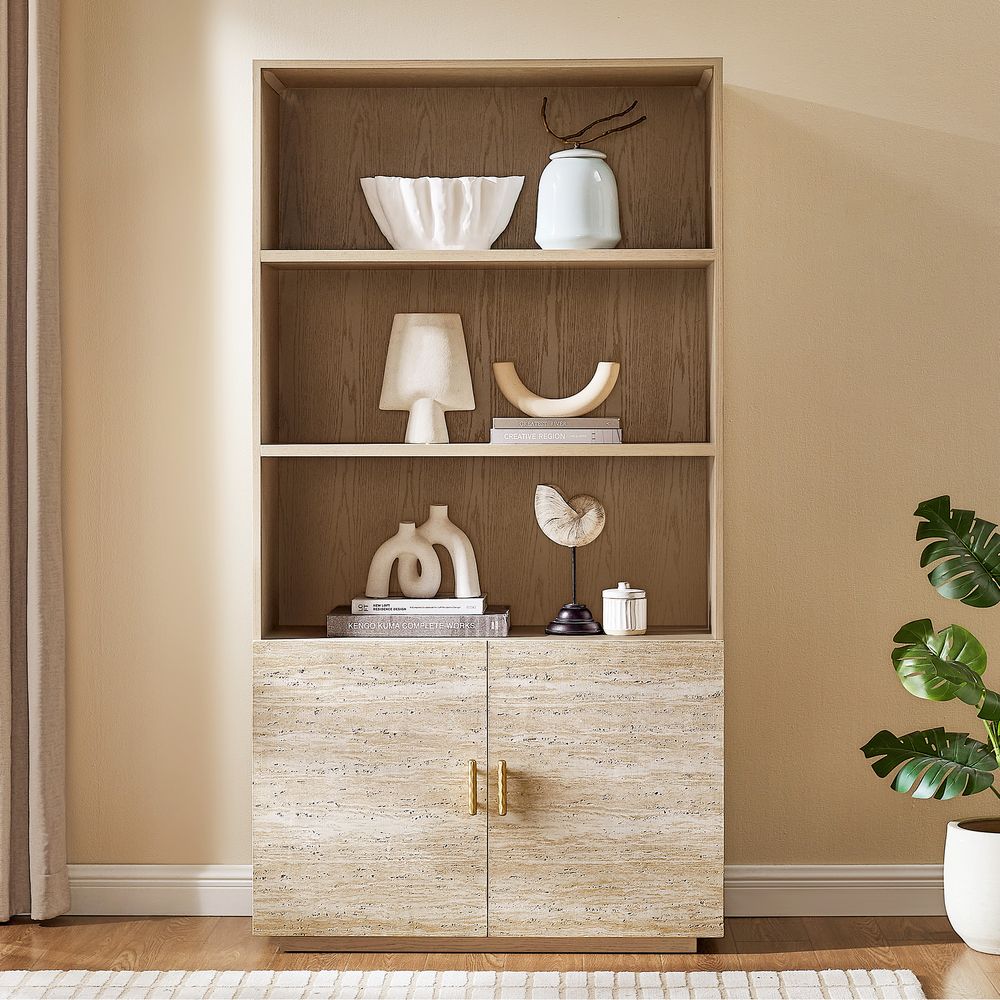
For a lighter color scheme, the Hernest Renata 41-Inch Travertine-Textured Cabinet features a beige, travertine-inspired surface and brass-toned hammered hardware. It measures 41.3 inches wide by 18.1 inches deep and 78.7 inches high.
The cabinet combines resin and engineered wood with American oak veneers. Its storage layout includes two fixed shelves and two adjustable shelves behind two doors. It arrives fully assembled, with handles to be fitted.
Renata can suit an office that shares space with a bedroom or living room, particularly if you want to conceal paperwork and supplies. Its 18.1-inch depth and 78.7-inch height should be considered when planning the layout. Follow the manufacturer's safety guidance when installing and positioning the cabinet.
Renata 41-Inch Travertine-Textured Cabinet
View Product
6. Plan Lighting for Screens, Reading, and Video Calls
Natural light can make a home office more pleasant, but its intensity and direction change throughout the day. A practical lighting plan accounts for screen glare, reading, video calls, and work after dark.
Position the desk to manage glare
If sunlight reflects on your screen, try placing the desk perpendicular to a window rather than directly facing it. This arrangement may help balance daylight and reflections, although the best position depends on the window's direction and your working hours.
Test the layout during the times you normally work. Curtains or shades can soften direct sunlight, while keeping tall furniture away from the main window can help preserve the amount of daylight entering the room.
Combine task and ambient lighting
A desk lamp directs light toward reading and writing, while a ceiling fixture, floor lamp, or wall light brightens the rest of the room. Using both can make evening work more comfortable than relying on a single bright lamp.
If the office doubles as a guest bedroom or living room, choose lighting that suits both functions. Separate switches or adjustable lamps make it easier to brighten the desk during work and create softer light when the room is used for relaxation.
7. Choose Colors and Materials That Work Together
A home office can feel organized without looking clinical. Natural wood, warm neutrals, muted greens, soft blues, and earthy browns are versatile starting points, but the best palette depends on your flooring, existing furniture, and available daylight.
Start with one dominant material
Wood introduces grain and visual variation into a workspace. A brown oak desk, for example, can work with cream walls, woven textures, and darker accents. The wood tones do not need to match exactly; similar undertones and a mix of finishes can help the pieces relate without looking like a matching set.
Glass, metal hardware, linen, and stone-inspired textures can add contrast. A textured cabinet beside a smoother desk introduces another material without requiring a bold wall color.
Use color strategically
If you want to refresh the room without replacing furniture, consider painting the wall behind the desk or adding artwork in a coordinated palette. Deep green, muted blue, and clay can create contrast, while lighter colors may help a compact room feel more open.
Test paint samples in the actual room before making a final decision. A shade that looks neutral in bright daylight may appear warmer or darker under evening lighting.
8. Create a Video-Call Background That Looks Natural
If you regularly take video calls, the wall behind your desk deserves some attention. It does not need to resemble a professionally styled set. A few useful or meaningful objects can make the background feel considered without creating extra work.
A bookcase, framed artwork, plant, or cabinet can add depth. Keep the center of the camera frame relatively simple, and check whether a bright window behind you makes your face appear dark.
Think about the background from the camera's perspective rather than decorating the entire wall. Adjusting the desk angle, lamp placement, or position of a shelf may be enough to improve the view.
Lundbord 64-Inch Desk
View Product
9. Adapt Your Office to a Guest Bedroom, Living Room, or Shared Space
When a home office shares a room with another function, the layout should make both uses possible. The goal is to leave enough room for each activity rather than fitting in as much furniture as possible.
Home office in a guest bedroom
Position the desk where it does not interfere with the bed, closet, or path to the door. A desk with drawers can keep paperwork organized, while a bookcase or cabinet provides additional storage when needed.
Leave enough clear surface for a guest to set down a bag or personal belongings. If the room is small, start with the desk's built-in storage before adding another freestanding piece.
Home office in a living room
Choose a desk that complements the existing furniture. If your home office shares a living room, coordinate the desk with nearby pieces such as a media console or side table. For a cohesive look, explore mid-century modern TV stands with warm wood tones, clean lines, or textured cabinet fronts that complement your workspace. Drawers and closed storage can also keep office materials out of sight when the desk is not in use.
Keep chargers, notebooks, and documents in designated places. If the desk faces the main seating area, a simple desktop can prevent the work zone from becoming the room's visual focus.
A home office shared by two people
Plan separate work zones before buying furniture. Consider whether both people need monitors, how often they take calls, and where their individual supplies will go.
If the room cannot accommodate two full desks, agree on how the shared surface will be used and where equipment should be stored when it is not needed. This avoids a setup in which one person must move everything before the other can work.
10. Add Personal Details Without Creating More Clutter
Decor should support the workspace rather than create another surface to clean. Choose a few things you genuinely enjoy or use, such as a plant, framed print, favorite book, or tray for small essentials.
Artwork can add color without taking up desk space, while a rug can define the work area. Choose plants according to the room's light and the amount of care you can provide. If you collect decorative objects, rotate them instead of displaying everything at once.
Before adding an accessory, ask whether it serves a purpose, adds something you value, or helps connect the room's design. If it does none of those things, leave the space open. A clear desktop can be more useful than one filled with decorative items.
11. Home Office Design Trends to Consider in 2026
Home office inspiration in 2026 includes practical storage, natural light, personal details, and furnishings that make workspaces more inviting. These are design directions to consider, not rules every homeowner needs to follow.
In April 2026, Houzz published a roundup of popular new home offices based on photos saved by its community between December 15, 2025, and March 15, 2026. The article discusses storage, natural light, inviting furnishings, and personal touches. A later Houzz home-office roundup from July 2026 also highlights storage solutions, built-ins, and considered design details.
These roundups reflect the spaces that attracted attention on Houzz; they do not prove that every homeowner is adopting the same designs. The following ideas offer practical ways to adapt that inspiration to your own workspace.
Warm wood and tactile finishes
Wood grain, textured surfaces, and warm neutrals can keep a workspace from feeling overly utilitarian. You do not need to redesign the entire room. A wood desk, a textured storage piece, and a fabric lampshade can introduce contrast without making the space feel busy.
Storage that works with the design
Instead of adding storage only after clutter appears, choose pieces that suit both the room and the items you need to keep. A bookcase can hold reference materials, a cabinet can conceal extra supplies, and desk drawers can accommodate everyday essentials.
The right combination depends on what you store and whether you prefer to keep items visible or behind closed doors.
Flexible spaces with more than one purpose
A home office may also serve as a guest bedroom, reading area, or part of the living room. Furniture that complements the existing palette can help the workspace blend into its surroundings.
A desk with drawers, a suitable storage cabinet, and lighting that works beyond office hours can support multiple uses without requiring a dedicated office suite.
Curved details and softer shapes
Rounded furniture edges and arched details can soften a room dominated by straight walls, screens, and rectangular furniture. Houzz's 2026 U.S. emerging design trends report discusses curved forms and softer geometry as broader home-design trends.
For a home office, this could mean choosing a desk with rounded corners or adding a curved accessory. Use the idea where it complements the existing furniture rather than treating it as a requirement.
Layered lighting for different tasks
A layered lighting plan remains useful regardless of the latest trend. Natural light, a desk lamp, and ambient lighting serve different purposes. Choose fixtures that suit the room and provide enough light for the tasks you do most often.
Valborg 47-Inch Black Oak Cabinet
View Product
12. A Practical Plan for Putting Your Home Office Together
You do not need to change every part of the room at once. Work through these decisions in order so each purchase solves a real problem.
-
Define the main use. Decide whether the room is for full-time work, occasional paperwork, studying, or several purposes.
-
Measure the available space. Record wall width, desk depth, door swings, window placement, outlets, and chair clearance.
-
Choose the desk. Match its dimensions and storage to your equipment and work habits.
-
Plan storage. Use drawers for everyday supplies, a bookcase for reference materials, and a cabinet for items you prefer to conceal.
-
Check the lighting. Test daylight and screen glare, then add task and ambient lighting as needed.
-
Connect the materials. Repeat a few colors or finishes so the desk, storage, and decor work together.
-
Add personal details last. Finish with artwork, plants, textiles, and objects that make the space feel like yours.
A successful home office does not depend on having a separate room or following every new design trend. It depends on choosing furniture that fits, organizing supplies around your routine, and making the lighting and layout work for the space you have. Start with those practical decisions, then add the details that make the office a place you enjoy using.
FAQs
What are some must-haves for a home office?
The essentials are a desk that fits your work, a suitable chair, reliable lighting, and storage for frequently used items. Depending on your routine, you may also need a monitor, charging access, or a printer. Start with the equipment you use every day rather than buying accessories before you know what the room needs.
What are the key trends for home offices in 2026?
Home-office examples published by Houzz in 2026 highlight practical storage, natural light, personal details, and inviting furnishings. Broader home-design coverage also discusses warm materials and softer shapes. These are sources of inspiration rather than requirements. Consider a wood desk, concealed storage, or layered lighting if those features suit your room and routine.
What is a good home office setup?
A good setup gives you enough desk space for your equipment, a chair that supports your working position, suitable lighting, and storage within easy reach. Position the screen to limit glare, keep frequently used supplies accessible, and leave enough clearance to move comfortably around the desk.
How can I create a home office in a small space?
Start by measuring an underused wall, bedroom corner, or alcove. A desk with a shallower depth may preserve more floor space, while wall shelves can hold books and supplies without adding another freestanding piece. Choose furniture that fits the room's primary function and avoid adding storage until you know what the desk can accommodate.
How do I choose the right home office desk?
Compare the desk's width, depth, height, storage, and recommended weight capacity with your equipment and available space. A wider surface may suit multiple monitors and paperwork, while a shallower desk may fit a shared room more easily. Check the material details and assembly requirements before purchasing, too.
Is a bookcase useful in a home office?
A bookcase is useful when you need reference books, binders, and frequently used materials close at hand. Organize smaller items in boxes or baskets and leave some open space between groups. If most of your supplies are loose paperwork or electronics you prefer to conceal, a cabinet with doors may be more practical.
How can I make a home office look less cluttered?
Give frequently used items a designated place and keep only the essentials on the desktop. Use drawers for small accessories, a bookcase for reference materials, and closed storage for supplies you do not want visible. Avoid filling every shelf with decorative objects, and return items to their designated places at the end of the day.
Where should I put a desk for the best natural light?
Try placing the desk near a window, often perpendicular to it, to balance daylight and screen reflections. The best position depends on the window's direction and when you work. Test the setup at different times of day, and use curtains or shades if direct sunlight becomes distracting.
How do I make a home office fit into a living room or guest bedroom?
Choose a desk and storage pieces that complement the room's existing furniture. A rug or artwork can define the work zone without blocking movement, while drawers and closed cabinets help keep supplies out of sight. Leave enough room for the space's primary function, whether that is sleeping, relaxing, or entertaining.
What colors work well in a home office?
Warm neutrals, natural wood, muted greens, soft blues, and earthy browns are versatile options. Lighter colors may help a compact room feel more open, while a deeper accent wall can distinguish the work area. Consider the room's natural light and existing furniture, and test paint samples before committing to a color.