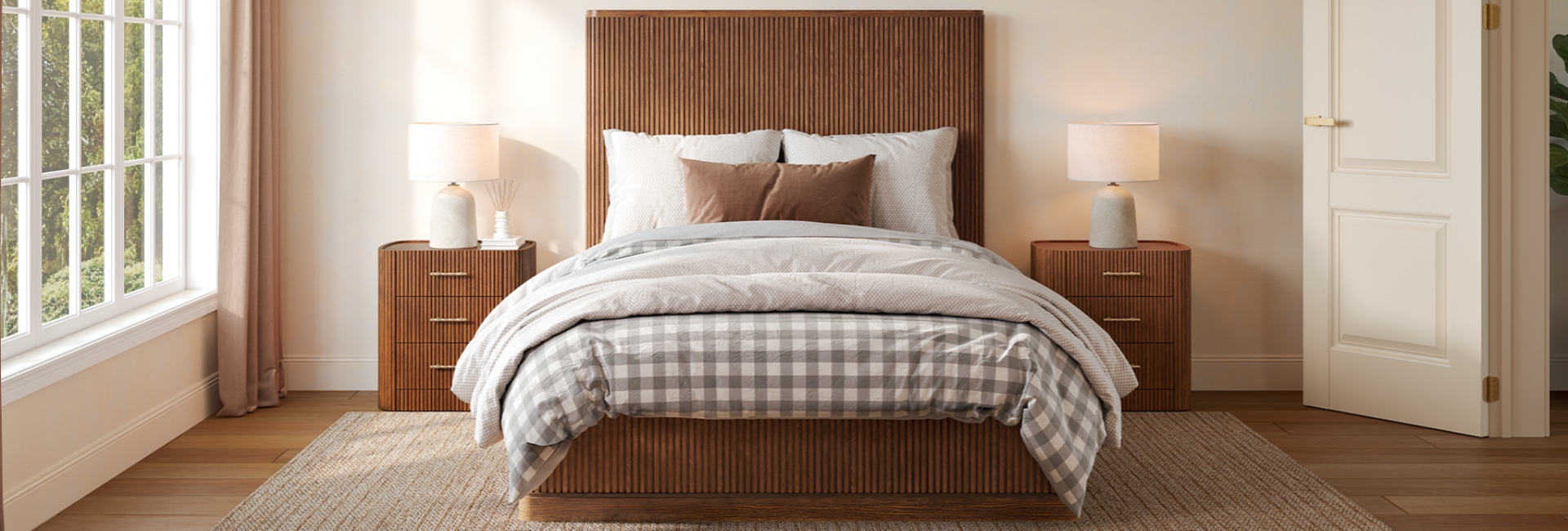
A contemporary bed should do more than look good. It should fit your room, support your mattress, and complement the way you use your bedroom. From fluted wood frames to upholstered headboards and sculptural silhouettes, contemporary beds offer plenty of ways to bring character into a space.
This guide compares five Hernest beds, highlighting their materials, dimensions, design features, and practical considerations. You'll also learn how to choose the right frame, coordinate bedroom furniture, and check mattress compatibility before buying.
Table of Contents
- What Makes a Bed Contemporary?
- 5 Contemporary Beds Worth Considering
- 1. Skugga Fluted Bed: A Light Finish With Architectural Texture
- 2. Renata Travertine-Textured Bed: A Neutral Look With Stone-Inspired Detail
- 3. Harold King Bed: Visible Oak Grain and a Taller Headboard
- 4. Walter Linen-Blend Bed: Upholstered Comfort With a Wood Frame
- 5. Orson Bed: Dark Wood and Sculptural Curves
- Comparing the 5 Contemporary Beds
- How to Choose the Right Contemporary Bed
- Contemporary Bedroom Styling Ideas
- What to Check Before Ordering a Bed
- Final Thoughts: Finding the Best Contemporary Bed for Your Room
- FAQs
- What is a contemporary bed?
- What is the difference between a contemporary bed and a modern bed?
- Which contemporary bed is best for a neutral bedroom?
- Are wood beds a good choice for contemporary bedrooms?
- Is an upholstered bed better than a wood bed?
- How do I choose the right bed size for my room?
- What mattress thickness works with these Hernest beds?
- How should I style a contemporary bed?
- What should I check before buying a contemporary bed online?
What Makes a Bed Contemporary?
Contemporary bed design reflects current preferences for clean lines, considered proportions, tactile materials, and functional details. Unlike a strict historical style, contemporary design can combine elements from different influences, including minimalism, organic modern interiors, and mid-century-inspired furniture.
A contemporary bed doesn't have to be completely plain. Subtle fluting, rounded corners, textured finishes, or an upholstered headboard can add visual interest without making the bedroom feel crowded.
Several features are worth considering when shopping for a contemporary bed:
-
Clean silhouettes: Simple outlines and balanced proportions help a bed work with different bedroom layouts.
-
Distinctive materials: Wood grain, linen-blend upholstery, and stone-inspired finishes create contrast and texture.
-
Practical construction: Slat systems, center supports, and mattress compatibility matter as much as appearance.
-
A considered footprint: The overall width, depth, and height should suit the room and leave enough space for movement.
-
Versatile styling: Neutral finishes and restrained detailing make it easier to update bedding, rugs, lighting, and accent colors over time.
The best contemporary beds balance these visual and practical qualities. Before choosing a design, consider how much space you have, whether you prefer a wood or upholstered frame, and how the bed will work with your existing furniture.
5 Contemporary Beds Worth Considering
These five Hernest beds take different approaches to contemporary design. Skugga emphasizes vertical fluting and a light finish, Renata introduces a travertine-inspired texture, Harold highlights cerused oak grain, Walter combines wood with linen-blend upholstery, and Orson uses dark wood with sculptural detailing.
1. Skugga Fluted Bed: A Light Finish With Architectural Texture
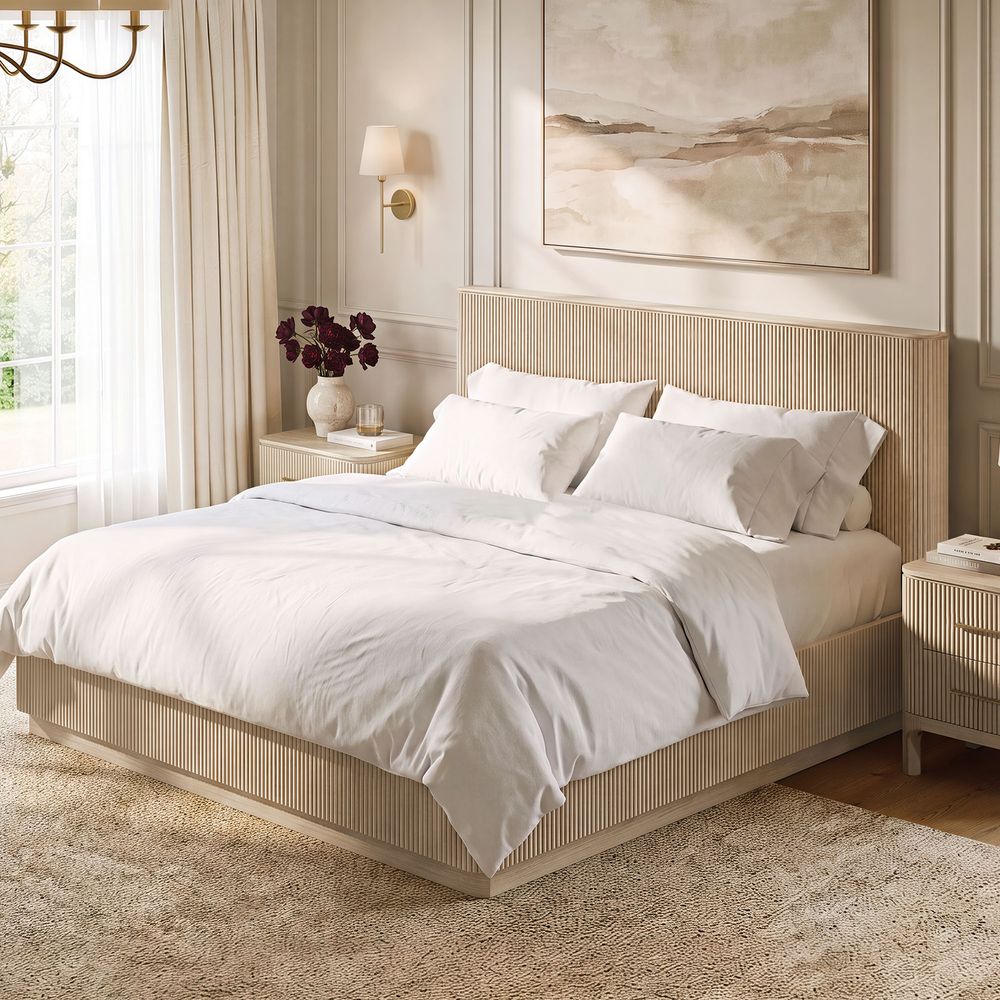
The Skugga Fluted King Size Bed is a strong option for a bedroom that needs texture without a dark or visually heavy finish. Its whitewashed rubberwood appearance, vertical fluting, and rounded footboard create a defined silhouette while keeping the overall look relatively light.
Rather than relying on ornate decoration, Skugga uses repeated vertical lines to give the headboard and frame more depth. The detail is noticeable enough to anchor the bed against a plain wall, but it can still work with understated bedding and simple nightstands.
What stands out
-
Whitewashed rubberwood finish with visible grain.
-
Vertical fluted detailing for a more dimensional look.
-
Rounded footboard edges that soften the frame's outline.
-
Six middle support legs and a plywood slat base.
-
Recommended weight capacity of 700 lb.
The dimensions are 90.9 inches wide, 86.2 inches deep, and 48 inches high. The wide headboard is an important consideration: measure the wall and the available space between nearby furniture before ordering. The listed mattress space is 76 inches wide by 80.9 inches deep, and the recommended mattress thickness is 8 inches.
How to style it
A restrained palette helps the whitewashed finish stand out. Try warm-white bedding, a textured ivory rug, and nightstands in a complementary wood tone. If you want more contrast, add charcoal cushions or a dark ceramic lamp rather than introducing several competing patterns.
Keep the wall above the headboard relatively simple. A large, understated artwork or a pair of wall lights can complete the layout without competing with the fluting.
Before you buy
Confirm the mattress dimensions and foundation requirements before purchasing. Also, don't judge fit from the bed's mattress size alone: the headboard and overall frame can extend well beyond the mattress footprint.
Best for: Bedrooms that need a light wood look, vertical texture, and a prominent headboard.
Skugga Fluted King Size Bed
View Product
2. Renata Travertine-Textured Bed: A Neutral Look With Stone-Inspired Detail
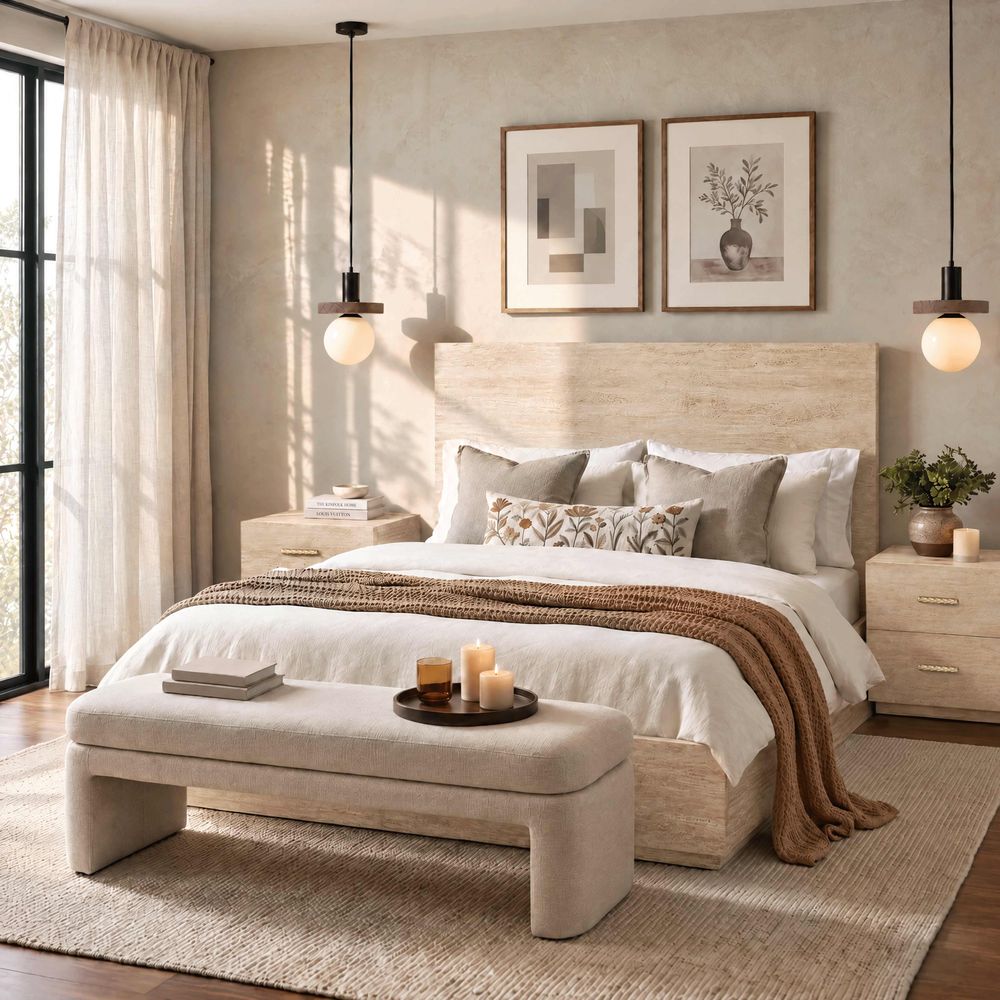
The Renata Travertine-Textured King Size Bed takes a different approach to a contemporary bedroom. Instead of emphasizing visible fluting or upholstery, it uses a travertine-inspired surface to introduce subtle variation and a stone-like quality.
Its light gray oak and beige resin finish works particularly well in rooms built around warm neutrals, natural textures, and uncomplicated furniture. The visual appeal comes from the surface itself, so the rest of the bedroom doesn't need elaborate decoration.
What stands out
-
Light gray oak and beige resin finish.
-
Travertine-inspired texture with a layered, weathered appearance.
-
Six middle support legs.
-
Recommended weight capacity of 700 lb.
The product dimensions as 80.7 inches wide, 85.4 inches deep, and 59.1 inches high. The headboard measures 80.7 inches wide, 3.14 inches deep, and 43.2 inches high. These measurements are useful when planning the wall arrangement, especially if you intend to install artwork or lighting above the bed.
The listed mattress space is 76 inches wide by 79.5 inches deep, with a recommended mattress thickness of 8 inches.
How to style it
Build the room around a small group of complementary materials. Beige bedding, a wool-look rug, and curtains in an oatmeal or soft gray tone can reinforce the bed's muted finish. Natural wood nightstands can add warmth, while a ceramic lamp or a textured vase introduces another surface without overwhelming the room.
Avoid pairing every item with a stone-like finish. Too many similar textures can make the room feel repetitive. Instead, mix smooth bedding, woven fabrics, and wood to create contrast.
Before you buy
Renata is a substantial piece, with a listed product weight of 363.98 lb and packaging in three boxes. Check delivery access, stairways, and the route into the bedroom, not just the space where the bed will sit.
Best for: Bedrooms that use warm neutrals, layered materials, and a stone-inspired finish as a visual focal point.
Renata Travertine-Textured King Size Bed
View Product
3. Harold King Bed: Visible Oak Grain and a Taller Headboard
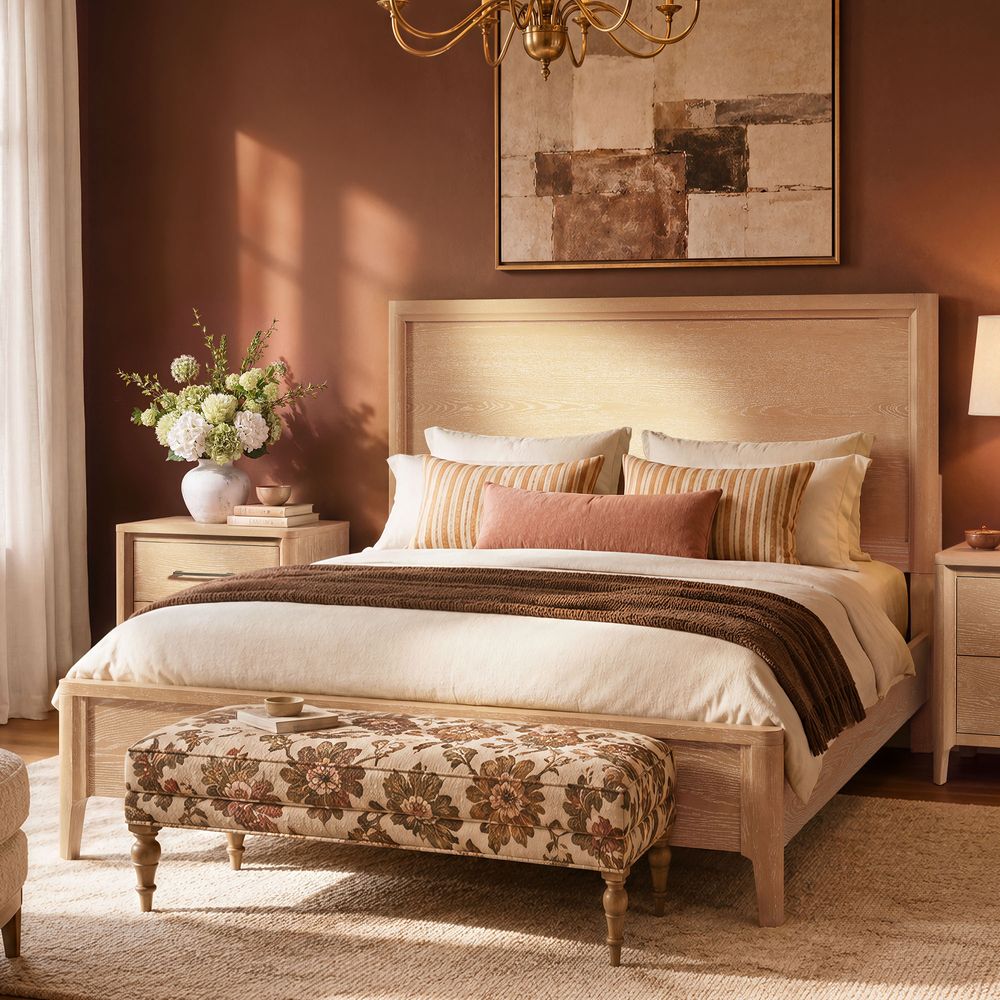
The Harold King Bed offers a more wood-focused interpretation of contemporary design. Its light brown cerused oak finish highlights the grain, while beveled corners and a straightforward frame keep the overall silhouette composed.
The cerused finish adds visual variation without relying on a strong color contrast. This makes Harold a flexible choice for bedrooms that combine contemporary furniture with transitional or more traditional accents.
What stands out
-
Light brown cerused oak finish.
-
Rubberwood and engineered wood construction with American oak veneers.
-
Wire-brushed grain and a layered wood glaze.
-
Four middle support legs.
-
Recommended weight capacity of 700 lb.
Harold measures 79.1 inches wide, 85.4 inches deep, and 60.2 inches high overall. Its listed headboard height makes wall planning particularly important. If you want to hang artwork, install sconces, or position a decorative panel behind the bed, measure the available vertical space before settling on a layout.
The mattress space measures 77 inches wide by 81.86 inches deep, and the recommended mattress thickness is 8 inches.
How to style it
Let the wood grain guide your color choices. Cream bedding, muted green accents, or a warm gray throw can complement the light brown finish without making the room too uniform. Nightstands with simple fronts and modest hardware will keep the focus on the headboard.
For lighting, consider wall-mounted sconces or slim bedside lamps. These can free up surface space on the nightstands and help frame the bed symmetrically. If you prefer artwork above the headboard, choose a piece whose scale suits the wall rather than squeezing a small frame into a large empty area.
Before you buy
Harold is 60.2 inches high overall, so check the height of windows, sloped ceilings, and existing wall fixtures. This product weight is 167.62 lb, and the bed ships in three boxes. Assembly is required.
Best for: Bedrooms that favor visible wood grain, a taller headboard, and a finish that can work with contemporary or transitional furniture.
Harold King Size Bed
View Product
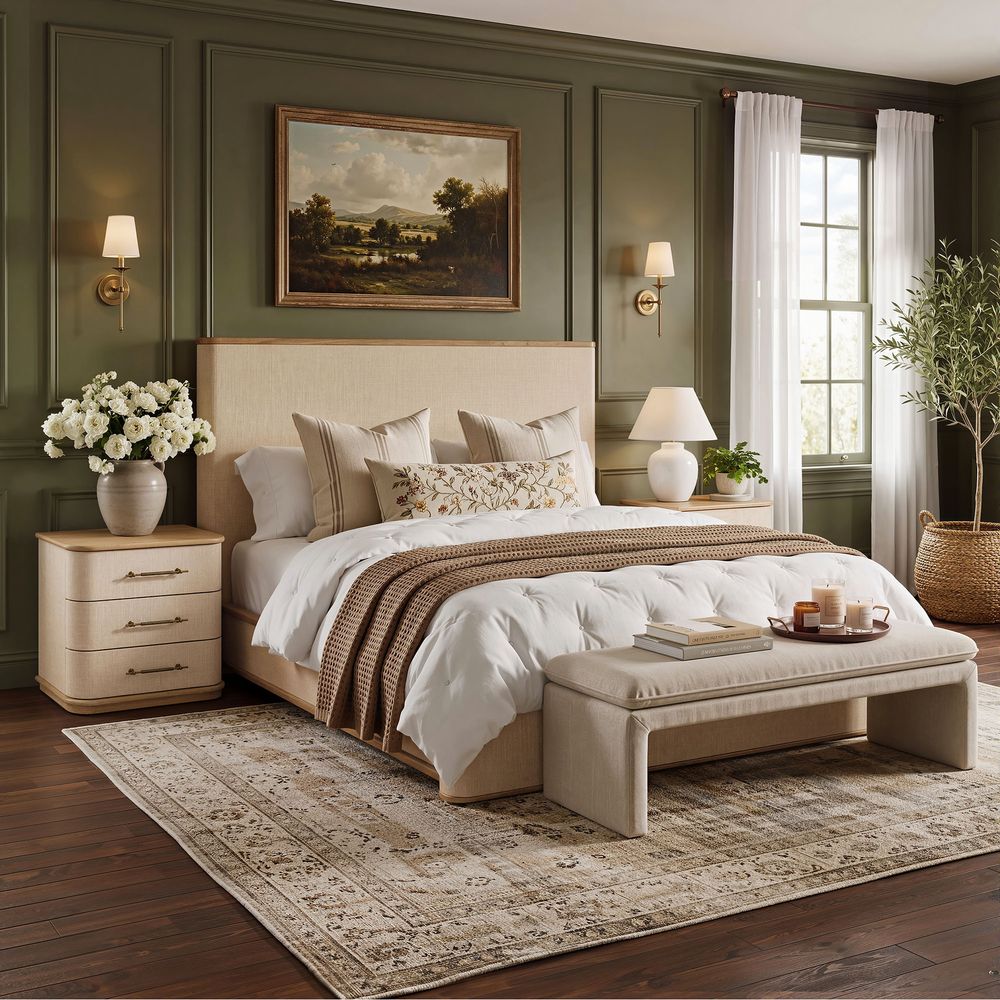
4. Walter Linen-Blend Bed: Upholstered Comfort With a Wood Frame
The Walter Linen-Blend Bed combines a fabric-covered frame with rounded wood details. Its sand linen fabric and light brown cerused mindi finish create a softer look than an all-wood bed, while the upholstered headboard provides a comfortable surface for sitting up to read or relax.
This design is worth considering if you want your bed to feel inviting rather than sharply architectural. The upholstery adds a different texture to the room, and the wood framing prevents the overall design from looking too uniform.
What stands out
-
Sand linen-fabric.
-
Light brown cerused mindi finish.
-
Thirteen evenly spaced solid-wood slats, two cross rails, and six support legs.
-
Recommended weight capacity of 700 lb.
Walter's overall dimensions are 86.6 inches wide, 91.7 inches deep, and 57.3 inches high. Its depth is especially important: at 91.7 inches, it can take up more floor space than a bed with a shallower frame. Measure from the wall behind the headboard to the front of the footboard, then allow room for walking around the bed.
The mattress space measures 76 inches wide by 79.5 inches deep, and the recommended mattress thickness is 8 inches.
How to style it
Choose bedding that complements the sand upholstery instead of matching it exactly. White or ivory sheets keep the bed looking fresh, while muted taupe, sage, or clay-colored cushions can introduce gentle contrast. A textured rug under the bed helps define the sleeping area, particularly in a larger bedroom.
For nightstands, consider wood finishes that echo the frame without needing to match it perfectly. A coordinated room doesn't require every wood surface to have the same color; similar undertones and simple shapes can be enough to make the furniture feel connected.
Caring for the upholstery
Fabric introduces a maintenance consideration that doesn't apply in the same way to an all-wood frame. Follow the care instructions provided for the specific upholstery, and test any cleaning method in an inconspicuous area first. Regular, gentle removal of dust can help keep the fabric looking presentable. Avoid assuming that a linen-blend fabric can be cleaned with any household product.
Before you buy
Walter's overall depth is the key measurement to check if your bedroom is compact. The bed weighs 340.83 lb according to the listing and ships in three boxes. Assembly is required.
Best for: People who prefer a softer, upholstered look and want the warmth of wood framing with a fabric-covered bed.
Walter Linen-Blend Bed
View Product
5. Orson Bed: Dark Wood and Sculptural Curves
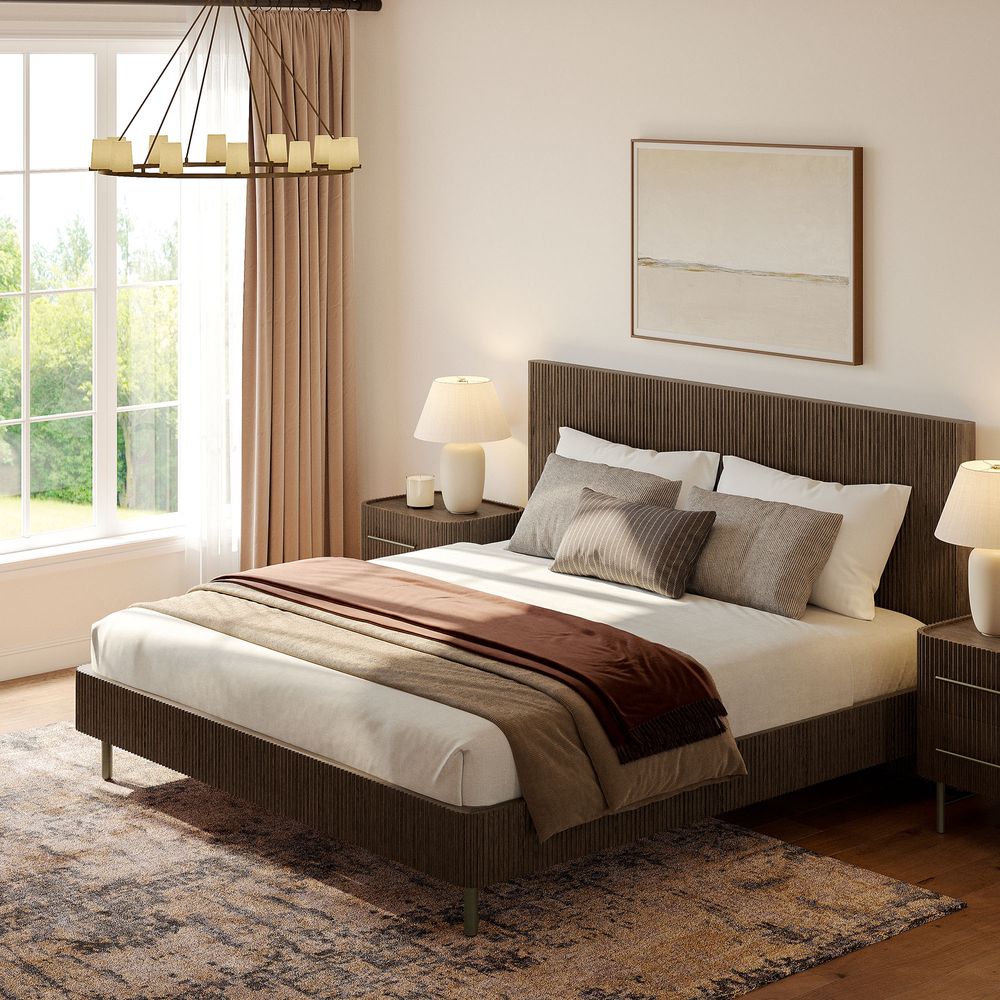
The Orson Bed brings more contrast to a contemporary bedroom. Its dark brown mindi finish, fluted detailing, and rounded corners give the frame a defined presence without depending on ornate decoration.
The darker finish can help anchor a room with pale walls or light bedding. Its sculptural details also mean that the bed can carry much of the room's visual interest, allowing the other furniture to remain relatively simple.
What stands out
-
Dark brown mindi finish.
-
Mindi wood and engineered wood with mindi veneers.
-
Fluted detailing with a rich wood grain.
-
Six middle support legs and a recommended weight capacity of 700 lb.
Orson measures 84.3 inches wide, 85.4 inches deep, and 47.2 inches high. Its lower overall profile may suit a room where you want the headboard to make an impact without dominating the wall vertically.
The mattress space is 76 inches wide by 79.5 inches deep, and the recommended mattress thickness is 8 inches.
How to style it
Use contrast deliberately. Ivory bedding and a pale rug can make the dark finish stand out, while warm beige or caramel accents help prevent the palette from feeling stark.
Lighting matters with dark furniture. A bedside lamp with a warm bulb can bring out the wood grain, while daylight from a nearby window helps reveal the finish's variation. If the room already contains several dark pieces, balance them with lighter curtains, bedding, or wall art.
Before you buy
Orson weighs 163.53 lb and ships in two boxes. Assembly is required. Check the full frame dimensions and the route into the room before delivery, particularly if the bedroom is upstairs or has a narrow doorway.
Best for: Bedrooms that need a darker wood focal point and sculptural curves.
Orson King Size Bed
View Product
Comparing the 5 Contemporary Beds
Use this table to narrow down the options based on finish, construction, and overall footprint. All dimensions below refer to the listed overall product dimensions, not just the mattress size.
How to Choose the Right Contemporary Bed
A bed can look ideal in a product photo but feel wrong in your home if the scale, finish, or support system doesn't suit your needs. Use the following considerations to make a more practical choice.
1. Measure the Whole Bed, Not Just the Mattress
A king mattress does not tell you how much floor space the bed will occupy. Headboards, footboards, side rails, and decorative details can all extend beyond the mattress footprint.
Measure the available wall width and the distance from the headboard wall to the opposite side of the room. Then account for bedside tables, drawers that need to open, and a comfortable walking route. If you have a narrow bedroom, the difference between a frame that is about 85 inches deep and one that is more than 91 inches deep may matter.
Also measure the doorways, stairs, and hallways the delivery boxes must pass through. A bed that fits the bedroom may still be difficult to bring into the house.
2. Match the Material to Your Routine
Wood and upholstered beds create different visual effects and require different care.
A wood-focused frame, such as Skugga, Harold, or Orson, makes grain and surface detailing part of the room's design. Consider whether you prefer a light finish that blends with pale interiors, a warm brown finish, or a darker tone that creates contrast.
Renata's travertine-inspired surface offers another option for people who want a stone-like look without building the entire room around natural stone. Walter, meanwhile, combines wood framing with linen-blend upholstery, making fabric care part of the decision.
Think about how you use the bedroom. If you often sit against the headboard to read, upholstered surfaces may appeal to you. If you prefer a more defined wood silhouette, a wood-focused frame may be a better fit.
3. Consider Headboard Height and Wall Space
The headboard affects more than appearance. It determines how the bed relates to artwork, windows, wall lights, and the proportions of the room.
Harold's listed overall height is 60.2 inches, while Orson's is 47.2 inches. Skugga's listed overall height is 48 inches, although its wide headboard gives it a different visual presence.
If you want to install sconces or hang artwork above the bed, plan the positions before ordering. Leave enough visual space so that the headboard and wall decor do not compete with each other.
4. Check Mattress and Foundation Compatibility
The mattress is a separate purchase consideration, even when a bed is described as a platform bed. Confirm the mattress dimensions against the frame's listed mattress space, and check the recommended mattress thickness.
For these five beds, recommend an 8-inch mattress thickness. That does not mean every mattress and foundation combination will work equally well for every sleeper. Confirm the manufacturer's requirements for your specific mattress and follow the bed's assembly instructions.
Don't overlook the slat system, either. Slat spacing and center support can affect compatibility with a mattress, so check the product details rather than assuming all platform beds have the same construction.
5. Choose a Finish That Works With Your Existing Furniture
A contemporary bedroom does not need to match every piece of furniture exactly. Instead, aim for a consistent overall palette.
-
For a lighter room: Consider whitewashed wood, beige, ivory, or pale gray, with a few darker accents for contrast.
-
For a warm neutral room: Combine wood grain, oatmeal-colored textiles, and muted earthy tones.
-
For a darker focal point: Use a bed such as Orson with lighter bedding and a rug to keep the room balanced.
-
For a softer look: Combine upholstered elements with wood furniture and tactile fabrics.
If you're buying a complete bedroom setup, compare the finish, hardware, and proportions of the bed with your nightstands and dresser. Related colors and complementary silhouettes usually create a more natural result than trying to make every finish identical.
Contemporary Bedroom Styling Ideas
Once you've selected a bed, a few well-chosen details can help the room feel complete without making it busy.
Keep Bedding Simple and Layered
Start with a base of white, ivory, or another neutral color. Add a throw or a few cushions in a contrasting tone to introduce depth. A bed with prominent fluting or a distinctive finish already has visual texture, so bedding with too many competing patterns may distract from it.
Use Lighting to Highlight the Bed
Bedside lighting can improve both the atmosphere and everyday usability of the room. Table lamps are easy to change, while wall-mounted lights can free up space on nightstands. Choose a fixture that complements the bed's proportions and leaves enough clearance around the headboard.
For a dark wood bed, warm lighting can emphasize the grain. For a light finish, softer neutral lighting can help preserve the room's calm palette.
Coordinate Nightstands and Dressers
Nightstands and dressers should support the bed's design rather than compete with it. A simple nightstand can balance a detailed headboard, while a more sculptural bed may work best with furniture that has restrained fronts and hardware.
Before buying additional pieces, check their heights relative to the mattress and the available wall space. A visually coordinated room should also be comfortable to use.
Leave Space for Movement
A well-designed bedroom is not simply a collection of attractive pieces. You should be able to walk around the bed, open drawers, change bedding, and access windows without having to move furniture every time.
If the bed has a broad headboard or deep footboard, keep the surrounding furniture proportionate. A slightly smaller nightstand or a wall-mounted light can sometimes make a room feel more functional than adding another decorative piece.
What to Check Before Ordering a Bed
Use this checklist before placing your order:
-
Overall dimensions: Confirm width, depth, and height, including any extended headboard or footboard.
-
Room clearance: Leave enough space for walking, opening drawers, and changing bedding.
-
Delivery access: Measure doors, hallways, stairways, and tight turns.
-
Mattress fit: Compare mattress dimensions with the listed mattress space.
-
Foundation requirements: Confirm whether a box spring is optional and check the mattress manufacturer's recommendations.
-
Support structure: Review the listed slats, center supports, and recommended weight capacity.
-
Assembly: Check whether assembly is required and plan enough room to put the frame together.
-
Care requirements: Review the appropriate cleaning instructions for wood finishes and upholstery.
-
Delivery and policies: Read the current delivery details, satisfaction guarantee, and warranty terms on the product page.
This final check helps you compare beds based on how they will work in your home, not just how they look online.
Final Thoughts: Finding the Best Contemporary Bed for Your Room
The best contemporary bed is the one that fits your space, supports your mattress, and complements the way you want your bedroom to feel. Skugga offers a light finish and strong vertical texture, Renata brings a travertine-inspired surface, Harold highlights cerused wood grain, Walter adds linen-blend upholstery, and Orson creates contrast with dark wood and sculptural detailing.
Before making a decision, compare the full frame dimensions, mattress requirements, material care, and assembly needs. These practical details can make the difference between a bed that looks right in a photo and one that works comfortably in your home.
FAQs
What is a contemporary bed?
A contemporary bed reflects current design preferences, often combining clean lines, balanced proportions, practical construction, and distinctive materials. It may feature wood grain, upholstered surfaces, fluted detailing, rounded edges, or other restrained design elements.
What is the difference between a contemporary bed and a modern bed?
The terms are often used interchangeably in furniture shopping, but they can have slightly different meanings. Modern design may refer to a particular design movement, while contemporary design describes styles popular today. In practice, both can include streamlined silhouettes, functional details, and an emphasis on materials.
Which contemporary bed is best for a neutral bedroom?
Renata's light gray oak and beige resin finish is worth considering for a room built around warm neutrals and layered textures. Skugga's whitewashed finish is another option for a lighter palette. The best choice depends on the other finishes, lighting, and furniture in the room.
Are wood beds a good choice for contemporary bedrooms?
Yes. Wood beds can bring natural grain and texture to a contemporary room while remaining versatile enough to work with different bedding and decor. The finish matters: whitewashed wood creates a lighter look, while darker wood can add contrast and visual weight.
Is an upholstered bed better than a wood bed?
Neither is universally better. Upholstered beds, such as Walter, offer a softer surface and a fabric texture, while wood-focused frames emphasize grain and structure. Consider comfort preferences, cleaning requirements, and the visual style you want for your bedroom.
How do I choose the right bed size for my room?
Start with the mattress size you need, then check the bed frame's full width and depth. Include space for nightstands, walking paths, and drawers that need to open. Also measure doorways and stairs to confirm the frame can be delivered to the room.
What mattress thickness works with these Hernest beds?
The product listings for Skugga, Renata, Harold, Walter, and Orson recommend an 8-inch mattress thickness. Check the current product specifications and your mattress manufacturer's recommendations before purchasing, especially if you plan to use an additional foundation.
How should I style a contemporary bed?
Start with simple bedding, then introduce contrast through a throw, cushions, a rug, or bedside lighting. Coordinate the bed with nightstands and dressers through complementary colors and proportions rather than trying to match every finish exactly. Keep enough open space for comfortable movement around the furniture.
What should I check before buying a contemporary bed online?
Review the full dimensions, mattress space, recommended mattress thickness, support structure, weight capacity, material and care instructions, assembly requirements, delivery access, and current return and warranty terms. These details help you determine whether the bed is suitable for your room and routine.