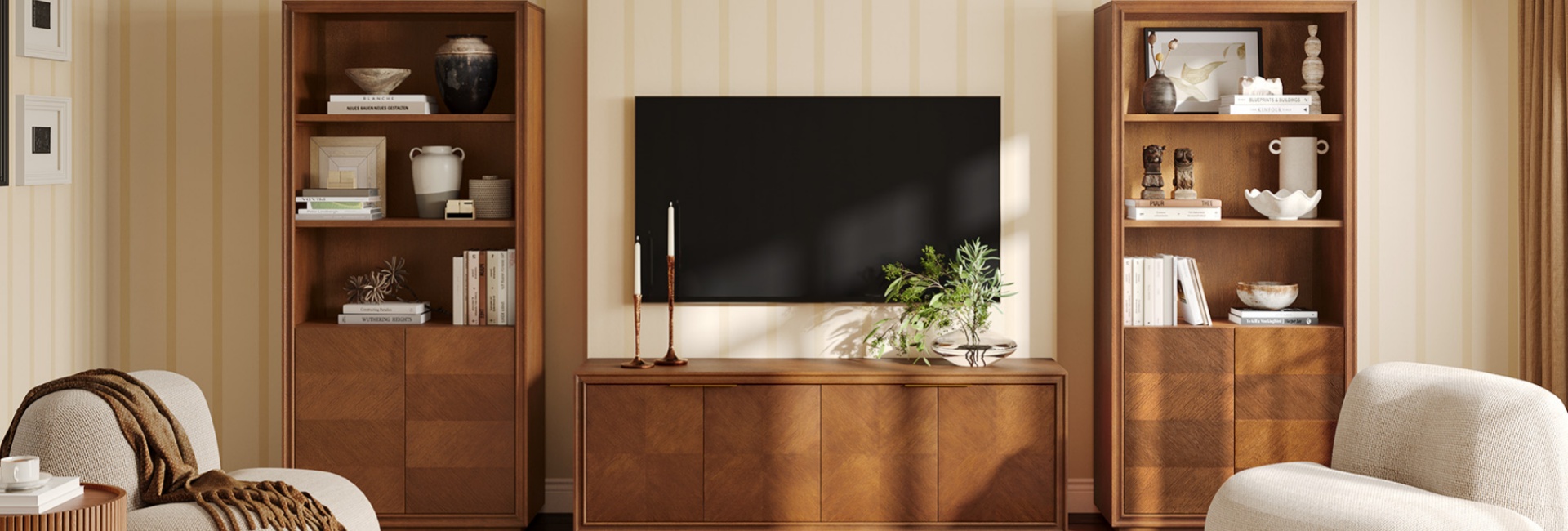
Choosing a Mid-Century Modern furniture brand is about more than finding a piece you like. Materials, dimensions, storage, delivery, and how well a new piece works with the rest of your home can all affect the decision.
Hernest and West Elm are two brands worth considering if you like modern furniture with Mid-Century Modern influences. Both offer furniture for living rooms, dining rooms, bedrooms, and other areas of the home, but they approach the category differently.
Hernest places a stronger emphasis on Modern and Mid-Century Modern furniture, with warm wood tones, clean silhouettes, practical storage, and coordinated collections. West Elm takes a broader modern lifestyle approach, with dedicated Mid-Century collections alongside contemporary furniture, lighting, rugs, bedding, décor, and other home categories.
Neither brand is automatically the better choice for every home. Hernest may appeal to shoppers who want a more concentrated MCM design direction, while West Elm may suit shoppers who want to mix MCM pieces with other modern styles or prefer shopping through physical retail locations.
This comparison looks at the differences between Hernest and West Elm across design, materials, product features, pricing, shopping experience, delivery, returns, and common buyer needs.
Comparison note: Product specifications, prices, availability, delivery options, and policies can change. The comparison below focuses on current website information and representative products. Always check the individual product page and current terms before placing an order.
Table of Contents
- Quick Answer: Hernest vs West Elm
- Brand Comparison Snapshot: Hernest vs West Elm
- Understanding Hernest and West Elm
- Hernest vs West Elm Furniture Quality: What Should You Compare?
- Frode 84" MCM Media Console vs West Elm Mid-Century Media Console (80")
- Hernest vs West Elm Pricing: How Should You Compare Value?
- Hernest vs West Elm Shopping Experience
- Hernest vs West Elm Delivery and Assembly
- Hernest vs West Elm Returns: What Should You Know?
- Which Brand Fits Different Types of Homeowners?
- Buying Guide: How to Choose Between Hernest and West Elm
- Final Verdict: Hernest vs West Elm
- FAQs
- Is Hernest better than West Elm for Mid-Century Modern furniture?
- Is Hernest furniture good quality compared with West Elm?
- Which is more affordable, Hernest or West Elm?
- Does West Elm have Mid-Century Modern furniture?
- Is Hernest a good alternative to West Elm?
- Which brand is better for wood furniture?
- Which media console is better: Hernest Frode 84" or West Elm Mid-Century 80"?
- Which is better for an MCM living room?
- Which brand is better for a first home?
- What should I compare before buying?
Quick Answer: Hernest vs West Elm
Hernest may be a good fit if your priority is a cohesive Mid-Century Modern look, warm wood furniture, functional storage, and coordinated collections.
West Elm may be a better fit if you want more freedom to mix design styles, shop across a broader home-furnishing ecosystem, or see furniture in physical stores before buying.
The most useful way to compare the two is not to ask which brand is universally better. Instead, compare the specific pieces you're considering based on design, materials, dimensions, construction, functionality, price, delivery, and returns.
Brand Comparison Snapshot: Hernest vs West Elm
West Elm's current website includes a dedicated Mid-Century assortment, while Hernest maintains a more concentrated Modern and MCM furniture direction.
Understanding Hernest and West Elm
What Is Hernest?
Hernest focuses on modern furniture with a strong Mid-Century Modern influence. Its current assortment emphasizes warm wood finishes, clean proportions, practical storage, and recognizable MCM details.
Its furniture range includes media consoles, sideboards, dining tables and chairs, coffee tables, beds, nightstands, dressers, cabinets, and other storage pieces.
That focused approach can be useful if you already know the look you want. Instead of starting with many unrelated styles, you can build around a relatively consistent combination of warm finishes, simple silhouettes, and functional furniture.
Why Shoppers May Choose Hernest
Hernest may appeal to shoppers who prefer:
Warm wood tones and natural-looking finishes
Clean Mid-Century Modern silhouettes
Functional storage
Coordinated furniture collections
Organic modern and MCM-inspired interiors
Furniture designed to work across multiple rooms
Hernest also operates physical showrooms where shoppers can view selected furniture in person before making a purchase online.
What Is West Elm?
West Elm takes a broader modern home approach. Its website covers furniture as well as lighting, rugs, bedding, bath, décor, office furniture, kitchen and dining, storage, outdoor products, and other home categories.
Mid-Century Modern is an established part of that assortment rather than the brand's only design direction. Its MCM offerings include media consoles, coffee tables, dining chairs, beds, nightstands, accent chairs, lighting, and décor.
This gives West Elm more stylistic flexibility. A shopper can start with an MCM sofa or media console and later introduce more contemporary or decorative pieces without necessarily keeping every item within one collection.
Why Shoppers May Choose West Elm
West Elm may appeal to shoppers who value:
A broad range of modern design styles
Dedicated Mid-Century Modern collections
More ways to mix furniture and décor
A larger home-furnishing ecosystem
Physical store access
In-person evaluation of furniture, finishes, fabrics, and scale
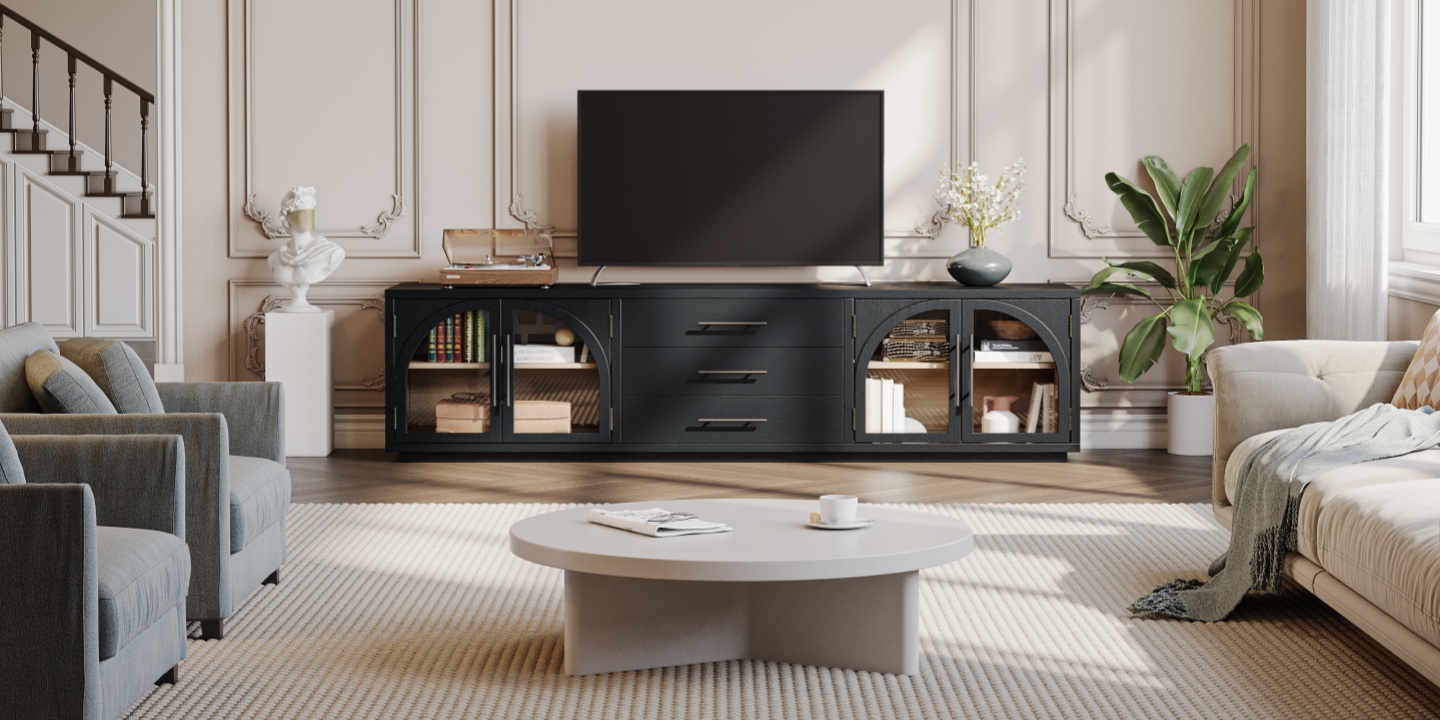
Hernest vs West Elm Furniture Quality: What Should You Compare?
“Furniture quality” is difficult to judge at the brand level because both brands sell products with different materials, construction methods, dimensions, and intended uses.
A better comparison is product by product.
Before buying, look at:
Wood species and material composition
Solid wood versus veneer or engineered wood
Joinery and drawer construction
Hardware and hinges
Finish and surface treatment
Weight capacity
Shelf configuration
Cable management
Assembly requirements
Intended use
Two pieces can look similar in photographs while having very different specifications.
Hernest Furniture Materials and Construction
Hernest uses different material combinations depending on the product. Current product pages show examples using solid wood, engineered wood, plywood, and real wood veneers.
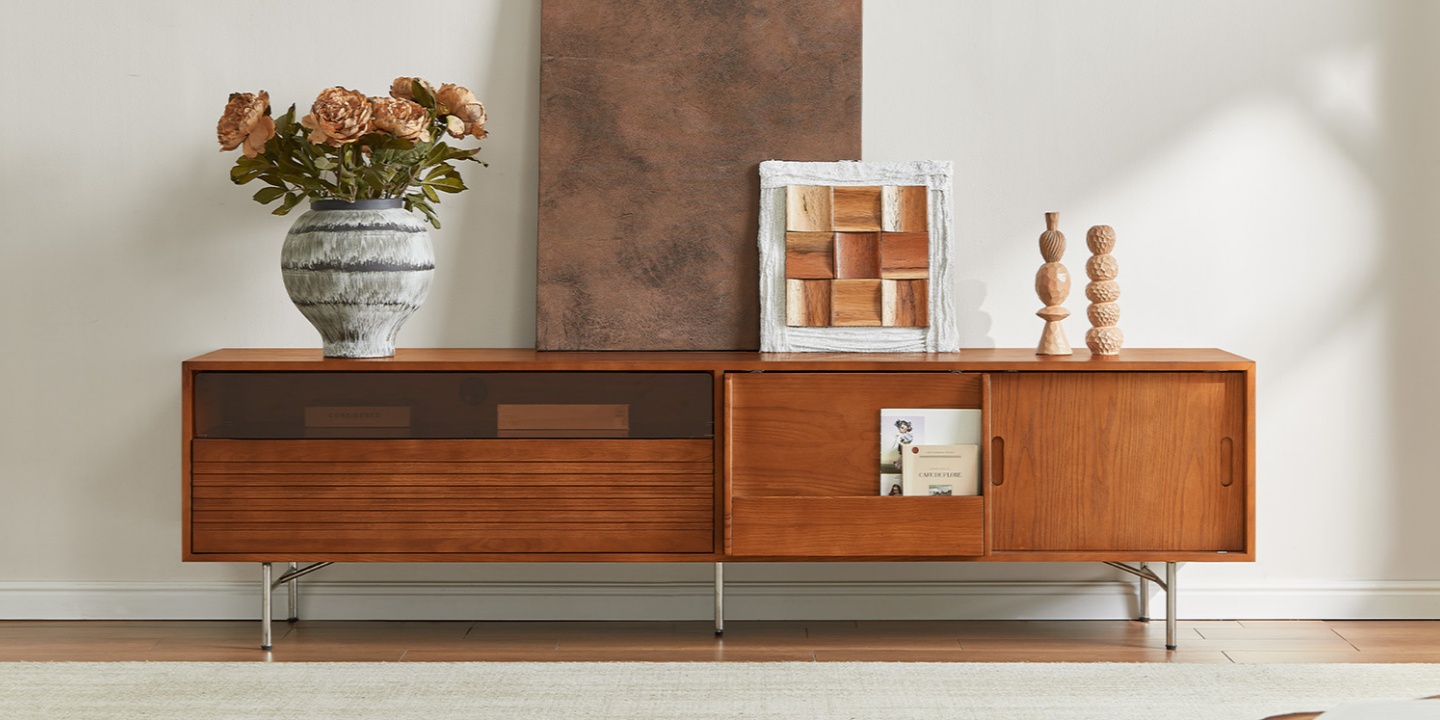
The Frode 84" MCM Media Console, for example, is crafted from rubber wood and plywood with American ash wood veneers. The wood is kiln-dried, and its multistep finish combines wire brushing and wood glazing to highlight the natural grain. The console features precision dovetail joints on the drawer, stainless steel legs, adjustable shelves for flexible storage, and five cord cutouts in the back panel for cable management.
West Elm Furniture Materials and Construction
West Elm also uses different material combinations across its catalog.
The Mid-Century Media Console (80") in Acorn, for example, uses kiln-dried solid eucalyptus wood and engineered wood with an acacia wood veneer. The Cerused White version uses kiln-dried solid ash wood for the frame and legs, with engineered wood drawers and sides with oak veneer.
West Elm also specifies features such as metal hardware, adjustable shelves, smooth metal drawer glides, and a rear cutout for cord management on this media console.
Again, the useful comparison is the actual product specification rather than a general statement about which brand has “better” materials.
Frode 84" MCM Media Console vs West Elm Mid-Century Media Console (80")
If you're specifically shopping for an MCM media console, comparing actual products gives a much clearer picture than comparing the brands in general.
Two representative options are the Frode 84" MCM Media Console from Hernest and the Mid-Century Media Console (80") from West Elm.
The Frode is 4 inches wider, but shallower and lower than the West Elm console. That difference matters if you have limited floor depth or want a lower media profile.
The Frode also has a higher stated recommended weight capacity of 230 lbs., compared with 135 lbs. for the West Elm model. Its rear panel has five cord cutouts, while West Elm lists a rear cutout for cord management.
Storage is configured differently. Frode combines a large drawer, side cabinets, adjustable shelves, and sliding solid wood doors that can function like bookshelf panels. West Elm uses three drawers plus a cabinet with an adjustable shelf.
The design language is also slightly different. Frode combines a warm brown ash finish with metal legs and sliding wood doors, while West Elm's console follows a more traditional MCM formula with tapered legs, angled detailing, and understated hardware.
Because both brands may change promotional pricing, this comparison focuses on product specifications rather than treating a temporary listed price as a permanent price difference.
Which Media Console Makes More Sense for Your Space?
Choose the Frode 84" if you prioritize:
A wider 84-inch profile
Shallower 17.3-inch depth
Lower 22.8-inch height
Higher stated weight capacity
Five cable cutouts
Sliding wood doors
A combination of drawer, cabinet, and display storage
Warm ash wood appearance with metal legs
Choose the West Elm 80" if you prioritize:
A slightly narrower 80-inch width
Three dedicated drawers
A taller 27-inch overall height
Classic tapered MCM legs
Additional finish options are available depending on the selected version
Full assembly through White Glove service when eligible
Neither configuration is automatically better. The right choice depends on your TV size, wall width, equipment, storage needs, preferred height, and available floor depth.
If floor depth is limited, Frode's 17.3-inch depth may leave more usable floor space in front of the console. If you prefer a taller console with three drawers and a classic tapered-leg silhouette, the West Elm model offers a different configuration.
Hernest vs West Elm Pricing: How Should You Compare Value?
Furniture pricing can change by collection, size, materials, finish, construction, features, and promotions. Because of that, it is difficult to label either brand as universally more affordable.
A better approach is to compare similar products.
For example, when comparing two media consoles, look beyond the listed price:
Are they similar in width and depth?
Do they use comparable materials?
Do both have drawers or cabinets?
Is cable management included?
Are shelves adjustable?
Is assembly required?
What type of delivery is available?
What happens if the product arrives damaged?
What are the return conditions?
The same approach works for dining tables, dressers, sideboards, beds, and other furniture.
Value Comparison by Furniture Category
Media Consoles
Media consoles are one of the clearest categories for comparing the two brands because both offer dedicated MCM designs.
Hernest's current assortment includes warm wood media consoles with features such as storage, adjustable shelving, and cable-management solutions on selected models.
West Elm offers multiple Mid-Century media-console configurations, including the 80-inch model discussed above.
When comparing them, check:
TV width and recommended TV size
Console width
Depth
Storage capacity
Door and drawer configuration
Cable management
Shelf adjustability
Material composition
Delivery requirements
Sideboards
Sideboards need to balance storage with visual proportion.
Many Hernest sideboards emphasize warm wood finishes, MCM-inspired proportions, textured fronts, and practical cabinet storage.
West Elm offers sideboards across multiple modern styles and materials.
If the rest of your room already follows a warm MCM aesthetic, a coordinated Hernest piece may be easier to integrate. If you're mixing styles, West Elm's wider design range may give you more options.
Dining Tables
Dining tables should be evaluated based on everyday use rather than appearance alone.
Compare:
Table length and width
Number of people it comfortably seats
Leg clearance
Extension capability
Material
Finish
Maintenance requirements
Chair compatibility
Hernest's dining assortment includes MCM-inspired wood tables and extendable designs, while West Elm offers multiple dining collections and a broader mix-and-match approach.
Bedroom Furniture
For bedroom furniture, coordination can matter as much as the individual piece.
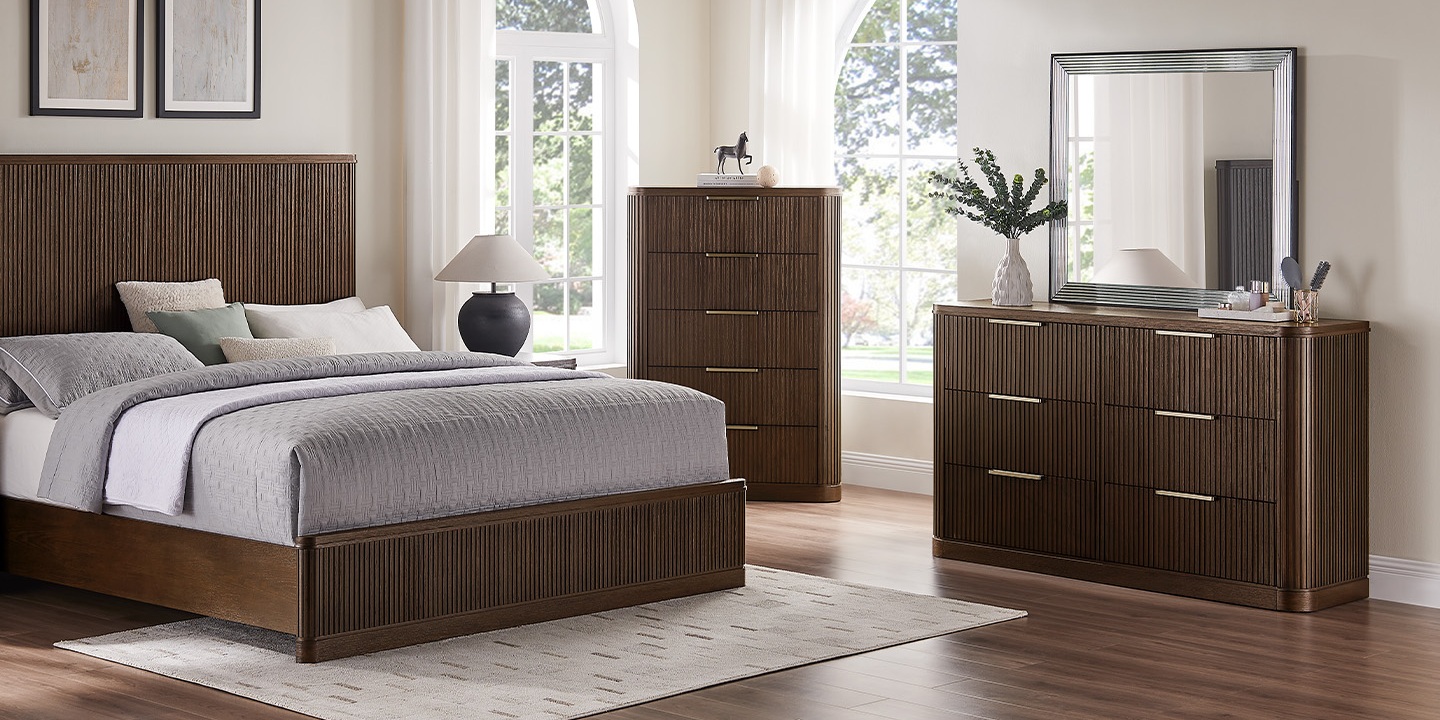
Hernest offers coordinated bedroom collections where beds, nightstands, dressers, and chests can share a common visual language.
West Elm offers a broader selection of bedroom furniture, including its established Mid-Century collection, giving shoppers more room to mix finishes, styles, and individual pieces.
Hernest vs West Elm Shopping Experience
The shopping experience is another meaningful difference.
Buying Hernest Online
Hernest's website makes it relatively straightforward to shop by furniture category and collection.
Its assortment includes furniture for living rooms, dining rooms, bedrooms, storage, outdoor spaces, and other parts of the home. Product pages provide specifications such as dimensions, materials, weight, assembly, and delivery information.
For shoppers who already know they want warm, modern, MCM-inspired furniture, that focused assortment can make browsing more straightforward.
Hernest also has showrooms, giving shoppers in supported locations an opportunity to see selected products in person.
Buying West Elm
West Elm combines online shopping with physical retail locations.
That can be useful when you're unsure about:
Furniture scale
Upholstery texture
Finish color
Seat comfort
Material appearance
Proportions
West Elm also offers store pickup for select eligible items. Its current customer-service information states that in-stock eligible items can be picked up from a local store, while certain non-stocked items can be shipped to a store.
Which Shopping Experience Is Better?
It depends on how you like to shop.
Choose Hernest if you prefer a more focused modern and MCM furniture assortment and want to shop around coordinated collections.
Choose West Elm if you value a broader retail ecosystem, wider style options, and more opportunities to visit a store and evaluate furniture in person.
Neither shopping model is inherently better.
Hernest vs West Elm Delivery and Assembly
Delivery is especially important for furniture because a product that fits your room may not fit through your front door, hallway, elevator, or staircase.
Before ordering, check:
Product dimensions
Package dimensions
Delivery method
Delivery fees
In-home placement
Assembly
Packaging removal
Delivery area
Service availability
Hernest Delivery and Assembly
Hernest currently offers several delivery levels depending on the product and order.
Its Shipping Guide lists:
Free Parcel Delivery
Free Threshold Delivery
Room of Choice for $119
White Glove Delivery for $199
Free Threshold Delivery brings the item to the first dry area of the home, while Room of Choice includes placement in the room selected by the customer. White Glove includes in-room delivery, professional placement, unpacking, complete packaging removal, professional assembly, and final inspection.
The exact option available for a product is shown during checkout.
For the Frode 84" MCM Media Console, the current product page lists Free Threshold Delivery and notes that the console is partially assembled, with the legs/base requiring fitting.
Hernest also offers its Signature Membership for $199 per year, with unlimited free White Glove Delivery on eligible items under its current membership terms. The benefit applies only to products that offer White Glove Delivery and does not apply retroactively to orders placed before membership activation.
West Elm Delivery and Assembly
West Elm currently offers two main delivery methods: Front Door Parcel Delivery for items shipped by parcel carriers such as UPS or USPS, and Truck Delivery is used for most furniture and other items that exceed parcel-carrier weight limits, with Premium White Glove service available or included for eligible items depending on the product and delivery terms.
For eligible furniture and oversized items, West Elm offers Unlimited Flat Rate Delivery, where eligible items can be delivered for a single flat rate per shipping address. The applicable delivery charge depends on the delivery location, and eligibility is shown on the product page.
West Elm also offers Doorstep Delivery for select items at a lower flat rate. With this option, the customer is responsible for bringing the item into the home, and assembly and packaging disposal are not included.
For eligible products, West Elm also offers Store Pickup. In-stock items may be available for pickup at a local store, while certain non-stocked items can be shipped to a store for pickup. Availability depends on the individual product and location.
Which Delivery Experience Is Better?
The two brands take somewhat different approaches.
Hernest gives shoppers several service levels, ranging from free basic delivery to paid Room of Choice and White Glove upgrades. Its Signature Membership can also provide unlimited free White Glove Delivery on eligible items.
West Elm includes Premium White Glove with eligible Flat Rate furniture and also offers Doorstep Delivery and Store Pickup on selected products.
For a large media console, don't compare only the delivery fee. Compare where the item will be placed, whether assembly is included, whether packaging is removed, and whether the specific product qualifies for the service you want.
Hernest vs West Elm Returns: What Should You Know?
Returns can matter just as much as delivery when buying large furniture. Both Hernest and West Elm offer returns on eligible products, but their return windows, exclusions, fees, and procedures differ.
Hernest Returns
Hernest currently accepts eligible non-defective returns within 60 days of delivery. The item must be in as-new, unused condition with its original tags, hardware, accessories, and packaging. Hernest states that a 20% restocking fee is deducted from refunds for eligible non-defective returns. Items such as clearance and final-sale products may not be eligible for return for non-quality-related reasons.
For products that arrive damaged, defective, or incorrect due to Hernest's error, Hernest states that customers are not responsible for return-related fees and that the company may provide a refund, replacement, repair, or replacement parts depending on the situation. Damage should be reported within 7 days of delivery, with photos and order information provided.
Hernest also states that delivery and assembly service fees are non-refundable once the service has been completed for non-defective returns. If original packaging is unavailable and alternate packaging is used, a $50 repackaging fee per item may apply.
West Elm Returns
West Elm currently allows eligible stocked items to be returned for a refund of the merchandise value within 30 days of receiving the order. Quick Ship upholstery items have a shorter 7-day return window. West Elm requires proof of purchase for returns.
West Elm lists several return exclusions and special rules. Stocked items generally must be returned within the applicable return window, while final-sale items, gift cards, and items damaged through normal wear and tear are not eligible for standard returns. Special Order (SPO) items cannot be returned and are exchangeable only for manufacturer's defects. West Elm identifies certain custom or specially ordered products as SPO, including special-order upholstery, monogrammed or personalized items, special-order rugs, one-of-a-kind rugs, and products shipped directly from certain third-party vendors.
The return method depends on the product. Many items shipped by mail can be returned through UPS using a return label, while furniture and other large items that were not delivered by mail must generally be arranged through West Elm Customer Care. Depending on the reason for return, the customer may be responsible for return shipping and processing costs.
West Elm states that returns with an original receipt are refunded to the original form of payment, while eligible gift returns with a gift receipt are generally issued as Merchandise Credit. Shipping and processing fees are nonrefundable.
How Do the Return Policies Compare?
The most obvious difference is the standard return window for eligible stocked or non-defective products: Hernest currently provides a 60-day window from delivery, while West Elm generally provides 30 days from receipt for stocked items. However, this does not mean one policy is universally better.
Hernest's longer window comes with conditions, including a 20% restocking fee for eligible non-defective returns and packaging requirements. West Elm's policy has a shorter standard window but different return methods and product-specific exclusions, and return shipping or processing costs may apply depending on the reason for the return.
For either brand, the practical cost of a return can depend on the product, its condition, packaging, delivery method, and reason for return. Always review the current return policy and the product-specific terms before placing an order.
Which Brand Fits Different Types of Homeowners?
These are starting points, not rules. The specific product and your room should ultimately determine the decision.
Best Fit for MCM-Focused Homeowners
If you want your living room, dining room, and bedroom to share a consistent MCM visual language, Hernest may be the more straightforward starting point.
Its collections emphasize warm wood, clean silhouettes, functional storage, and coordinated proportions.
Best Fit for Shoppers Who Mix Styles
West Elm may be more flexible if you don't want your entire home to follow one design direction.
Its broader catalog makes it easier to combine Mid-Century pieces with contemporary, transitional, decorative, or other modern elements.
Best Fit for Apartment Residents
Apartment shoppers should avoid choosing a brand based solely on style.
Instead, focus on:
Wall width
Floor space
Door and hallway clearance
Elevator dimensions
Package dimensions
Furniture depth
Storage needs
Walking clearance
A compact media console from either brand may work better than a larger piece if you're working with limited space.
Best Fit for Design-Focused Homeowners
For a design-conscious homeowner, the choice often comes down to specialization versus variety.
Hernest's more concentrated MCM direction can simplify coordination.
West Elm's broader assortment can make experimentation easier.
Buying Guide: How to Choose Between Hernest and West Elm
Step 1: Define Your Interior Style
Start with the look you actually want.
Warm MCM → Hernest may be a natural fit
MCM mixed with contemporary → Either
Broad modern → West Elm
Eclectic modern → West Elm may offer more variety
Don't choose a brand first and then force your room to match it. Start with the room.
Step 2: Measure Your Space
Measure more than the wall where the furniture will sit.
Record:
Room dimensions
Wall width
Ceiling height
Door openings
Hallways
Stairways
Elevator dimensions
Existing furniture
Walking paths
For large furniture, also check the package dimensions when available.
Step 3: Compare Materials
Look beyond terms such as “wood furniture.”
Check whether the piece uses:
Solid wood
Wood veneer
Engineered wood
Plywood
Metal
Upholstery
Stone or other surfaces
Then compare the actual construction rather than assuming two similarly styled products are built the same way.
Step 4: Compare Functionality
For a media console, check TV compatibility, storage, cable management, shelf configuration, ventilation, and weight capacity.
For a dining table, check seating capacity, legroom, dimensions, extension options, and care requirements.
For a dresser or sideboard, check drawer construction, storage capacity, hardware, dimensions, and weight limits.
Step 5: Compare Delivery and Assembly
Ask:
Is delivery parcel, threshold, doorstep, or in-home?
Is assembly included?
Is packaging removed?
Is there an additional delivery fee?
Does the service cover your location?
Does the product qualify for White Glove service?
These details can change the real cost and effort of your purchase.
Step 6: Review Returns and Warranty
Before buying expensive furniture, check:
Return window
Restocking fees
Return shipping
Damage reporting requirements
Made-to-order exclusions
Final-sale restrictions
Warranty duration
What the warranty actually covers
A longer return window or warranty does not automatically make one brand better, but it can matter for your individual purchase.
Step 7: Think About Your Next Five Years
Furniture is easier to live with when you think beyond the current room.
Ask yourself:
Will you move soon?
Will your space change?
Are you likely to buy matching pieces later?
Do you prefer one consistent style?
Are you likely to mix styles over time?
Will you need more storage?
If you expect your style to remain MCM-focused, coordinated collections can be useful. If you expect your taste to evolve, a broader assortment may give you more flexibility.
Final Verdict: Hernest vs West Elm
There is no universal winner between Hernest and West Elm.
Hernest may be the better fit if you want:
A strong emphasis on Modern and Mid-Century Modern furniture
Warm wood aesthetics
Clean, functional silhouettes
Coordinated furniture collections
MCM-inspired furniture across multiple rooms
Multiple delivery service levels
A longer standard return window for eligible items
West Elm may be the better fit if you want:
A broader range of modern styles
Dedicated MCM collections alongside other designs
More home categories in one ecosystem
More opportunities to mix and match styles
Physical store access
Multiple delivery and fulfillment options
White Glove service included with eligible Flat Rate furniture
The most reliable way to choose is to compare the actual furniture you're considering.
Look at materials, dimensions, construction, functionality, price, delivery, assembly, return terms, and warranty before making the final decision.
For shoppers who want an MCM-focused home, Hernest offers a more concentrated design direction across its current assortment. For shoppers who want more variety across styles, categories, and shopping channels, West Elm offers a broader ecosystem.
Ultimately, the right choice is the one that fits your home, budget, space, lifestyle, and design priorities.
FAQs
Is Hernest better than West Elm for Mid-Century Modern furniture?
Not universally. Hernest has a stronger focus on Modern and MCM furniture, while West Elm offers dedicated MCM collections within a broader modern home assortment. The better choice depends on whether you prioritize a focused MCM direction or broader style flexibility.
Is Hernest furniture good quality compared with West Elm?
Quality should be evaluated at the product level rather than assumed from the brand name. Compare materials, construction, hardware, dimensions, finish, functionality, warranty, and intended use for the specific pieces you're considering.
Which is more affordable, Hernest or West Elm?
Neither brand can be described as universally more affordable. Furniture prices vary by size, material, collection, construction, finish, features, and promotions. Compare similar products using the same specifications.
Does West Elm have Mid-Century Modern furniture?
Yes. West Elm currently has a dedicated Mid-Century assortment that includes furniture and décor across categories such as media consoles, coffee tables, dining chairs, beds, nightstands, lighting, and other home products.
Is Hernest a good alternative to West Elm?
Hernest can be a useful alternative for shoppers who want a more concentrated Modern and MCM furniture assortment, warm wood aesthetics, and coordinated collections. West Elm may be more suitable for shoppers who want broader styles, a larger home category selection, and physical retail access.
Which brand is better for wood furniture?
Neither is automatically better for every wood furniture purchase. Both brands use different combinations of solid wood, veneers, engineered wood, and other materials across their collections. Compare the exact material and construction specifications of the products you're considering.
Which media console is better: Hernest Frode 84" or West Elm Mid-Century 80"?
It depends on your space and priorities.
The Frode is wider at 84 inches but shallower and lower at 17.3 inches deep and 22.8 inches high. It also has a stated 230-pound weight capacity, five cord cutouts, a large drawer, side cabinets, adjustable shelves, and sliding solid wood doors.
The West Elm model is 80 inches wide, 19 inches deep, and 27 inches high. It has three drawers, a cabinet with an adjustable shelf, a rear cord-management cutout, and a stated maximum TV weight of 135 pounds.
If depth is a concern, Frode has the advantage on dimensions. If you prefer a taller console with three dedicated drawers and classic tapered MCM legs, West Elm may be the better match.
Which is better for an MCM living room?
Hernest may be a natural fit if you want the living room to maintain a consistent warm MCM aesthetic. West Elm may be a better fit if you want to combine MCM furniture with other modern styles and décor.
Which brand is better for a first home?
Either can work. First-time homeowners should focus on dimensions, functionality, delivery, budget, return terms, and whether they expect their design preferences to change.
What should I compare before buying?
At minimum, compare:
● Materials
● Dimensions
● Construction
● Storage and functionality
● Finish
● Price
● Delivery
● Assembly
● Return policy
● Warranty
● Overall fit with your home
A product-level comparison will usually tell you more than a simple brand-versus-brand ranking.