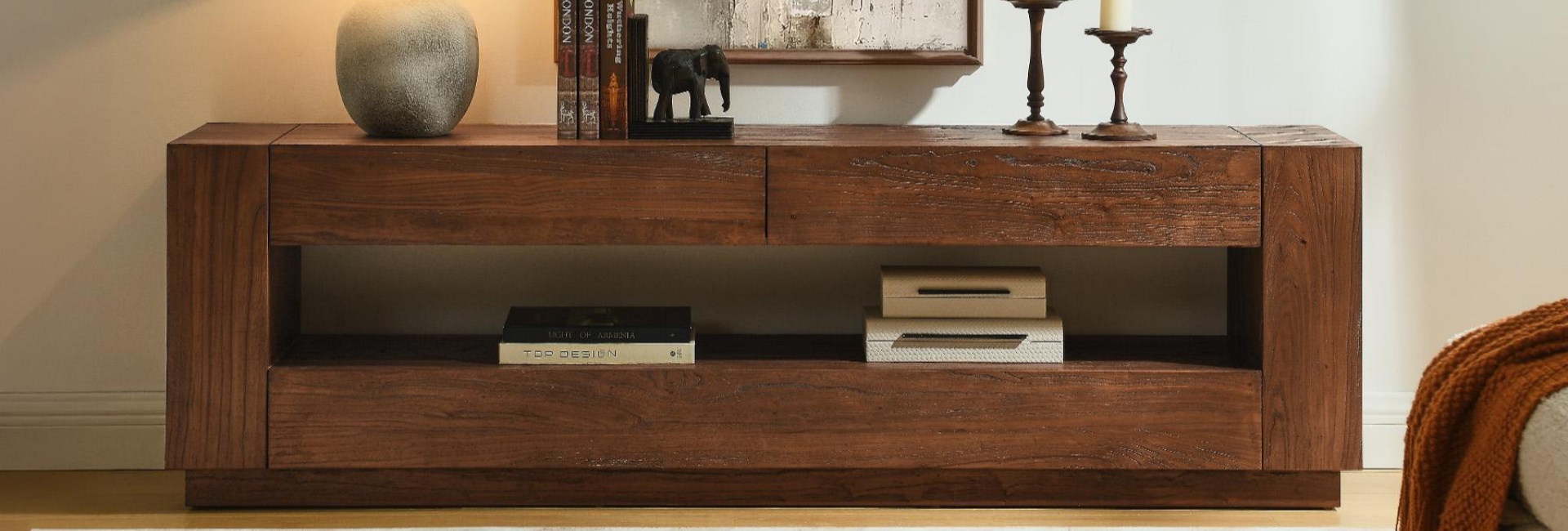
An elm TV stand offers a distinctive alternative to more common oak furniture. Known for its interlocked grain, elm has a natural pattern that ranges from subtle waves to pronounced swirls. Although it is softer than oak in terms of Janka hardness, its grain structure gives it good resistance to splitting. Understanding these differences can help you decide whether an elm media console is right for your living room.
Elm also requires careful drying and proper handling during manufacturing. Its dimensional stability can be affected by changes in moisture, so the quality of the wood preparation matters when choosing a console. This guide covers what old elm means, how elm compares with oak, what to look for in construction, and how to choose and care for an elm TV stand.
Table of Contents
- What "Old Elm" Actually Means on a TV Stand Label
- Elm Wood vs. Oak Wood: What's the Difference?
- Why Proper Drying Matters for Elm Furniture
- What an Elm TV Stand Looks Like in a Room
- Sizing an Elm Media Console for Your Screen
- Caring for an Elm TV Stand
- What to Check Before You Buy an Elm TV Stand
- The Bottom Line: Is an Elm TV Stand Right for You?
- FAQs
What "Old Elm" Actually Means on a TV Stand Label
If you've shopped for elm furniture, you may have noticed the term old elm in product descriptions. It generally refers to elm wood from mature trees or reclaimed timber, depending on the manufacturer's sourcing and terminology. It is not a separate botanical species.
The distinction matters because elm has a long history in furniture and traditional woodworking. Dutch elm disease significantly affected elm populations across North America and Europe during the twentieth century, reducing the availability of some mature trees. Reclaimed elm from older buildings and structures is also used in furniture, giving existing timber another purpose.
Old elm often has visible grain variations, knots, small splits, and joint lines. These characteristics contribute to its natural appearance, although the amount of variation depends on the wood selection and manufacturing process. Some furniture makers preserve these features as part of the design, while others use finishing techniques to create a more uniform look.
If a product is described as reclaimed old elm, check the manufacturer's details to understand where the wood comes from. The term old elm alone does not necessarily mean the furniture is made from reclaimed building timber or wood that has naturally dried for decades.
Elm Wood vs. Oak Wood: What's the Difference?
Elm and oak are both used in furniture, but they have different physical properties and appearances. The following comparison uses American elm and common furniture oaks, including red and white oak. Hardness and weight figures are approximate and can vary with species, growing conditions, and moisture content.
|
Property |
Elm (American) |
Oak (Red / White) |
What It Means at Home |
|
Janka hardness |
Around 830 lbf |
Around 1,290 / 1,350 lbf |
Oak generally resists dents and surface wear better |
|
Average dried weight |
Around 35 lbs/ft³ |
Around 44 lbs/ft³ |
Elm is generally lighter than oak |
|
Grain |
Interlocked and often wavy |
Generally straighter, with visible grain patterns |
Elm often has more pronounced grain movement |
|
Splitting resistance |
Good |
Varies by species and grain orientation |
Elm is known for its resistance to splitting |
|
Dimensional stability |
Requires careful drying and moisture control |
Generally more stable in common furniture applications |
Drying and construction quality matter for both |
|
Rot resistance |
Generally low |
Varies by species; white oak is notably more resistant than red oak |
Both are primarily used indoors in furniture |
Where Elm Has an Advantage
One advantage of elm is its resistance to splitting. Its interlocked grain, in which wood fibers change direction as they grow, makes it less likely to split along a straight grain line under certain types of stress. This property has made elm useful in traditional applications such as wagon components, tool handles, and furniture parts that experience repeated impact.
For a TV stand, this characteristic can be useful in a busy living room where furniture may experience occasional bumps from vacuum cleaners, toys, or moving equipment. However, resistance to splitting does not mean elm is immune to damage. Its surface can still develop dents and scratches during everyday use.
Elm also has a distinctive appearance. Its grain can form waves, loops, and irregular patterns that create visual variation across doors, drawer fronts, and cabinet panels. Depending on the finish, these details can become more or less noticeable.
Where Oak Has an Advantage
Oak generally offers greater surface hardness than American elm. Its higher Janka rating means it is typically better at resisting dents caused by everyday contact. This can be useful for furniture that receives frequent handling or supports decorative objects and other items.
Oak also has a familiar grain appearance, with relatively straight patterns and visible grain features. It is widely used in furniture because of its combination of hardness, workability, and availability.
Elm is generally lighter than oak, which may make a similarly sized piece easier to move, although the actual weight of a TV stand also depends on its dimensions, construction, hardware, and materials.
Neither wood is automatically the better choice for every home. Oak may suit buyers who prioritize surface hardness and a more consistent grain appearance, while elm may appeal to those who prefer distinctive grain patterns and good resistance to splitting.
Why Proper Drying Matters for Elm Furniture
Elm requires careful drying because its dimensional stability can be affected by changes in moisture content. If the drying process is rushed or poorly controlled, the wood may develop checks, cracks, or warping.
Kiln-drying helps reduce the moisture content of wood to a level suitable for furniture manufacturing. After drying, the wood also needs appropriate handling and acclimation before and during construction. These steps help reduce movement when the furniture is placed in an indoor environment.
When evaluating an elm TV stand, look for clear information about the wood's drying process and construction. If the product listing does not specify whether the wood is kiln-dried, you can ask the manufacturer for details.
The type of construction matters as well. Solid elm panels, elm veneer over plywood, and other engineered constructions have different characteristics. Wide solid-wood panels can respond more noticeably to humidity changes, while quality plywood cores are generally more dimensionally stable.
Elm's interlocked grain can also make machining more challenging. Careful cutting, sanding, and joinery help produce cleaner edges and better-fitting components. Well-executed drawer joints, smooth door movement, and even panel alignment are useful details to examine when comparing furniture.
What an Elm TV Stand Looks Like in a Room
Elm furniture is often recognized by its warm color and varied grain. The heartwood of American elm generally ranges from light to medium reddish-brown, while the grain can appear wavy, interlocked, or irregular. The final look depends on the species, the wood selection, and the finish applied.
These characteristics work well with interiors that use natural materials and warm colors. An elm media console can complement linen upholstery, wool or jute rugs, ceramic accessories, rattan furniture, and neutral wall colors.
The finish also influences the overall appearance. A cerused finish uses contrasting pigment to highlight the open grain, creating a lighter and more textured look. A glazed brown finish, on the other hand, can deepen the wood's natural color and give the furniture a warmer, more traditional appearance.
Elm does not always have a uniform surface. Natural variations in grain, knots, and color can appear across different panels. If you prefer furniture with a consistent appearance, check the product photographs and finish details before buying. If you enjoy natural wood character, these variations can be an appealing part of the design.
Sizing an Elm Media Console for Your Screen
The wood species does not change the basic sizing considerations for a TV stand. Start by measuring the actual width of your television rather than relying only on its diagonal screen size.
As a general estimate, a 65-inch TV is about 57 inches wide, a 75-inch TV is about 65 inches wide, and an 85-inch TV is about 74 inches wide. Exact measurements vary by model and bezel design.
A TV console that extends beyond the screen on both sides generally creates a more balanced appearance and provides additional surface space for accessories. The ideal difference depends on your room layout, the TV's base, and your preferred furniture proportions. Check the console's recommended TV size as well as its actual dimensions before ordering.
For a larger living room, the Woodie 84-Inch Old Elm Media Console offers an 84-inch-wide surface designed for TVs up to 85 inches. Its three hidden drawers provide concealed storage, while the open shelf offers room for a soundbar and other media equipment. The cerused elm finish highlights the wood grain, and exposed joinery adds to its rustic character. Adjustable levelers help keep the console stable on uneven floors.

Woodie 84-Inch Old Elm Media Console
View ProductFor smaller living rooms, the Torben 70-Inch Old Elm Media Console is designed for TVs up to 75 inches. It features two dovetail-jointed drawers and an open shelf for media devices. Its glazed brown finish adds depth to the elm grain, while its plywood construction with old elm veneers offers an alternative to solid-wood furniture.
Depth and height are also important. Choose a console deep enough to accommodate your television's base and media equipment, leaving room for cables and the ventilation requirements of your devices. For viewing comfort, consider a height that places the center of the screen near seated eye level. Measure your available wall space and nearby walkways before choosing a model.
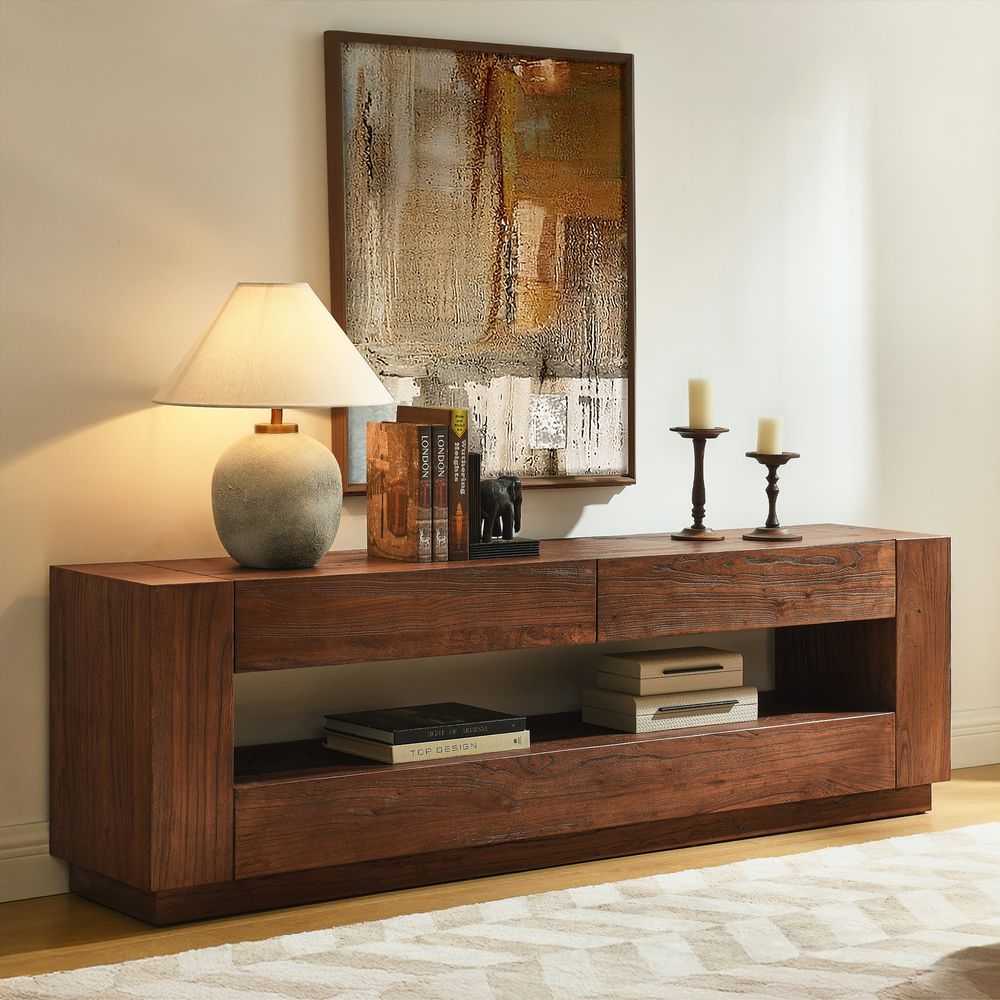
Torben 70-Inch Old Elm Media Console
View Product
Caring for an Elm TV Stand
An elm TV stand can be maintained with the same basic care used for many finished wood furniture pieces. The appropriate routine depends on the finish, so always follow the manufacturer's instructions.
For everyday cleaning, dust the surface with a soft, dry microfiber cloth. Wipe spills promptly with a slightly damp cloth and avoid harsh chemical cleaners, abrasive pads, or excessive water.
Some elm furniture uses penetrating oil finishes, while other pieces have brushed, glazed, or sealed surfaces. These finishes have different maintenance requirements. For example, certain oil finishes may allow minor scratches to be treated with additional finish, while other surfaces require specific cleaning or repair products.
Indoor humidity is another consideration. Wood naturally responds to changes in moisture, so try to maintain reasonably consistent conditions throughout the year. Avoid placing the console directly beside a radiator, heating vent, or other source of concentrated heat.
Use coasters under drinks and avoid placing hot objects directly on the surface. These simple habits help protect the finish from stains, heat marks, and scratches.
What to Check Before You Buy an Elm TV Stand
Before choosing an elm media console, look beyond its appearance. The material, construction, dimensions, and storage layout all affect how well it works in your home.
-
Wood construction: Check whether the console uses solid elm, elm veneer, or a combination of materials. If it uses veneer, look for information about the core material.
-
Drying process: Look for information about kiln-drying and wood preparation, as moisture control helps reduce the risk of warping.
-
Natural variations: Check whether the manufacturer describes knots, grain differences, small splits, or joint lines as part of the wood's natural appearance.
-
TV size compatibility: Compare the actual width of your television with the console dimensions and check the manufacturer's recommended screen size.
-
Storage layout: Consider whether you need drawers for smaller accessories, cabinets for concealed storage, or open shelving for media equipment.
-
Cable management: Look for back-panel openings or other provisions for power cords, HDMI cables, and connected devices.
-
Hardware and joinery: Check drawer construction, hinges, slides, and door movement. Dovetail joints and well-fitted hardware can contribute to durable furniture construction.
-
Return policy: Natural wood patterns vary from piece to piece. Review the return policy and product descriptions so you understand what variations to expect.
Comparing these details can help you choose an elm TV stand that fits both your living room and your everyday storage needs.
The Bottom Line: Is an Elm TV Stand Right for You?
An elm TV stand can be a good choice if you appreciate natural wood grain, warm finishes, and furniture with a distinctive appearance. Its interlocked grain gives it good resistance to splitting, while its lower surface hardness means it may show dents and scratches more readily than oak.
The quality of drying, construction, and finishing also matters. A well-made elm console should be suited to normal indoor use when properly maintained, but it still needs protection from excessive moisture changes and everyday surface damage.
If you prefer harder surfaces and a more familiar grain pattern, oak may be a better fit. If you enjoy varied wood patterns and want an alternative to more common furniture materials, elm is worth considering.
FAQs
Is elm a good wood for a TV stand?
Yes. Elm is suitable for indoor TV stands because its interlocked grain offers good resistance to splitting. However, it is softer than oak and may show dents and scratches more easily. Proper drying and an appropriate finish are also important for long-term performance.
Is elm wood softer than oak?
Generally, yes. American elm has a Janka hardness rating of around 830 lbf, compared with approximately 1,290 lbf for red oak and 1,350 lbf for white oak. This means oak typically offers better resistance to dents and surface wear. Different elm and oak species can have different hardness ratings.
What is old elm wood?
Old elm generally refers to elm wood sourced from mature trees or reclaimed timber, depending on the manufacturer's description. It is often valued for its natural grain variations, knots, and warm appearance. The term does not necessarily mean the wood comes from reclaimed buildings, so check the product's material and sourcing information.
Does elm wood scratch and dent easily?
Elm is softer than oak, so its surface may show dents and scratches more readily. The exact level of wear depends on the finish, wood construction, and how the furniture is used. Using coasters, cleaning spills promptly, and avoiding abrasive objects can help protect the surface.
Does elm wood warp?
Elm can warp or develop cracks if it is not dried and handled properly. Kiln-drying and appropriate moisture control help reduce these risks. After purchase, maintaining reasonably consistent indoor humidity can also help limit wood movement.
How do I clean and care for an elm TV stand?
Dust the surface with a soft microfiber cloth and wipe spills promptly with a slightly damp cloth. Avoid abrasive cleaners and excessive water. Follow the manufacturer's instructions for oil, glazed, or sealed finishes, and keep the furniture away from direct heat sources and extreme humidity changes.
Is elm wood expensive?
The price of elm furniture depends on the wood source, construction, finish, and craftsmanship. Solid elm furniture may cost more than pieces made with elm veneers over engineered wood. Reclaimed or specially selected elm can also carry a higher price depending on availability and processing.
How long does elm furniture last?
The lifespan of elm furniture depends on its construction, wood preparation, finish, and maintenance. Well-made indoor furniture can last for many years when kept in a suitable environment and cared for properly. Avoid excessive moisture changes and follow the manufacturer's maintenance recommendations.