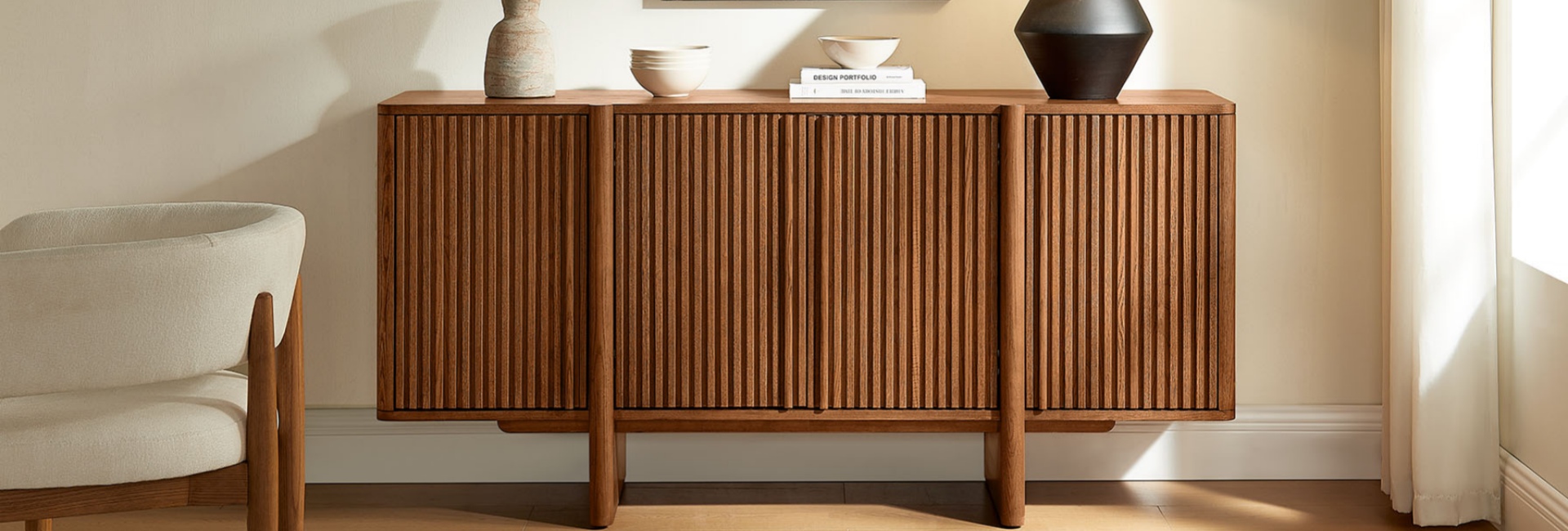
A dining room sideboard is the one piece most dining spaces are missing. It sits against the wall, holds the dishes and linens you only pull out on holidays, and gives you a flat surface for serving and styling. If you have been stacking plates in a kitchen cabinet three steps from the table, a sideboard closes that gap.
The easiest way to get the size right is to start with a tape measure, not a product photo. Measure your dining table, the wall where the sideboard will sit, and the walking space in front of it. From there, you can choose a dining room sideboard that fits the room instead of forcing the room to fit the furniture.
Table of Contents
- Quick Answer: What Size Sideboard Do You Need?
- What Is a Sideboard in a Dining Room?
- Why a Sideboard Earns Its Spot in the Dining Room
- How to Size a Sideboard for Your Dining Room
- How Long Should a Sideboard Be? The 60–75% Starting Point
- Height and Depth: The Two Numbers People Forget
- What Material Should a Dining Room Sideboard Be?
- Styles, From Mid-Century to Modern
- Should Your Sideboard Match Your Dining Table?
- Storage Layout: Doors, Drawers, Shelves, or a Mix
- Where to Put a Sideboard in the Dining Room
- How to Style the Top of Your Sideboard
- The Buying Checklist: Measure, Decide, Then Shop
- FAQs
- What is a sideboard in a dining room?
- How long should a sideboard be in a dining room?
- Should your sideboard match your dining table?
- How tall should a sideboard be?
- How deep is a standard sideboard?
- How much clearance do you need in front of a sideboard?
- Where should you place a sideboard in a dining room?
- What do you put on top of a sideboard?
- What is the best material for a dining room sideboard?
- Does a dining room need a sideboard?
Quick Answer: What Size Sideboard Do You Need?
For most dining rooms, these measurements are a useful starting point:
-
Length: Aim for about 60–75% of your dining table's length.
-
Height: Most sideboards are 30–36 inches tall.
-
Depth: 16–20 inches works well for most dining rooms.
-
Front clearance: Leave at least 30 inches of open floor for walking and chair movement.
-
End clearance: Allow about 6–12 inches where the layout permits.
-
Storage: Choose drawers for flatware, napkins, and other small items; adjustable shelves work well for larger serveware.
These are starting points rather than hard rules. Wall length, chair placement, door swings, vents, and the overall scale of the room all matter.
What Is a Sideboard in a Dining Room?
A sideboard is a low, long storage cabinet designed to sit against a wall, often in a dining room. Inside, you may find a combination of drawers, doors, and shelves for tableware, linens, and serving pieces. On top, there is a surface for food, drinks, or decor.
The name comes from the traditional use of a "side board" placed beside the main dining table to hold food before it was served and to store tableware. Today, the design has become more flexible, but the basic job remains the same: keep dining essentials close by while giving the room another useful surface.
Most sideboards fall somewhere around 48 to 72 inches wide, 30 to 36 inches tall, and 16 to 20 inches deep, although sizes vary considerably. That relatively low profile is part of what makes them useful in dining rooms. They provide storage without taking up the visual space of a tall cabinet or hutch.
Why a Sideboard Earns Its Spot in the Dining Room
A dining table gives you a place to eat. A dining room sideboard adds storage, serving space, and another visual anchor to the room.
A Place for the Things You Reach For
Holiday platters, charger plates, cloth napkins, good flatware, candles, placemats, and serving bowls all need somewhere to live. A sideboard keeps those items close to the dining area without filling your everyday kitchen cabinets.
That becomes especially useful when guests arrive. Instead of carrying stacks of dishes from another room, you can open a cabinet a few feet from the table and get what you need.
A Serving Station on Busy Nights
When you are hosting more than four people, the dining table can fill up quickly. A sideboard gives you another surface for a salad bowl, bread basket, drinks tray, coffee setup, or serving dishes.
It can also act as a temporary staging area while you are preparing a meal. When dinner is over, the same surface gives you somewhere to place dishes before they make their way back to the kitchen.
A Surface That Finishes the Room
An empty wall behind a dining table can make the room feel unfinished. A sideboard fills that space while adding practical storage.
Place a lamp, mirror, or piece of art above it and the wall gains a natural focal point. The key is to keep enough of the top available for serving when you need it.
How to Size a Sideboard for Your Dining Room
Sizing is where most buyers should start. A piece can look perfect online and still feel too large once you have chairs, people, doors, and walkways competing for the same floor space.
Before shopping for a dining room sideboard, measure three things:
-
Your dining table length
-
The available wall length
-
The open floor space in front of the sideboard
Those measurements will narrow down your choices quickly.
Length Should Relate to Your Table
A useful starting point is to choose a sideboard that is about 60–75% of your dining table's length. It does not need to match the table exactly.
For example, a 72-inch dining table could pair well with a sideboard around 44 to 54 inches wide. An 84- to 96-inch table gives you more room to move toward a wider sideboard, provided the room has enough clearance.
The wall matters just as much as the table. A longer sideboard may look right next to a large table but still overwhelm a narrow wall.
Height That Works for Serving
Most sideboards are around 30–36 inches tall. That range keeps the piece close to standard dining and kitchen furniture proportions while providing a comfortable surface for serving and display.
A 30- to 32-inch sideboard can create a lower, quieter look when storage and display are the main priorities. A 34- to 36-inch piece can be useful when you regularly use the top for serving.
Depth and the Clearance Everyone Forgets
Sideboard depth is easy to overlook when shopping online. A piece that is only a few inches deeper can make a noticeable difference once dining chairs and walking paths are involved.
For most dining rooms, 16–20 inches of depth is a practical range. Sixteen inches works well when floor space is tight. Around 20 inches gives you more room for larger serving pieces.
Then check the space in front. Aim for at least 30 inches of open floor so people can walk past and chairs can move without making the area feel cramped.
Also check for heating and cooling vents, outlets, door swings, and nearby corners before choosing the final size.
How Long Should a Sideboard Be? The 60–75% Starting Point
If you want the quick version, measure your dining table and start with a sideboard that is roughly two-thirds its length. The range below gives you a practical shopping reference.
These numbers are not a requirement. A 72-inch dining table, for example, does not automatically need a 44- to 54-inch sideboard. A shorter piece can work in a compact room, while a wider piece can work when you have a long wall and plenty of clearance.
One tip can save you from an expensive return: mark the sideboard footprint on the floor with painter's tape before you buy. Pull the dining chairs back, walk through the space, and check nearby doors and vents. If the taped outline feels tight, the furniture probably will too.
Height and Depth: The Two Numbers People Forget
Length gets most of the attention, but height and depth determine how the sideboard actually feels in the room.
Standard Sideboard Height
Most sideboards fall between 30 and 36 inches tall. A lower 30- to 32-inch piece can feel calm and understated, while a 34- to 36-inch sideboard provides a more substantial serving surface.
If the top will mainly hold decor, either range can work. If you regularly use it for serving, consider a height that feels comfortable when placing or picking up dishes.
Standard Sideboard Depth
Plan for around 16 to 20 inches of depth for most dining rooms.
That range can accommodate many everyday dinnerware pieces, folded linens, and serving items while keeping the cabinet relatively slim. If your room is tight, look closer to 16 inches. If you need more room for bulky serveware and have enough floor space, 18 to 20 inches may be more practical.
Always check the usable interior depth, not just the exterior measurement. Doors, drawer fronts, back panels, and shelving can reduce the space available inside.
What Material Should a Dining Room Sideboard Be?
Material affects appearance, durability, maintenance, and price. The right choice depends on how you use the sideboard and how much maintenance you are comfortable with.
Solid Hardwood
Solid hardwood is often a premium choice when durability, repairability, and natural grain are priorities. Oak, walnut, and cherry each have different grain patterns, colors, and characteristics.
A piece like the Rolf 63" Oak Sideboard shows how real wood can become part of the design itself. Its construction combines American solid oak, plywood, and engineered wood with oak veneers, while the vertical fluted detailing gives the front more texture and visual depth.
The advantage of hardwood is not simply that it is "real wood." It can also be repaired or refinished in ways that many engineered materials cannot. The trade-off is that solid wood can be heavier and may require more attention to changes in moisture and temperature.
For species-level information about wood characteristics, the Wood Database is a useful reference.
Veneer and Engineered Wood
Wood veneer is a thin layer of real wood applied over a core material such as plywood or engineered wood. Because the visible surface is genuine wood, veneer can provide the appearance and grain of solid timber while allowing manufacturers more flexibility with construction and cost.
Engineered cores can also provide dimensional stability, depending on the material and construction. The trade-off is repairability: veneer can be repaired or refinished to a degree, but it does not offer the same sanding depth as solid wood.
If you are comparing two sideboards, look beyond the word "wood" and check the actual material breakdown.
Mixed Materials and Accents
Glass doors can make a sideboard feel visually lighter and turn the contents into part of the display. Metal legs and handles can add a cleaner, more contemporary edge.
Stone and stone-look surfaces can also create contrast with a wood cabinet. Whatever the material, use trivets for hot dishes unless the manufacturer specifically states that the surface is heat-resistant.
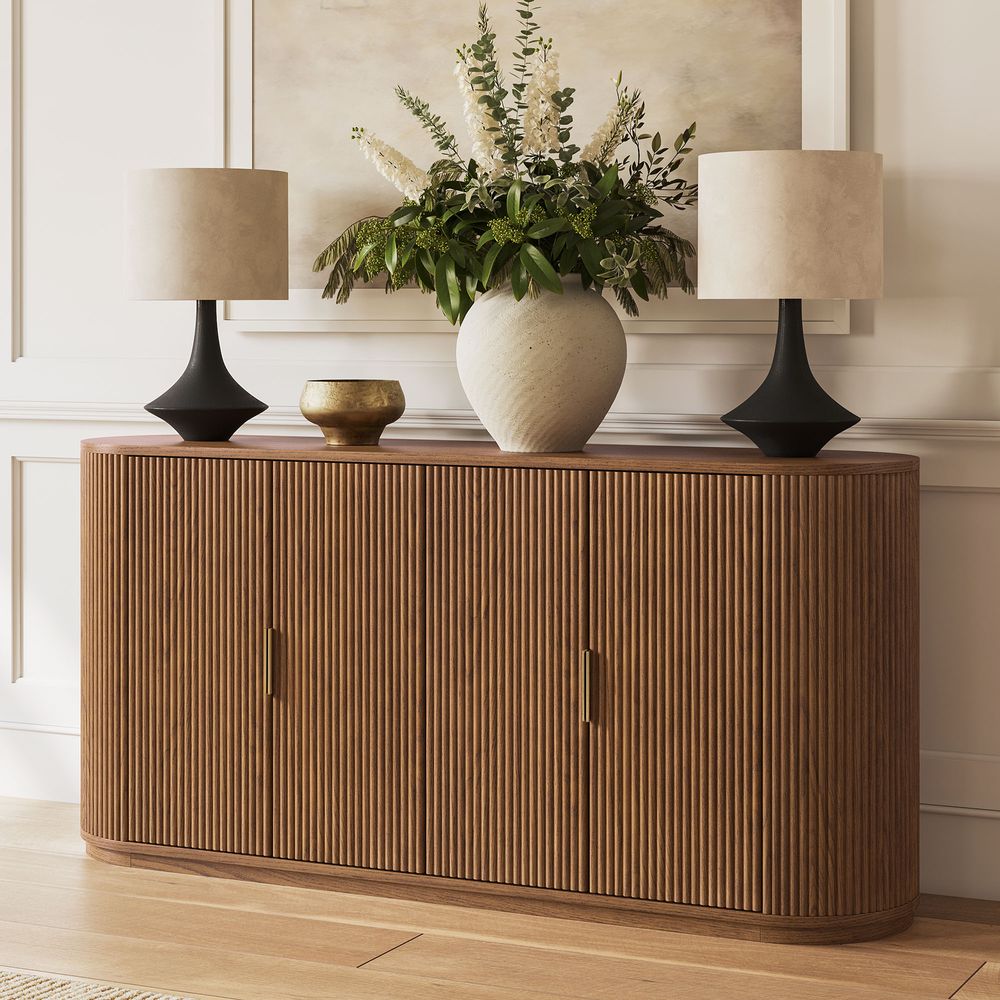
Rolf 63" Oak Sideboard
View Product
Styles, From Mid-Century to Modern
Style should support the rest of the dining room rather than compete with it.
Mid-Century Modern
Mid-century modern sideboards often feature tapered or angled legs, clean lines, warm wood tones, and relatively simple silhouettes.
The Ragnar 72" Mid-Century Sideboard is one example, with a warm brown wood finish, crossbar base, push-to-open doors, and dovetail-jointed drawers.
If your dining chairs already have angled legs or your table uses warm wood, a mid-century sideboard can connect those elements without requiring every piece in the room to match.
Modern Minimalist
Modern minimalist sideboards tend to reduce visible hardware and decorative details. Flat or subtly textured fronts, neutral finishes, and clean proportions help them blend into the room.
This approach works particularly well when your dining table, lighting, or artwork already provides a strong visual focal point.
Traditional and Farmhouse
Traditional sideboards may use paneled doors, turned legs, or more decorative profiles. Farmhouse designs often introduce rustic finishes, visible wood grain, or barn-inspired details.
Because these designs can carry more visual weight, make sure the surrounding room has enough space to balance the piece.
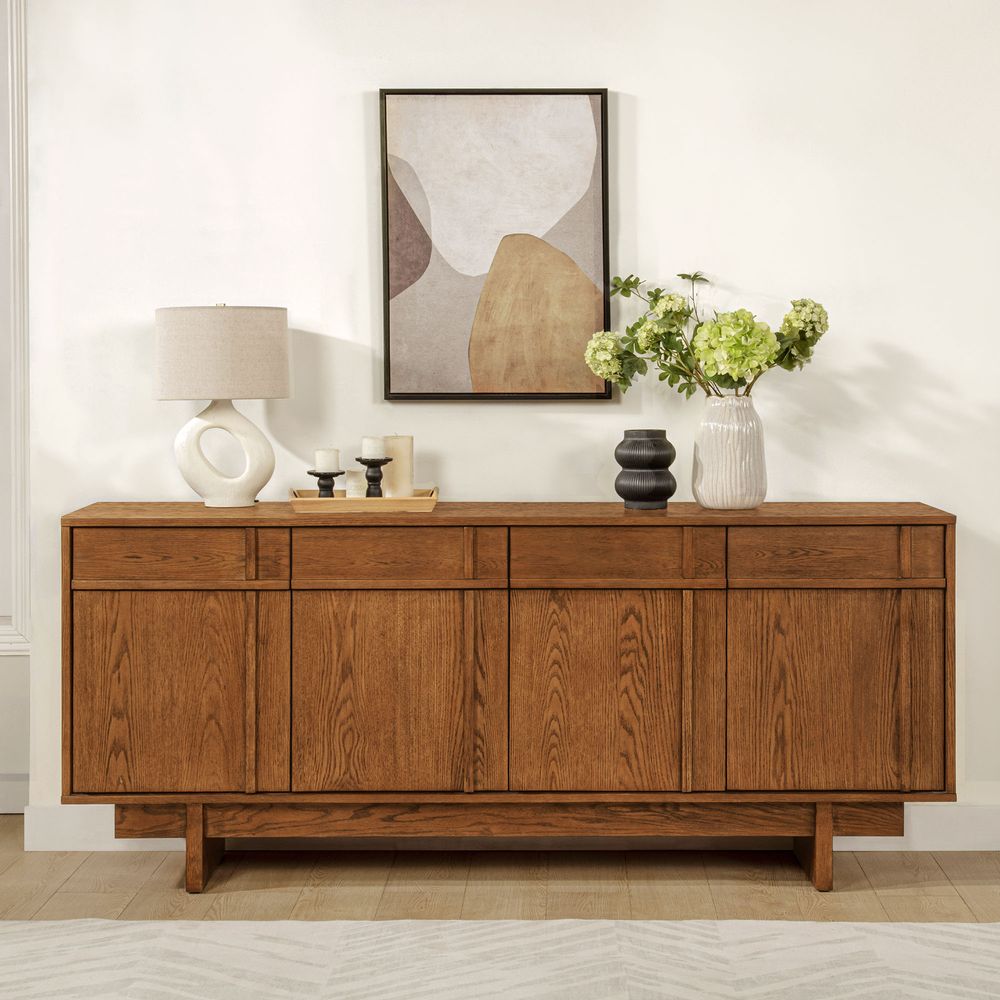
Ragnar 72" Oak Sideboard
View Product
Should Your Sideboard Match Your Dining Table?
It does not have to. In many dining rooms, a sideboard that complements the table looks more intentional than one that matches it exactly.
Match, Complement, or Contrast
An exact match is the safest approach, but it can sometimes make the room feel like it came from a single furniture set.
Complementing finishes is often easier. For example, a warm oak sideboard can work next to a lighter oak dining table without looking identical.
Contrast can also work. A dark sideboard against a lighter dining table creates a stronger focal point, while a walnut sideboard can add depth to a room with painted furniture.
The goal is not to make every piece identical. It is to make the finishes feel like they belong in the same room.
Watch the Undertones
Pay attention to whether the wood looks warm, cool, red, yellow, or neutral.
Warm floors and honey-toned oak furniture generally work well with other warm finishes. Cooler gray floors may pair more easily with charcoal, black, white, or cooler wood tones.
If you are unsure, compare your flooring, table, and sideboard finish in natural daylight. Store lighting can make colors look different from how they appear at home.
Storage Layout: Doors, Drawers, Shelves, or a Mix
The outside determines how the sideboard looks. The inside determines how useful it will be.
When Drawers Beat Doors
Drawers are especially useful for smaller, flatter items such as:
-
Flatware
-
Napkins
-
Placemats
-
Candles
-
Small serving accessories
They make these items easier to separate and reach without moving everything inside a cabinet.
Deep drawers can become harder to organize, so reserve them for items you use less often or larger pieces that need the extra space.
Why Adjustable Shelves Earn Their Keep
Adjustable shelves let you change the interior around what you actually own.
A tall vase, stack of chargers, serving bowl, and glassware may all need different amounts of vertical space. Adjustable shelving lets you make those changes instead of working around fixed shelf heights.
If two sideboards are otherwise similar, adjustable shelves can be a useful feature to prioritize.
Where to Put a Sideboard in the Dining Room
Placement and sizing go together. A sideboard that fits the wall can still feel wrong if it interferes with how people move through the room.
Against the Wall
A clear wall is the most common placement. Make sure doors and drawers can open fully and that the cabinet does not block a heating or cooling vent, useful outlet, or window.
Leave enough space around the piece so it does not feel wedged into the corner. Around 6 to 12 inches of end space can help when the layout allows it, but it is not necessary if the sideboard is intentionally fitted to the wall.
Near the Kitchen
If your dining room connects directly to the kitchen, placing the sideboard on the kitchen-facing wall can make serving easier.
It gives you a nearby place to stage food, drinks, and dishes and can shorten the distance you need to travel during a meal.
As a Soft Divider in an Open Plan
In an open-concept home, a low sideboard can help define the dining area without blocking the room completely.
Place it behind the dining table to create a visual boundary between the dining and living areas. Because the piece stays relatively low, it can separate zones while keeping sightlines open.
How to Style the Top of Your Sideboard
The top of a sideboard can be both decorative and useful. The trick is not filling every inch.
Start With One Focal Point
Choose one main anchor:
-
A mirror
-
A piece of art
-
A lamp
-
A large vase
Then build around it with a few smaller pieces.
A pair of lamps can frame artwork or a mirror, while a tray can group smaller objects together. Keep some open surface available if you regularly use the sideboard for serving.
Layer Heights and Change Things With the Seasons
Mix low, medium, and tall objects rather than placing everything at the same height. A tray, medium vase, and taller lamp create more visual variation than a row of objects of identical height.
You can also change smaller decorative pieces throughout the year. A bowl, vase, greenery, or stack of books can shift the look without requiring a completely new arrangement.
The Buying Checklist: Measure, Decide, Then Shop
Before buying a dining room sideboard, run through this checklist:
-
Measure your dining table length, available wall, and front clearance.
-
Start with a sideboard width around 60–75% of the table length.
-
Look for a height around 30–36 inches, depending on how you plan to use the top.
-
Keep depth around 16–20 inches unless your room can comfortably handle more.
-
Check the actual material construction instead of relying on "wood" in the product name.
-
Choose drawers for smaller items and adjustable shelves for mixed-size storage when possible.
-
Compare wood undertones with your dining table and flooring in natural light.
-
Check doorways, hallways, corners, vents, and outlets before ordering.
-
Use painter's tape to mark the furniture footprint if you are unsure about the size.
When you are ready to shop, explore Hernest's sideboards collection and compare the dimensions against your measurements first. The best dining room sideboard is the one that works with the room you actually have.
FAQs
What is a sideboard in a dining room?
A sideboard is a low, long storage cabinet designed to sit against a wall in a dining room. It typically stores dishes, linens, glassware, and serving pieces while providing a surface for serving food or displaying decor.
How long should a sideboard be in a dining room?
A useful starting point is to choose a sideboard that is about 60–75% of your dining table's length. For a 72-inch table, that is roughly 44–54 inches. The available wall space and clearance should determine the final size.
Should your sideboard match your dining table?
No. A sideboard can match, complement, or intentionally contrast with the dining table. Using related wood tones or finishes often creates a more natural look than choosing an identical furniture set.
How tall should a sideboard be?
Most sideboards are around 30–36 inches tall. Choose a lower height for a quieter look or a slightly taller piece if you regularly use the top for serving and staging food.
How deep is a standard sideboard?
A practical depth for many dining rooms is 16–20 inches. Choose closer to 16 inches when floor space is limited and closer to 20 inches when you need more interior storage and have enough clearance.
How much clearance do you need in front of a sideboard?
Aim for at least 30 inches of open floor in front of the sideboard for comfortable movement. If the area also needs to accommodate frequently used dining chairs or a busy walkway, additional clearance can make the room easier to use.
Where should you place a sideboard in a dining room?
A clear wall is the most common location. A wall near the kitchen can make serving easier, while a low sideboard behind a dining table can help define a dining zone in an open-plan room.
What do you put on top of a sideboard?
Start with one focal point such as a mirror, artwork, lamp, or large vase. Add a few smaller pieces at different heights, but leave some open surface if you use the sideboard for serving.
What is the best material for a dining room sideboard?
Solid hardwood is a strong choice when durability, natural grain, and repairability are priorities. Veneer over an engineered core can offer real wood on the visible surface with a stable construction. The best option depends on your budget, room, and maintenance preferences.
Does a dining room need a sideboard?
Not every dining room needs one. A sideboard becomes especially useful when you need additional storage for tableware, a nearby serving surface, or a way to fill an unused wall without adding a tall cabinet.