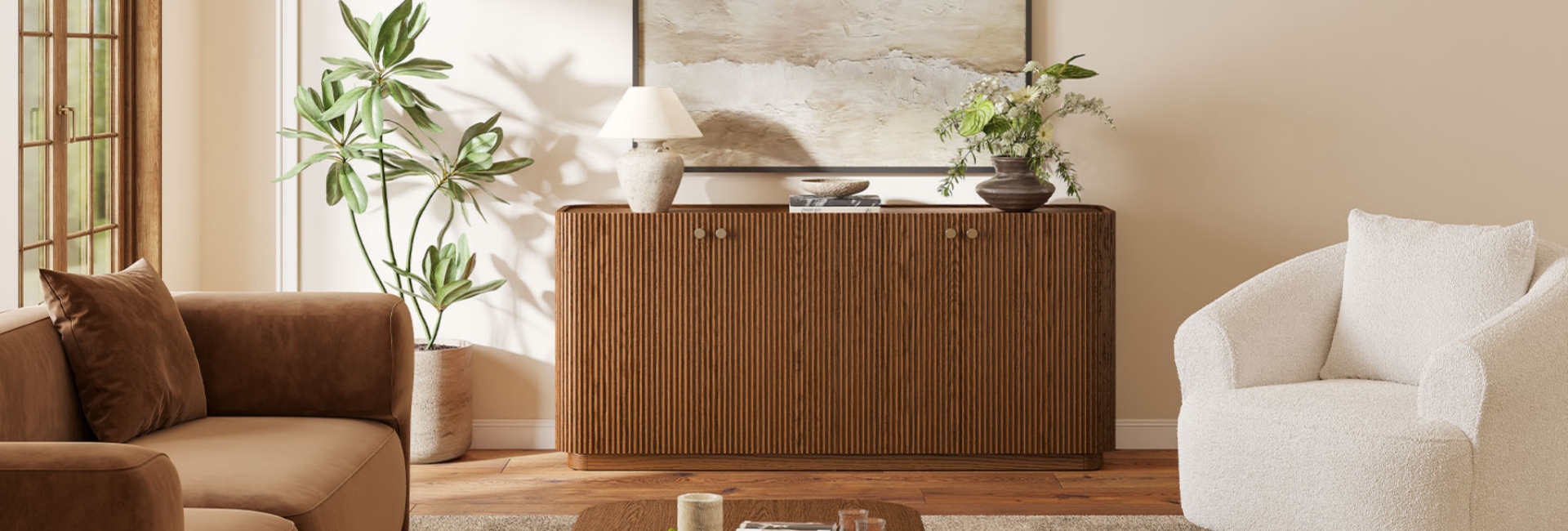
A 72 inch sideboard gives you six feet of storage and serving space without taking over the room. It can hold dinnerware, linens, barware, and serving pieces while providing a long surface for meals, decor, or everyday use. This guide covers how to measure for one, choose the right storage layout and material, and place a 72-inch sideboard in your home.
Table of Contents
- Why Choose a 72 Inch Sideboard?
- Sideboard, Buffet, or Credenza: What Is the Difference?
- How to Measure Your Space for a 72 Inch Sideboard
- 72 Inch Sideboard With Drawers vs. Doors vs. Open Shelving
- Materials: Solid Wood, Veneer, and Engineered Wood
- How to Choose a Style for a 72 Inch Sideboard
- Where Does a 72 Inch Sideboard Work Best?
- Storage Planning: What Goes Where
- Assembly, Care, and Long-Term Use
- How to Style the Top of a 72 Inch Sideboard
- Budget and Value: Where Should You Spend More?
- FAQs
- What size sideboard do I need for my dining room?
- How tall should a sideboard be?
- How deep should a sideboard be, and how much clearance do I need?
- Is a 72 inch sideboard too big for a small dining room?
- What is a 72 inch sideboard with drawers best for storing?
- What material is best for a sideboard: solid wood, veneer, or MDF?
- Can a 72 inch sideboard work as a TV stand or media console?
- How should I style the top of a 72 inch sideboard?
Why Choose a 72 Inch Sideboard?
A 72 inch sideboard offers a useful middle ground between compact storage cabinets and oversized dining room furniture. At six feet wide, it provides substantial storage while working with many six- to eight-person dining setups.
The right size ultimately depends on your table, wall length, and available walking space. A 72-inch sideboard can work particularly well with a longer dining table, where a shorter cabinet may leave too much unused wall space.
The top is another advantage. Six feet of surface gives you room for serving dishes, lamps, artwork, plants, or other decor without having to choose between function and display.
The key is proportion. A 72-inch sideboard should have enough room around it to look intentional and allow people to move comfortably through the dining area.
Sideboard, Buffet, or Credenza: What Is the Difference?
In modern furniture retail, the terms sideboard, buffet, and credenza overlap considerably. Height, depth, storage configuration, and intended placement are usually more useful than the name alone.
These are general ranges rather than strict industry standards, and individual designs vary.
A sideboard typically sits around dining-table height and works well for storage and serving. A buffet may be slightly taller, while a credenza is often lower and longer, making it useful behind a sofa, beneath a window, or along an office wall.
For a 72 inch sideboard, focus less on the label and more on the actual dimensions. A piece around 30 to 36 inches tall will generally work well in a dining room, but the right height depends on how you plan to use the surface.
How to Measure Your Space for a 72 Inch Sideboard
A 72-inch sideboard needs more than 72 inches of wall space. Before buying, measure the wall, the furniture around it, and the walking path.
Wall Width: Leave Some Breathing Room
Start with the clear wall width. A 72-inch sideboard physically needs at least 72 inches of uninterrupted space, but a little additional room on either side usually creates a more balanced look.
For example, an 84-inch wall would leave roughly six inches on each side of a 72-inch cabinet. You do not need to follow that exact proportion, but some visible wall space can keep a large sideboard from looking wedged into the room.
Also check for:
-
Door and window trim
-
Baseboards and outlets
-
Radiators or vents
-
Wall-mounted artwork
-
Nearby doors and cabinet swings
Compare the Sideboard With Your Dining Table
There is no single required ratio between a dining table and sideboard. Instead, consider the overall proportions of the room.
A 72-inch sideboard can work particularly well with an 84- to 96-inch dining table, but it can also work with other table sizes if the wall and circulation space allow it.
If your table is only 60 inches long, for example, a 72-inch sideboard may become the dominant piece on that wall. That is not necessarily a problem, but it should be an intentional design choice.
Check Depth and Walking Clearance
Most sideboards are approximately 16 to 22 inches deep, with 18 to 20 inches being common.
The more important measurement is the open space in front of the cabinet. Aim for at least 30 inches of clearance where possible, and closer to 36 inches is more comfortable in areas where dining chairs are pulled out or people regularly walk through.
Before ordering, use painter's tape to mark the full footprint of the sideboard. Walk around it, pull out a dining chair, and open nearby doors and drawers. This simple test can reveal clearance problems before the furniture arrives.
Match the Height to Your Table
A sideboard around 30 to 34 inches high will generally sit comfortably with a standard dining table around 30 inches high.
If you plan to use the sideboard primarily as a serving surface, a slightly taller design can also work. For display-focused use, a lower profile may create a better visual relationship with the rest of the room.
72 Inch Sideboard With Drawers vs. Doors vs. Open Shelving
The storage layout matters just as much as the overall width. A six-foot cabinet can hold a lot, but the wrong configuration can make everyday items harder to organize.
Drawers
A 72 inch sideboard with drawers is useful for smaller items that you reach for regularly, including flatware, napkins, coasters, placemats, and linens.
Pay attention to drawer depth rather than simply counting the number of drawers. Shallow drawers are useful for flat items but may not accommodate larger serving pieces.
Dovetail joints can be a useful indicator of drawer construction quality, particularly when they are paired with sturdy drawer boxes and well-fitted hardware. They are worth checking when comparing otherwise similar pieces.
The Vera 72" Sideboard is one Hernest option designed around this type of storage. Its 72-inch width combines drawers with enclosed cabinet space, while dovetail drawer construction adds durability to a high-use part of the cabinet.
Doors and Adjustable Shelves
Cabinet compartments are better suited to larger or taller items such as serving platters, bowls, stacks of plates, and small appliances.
Adjustable shelves are especially useful because they allow you to change the storage layout as your needs change. Before buying, measure your largest platter or serving piece and compare it with the cabinet's usable interior dimensions.
Open Shelving
Open shelving works well when you want to display barware, books, plants, or decorative pieces. The trade-off is that everything remains visible and needs to be kept relatively organized.
For everyday dining storage, a combination of drawers and enclosed cabinets is usually easier to maintain.
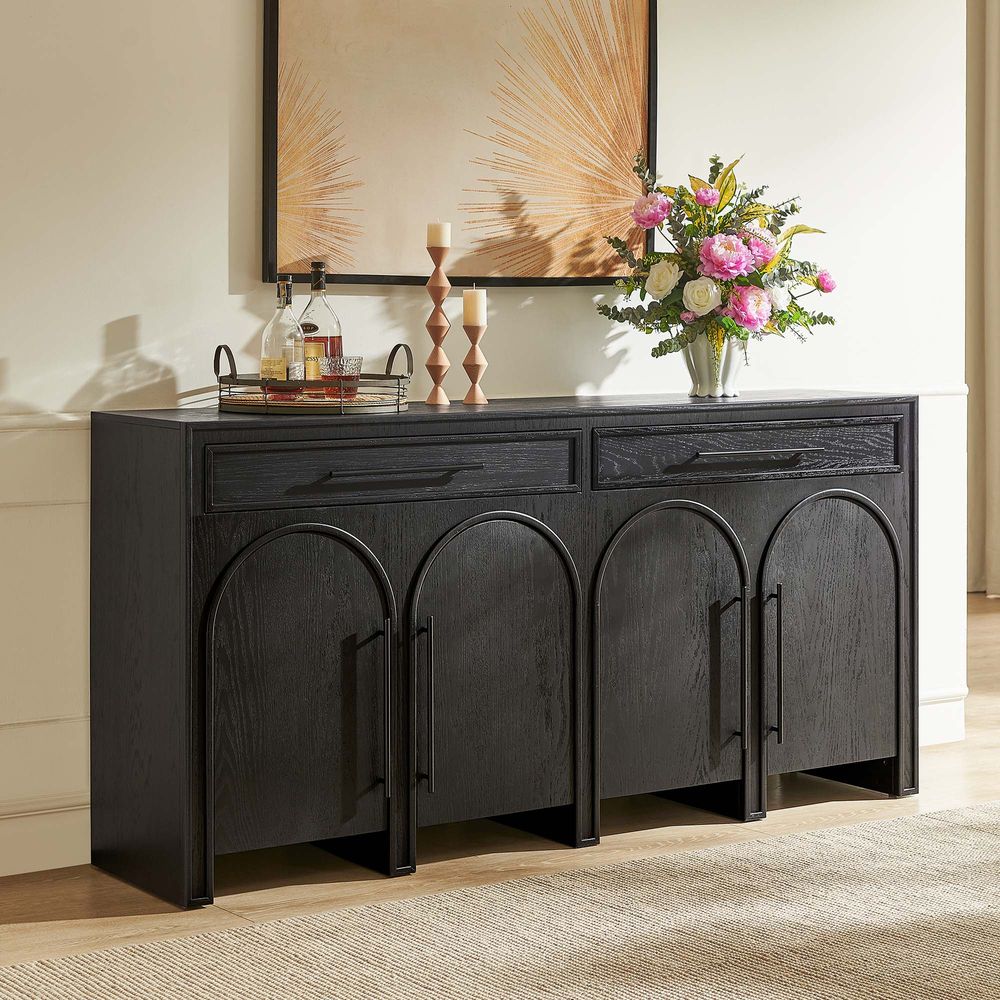
Vera 72" Sideboard
View Product
Materials: Solid Wood, Veneer, and Engineered Wood
The material affects the sideboard's appearance, durability, weight, and price. Construction quality matters just as much as the material category.
Solid Wood
Solid wood, including oak and walnut, is often chosen for its natural grain, durability, and ability to be refinished depending on the finish and construction.
The trade-offs are higher weight and cost. Solid wood can also respond to changes in temperature and humidity, so keeping it away from extreme heat, direct sunlight, and damp conditions is important.
Wood Veneer Over an Engineered-Wood Core
Quality veneer over a stable engineered-wood core can offer a balance of appearance, durability, and cost.
The quality of the veneer, substrate, joinery, finish, and hardware all matter. A well-constructed veneer piece can be a practical choice for a dining room without requiring the weight or cost of a fully solid-wood cabinet.
MDF or Particleboard
MDF and particleboard can make furniture more accessible at lower price points. Their long-term performance depends on factors such as board density, edge treatment, hardware, moisture exposure, and overall construction.
Rather than judging a sideboard solely by the material name, look at how the material is used throughout the cabinet.
Look Beyond the Material Label
Details such as kiln-dried wood, quality joinery, solid drawer boxes, adjustable shelving, and well-fitted hardware can tell you more about a piece's construction than a single material description.
Proper kiln-drying can help reduce moisture-related movement in wood, although overall construction and hardware also affect long-term alignment.
How to Choose a Style for a 72 Inch Sideboard
A 72-inch sideboard occupies enough wall space to become a major visual element, so choose a design that works with the furniture you already own.
Mid-Century Modern
Mid-century modern sideboards often feature clean lines, tapered or structured legs, warm wood tones, and relatively simple fronts. They work especially well with dining tables that use similar wood tones or streamlined silhouettes.
The Ragnar 72" Sideboard takes this direction with a natural oak finish, wood construction and oak veneers, a crossbar base, and push-to-open cabinet doors. Its 72-inch width gives the design enough presence to anchor a longer dining wall.
Modern and Minimalist
Modern sideboards typically rely on simple fronts, restrained hardware, and understated finishes. If your dining room already has a clean, streamlined look, a sideboard with subtle grain and minimal hardware can reinforce that style without becoming the focal point.
Farmhouse and Rustic
Farmhouse and rustic designs often use warmer finishes, visible wood character, and simpler hardware. These styles can work well in relaxed dining spaces, particularly when paired with natural wood tables and textured fabrics.
Traditional
Traditional sideboards may feature richer finishes, decorative hardware, or more detailed profiles. They are a natural fit for formal dining rooms and traditional furniture collections.
If you expect your furniture style to change over time, a simpler silhouette can be easier to mix with different tables and chairs.
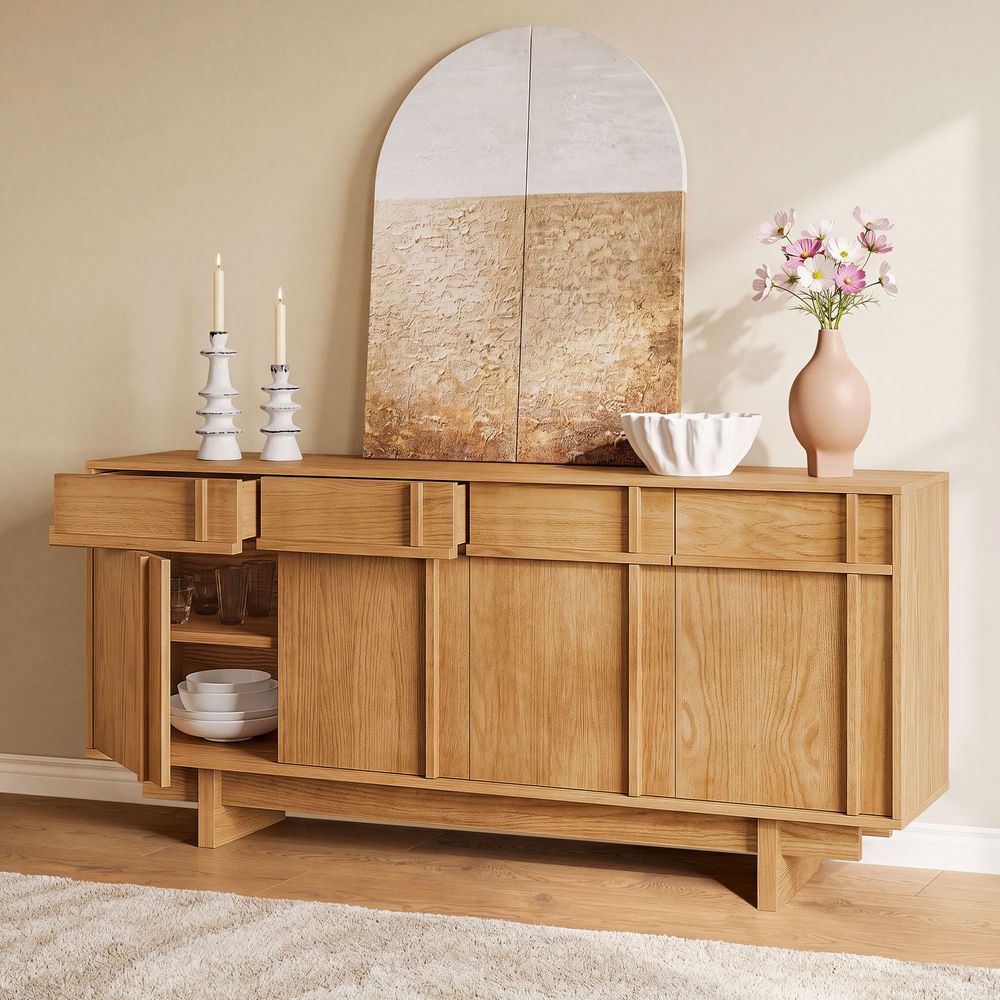
Ragnar 72" Natural Sideboard
View Product
Where Does a 72 Inch Sideboard Work Best?
A 72-inch sideboard is not limited to the dining room. Its long, low profile can provide useful storage in several areas of the home.
Dining Room
The dining room is the most obvious choice. Place the sideboard along a long, uninterrupted wall to store dinnerware, linens, serving pieces, and entertaining supplies.
A 72-inch sideboard can also provide a useful serving surface during larger meals while giving you space for artwork or a mirror above it.
Living Room as a Media Console
A 72-inch sideboard can work as a media console if its height, depth, and construction are appropriate for the television.
Look for a lower profile if you are placing a large TV above it, and check whether the cabinet provides openings for cables and ventilation if your electronics require them.
The cabinet should also be able to support the weight of your equipment. Always follow the manufacturer's weight and installation recommendations.
Entryway
A long sideboard can provide substantial entryway storage for keys, mail, bags, and other everyday items.
In a narrower entry, depth becomes especially important. Measure the distance between the cabinet and the opposite wall or door swing before choosing a 72-inch model.
Home Office
In a home office, a sideboard can store printers, paper, office supplies, files, and other equipment behind closed doors.
Its low profile can also keep a workspace visually calmer than a collection of separate storage units.
Storage Planning: What Goes Where
Before filling your sideboard, divide the storage according to how often you use each item.
Use drawers for everyday small items:
Flatware, napkins, coasters, placemats, candles, and other accessories are easier to organize in drawers.
Use cabinets for larger or occasional items:
Platters, bowls, serving trays, small appliances, and seasonal dining pieces can go behind doors.
Use open shelves for display:
Barware, books, plants, and decorative objects are better suited to open storage because they remain visible.
The Ragnar 72" Sideboard combines drawers and enclosed compartments, making this type of organization straightforward. Push-to-open cabinet doors also avoid protruding handles and can give the front a cleaner appearance.
Before buying, use this checklist:
-
Count the drawers and consider what will go inside them.
-
Measure your largest platter and compare it with the cabinet's usable depth.
-
Look for adjustable shelves if you need flexible storage.
-
Check drawer construction and hardware.
-
Confirm the top's weight capacity if you plan to place heavy objects or electronics on it.
-
Check the overall dimensions against your room's walking paths.
Assembly, Care, and Long-Term Use
A 72-inch sideboard is a large piece of furniture, so plan the delivery route before it arrives. Measure doorways, stairways, elevators, and tight corners if necessary.
If the cabinet requires assembly, having a second person available can make handling a six-foot piece much easier. Follow the manufacturer's assembly instructions rather than relying on general furniture assembly methods.
For routine care, use a soft cloth and follow the cleaning instructions provided for the specific finish. For deeper cleaning, avoid automatically applying polish, wax, or other products unless the manufacturer recommends them.
Wipe spills promptly and avoid prolonged exposure to moisture. Direct sunlight can also affect some wood finishes over time, so consider the position of the cabinet if it receives strong afternoon sun.
How to Style the Top of a 72 Inch Sideboard
A six-foot surface gives you plenty of room to decorate, but leaving some open space usually creates a cleaner result.
Start with one main focal point, such as:
-
A large framed artwork
-
A round mirror
-
A table lamp
-
A tall vase or plant
Then add smaller objects at different heights. A few books, a decorative bowl, a plant, or a framed photograph can fill the remaining space without making the surface feel crowded.
Consider the sideboard's finish when choosing decor. A warm wood finish can pair naturally with other warm materials, while a darker finish can provide contrast for lighter artwork and accessories.
You can also change the styling throughout the year. Seasonal branches, flowers, candles, or holiday decor can refresh the space without changing the furniture itself.
Budget and Value: Where Should You Spend More?
The price of a 72-inch sideboard can vary widely depending on material, construction, finish, hardware, and brand.
Rather than choosing based on material alone, compare the features that affect everyday use:
-
Drawer construction
-
Hardware quality
-
Adjustable shelving
-
Finish durability
-
Cabinet construction
-
Assembly requirements
-
Weight capacity
-
Warranty and return policy
For a piece that you expect to keep for years, construction quality can be more valuable than a trend-driven finish.
The Vera 72" Sideboard and Ragnar 72" Sideboard are both designed around the dimensions and storage needs of a six-foot sideboard, giving shoppers options for different room styles and storage preferences.
When comparing models, focus on the specifications that will affect how you actually use the cabinet rather than paying simply for a particular material label or decorative trend.
FAQs
What size sideboard do I need for my dining room?
A 72-inch sideboard works well when you have enough wall width and walking clearance around it. It can pair particularly well with longer dining tables, but the best size depends on your table, wall, sideboard depth, and room layout.
How tall should a sideboard be?
For many dining rooms, a sideboard around 30 to 36 inches high works well with a standard dining table. Choose based on how you plan to use the surface and how its height relates to nearby furniture.
How deep should a sideboard be, and how much clearance do I need?
Most sideboards are approximately 16 to 22 inches deep. Aim for at least 30 inches of open space in front where possible, and around 36 inches is more comfortable when dining chairs are pulled out or the area is frequently used as a walkway.
Is a 72 inch sideboard too big for a small dining room?
It can be if wall space or circulation is limited. A 72-inch sideboard needs a sufficiently long wall and enough room for people to move around it comfortably. In a smaller room, a 50- to 60-inch model may be easier to accommodate.
What is a 72 inch sideboard with drawers best for storing?
Drawers are useful for flatware, napkins, linens, coasters, placemats, and other smaller items. Use the enclosed cabinets for larger pieces such as platters, bowls, serving dishes, and small appliances.
What material is best for a sideboard: solid wood, veneer, or MDF?
There is no single best material for every home. Solid wood offers natural grain and durability, quality veneer over engineered wood can balance appearance and cost, and MDF or particleboard can provide a more affordable option. Construction quality and finish are important in every category.
Can a 72 inch sideboard work as a TV stand or media console?
Yes, provided its height, depth, weight capacity, and cable access are appropriate for your TV and equipment. A lower 72-inch sideboard often works better beneath a large television because it keeps the overall setup visually balanced.
How should I style the top of a 72 inch sideboard?
Start with one focal point, such as artwork, a mirror, or a lamp. Add a few smaller objects at different heights and leave some open surface. Keeping the number of decorative pieces limited usually creates a cleaner look.