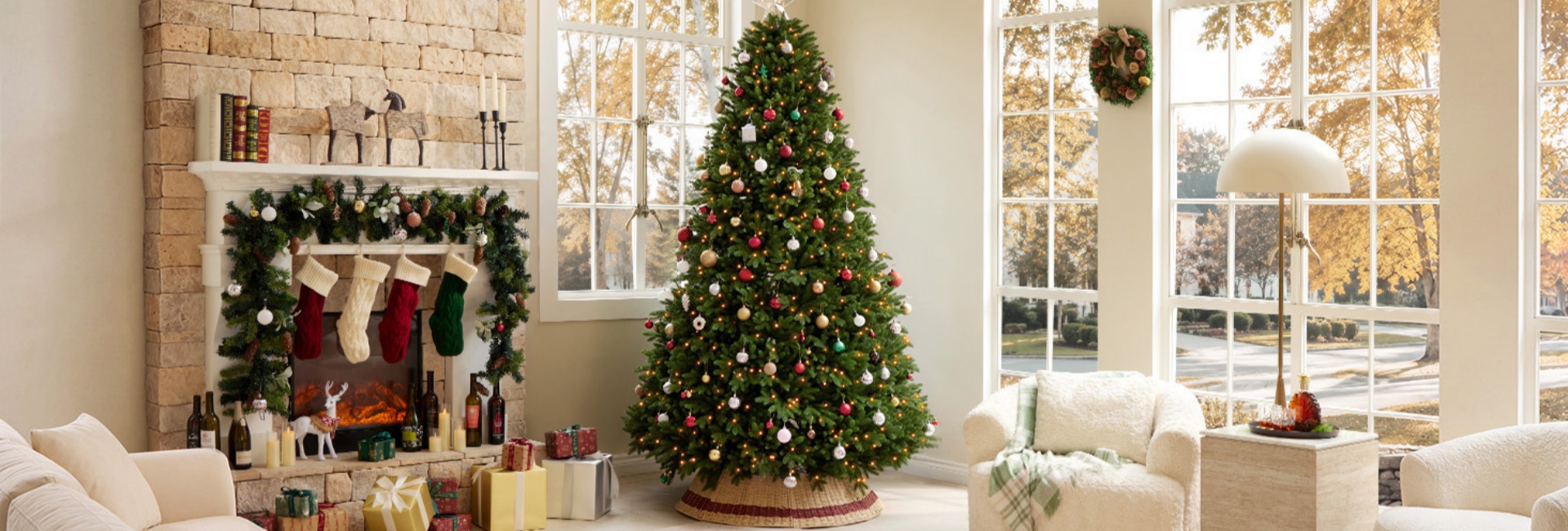
The best Christmas tree is not the one with the most ornaments. It is the one that makes the room feel warmer, gives your eye somewhere to land, and makes your family want to gather around it.
The best ideas of Christmas tree decorating use five elements: layered lighting, ribbon, ornaments, texture, and one clear focal point. Start with the tree size and color palette, add lights first, then ribbon, large ornaments, smaller decorations, and a topper. For an elegant look, keep the palette restrained; for a family-friendly tree, mix meaningful ornaments with interactive lighting.
Whether you want an elegant Christmas tree, simple decor for Christmas tree, a playful family display, or a modern 2026 holiday look, the right approach depends on your space, decorating time, and the feeling you want to create. This guide brings together 15+ creative ideas, designer-inspired decorating techniques, 2026 trends, small-space solutions, and practical fixes for the most common Christmas tree decorating mistakes.
Table of Contents
- What Makes a Christmas Tree Look Magical?
- 15+ Christmas Tree Decorating Ideas for Every Style
- Create a Classic Red, Green & Gold Christmas Tree
- Try an Elegant Champagne & Gold Tree
- Build a Magical Winter Wonderland Tree
- Create a Nature-Inspired Woodland Christmas Tree
- Design a Statement Velvet Bow Tree
- Create a Monochromatic Christmas Tree
- Mix Vintage Ornaments With Modern Decor
- Create a Blue & White Christmas Tree
- Try a Cozy Cottage Christmas Tree
- Create a Modern Minimalist Christmas Tree
- Build a Whimsical or Playful Christmas Tree
- Create a Rainbow Christmas Tree
- Use Unexpected Objects as Tree Decorations
- Create a Family Memory Tree
- Turn the Tree Into an Interactive Family Experience
- How to Decorate a Christmas Tree Like a Designer
- Choose Your Theme Before Buying Decorations
- Choose the Right Tree Size and Shape
- Fluff and Shape the Tree Before Decorating
- Check the Lights Before Decorating
- Add Garland or Ribbon
- Add Large Ornaments First
- Add Medium and Small Ornaments
- Add Picks and Natural Elements
- Finish With the Tree Topper
- Step Back, Edit, and Photograph the Finished Tree
- Christmas Tree Decoration Ideas by Interior Style
- 2026 Christmas Tree Decorating Trends to Watch
- Simple Decor for Christmas Tree: 7 Easy Ideas
- How to Style Your Christmas Tree With the Rest of the Room
- What Not to Do When Decorating a Christmas Tree
- Christmas Tree Decorating Checklist
- Final Takeaway: Make Your Christmas Tree Part of the Memory
- FAQs
- What Are Some Unique and Creative Christmas Tree Decor Ideas?
- How to Make a Christmas Tree Look Magical?
- What Are the Trends for Christmas Tree Decorating in 2026?
- What Is the Correct Order to Decorate a Christmas Tree?
- How Do You Make a Christmas Tree Look Elegant?
- How Many Ornaments Should You Put on a Christmas Tree?
- How Can I Decorate a Christmas Tree Simply?
- How Do I Decorate a Small Christmas Tree?
What Makes a Christmas Tree Look Magical?
A magical Christmas tree has more than sparkle. It has depth, movement, contrast, and a sense of story.
The most effective ideas of Christmas tree styling generally use several layers rather than relying on ornaments alone. Think of the tree as a three-dimensional canvas: light creates atmosphere, ribbon creates movement, ornaments provide visual punctuation, and natural or textured accents add character.
Create a Strong Visual Focal Point
Every successful tree needs something that immediately catches the eye.
That might be a large velvet bow, an unusual topper, a cluster of oversized ornaments, a dramatic floral spray, or even a striking lighting effect. You do not need five focal points. One strong focal element is usually enough.
For example, if your topper is an oversized champagne bow, let the rest of the tree support it with smaller bows, gold ornaments, ivory accents, and warm lighting.
This is one of the easiest ideas of Christmas tree decorating to apply because it gives you a clear starting point: choose the one thing you want people to notice first.
Create Depth Instead of Filling Every Branch
If your tree looks flat despite having plenty of decorations, the problem is probably placement.
A tree looks fuller when decorations occupy different visual depths rather than sitting only on the outer branch tips. Place some larger pieces closer to the trunk, medium ornaments in the middle layer, and smaller accents toward the tips. This creates shadows, highlights, and a more dimensional display without adding more decorations.
Among all the Christmas tree decorating ideas, this is one of the most useful because it changes the appearance of the tree without requiring you to buy anything new.
Use Lighting to Create the “Magic”
Lighting is what makes the tree come alive after sunset.
Warm white lights create a traditional, sophisticated glow. Multicolor or RGB lighting can make the same tree feel more playful and contemporary. The key is to make the lighting part of the design rather than an afterthought.
Hernest takes this idea further with its Magic Wand Christmas Tree, which combines pre-installed LED lighting with interactive gesture control. A swipe can trigger different lighting effects, allowing children and adults to participate in the tree-lighting experience.
That changes one of the simplest ideas of Christmas tree decorating—turning on the lights—into an actual holiday ritual.
15+ Christmas Tree Decorating Ideas for Every Style
There is no single “correct” Christmas aesthetic. The strongest ideas of Christmas tree decorating are the ones that fit the room, the people living in it, and the mood you want to create.
Create a Classic Red, Green & Gold Christmas Tree
If you want a tree that still looks right ten years from now, start with red, deep green, and gold.
Use warm white lights, red ornaments, gold accents, velvet ribbon, pinecones, and berry sprays. The trick is not to use equal amounts of every color. Let green remain the visual foundation, use red as the main accent, and reserve gold for highlights.
This classic combination works especially well in traditional, transitional, and family-oriented homes.
Try an Elegant Champagne & Gold Tree
For an elegant Christmas tree, replace bright primary colors with champagne, ivory, soft gold, and warm white.
Mix finishes rather than using metallic ornaments exclusively. Combine matte champagne balls with brushed gold, satin ribbon, pearl-like ornaments, and a few reflective pieces.
The result feels sophisticated because the interest comes from texture and light instead of visual clutter.
Build a Magical Winter Wonderland Tree
Use white, silver, frosted accents, snowflakes, crystal-like ornaments, and soft lighting.
A flocked tree can provide the snowy foundation, while silver ornaments catch the lights. Keep the palette restrained so the tree feels icy and luminous rather than overly shiny.
Create a Nature-Inspired Woodland Christmas Tree
Bring the outdoors inside with pinecones, dried citrus, berries, wood ornaments, greenery, and natural-fiber ribbon.
Natural materials also help prevent an artificial tree from feeling overly manufactured. Recent decorating guidance continues to highlight organic textures, handmade elements, and nature-inspired decoration as strong holiday directions.
Design a Statement Velvet Bow Tree
Oversized bows are having a major moment.
Choose one wide velvet ribbon in burgundy, emerald, ivory, or red and let it become the visual backbone of the tree. Instead of tightly wrapping it around every branch, create loose loops and billows that move downward.
Ribbon works particularly well when it is tucked into the branches at intervals rather than simply wound around the outside.
Create a Monochromatic Christmas Tree
Choose one color and explore it through different materials.
An all-white tree might combine matte white, ivory velvet, pearl accents, frosted greenery, and clear glass-like ornaments. A green tree could combine sage, forest, and olive shades.
The secret is variation. A monochromatic tree without texture can look flat; a monochromatic tree with texture can look remarkably sophisticated.
Mix Vintage Ornaments With Modern Decor
Do not put family heirlooms away simply because they do not match your new decorations.
Instead, surround vintage ornaments with contemporary ribbon, modern metallics, or a restrained color palette. The contrast makes sentimental pieces feel intentional.
This approach feels especially meaningful because the finished tree tells a story rather than looking like it came from one shopping trip.
Create a Blue & White Christmas Tree
Blue and white can create a cooler, collected look without becoming sterile.
Try navy, pale blue, ivory, silver, and a small amount of champagne. Add patterned ornaments if you want a more traditional feel, or keep the shapes simple for a modern interior.
Try a Cozy Cottage Christmas Tree
Plaid ribbon, wood ornaments, berries, pinecones, and warm lights immediately make a tree feel relaxed and welcoming.
This approach works especially well with wood furniture, fireplaces, neutral upholstery, and rooms where you want the Christmas tree to feel like part of the home rather than a separate display.
Create a Modern Minimalist Christmas Tree
Minimalism does not mean an empty tree.
Choose one dominant color, one primary texture, and a small number of meaningful ornaments. Let the foliage remain visible.
If you prefer simple Christmas tree decor, this is one of the most practical approaches. You spend less time decorating, yet every piece has more visual impact.
Build a Whimsical or Playful Christmas Tree
Have fun with oversized candy ornaments, gingerbread shapes, colorful baubles, miniature houses, playful characters, or unexpected shapes.
This style is particularly effective for families with children because it does not take itself too seriously.
Create a Rainbow Christmas Tree
Organize colors deliberately from one section to another rather than scattering every color randomly.
You can move from red to orange, yellow, green, blue, and purple, or use a smaller rainbow palette such as pink, coral, blue, and green.
Use Unexpected Objects as Tree Decorations
Try miniature picture frames, paper stars, fabric ornaments, wooden shapes, handmade decorations, dried citrus, or small keepsakes.
The best Christmas tree decorating ideas often use several layers rather than relying on ornaments alone.
Create a Family Memory Tree
Make the tree personal with photographs, children's handmade ornaments, travel souvenirs, annual ornaments, and heirlooms.
A family tree does not need to be perfectly coordinated. A consistent ribbon or color can provide enough structure to make the collection feel intentional.
Turn the Tree Into an Interactive Family Experience
This is where Hernest offers a distinctly different approach.
A Magic Wand Christmas Tree allows the lighting itself to become part of the decoration. With gesture-controlled RGB effects, family members can interact with the tree rather than simply looking at it.
For children, that can turn the annual tree-lighting moment into something they actively anticipate.
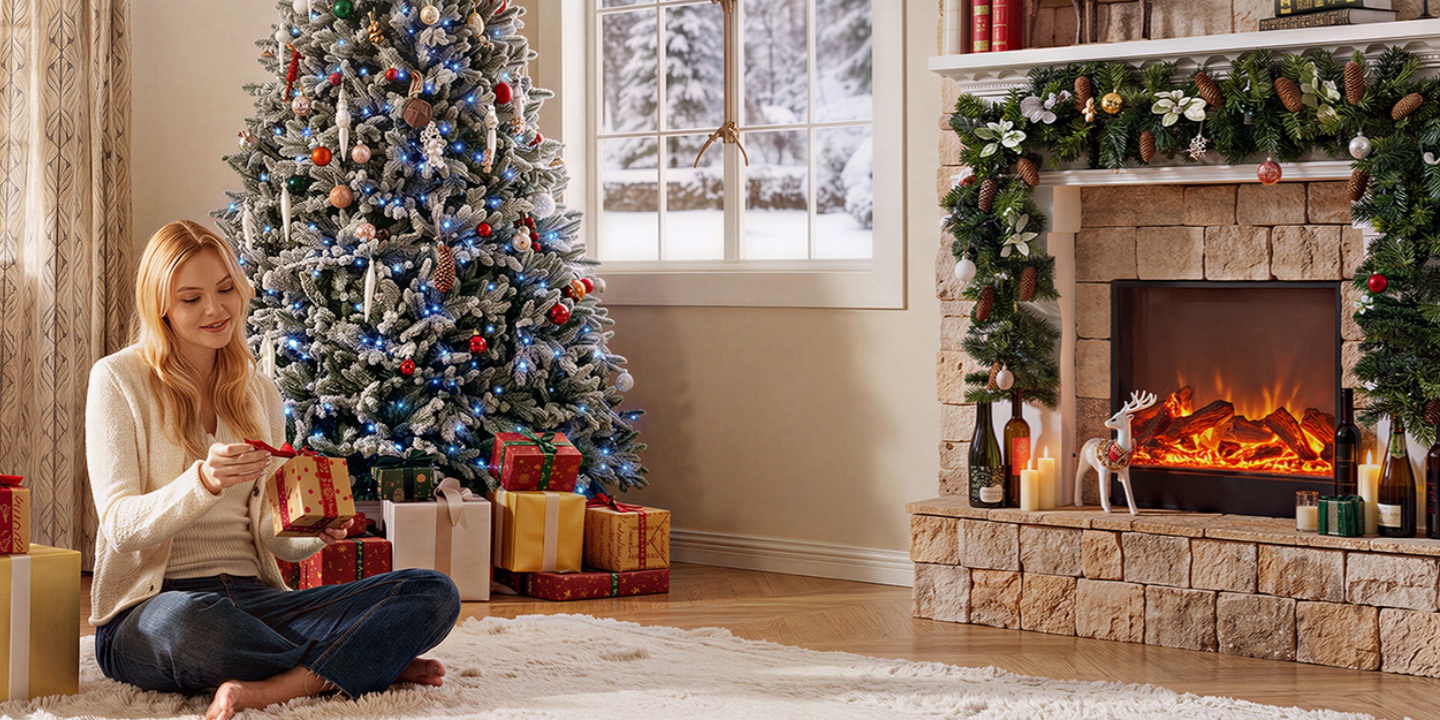
How to Decorate a Christmas Tree Like a Designer
If you are wondering how to decorate a Christmas tree properly, do not start by hanging ornaments.
Start by designing the structure.
Choose Your Theme Before Buying Decorations
Pick your colors, textures, and focal element first.
A simple formula is:
1 main color + 1 supporting color + 1 accent + 1 signature texture.
For example:
Ivory + champagne + gold + velvet.
This prevents the common problem of buying attractive decorations individually that look chaotic when placed together.
Choose the Right Tree Size and Shape
The tree needs to fit the architecture of the room.
As a general starting point, leave about 12 inches between the top of the tree and the ceiling for the topper and stand. A 6.5-foot tree can work comfortably in many rooms with 7–8-foot ceilings, while a 7.5-foot tree is better suited to rooms with more vertical clearance.
For narrow spaces, choose a slim profile. For a large living room, a full profile creates a stronger focal point.
Fluff and Shape the Tree Before Decorating
This step is easy to skip—and one of the biggest reasons artificial trees can look artificial.
Open each branch, separate the tips, vary their direction, and fill obvious gaps. Work from the inside outward and check the silhouette from several angles.
Decorating expert Julian Thomas calls this essential preparation, explaining that branches need to be spread and shaped so large gaps disappear.
Check the Lights Before Decorating
If the tree is pre-lit, test the connections before adding anything.
If you are adding lights yourself, distribute them through the depth of the branches rather than leaving every bulb on the outside.
The goal is not simply to see the bulbs. You want the foliage itself to glow.
Add Garland or Ribbon
Ribbon should establish the tree's movement before ornaments compete for attention.
Use one to three complementary ribbons, rather than layering every pattern you own. Wired ribbon is easier to shape into controlled loops and billows.
A practical decorating sequence is lights first, ribbon second, and ornaments afterward.
Add Large Ornaments First
Start with your largest ornaments and use them to establish the tree's visual balance. Place them at different heights and distribute them around the tree rather than concentrating them in one area. Once the major visual weight is established, smaller ornaments can be used to refine the design.
Add Medium and Small Ornaments
Now fill the middle and outer layers.
Once the larger ornaments are in place, use medium and small pieces to connect the color palette and fill remaining visual gaps. Reserve your most meaningful ornaments for locations where they can actually be seen rather than hiding them behind larger decorations.
Add Picks and Natural Elements
Floral sprays, pinecones, berries, branches, and greenery can change the silhouette of the entire tree.
Use them strategically. A few well-placed clusters generally look more intentional than dozens of identical picks.
Finish With the Tree Topper
The topper should complete the design, not fight it.
A large bow works beautifully on a lush tree. A simple star may be better for a minimalist tree. If the topper is extremely large, reduce the visual complexity elsewhere.
Step Back, Edit, and Photograph the Finished Tree
This is the step people skip most often.
Walk across the room. Look at the tree from the side. Take a photograph.
If one area feels heavy, move something. If one section looks empty, add one piece rather than five.
Professional guidance recommends a final sweep from multiple angles to correct gaps, spacing, and the topper's position.
Christmas Tree Decoration Ideas by Interior Style
Your tree should belong to the room.
Modern Organic Christmas Tree
Use cream, sage, natural wood, warm white lighting, and understated greenery.
Mid-Century Modern Christmas Tree
Pair warm wood tones with brass, cream, olive, deep orange, or sculptural ornaments. Keep the shapes clean so the tree complements rather than competes with the furniture.
Traditional Christmas Tree
Red, green, gold, plaid, velvet, pinecones, and warm lighting remain dependable choices.
Elegant Christmas Tree
Keep the palette controlled and emphasize champagne, ivory, gold, velvet, glass-like finishes, and warm light.
Farmhouse Christmas Tree
Use plaid, burlap, wood, berries, pinecones, and handmade-looking ornaments.
Scandinavian Christmas Tree
Keep it restrained with white, natural wood, paper decorations, neutral ornaments, and warm lighting.
Glam Christmas Tree
Layer metallics, velvet, crystal-like accents, deep jewel tones, and statement bows.
Small Apartment Christmas Tree
A slim profile, vertical ribbon, fewer large decorations, and integrated lighting can create a dramatic tree without consuming the room.
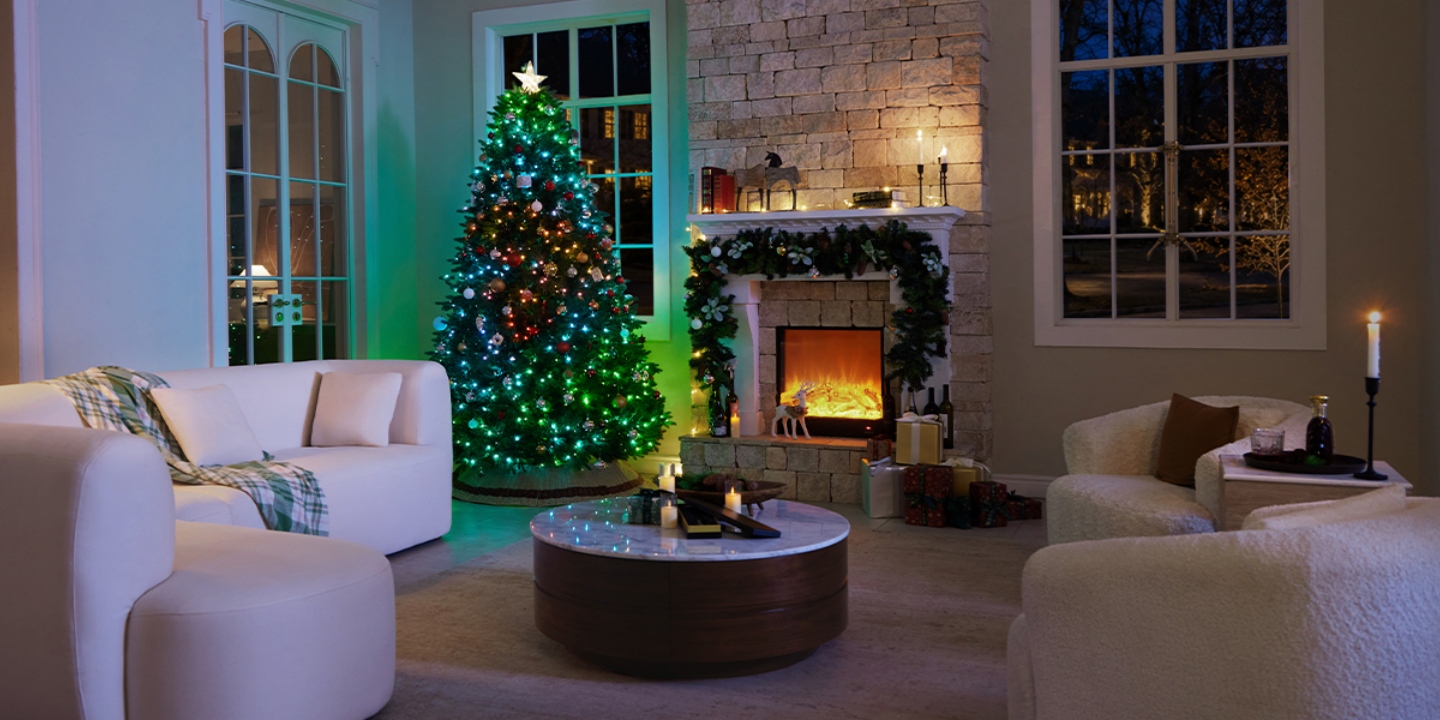
2026 Christmas Tree Decorating Trends to Watch
One notable direction for 2026 is personalization, with more decorators mixing vintage pieces, handmade accents, natural materials, and contemporary lighting.
Statement Bows and Oversized Ribbon
Large bows create immediate visual impact without requiring hundreds of ornaments. Current decorating coverage continues to highlight oversized bows, velvet, cascading ribbon, and vertical ribbon techniques.
Warm, Layered Metallics
Gold is moving away from an all-shiny look.
Combine brushed gold, champagne, brass-like finishes, matte ornaments, and warm lighting for depth.
Old-World and Castle-Inspired Christmas
Think burgundy, emerald, velvet, antique-inspired ornaments, gold, and traditional motifs.
It feels nostalgic without requiring your entire home to look old-fashioned.
Natural and Artisanal Decorations
Wood, paper, fabric, dried fruit, pinecones, and handmade ornaments make a tree feel less mass-produced.
They also provide useful texture against glossy ornaments.
Smart and Interactive Christmas Lighting
Smart lighting is becoming part of the decorating experience rather than simply a utility.
Hernest's Magic Wand technology takes this concept into a family setting by letting users trigger lighting effects with gestures. For households with children, this can become a memorable part of decorating night.
Traditional and Modern Hybrid Trees
One of the strongest directions for 2026 is refusing to choose between old and new.
Try traditional red velvet with modern lighting, vintage ornaments with minimalist ribbon, or natural wood decorations against a sophisticated metallic palette.
The result feels personal instead of trend-dependent.
Simple Decor for Christmas Tree: 7 Easy Ideas
If you want simple decor for Christmas tree, resist the temptation to buy more.
Use One Color and One Texture
White plus velvet. Green plus wood. Burgundy plus gold.
Simple combinations are easier to execute well.
Let the Lights Do More of the Work
A beautifully illuminated tree can look finished with fewer ornaments.
Use Oversized Decorations Instead of More Decorations
One large bow can create more impact than twenty small bows.
Choose a Statement Ribbon
A beautiful ribbon can establish the color, texture, and movement of the entire tree.
Add Natural Elements
Pinecones, dried oranges, greenery, and wood accents are inexpensive ways to add texture.
Use a Simple Topper
A clean star or oversized bow is often enough.
Repeat One Element Around the Room
Repeat the tree's ribbon color in a pillow, throw, dining centerpiece, or nearby accent décor. This helps the Christmas tree feel naturally integrated into the rest of the room.
How to Style Your Christmas Tree With the Rest of the Room
A tree should not feel like an isolated object dropped into an otherwise ordinary room.
Coordinate the Tree With Your Living Room
Look at the colors already present in your sofa, rug, curtains, coffee table, and media console.
You do not need everything to match. One shared color or material is enough.
Create a Holiday Focal Point Around the Tree
Add a tree skirt, baskets, wrapped gifts, lanterns, or small decorative trees around the base.
Keep the floor area useful and uncluttered.
Use Lighting Beyond the Tree
Repeat the tree's warm glow through table lamps, candles, fireplace lighting, or soft accent lights.
The goal is atmosphere, not maximum brightness.
What Not to Do When Decorating a Christmas Tree
Some of the most important ideas of Christmas tree decorating are actually about what to avoid.
Don't Skip Fluffing
A poorly shaped tree makes everything placed on it look less polished.
Don't Hang Every Decoration You Own
More is not automatically better.
Overloaded branches can sag, and too many ornaments destroy the visual hierarchy. Thomas specifically warns against hanging every ornament and recommends distributing pieces according to size and weight.
Don't Ignore Proportion
A tiny tree with enormous decorations can look overwhelmed. A huge tree with tiny ornaments can look unfinished.
Match the scale of the decoration to the scale of the tree.
Don't Leave Cords Tangled or Visible
Visible cords interrupt the design and can create a tripping hazard. Route them neatly behind the tree whenever possible.
Don't Mix Too Many Unrelated Themes
If you love red, blue, gold, wood, plaid, silver, pink, and every ornament you've collected, that is fine—but give them a common thread.
Don't Put All Decorations on the Outer Tips
Decorating only the outer tips can make a tree look sparse and overly symmetrical. If your tree feels flat, move a few larger pieces inward before adding more decorations. Adding more ornaments is not always the solution; better placement often is.
Don't Forget the Back and Side Views
If the tree sits in an open-plan room, people will see it from more than one direction.
Don't Follow Trends Blindly
A trend is useful when it makes your home feel better.
It is not useful when you spend money recreating a look you do not actually like.
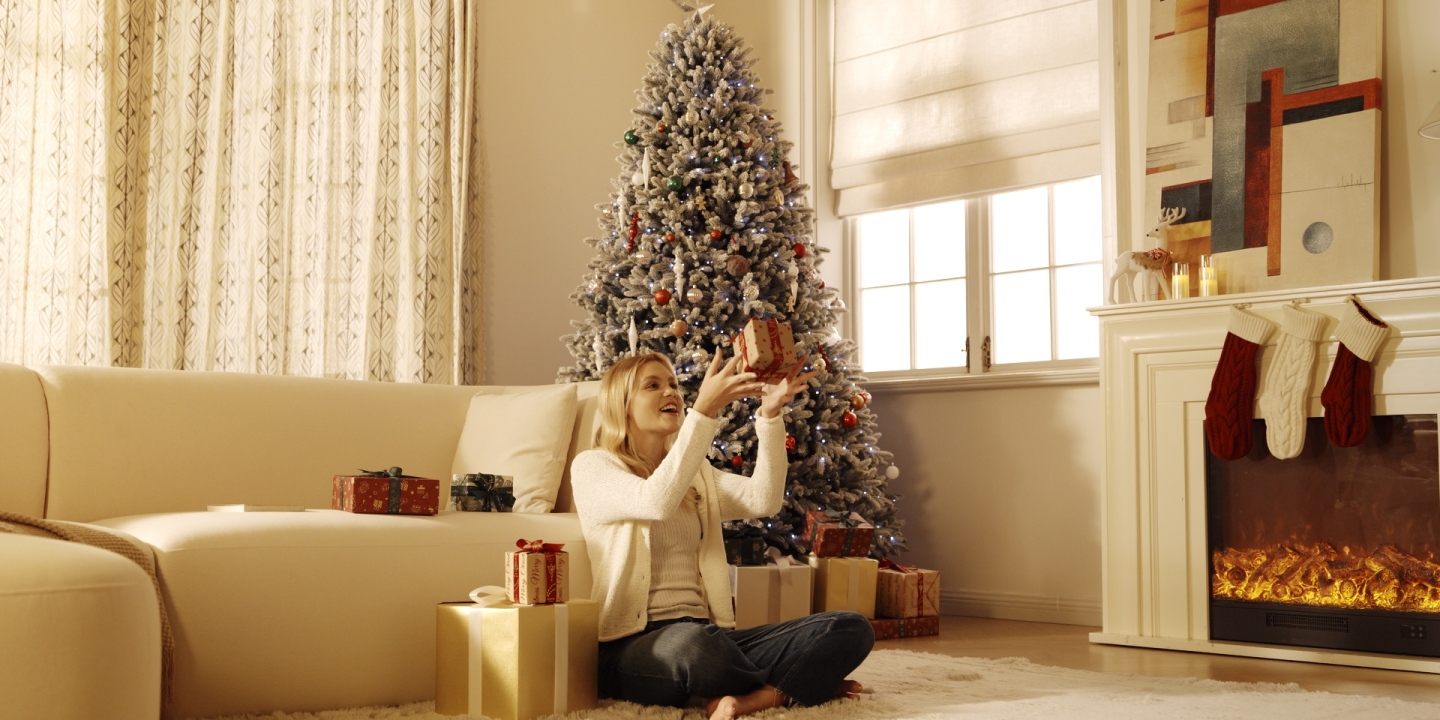
Christmas Tree Decorating Checklist
A successful tree is easier when you break the job into stages.
Before Decorating
Measure ceiling height
Choose tree size and profile
Pick a color palette
Select a decorating theme
Test the lights
Fluff and shape the branches
While Decorating
Add lights
Add ribbon or garland
Place large ornaments
Add medium ornaments
Add small ornaments
Add natural elements
Add the topper
Check the tree from several angles
Before Calling It Finished
Hide visible cords
Fill obvious gaps
Remove crowded decorations
Straighten the topper
Check lighting balance
Coordinate nearby décor
Take a final photograph
Final Takeaway: Make Your Christmas Tree Part of the Memory
The most successful ideas of Christmas tree decorating are not necessarily the most elaborate ones.
Start with the room. Choose a tree that fits its scale. Shape the branches properly. Build your lighting first. Add ribbon for movement, larger ornaments for structure, smaller pieces for detail, and natural elements for texture. Then stop before the tree becomes crowded.
If you prefer an elegant Christmas tree, keep the palette restrained. If you need simple decor for Christmas tree, let lighting and one strong statement element do more of the work. If your goal is memorable Christmas with Christmas tree, make the decorating process itself part of the family tradition.
FAQs
What Are Some Unique and Creative Christmas Tree Decor Ideas?
Some of the best ideas of Christmas tree decorating include a family-memory tree, woodland tree, monochromatic tree, oversized-bow tree, blue-and-white tree, or interactive RGB tree. The trick is to introduce one distinctive idea while keeping your colors and textures coordinated. A tree becomes memorable through contrast and personality, not simply through the number of ornaments.
How to Make a Christmas Tree Look Magical?
Layer lighting, ribbon, ornaments, and texture rather than concentrating everything on the outside branches. Place reflective ornaments deeper inside the tree so light travels through the foliage, then add larger ornaments for structure and smaller pieces toward the tips. Finish with one strong topper and remove anything that makes the tree feel crowded.
What Are the Trends for Christmas Tree Decorating in 2026?
The major ideas of Christmas tree styling for 2026 include oversized bows, velvet ribbon, warm metallics, natural materials, Old-World-inspired decoration, personalized ornaments, and interactive lighting. The broader direction is toward trees that feel collected and expressive rather than perfectly matched. Current decorating coverage also highlights layered ribbon, tactile materials, and nontraditional color combinations.
What Is the Correct Order to Decorate a Christmas Tree?
For most artificial trees, the practical sequence is to shape the branches, install or check the lights, add ribbon or garland, place large ornaments, add medium and small ornaments, insert decorative picks, and finish with the topper. This order creates structure first and lets smaller pieces fill gaps rather than forcing you to work around decorations already in place.
How Do You Make a Christmas Tree Look Elegant?
An elegant Christmas tree usually benefits from a limited palette and varied textures. Try champagne, ivory, gold, burgundy, or deep green with velvet, satin, matte, and reflective finishes. Avoid covering every branch. A controlled amount of negative space, balanced ornament placement, and warm lighting will usually look more sophisticated than simply adding more sparkle.
How Many Ornaments Should You Put on a Christmas Tree?
There is no universal number. The appropriate amount depends on the tree's height, width, foliage density, ornament size, and desired style. For a minimalist tree, fewer large pieces can be enough. For a traditional full tree, you may use considerably more. Focus on visual balance rather than hitting a specific ornament count.
How Can I Decorate a Christmas Tree Simply?
For simple decor for Christmas tree, choose one primary color, one supporting texture, a statement ribbon or topper, and a consistent lighting style. You do not need dozens of ornaments. A well-shaped tree with beautiful lighting, a few oversized decorations, and natural accents can look intentional and finished.
How Do I Decorate a Small Christmas Tree?
Use decorations that match the tree's scale. A slim profile, vertical ribbon, lightweight ornaments, and integrated lighting work especially well in apartments. Avoid filling every inch of foliage. Leaving some greenery visible gives a small tree more visual breathing room and prevents the decorations from overwhelming its silhouette.