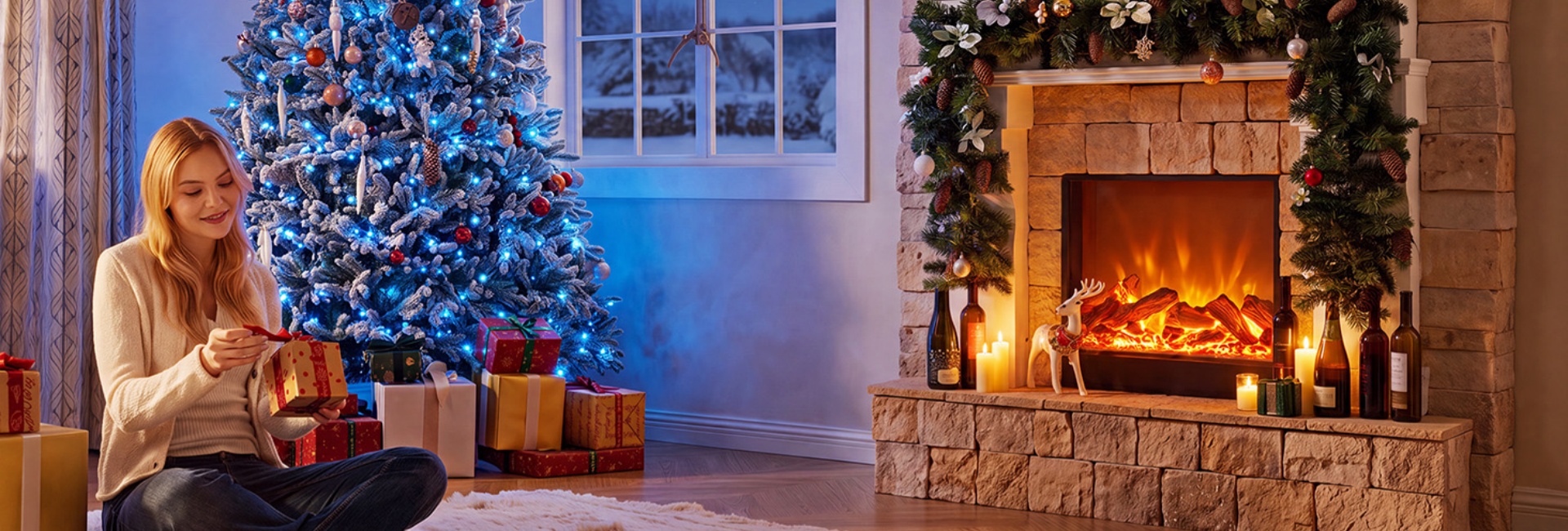
A Christmas tree can make a living room feel instantly more festive, but the wrong spot can quickly make the room feel crowded. The best christmas tree placement depends on how you use the space—not just where there happens to be an empty corner.
Before choosing a tree, look at three things: where people walk, where the tree will be most visible, and how much floor space it actually needs. A corner may be ideal in one apartment but awkward in another.
For most homes, the living room is a natural place for the tree because it is where family and guests spend time together. From there, the right location could be beside the sofa, next to a media console, near a window, or in an open corner.
Interior designer Marie Flanigan has suggested using height strategically in smaller rooms rather than automatically choosing a very small tree. A taller, slimmer tree can make use of vertical space while keeping more floor area open.
That is why it often makes sense to choose the spot first and the tree second.
Whether you are working with a compact apartment, a large open-plan home, or a modern living room centered around a TV and media console, this guide will help you find a spot that looks intentional while keeping the room comfortable and functional.
Table of Contents
- Where Is the Best Place to Put a Christmas Tree?
- How to Choose the Right Spot for Your Christmas Tree
- Where to Place a Christmas Tree in a Small Living Room
- How to Arrange a Living Room With a Christmas Tree
- How Much Space Do You Need for a Christmas Tree?
- Christmas Tree Placement for Different Living Room Layouts
- Christmas Tree Placement Mistakes to Avoid
- Should You Put a Christmas Tree Inside or Outside?
- How to Choose the Best Christmas Tree for Your Living Room
- What to Look for in a Modern Artificial Christmas Tree
- Christmas Tree Placement Checklist
- Final Thoughts: Choose Placement Before Decoration
- FAQs
- Where Is the Best Place to Put a Christmas Tree?
- Where Is the Best Place to Put a Christmas Tree in a Small Living Room?
- Should I Put My Christmas Tree Inside or Outside?
- Can I Put My Christmas Tree Next to the TV?
- Should a Christmas Tree Go Beside the Sofa or Behind It?
- Can I Put a Christmas Tree in Front of a Window?
- Can I Put a Christmas Tree Next to a Fireplace?
- How Far Should a Christmas Tree Be From a Heat Source?
- How Much Space Should I Leave Around a Christmas Tree?
- Should I Rearrange My Furniture to Fit a Christmas Tree?
- What Size Christmas Tree Is Best for a Living Room?
Where Is the Best Place to Put a Christmas Tree?
The best place for a Christmas tree is usually a visible corner or open area near the main living zone, provided it does not block walkways, doors, exits, equipment, or heat sources.
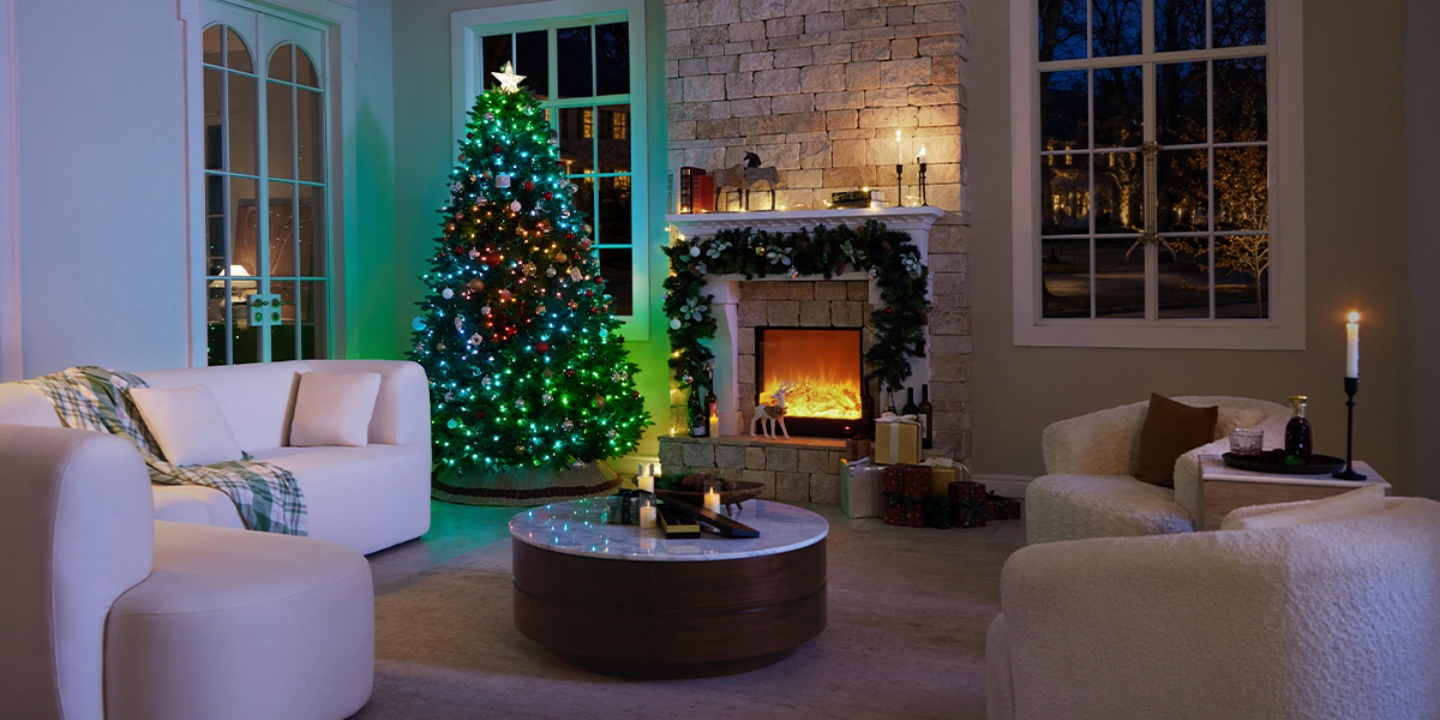
In a living room, common options include a corner, the space beside a sofa or media console, an open area near a window, or a spot that helps connect two zones in an open-plan layout.
When choosing between two possible locations, prioritize them in this order: visibility, circulation, and safety.
In a Living Room Corner
A corner is often the easiest starting point for christmas tree placement, particularly in smaller rooms. It uses space that might otherwise go unused while keeping the center of the room available for seating and conversation.
Don't push the tree all the way into the corner. If too much of it disappears behind the sofa or curtains, the tree will feel hidden rather than decorative.
Pulling it a few inches forward can make a noticeable difference, especially if you can see the tree from the sofa, doorway, and adjacent room.
Beside the Sofa
Placing the tree beside the sofa keeps it close to the part of the room where people actually spend time. It also makes the tree feel connected to the seating area instead of looking like a separate decoration.
This arrangement works well when the sofa faces a TV or fireplace. Leave enough room to sit down, stand up, and walk past without brushing against the branches.
Next to the TV or Media Console
For a modern living room, placing the tree beside the TV or media console is an easy way to soften a long, low media wall.
The tree adds height and natural texture without competing with the screen. Keep the TV fully visible and leave access to the console, outlets, ventilation openings, remote sensors, and other equipment.
If the media console already fills most of the wall, a slim tree is usually easier to fit without making the area feel crowded.
Near a Window
A large window can provide an excellent backdrop for a Christmas tree. During the day, natural light highlights the branches and ornaments; after dark, the illuminated tree can become part of the home's exterior view.
But window placement requires judgment. If the tree blocks most of the daylight or prevents you from opening the window or curtains, the visual payoff may not justify the inconvenience.
Beside a Fireplace
A fireplace can be a beautiful backdrop for a Christmas tree, but safety should determine the final position.
The U.S. Consumer Product Safety Commission advises keeping Christmas trees away from fireplaces and radiators. The National Christmas Tree Association also recommends keeping live trees away from fireplaces, heaters, heat vents, and direct sunlight.
You do not need a perfectly symmetrical fireplace-and-tree arrangement. If moving the tree farther from the heat makes the composition slightly asymmetrical, that is the better trade-off.
Behind the Sofa
A tree behind the sofa can work surprisingly well in an open-plan room. It keeps the main seating zone relatively clear while allowing the tree to rise above the sofa and remain visible.
This works best when there is sufficient space behind the sofa. If the sofa already sits tightly against a wall or major walkway, this is probably not the right christmas tree placement.
In an Open-Plan Living Room
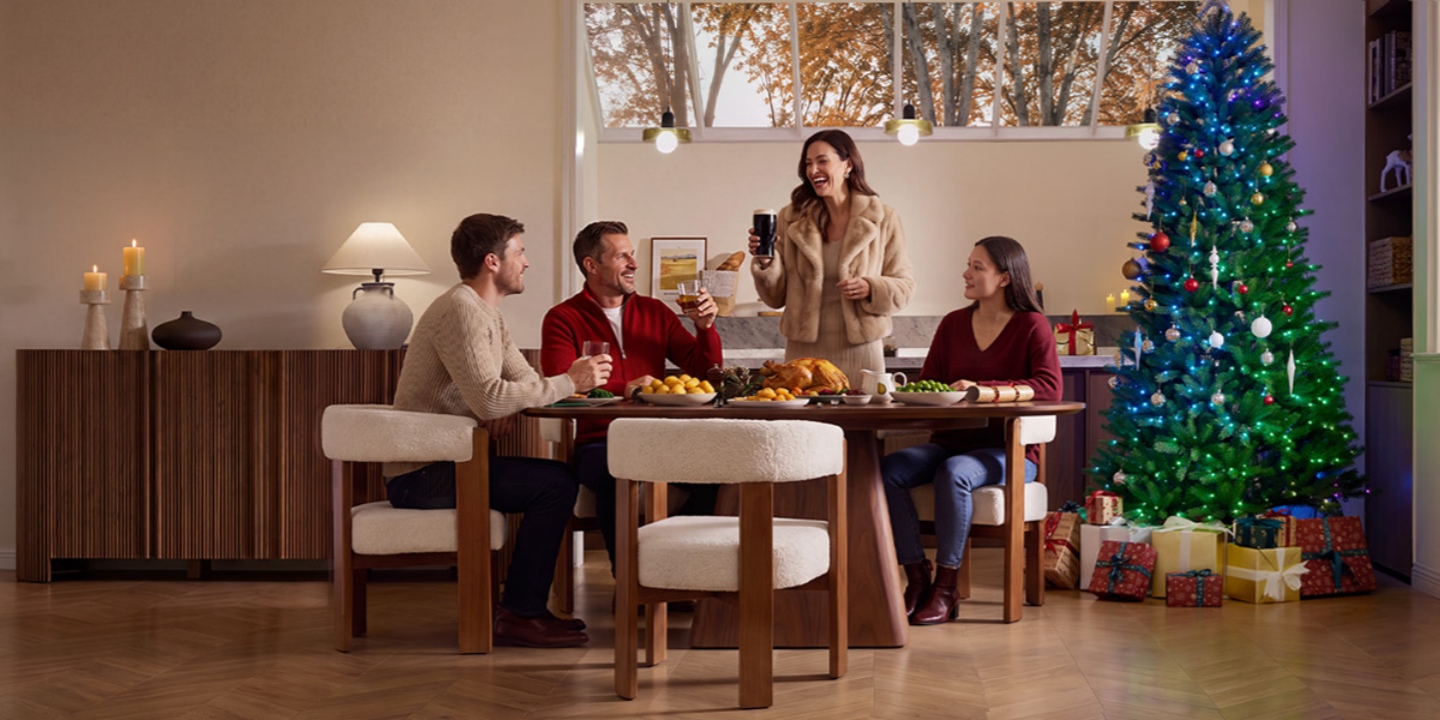
In an open-plan home, the tree can do more than decorate the living room. It can visually connect the living and dining areas.
Positioning the tree near the boundary between zones can make one large space feel more cohesive. Just keep it out of the main route between the kitchen, dining table, and living room.
Between Windows or in an Architectural Nook
A narrow section of wall between windows, built-ins, or architectural openings can become an excellent tree location.
These spaces naturally frame the tree, making the placement feel deliberate. A slim profile is particularly useful when the available width is limited.
How to Choose the Right Spot for Your Christmas Tree
The right Christmas tree location should work on an ordinary day, not just look good in a holiday photo.
Before committing to a spot, check these five things:
Visibility: Can you see the tree from the sofa and main entrance?
Traffic: Can people still move between the sofa, kitchen, hallway, and doors?
Furniture: Can you sit, stand, and reach the coffee table normally?
Power: Can you connect the lights without running cords across a walkway?
Safety: Is the tree clear of fireplaces, heaters, vents, and exits?
If a spot fails any of these checks, try another location before rearranging the entire room.
Where to Place a Christmas Tree in a Small Living Room
Small living rooms do not automatically require a tiny Christmas tree. A taller, slimmer tree can often create more visual impact while taking up less usable floor space.
The best options are usually an unused corner, the end of a sofa, or an open section beside a media console. If the room is still crowded, temporarily moving one small piece of furniture—such as an ottoman, plant, or side table—may create enough space.
Choose an Unused Corner
Start with corners occupied by furniture that can be moved temporarily.
A corner beside a sofa is often more useful than a corner behind the TV because it gives the tree better visibility without consuming the center of the room.
If a corner is visually hidden from the sofa, look for another location before assuming it is automatically the best option.
Use a Slim or Pencil-Profile Christmas Tree
When floor space is limited, a slim or pencil-profile tree can preserve more room around the sofa and coffee table while still adding height.
Place the Tree Beside a Media Console
If your TV wall has unused space on one side, it may be one of the smartest locations for a Christmas tree in a small living room.
The tree adds vertical softness beside the low, horizontal media console. Keep the television clear and maintain access to electronics.
This arrangement is especially effective in modern interiors because the tree adds organic texture to an otherwise technology-heavy wall.
Temporarily Move One Piece of Furniture
Do not be afraid to make seasonal adjustments.
Livingetc has described a “one in, one out” approach for making room for a larger Christmas tree: temporarily remove or relocate an ottoman, plant, chair, or side table rather than squeezing everything together.
Measure the Full Tree Footprint Before Buying
Do not measure only the tree stand. Use the widest branch span as your footprint.
Mark that width on the floor with painter's tape and leave room for nearby furniture and normal foot traffic. If the taped area already makes the room feel cramped, choose a narrower tree or move the placement.
How to Arrange a Living Room With a Christmas Tree
Once you have chosen the location, the next step is making the tree feel connected to the rest of the room.
Think about the tree as the room's main vertical element. The sofa, coffee table, and media console can then provide lower, horizontal shapes that keep the composition balanced.
Balance the Tree With the Sofa
Think of the sofa and tree as two parts of one composition.
A large sectional can usually handle a fuller tree, while a compact loveseat may look better with a slimmer profile. The tree should add visual weight without overwhelming the seating.
If one side of the room already feels visually heavy, placing the tree on the opposite side can make the overall layout feel more even.
Create a Visual Relationship With the Coffee Table
The coffee table creates a low visual anchor, while the tree becomes the room's vertical focal point. If the tree is heavily decorated, keep the coffee table, mantel, and media console relatively simple so the room does not feel visually crowded.
Balance the Tree With a TV or Media Console
A tall tree can offset the low profile of a media console. For example, placing it toward one end of a long console creates an asymmetrical composition without covering the screen.
The tree should support the media wall—not compete with it.
Keep the Main Seating Area Open
Do not sacrifice everyday comfort for a perfect holiday photo.
You should still have a clear route between the sofa, coffee table, doorway, and other frequently used areas.
If someone needs to squeeze sideways between the tree and coffee table, the arrangement probably needs another adjustment.
Create One Clear Holiday Focal Point
A small living room usually benefits from one strong seasonal focal point rather than several competing displays.
The tree can be that focal point. Let the mantel, coffee table, shelves, and media console support it instead of competing with it.
This makes the overall arrangement feel intentional rather than cluttered.
How Much Space Do You Need for a Christmas Tree?
You need to measure both height and width before choosing a Christmas tree. A tree can fit comfortably under the ceiling and still overwhelm the room because its branches are too wide.
Measure Ceiling Height
Measure from the floor to the ceiling before buying.
Leave enough room between the top of the assembled tree and the ceiling for the topper and for the tree to sit comfortably in the room. As a general starting point, an 8-foot ceiling often works well with a 6.5- to 7-foot tree, but the final choice depends on the stand, topper, and actual assembled height.
Always check the tree's assembled height rather than relying only on the advertised tree height.
Measure the Tree's Maximum Width
Height tells only half the story.
A tall, full tree can consume substantially more floor space than a tall slim tree. Always check the manufacturer's maximum diameter or width.
Account for the Stand and Tree Topper
The stand is part of the footprint, and the topper is part of the height.
Give yourself enough room that the topper does not look pressed against the ceiling. A small amount of breathing room makes the entire tree feel more proportional.
Leave Enough Space for Walkways
Leave enough room for people to walk normally around the tree. If everyone has to turn sideways to get past it, the tree is too close to the main circulation path.
Compare Slim and Full Tree Profiles
Choose a full profile when you have enough open floor space and want a dramatic centerpiece.
Choose slim when you need vertical impact without sacrificing circulation.
For many apartments, the slim option delivers a better balance between holiday presence and usable floor area.
Choose Tree Size Based on Room Proportion
A common mistake is assuming that “small room = tiny tree.”
That is not always true. Livingetc's coverage of Flanigan's design advice notes that an undersized tree can actually make a small room feel less intentional.
The better rule is: choose the largest tree that comfortably fits the room's footprint and circulation.
Christmas Tree Placement for Different Living Room Layouts
Different layouts call for slightly different tree positions:
Christmas Tree Placement Mistakes to Avoid
Even a beautiful tree can feel out of place if its footprint or position is wrong. Avoid these common mistakes:
Blocking a doorway or exit: Keep normal routes and exits clear.
Placing the tree too close to heat: Follow the tree and heating equipment manufacturer's instructions.
Covering the TV: Keep the screen, remote sensors, and equipment accessible.
Crowding the seating area: Leave enough room to sit, stand, and walk comfortably.
Ignoring branch width: Measure the widest part of the tree, not just the stand.
Choosing the tree before measuring: Determine the available footprint first.
Overloading electrical connections: Inspect cords and lighting and follow product instructions.
Should You Put a Christmas Tree Inside or Outside?
For most living-room setups, an indoor tree is the practical choice because it becomes part of the space where family and guests gather.
An outdoor tree can work well on a porch or covered patio, but use only trees, lights, cords, and electrical accessories specifically rated for outdoor conditions. Weather, moisture, wind, and direct sunlight also need to be considered.
For a christmas tree placement guide focused on living rooms, indoor placement should remain the priority.
How to Choose the Best Christmas Tree for Your Living Room
Once the location is clear, choose a tree that fits the footprint and the look of the room.
For most living rooms, the main decisions are profile, foliage style, lighting, and overall height. The tree should complement the furniture rather than force you to redesign the room around it.
Slim vs. Full Christmas Trees
Choose slim when floor space is limited.
Choose full when you have enough room for a wider silhouette and want the tree to dominate the holiday display.
The best choice depends on the tree's relationship to the surrounding furniture, not simply its advertised height.
Realistic PE Foliage vs. Traditional PVC
PE foliage is molded into three-dimensional branch shapes, giving an artificial tree more depth and texture.
Traditional PVC foliage is generally made from flatter plastic strips. If the tree will be visible from several angles, realistic three-dimensional foliage can make a noticeable difference.
This is especially relevant for a tree placed beside a sofa, in an open-plan room, or between furniture groups where multiple sides remain visible.
Pre-Lit Christmas Trees for Easier Setup
Pre-lit trees can reduce the annual work of wrapping separate light strands around every branch.
They can also produce a cleaner appearance because the lighting is integrated into the tree's structure.
For busy households, this can make setup considerably easier.
Green vs. Flocked Christmas Trees
Green trees offer a classic evergreen appearance and work with almost any interior style.
Flocked trees create a snow-covered look and can be especially effective in neutral, contemporary interiors.
Think about the existing color palette of the room before choosing between the two.
Interactive Christmas Trees for Family Gatherings
If the tree is going to be the center of family activity, interactive lighting can make it more than a static decoration.
That is particularly appealing when children want to participate in the lighting ritual rather than simply watch adults switch it on.
What to Look for in a Modern Artificial Christmas Tree
If the tree will remain visible from several angles, foliage quality and branch density matter more than they might in a corner placement.
Hernest's Christmas tree collection, for example, uses 100% PE foliage to create three-dimensional branch shapes, with both slim and full profiles available for different room layouts. That makes it easier to choose a tree based on how much of it will remain visible and how much floor space you have available. Some larger models feature up to 12,125 foliage tips for a fuller look.
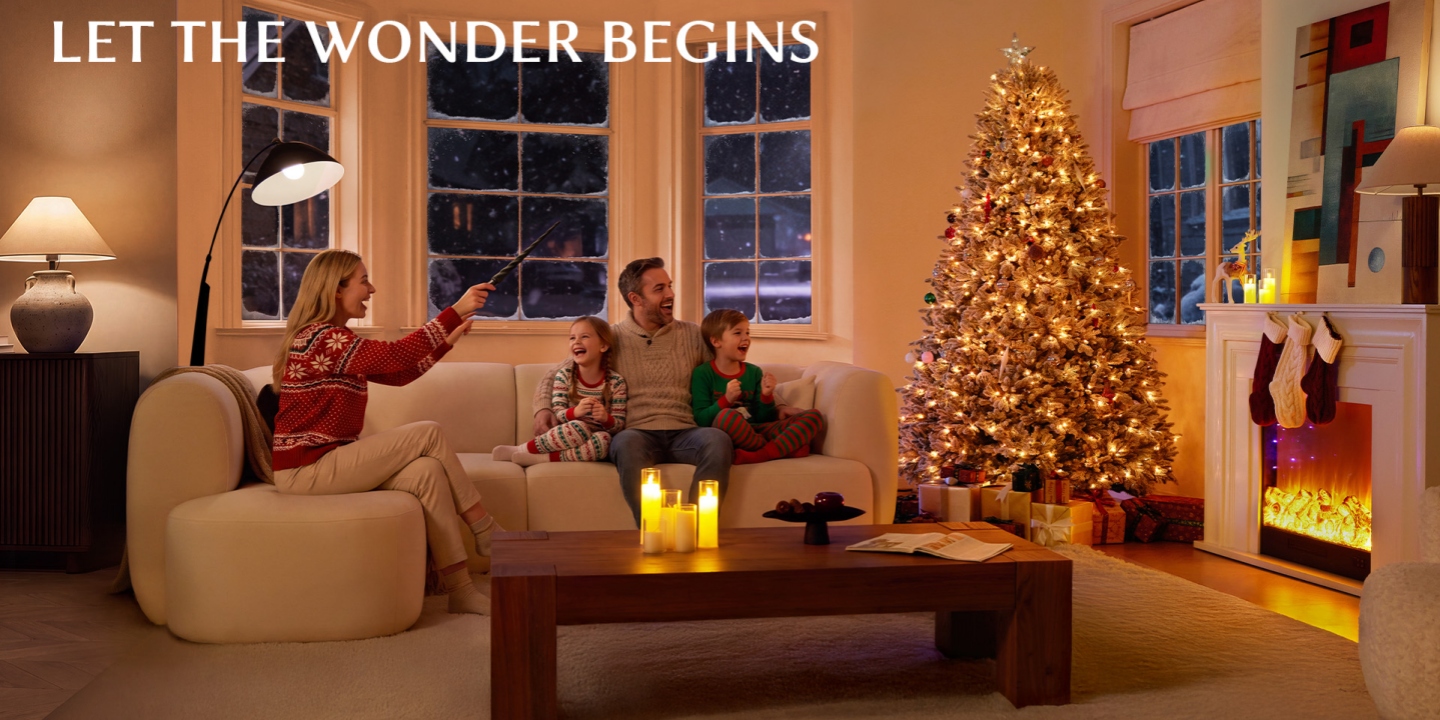
For families who want the tree to be part of the holiday experience, interactive lighting is another option. Instead of simply switching the lights on and off, the Magic Wand lets family members interact with the tree and change its lighting effects.
The important thing is to match those features to the way the tree will actually be used. A full, highly detailed tree makes sense when it will be a major focal point; a slim profile may be more practical when floor space is limited.
Christmas Tree Placement Checklist
Before buying or setting up your tree, run through these seven steps:
1. Check Your Main Viewing Angles
Look at the room from the sofa, entrance, kitchen, and dining area.
2. Measure the Available Space
Record ceiling height, available width, and depth.
3. Measure the Tree's Widest Point
Use the maximum branch width—not just the stand—as the footprint.
4. Mark the Footprint
Use painter's tape to see how the tree will affect the room before setting it up.
5. Check Traffic and Furniture
Make sure people can still move around the sofa, coffee table, doors, and other frequently used areas.
6. Check Heat, Exits, and Power
Keep the tree away from heat sources and exits, and make sure the lighting can be powered safely.
7. Choose the Tree Profile
Only after the placement is confirmed should you choose between slim, full, flocked, green, pre-lit, or interactive options.
Final Thoughts: Choose Placement Before Decoration
The best Christmas tree location is the one that looks good and still works on a normal December evening.
Before you buy the tree, measure the footprint, check your main walking paths, and look at the room from the places where your family actually sits. A small apartment may need a slim tree in a corner, while a larger open-plan room may have enough space for a full tree near the boundary between living and dining areas.
Choose the spot first. Then choose the tree. That simple order makes christmas tree placement much easier—and helps the finished room feel intentional rather than crowded.
FAQs
Where Is the Best Place to Put a Christmas Tree?
The best spot is usually a visible corner or open area near the main living zone, as long as it does not block traffic, exits, or heat sources.
Where Is the Best Place to Put a Christmas Tree in a Small Living Room?
In a small living room, start with an unused corner, the end of a sofa, or the space beside a media console. A slim tree can preserve more usable floor space.
Should I Put My Christmas Tree Inside or Outside?
For most families, an indoor tree is the better choice if you want the tree to become part of everyday holiday gatherings. An outdoor tree can work well on a porch or covered patio when the tree and electrical products are specifically designed and rated for outdoor use.
Can I Put My Christmas Tree Next to the TV?
Yes. A tree beside the TV or media console can balance a long, low media wall without blocking the screen. Keep remote sensors, ventilation, outlets, and equipment accessible.
Should a Christmas Tree Go Beside the Sofa or Behind It?
Beside the sofa is usually better when visibility matters; behind the sofa can work in an open-plan room with enough space for circulation.
Can I Put a Christmas Tree in Front of a Window?
Yes, as long as the tree does not interfere with curtains, window operation, or too much natural light.
Can I Put a Christmas Tree Next to a Fireplace?
Yes, but keep it away from direct heat and flames. Follow the fireplace and tree manufacturer's safety instructions.
How Far Should a Christmas Tree Be From a Heat Source?
There is no single clearance that applies to every fireplace, heater, vent, and tree. Follow the manufacturer's instructions and keep the tree away from direct heat whenever possible.
How Much Space Should I Leave Around a Christmas Tree?
Leave enough room for people to move comfortably, access nearby furniture, and use doors and exits normally. Measure the tree at its widest point rather than relying only on the stand's dimensions.
Should I Rearrange My Furniture to Fit a Christmas Tree?
Yes. A modest seasonal rearrangement can make a major difference. Moving an ottoman, plant, chair, or side table may create enough space for a better tree without compromising the rest of the room. This is particularly useful in smaller living rooms.
What Size Christmas Tree Is Best for a Living Room?
The best size depends on ceiling height, tree width, furniture scale, and available floor space. For smaller rooms, a taller slim tree can often provide more visual impact without taking up as much floor area.