A contemporary accent chair can add seating, introduce a new texture, or make an empty corner more useful. But a chair that looks right in a product photo may not work as well beside your sofa or in your everyday layout.
Start with three things: the space available, the way you plan to use the chair, and the upholstery that fits your routine. From there, you can compare silhouettes, colors, and details without choosing a piece that overwhelms the room or feels uncomfortable to use.
Table of Contents
- Measure Your Space Before Choosing a Chair
- Choose Upholstery for the Way You Live
- Compare Contemporary Accent Chairs by Their Actual Dimensions
- Is a Swivel Accent Chair Right for Your Living Room?
- Coordinate the Chair With Your Sofa
- Choose a Shape That Suits the Room
- Place the Accent Chair Where You'll Actually Use It
- What to Check Before Buying an Accent Chair
- Find the Right Contemporary Accent Chair for Your Space
- FAQs
Measure Your Space Before Choosing a Chair
A chair's listed width and depth tell you how much floor space it occupies, but they don't tell you the whole story. You also need to account for nearby furniture, walking paths, and room to get in and out of the seat.
Before shopping, measure the area where the chair will sit. Use painter's tape to mark the chair's approximate footprint on the floor, based on its listed overall dimensions. This gives you a clearer picture of how much space it will occupy next to your sofa, coffee table, and other furniture.
Check These Three Measurements
-
Overall width and depth: Check the chair's full outside dimensions, including its arms and any other parts that extend beyond the seat. These measurements determine how much floor space the chair occupies.
-
Seat height: Measure from the floor to the top of your sofa's seat cushion, then compare it with the chair's listed seat height. Similar heights can help the seating arrangement feel cohesive, although a difference can work depending on the chair design and your preferences.
-
Clearance around the chair: Check whether you can walk past it, reach nearby tables, and sit down without moving other furniture. If you're considering a swivel accent chair, allow room for it to turn without hitting a wall, sofa, or table.
Once you've marked the footprint, simulate how you'll use the space. Walk along the main route through the room, approach the chair from the side you would normally use, and check whether you can reach the coffee table comfortably.
If you're planning a pair of chairs, mark both footprints and the space between them. Measuring only one chair can make the final arrangement look more spacious on paper than it feels in the room.
There isn't one clearance measurement that works for every living room. The right amount depends on the chair's shape, the direction people walk through the room, and whether the seat needs to rotate.
How Big Should an Accent Chair Be?
The right size depends on the room, the furniture around it, and how you intend to use the chair. A compact chair may suit a reading corner or a smaller living room, while a wider, deeper chair can provide a more substantial seat in a spacious layout.
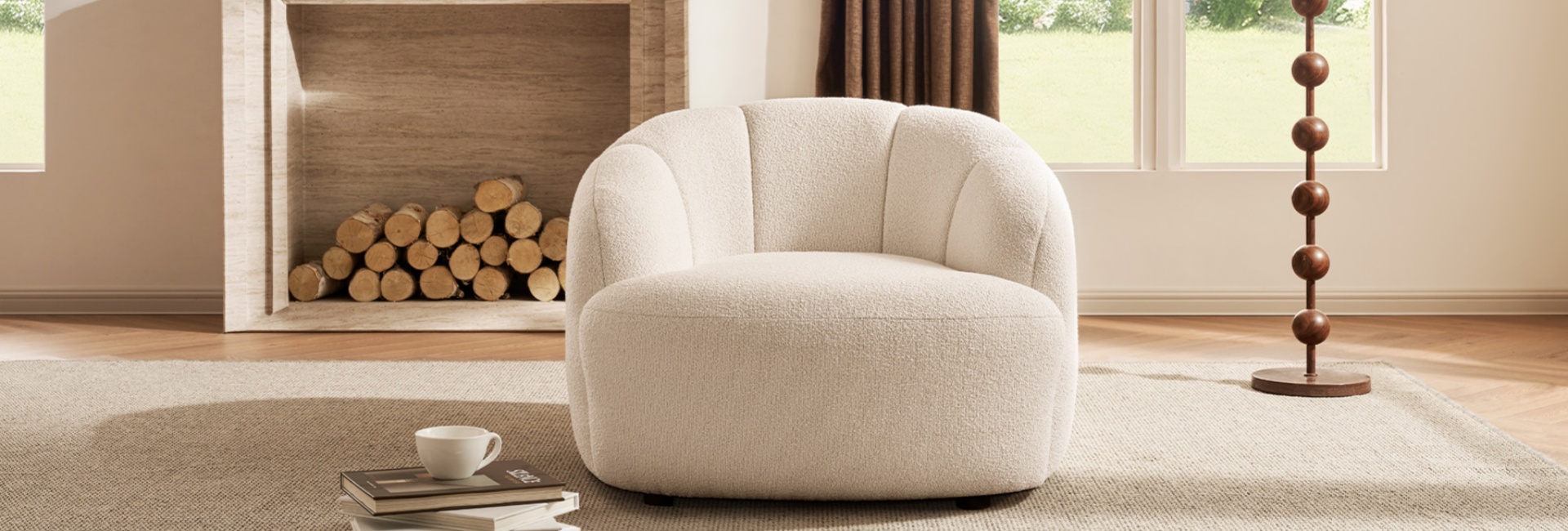
For example, the Hernest Timberve 35-Inch Swivel Accent Chair measures 35.4 inches wide, 33.8 inches deep, and 27.5 inches high.
To see whether it fits, mark a rectangle approximately 35.4 inches by 33.8 inches on your floor. Then check the space around that rectangle. The chair's actual position, nearby furniture, and any movement required for its swivel base may affect how much usable room you need.
Also distinguish between overall width and usable seat width. Timberve has a listed seat width of 21 inches and a seat depth of 26.3 inches. These measurements tell you more about the sitting area than the overall dimensions alone, although they cannot fully predict comfort.
If you're placing two chairs opposite a sofa, measure the combined footprint of both chairs and the gap between them—not just the width of one chair. This helps you judge whether the arrangement will leave enough room for movement.

Timberve 35-Inch Swivel Accent Chair
View Product
Choose Upholstery for the Way You Live
Upholstery affects how an accent chair looks, feels, and needs to be maintained. Think about who uses the room and how often before choosing a fabric based on appearance alone.
No upholstery is automatically the best choice for every household. If you have pets, children, or frequent guests, check the cleaning instructions and any fabric-specific care recommendations before ordering. A material's appearance alone does not establish that it is stain-resistant, scratch-resistant, or easy to clean.
Match the Fabric to Your Existing Furniture
You don't need to match the chair's upholstery to your sofa exactly. Instead, look for a connection through color, texture, or shape.
For example, a textured accent chair can add contrast beside a smooth leather sofa. A chair in a contrasting color can also add definition to a neutral seating area, while a similar color palette creates a quieter, more coordinated look.
If you're unsure, compare the upholstery with your sofa in natural light. Colors and textures can look different on a screen than they do in your home.
Before ordering, review the product's listed upholstery material and care instructions. If the product page doesn't specify a particular performance feature, such as stain resistance, don't assume the chair has it based on the fabric name alone.
Compare Contemporary Accent Chairs by Their Actual Dimensions
Product names are useful for browsing, but the full measurements and construction details provide a more reliable basis for comparison.
These three Hernest designs illustrate how different dimensions, materials, and features can influence your choice.
What These Measurements Mean for Your Room
Timberve: Its 35.4-inch width and 33.8-inch depth provide a useful starting point for planning the layout. The 360-degree swivel function may be helpful if you regularly turn between a conversation area, a window, and a television. Check both its footprint and the room needed for rotation.
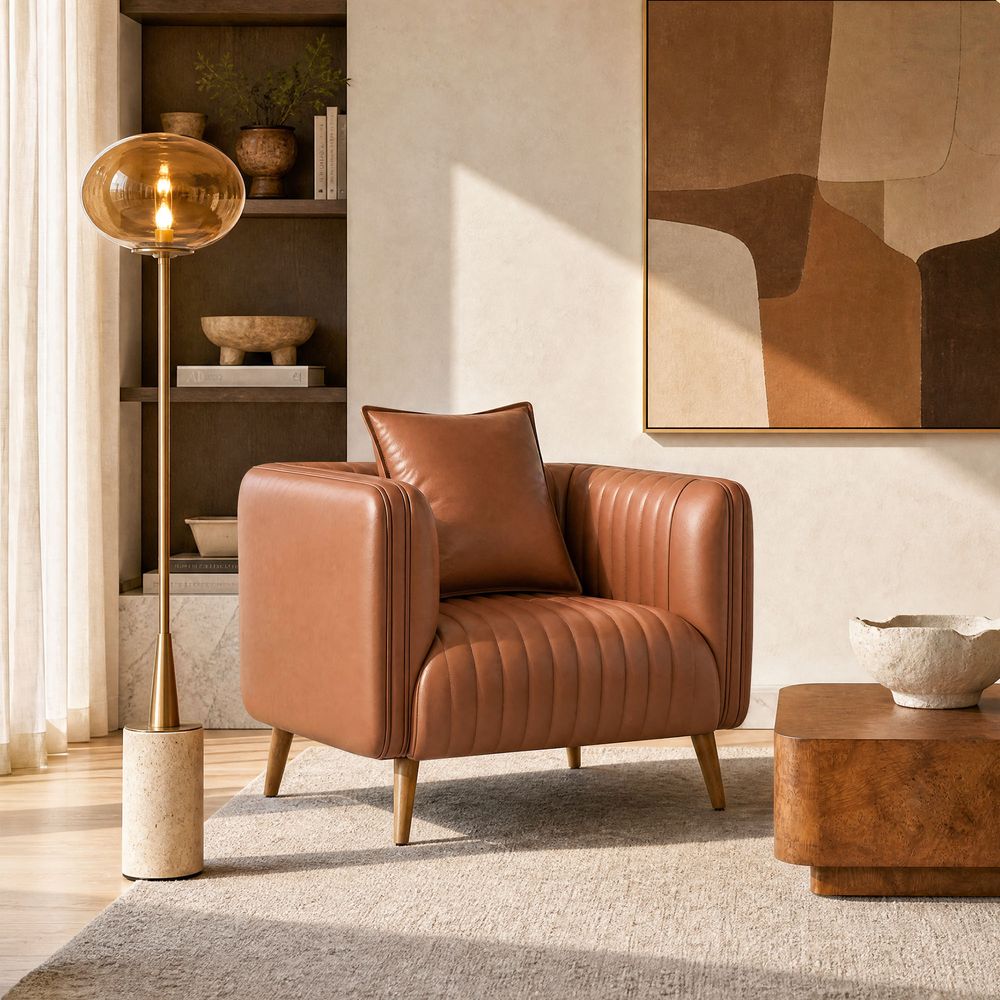
Otis: At 38 inches wide and 35.2 inches deep, Otis has the largest overall footprint of these three examples. Measure the available floor space carefully if you plan to place it beside a sofa or in a narrow corner. Its overall width also doesn't tell you how much usable seat space it provides, so check the product specifications if seat width is important to you.
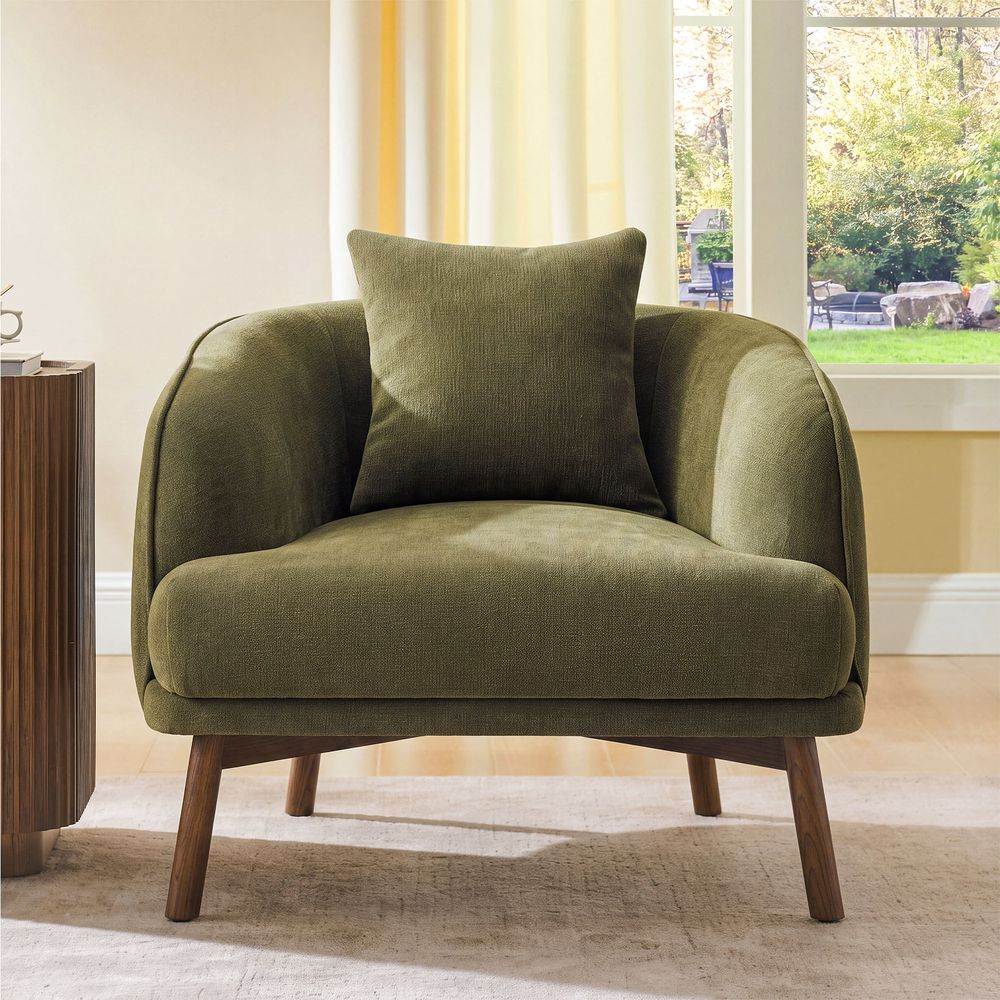
Mellow: Its 33.9-inch width is the narrowest of the three, but its 35.4-inch depth means it still needs substantial front-to-back space. This is a useful reminder that a narrower chair isn't necessarily a shallower one.
These comparisons are more helpful than relying on a chair's name alone. Check the full width, depth, and height, along with seat height, seat depth, and usable seat width where those measurements are available.
Remember that measurements help you assess fit, not guarantee comfort. Cushioning, back angle, and arm placement also affect how a chair feels when you sit down.
Mellow 33-Inch Accent Chair
View Product
Is a Swivel Accent Chair Right for Your Living Room?
A swivel accent chair can be useful when a room serves more than one purpose. It lets you change your viewing direction without moving the entire chair, which can be convenient in open-plan spaces or living rooms used for both conversation and television.
Hernest's Timberve 35-Inch Swivel Accent Chair features a 360-degree swivel. Its dimensions are 35.4 inches wide, 33.8 inches deep, and 27.5 inches high.
Before choosing a swivel model, check more than the chair's footprint:
-
Rotation space: Turn the chair through its intended range and check whether it could hit a coffee table, sofa, wall, or nearby decor.
-
Position of the seat: Consider whether the chair will face the television, a window, or the main conversation area most of the time.
-
Ease of access: Leave a comfortable route to the seat, even when it is turned at an angle.
-
Nearby furniture: Check that the chair won't interfere with drawers, cabinet doors, or other furniture that needs to open or move.
A practical way to test the layout is to mark the chair's footprint with painter's tape, then account for the space needed to rotate it. Check the full movement rather than measuring only the distance from the chair to the nearest wall.
A swivel feature is most useful when you expect to change directions regularly. If the chair will remain in one position against a wall or in a fixed reading corner, a stationary design may suit the layout just as well.
Coordinate the Chair With Your Sofa
An accent chair should feel connected to the rest of the room without disappearing into it. You can create that connection through color, upholstery, shape, or material.
Should an Accent Chair Be Lighter or Darker Than the Sofa?
Either can work. A lighter chair can break up a dark sofa, while a deeper color can add contrast to a light neutral seating area. The result depends on the room's lighting, flooring, wall color, and other finishes.
Try one of these approaches:
-
For a coordinated look: Choose a chair in a similar color family to the sofa, but vary the texture or silhouette.
-
For contrast: Use noticeably lighter or darker upholstery, then repeat that color in a cushion, artwork, or another small detail.
-
For a warmer room: Combine neutral upholstery with wood accents or other natural-looking materials.
-
For a stronger focal point: Let the chair introduce one distinct color while keeping the surrounding furniture relatively restrained.
You don't need to match every finish. One shared element—such as a warm tone, a curved silhouette, or a similar leg finish—can be enough to make different pieces feel intentional together.
Before deciding, look at the sofa and chair together in the room where they'll be used. A color that looks subtle online may appear more prominent beside your existing furniture.
Choose a Shape That Suits the Room
Contemporary accent chairs come in a range of silhouettes. Rather than choosing a shape because it is trending, consider how it will look alongside the furniture you already own.
-
Curved silhouettes: Can soften a room with straight-edged sofas, cabinets, and tables.
-
Clean, compact shapes: Can work well in smaller rooms or spaces where you want the chair to feel visually simple.
-
Textured upholstery: Adds depth when the surrounding furniture has smooth surfaces.
-
Wooden or sculptural details: Can connect a chair with existing wood furniture or introduce a different material into the seating area.
Think about visual balance as well as physical size. A chair with a broad back or thick arms may feel more substantial than its width suggests, while a more open silhouette may look lighter in the same space.
This is why measuring the footprint and evaluating the chair's shape are both important. Two chairs with similar outside dimensions can have quite different visual effects in a room.
Place the Accent Chair Where You'll Actually Use It
The best position depends on what you want the chair to do. A chair intended for conversation needs a different arrangement from one used for reading or watching television.
For Conversation
Place the chair near the sofa and angle it slightly toward the other seats. Make sure people can move between the seating pieces without squeezing through a narrow gap.
Before finalizing the position, check the route between the sofa, chair, coffee table, and nearest doorway. A layout that looks balanced from across the room may still feel awkward if it interrupts the main walking path.
For Reading
Choose a spot with comfortable light and convenient access to a side table. Check that the chair's seat depth and height suit the way you like to sit, especially if you plan to spend long periods there.
If you're adding a floor lamp or footrest, mark out those items as well. The chair may fit on its own but leave too little room for the other pieces that make the reading area practical.
For an Open-Plan Living Room
Use the chair to help define the seating area without blocking a main walkway. A swivel design may be useful if you regularly turn between different parts of the room.
Place the chair so it relates to the sofa or coffee table rather than sitting independently at the edge of the space. Then check that the arrangement still leaves a clear route between adjoining areas.
For an Empty Corner
Measure the corner's width and depth before choosing a chair. Consider the space needed for a floor lamp, side table, or footrest as well.
A chair that fits by itself may leave too little room for the other pieces that make the corner practical. Use painter's tape to map out the complete arrangement before ordering.
What to Check Before Buying an Accent Chair
Before placing an order, use this quick checklist:
-
Dimensions: Have you checked the full width, depth, and height—not just the size in the product name?
-
Seat measurements: Have you compared seat height, seat depth, and usable seat width where those measurements are available?
-
Clearance: Can you walk past the chair, approach the seat, and reach nearby tables comfortably?
-
Comfort: Do the seat depth, back shape, and arm height suit your preferences? If you can't try the chair in person, compare its measurements with a chair you already find comfortable.
-
Materials: Are the upholstery and frame materials clearly specified?
-
Care: Have you checked the manufacturer's cleaning instructions rather than assuming the fabric is stain-resistant or easy to maintain?
-
Movement: If it's a swivel chair, is there enough room for it to turn without hitting other furniture?
-
Delivery access: Will the chair fit through your doorway, hallway, and stairway? Check the packaged dimensions if they're available.
-
Product details: Have you reviewed current availability, shipping information, return terms, and warranty coverage on the product page?
Taking a few minutes to verify these details can help you avoid a chair that looks right online but doesn't work in your space.
Otis 38-Inch Accent Chair
View Product
Find the Right Contemporary Accent Chair for Your Space
The right contemporary accent chair should fit your room, support the way you use it, and complement your existing furniture. Start with the measurements, compare upholstery and construction details, and choose a shape that works with the layout rather than relying on appearance alone.
Explore Hernest's Accent Chairs collection to compare available sizes, materials, silhouettes, and seating features. Check each product page for current specifications and availability before making your choice.
FAQs
What Size Accent Chair Should I Choose for My Living Room?
Choose a chair that fits the available floor space while leaving comfortable walking paths. Compare its full width and depth with your sofa, coffee table, and other furniture. For example, a chair measuring around 35 inches wide can still need more than 33 inches of depth, so check both dimensions. Marking the footprint on your floor can help you assess the fit before ordering.
Should My Accent Chair Match My Sofa?
No. Your chair can complement your sofa through color, texture, shape, or material without matching it exactly. A contrasting upholstery color can add interest, while a similar palette creates a more coordinated look. Consider the room's lighting and existing finishes before choosing the final combination.
Is a Swivel Accent Chair Practical for a Small Living Room?
It can be, provided there is enough room for the chair to rotate without hitting nearby furniture. Mark the chair's footprint and check the space required for its turning movement before purchasing. In a tight corner or fixed reading area, a stationary chair may be easier to position.
Which Accent Chair Fabric Is Easiest to Maintain?
Maintenance depends on the specific upholstery and its care instructions. Check the manufacturer's guidance for cleaning, stain treatment, and everyday care rather than assuming that a particular fabric is automatically easy to maintain. If you have pets or children, confirm any stain-resistance or durability claims on the product page before buying.
How Do I Know Whether an Accent Chair Will Be Comfortable?
Start with the seat height, seat depth, usable seat width, back support, and arm height. Compare those measurements with a chair you already find comfortable. If possible, try the chair in person; otherwise, use the product specifications and return terms to inform your decision. Remember that dimensions alone cannot fully predict how a chair will feel.
Can I Put an Accent Chair in a Corner?
Yes. A corner can work well for a reading spot or additional seating. Measure the available width and depth, and account for any lamp or side table you want to add. Make sure the placement doesn't obstruct a doorway or regular walking route.