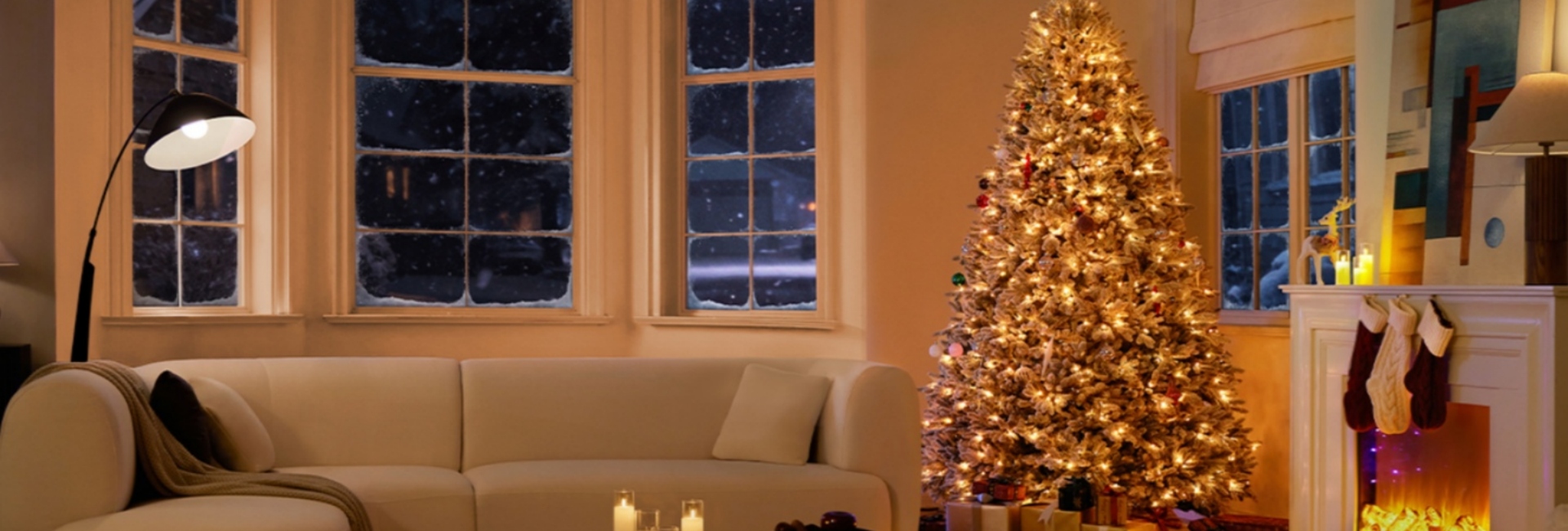
Choosing the right christmas tree size starts with your ceiling, but height is only part of the equation. You also need to account for the stand, topper, clearance, floor width, and the shape of the tree. This guide explains how to choose a tree for 8-, 9-, and 10-foot ceilings, compare 6.5 ft and 7.5 ft trees, and measure your space before you buy.
Table of Contents
- Start With Your Ceiling
- Christmas Tree Size by Ceiling Height
- Quick Guide: Match the Tree to Your Room
- 6.5 Ft vs. 7.5 Ft Christmas Trees
- Don't Shop Height Alone: Check Width
- How to Measure Your Space Before Buying
- Tree Toppers and Finished Height
- How Many Lights Does a Christmas Tree Need?
- How Many Ornaments Does a Christmas Tree Need?
- Artificial vs. Real Christmas Tree Sizing
- Storage and Assembly Matter Too
- The Bottom Line: Choose Height First, Then Width
- FAQs
- What is the perfect size for a Christmas tree?
- Is a 7.5 ft Christmas tree too big?
- What size Christmas tree do I need for an 8-foot ceiling?
- What size Christmas tree is best for a 9-foot ceiling?
- What size Christmas tree is best for a 10-foot ceiling?
- How much clearance should I leave between the tree and the ceiling?
- Does a tree topper count toward the total height?
- How wide should my Christmas tree be for my room?
- What is the difference between a slim and a full Christmas tree?
- How do I measure my space before buying a Christmas tree?
Start With Your Ceiling
The easiest way to narrow down your options is to measure the ceiling where the tree will actually stand. Do not rely on the advertised height of the room or assume every ceiling in your home is the same.
Measure from the finished floor to the ceiling at the exact spot where the tree will go. Then account for three things:
-
The height of the tree stand
-
The height of the topper
-
A small amount of clearance above the finished tree
A useful starting formula is:
Ceiling height − stand height − topper height − clearance = maximum tree height
For a simple rule of thumb, you can also start by subtracting about 12 inches from the ceiling height. The exact number depends on the stand and topper you use, so measure those pieces when you need a closer fit.
How Much Clearance Should You Leave?
A few inches of open space above the finished tree keeps the topper from touching the ceiling and makes the display look more intentional.
For most rooms, about 6 inches of clearance is a practical target. If you have a large topper, simply subtract its full height before choosing the tree.
For example, a 7.5 ft tree is 90 inches tall before the topper. Under a 9-foot ceiling, which is 108 inches, that leaves 18 inches for the stand, topper, and clearance combined.
If your stand is 6 inches high, your topper is 8 inches high, and you want 4 inches of clearance:
108 − 90 − 6 − 8 = 4 inches
That gives you a finished display that fits without pressing against the ceiling.
The key is to calculate the finished height, not just the tree's listed height.
Christmas Tree Size by Ceiling Height
The table below gives a practical starting point for common residential ceilings. The recommended size assumes a typical stand, a moderate topper, and several inches of clearance.
These are starting ranges rather than hard limits. A low-profile topper gives you more usable height, while a tall angel, star, bow, or decorative arrangement requires additional room.
What Size Christmas Tree for an 8-Foot Ceiling?
For an 8-foot ceiling, a 6 to 6.5 ft tree is usually the easiest fit. A 7 ft tree can work when you have a low topper and enough clearance, but a 7.5 ft tree leaves very little room once the stand and topper are included.
If floor space is limited, a 6.5 ft slim tree can give you more visual height without taking up as much room as a full tree.
What Size Christmas Tree for a 9-Foot Ceiling?
A 7 to 7.5 ft tree is a practical choice for a 9-foot ceiling. A 7.5 ft tree is 90 inches tall, leaving 18 inches between the top of the tree and a 108-inch ceiling before accounting for the stand and topper.
That makes 7.5 ft a good balance between presence and usable clearance for many living rooms.
An 8 ft tree can also work, but you will have less room for a tall topper.
What Size Christmas Tree for a 10-Foot Ceiling?
For a 10-foot ceiling, look at 8 to 9 ft trees. An 8 ft tree gives you more flexibility with the topper and leaves more open space above the finished display. A 9 ft tree creates a taller focal point but requires closer attention to the stand and topper height.
For large open rooms, a 9 ft full tree can work well. For a narrower room, an 8 ft slim tree may make better use of the available space.
Quick Guide: Match the Tree to Your Room
Ceiling height is only one part of the decision. The right size also depends on how much floor space you have and where the tree will sit.
This is why there is no single “perfect” Christmas tree size. The best choice is the largest tree that fits both your vertical space and your usable floor area.
6.5 Ft vs. 7.5 Ft Christmas Trees
For many homes, the decision comes down to 6.5 ft or 7.5 ft. The difference is only one foot in height, but it can make a noticeable difference in both appearance and floor space.
When a 6.5 Ft Tree Is Better
A 6.5 ft tree is usually the safer option for an 8-foot ceiling. It gives you more flexibility with your topper and leaves more room above the finished display.
It also works well in:
-
Bedrooms
-
Guest rooms
-
Home offices
-
Apartments
-
Narrow living rooms
-
Corners beside furniture
A slim 6.5 ft tree is particularly useful when you want a full-height holiday display without giving up much floor space.
For a pre-lit option, the CastGlow 6.5 ft Full Flocked tree combines a flocked finish with PE foliage and built-in lighting. Its 18 lighting modes can be controlled with the Magic Wand or IR remote, with no app required.
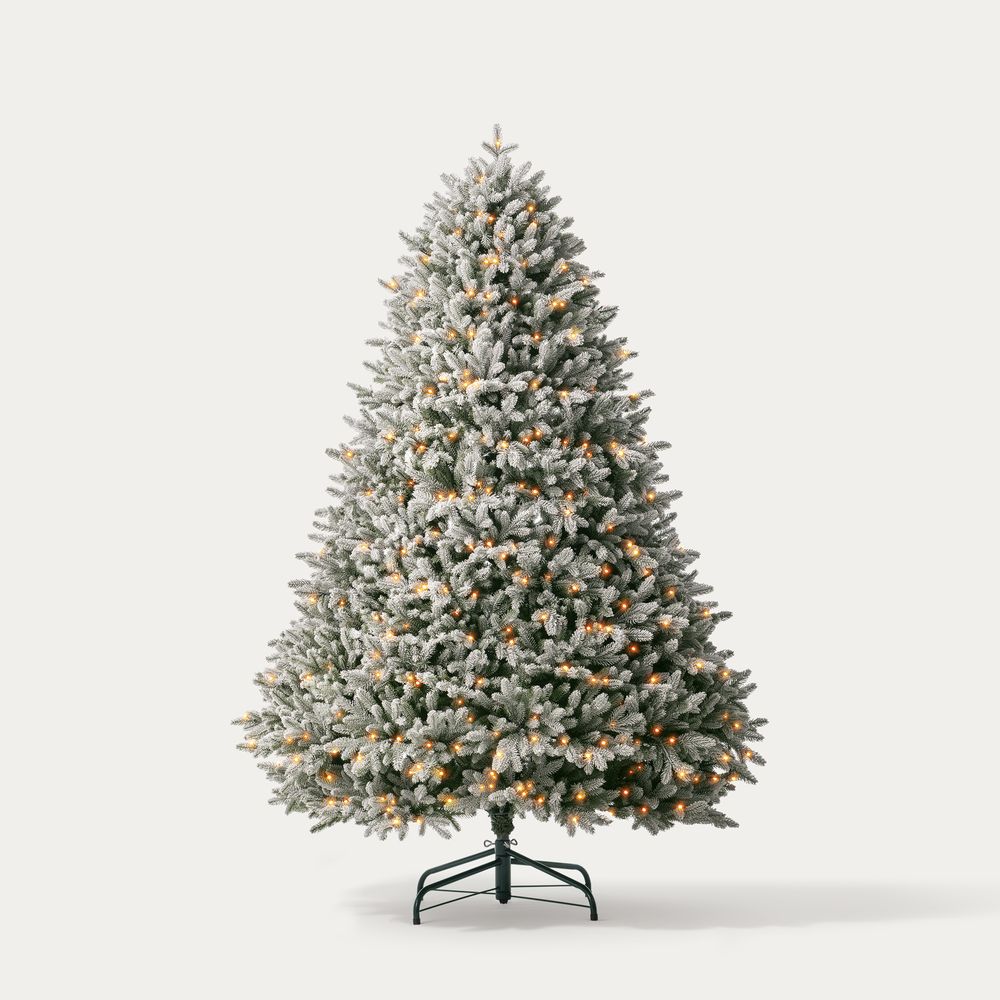
CastGlow 6.5′ Artificial Christmas Tree Full Flocked
View Product
When a 7.5 Ft Tree Is Better
A 7.5 ft tree makes more sense when you have a 9-foot ceiling or a room with plenty of vertical and floor space.
The additional height gives the tree a stronger presence and provides more branch area for ornaments and lights. It is particularly effective as the main tree in a living room or family room.
Hernest's CastGlow 7.5 ft Full Flocked tree is designed around this larger-room use case, with 100% PE foliage, a flocked finish, built-in lighting, 18 lighting modes, and Magic Wand and IR remote control.
Before choosing 7.5 ft, however, measure the finished height with your topper. The extra foot is useful only if your room can accommodate it comfortably.
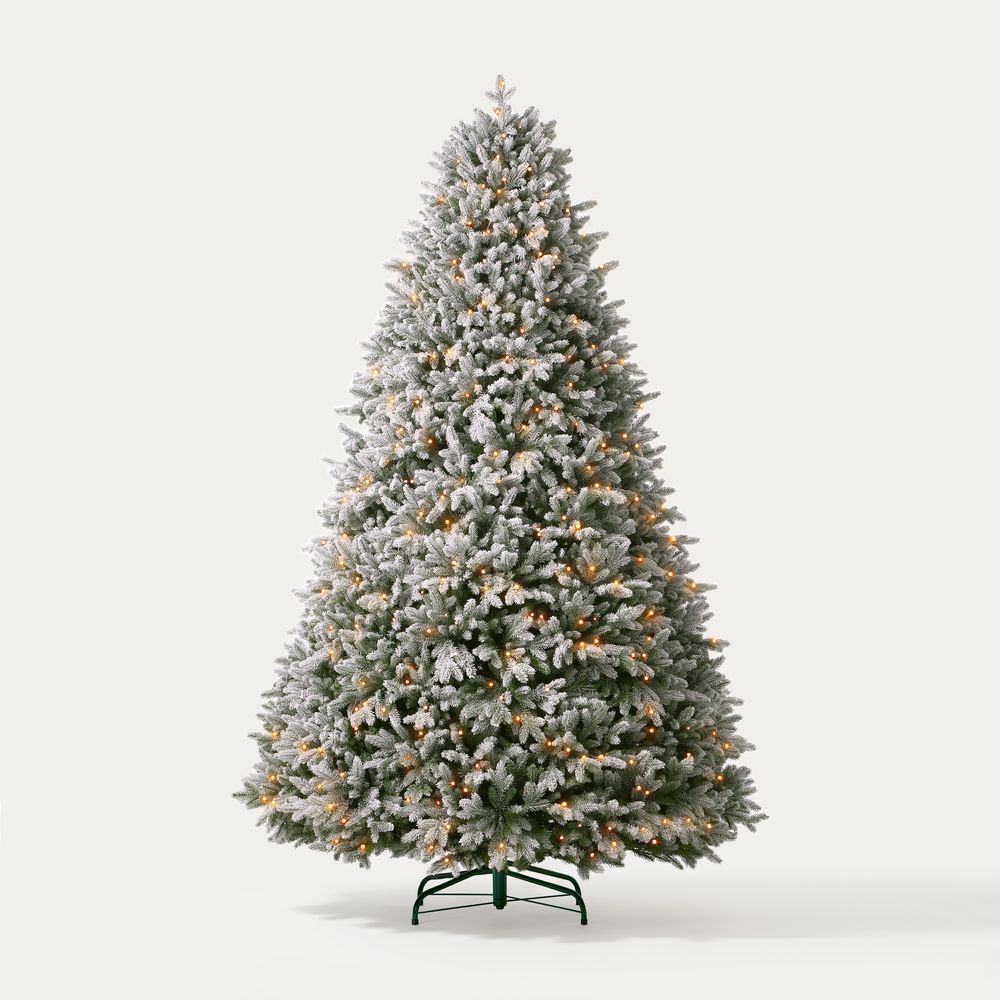
CastGlow 7.5′ Artificial Christmas Tree Full Flocked
View Product
Don't Shop Height Alone: Check Width
Two trees can have the same height but require very different amounts of floor space.
A full tree has a wider, fuller silhouette. A slim tree keeps more of the vertical presence while reducing the footprint.
As a general starting point, a full tree may have a base width around 55% to 65% of its height, although the exact ratio varies by tree design.
For example, a 7.5 ft full tree may be around 52 to 60 inches wide at its broadest point. Always use the manufacturer's listed assembled width when available rather than estimating from height alone.
Full vs. Slim Christmas Trees
Choose a full tree when:
-
You have an open floor plan
-
The tree will be the main focal point
-
You have room around the base for presents
-
You want a dense, traditional silhouette
Choose a slim tree when:
-
The tree will sit in a corner
-
Your room is narrow
-
You have limited floor space
-
You want more open walking space
-
The tree will sit beside a window, console, or other furniture
A slim profile can be especially useful when your ceiling allows a 7.5 ft tree but the floor does not comfortably accommodate a full 7.5 ft model.
How to Measure Your Space Before Buying
Take five minutes to measure before ordering. Artificial trees have fixed assembled dimensions, so choosing based on appearance alone can lead to a poor fit.
1. Measure Ceiling Height
Measure from the floor to the ceiling at the exact location where the tree will stand.
Write the measurement in inches. This makes the height calculation easier.
2. Measure the Floor Width
Measure the available floor area at the widest point of the tree.
If the tree will sit near furniture or a wall, measure the usable area rather than the entire room.
For example, if you have only 48 inches of usable width, a full tree listed at 60 inches wide is unlikely to be comfortable, even if its height is perfect.
3. Mark the Footprint
Painter's tape is a simple way to visualize the tree before buying.
Mark the approximate base width on the floor, then step back and look at it with your furniture in place. This helps you see whether the tree will interfere with:
-
Walkways
-
Doors
-
Cabinets
-
Windows
-
Furniture
-
Electrical outlets
4. Check the Route to the Room
The assembled tree is not the only thing that needs to fit. Check the route from your delivery location to the room where you will set it up.
Measure:
-
Exterior doors
-
Interior doors
-
Hallways
-
Narrow turns
-
Stairways
Also check the number and dimensions of shipping cartons when available.
Tree Toppers and Finished Height
A topper can change the size decision more than many buyers expect.
The tree's advertised height usually refers to the tree itself. Your finished display is taller once the topper is installed.
For example:
-
7.5 ft tree = 90 inches
-
8-inch topper = 8 inches
-
Finished height before stand = 98 inches
Under a 9-foot ceiling, that leaves 10 inches before accounting for the stand.
This is why a 7.5 ft tree does not automatically mean you have exactly 18 inches of usable clearance under a 9-foot ceiling.
If you already own a tall angel or large decorative topper, measure it before choosing the tree. A shorter tree may give you a better overall result.
How Many Lights Does a Christmas Tree Need?
Light requirements depend on the bulb type, spacing, branch density, and the look you want.
A common starting point is around 100 lights per foot for a balanced display. You can use fewer for a softer look or more for a brighter, heavily decorated tree.
That puts a 7.5 ft tree at roughly:
-
500–750 lights for a lighter display
-
Around 750 lights for a balanced starting point
-
1,000+ lights for a brighter, layered effect
These numbers are only guidelines. A dense full tree may need more lights than a narrow or sparse tree of the same height.
Pre-lit trees remove much of this calculation because the lighting is already integrated into the design. CastGlow trees, for example, come with built-in lighting and 18 lighting modes, so you can change the lighting effect instead of adding multiple strands.
How Many Ornaments Does a Christmas Tree Need?
There is no single correct ornament count. The number depends on ornament size, branch density, decorating style, and how much open greenery you want to show.
As a practical starting point, a full 7.5 ft tree might use around 150 to 200 medium-sized ornaments for a heavily decorated look. A slim tree generally needs fewer because it has less branch surface.
Use a mix of sizes rather than filling every branch with identical ornaments:
-
Larger ornaments can sit deeper inside the tree
-
Medium ornaments fill the middle layer
-
Smaller ornaments work well near the branch tips
-
Larger decorative pieces can act as focal points
The goal is visual balance, not reaching a specific number.
Artificial vs. Real Christmas Tree Sizing
The basic height calculation works for both real and artificial trees:
Ceiling height − stand − topper − clearance = available tree height
The difference is flexibility.
A real tree can sometimes be trimmed slightly if it is too tall, although it is better to measure carefully before buying. An artificial tree has a fixed assembled height, so its listed dimensions matter more.
Artificial trees also require you to think about storage. A 7.5 ft full tree will generally take more storage space than a 6.5 ft slim tree, so check where the tree, stand, and storage bag will go after the holidays.
When comparing artificial trees, use the assembled dimensions, not the shipping carton dimensions, to determine whether the tree fits your room.
Storage and Assembly Matter Too
The tree may look perfect in December, but you still need somewhere to keep it for the rest of the year.
Before choosing a large model, measure your available storage area. Check:
-
Storage closet height
-
Shelf or floor width
-
Box or bag dimensions
-
Number of sections
-
Number of cartons
-
Access to the storage area
CastGlow trees are designed to break down into sections for storage and come with a storage bag. The lighting is pre-connected, which reduces the amount of setup required compared with a bare tree that needs separate light strands.
The larger the tree, the more important these practical details become.
The Bottom Line: Choose Height First, Then Width
The best Christmas tree size is not simply the tallest tree your ceiling can accommodate.
Start with your ceiling height. Then subtract the stand, topper, and a few inches of clearance. Once you have the maximum height, compare the tree's base width with the actual floor space available.
For most homes:
-
8-ft ceiling: 6–6.5 ft is the easiest fit
-
9-ft ceiling: 7–7.5 ft is the sweet spot
-
10-ft ceiling: 8–9 ft gives you more presence
-
Limited floor space: choose a slim profile
-
Large open room: a full tree can make better use of the space
If you are comparing artificial trees, the CastGlow Christmas tree offers 6.5 ft and 7.5 ft options in slim and full profiles, with green and flocked finishes and built-in lighting. Compare the assembled height and width of each option with your measurements before choosing.
FAQs
What is the perfect size for a Christmas tree?
The best size is the largest tree that fits your ceiling, topper, stand, and available floor space without making the room feel crowded. For many 8- to 9-foot ceilings, a 6.5 to 7.5 ft tree is a practical range.
Is a 7.5 ft Christmas tree too big?
A 7.5 ft tree is usually a good fit for a 9-foot ceiling, provided you account for the stand and topper. Under an 8-foot ceiling, it will generally leave too little room for a comfortable finished display.
What size Christmas tree do I need for an 8-foot ceiling?
A 6 to 6.5 ft tree is usually the easiest choice for an 8-foot ceiling. A 7 ft tree can work with a short topper and careful measurement, but a 7.5 ft tree is generally too tall once the stand and topper are included.
What size Christmas tree is best for a 9-foot ceiling?
A 7 to 7.5 ft tree is a practical choice for a 9-foot ceiling. A 7.5 ft tree gives you a substantial centerpiece while leaving enough height for a moderate topper and clearance when the stand is included.
What size Christmas tree is best for a 10-foot ceiling?
An 8 to 9 ft tree generally works well under a 10-foot ceiling. Choose closer to 8 ft if you want more room for a tall topper, or consider 9 ft when the room is large enough to support the additional height and width.
How much clearance should I leave between the tree and the ceiling?
About 6 inches of clearance is a practical target for most setups. The exact amount depends on the topper, stand, and overall look you want. The important thing is to measure the finished height rather than the tree alone.
Does a tree topper count toward the total height?
Yes. The topper is part of the finished display height. A 7.5 ft tree with an 8-inch topper is about 98 inches tall before accounting for the stand, so always include the topper when checking ceiling clearance.
How wide should my Christmas tree be for my room?
Width depends on the tree's shape. A full tree often has a base width around 55% to 65% of its height, while slim trees take up considerably less floor space. Always compare the manufacturer's listed base width with your actual usable floor area.
What is the difference between a slim and a full Christmas tree?
A full tree has a wider, denser silhouette and requires more floor space. A slim tree maintains more vertical presence while using a narrower footprint, making it useful for apartments, corners, narrow rooms, and spaces beside furniture.
How do I measure my space before buying a Christmas tree?
Measure the ceiling height where the tree will stand, then account for the stand, topper, and clearance. Next, measure the available floor width and compare it with the tree's listed base width. Finally, check doors, hallways, stairs, and storage space.