A worthwhile Black Friday sideboard deal is not simply the one with the largest discount. The right piece should fit your available space, provide storage for the items you actually own, and complement the room where you plan to use it. Some sideboards are designed for dining room storage, while others work well in living rooms, entryways, or home offices.
When comparing Black Friday sideboard deals, look beyond the advertised discount. Check cabinet dimensions, storage layouts, materials, finishes, and delivery requirements before deciding which product offers the best value. This guide explores different sideboard styles, explains how to choose one for your space, and covers what to check before purchasing.
Table of Contents
- What Sideboard Styles Are Worth Buying During Black Friday?
- How to Choose the Right Size Sideboard for Your Space
- How to Match the Storage Configuration to Your Needs
- Which Materials and Construction Details Should You Compare?
- How to Match a Sideboard With Your Existing Furniture
- How to Make the Most of Hernest's Black Friday Deals
- FAQs
- Are Black Friday Sideboard Deals Worth It?
- What Is the Difference Between a Sideboard and a Buffet Cabinet?
- What Size Sideboard Should I Choose for My Space?
- What Is the Best Material for a Sideboard?
- What Should I Look for When Buying a Sideboard on Sale?
- Should I Measure My Doorways Before Buying a Sideboard?
- How Much Space Should I Leave Around a Sideboard?
- How Do I Maintain a Wood Sideboard?
What Sideboard Styles Are Worth Buying During Black Friday?
Sideboards come in different finishes, shapes, and storage configurations. Some have simple cabinet fronts that blend into contemporary interiors, while others use textured surfaces, decorative doors, or distinctive materials to add visual interest. Your choice should depend on your existing furniture, available space, and whether you need concealed storage or display space.
Modern Sideboards for Contemporary Interiors
Modern sideboards often feature clean lines, simple cabinet fronts, and restrained hardware. Some have a minimal appearance, while others incorporate curved details, fluted panels, or contrasting finishes.
For a contemporary dining room or living area, consider how the cabinet's color and silhouette relate to nearby furniture. A dark finish can create contrast against light walls and flooring, while a natural wood tone can complement neutral interiors.
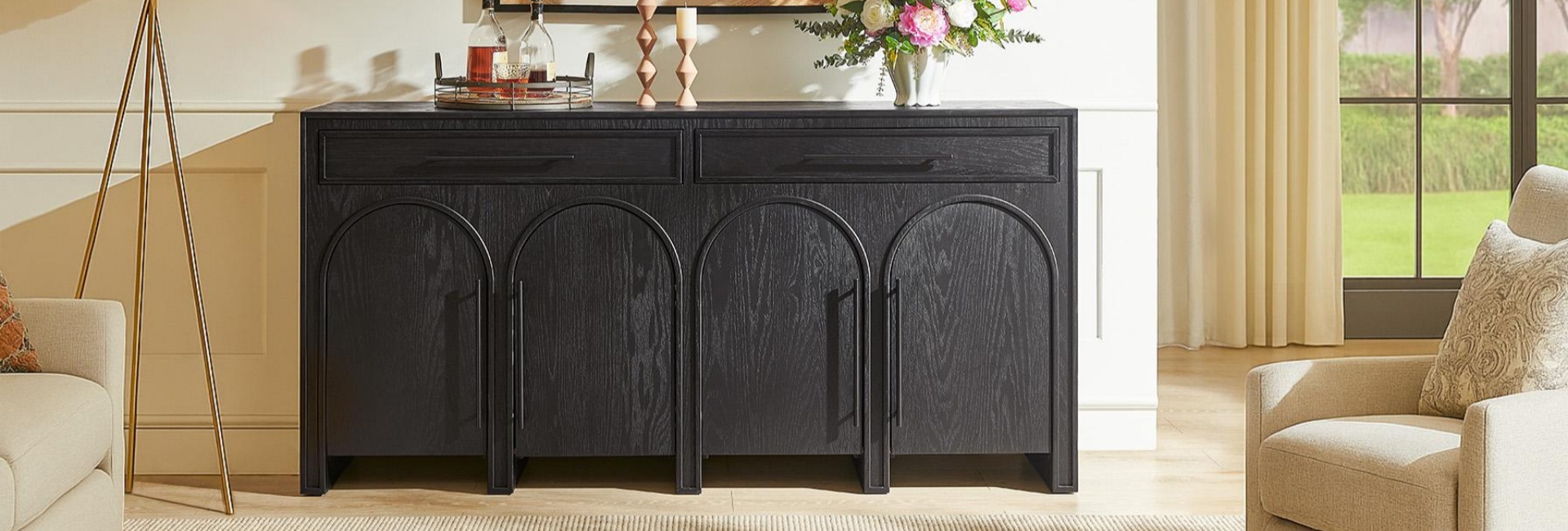
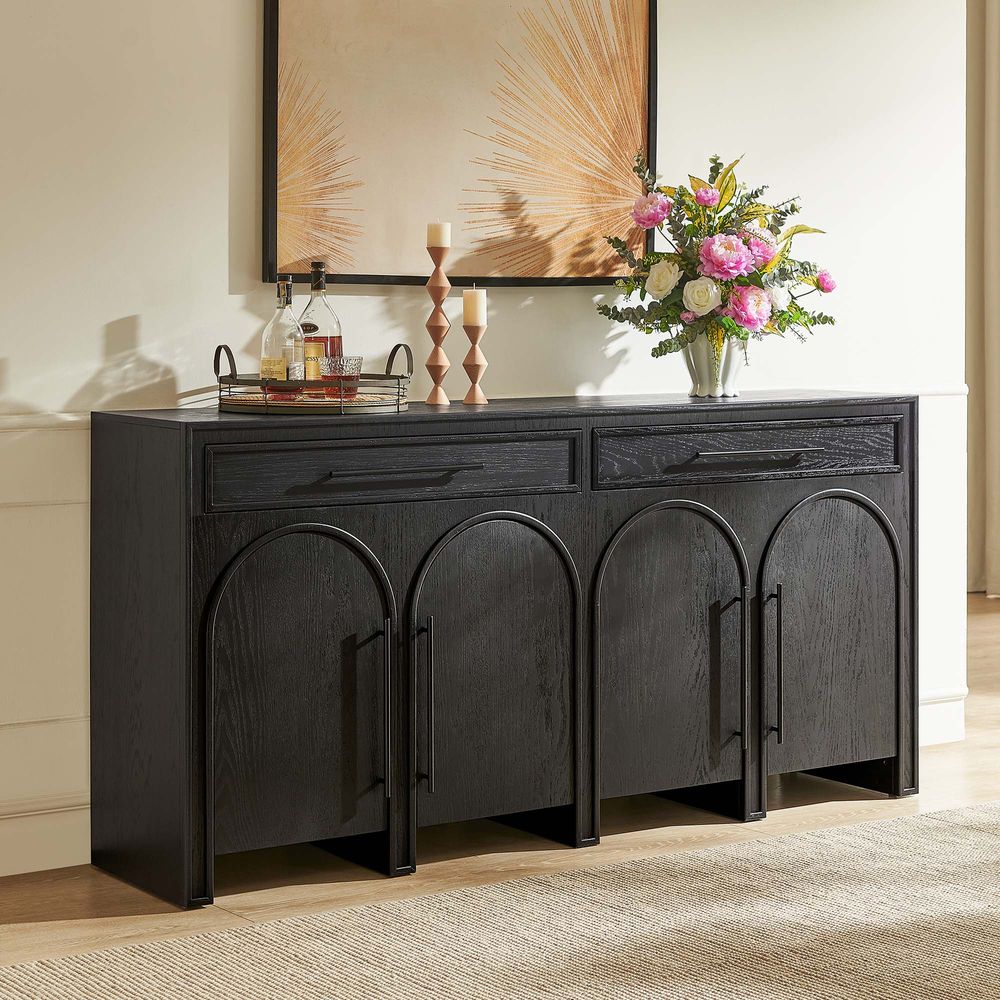
The Vera 72-Inch Sideboard offers a distinctive take on modern design. Its black oak finish and architectural arched cabinet fronts give it a defined look that can complement contemporary dining and living spaces. At 72 inches wide, it provides a substantial storage option for larger walls.
Its combination of upper drawers and enclosed cabinet compartments provides space for smaller accessories and household items. When considering a wide sideboard, check both the available wall space and the storage layout to make sure the design suits your needs.
Vera 72-Inch Sideboard
View Product
Wood Sideboards for Warm and Natural Interiors
Wood sideboards can bring warmth and visible grain variation to a room. Depending on the wood species, finish, and construction, they can suit traditional, rustic, mid-century modern, or relaxed contemporary interiors.
When comparing wood sideboards, look beyond the color name. Check whether the product uses solid wood, engineered wood, wood veneer, or a combination of materials. The construction may differ between the frame, cabinet panels, doors, and top surface.
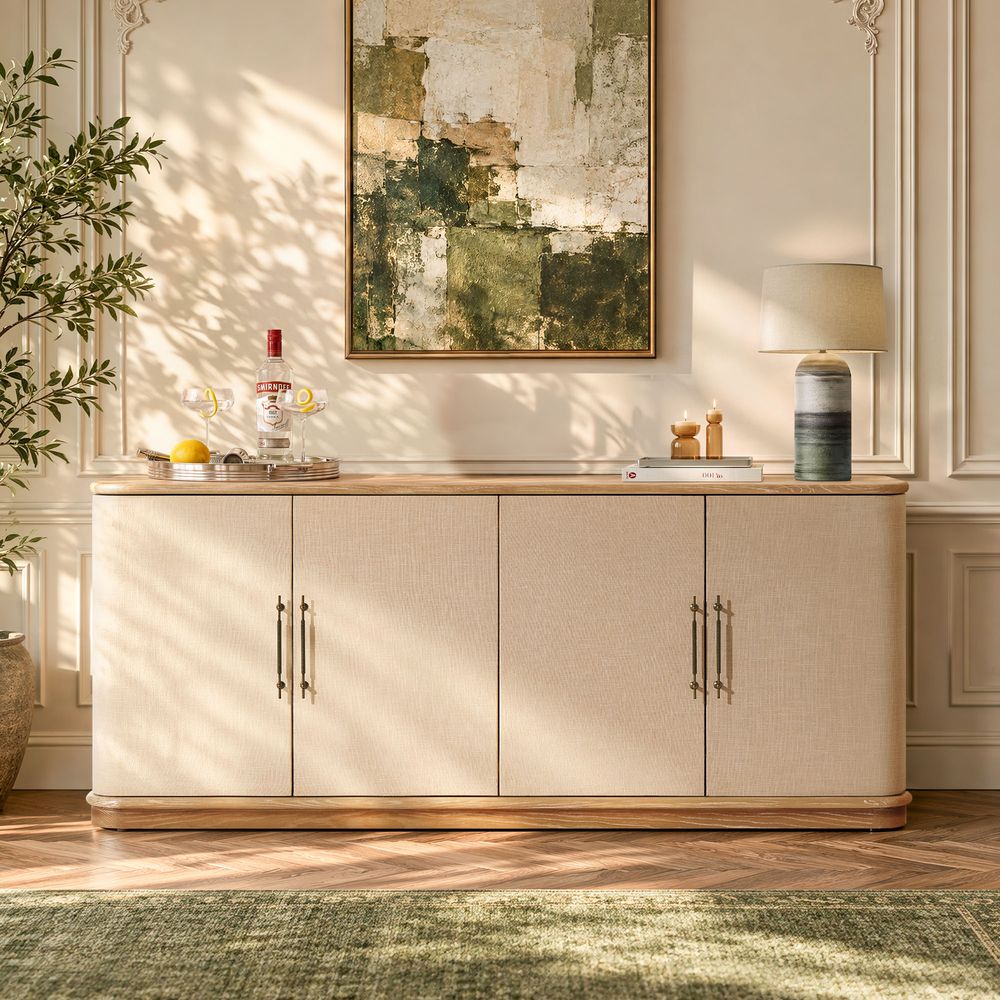
The Walter 80-Inch Linen-Blend Sideboard combines mindi wood and engineered wood with mindi veneers. Its light brown cerused finish and rounded wood framing give it a warm appearance, while the Sand Linen fabric detailing adds contrast to the wood surfaces.
At 80.1 inches wide, it is better suited to a spacious dining or living area with enough wall space. Its combination of wood tones and fabric detailing may also appeal to shoppers who want something different from a conventional all-wood cabinet.
Walter 80-Inch Linen-Blend Sideboard
View Product
Textured Sideboards for Interiors With Natural Tones
If you want a sideboard that adds texture without relying on a conventional wood-grain appearance, consider finishes inspired by natural materials. Travertine-inspired surfaces, textured panels, and contrasting hardware can introduce visual interest while working with neutral or warm-toned interiors.
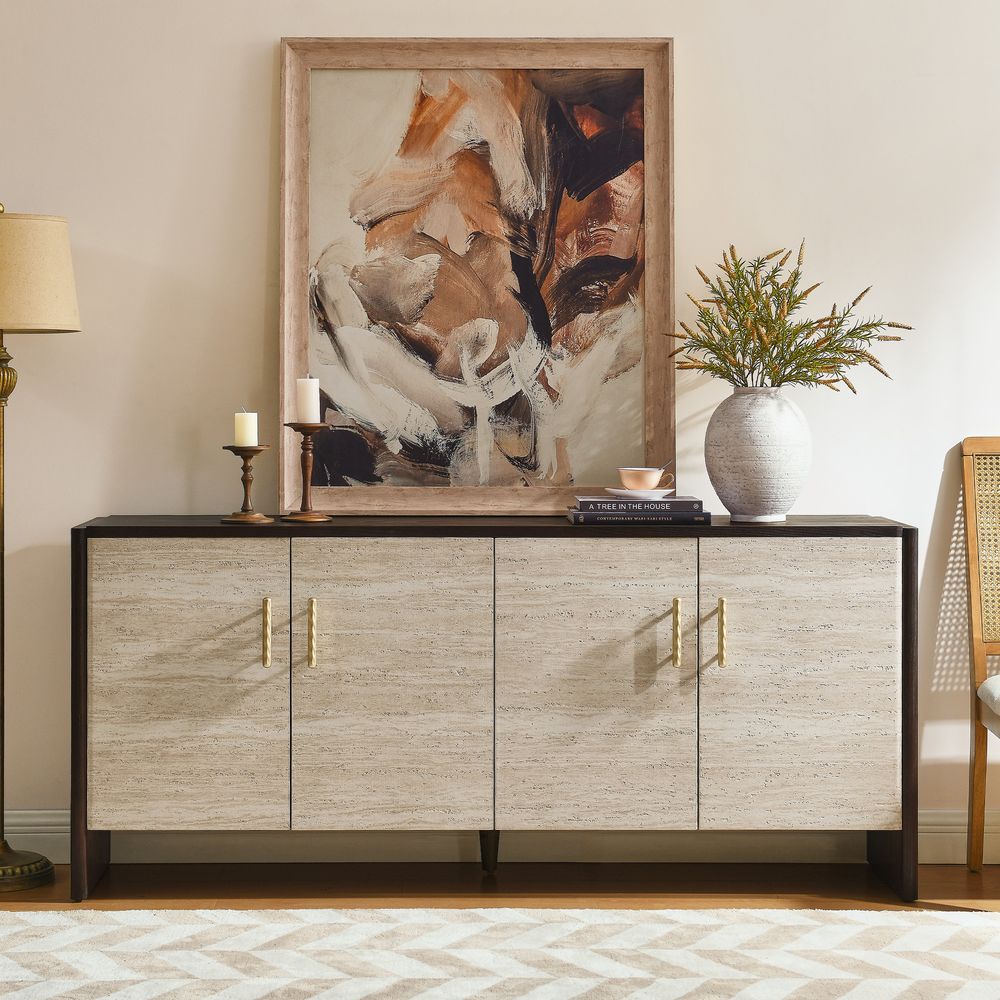
The Renata 71-Inch Travertine-Textured Sideboard combines resin and engineered wood with American ash veneers. Its beige travertine-inspired surface, dark wood grain frame, and light brass-toned hardware create a contrast between different materials and finishes.
Measuring 71 inches wide, it can work along a larger wall in a dining room or living area. Its textured appearance is worth considering if you prefer warm neutral colors and mixed materials in your interior design.
Renata 71-Inch Travertine-Textured Sideboard
View Product
Sideboards With Drawers and Cabinets for Everyday Storage
For regular household storage, a sideboard that combines drawers and enclosed cabinet compartments can accommodate different types of belongings. Drawers provide separate spaces for smaller items, while cabinet shelves offer room for larger objects.
The Stavn 72-Inch MCM Sideboard combines two drawers with adjustable shelves behind its cabinet doors. This layout provides separate storage areas for smaller accessories and larger household items. It measures 72 inches wide, 15.8 inches deep, and 34.3 inches high.
The cabinet doors also feature decorative Moru glass paired with fluted oak detailing. This allows dinnerware and decorative objects to remain partially visible while keeping them behind closed doors.
Before choosing a similar configuration, think about what you plan to store. A cabinet with several small drawers may help organize accessories, but it may not provide enough interior space for large serving bowls or storage baskets. Compare the shelf dimensions and drawer capacity rather than judging storage usefulness by the number of compartments alone.
Explore Hernest's sideboards collection to see the available designs and find options that suit your room.
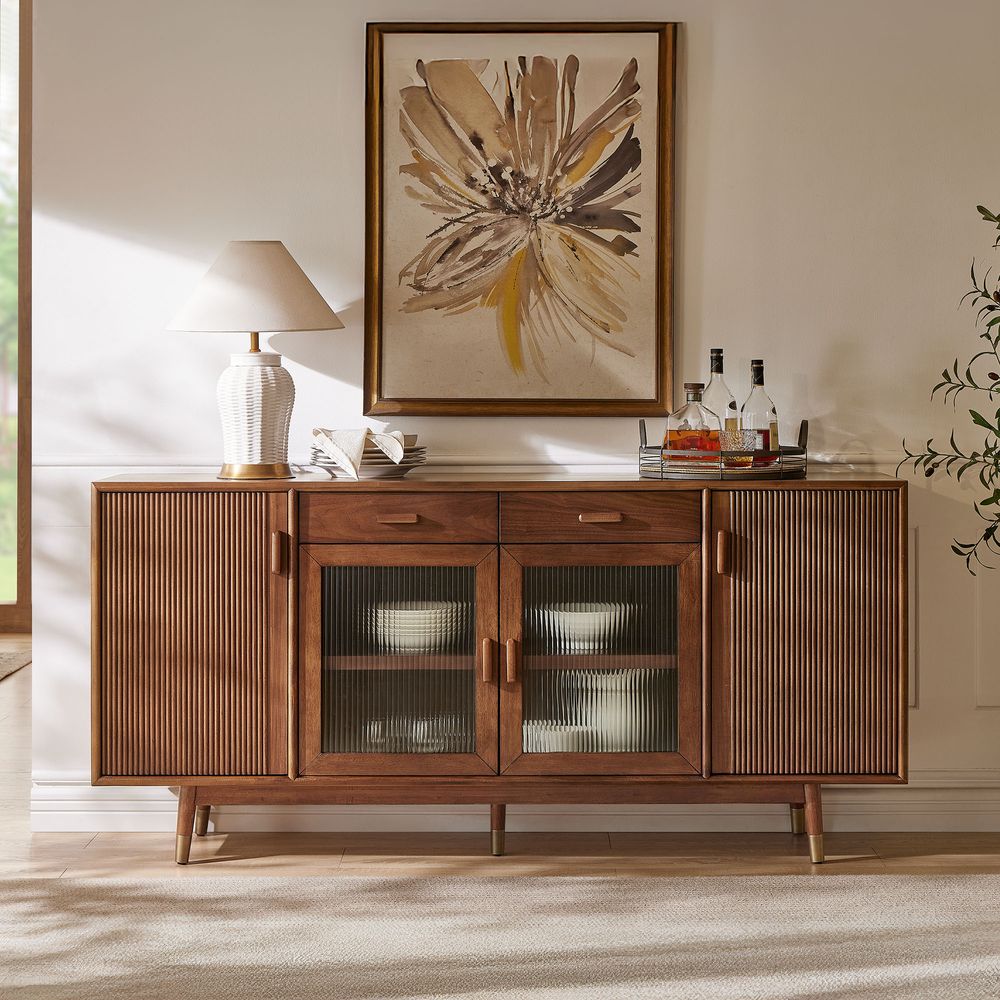
Stavn 72-Inch MCM Sideboard
View Product
How to Choose the Right Size Sideboard for Your Space
A sideboard should fit the room without obstructing movement or making nearby furniture difficult to use. A cabinet may look suitable in a product photograph but feel too large once placed against your wall. Measure the intended location before comparing styles.
Measure Width, Height, and Depth
Start with the available wall width. Account for nearby door frames, windows, radiators, light switches, and other features that could affect placement. Leave enough visual space around the cabinet rather than filling every available inch.
Height affects both the appearance and the way you use the top surface. A taller sideboard may provide a convenient serving or display height, while a lower profile can suit a living room or media area. Also consider windowsills, wall art, mirrors, and shelves positioned above the cabinet.
Depth is particularly important in hallways and rooms with limited circulation space. Measure from the wall to the nearest furniture or walking route, then account for the space needed to open doors and drawers. A sideboard that fits when closed may still be inconvenient when someone needs to access its interior.
Check Walking Space and Door Clearance
Leave enough room for people to move around the sideboard comfortably. In a dining room, measure with dining chairs pulled out rather than relying on the distance between the wall and the table when nobody is seated.
Remember that drawers extend into the room when opened, and hinged cabinet doors need space to swing outward. If the sideboard will sit opposite another cabinet or near a sofa, check whether both pieces can be used without interfering with each other.
For a narrow hallway or entryway, a shallower cabinet may be easier to accommodate. In a living room, consider the distance between the sideboard, sofa, and other frequently used furniture.
Measure the Delivery Route
Room dimensions are only part of the sizing process. Check the path from the delivery entrance to the final location, including exterior doors, interior doorways, staircases, landings, and tight turns.
This is especially important with larger furniture. Sideboards in this size range can be heavy, so check the product weight, package measurements, and handling requirements on the product page. Make sure the delivery route can accommodate the item and its packaging before placing an order.
How to Match the Storage Configuration to Your Needs
External dimensions determine how much room a sideboard occupies, while its internal layout affects what you can store. Think about the belongings you plan to keep inside before deciding between drawers, cabinets, shelves, and display compartments.
Choose Between Drawers and Cabinets
Drawers are generally useful for smaller items that benefit from separation. In a dining room, they can hold cutlery, napkins, coasters, and table accessories. In a living room, they can keep remote controls, cables, and smaller personal belongings organized.
Cabinet compartments are often more suitable for larger items. They can accommodate dinnerware, serving dishes, books, baskets, and household supplies, depending on the available interior height and depth.
A combination of drawers and cabinets can work well for households with varied storage needs. However, more compartments do not automatically mean more usable space. Compare the internal measurements and consider whether the shelves can accommodate the items you own.
Consider Adjustable Shelves
Adjustable shelves make it easier to change the interior layout over time. You may need more vertical space for tall vases or small appliances, or closer shelf spacing for plates, bowls, and storage containers.
Before purchasing, check the product details to understand how the shelves are arranged, whether they can be moved or removed, and how much usable height is available between them.
Decide Between Open, Glass-Front, and Closed Storage
Open shelves keep frequently used items within easy reach, but they leave belongings visible and exposed to dust. Glass-front compartments provide visibility while keeping objects behind doors. Solid cabinet fronts offer a more concealed appearance and can help a room feel less visually busy.
Consider how often you will use the stored items. Everyday essentials may be easier to organize in drawers or accessible cabinets, while decorative objects and occasional-use dinnerware can be placed behind glass or on display shelves.
Which Materials and Construction Details Should You Compare?
A sideboard's finish influences its appearance, but the materials beneath the surface also matter. Product descriptions may list several materials because the frame, panels, doors, and decorative surfaces do not always use the same construction.
Understand Solid Wood, Engineered Wood, and Veneer
Solid wood refers to components made from natural lumber. Wood veneer is a thin layer of real wood bonded to a supporting material, which may be solid wood or an engineered panel. Engineered wood is a broad category that includes manufactured wood-based panels used in furniture construction.
Veneer is different from a printed wood pattern because it uses a real wood surface. The supporting core provides the underlying structure, allowing furniture to combine a natural wood appearance with other construction materials.
Both solid wood and veneered furniture can respond to changes in moisture. Wood may shrink or swell as moisture levels change, while veneered surfaces also require appropriate care to protect the finish. The U.S. Forest Products Laboratory provides further information about veneered furniture and cabinetry, and the USDA Forest Service explains how moisture affects wood dimensions.
When evaluating a sideboard, check the listed materials for each component instead of relying on descriptions such as "wood finish" or "natural look." A piece may combine solid wood framing, engineered panels, and real wood veneer.
Check the Construction Details
Look for information about the cabinet frame, door hinges, drawer joints, shelf supports, and surface finish. These details help you understand how the furniture is assembled and whether its layout suits the way you plan to use it.
For drawers, check the interior dimensions as well as the opening mechanism. A drawer may look spacious from the front but have limited usable depth or height. For cabinets, check the shelf arrangement and whether shelves can be adjusted or removed.
Also pay attention to the listed construction materials. A sideboard may use different materials for its frame, cabinet panels, doors, and decorative details. Compare these specifications rather than assuming that a product described as a wood sideboard is made entirely from solid wood.
Consider the Finish and Maintenance
Cleaning requirements vary by surface material and finish. Wood and wood veneer generally benefit from gentle cleaning and prompt removal of spills. Avoid abrasive cleaners unless the manufacturer specifically recommends them.
For fabric-covered details, check the care instructions for the upholstery material rather than applying a wood cleaner to the entire piece. Textured resin finishes may also have different cleaning requirements from smooth wood surfaces.
Choose a finish that fits your household. A highly textured surface can add visual depth, while a smoother finish may be easier to wipe down if the sideboard will frequently hold serving dishes or everyday items. Always follow the manufacturer's care guidance.
How to Match a Sideboard With Your Existing Furniture
A sideboard does not need to match every other piece in the room exactly. It should relate to the overall color palette, materials, and proportions so that it feels intentional rather than out of place.
Start with the largest existing surfaces, such as the flooring, dining table, sofa, or media furniture. If the room already contains several wood tones, choose a sideboard that complements one of them instead of introducing another unrelated finish. The tones do not need to be identical; similar warmth or undertones can create a more coordinated look.
Contrast can also work well. A black sideboard can stand out against pale walls and lighter furniture, while a beige or natural finish can soften a room with darker floors. Decorative hardware, cabinet legs, and door patterns can connect the sideboard to other details in the room.
Think about visual proportions, too. A wide cabinet with a dark finish may feel substantial, especially in a smaller room. Lighter colors, visible legs, or glass-front sections can make the furniture feel less visually heavy.
The top surface offers another opportunity to connect the sideboard with the rest of the decor. A lamp, framed artwork, tray, or small group of decorative objects can help integrate the cabinet into the room. Leave enough space if you also plan to use the surface for serving or everyday storage.
How to Make the Most of Hernest's Black Friday Deals
Black Friday is a useful time to compare larger furniture purchases, and Hernest's Black Friday Furniture Deals offer an opportunity to explore available furniture discounts. However, the advertised discount should not be the only factor in your decision. A sideboard is a substantial piece of furniture, so its dimensions, construction, storage layout, and delivery arrangements matter long after the sale ends.
Compare the Final Price, Not Just the Discount
Look at the current selling price and the final amount shown at checkout. A product page may display a sale price alongside an additional order-level promotion, but the extra offer may depend on the total order value or other campaign conditions.
Hernest's published sitewide promotion terms list the following additional discounts based on qualifying merchandise subtotals:
-
$100 off $1,500
-
$150 off $2,000
-
$300 off $3,000
-
$600 off $5,000
-
$1,000 off $7,000
If you are also planning to purchase a dining table, chairs, or other furniture, compare the total cost of the items you already intend to buy. An additional discount may make a combined order worthwhile, but buying an unnecessary piece just to reach a threshold can reduce the value of the deal.
Compare the Features That Matter to You
When comparing sideboard deals, use the same criteria for each product. Check the external dimensions, interior storage measurements, material breakdown, door and drawer layout, finish, and assembly requirements.
A lower-priced sideboard may be a suitable choice if it meets your needs. A more expensive option may be worth considering when it offers a more suitable size, a specific finish, or a storage arrangement that better fits your home. Base your decision on the product's usefulness and final price rather than the discount percentage alone.
Prepare a Shortlist Before Black Friday
A little preparation makes it easier to compare products without rushing into a purchase because a sale is ending.
-
Measure the intended space. Record the maximum width, height, and depth available. Include nearby doorways, windows, furniture, and walking routes.
-
Decide what you need to store. List the items that will go inside. This helps determine whether drawers, adjustable shelves, glass-front compartments, or closed cabinets are most useful.
-
Choose a suitable style and finish. Consider your existing furniture and color palette. Decide whether you want the sideboard to blend in or become a focal point.
-
Shortlist a few products. Compare dimensions, internal storage, material construction, and listed prices before the sale. Save product pages so you can review price changes later.
-
Set a realistic budget. Include the expected order total and any additional furniture you already plan to buy. Do not let a discount threshold determine what you purchase.
-
Review delivery and assembly requirements. Check the item weight, package measurements, delivery access, and whether the product arrives fully or partially assembled.
-
Read the current purchase terms. Confirm promotion eligibility, shipping arrangements, warranty coverage, and return conditions before checkout.
These checks help narrow your options to sideboards that fit your home and budget. Confirming the practical details in advance also makes it easier to compare genuine savings during the Black Friday Sideboard Sale.
FAQs
Are Black Friday Sideboard Deals Worth It?
They can be worthwhile when the sale price applies to a sideboard that fits your space, storage needs, and budget. Compare the final checkout price, material construction, dimensions, delivery arrangements, and return conditions. A large discount is not useful if the product is too big or has an impractical storage layout.
What Is the Difference Between a Sideboard and a Buffet Cabinet?
The terms are often used interchangeably, particularly for dining room storage furniture. A buffet is traditionally associated with serving food and storing dining essentials, while sideboard is commonly used for a broader range of storage cabinets. In practice, the product's dimensions, shelf arrangement, and intended use matter more than the label.
What Size Sideboard Should I Choose for My Space?
Measure the available wall width, height, and depth before comparing products. Leave enough room for walking paths, cabinet doors, and drawers to open. Also consider nearby furniture and the route used to bring the sideboard into your home. Check the internal measurements if you have larger items to store.
What Is the Best Material for a Sideboard?
There is no single best material for every home. Solid wood offers natural grain and variation, while engineered wood and wood veneer are common in furniture that combines different materials and finishes. Compare the materials used in the frame, panels, doors, and surface, then consider the finish and maintenance instructions.
What Should I Look for When Buying a Sideboard on Sale?
Check the actual dimensions, internal storage space, shelf configuration, material details, door and drawer construction, and assembly requirements. Compare the final checkout price rather than relying only on the advertised discount. Before ordering, confirm delivery access, warranty coverage, and the current return and promotion terms.
Should I Measure My Doorways Before Buying a Sideboard?
Yes. In addition to measuring the space where you plan to place the sideboard, check the width and height of doorways, hallways, staircases, and other access points. Make sure the furniture can be moved into the room without difficulty, especially if you are choosing a wider or heavier model.
How Much Space Should I Leave Around a Sideboard?
Leave enough room for cabinet doors and drawers to open fully without hitting nearby furniture or walls. If the sideboard is placed in a dining area, allow sufficient clearance for chairs and comfortable movement. The exact space needed depends on the room layout and the sideboard's dimensions.
How Do I Maintain a Wood Sideboard?
Dust the surface regularly with a soft, dry cloth and clean spills promptly to prevent moisture from sitting on the finish. Avoid abrasive cleaners and excessive water. For specific cleaning methods, follow the care instructions provided by the manufacturer, as different wood finishes and surface materials may require different treatment.