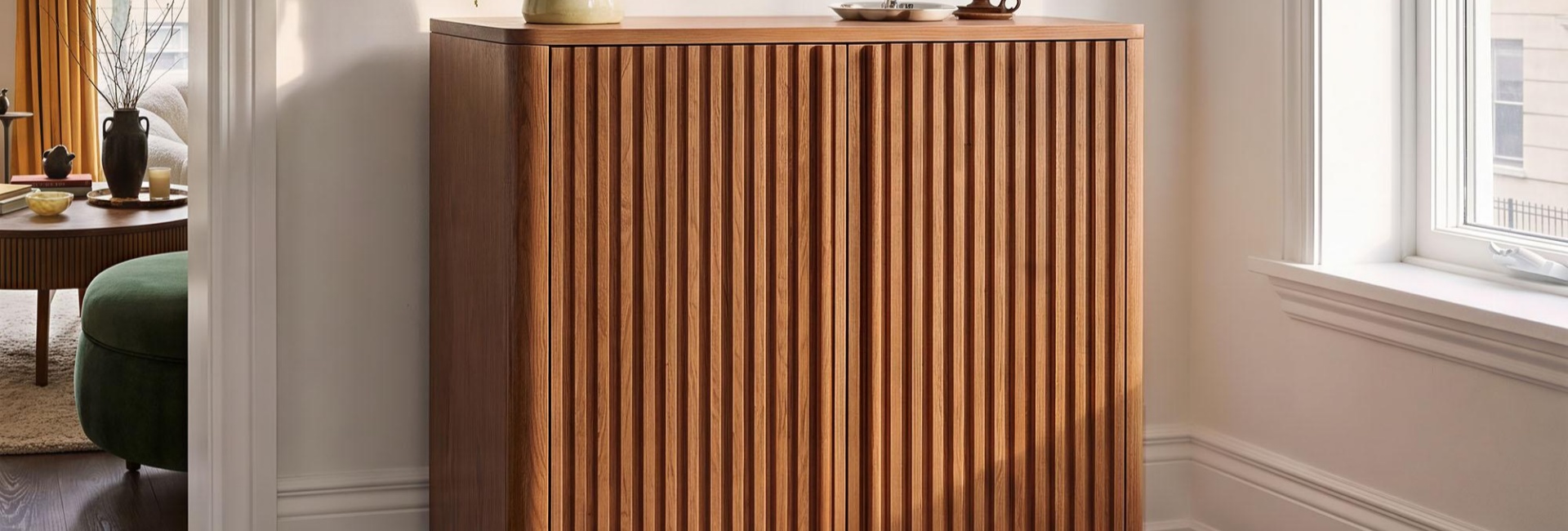
Black Friday cabinet deals can be an opportunity to add storage, replace an outdated cabinet, or make better use of an underused corner. However, the right choice depends on what you need to store and where the cabinet will go. Accent cabinets, glass display cabinets, and tall storage cabinets serve different purposes, so compare their dimensions, internal layouts, materials, and construction before focusing on the advertised discount. This guide covers cabinet styles for different rooms and the details worth checking before you buy.
Table of Contents
- Which Types of Cabinets Are Worth Buying During Black Friday?
- Where Can You Use Different Storage Cabinets at Home?
- How to Choose the Right Cabinet Size and Placement
- Which Storage Features Should You Look For?
- How to Evaluate Cabinet Materials, Construction, and Safety
- How to Find the Best Black Friday Cabinet Deals
- A Black Friday Cabinet Shopping Checklist
- FAQs
- Are Black Friday Cabinet Deals Worth It?
- What Type of Storage Cabinet Is Best for a Living Room?
- What Is the Difference Between a Display Cabinet and a Storage Cabinet?
- Are Glass Display Cabinets Practical for Everyday Use?
- What Should I Consider When Buying a Tall Storage Cabinet?
- How Do I Compare Cabinet Deals During Black Friday?
- How Much Space Should I Leave Around a Storage Cabinet?
- Should I Anchor a Tall Storage Cabinet to the Wall?
Which Types of Cabinets Are Worth Buying During Black Friday?
Different cabinets address different storage needs. Some keep everyday belongings out of sight, while others provide space to display collectibles and decorative objects. Consider the following types when comparing Black Friday cabinet deals.
Accent Cabinets for Living Room and Entryway Storage
Accent cabinets combine enclosed storage with decorative details such as textured doors, distinctive handles, and contrasting finishes. They can hold books, board games, remote controls, and other household items while adding a defined furniture element to a living room or entryway.
When comparing accent cabinets, consider their proportions and interior arrangement. Adjustable shelves offer flexibility for belongings of different heights, while separate compartments help keep smaller items organized.
The Sabina 31-Inch Ash Wood Cabinet features square fluting across its front and a warm brown ash finish. Its construction combines American solid ash wood and plywood with ash wood veneers. Measuring 31.9 inches wide, 15.7 inches deep, and 31.7 inches high, it has a relatively compact profile for a living room or smaller storage area. The adjustable shelves provides room for media accessories, books, and everyday belongings.
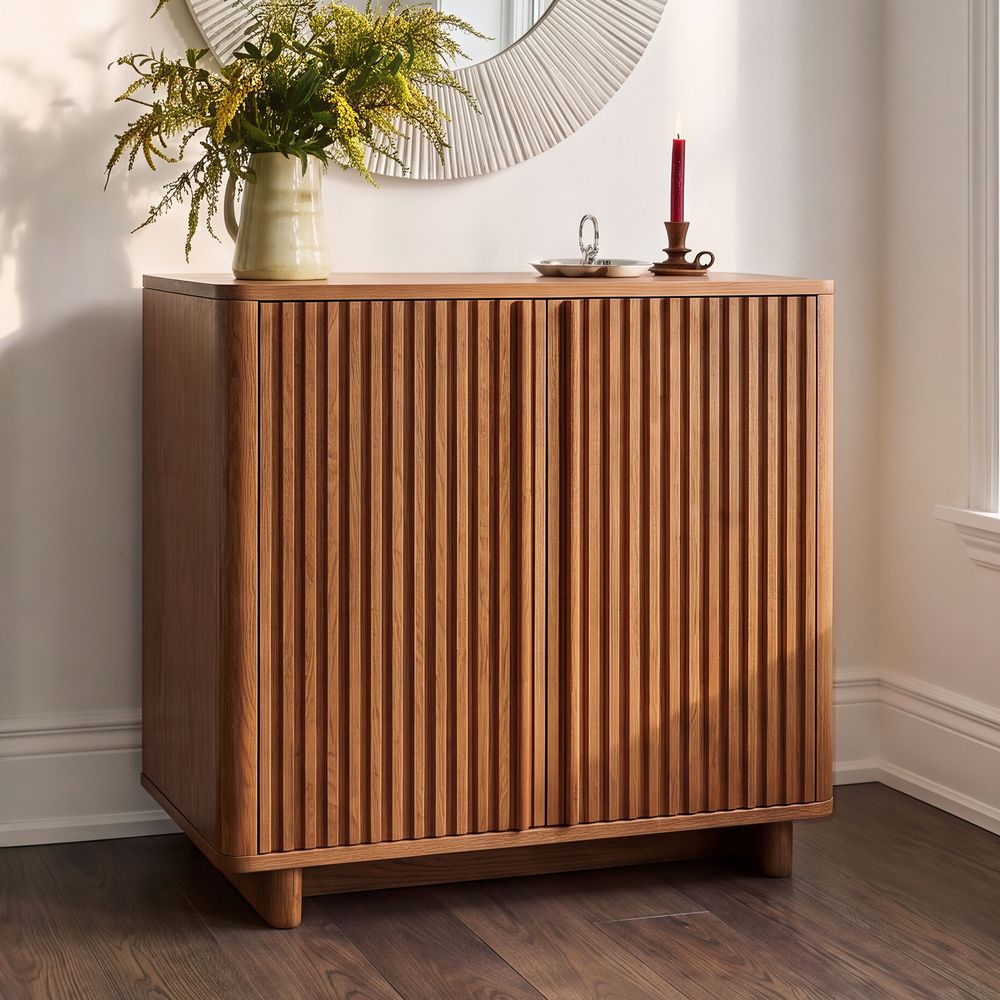
Sabina 31-Inch Ash Wood Cabinet
View ProductFor a more geometric look, the Vittorio 31-Inch Elm Cabinet features raised grid detailing across its doors and sides. It is made from solid rubberwood and plywood with elm veneers. Measuring 31.5 inches wide, 15.8 inches deep, and 32.1 inches high, it includes three interior storage areas and adjustable shelves. The cabinet arrives fully assembled, although the handles need to be fitted.
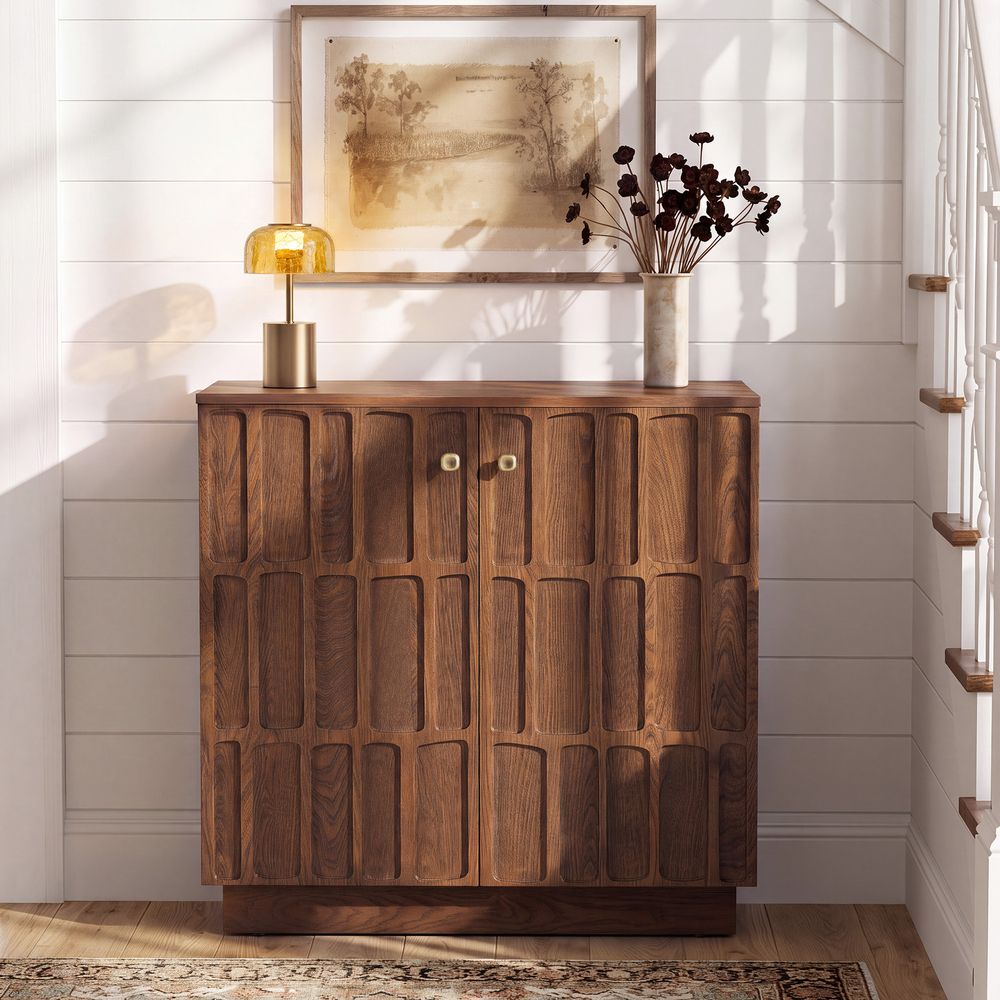
Vittorio 31-Inch Elm Cabinet
View Product
Glass Display Cabinets for Collectibles and Decorative Items
Glass display cabinets are worth considering when you want to keep ceramics, glassware, collectibles, or decorative objects visible while giving them a dedicated storage space.
Glass doors allow you to see the contents without opening the cabinet and can help limit direct dust exposure compared with open shelving. However, the glass and displayed items will still need occasional cleaning.
When comparing display cabinet deals, look at the number of shelves, interior dimensions, glass-door configuration, and whether the cabinet includes additional enclosed storage. A combination of glass doors and solid compartments can provide space for both displayed objects and belongings you prefer to keep out of sight.
The Fiske 37-Inch Chevron Cabinet combines clear glass doors with a lower enclosed storage section. It includes three adjustable shelves for displaying decorative objects, glassware, or collectibles. Its construction uses American solid oak and engineered wood with oak veneers, while the black oak finish and chevron detailing add texture to the cabinet front. Measuring 37.2 inches wide, 15.9 inches deep, and 72.6 inches high, Fiske offers vertical display space without requiring the width of a large horizontal cabinet.
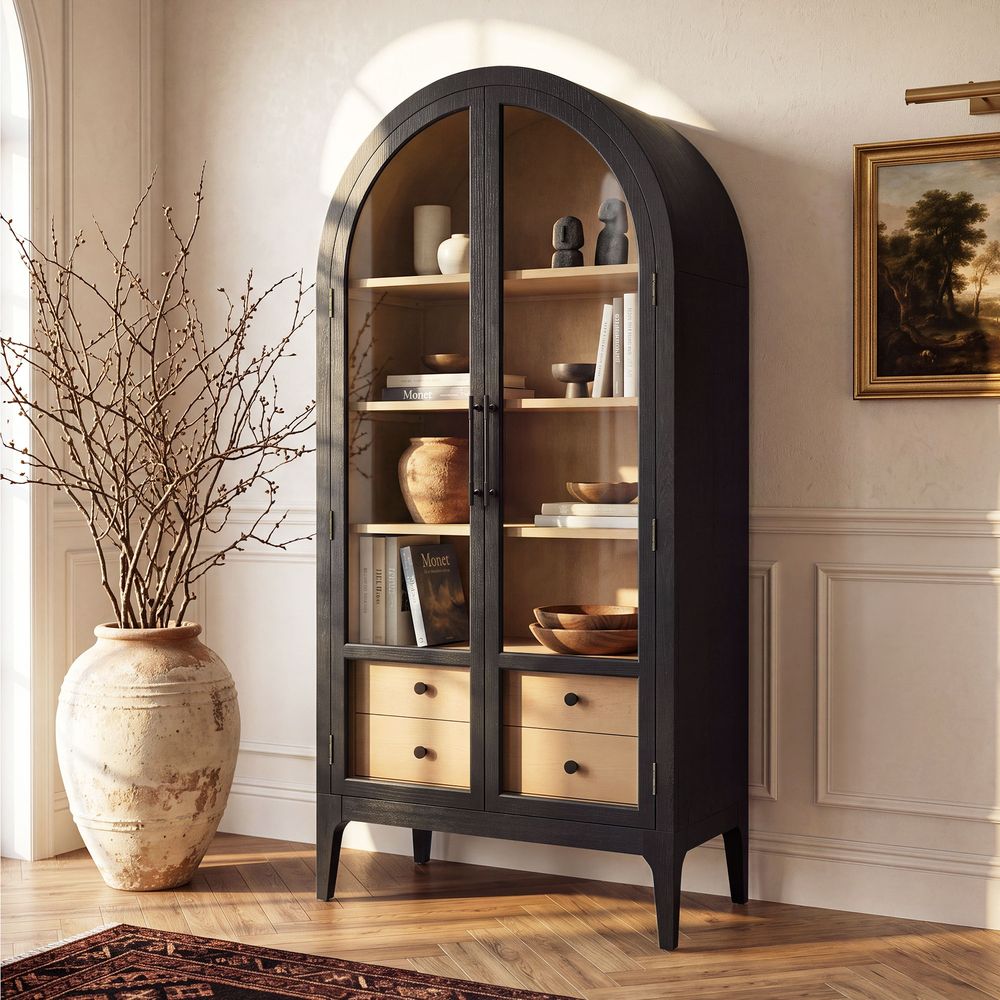
Fiske 37-Inch Chevron Cabinet
View Product
Tall Storage Cabinets for Maximizing Vertical Space
Tall storage cabinets make use of vertical space when you need additional storage but have limited room for wider furniture. They can work in living rooms, dining areas, and other spaces where a low cabinet may not provide enough storage capacity.
Height is only one factor to consider. Check the cabinet's depth, interior shelf dimensions, door-opening clearance, and stability. Adjustable shelves can accommodate belongings of different heights, while drawers provide a separate place for smaller items.
The Valborg 36-Inch Oak Cabinet has an arched design and a black oak finish. Its construction combines American solid oak and engineered wood with oak veneers. Measuring 36 inches wide, 17.9 inches deep, and 74.4 inches high, it provides multiple storage compartments, adjustable shelving, and drawers with dovetail joints and soft-close drawer.
Explore Hernest's cabinet collection to see the available types and find options that suit your room.
Valborg 36-Inch Oak Cabinet
View Product
Where Can You Use Different Storage Cabinets at Home?
The best cabinet for a room depends on the belongings you need to organize, the available space, and how frequently you use those items.
Living Room Cabinets for Everyday Organization
Living rooms often contain a mixture of decorative objects and everyday belongings, including books, board games, electronics, and media accessories. An enclosed cabinet provides space to organize these items without leaving everything on shelves or tabletops.
A compact cabinet may fit beside a sofa or along a smaller wall, while a taller design can make use of an unused corner. Consider the height of nearby furniture and the cabinet's finish as well. A wood finish can complement neutral interiors, while a darker surface can create contrast against lighter walls and furniture.
Entryway Cabinets for Shoes and Daily Essentials
An entryway cabinet needs to provide storage without interfering with the movement of people entering and leaving the home.
Start by identifying what you intend to store. Keys, mail, bags, and gloves require less space than shoes or larger household belongings. A compact accent cabinet may be suitable for smaller essentials, while shoe storage calls for enough interior height and depth to accommodate footwear.
Also check the door-opening direction and the cabinet's distance from the front door. In a narrow entrance, a deep cabinet or outward-opening doors may make the walkway less convenient to use.
Dining Room Cabinets for Tableware and Display
Dining rooms often need storage for serving dishes, glasses, table linens, and decorative objects. A cabinet with glass doors can keep selected pieces visible, while solid compartments provide space for items you do not need to display.
Shelf spacing is particularly important for tableware. Check the height of your largest plates, serving bowls, and glass containers before choosing a cabinet. If the dining area connects to the living room, consider how the cabinet's finish and style relate to the furniture in both spaces.
How to Choose the Right Cabinet Size and Placement
A cabinet may look suitable online but feel too large or inconvenient once it arrives. Measure the intended location and delivery route before placing an order.
Measure Your Room and Check Cabinet Placement
Start by measuring the available width, height, and depth of the area where you plan to place the cabinet. Also consider the space needed for doors and drawers to open.
For example, a cabinet may fit along an empty wall but leave insufficient clearance beside a doorway or nearby furniture. A cabinet that fits the floor area may also make a walkway difficult to use when its doors are open.
Check the following measurements:
-
Available wall width and floor depth.
-
Distance from nearby doors, windows, and furniture.
-
Clearance for opening cabinet doors and drawers.
-
Ceiling height, especially for tall cabinets.
-
Entry doors, hallways, stairways, and elevators along the delivery route.
A useful way to visualize the cabinet's footprint is to mark its width and depth on the floor with painter's tape. This helps you judge how much room will remain for walking and nearby furniture.
Which Storage Features Should You Look For?
External dimensions do not tell you how much usable storage a cabinet provides. The arrangement of its shelves, drawers, compartments, and doors can make a difference in everyday use.
Choose a Cabinet Based on Your Storage Needs
Before comparing storage configurations, make a list of the belongings you plan to keep inside the cabinet.
-
Books and household accessories: Enclosed compartments with adjustable shelves can accommodate items of different heights.
-
Small belongings: Drawers help separate items such as keys, accessories, and other smaller objects.
-
Collectibles and decorative pieces: Glass doors or open shelves keep selected objects visible.
-
Larger household items: Wider compartments provide more room for objects that need additional space.
Also consider how frequently you access each item. Everyday essentials are easier to retrieve from accessible drawers or lower compartments, while seasonal decorations and less frequently used belongings can be stored higher up.
Select the Right Cabinet Door and Opening Style
Cabinet doors affect how much clearance you need around the furniture.
Hinged doors provide access to the cabinet opening but need enough room to swing outward. Sliding doors avoid this clearance requirement, although they may not allow the entire interior to be accessed at once.
Glass doors are useful when you want to display selected belongings, while solid doors keep the contents less visible. Open shelves provide direct access but leave everything exposed to view and dust.
Consider the surrounding layout before choosing a door style. A cabinet in a narrow entryway may need a different configuration from one placed against an open dining room wall.
Check Interior Storage Capacity and Shelf Flexibility
Do not assume that a cabinet's external dimensions represent its usable storage space. Frames, doors, and internal dividers reduce the room available inside.
Check the interior width, depth, and height of individual compartments, especially if you plan to store large books, decorative vases, serving dishes, or electronic equipment.
Adjustable shelves are useful when your storage needs change. They allow you to create more space for taller objects or reduce the distance between shelves for smaller belongings. Also review the manufacturer's recommended shelf weight limits rather than estimating how much a shelf can support.
How to Evaluate Cabinet Materials, Construction, and Safety
Cabinet materials and hardware affect appearance, maintenance, and everyday use. Compare the complete construction rather than judging a cabinet by one material label.
Compare Cabinet Materials and Construction Quality
Solid wood, engineered wood, and wood veneer are commonly used in furniture, but they serve different roles.
Solid wood is made from natural timber and has individual grain patterns. It can be used in structural components, decorative details, and visible surfaces. Its appearance may change with environmental conditions, so follow the recommended care instructions.
Engineered wood refers to manufactured wood panels used in cabinet bodies and other components. Its characteristics depend on the specific panel material, construction, and finish.
Wood veneer is a thin layer of real wood applied over a supporting material. It provides a natural wood surface while allowing the underlying structure to use a different material.
These materials are not mutually exclusive. A cabinet may combine solid wood, plywood, engineered panels, and veneer, with each material serving a different purpose.
When comparing wood storage cabinets, read the full material description to understand which components use solid wood and which use manufactured panels or veneers. Also review the surface finish, panel detailing, and drawer construction rather than relying on terms such as "solid wood" or "wood finish" alone.
Review Hardware, Drawers, and Cabinet Stability
Hardware affects how convenient a cabinet is to use. Check the door hinges, drawer slides, handles, and shelf adjustment system. If you plan to access the cabinet frequently, pay attention to how the doors and drawers open and close.
Drawer construction is another detail worth comparing. Dovetail joints are interlocking joints used to connect drawer sides. They describe a particular construction method, rather than guaranteeing the overall quality or lifespan of a cabinet.
For taller furniture, stability deserves particular attention. The U.S. Consumer Product Safety Commission's Anchor It! guidance recommends securing top-heavy furniture to help prevent tip-over incidents.
Follow the manufacturer's installation instructions and use suitable hardware for your wall construction. This precaution is particularly important in households with young children who may climb on or pull at furniture.
Consider Assembly, Maintenance, and Long-Term Use
Assembly requirements can affect which cabinet is practical for your home. Some products arrive fully assembled, while others require you to attach legs, handles, shelves, or other components. Check the product details before ordering.
Maintenance also varies by surface. Glass panels need occasional cleaning, while wood finishes should be cared for according to the manufacturer's instructions. Avoid assuming that every finish can be cleaned with the same products.
For larger cabinets, consider the product's weight and packaging dimensions as well. Even an assembled cabinet may require additional help to move into position.
How to Find the Best Black Friday Cabinet Deals
Once you know which cabinet style and features you need, you can compare Black Friday cabinet deals more effectively. Focus on the final price and the product specifications rather than the advertised discount alone.
Compare Prices Based on Cabinet Type and Features
A small accent cabinet and a tall glass display cabinet have different purposes, dimensions, and construction requirements. Their prices should not be compared as though they were equivalent products.
When reviewing storage cabinet deals, compare products with similar characteristics:
-
Overall width, height, and depth.
-
Materials and surface finishes.
-
Number and arrangement of shelves.
-
Drawer construction and hardware.
-
Assembly requirements and included accessories.
Check the actual selling price rather than focusing only on the percentage displayed beside it. Where available, review previous pricing to understand whether the current offer represents a meaningful reduction.
Consumers' Checkbook's furniture deal guide discusses why advertised regular prices and discounted prices do not always provide a straightforward basis for comparing furniture.
Take Advantage of Hernest's Black Friday Deals
If you are comparing Black Friday Deals, you can take a look at Hernest's Black Friday Furniture Deals and check the current promotion terms before placing an order.
Hernest's published sitewide promotion terms list the following additional discounts based on qualifying merchandise subtotals:
Check the current campaign page and checkout summary for eligible products, spending requirements, and applicable conditions. Buying an additional item solely to reach a discount threshold may cost more than the savings it provides.
A Black Friday Cabinet Shopping Checklist
Before completing your order, check the following:
-
Identify what you need to store and which cabinet style suits the room.
-
Measure the available space and delivery access.
-
Check interior dimensions, shelf spacing, and drawer configurations.
-
Review materials, surface finishes, hardware, and anti-tip requirements.
-
Compare final prices and available order discounts.
-
Confirm product availability, delivery arrangements, and return terms.
These checks help you compare cabinets based on how they will fit and function in your home, not just their advertised prices.
FAQs
Are Black Friday Cabinet Deals Worth It?
Black Friday cabinet deals can be worth considering when you have already identified the type, size, and storage features you need. Compare the current selling price, construction, and delivery terms rather than judging an offer by its discount percentage alone.
What Type of Storage Cabinet Is Best for a Living Room?
The right choice depends on how you use your living room. Accent cabinets provide enclosed storage for everyday belongings, glass display cabinets keep selected objects visible, and tall cabinets make use of vertical space.
What Is the Difference Between a Display Cabinet and a Storage Cabinet?
A display cabinet is designed to make its contents visible, often through glass doors or open shelving. A storage cabinet generally prioritizes enclosed compartments for keeping belongings organized and out of sight. Some designs combine both functions.
Are Glass Display Cabinets Practical for Everyday Use?
Glass display cabinets can be useful for organizing ceramics, collectibles, and glassware while keeping them visible. Glass doors can limit direct dust exposure compared with open shelves, although both the glass and displayed items still need occasional cleaning.
What Should I Consider When Buying a Tall Storage Cabinet?
Check the cabinet's height, width, depth, interior shelf dimensions, and door-opening clearance. You should also review its weight, assembly requirements, and anti-tip hardware. Make sure it can be secured properly in its intended location.
How Do I Compare Cabinet Deals During Black Friday?
Compare cabinets with similar dimensions, materials, storage configurations, and hardware. Then review their current selling prices, available discounts, shipping costs, and return policies to understand the overall cost.
How Much Space Should I Leave Around a Storage Cabinet?
There is no single clearance measurement for every cabinet. Leave enough space for doors and drawers to open fully, maintain comfortable walking paths, and avoid blocking nearby furniture or entrances. Follow the manufacturer's installation requirements when applicable.
Should I Anchor a Tall Storage Cabinet to the Wall?
Yes. Anchoring tall or top-heavy furniture is an important safety precaution. Follow the manufacturer's instructions and use suitable hardware for the wall type. This is particularly important in households with children who may climb on or pull at furniture.