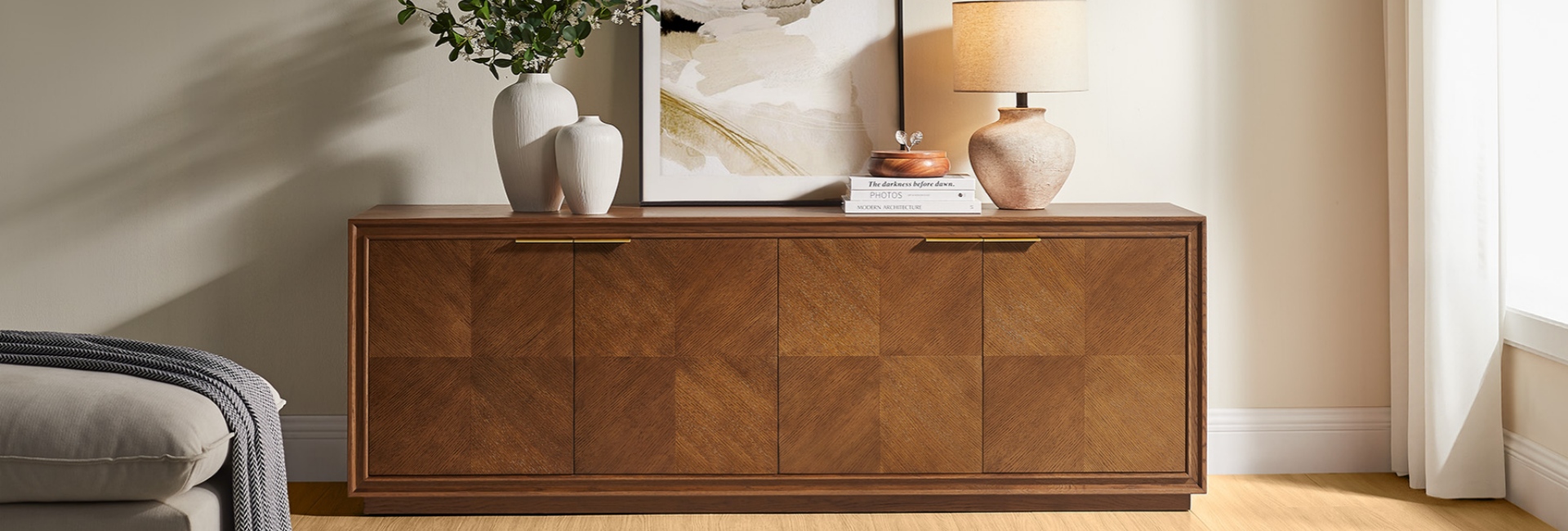
A bedroom TV stand solves a simple problem: it holds your screen at a comfortable height for watching from bed while giving cords, remotes, and streaming devices a place to go. But bedrooms aren't living rooms. You're usually watching from a lower, more reclined position, floor space is tighter, and a bulky console can make a restful room feel crowded. The right bedroom TV stand balances height, width, depth, viewing distance, storage, and cable management so the TV feels like part of the room rather than an afterthought.
Table of Contents
- Bedroom TV Stand at a Glance
- Why a Bedroom TV Stand Works Differently Than a Living Room One
- Can You Put a TV Stand in the Bedroom?
- How Tall Should a TV Stand Be in a Bedroom?
- How Wide Should a Bedroom TV Stand Be?
- How Deep Should a Bedroom TV Stand Be?
- How Far Should a TV Be From Your Bed?
- Storage That Earns Its Footprint in a Bedroom
- Choosing a Bedroom TV Stand Style
- Where Should a TV Stand Go in a Bedroom?
- Wall-Mount vs. TV Stand: Which Should You Choose?
- Buying Checklist: What to Measure Before You Order
- Two Hernest Bedroom TV Stand Options
- FAQs
- Can you put a TV stand in the bedroom?
- How tall should a TV stand be in a bedroom?
- How wide should a bedroom TV stand be for my TV?
- How deep should a bedroom TV stand be?
- Is a 55-inch TV too big for a bedroom?
- Can I use a nightstand or dresser as a TV stand?
- Should the TV stand go opposite the bed?
- How do I hide cables on a bedroom TV stand?
- Do I need an anti-tip kit for a bedroom TV stand?
- What material is best for a bedroom TV stand?
Bedroom TV Stand at a Glance
If you want the short version, start with these measurements:
The exact measurements depend on your bed height, TV size, room layout, and how you actually watch. Use these numbers as starting points, then measure your own room before ordering.
Why a Bedroom TV Stand Works Differently Than a Living Room One
The living room is built around a sofa. The bedroom is built around a mattress. That difference changes almost every measurement that follows.
You Watch From Bed, Not a Sofa
In a bedroom, your viewing position is usually lower and more reclined than it is on a sofa. If you're propped up on pillows, your eyes may be several inches lower than they would be while sitting upright in a living room.
That's why a media console that feels perfectly comfortable in front of a sofa can put the TV too high when it's across from your bed.
A bedroom TV stand should be sized around your actual viewing position, not a generic living-room setup. Sit in bed the way you normally watch TV and use that position when deciding the stand height.
Floor Space Is Tighter and the Mood Matters
A living room can often absorb a deeper console without affecting circulation. Bedrooms have less spare floor space, especially around the foot of the bed and the path to a closet or bathroom.
A deep TV stand can narrow that walkway quickly. In a smaller bedroom, a shallow console usually works better because it keeps the floor open while still providing enough room for the TV and essential electronics.
The visual side matters, too. A large entertainment center, exposed wires, bright LEDs, or glossy finishes can make a bedroom feel more like a media room than a place to unwind.
Can You Put a TV Stand in the Bedroom?
Yes. In many bedrooms, a dedicated TV stand is a practical alternative to wall mounting or using a dresser. It keeps the screen at a manageable height, provides storage for small electronics, and gives you a place to organize cables without drilling into the wall.
For renters or anyone who likes to rearrange furniture, a freestanding stand is particularly convenient.
The Dresser Hack—and Why It Can Backfire
Putting a TV on a dresser can work when the proportions are right, but many dressers are taller than a bedroom media console. Once the TV is added, the screen may sit higher than is comfortable from bed.
If you want to use a dresser, don't judge the height by the furniture alone. Measure from the floor to your eyes in your normal watching position, then account for half the TV's height. If the resulting screen position forces you to look noticeably upward, the dresser is probably too tall.
When a Wall-Mounted Setup Makes Sense
Wall mounting frees up floor space and can create a clean, minimal look. It also gives you more flexibility with screen height than placing a TV directly on a console.
The trade-off is installation. You'll need the correct wall anchors, a suitable mounting surface, and a plan for concealing power and HDMI cables. You also lose the storage that comes with a TV stand.
For renters, frequent room rearrangers, or anyone who wants storage without drilling, a TV stand for bedroom use is usually the simpler option.
How Tall Should a TV Stand Be in a Bedroom?
A bedroom TV stand is typically 20–30 inches tall, but there is no universal ideal height. The better rule is to position the center of the screen at or slightly below your eye line when you're watching from bed.
Your bed height, mattress thickness, pillow arrangement, and normal viewing position all affect the answer.
How to Calculate the Right Stand Height
Use your actual viewing position instead of relying on a standard number:
Sit or recline in bed exactly as you normally watch TV.
Measure from the floor to your eyes.
Measure the height of your TV.
Divide the TV height by two.
Subtract half the TV height from your eye-line measurement.
The result gives you a useful starting point for the top of the stand, assuming the TV sits directly on the console.
For example, if your eye line is 48 inches from the floor and your TV is 24 inches tall, the screen center would be 12 inches above the stand. A stand around 24–30 inches tall would put the screen center close to your eye level.
The exact result will vary, so treat the calculation as a starting point rather than a rigid rule.
Mattress Thickness Changes the Number
A high bed frame and thick mattress raise your viewing position. A low platform bed lowers it. That means two bedrooms with the same TV can need different stand heights.
If you usually watch while sitting upright against pillows, measure from that position. If you watch mostly reclined, measure from the position you actually use rather than assuming the sitting-up measurement will work.
How Wide Should a Bedroom TV Stand Be?
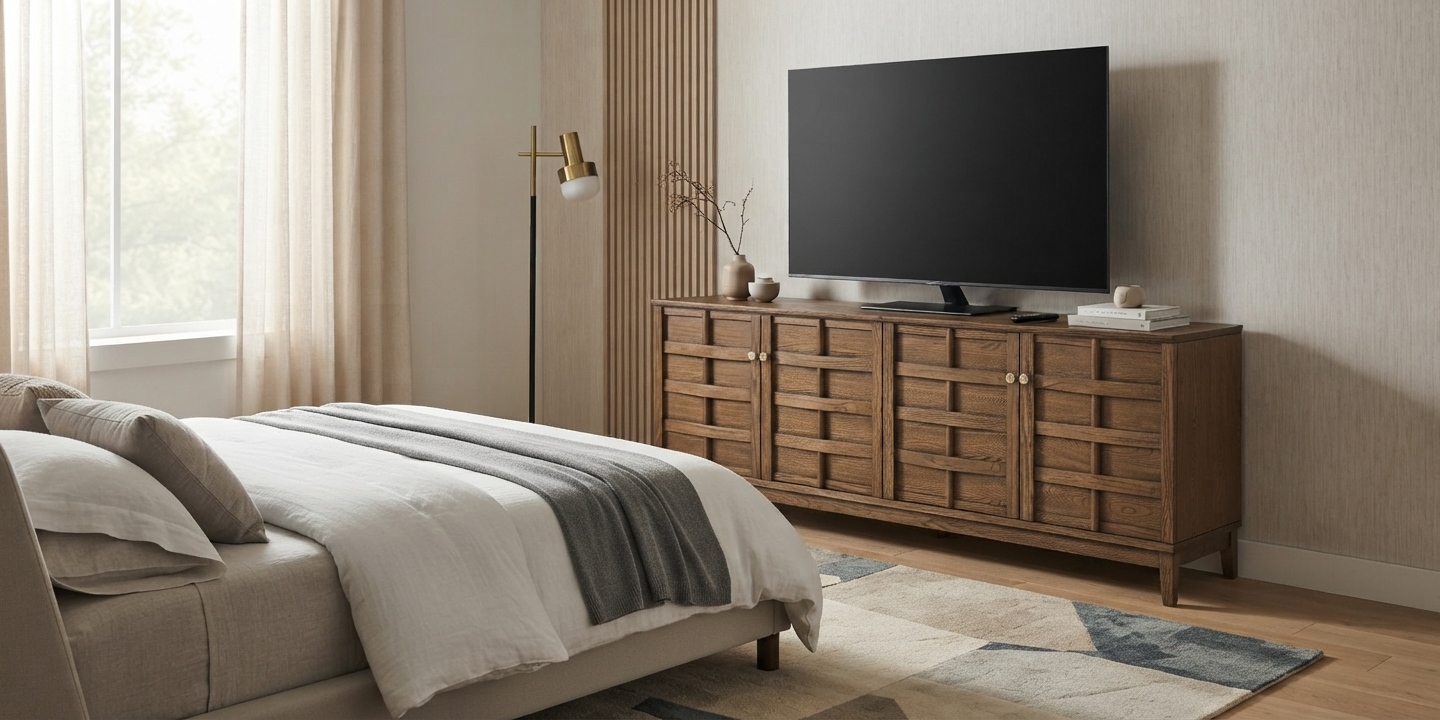
Your TV stand should generally be wider than the TV, leaving several inches of surface on both sides. This keeps the screen from looking top-heavy and provides a more stable visual base.
A simple rule is:
Recommended stand width = TV width + several inches on each side
The exact TV width varies by model, so check the manufacturer's dimensions rather than assuming the diagonal screen size equals the TV's physical width.
Bedroom TV Stand Width by TV Size
These are starting ranges, not safety ratings. Always check the stand's maximum TV size, weight capacity, and the TV's actual base-foot placement before buying.
For larger screens, a wider console also gives you room for a soundbar or a few restrained decorative pieces without making the top look crowded.
The Willow 78" Elm Media Console is designed for TVs up to 80 inches, making it a practical option for larger bedrooms where a wide, substantial console won't overwhelm the room. Its eight rear cord cutouts also help keep connections organized.
How Deep Should a Bedroom TV Stand Be?
For a bedroom, 12–16 inches of depth is a useful starting range when floor space is tight. Living-room consoles commonly run deeper, but that extra depth can reduce the walkway around a bed.
Before choosing a stand, measure from the wall to the edge of the available floor area. Then account for:
Foot-of-bed clearance
Closet and bathroom access
Door swings
Walkways around the bed
The TV's actual base depth
A shallow console can be particularly useful in bedrooms where the TV sits directly across from the foot of the bed. You give up some interior storage depth, but the room gains valuable circulation space.
How Far Should a TV Be From Your Bed?
Viewing distance depends more on TV size and your normal viewing position than on bedroom size alone.
A larger screen generally works best when you have enough distance for comfortable viewing, while a smaller room may call for a smaller screen. Rather than treating one distance as correct for every TV, check the TV manufacturer's recommended viewing guidance and consider how close your eyes are to the screen when you're actually lying or sitting in bed.
As a practical starting point, a 55-inch TV can work well in a bedroom where the viewing position is around 8–10 feet away, provided the screen doesn't dominate the room and the viewing angle feels comfortable.
The important point is to avoid choosing a TV solely because it fits on the stand. TV size, viewing distance, and room layout should be considered together.
Storage That Earns Its Footprint in a Bedroom
A living-room media console might need to store a game console, speakers, discs, and multiple accessories. A bedroom stand usually has a smaller job: hide a streaming device, charger, remote, cables, and perhaps a few books.
The best storage is the storage you will actually use.
Drawers, Cabinets, or Open Shelves?
If your priority is a calm bedroom, closed storage usually creates the cleanest visual result. Drawers are useful for small items that would otherwise migrate to the nightstand.
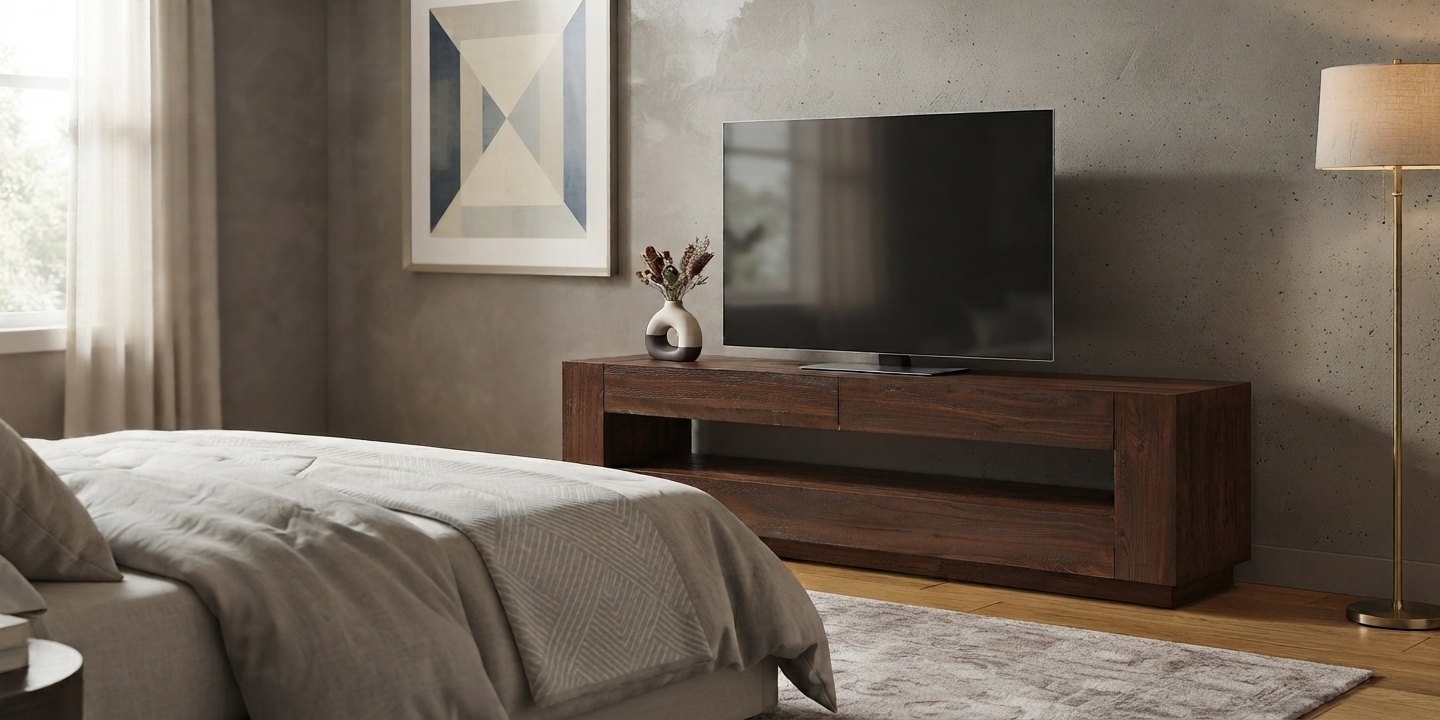
The Torben 70" Old Elm Media Console combines two dovetail-jointed drawers with an open shelf and supports TVs up to 75 inches. It's a useful choice when you want concealed storage for smaller items without giving up an open area for a streaming device or speaker.
Cable Management Is Essential
Visible cables can make even a well-designed bedroom feel unfinished.
Look for a stand with:
Rear cable cutouts
A cable channel or routing space
Enough clearance for a power strip
Ventilation around electronic devices
Route HDMI and power cables through the rear openings and use small cord clips to keep loose sections against the back or legs of the console.
If a stand has no practical cable-management solution, consider how the cords will look before you buy it, not after the TV is installed.
Choosing a Bedroom TV Stand Style
A bedroom TV stand should support the room's existing style rather than compete with the bed.
Mix Materials Instead of Buying a Matching Set
A perfectly matched bedroom set isn't the only way to create a cohesive room. In fact, using exactly the same finish for the bed, dresser, nightstands, and TV stand can make the space feel more uniform than intentional.
Instead, look for shared elements.
An upholstered bed can pair well with a warm wood console. A room already filled with dark wood may benefit from a lighter finish. If your nightstands have rounded or sculptural details, a simpler console can keep the room from feeling visually busy.
The goal is coordination, not perfect matching.
Wood Tones and Finishes That Work Well in Bedrooms
Warm wood tones and muted finishes tend to work easily with bedroom furnishings. Elm, oak, and walnut-inspired finishes can add texture without introducing a strong visual contrast.
For a small bedroom, lighter finishes can help the console feel less visually heavy. Darker wood can work well in larger rooms or bedrooms with lighter walls and bedding.
Whatever finish you choose, consider the furniture already in the room. The TV is already a visually dominant black rectangle; the stand doesn't necessarily need another high-contrast element competing with it.
Where Should a TV Stand Go in a Bedroom?
The best location depends on the room, but across from the bed is usually the simplest arrangement.
Opposite the Bed
Putting the stand across from the bed allows you to face the screen directly rather than turning your neck. It also makes the TV wall a natural focal point.
Before committing to this layout, check the clearance between the stand and the foot of the bed. Make sure you can still walk comfortably and open nearby doors or drawers.
Corner Placement for Awkward Rooms
Not every bedroom has a clean wall opposite the bed. A window, closet, door, or unusual floor plan may make a corner more practical.
A corner TV stand or a swivel-mounted screen can help in these situations. The important thing is to preserve a comfortable viewing angle from your normal position in bed.
Don't sacrifice ergonomics just to make the furniture fit a particular wall.
Wall-Mount vs. TV Stand: Which Should You Choose?
Both options can work well. The better choice depends on whether you prioritize floor space, storage, flexibility, or a minimal look.
A stand is usually the lower-commitment choice. A wall mount makes more sense when floor space is extremely limited and you're comfortable planning the installation and cable routing.
Whichever setup you choose, secure the TV and furniture appropriately. TVs can tip if bumped, and the risk is greater when children or pets are present. Follow the manufacturer's anchoring instructions and the U.S. Consumer Product Safety Commission's furniture stability guidance, including its Anchor It campaign.
Buying Checklist: What to Measure Before You Order
Before buying a bedroom TV stand, measure these seven things:
Eye line from bed: Measure from the floor to your eyes in your normal viewing position.
TV dimensions: Check the TV's actual width, height, depth, and base-foot placement.
Stand width: Choose a console wider than the TV and confirm the manufacturer's size and weight limits.
Available wall width: Measure the space where the stand will sit, including nearby doors, windows, and furniture.
Depth clearance: In a tight bedroom, a 12–16-inch-deep console can help preserve the walkway.
Viewing distance: Measure from your normal eye position in bed to the screen location.
Cable and storage needs: Confirm that the stand has enough storage, ventilation, and cable access for your equipment.
These measurements eliminate most of the common fit problems before the furniture arrives.
Two Hernest Bedroom TV Stand Options
If you're shopping for a bedroom media console, two Hernest options illustrate different use cases.
Willow 78" Elm Media Console: Best for Larger TVs
The Willow is a strong fit when you have a larger bedroom and a TV up to 80 inches. Its 78-inch width gives a large screen a substantial base, while eight rear cord cutouts make it easier to keep cables organized.
Its warm brown elm finish also works well when you want the media wall to feel more like bedroom furniture than entertainment equipment.
Torben 70" Old Elm Media Console: Best for Storage
The Torben is better suited to a setup where everyday storage matters. It supports TVs up to 75 inches and combines two dovetail-jointed drawers with an open shelf.
The old elm finish brings visible grain variation, knots, and natural character, making it a good choice when you want the TV stand to add warmth and texture rather than blend into the background completely.
You can explore more options in Hernest's media consoles collection.
FAQs
Can you put a TV stand in the bedroom?
Yes. A bedroom TV stand can keep the screen at a comfortable height, provide storage for electronics and small items, and simplify cable management. It is also easier to move than a wall-mounted TV.
How tall should a TV stand be in a bedroom?
Most bedroom TV stands are around 20–30 inches tall, but your ideal height depends on your eye level when watching from bed. Position the center of the screen at or slightly below your normal eye line rather than relying on a universal stand height.
How wide should a bedroom TV stand be for my TV?
Choose a stand that is wider than the TV, leaving several inches of surface on each side. As a starting point, a 43-inch TV typically pairs with a 48–52-inch stand, while a 55-inch TV can work with roughly 58–65 inches of stand width.
How deep should a bedroom TV stand be?
For tighter bedrooms, 12–16 inches of depth is a useful starting range. A shallower console preserves the walkway between the TV and the bed while still providing room for the screen and basic electronics.
Is a 55-inch TV too big for a bedroom?
Not necessarily. A 55-inch TV can work well when the viewing position is roughly 8–10 feet away and the room has enough space around the screen. TV size should be considered together with viewing distance and room layout.
Can I use a nightstand or dresser as a TV stand?
A nightstand is generally suitable only for very small TVs and may not provide enough stability or surface area. A dresser can work, but its height may place the screen too high for comfortable bed viewing. Measure the combined furniture and TV height before using one.
Should the TV stand go opposite the bed?
Usually, yes. Placing the TV across from the bed lets you face the screen directly and reduces the need to turn your neck. If a window, door, or closet makes that impossible, a corner setup with an adjustable or swivel-mounted screen can work.
How do I hide cables on a bedroom TV stand?
Choose a stand with rear cutouts or a cable channel, then route HDMI and power cables through the back. A power strip and small adhesive cord clips can help keep remaining wires organized and out of sight.
Do I need an anti-tip kit for a bedroom TV stand?
If the TV sits on the stand, anchoring the furniture is a sensible safety precaution, particularly in homes with children or pets. Use the manufacturer's anti-tip hardware or an appropriate wall-anchor system and follow the installation instructions.
What material is best for a bedroom TV stand?
Wood and wood-based finishes are popular because they add warmth and coordinate easily with beds and nightstands. Elm, oak, and walnut-inspired finishes can all work well. Choose based on the room's existing materials, finish, and overall style rather than trying to match every piece exactly.