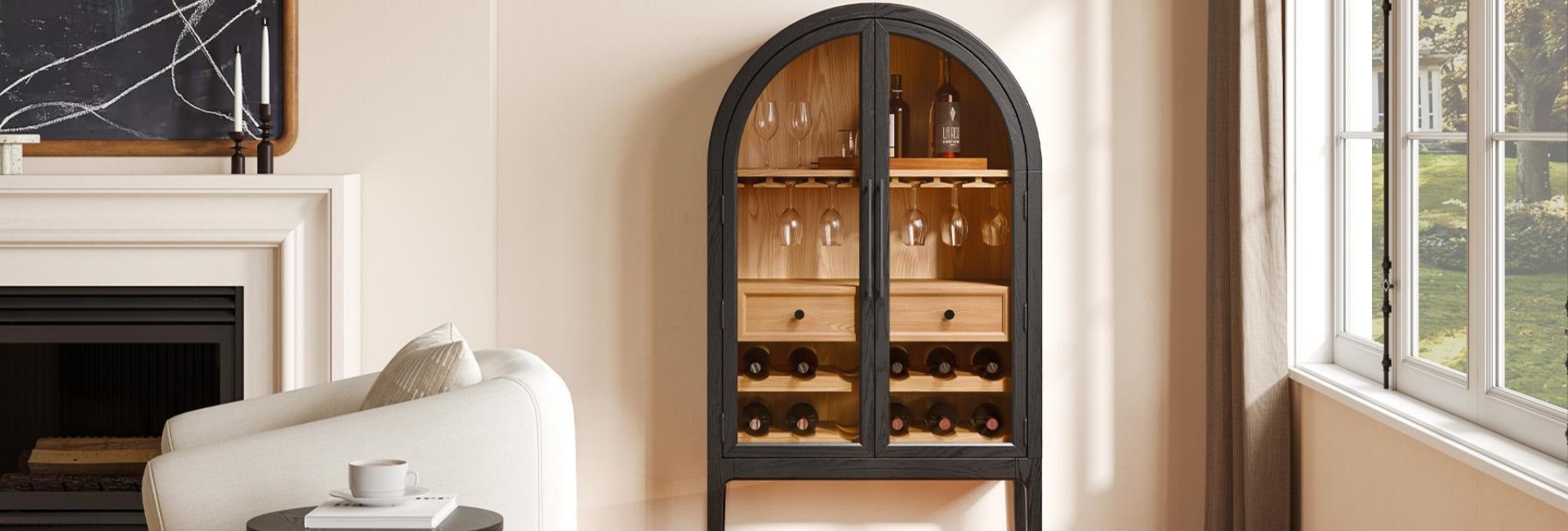
Choosing the right bar cabinet dimensions helps you make the most of your space while keeping bottles, glassware, and bar accessories organized. From compact freestanding cabinets to built-in home bars, sizes vary in width, height, and depth depending on their design and storage capacity. This guide covers common bar cabinet measurements, explains how to measure your available space, and shows what to check before choosing a cabinet for your home.
Table of Contents
- What Are the Standard Bar Cabinet Dimensions?
- Bar Cabinet Width, Height, and Depth Explained
- Built-In vs. Freestanding Bar Cabinet Dimensions
- How Much Storage Space Does a Bar Cabinet Need?
- Bar Cabinet Dimensions for Different Room Sizes
- How to Measure for a Bar Cabinet
- Bar Cabinet Design and Features to Consider
- Common Bar Cabinet Measurement Mistakes to Avoid
- FAQs
- What Are the Standard Bar Cabinet Dimensions?
- How Wide Should a Home Bar Cabinet Be?
- How Deep Should a Bar Cabinet Be?
- What Is the Standard Height of a Bar Cabinet?
- How Much Space Should I Leave Around a Bar Cabinet?
- Can a Bar Cabinet Fit in a Small Living Room?
- What Is the Difference Between a Bar Cabinet and a Wine Cabinet?
- How Do I Choose Between a Built-In and Freestanding Bar Cabinet?
What Are the Standard Bar Cabinet Dimensions?
Bar cabinets come in different sizes because they serve different purposes. A compact cabinet may hold a few bottles and glasses, while a larger home bar can include wine racks, drawers, serving space, and room for small appliances.
There is no single standard size for every bar cabinet. However, common kitchen and bar-counter measurements can help you estimate the space you need.
These measurements are reference points, not fixed requirements. A freestanding bar cabinet may be much taller than a kitchen base cabinet, while a narrow dry bar may have a smaller footprint to fit an apartment or living room.
Standard Bar Cabinet Height
Bar cabinet height depends on whether the unit is designed for storage, serving, or seating.
Many kitchen base cabinets measure about 34.5 inches tall before the countertop is installed. With a countertop, the finished height is commonly around 36 inches. This height works well for preparing drinks while standing.
A raised bar counter is often around 42 inches high. It is generally designed for bar stools rather than for the same kind of storage provided by a freestanding cabinet.
Freestanding bar cabinets have more varied heights. Some are low enough to double as serving surfaces, while taller models use vertical space for bottles, glassware, and concealed storage.
Standard Bar Cabinet Width and Depth
Bar cabinet width can range from a compact unit under 30 inches to a wide cabinet with multiple storage sections. The width you need depends on how many bottles and glasses you plan to store, as well as how much wall space is available.
Depth affects both storage capacity and how far the cabinet projects into the room. A deeper cabinet may accommodate larger bottles, glassware, and appliances, but it can make a narrow walkway feel crowded. A shallow cabinet takes up less floor space, although its interior may not fit every type of bottle or accessory.
When comparing dimensions, check the product's listed width, height, and depth rather than relying on the name or style. Also look for internal measurements if you plan to store larger bottles, countertop appliances, or oversized glassware.
Bar Cabinet Width, Height, and Depth Explained
The outside dimensions tell you how much room a bar cabinet occupies. The internal dimensions determine what you can actually store. Both matter when comparing models.
Bar Cabinet Width: How Much Storage Do You Need?
A narrow bar cabinet may be enough if you mainly store a few bottles, cocktail tools, and everyday glasses. Wider cabinets provide more room for separate storage zones, such as bottle racks, drawers, and shelves.
Think about the items you want to keep together:
-
Bottles for wine, spirits, and mixers
-
Wine glasses, tumblers, and cocktail glasses
-
Bottle openers, shakers, and bar tools
-
Napkins, coasters, and serving accessories
-
Small appliances, such as a compact beverage cooler, if the cabinet is designed to accommodate one
If you plan to store several categories of items, check the cabinet's internal width and the dimensions of each compartment. A wide exterior does not necessarily mean every section has the same usable space.
Bar Cabinet Height: Storage or Serving?
A cabinet around counter height can provide a convenient surface for pouring drinks or arranging glasses. Taller cabinets make more use of vertical space and can separate bottle storage from glassware and accessories.
For example, a tall cabinet may include upper wine-glass racks, middle shelves, and lower bottle storage. This layout can keep frequently used items within reach while leaving less-used accessories in lower compartments.
Before choosing a tall design, measure the available wall height and check for nearby ceiling fixtures, wall lights, shelves, or other obstacles. Also consider whether the upper compartments will be comfortable to reach.
Bar Cabinet Depth: Check the Interior, Not Just the Exterior
Depth is especially important for wine bottles, spirits, and glassware. A cabinet that looks deep enough from the outside may have less usable space because of its back panel, doors, shelves, or internal dividers.
Measure the items you plan to store, particularly if you have unusually shaped bottles or large cocktail glasses. Pay attention to shelf depth and the space between shelves, not just the cabinet's overall depth.
For a compact room, a shallow cabinet can reduce how much floor space the furniture occupies. However, make sure its compartments still fit the bottles and accessories you use regularly.
Built-In vs. Freestanding Bar Cabinet Dimensions
Built-in and freestanding bar cabinets serve similar purposes, but their dimensions are planned differently. Built-in units are usually part of a larger room or kitchen layout. Freestanding cabinets are individual furniture pieces that can be placed against a wall or moved when the room arrangement changes.
Built-In Bar Cabinet Dimensions
Built-in bar cabinets are often designed around standard kitchen cabinetry. A base cabinet may measure approximately 34.5 inches high before the countertop, with a finished counter height of around 36 inches. A common base-cabinet depth is 24 inches, although the actual layout may vary.
These measurements provide a starting point when planning a home bar along a kitchen wall or in a dedicated alcove. The final dimensions should account for the countertop, appliances, plumbing, and surrounding cabinetry.
If you are planning a built-in bar, measure the full available width and height. Check where electrical outlets, water lines, windows, and doors are located before settling on the cabinet layout.
Freestanding Bar Cabinet Dimensions
A freestanding bar cabinet does not need to follow standard kitchen cabinet dimensions. Its height, width, and depth depend on the furniture design and intended storage.
This gives you more flexibility when furnishing a living room, dining room, or apartment. You can choose a compact cabinet for occasional entertaining or a taller model with separate compartments for bottles and glassware.
For example, the Stavn 38-Inch Bar Cabinet measures 38 inches wide, 18.1 inches deep, and 55.1 inches high. Its vertical design combines a built-in wine rack for up to 8 bottles with additional cabinet storage for glassware and bar accessories. The upper drop-down door features decorative Moru glass, while the lower fluted wood sliding door conceals additional storage. Its 18.1-inch depth also makes it an option for rooms where a full-depth kitchen cabinet would take up too much space.
A freestanding unit also needs enough clearance for its doors and drawers to open. Measure the space in front of the cabinet, not just the wall area it occupies. If the cabinet has sliding doors, check whether they require additional side clearance.
Wet Bar vs. Dry Bar Dimensions
The difference between a wet bar and a dry bar is mainly the plumbing.
A wet bar includes a sink and requires space for plumbing connections, a drain, and potentially additional countertop work. Its dimensions depend on the sink and the surrounding cabinetry.
A dry bar does not have a sink. It may consist of a freestanding cabinet, a countertop, or a section of built-in storage. Without plumbing, it can be easier to fit into a living room, dining room, or other area where adding a water line would be impractical.
When planning either type, allow enough room for the storage components and the activities you expect to do there. A wet bar needs space for its sink and working area, while a dry bar needs enough storage for the bottles, glasses, and tools you use.
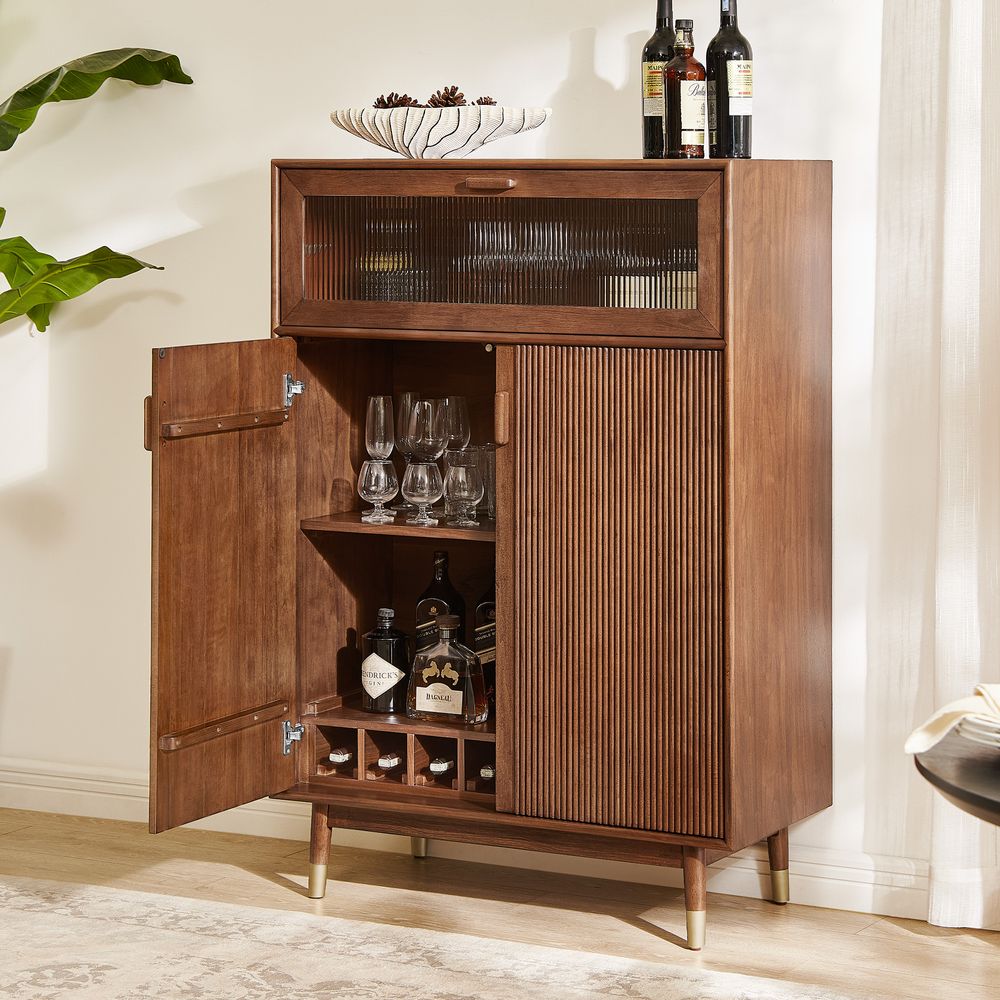
Stavn 38-Inch Bar Cabinet
View Product
How Much Storage Space Does a Bar Cabinet Need?
A bar cabinet should have enough usable space for the items you actually keep. Bottle capacity is one consideration, but glassware, bar tools, and serving accessories also need room.
Wine Bottle Storage
Wine bottles are not all the same shape or size. A standard 750 ml bottle is often around 12 inches tall, but sparkling wine bottles, larger formats, and some specialty bottles may need more room.
Check the height and depth of the bottle compartments before buying. If the cabinet uses fixed racks, confirm that the openings fit your bottles. Adjustable shelves offer more flexibility if you store bottles of different sizes.
Wine bottle capacity is also worth checking carefully. A cabinet advertised for a certain number of bottles may have limited space for other items, so consider whether the listed capacity matches how you plan to use the cabinet.
Glassware Storage
Wine glasses, tumblers, and cocktail glasses need different types of storage. Stemware racks can hold wine glasses upside down, while shelves are more suitable for tumblers and larger glassware.
Check the distance between shelves and the height of the storage compartments. Tall wine glasses may not fit in a shallow shelf, even if the cabinet has plenty of overall storage space.
If you use several types of glassware, look for a layout that separates them. This can make it easier to reach the right glass without moving other items.
Drawers and General Bar Accessories
Drawers are useful for smaller items that are easy to lose on open shelves. Bottle openers, corkscrews, cocktail picks, napkins, and coasters can be kept together instead of mixed with bottles and glasses. Check the drawer's internal width, depth, and height, since exterior measurements do not show how much usable space is available. Internal dividers can also reduce the room for storage.
For example, the Valborg 36-Inch Oak Bar Cabinet combines a drawer with separate compartments for bottles and glassware. It measures 36 inches wide, 18 inches deep, and 65 inches high, with built-in wine racks for 12 wine bottles and built-in wine glass rack for 14 standard-sized glasses. The drawer provides a separate place for smaller bar tools and accessories, while the vertical layout makes use of wall height without requiring a particularly deep footprint.
For larger accessories, such as cocktail shakers or serving trays, measure the items before deciding which compartment they will occupy. Also check the drawer's internal dimensions to make sure frequently used items fit comfortably.

Valborg 36-Inch Oak Bar Cabinet
View Product
Bar Cabinet Dimensions for Different Room Sizes
The available floor space should guide your choice of bar cabinet. A cabinet that works well in a large dining room may take up too much room in a small apartment.
Small Apartments and Compact Living Rooms
In a small room, a narrow or shallow bar cabinet can provide storage without taking up too much floor space. Measure the wall section where you plan to place it and check how far the cabinet will extend into the room.
A compact cabinet is useful for storing a small bottle collection, everyday glasses, and a few cocktail accessories. If you do not need a large serving surface, you may not need a wide or deep unit.
Also check nearby furniture. A bar cabinet placed beside a sofa, dining table, or entryway should not block the main walking route.
Dining Rooms and Larger Living Rooms
A wider cabinet may work well in a dining room or a larger living area where there is enough space for entertaining. It can provide separate areas for bottles, glassware, and serving accessories.
Think about how people will move around the cabinet when guests are present. Leave enough space to open doors and drawers while keeping the main walkway clear.
If the cabinet will sit near a dining table, check the distance between the two pieces of furniture. Chairs need room to move, and people should be able to access the cabinet without squeezing behind seated guests.
Kitchen and Basement Home Bars
A kitchen bar cabinet may need to fit around existing countertops, appliances, and cabinetry. Measure the available section carefully and check whether the cabinet will interfere with nearby doors or drawers.
A basement home bar may have more room for a larger built-in layout, a countertop, or additional seating. However, ceiling height, utility connections, and the location of existing plumbing can affect the final design.
For either room, plan the cabinet around the items you want to store and the way you intend to use the space. Do not choose dimensions based on floor area alone.
How to Measure for a Bar Cabinet
Measuring before buying helps prevent problems with fit, access, and storage. Record the available space and compare it with both the cabinet's exterior and interior dimensions.
1. Measure the Available Wall and Floor Space
Measure the width of the wall section where the cabinet will sit. Check the height from the floor to any shelves, windowsills, wall lights, or other obstacles above it.
Then measure the available depth from the wall into the room. Include nearby furniture and walking routes in your plan. A cabinet may fit against the wall but still make the room difficult to move through.
If the floor or wall is uneven, account for that when checking the cabinet's position.
2. Check Door, Drawer, and Walking Clearance
A cabinet's listed dimensions usually describe its closed position. Doors and drawers need additional room to open.
Check which direction the doors swing and whether they could hit another piece of furniture. For drawers, measure the space in front of the cabinet so they can extend fully.
Also consider how people will use the cabinet. You should be able to stand in front of it, reach the storage compartments, and move around the room without blocking the main walkway.
3. Measure Your Bottles, Glasses, and Appliances
Make a list of the items you plan to store. Measure the tallest bottles, widest glassware, and any appliances you want to keep inside or on top of the cabinet.
Compare these measurements with the cabinet's internal compartments. Check shelf height, usable depth, rack openings, and drawer dimensions.
Do not assume that every bottle will fit simply because the cabinet has a stated bottle capacity. That number may refer to a specific bottle shape or rack arrangement.
4. Check the Cabinet's Internal Dimensions
Exterior dimensions help you determine whether the cabinet fits the room. Interior dimensions tell you whether it fits your belongings.
Look for measurements of individual shelves, drawers, wine racks, and glassware compartments. If these details are not listed, contact the retailer before buying rather than estimating from product photos.
This is particularly important for cabinets with fixed shelves or specialized bottle and glass racks.
Bar Cabinet Design and Features to Consider
The cabinet's layout affects how much storage you can use and how easily you can access it. Focus on features that match your collection and daily habits rather than choosing a design based on appearance alone.
Open Shelves and Closed Storage
Open shelves make bottles and glasses easy to see and reach. They can also create a display area for decorative glassware or frequently used accessories.
Closed cabinets keep contents out of sight and can help reduce dust on stored items. A combination of open and closed storage offers a place for display pieces as well as items you prefer to keep tucked away.
Wine Racks and Stemware Holders
Built-in wine racks keep bottles in designated spaces and can help prevent them from rolling around. Check the rack openings and the number of bottles it is designed to hold.
Stemware holders provide dedicated storage for wine glasses. Make sure the rack accommodates the size and shape of your glasses, particularly if you use larger bowls or long stems.
Drawers, Doors, and Shelves
Drawers work well for small tools and accessories. Doors conceal larger items, while adjustable shelves allow you to change the storage layout when your collection changes.
If a cabinet has sliding doors, check how much access each opening provides. If it has hinged doors, confirm that there is enough room for them to swing open.
Materials and Construction
Bar cabinets are available in different wood types, veneers, engineered wood, and mixed-material designs. Read the product specifications carefully to understand which materials are used for the frame, panels, and finish.
Construction details also matter. Check how drawers are joined, whether shelves are adjustable, and whether the cabinet requires assembly. If you plan to store heavy bottles or glassware, review the product's stated weight capacity where available.
Common Bar Cabinet Measurement Mistakes to Avoid
A cabinet can fit the wall and still be inconvenient to use. Check these common issues before placing an order.
Measuring Only the Exterior
The outside width, height, and depth do not show how much usable storage is available. Internal panels, doors, racks, and dividers reduce the space inside.
Compare the compartment measurements with the bottles and glassware you own.
Ignoring Door and Drawer Clearance
A cabinet may fit between two pieces of furniture when closed, but its doors or drawers may not open fully. Measure the opening space in front of and beside the cabinet.
Remember to account for nearby dining chairs, sofas, and other furniture.
Choosing a Cabinet That Is Too Deep
A deep cabinet can provide more storage, but it may make a narrow room feel crowded. Measure the distance from the wall to the main walking route before deciding on depth.
Assuming All Bottles and Glasses Fit
Bottle racks and glass holders are often designed for particular sizes. Tall bottles, wide sparkling wine bottles, and oversized glasses may not fit.
Measure the items you use most often and compare them with the listed interior dimensions.
Forgetting the Height of the Room
A tall cabinet may not fit under a shelf, window, or ceiling fixture. Measure the available height and check whether the cabinet can be moved into the room and positioned upright during delivery.
FAQs
What Are the Standard Bar Cabinet Dimensions?
There is no universal standard for freestanding bar cabinets. Their dimensions vary by design and storage capacity. Built-in bar cabinets often use kitchen cabinetry as a reference, with base cabinets around 34.5 inches high before the countertop and approximately 24 inches deep.
How Wide Should a Home Bar Cabinet Be?
The width depends on how many bottles, glasses, and accessories you want to store. A compact cabinet may work for a small collection, while a wider model can provide separate storage sections. Measure your available wall space before choosing.
How Deep Should a Bar Cabinet Be?
The depth should accommodate your bottles, glassware, and other accessories without taking up too much floor space. Check the internal shelf depth as well as the exterior measurement, since doors and back panels reduce usable space.
What Is the Standard Height of a Bar Cabinet?
Freestanding bar cabinets do not have one standard height. Kitchen base cabinets are commonly around 34.5 inches high before the countertop, while finished counters are often about 36 inches high. Raised bar counters are commonly around 42 inches.
How Much Space Should I Leave Around a Bar Cabinet?
Leave enough room for doors and drawers to open fully and for people to stand in front of the cabinet. The required clearance depends on the cabinet design and the surrounding furniture. Measure the actual opening space rather than relying only on the cabinet's closed dimensions.
Can a Bar Cabinet Fit in a Small Living Room?
Yes. A narrow or shallow cabinet can work in a small living room if it fits the available wall space and does not block the main walkway. Check its depth, door swing, and drawer clearance before buying.
What Is the Difference Between a Bar Cabinet and a Wine Cabinet?
A bar cabinet usually stores a mix of bottles, glassware, and bar accessories. A wine cabinet focuses more specifically on wine storage and may include dedicated bottle racks. Some bar cabinets also have built-in wine racks, so the distinction depends on the storage layout.
How Do I Choose Between a Built-In and Freestanding Bar Cabinet?
Choose a built-in cabinet if you are planning a permanent bar area with a countertop or plumbing. A freestanding cabinet is more flexible and can be placed in a living room, dining room, or apartment without remodeling. Compare the available space, storage needs, and installation requirements before deciding.