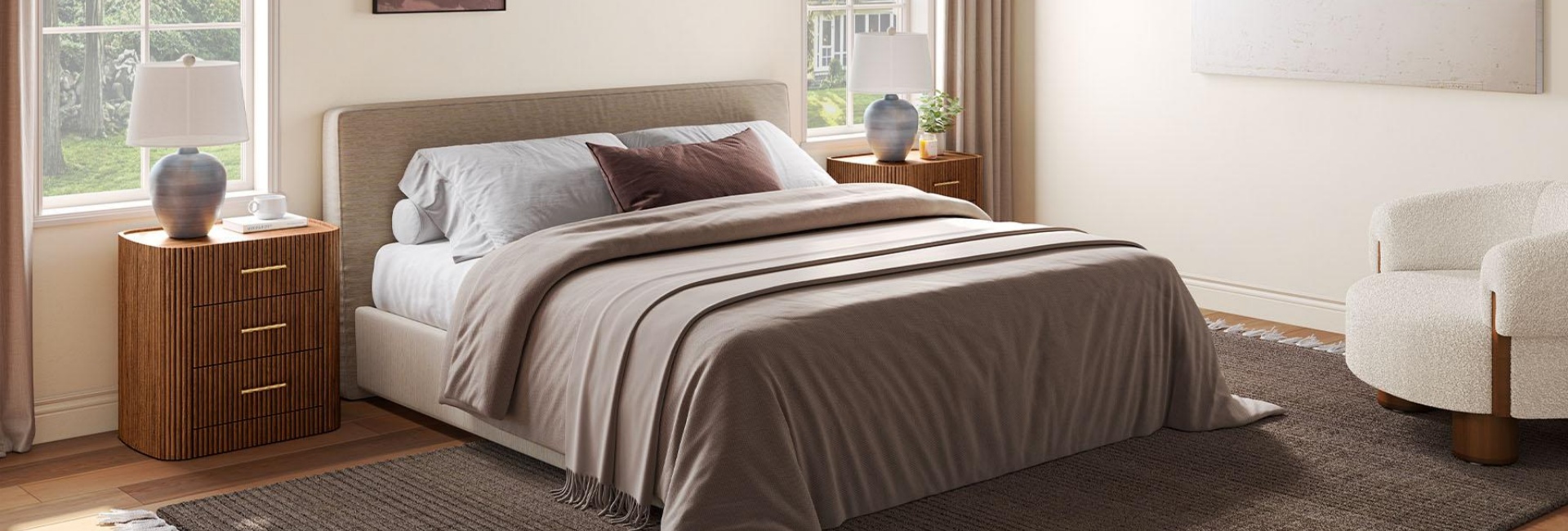
A feng shui nightstand is more than a place to keep your lamp, phone, or bedtime reading. In traditional feng shui, the area beside the bed contributes to the overall balance and atmosphere of the bedroom. A thoughtful arrangement starts with practical placement, clear surfaces, and a few meaningful objects rather than excessive decoration. Whether you have two matching nightstands or room for just one, you can create a more harmonious bedside space by choosing what belongs there and keeping unnecessary distractions out.
Table of Contents
- What Is a Feng Shui Nightstand?
- How to Position Your Nightstand for Good Feng Shui
- What to Put on a Feng Shui Nightstand
- What Should You Avoid on a Feng Shui Nightstand?
- How to Create a Balanced Feng Shui Nightstand Setup
- FAQs
- Do You Need Two Nightstands for Good Feng Shui?
- What Should You Put on a Nightstand for Good Feng Shui?
- What Should You Avoid Putting on a Nightstand?
- Is It Bad Feng Shui to Have Only One Nightstand?
- Are Wooden Nightstands Good for Feng Shui?
- Do Feng Shui Nightstands Have to Match the Bed?
- Where Should You Place a Nightstand in a Feng Shui Bedroom?
- Can You Put Plants on a Feng Shui Nightstand?
What Is a Feng Shui Nightstand?
A feng shui nightstand is a bedside table arranged with the principles of balance, harmony, and intentional use of space in mind. Instead of treating it as a place for miscellaneous belongings, this approach gives the table a clear purpose: keeping everyday essentials within reach while contributing to a comfortable bedroom.
In traditional feng shui, the bedroom is associated with rest, privacy, and a quieter environment. Three principles help guide how you arrange the bedside area:
Balance: The nightstand should feel visually connected to the bed and surrounding furniture. Two bedside tables, coordinated lighting, or pieces with similar proportions can help create a balanced appearance.
Harmony: The table's color, shape, and decorative elements should complement the bedroom. Natural wood finishes, simple lamps, and personal objects can contribute to a cohesive look.
Clarity: Leave enough open space for everyday use. Unopened mail, tangled charging cables, and unused accessories can make the bedside area feel cluttered.
These principles do not require a particular furniture style or a prescribed collection of decorations. A traditional wooden table, a contemporary bedside cabinet, or a simple side table can all work.
It is also important to distinguish traditional feng shui beliefs from established sleep guidance. A particular nightstand arrangement cannot guarantee better sleep, stronger relationships, or improved health. Its practical value lies in helping you create a bedroom that feels organized, comfortable, and personal.
How to Position Your Nightstand for Good Feng Shui
Nightstand placement is an important part of bedroom feng shui. The arrangement should feel balanced while leaving enough room to move comfortably. Your bed size, bedroom layout, and daily habits will determine which setup works best.
Should You Have Two Nightstands?
In many traditional bedroom feng shui interpretations, two nightstands on either side of the bed represent balance, partnership, and equal space for both people. This arrangement also frames the bed and can make the bedroom look more visually complete.
Two tables are particularly useful in shared bedrooms. Each person has a convenient place for a reading lamp, glasses, a book, or other nighttime essentials.
The tables do not have to be identical. Matching nightstands are an easy way to create symmetry, but visual balance can also come from pieces with similar heights, proportions, or finishes.
For example, you could pair two wooden tables in different finishes or use a larger cabinet on one side and a smaller side table on the other. Coordinating lamps or decorative details can help connect the arrangement. Pay attention to visual weight as well: a substantial cabinet may need a taller lamp or a more noticeable decorative element on the opposite side.
Two nightstands are a traditional design preference, not an absolute requirement. Choose an arrangement that suits the room rather than forcing furniture into a space that cannot comfortably accommodate it.
How to Arrange a Nightstand When You Only Have One
Not every bedroom has room for two bedside tables. A bed may sit against one wall, a window may occupy one side, or a doorway may limit the available floor space. In these situations, adding a second nightstand can make the layout less comfortable.
You can still create a balanced feng shui bedroom with one nightstand. Consider these alternatives:
-
Place a floor lamp on the opposite side of the bed to create a visual connection without adding another cabinet.
-
Use a wall-mounted sconce to balance the height and presence of the existing nightstand.
-
Add a small decorative stool or narrow side table if the available space allows.
-
Keep the opposite side of the bed open rather than filling every empty corner.
Think about the bed and surrounding furniture as a whole. If one side has a substantial nightstand and lamp, the other side may need only a wall light or a modest decorative accent.
This arrangement works well in apartments, guest rooms, and smaller bedrooms where floor space is limited.
Keep Your Nightstand Within Easy Reach
A well-positioned nightstand should be easy to reach without making the area around the bed difficult to use.
Check the clearance between the bed and the table. You should be able to get in and out of bed without repeatedly bumping into the furniture. If the nightstand has drawers, make sure they can open without hitting the bed frame or another piece of furniture.
Also consider the route from the bed to the bedroom door. Avoid placing furniture, baskets, or loose cables where they create obstacles, especially in a dark bedroom when you may need to get up during the night.
The height matters, too. A lamp switch, glass of water, or book should be easy to reach without an awkward stretch. A nightstand that works comfortably from a lying or seated position is more useful than one chosen solely for its appearance.
What to Put on a Feng Shui Nightstand
The objects on your nightstand affect how the bedside area looks and functions. In feng shui-inspired bedroom decor, a small selection of useful, calming, or meaningful items is generally preferable to a crowded display.
Start with the things you genuinely use before adding decorative accessories.
Soft Lighting for a Relaxing Atmosphere
A bedside lamp provides light for reading and other evening activities without requiring the main bedroom light to stay on.
Look for a lamp with a shade that diffuses light rather than directing a harsh beam across the room. Warm-toned lighting and adjustable brightness can also create a softer atmosphere as bedtime approaches.
Position the lamp where you can easily switch it on and off from bed. It should not take up so much space that there is no room for other essentials. If your nightstand is small, a wall-mounted light can provide illumination while keeping the tabletop open.
Light management also has a practical connection to sleep. The Sleep Foundation explains that exposure to bright artificial light in the evening can affect the body's circadian rhythm. Dimming bedroom lights before bed and limiting bright screens can help support a more suitable nighttime environment. Read its guide to light and sleep for more information.
Natural Elements and Meaningful Decorations
Natural materials and personal decorations can make a feng shui nightstand feel more welcoming. Wood, stone, and ceramic introduce texture without requiring a large number of accessories.
A small plant is one option if your bedroom has enough natural light. Choose a variety that suits the conditions and does not grow so large that it crowds the surface. If you prefer flowers, use a small arrangement that is easy to maintain and remove it when it begins to wilt.
Views on plants in bedrooms vary among feng shui practitioners. Some favor living greenery as a connection to nature, while others prefer a more subdued environment. You do not need a plant to create a balanced arrangement.
Personal photographs can also make the bedside area feel meaningful. A framed photograph, small print, or object associated with a positive memory adds a personal touch. In a shared bedroom, choose something that feels comfortable and relevant to both people.
Crystals and decorative stones are another common feature in feng shui-inspired interiors. Some people associate particular stones with love, protection, or calmness. These associations belong to traditional or personal belief systems rather than established scientific effects. A small crystal can serve as a decorative accent if you enjoy its appearance, but it is not necessary.
Books and Everyday Essentials
A nightstand should support your bedtime routine. A book you are currently reading, a pair of glasses, a small dish for jewelry, or a glass of water can all have a practical place beside the bed.
Keep the items you use regularly within reach and move everything else elsewhere. One current book makes sense if you read before bed, while a growing pile of unread books and paperwork can quickly take over the surface.
A small tray can group frequently used items such as hand cream, a watch, or jewelry. You can also use a drawer for belongings that need to stay nearby but do not need to remain visible.
What Should You Avoid on a Feng Shui Nightstand?
A feng shui nightstand should feel purposeful rather than overloaded. Removing unnecessary items can be just as important as choosing the right decorations.
Clutter and Unnecessary Items
Old receipts, unopened letters, loose change, empty bottles, and unfinished projects can gradually take over a nightstand. Together, these objects turn a small bedside surface into a reminder of unfinished tasks.
Remove anything that does not belong in the bedroom. Put important papers away, return books to their usual storage area, and dispose of packaging or other unnecessary items.
Then look at what remains. If you have not used an item in weeks, it probably does not need to stay within arm's reach.
A clear surface does not have to be completely empty. A lamp, framed photograph, or decorative object can remain as long as each item has a purpose. Keeping the arrangement simple also makes dusting and everyday cleaning easier.
Excessive Electronics and Work-Related Items
Phones, tablets, charging cables, laptops, and other devices can make a bedside area feel more like a workstation than a place to rest.
You may need to keep your phone nearby for an alarm or emergency contact. Other devices, however, can usually be charged elsewhere. If your phone stays beside the bed, consider silencing unnecessary notifications, reducing screen brightness, and avoiding messages once you are ready for sleep.
Loose charging cables can also make the surface look messy. Keep only the cables you need and organize them near the back of the table.
Work-related items deserve similar consideration. Laptops, notebooks, invoices, and unfinished to-do lists can remind you of responsibilities when you are trying to switch off for the evening. Put them away before bedtime, using a drawer or separate storage area if necessary.
The Sleep Foundation's bedroom environment guidance discusses ways to limit light and reduce potential sleep disruptions. These are practical reasons to be intentional about device use, separate from traditional feng shui beliefs about energy.
Overcrowded or Unbalanced Decorations
Multiple candles, several crystals, oversized plants, decorative bowls, and stacks of books may compete for attention when placed together.
Choose a few objects that work well together. A lamp can provide height, while a small plant or framed photograph adds a different shape and texture. Leave enough open tabletop space for everyday essentials.
Safety matters as well. Avoid unstable ornaments or heavy objects that could fall when you reach for something in the dark. Keep candles away from curtains, bedding, and other flammable materials, and never leave a burning candle unattended.
Decorations should not interfere with the function of the nightstand. You should still have room to set down a glass of water, reach your lamp, and access the items you need.

Skugga 26-Inch Oak Nightstand
View Product
How to Create a Balanced Feng Shui Nightstand Setup
Once you have decided where the nightstand belongs and which items you want to keep, focus on how everything works together. The furniture, lighting, and decorations should complement the bedroom without making the bedside area feel crowded.
Balance the Bedside Arrangement
If you have two nightstands, look at them together from the bed. They can have different designs, but similar heights, finishes, or decorative details help create a connected appearance.
For example, two tables with different shapes can still look balanced when paired with coordinating lamps. If one side has a taller lamp, the other might use a slightly larger decorative object or a wall light to create a comparable visual presence.
With one nightstand, consider the relationship between the table, bed, and opposite side of the room. A floor lamp or wall-mounted sconce can provide visual balance without taking up additional floor space.
Choose Nightstand Decor That Fits Your Space
Start with one main functional item, usually a bedside lamp. Add one or two smaller pieces, such as a book, framed photograph, or compact decorative accent. Varying their heights can give the arrangement dimension without making it feel crowded.
The nightstand's design can also contribute to the overall look. Natural wood finishes and considered shapes add texture without requiring many extra accessories.
For a natural, textured look, Hernest's Skugga 26-Inch Oak Nightstand features a fluted surface and visible oak grain. Its lifted legs and warm brass-finish pulls add detail without requiring much extra decoration on the tabletop.
If you prefer softer contours, the Astor 23-Inch Fluted Oak Nightstand has rounded edges, oak detailing, and gold-tone handles. Its curved shape can help soften the look of a bedside arrangement, especially when paired with simple bedding and understated accessories.
Neither design is a feng shui requirement. They are examples of how natural wood tones and considered shapes can work within a bedroom arrangement based on simplicity and visual balance.
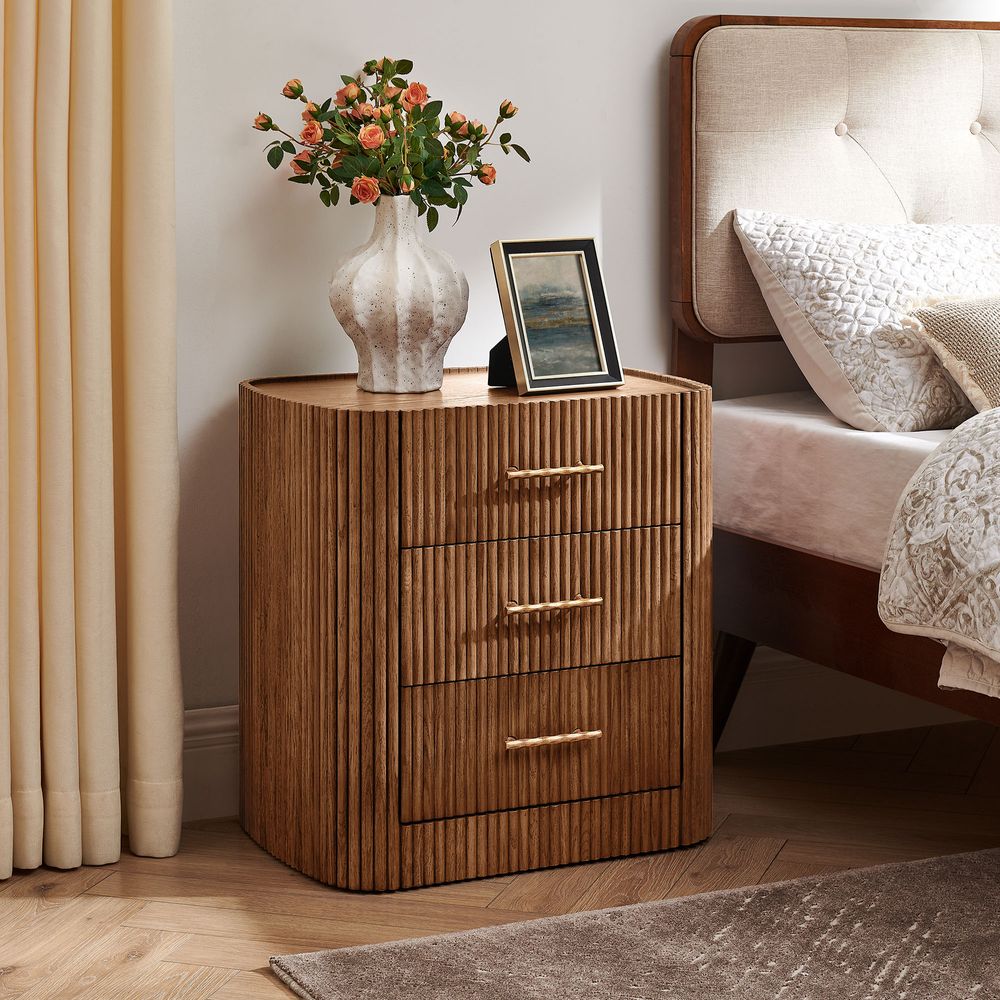
Astor 23-Inch Fluted Oak Nightstand
View Product
Keep Everyday Essentials Within Reach
The tabletop should accommodate the items you use most often without requiring you to move decorations around. Use drawers for spare chargers, hand cream, tissues, sleep masks, and other personal belongings that do not need to remain visible.
Think about what you reach for at night and first thing in the morning. Keep those items accessible and store less frequently used belongings elsewhere.
Coordinate with the Bedroom
Your nightstand should feel like part of the bedroom rather than an isolated decorative feature. Consider the color of the bed frame, headboard, bedding, and lighting when choosing finishes and accessories.
A warm wood nightstand can work well with neutral bedding and soft textiles, while a darker finish can create contrast against a lighter wall. Matching every piece is not necessary; complementary colors and textures are often enough to create a connected look.
Also consider what you see from the bed. A clear walking path, comfortable furniture placement, and a few meaningful decorative elements can help the room feel more settled.
Most importantly, work with the space you have. A narrow bedroom may need one compact nightstand, while a larger room may have enough room for two substantial tables. Do not sacrifice easy movement or useful storage just to follow a traditional arrangement.
FAQs
Do You Need Two Nightstands for Good Feng Shui?
Two nightstands are traditionally associated with symmetry, balance, and partnership in bedroom feng shui. However, they are not essential in every room. If your bedroom only has space for one, you can create a balanced appearance with thoughtful lighting, decorations, and furniture placement on the opposite side.
What Should You Put on a Nightstand for Good Feng Shui?
Consider keeping a bedside lamp, one book, a small plant, a meaningful photograph, or a few everyday essentials. Choose objects that contribute to a comfortable atmosphere and serve a clear purpose rather than filling the surface with decorations.
What Should You Avoid Putting on a Nightstand?
Avoid unnecessary paperwork, piles of unread books, excessive electronics, tangled cables, and too many decorative objects. Work-related items can also make the bedside area feel less restful. Keep frequently used belongings nearby and store the rest in a drawer or elsewhere in the bedroom.
Is It Bad Feng Shui to Have Only One Nightstand?
No. Although two bedside tables are commonly associated with balance in traditional feng shui, one nightstand is not automatically considered bad feng shui. You can use a floor lamp, wall sconce, or small decorative accent to create visual balance without adding another table.
Are Wooden Nightstands Good for Feng Shui?
Wood is associated with the Wood element in traditional feng shui, which symbolizes growth and vitality. A wooden nightstand can also bring natural grain and warmth into a bedroom. Consider its finish, condition, and how it fits with the rest of the space rather than focusing on material alone.
Do Feng Shui Nightstands Have to Match the Bed?
No. Your nightstand does not have to match the bed frame exactly. Coordinating finishes, complementary colors, and similar design details can create a connected look without using identical furniture.
Where Should You Place a Nightstand in a Feng Shui Bedroom?
A nightstand is generally placed beside the bed where it is easy to reach. If possible, keep the bed accessible from both sides and avoid blocking walkways. Leave enough space to open drawers and move around comfortably. The best position depends on the room's layout and the placement of doors, windows, and other furniture.
Can You Put Plants on a Feng Shui Nightstand?
A small, healthy plant can be used as a natural decorative accent if you enjoy having greenery in your bedroom. Recommendations about plants in feng shui vary. Choose a variety suited to your room's light and maintenance conditions, and avoid letting it crowd the nightstand or interfere with your bedtime routine.