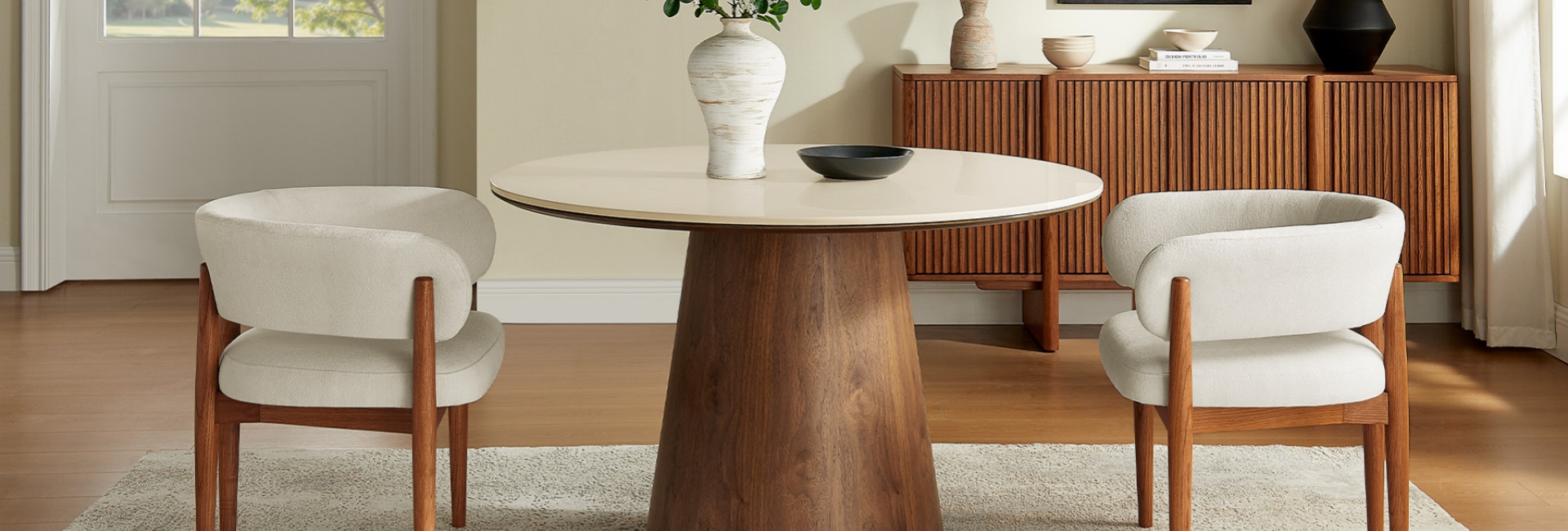
A round dining room table can be a smart choice for a small, square, or open-plan home. Its curved shape makes conversation easier, removes sharp corners from busy walkways, and helps a compact dining area feel more open. The trade-off is seating: a round table generally accommodates fewer people than a rectangular table of a similar overall width. The right choice comes down to your room dimensions, everyday seating needs, and how you use the space.
Table of Contents
- Quick Answer: Is a Round Dining Table Right for You?
- What Is a Round Dining Table?
- Where Does a Round Dining Table Work Best?
- Round vs. Rectangle Dining Table: Which Is Better?
- How Many People Fit at a Round Dining Table?
- How Much Clearance Does a Round Dining Table Need?
- Choosing the Right Round Dining Table
- Round Dining Table Styles: Mid-Century and Modern Options
- How to Care for a Round Dining Table
- A Practical Round Dining Table Buying Checklist
- Explore Hernest's Round Dining Tables
- FAQs
- Is a round dining table a good idea?
- What are the drawbacks of a round dining room table?
- Are round or rectangle dining tables better?
- How many people can fit at a round dining table?
- What size round dining table do I need for four or six people?
- How much clearance do I need around a round dining table?
- What styles and bases do round dining tables come in?
- What is the best material for a round dining table?
Quick Answer: Is a Round Dining Table Right for You?
Choose a round dining table if you have a small or square room, usually seat four to six people, and want easier conversation and movement around the table. A rectangular table is usually a better fit for a long or narrow room, larger gatherings, or spaces where the table needs to sit against a wall.
There is no universally better dining table shape. The best one is the shape that matches the room and the way you actually use it.
What Is a Round Dining Table?
A round dining table has a circular tabletop designed for seated dining, with no corners interrupting the perimeter. That simple difference changes how the table fits into a room and how people sit around it.
A few details matter when comparing round tables:
Diameter, not length: Round tables are sized by diameter, measured straight across the center. A 48-inch round table is 48 inches wide from edge to edge.
The base affects seating: A pedestal base generally provides more usable legroom than four separate legs, which can interfere with chairs.
Everyone faces the center: There is no designated head of the table, so conversation tends to feel more evenly shared.
Some can expand: Extendable round tables can use a leaf to become oval, giving you extra seating when needed.
The defining advantage is simple: a round tabletop prioritizes conversation, circulation, and a softer visual footprint over maximum seating capacity.
Where Does a Round Dining Table Work Best?
The shape works particularly well where corners would make a room feel crowded or interrupt the flow between spaces.
Small and Square Rooms
A square dining room is one of the easiest places to use a round table. Centering a circle within a square creates relatively even clearance on all sides, while eliminating the corners you would otherwise have to navigate around.
A 42- to 48-inch round table is a practical starting point for four people. In a compact room, measure the table and chair footprint together rather than judging the tabletop alone.
Breakfast Nooks and Kitchen Corners
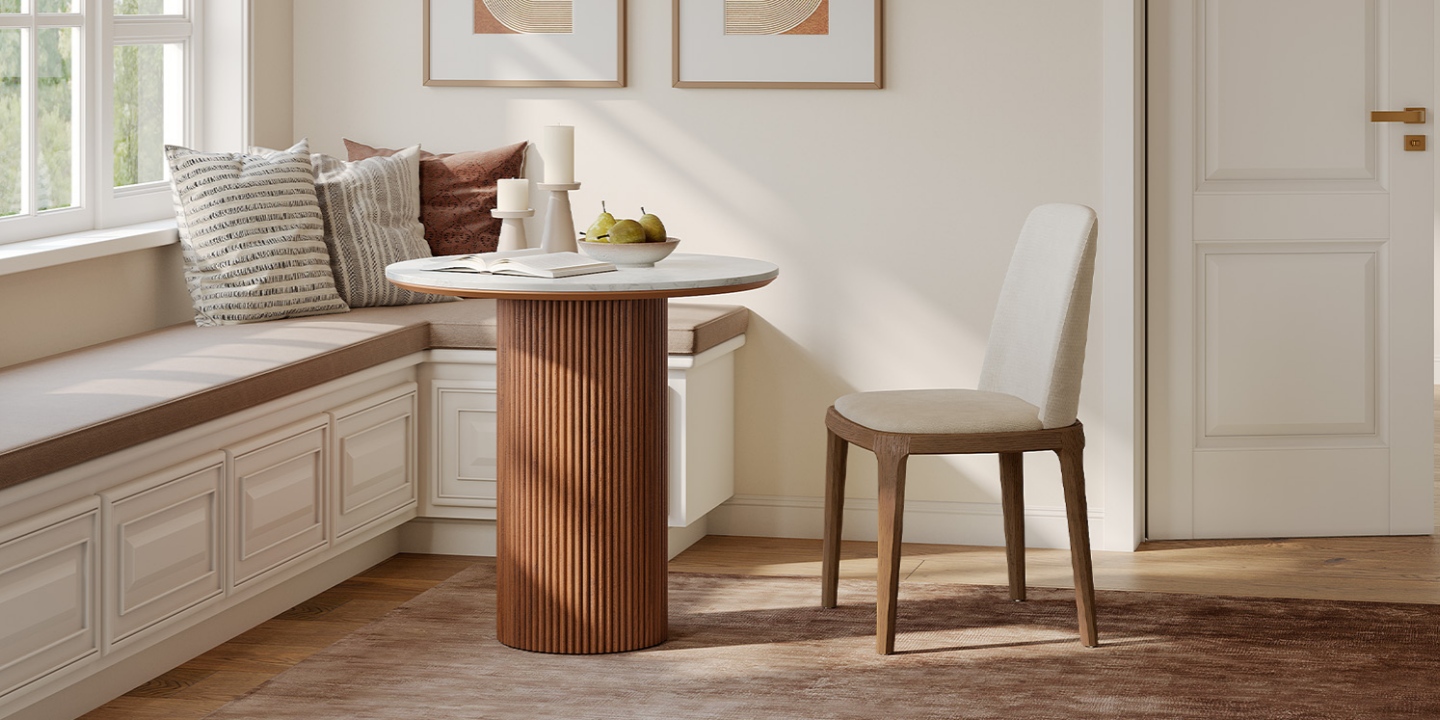
Smaller round tables are especially useful in breakfast nooks, bay windows, and kitchen corners.
The Rolf 31" Modern Stone Kitchen Dining Table from Hernest is designed for this type of compact setting. Its honed engineered-stone top is suited to everyday meals and spills, while the fluted solid-oak base keeps the design visually light. At 31 inches, it works best for two to four people in a compact dining area.
Open-Concept Living Spaces
In an open-plan home, a round table can define the dining area without creating a hard visual boundary between the kitchen and living room.
Its curved outline creates a softer transition between zones, and a pendant centered above the table can reinforce the dining area without making it feel boxed in.
Round vs. Rectangle Dining Table: Which Is Better?
The choice between a round and rectangular dining table comes down to room shape, seating needs, and how much flexibility you want.
Seating Capacity
A rectangle generally gives you more usable seating along its length. A 72-inch rectangular table can accommodate six to eight people comfortably, while a 72-inch round table can seat a similar number but requires more floor space and makes the center harder for some diners to reach.
For four or fewer people, a round table often makes the dining experience feel more intimate. If you regularly host six, eight, or more guests, a rectangle or oval usually scales more efficiently.
Traffic Flow and Safety
Round tables have an advantage in high-traffic dining areas because there are no corners to catch clothing, bump into, or navigate around with a plate in hand.
That can be particularly useful when the dining table sits between a kitchen and living area or when young children regularly move through the room.
Wall Placement and Expansion
This is where rectangular tables have the practical advantage.
A rectangular table can be pushed against a wall when you need more open floor space and pulled out when guests arrive. Many rectangular designs also use extension leaves that preserve the basic shape.
An extendable round table typically becomes an oval when expanded. That can give you useful extra seating, but it changes the table's footprint and may make the extension seam more visible.
How Many People Fit at a Round Dining Table?
The number of people a round dining table seats depends primarily on its diameter, chair size, and base design.
As a general furniture-planning rule, allow roughly 24 to 30 inches of table edge per diner, with about 30 inches providing a more comfortable place setting.
These numbers are planning ranges rather than hard limits. Chair width, table base, place settings, and whether you are serving a full meal can all change the practical capacity.
A 42-inch round table generally works well for four people. For six, 54 inches is a more comfortable starting point, while 48 inches is better treated as a tighter arrangement.
As the diameter increases, reaching the center can also become less convenient for some diners, especially when serving dishes or a large centerpiece. Large round tables often benefit from a lazy Susan or a carefully planned centerpiece.
Pedestal vs. Four Legs
The base can make a noticeable difference.
A single pedestal keeps the area under the tabletop open and allows chairs to move more freely around the perimeter. Four legs can provide a traditional look and strong stability, but a leg may interfere with a chair position.
For smaller round tables, a pedestal is often the more flexible choice. Larger tables may benefit from a double pedestal or a wider supporting structure for additional stability.
How Much Clearance Does a Round Dining Table Need?
The table itself is only part of the space you need to measure.
A 36-inch clearance is a useful starting point between the table edge and a wall, cabinet, or other furniture. Where people regularly walk behind seated guests, 42 to 48 inches provides a more comfortable circulation path.
For example, a 48-inch round table plus 36 inches of clearance on both sides requires:
48 + 36 + 36 = 120 inches, or 10 feet
If you want 48 inches of circulation space on each side, the same table needs about 12 feet of room width.
Before ordering, use painter's tape to mark the tabletop and the intended clearance on the floor. Pull out your dining chairs and walk around the taped area. If people have to turn sideways to pass, the table or chair arrangement is probably too large.
Choosing the Right Round Dining Table
Once you know that a round table fits your room, narrow the options by looking at four things: size, base, material, and style.
Choose the Size for Your Everyday Seating
Start with the number of people who sit down for dinner on a normal weeknight, not the maximum number you host once or twice a year.
2–4 people: 36–48 inches
4–6 people: 48–54 inches
6 people: 54–60 inches
6–8 people: 60–72 inches
If you occasionally host more people, an extendable design can be more practical than buying a large round table that takes up space every day.
Choose a Base That Preserves Legroom
For round tables, the base is part of the seating plan.
A pedestal gives chairs more freedom to move around the table and avoids the problem of a table leg occupying a potential seat. Four legs can work well when the design or stability is the priority, but check the position of each leg before deciding how many chairs will actually fit.
Choose a Material for Your Lifestyle
Different tabletop materials suit different households.
Solid wood: Warm, durable, and repairable. Oak and walnut are popular choices for everyday dining rooms.
Sintered or engineered stone: A practical option for busy kitchens and dining spaces where spills, heat, and frequent cleaning are concerns. It is typically heavier than wood, so check the table's construction and your floor requirements.
Glass: Makes a compact room feel visually lighter, but fingerprints, crumbs, and smudges are more noticeable.
Natural stone: Offers a distinctive surface and substantial visual presence, but maintenance requirements vary by stone type and finish.
For most households, sealed wood or a well-constructed stone tabletop offers a good balance of appearance and everyday practicality.
Round Dining Table Styles: Mid-Century and Modern Options
A round table does not automatically mean one particular decorating style. The tabletop, base, finish, and proportions determine how it reads in the room.
Mid-Century Modern
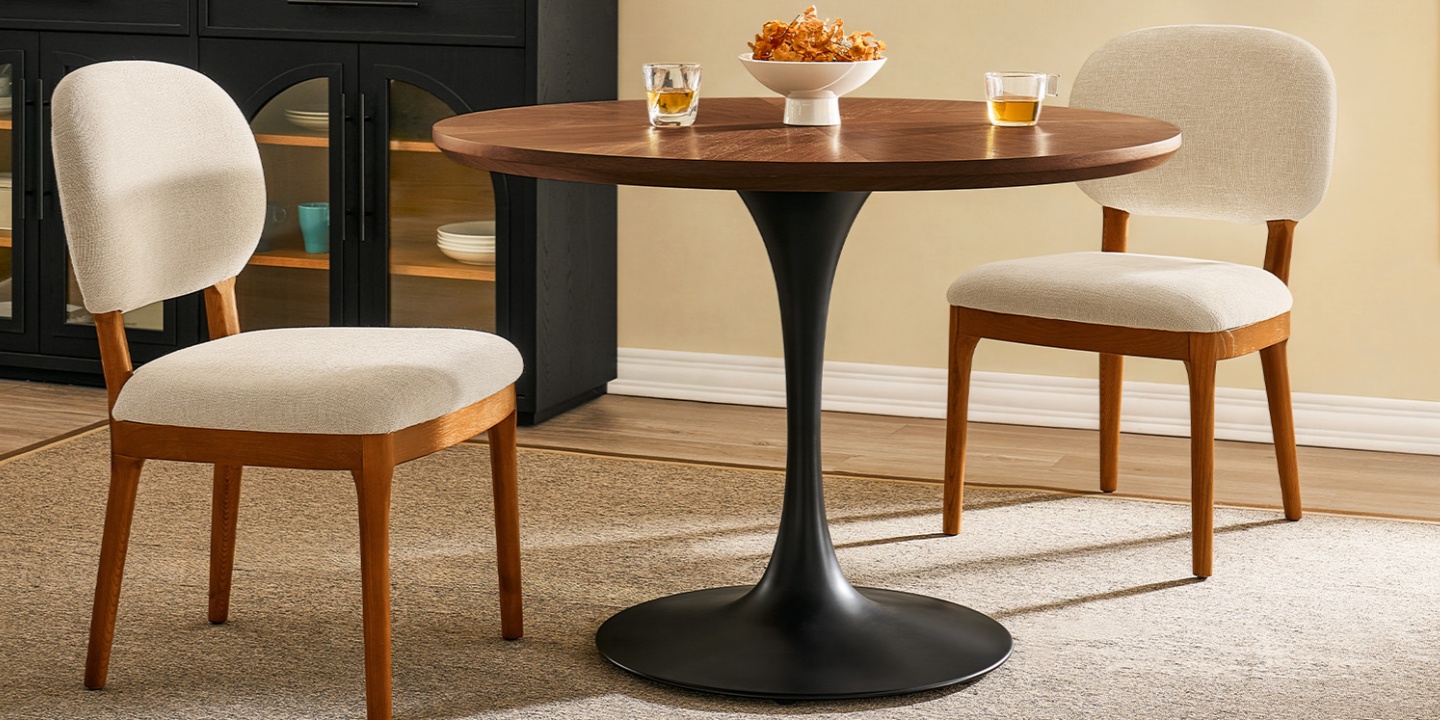
The Estelle 42" Walnut Bistro Dining Table from Hernest follows that direction. Its red oak top finish pairs with a turned, trumpet-style bronze-finished carbon-steel base, giving the table a sculptural look without making a small dining area feel heavy.
At 42 inches, it is sized for four and works well in a breakfast nook, compact dining corner, or small open-plan dining zone.
Modern
Modern round dining tables often rely on simple silhouettes, stone or wood surfaces, and sculptural bases. They work particularly well in open-plan homes because the curved outline can soften the transition between the dining and living areas.
Traditional and Farmhouse
Traditional round tables often use substantial pedestal bases or turned legs, while farmhouse versions tend to emphasize natural wood, thicker tops, and more visible grain.
The best style is ultimately the one that complements the materials and proportions already present in your room.
How to Care for a Round Dining Table
Daily maintenance depends on the tabletop material, but a few habits work across most designs.
Wipe spills after meals rather than allowing them to sit.
Use coasters and trivets for drinks and hot cookware.
Keep wood surfaces away from prolonged direct sunlight where possible.
Use felt pads under chair legs to reduce floor scratches.
Follow the manufacturer's cleaning instructions for stone and wood finishes.
Sealed wood is relatively straightforward to maintain and can often be touched up if minor scratches appear. Sintered or engineered stone generally requires prompt spill cleanup and routine wiping rather than extensive maintenance.
A Practical Round Dining Table Buying Checklist
Before ordering, check these six things:
Measure the room. Record the room dimensions and identify doorways, walkways, cabinets, and other furniture.
Count your everyday diners. Size the table around normal use rather than occasional large gatherings.
Check the clearance. Start with 36 inches around the table and allow more where people regularly walk behind chairs.
Choose the base. Make sure the pedestal or legs do not interfere with your intended chair positions.
Match the material to your lifestyle. Consider spills, heat, cleaning habits, and how much maintenance you are willing to do.
Tape the footprint. Mark the tabletop and chair clearance on the floor before buying.
This simple test can reveal problems that are easy to miss when looking at product dimensions on a screen.
Explore Hernest's Round Dining Tables
If a round dining table fits your space, Hernest offers options for both compact dining areas and mid-century-inspired interiors.
The Rolf 31" Modern Stone Kitchen Dining Table is designed for smaller dining areas, breakfast nooks, and kitchen corners, while the Estelle 42" Walnut Bistro Dining Table brings a warmer mid-century look to a compact dining space.
A round dining room table is not the right fit for every home. For a small or square room, however, the combination of easier conversation, smoother circulation, and softer visual lines can make a noticeable difference. Start with your everyday seating needs, confirm the clearance, and choose the diameter and base around how you actually live.
FAQs
Is a round dining table a good idea?
For many small, square, or open-plan rooms, yes. A round dining table makes conversation easier, removes sharp corners, and can improve circulation. It is less practical for long, narrow rooms or households that regularly host large groups.
What are the drawbacks of a round dining room table?
The main drawbacks are lower seating capacity compared with a similarly sized rectangle, less usable serving space, and awkward wall placement. Large round tables can also make the center harder to reach. Extendable round tables typically become oval when expanded.
Are round or rectangle dining tables better?
Neither is universally better. Round tables work particularly well in small, square, and open-plan rooms where conversation and circulation matter. Rectangular tables are generally better for long rooms, larger groups, wall placement, and bench seating.
How many people can fit at a round dining table?
A 42-inch round table generally seats four comfortably. A 48-inch table works well for four and can accommodate five or six more tightly. For six people, 54 inches is a better starting point, while 60–72 inches can work for six to eight depending on chair width and table construction.
What size round dining table do I need for four or six people?
For four people, a 36- to 48-inch round table is usually appropriate. For six, start around 54 inches and consider 60 inches if you want more comfortable spacing. Always account for chair width and clearance around the table, not just the tabletop diameter.
How much clearance do I need around a round dining table?
A 36-inch clearance between the table and surrounding walls or furniture is a useful starting point. Where people regularly walk behind seated guests, 42–48 inches is more comfortable. A 48-inch table with 36 inches of clearance on each side needs about 10 feet of room width.
What styles and bases do round dining tables come in?
Round dining tables are available in mid-century, modern, farmhouse, traditional, and industrial styles. Common bases include single pedestals, three or four legs, and double pedestals. A pedestal generally provides more flexible seating because there are no corner legs to avoid.
What is the best material for a round dining table?
The best material depends on how you use the table. Solid wood offers warmth and durability, while sintered or engineered stone is well suited to households that prioritize easy maintenance. Glass creates a lighter visual effect but shows fingerprints more easily. Natural stone offers distinctive character but may require more care.