Black Friday is a good time to compare tables for different rooms, whether you are looking for a dining table, coffee table, side table, or console table. With so many styles, sizes, and materials available, the key is finding a piece that suits your space and everyday needs—not just choosing the biggest discount. This guide explores different types of tables worth considering during Black Friday, along with practical tips on comparing dimensions, materials, features, and prices before you buy.
Table of Contents
- What Types of Tables Are Worth Buying During Black Friday?
- How to Choose the Right Table Size for Your Space
- Which Table Materials and Finishes Should You Look For?
- What Table Designs Work Best for Different Interior Styles?
- Which Table Features Are Worth Considering?
- How to Find the Best Black Friday Table Deals
- FAQs
- Are Black Friday Table Deals Worth It?
- What Types of Tables Should I Consider for My Home?
- How Do I Choose the Right Dining Table Size?
- How High Should a Coffee Table Be Compared to a Sofa?
- What Is the Difference Between a Side Table and a Console Table?
- What Materials Are Best for Everyday Tables?
- Are Round or Rectangular Tables Better for Small Spaces?
- What Should I Check Before Buying a Table on Sale?
What Types of Tables Are Worth Buying During Black Friday?
Black Friday is a good time to compare different table styles and prices. Before looking at discounts, consider where the table will go and how you plan to use it. Dining tables, coffee tables, side tables, and console tables serve different purposes, so their dimensions, materials, and features should be evaluated separately.
Dining Tables for Everyday Meals and Entertaining
A dining table needs to accommodate everyday meals while leaving enough room for chairs and movement. The right size depends on how many people regularly use it and whether you often host additional guests.
Rectangular tables work well in longer dining rooms and open-plan layouts. Round tables can fit into more compact or square spaces, while oval designs combine an elongated surface with softer ends. Square tables are another option for smaller dining areas.
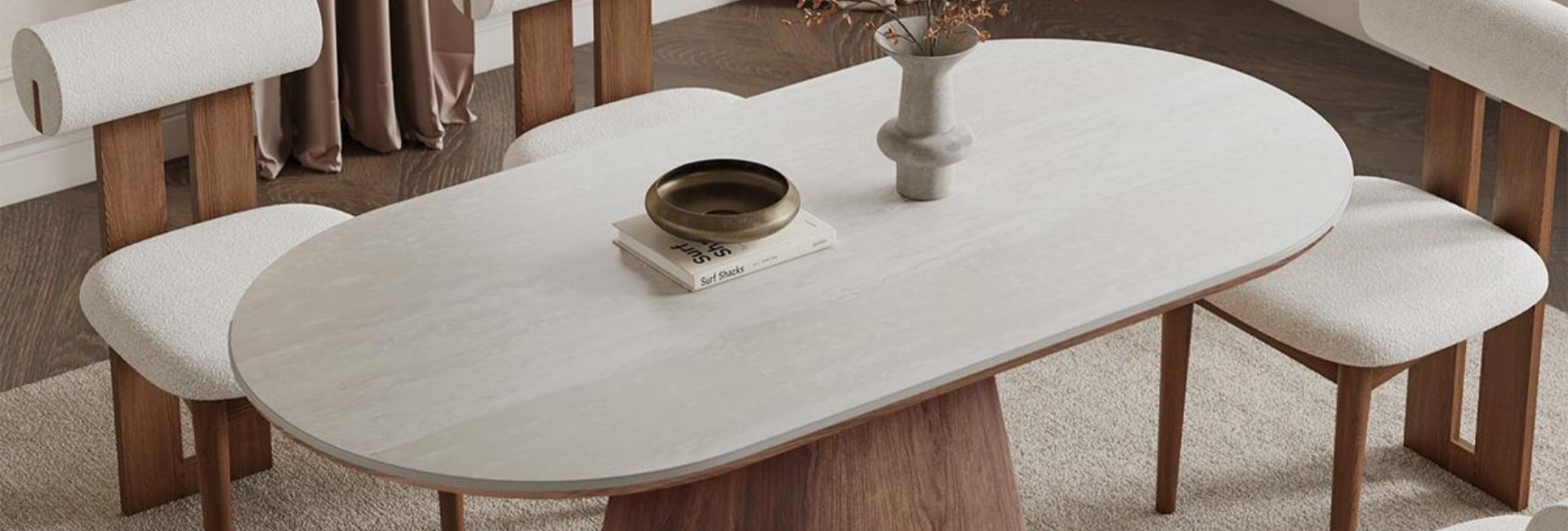
For a contemporary dining room, the Thorsten 72-Inch Oval Dining Table features a travertine-like sintered stone top and a walnut-finish trapezoidal base. It measures 72 inches wide, 39 inches deep, and 30 inches high and accommodates four to six people.
When comparing Black Friday dining table deals, look beyond the seating capacity shown in product photographs. Check the position of the legs or pedestal, the dimensions of your dining chairs, and the space needed to pull chairs out comfortably.

Thorsten 72-Inch Oval Dining Table
View Product
Coffee Tables for Living Rooms
A coffee table provides a central surface within a seating arrangement. It holds drinks, books, remote controls, and other items used while sitting on the sofa. Its size and height should work with the surrounding furniture without obstructing movement.
Rectangular coffee tables are common in front of longer sofas because their proportions follow the seating arrangement. Round and oval tables can soften a living room with several angular furniture pieces. Nesting tables provide additional surface space when needed without taking up as much room in the everyday layout.
Storage is another feature to consider, especially in family rooms where small items can easily accumulate. The Magnus 47-Inch Lift-Top Coffee Table measures 47.2 inches wide, 23.6 inches deep, and 17.9 inches high. Its tabletop lifts to 25 inches, providing a raised surface for activities such as reading or working from the sofa. It also includes 2 drawers and concealed storage beneath the tabletop.
When comparing Black Friday coffee table deals, check the raised tabletop height and the clearance needed to operate the lifting mechanism. Also consider whether the storage compartments can accommodate the items you want to keep nearby.
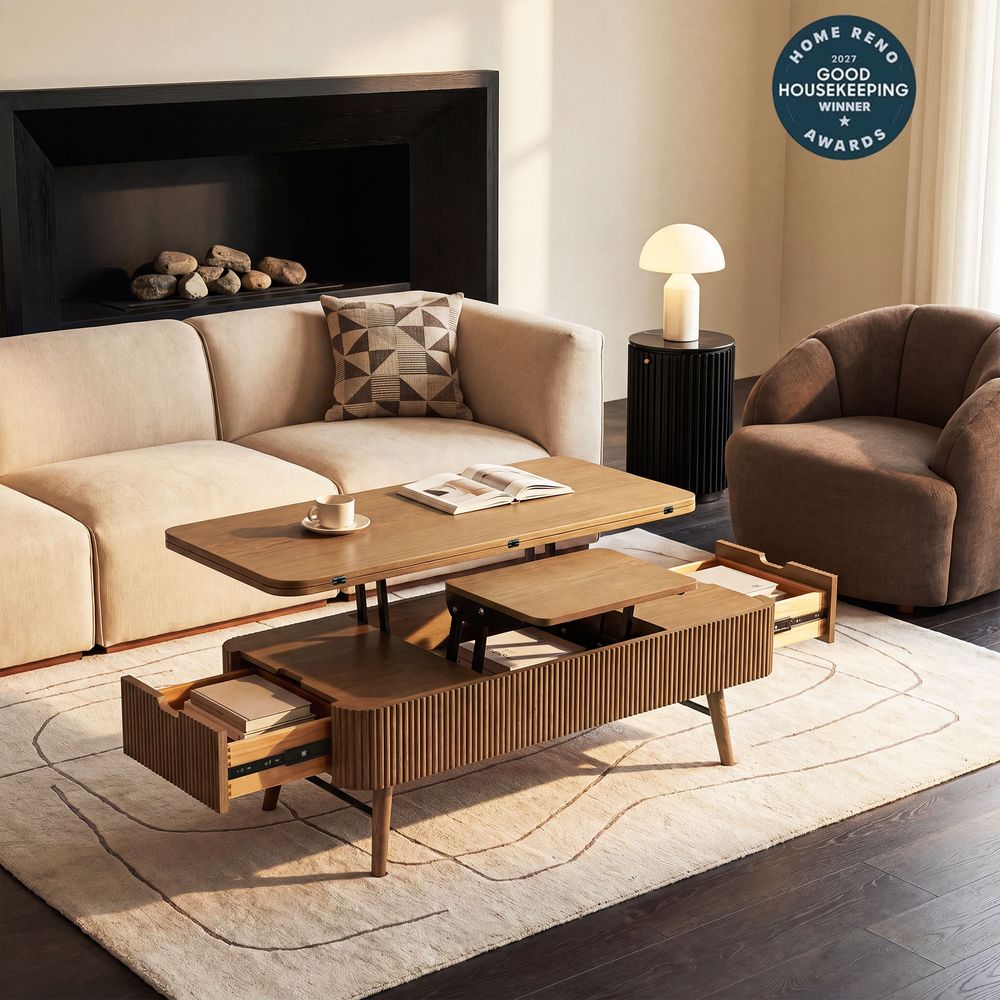
Magnus 47-Inch Lift-Top Oak Coffee Table
View Product
Side Tables for Flexible Everyday Use
Side tables are compact surfaces placed beside sofas, armchairs, or beds. They provide a convenient spot for drinks, phones, reading materials, or lamps without taking up the floor space required by a larger table.
Their shapes and dimensions vary depending on where they will be placed. Round designs can fit beside curved armchairs, while narrow rectangular tables may work better between two seats. In smaller living rooms, a compact side table can provide an additional surface without crowding the seating area.
Some designs include open shelves for frequently used items, while others have drawers or concealed compartments for smaller belongings.
The Elliot 16-Inch Solid Wood Side Table measures 16.9 inches wide, 16.9 inches deep, and 22 inches high. It features a round top, fluted detailing, concealed storage, and an open display area. Its construction combines American solid oak and plywood with oak veneers.
When comparing Black Friday side table deals, consider the height of your sofa or chair arm, the available floor space, and whether you need open or enclosed storage.

Elliot 16-Inch Solid Wood Side Table
View Product
Console Tables for Entryways and Living Spaces
Console tables are generally longer and shallower than dining and coffee tables. They are commonly placed against a wall in an entryway or hallway, or behind a sofa. Their narrow profiles provide a surface for display and everyday items without taking up as much floor space as a deeper cabinet.
A console table can hold a lamp, framed photographs, decorative objects, keys, or mail. Models with drawers and lower shelves provide additional storage, while open designs keep the surrounding area visually lighter.
The Solvind 60-Inch Console Table measures 60.2 inches wide, 15.9 inches deep, and 30.1 inches high. Its arched silhouette and wire-brushed warm brown oak finish give it a distinctive appearance. The table combines solid oak and plywood with American oak veneers and dovetail drawer construction.
Before buying a console table, measure the wall where it will stand and check the distance between the table and nearby doors, stairs, or walking routes. A table may fit the wall but still leave too little room in a narrow hallway.
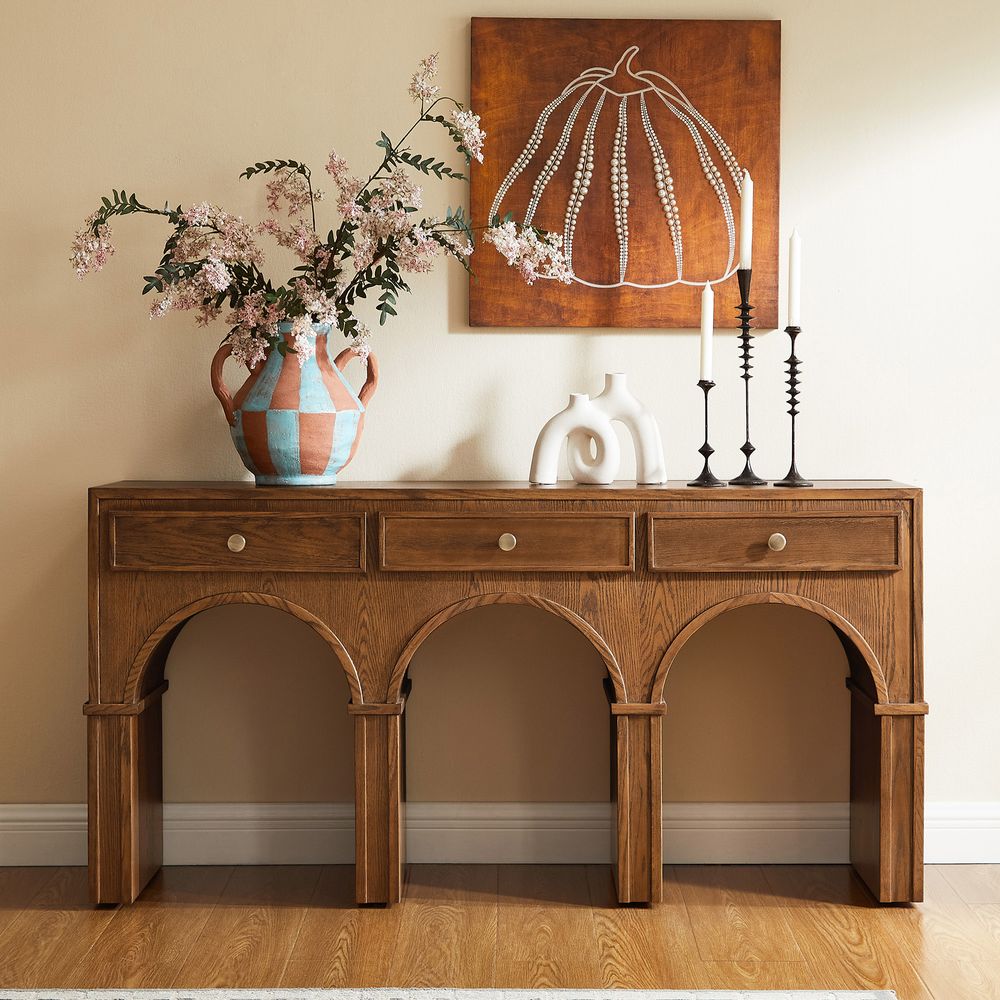
Solvind 60-Inch Console Table
View Product
How to Choose the Right Table Size for Your Space
Table dimensions affect seating, movement, and how easily you can use surrounding furniture. Measure the available space before comparing product styles or promotional prices. Remember to account for chairs, sofa access, open drawers, and walking routes, not just the tabletop footprint.
Consider Dining Table Dimensions and Seating Capacity
Start with the number of people who will use the dining table regularly. A household that usually eats together as a group of four may not need the same size as one that frequently hosts six or eight guests.
Table shape also affects seating arrangements. Rectangular tables generally place chairs along their longer sides and sometimes at the ends. Round tables distribute seating around their circumference, while oval tables provide a longer surface with curved ends.
As a starting point, allow roughly 24 inches of table edge for each place setting. Then check the actual chair width and leg positions. Armchairs often require more room than simple dining chairs. Pedestal bases can make chair placement easier because there are fewer corner legs, but the base still needs to leave sufficient legroom.
Plan for chair movement as well. Measure the distance from the table edge to nearby walls, cabinets, sideboards, and doorways. A table may fit between two walls, but pulling out a chair requires additional floor space.
For a more realistic layout, mark the proposed table dimensions on the floor with painter's tape and position your existing chairs around the outline.
Match Coffee Table Dimensions With Your Sofa
A coffee table should provide enough surface area for everyday use without interrupting movement between the sofa and other parts of the room.
Compare its length with the sofa rather than choosing a table based on appearance alone. A very small table may look out of proportion with a long sofa, while an oversized design can overwhelm a compact seating arrangement.
Height is equally important. A coffee table that is much lower than the sofa seat may be inconvenient when reaching for a drink. One that is considerably higher can interfere with comfortable seating. As a starting point, look for a tabletop close to the sofa seat height or slightly lower, then consider your seating position and preferences.
Oklahoma State University Extension recommends leaving approximately 18 inches between a coffee table and nearby seating. It also suggests allowing around 32 inches around furniture for comfortable movement in commonly used living spaces. These are planning references rather than fixed requirements; your room layout and mobility needs may call for different clearances. See its home measuring and furniture-spacing guidance.
Choose Suitable Side Table and Console Table Dimensions
A side table should be easy to reach from the seat it serves. Measure the height of your sofa or chair arm and compare it with the proposed tabletop height. A tabletop near arm height is often convenient because you can place or retrieve items without reaching too far down or stretching upward.
For console tables, start with the length of the wall and the available depth between the wall and the main walking route. Measure at the narrowest point of the hallway, accounting for door handles, radiators, and doors that swing open.
If you're unsure whether a table will fit, mark its footprint on the floor with painter's tape. Walk through the area and check whether you can open nearby doors and move around comfortably.
Which Table Materials and Finishes Should You Look For?
Materials influence a table's appearance, weight, maintenance requirements, and construction. When comparing Black Friday table deals, look beyond the finish name and check the materials used for the tabletop, frame, legs, and supporting panels.
Solid Wood, Engineered Wood, and Wood Veneer
Solid wood is made from natural lumber, while engineered wood uses processed wood fibers or layers to form panels. Wood veneer is a thin layer of real wood applied over a supporting core. These materials can be used together within one table, so a product described as a wood table does not necessarily have solid wood construction throughout.
Solid wood provides natural grain variation and can be used for components such as legs, frames, and structural details. Veneer creates a real wood surface over a different supporting material, while engineered wood provides a base for panels and other furniture components.
The important thing is to understand how these materials are combined. Check the construction information for the tabletop, base, drawer fronts, and visible panels rather than assuming the entire product uses the same material.
Stone and Sintered Stone Table Surfaces
Stone and stone-look surfaces are often chosen for dining tables because they create a distinctive finish and can complement contemporary interiors. However, natural stone, engineered stone, and sintered stone are not interchangeable terms. Their composition, surface characteristics, and care requirements can differ.
Sintered stone is manufactured rather than cut directly from a natural stone slab. Check the exact material description and the manufacturer's care instructions before choosing a table.
When considering a stone or sintered stone tabletop, review its recommended cleaning method. Do not assume that every stone-look surface has the same resistance to heat, stains, or acidic substances.
Metal and Mixed-Material Table Designs
Some tables combine wood with metal components to create contrast between materials. Metal may appear in the frame or supporting structure, while wood adds warmth through the tabletop, legs, or decorative panels.
Mixed-material designs can work well with different furniture finishes. For example, a table with a metal frame and oak details can connect darker living room accessories with lighter wood furniture.
When assessing a mixed-material table, check which components are structural and which are mainly decorative. Also consider whether the different finishes coordinate with your existing furniture.
What Table Designs Work Best for Different Interior Styles?
Shape, leg design, surface texture, and finish all contribute to a table's overall appearance. Rather than matching every furniture piece exactly, look for details that create a consistent visual connection across the room.
Modern and Minimalist Table Designs
Modern tables often feature clean lines, simple shapes, and limited decorative details. Their understated appearance can work well in interiors where the sofa, dining chairs, lighting, or wall decor already provide visual interest.
For a minimalist dining room, an oval table with a sculptural pedestal base can create a focal point without requiring elaborate decoration. In a living room, a simple rectangular coffee table can provide a surface without competing with the sofa.
Mid-Century and Retro-Inspired Tables
Mid-century-inspired furniture often uses tapered legs, balanced proportions, natural wood finishes, and geometric forms. These details give a room a warm appearance without making the furniture feel overly decorative.
When shopping for this style, compare the shape of the legs, the thickness of the tabletop, and the relationship between the base and surface. Compact coffee and side tables can also work well in smaller living rooms.
Wood tones matter too. A warm brown finish can complement neutral upholstery and textured rugs, while darker wood introduces more contrast.
Contemporary and Decorative Table Designs
Contemporary designs often combine familiar furniture shapes with distinctive details such as fluted panels, curved bases, unusual proportions, or contrasting finishes.
These features can add visual interest to a simple entryway or living room. However, decorative details should not interfere with everyday use. Check that the table still provides a practical surface, enough clearance, and a stable supporting structure.
Which Table Features Are Worth Considering?
Beyond size and appearance, functional features affect how well a table fits your everyday routine. Focus on the details that matter for its intended location rather than paying extra for features you may rarely use.
Storage Features for Better Organization
Storage can be useful for coffee tables, side tables, and console tables. Drawers help keep smaller items out of sight, while open shelves make frequently used belongings easier to reach.
A coffee table with concealed storage can hold remote controls, reading materials, and other living room accessories. A side table with an open display area can hold a book or decorative object while leaving the tabletop available for a lamp or drink. Console table drawers provide a place for keys, mail, and other entryway essentials.
If storage is important, check the interior dimensions rather than relying on a general description such as ample storage. Measure the items you plan to keep inside and compare them with the listed drawer or compartment dimensions.
Tabletop Shape and Surface Functionality
The shape of a tabletop affects how much usable surface area it provides and how easily people move around it.
Rectangular tables are often practical when they need to align with a sofa, wall, or dining area. Round tables have no sharp corners, which can make movement easier in some compact spaces. Oval tables combine a longer usable surface with rounded ends. Irregular or sculptural shapes add a decorative element, although they may offer less predictable space for everyday objects.
Think about what you plan to place on the table. A dining table needs room for place settings and serving dishes. A coffee table should accommodate drinks and frequently used accessories. A console table may need a longer surface for lamps and decorative pieces, while a side table can often function with a smaller top.
Stability, Construction, and Everyday Maintenance
Check the supporting base, leg construction, joints, and tabletop thickness before buying. The table should be appropriate for the items you plan to place on it, and its design should not make everyday movement awkward.
For tables with drawers, inspect the drawer construction and opening mechanism. Dovetail joints are a method of joining drawer components, while soft-close rails control how a drawer closes. These specific features provide more useful information than broad descriptions such as sturdy or high quality.
Also check the assembly requirements. Some tables arrive fully assembled, while others require the legs or base to be fitted. This can affect delivery planning and the help you may need when setting up the furniture.
Maintenance should match the material. Dust wood surfaces with a soft cloth and follow the manufacturer's instructions for cleaning finished or veneered components. For stone and sintered stone surfaces, use the recommended cleaning products and avoid harsh chemicals unless the manufacturer confirms they are suitable. Coasters and placemats can help reduce everyday marks.
How to Find the Best Black Friday Table Deals
When comparing Black Friday tables, consider the purchase price alongside the product's dimensions, materials, storage, delivery, and suitability for your room. A lower price is not necessarily a better value if the table does not meet your needs.
Compare Prices Across Different Table Types
Start by making a shortlist of tables that fit your room and intended use. Compare products within the same category first. A dining table should be compared with other dining tables of similar size and construction, rather than with a smaller side table simply because both are listed under a general table category.
When checking a sale price, look at the regular listed price, promotional price, dimensions, material composition, and included features. A table with drawers or a lift-top may cost more than a simpler model, but those features may be useful if they reduce the need for separate storage furniture.
Consider Additional Savings When Furnishing Multiple Rooms
Hernest's Black Friday 2026 event offers tiered discounts based on the total order value, making it worth checking the promotion if you're furnishing more than one room or purchasing several furniture pieces together. The current offer includes:
-
$100 off orders of $1,500 or more
-
$150 off orders of $2,000 or more
-
$300 off orders of $3,000 or more
-
$600 off orders of $5,000 or more
-
$1,000 off orders of $7,000 or more
For example, if you're furnishing an open-plan living and dining area, you might be considering both a dining table and a coffee table. Combining purchases may help your order reach a discount threshold. However, avoid adding furniture you don't need just to qualify for a larger discount. Compare the final order cost and make sure each piece fits its intended space.
You can explore eligible furniture and review the promotion details on the Hernest Black Friday Furniture Sale page. Since promotional terms and product eligibility may change, check the latest conditions before completing your order.
Check Delivery, Assembly, and Return Policies
The price shown on a product page is not always the complete cost of buying furniture online. Check delivery charges, delivery arrangements, assembly requirements, and the return policy before ordering.
For larger tables, measure the route from your front door to the intended room. Include doorways, staircases, hallways, and tight turns. Check the packaged dimensions when available, because the delivery box may be larger than the assembled furniture.
Finally, confirm whether the item requires assembly and whether the product includes the hardware and instructions needed for setup.
FAQs
Are Black Friday Table Deals Worth It?
Black Friday can be a useful time to compare table prices and look for seasonal promotions. Whether a deal is worthwhile depends on the product's dimensions, material, construction, features, and final checkout cost. Compare similar tables and make sure the chosen design fits your space before focusing on the discount.
What Types of Tables Should I Consider for My Home?
The four common types serve different purposes. Dining tables provide a surface for meals and entertaining, coffee tables sit in front of sofas, side tables offer convenient surfaces beside seating, and console tables work well against walls in entryways, hallways, and living rooms.
How Do I Choose the Right Dining Table Size?
Start with the number of people who will use the table regularly. Allow enough tabletop space for each place setting, then account for chair width, table legs, and the room needed to pull chairs out. Measure the surrounding clearance as well as the tabletop itself.
How High Should a Coffee Table Be Compared to a Sofa?
A coffee table is generally most convenient when its top is close to the sofa seat height or slightly lower. Measure your sofa cushion rather than relying on the overall sofa height. Also check that the table leaves sufficient room for sitting down, standing up, and walking through the seating area.
What Is the Difference Between a Side Table and a Console Table?
A side table is usually a compact surface placed beside a sofa, armchair, or bed. A console table is generally longer and shallower, designed to stand against a wall or behind a sofa. Side tables prioritize convenient reach from seating, while console tables often provide display space and entryway storage.
What Materials Are Best for Everyday Tables?
The best material depends on how the table will be used. Solid wood offers natural grain and can be used for structural components. Veneer provides a real wood surface over a supporting core, while engineered wood is commonly used for furniture panels. Stone and sintered stone create different tabletop finishes, and metal can be used in frames or bases. Check the specific material and care instructions for each product.
Are Round or Rectangular Tables Better for Small Spaces?
Round tables can be easier to move around in some compact rooms because they have no corners. Rectangular tables may work better in narrow or elongated spaces and can provide a larger continuous surface. Consider the shape of the room, the position of nearby furniture, and the main walking routes before deciding.
What Should I Check Before Buying a Table on Sale?
Check the overall dimensions, tabletop material, frame construction, storage features, stability, and assembly requirements. Also confirm the current promotional price, delivery charges, return conditions, and warranty information. Measuring the intended location and delivery route before ordering can help prevent fit and access problems.