


Mid Century Modern Sideboards for a More Considered Interior
A sideboard can do more than provide extra storage. In a mid-century modern interior, its proportions, wood finish, leg design, and cabinet details help shape the character of the room. A thoughtfully chosen piece brings practical storage together with the understated style that makes mid-century modern furniture enduringly appealing.
At Hernest, our mid century modern sideboard collection brings together designs with recognizable MCM influences, including tapered legs, natural wood finishes, fluted surfaces, and distinctive cabinet doors. Whether you are furnishing a dining room, adding storage to an open-plan living area, or looking for a statement piece against an entryway wall, these designs offer different ways to introduce mid-century character into your home.
If you are comparing a wider range of silhouettes and storage styles, explore the Hernest Sideboards collection for additional options.
Read More
What Defines a Mid Century Modern Sideboard?
Mid-century modern design is associated with furniture and interiors developed around the middle of the 20th century. Rather than relying on heavy ornamentation, the style emphasizes functional forms, balanced proportions, and materials that contribute to the overall design.
The SFO Museum's exhibition A Modern Approach: Mid-Century Design describes a guiding principle of the movement: "the form of each object followed its function." This idea helps explain why a mid-century modern sideboard can feel distinctive without relying on elaborate decoration.
Several details are especially useful when identifying an MCM sideboard.
Tapered Legs and Elevated Profiles
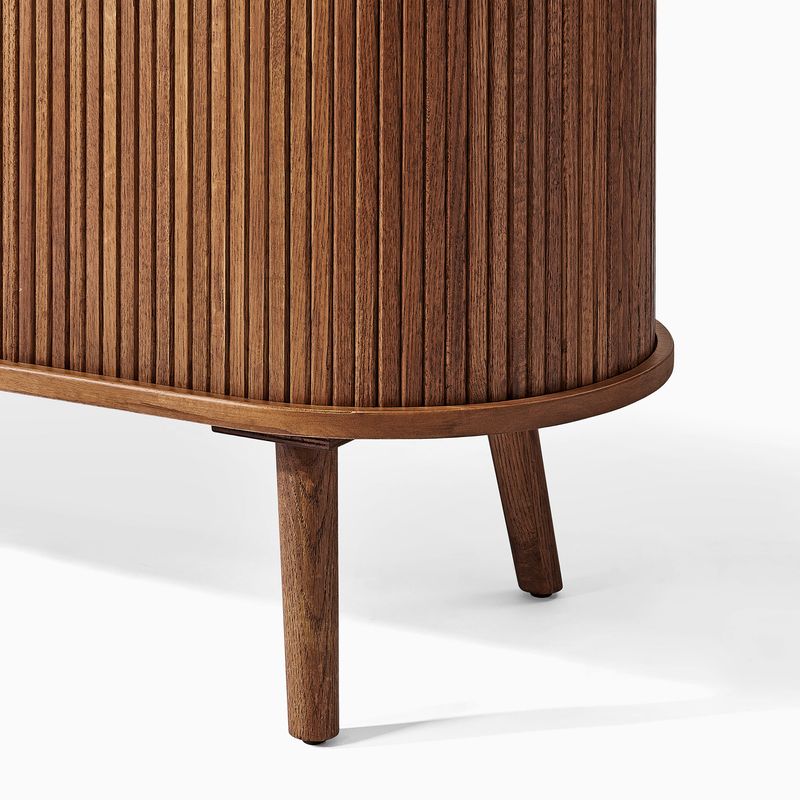
Tapered legs are among the most recognizable features of mid-century modern furniture. They narrow toward the floor, giving a cabinet a lighter, more elevated appearance than a design that rests directly on a solid base.
This construction also affects the overall silhouette. The visible space beneath the cabinet creates a sense of openness, while the angled leg profile adds definition without unnecessary ornamentation.
When evaluating a sideboard, look at the relationship between the legs and cabinet body. Well-balanced proportions help the piece feel cohesive rather than top-heavy or overly delicate.
Warm Wood Tones and Natural Grain
Wood plays an important role in many mid-century modern interiors. Oak and cherry are two finishes that can create noticeably different moods.
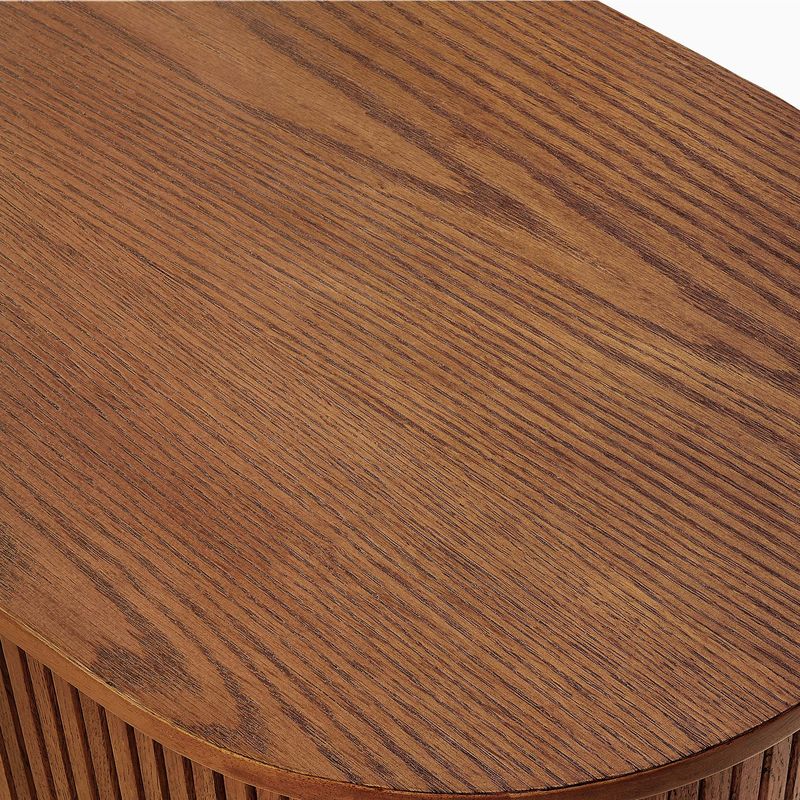
Oak typically has a more visible, varied grain that gives furniture a natural, textured appearance. Cherry has a deeper, richer color that can bring warmth and visual depth to a room.
The construction materials matter, too. An MCM sideboard may combine solid wood with engineered wood, plywood, or wood veneers. These materials serve different structural and finishing purposes, so the appearance of a wood surface alone does not indicate that the entire cabinet is made from solid wood.
Fluted and Slatted Surfaces
Fluted and slatted details introduce texture through repeated vertical lines, but they are not identical.
Fluted surfaces feature raised or recessed grooves that create a continuous, sculptural effect. Slatted surfaces use repeated narrow strips or linear sections, producing a more segmented appearance.
Both treatments add depth without relying on elaborate decoration. They are particularly useful when you want a cabinet to have a distinctive front or side while maintaining a relatively simple overall silhouette.
Tambour Doors and Distinctive Cabinet Fronts
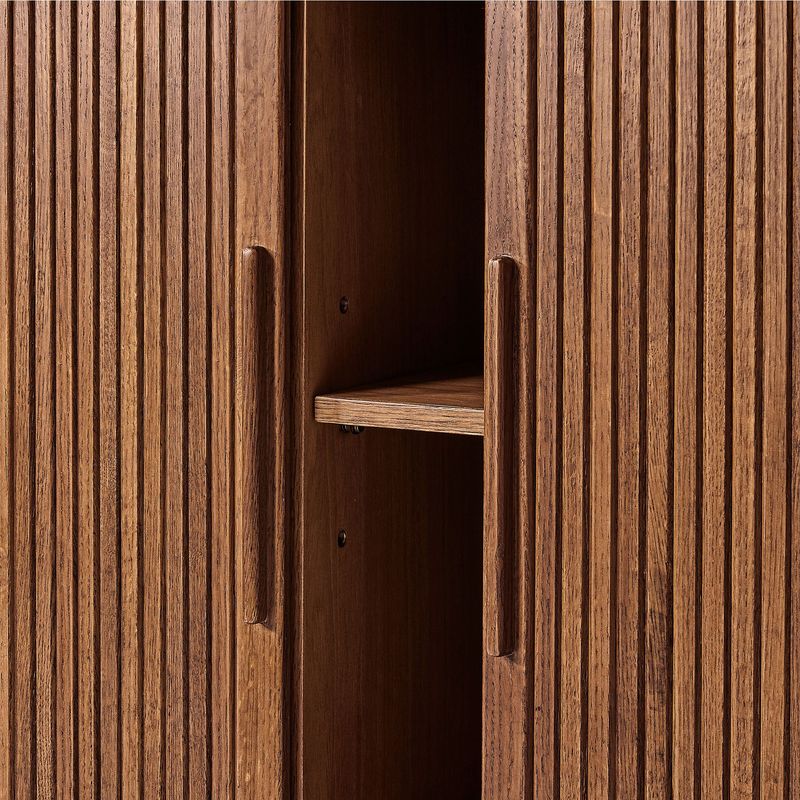
Tambour doors are made from connected narrow sections that move along a track, allowing the door to slide rather than swing outward. This construction gives the cabinet front a distinctive linear texture and changes how you access the storage inside.
For rooms where furniture sits close to a dining table, walkway, or other pieces, sliding doors can be a practical alternative to conventional hinged doors. Their repeated sections also create a recognizable visual detail that suits many mid-century-inspired interiors.
How to Choose the Right MCM Sideboard
The right MCM sideboard should feel connected to your existing furniture while meeting your everyday needs. Beyond storage capacity, consider its proportions, finish, and cabinet design.
Consider the Overall Proportions
Mid-century modern furniture often features strong horizontal lines and balanced proportions. A sideboard's width, height, depth, and leg profile all contribute to that impression.
A wider cabinet can create a visual anchor beneath artwork or along a dining room wall. A more compact design may be easier to incorporate into a smaller room without overwhelming nearby furniture.
Depth deserves just as much attention as width. Measure the available space and leave enough clearance for walking, opening drawers, and accessing cabinet doors. The cabinet should complement the room rather than interfere with how you move through it.
Match the Wood Finish to Your Existing Furniture
Instead of trying to make every wood surface in a room identical, look for finishes that work together.
An oak sideboard can complement interiors with lighter wood tones, neutral upholstery, and natural textures. It can also provide contrast against darker flooring or painted walls.
A cherry-finish design creates a deeper, warmer impression. It can work particularly well alongside muted wall colors, understated upholstery, and furniture with simple silhouettes.
Consider the overall balance of the room. A finish that complements the existing palette will usually feel more intentional than one chosen simply because it matches another piece exactly.
Select Cabinet Details That Suit Your Routine
The cabinet layout should reflect what you plan to store.
● Drawers provide convenient access to smaller items, dining accessories, and objects you want to keep organized.
● Adjustable shelves let you adapt the interior to different storage needs.
● Glass doors make selected contents visible and create a lighter display effect.
● Tambour sliding doors offer an alternative to outward-opening cabinet doors.
● Fluted and slatted details give the cabinet a more distinctive visual identity.
Think about which features matter most in daily use, then compare them with the design you prefer. A good choice brings the cabinet's appearance and practical features together.
Explore Mid Century Modern Sideboards at Hernest
Hernest offers several approaches to mid-century modern design. These three sideboards illustrate how different finishes, cabinet details, and proportions can create distinct looks within the same broad style.
Kaden 63-Inch Mid-Century Sideboard: Rich Cherry Finish and Classic Lines
The Kaden 63-Inch Mid-Century Sideboard brings a classic MCM look through its Brown Cherry finish, tapered wood legs, and beveled front edges. Its deeper wood tone gives the cabinet a warm, established appearance, while the elevated base keeps the silhouette visually light.
Its construction combines rubber wood and engineered wood with cherry veneers. The drawers feature precision dovetail joints, adding a traditional detail to the storage design.
At 63 inches wide, Kaden is a strong option for homeowners who prefer a rich cherry appearance and recognizable tapered-leg styling. Choose it when you want the warmth of a deeper wood finish to become part of your dining or living room's overall look.
Stavn 72-Inch MCM Sideboard: Fluted Oak and Moru Glass Details
The Stavn 72-Inch MCM Sideboard takes a more textured approach. Fluted solid oak details create vertical lines along the cabinet, while Moru glass doors introduce another layer of visual interest without making the design feel overly decorative.
The cabinet combines American solid oak and engineered wood with walnut veneers. Inside, two drawers and adjustable shelves provide different ways to organize stored items. The drawers also feature dovetail joints and soft-close rails.
At 72 inches wide, Stavn has a more substantial horizontal presence than the two 63-inch options. It is worth considering if you have a wider wall and want a sideboard that combines a generous cabinet profile with textured oak details and glass-front storage.
Valo 63-Inch Oak Sideboard: Tambour Doors and Natural Oak Character
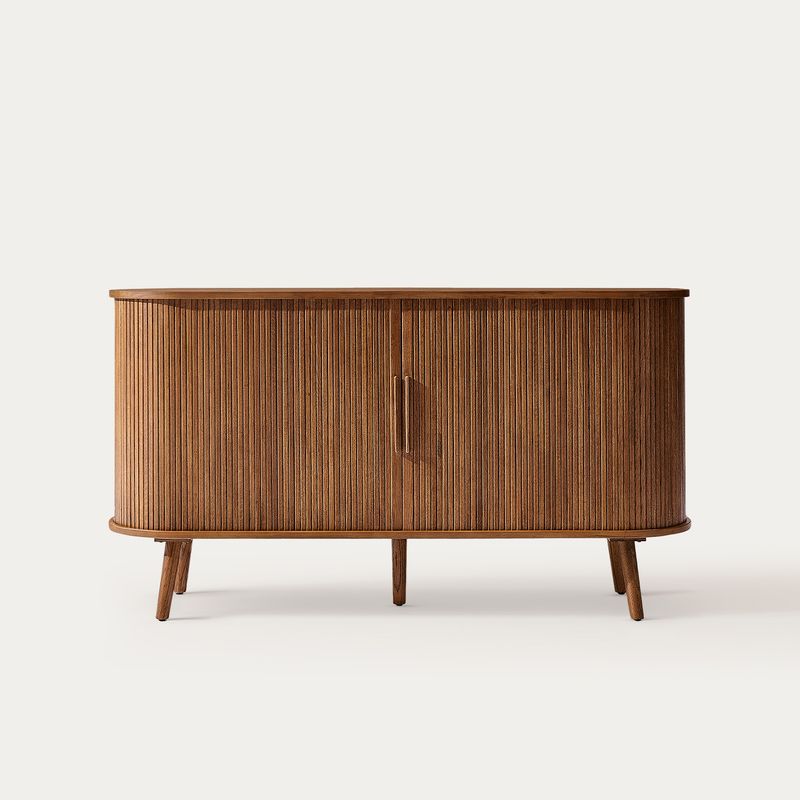
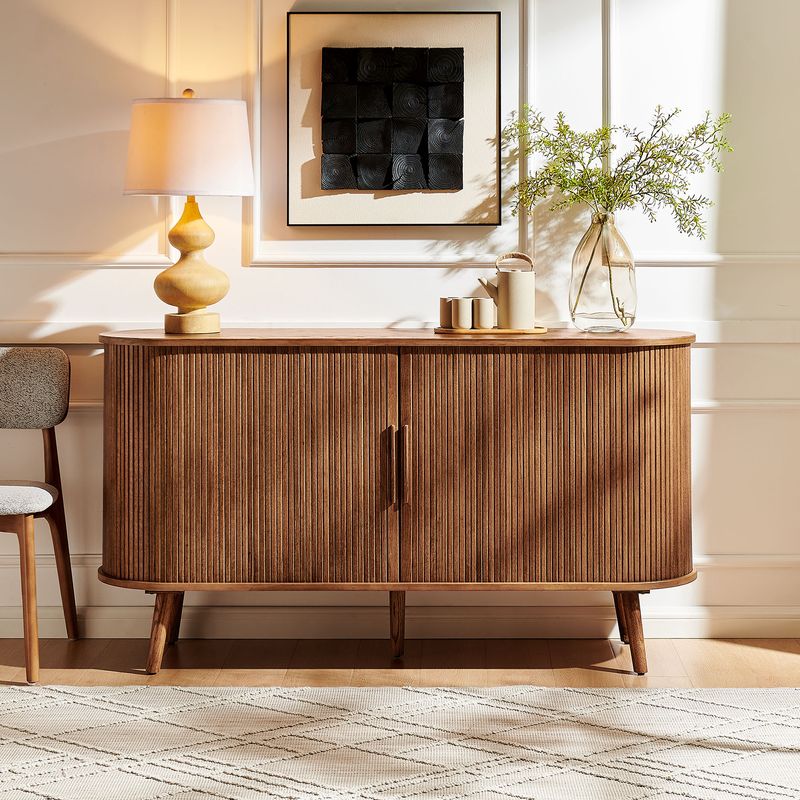
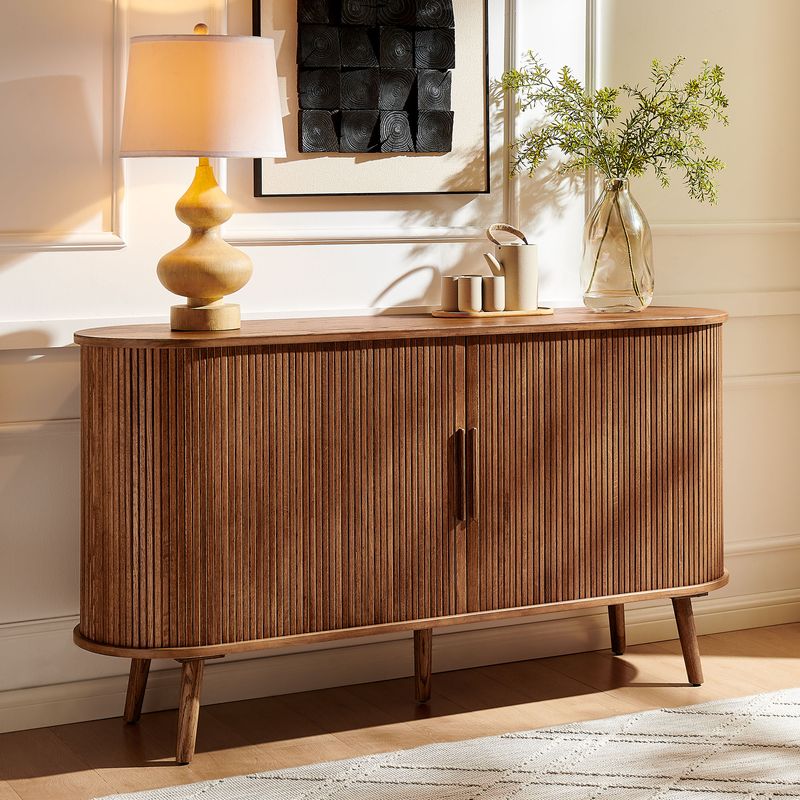
The Valo 63-Inch Oak Sideboard stands out for its Tambour sliding doors and solid oak fluting. Rather than using conventional hinged doors, its sliding-door design creates a different visual rhythm across the cabinet front and offers an alternative when outward-opening doors may be less convenient.
Its construction combines American solid oak and plywood with oak veneers. The wire-brushed finish highlights the wood's natural character, while adjustable shelves provide flexibility for organizing the cabinet interior.
Valo is a particularly good option if you prefer oak furniture with a distinctive cabinet front. Its combination of Tambour doors and fluted oak details gives it a clear identity without relying on elaborate ornamentation.
Where to Place a Mid Century Modern Sideboard
A mid century modern sideboard can work in several areas of the home. Its placement should reflect both its storage function and the way its design relates to nearby furniture.
In the Dining Room
The dining room is one of the most natural places for a sideboard. It can hold tableware, serving pieces, linens, and entertaining essentials while providing a surface for decorative objects or serving dishes.
For a coordinated dining area, consider how the sideboard's wood finish and leg design relate to your table and chairs. Explore Hernest's dining tables and dining chairs to find complementary furniture.
In the Living Room
A sideboard can provide additional storage while creating a visual anchor along a living room wall. Use the cabinet to organize items you want nearby but do not necessarily want on display.
A lower, wider silhouette can work beneath artwork or alongside a sofa, while a textured cabinet front can add interest to a more restrained interior. If you plan to place a television above or on the cabinet, check the product dimensions, recommended weight capacity, and viewing height before making a decision.
In the Entryway
An entryway sideboard can give keys, mail, and everyday accessories a more organized home. Its top surface can also hold a lamp, a small tray, or a carefully chosen decorative object.
Before placing one in an entryway, check the available depth and make sure the cabinet will not interfere with the door swing or normal movement through the space.
In an Open-Plan Kitchen or Dining Area
In an open-plan home, a sideboard can help define the transition between the kitchen and dining or living areas. It provides additional storage without requiring a full-height cabinet or built-in unit.
If you are furnishing a larger kitchen, explore Hernest's kitchen islands to compare different ways of adding storage and usable surface space.
How to Style a Mid Century Modern Sideboard
The styling around a sideboard should complement its design rather than compete with it. A few carefully selected pieces are often more effective than filling the entire surface.
Start with the cabinet itself. A cherry-finish sideboard already brings warmth to the room, while a fluted or Tambour-front design provides texture. Let those features remain visible rather than covering them with too many decorative objects.
A table lamp, ceramic vase, framed artwork, or small arrangement of books can add personality without making the surface feel crowded. For a wider cabinet, arrange objects in groups of different heights instead of spreading small accessories evenly across the top.
Wall art can help connect the sideboard to the rest of the room. A piece centered above the cabinet creates a unified composition, while a larger artwork can make the sideboard feel like part of a broader living or dining area.
Finally, consider the furniture around it. Repeating a wood tone, using complementary shapes, or introducing similar tapered-leg details can connect the sideboard to the rest of your interior without making every piece look identical.
Find Your Mid Century Modern Sideboard at Hernest
The right sideboard should feel connected to the rest of your interior while offering the features you need every day. From Kaden's rich cherry finish to Stavn's fluted oak and Moru glass details and Valo's distinctive Tambour doors, Hernest offers different ways to bring mid-century modern character into your home.
Explore the Hernest Sideboards collection to discover more storage designs, compare styles, and find a piece that works with your space.