
Buying a new TV stand sounds simple until you start measuring. You know your TV screen size, but is that enough information to choose the right console? The answer is no.
Many homeowners purchase a TV stand based only on the number printed on their TV box, only to discover later that the furniture looks too small, the proportions feel off, or there is not enough space for soundbars, gaming consoles, and decorations.
Understanding tv stand size is the key to creating a safe, comfortable, and visually balanced entertainment area. Whether you own a 55-inch television, a large 75-inch screen, or you are planning a complete home theater setup, choosing the right stand requires more than guessing.
This expert tv stand size guide explains how to measure your television, understand tv stand dimensions, choose between a long tv stand and a large tv stand, and determine exactly what size tv stand for 75 inch tv or what size tv stand for 65 inch tv works best in your home.
Why TV Stand Size Matters More Than You Think
Choosing the right tv stand size is not only about making your TV fit. It directly affects safety, viewing comfort, storage capacity, and the overall balance of your living space. A properly sized TV stand creates a stable foundation while making your entertainment area look intentional and well-designed.
The relationship between TV stability and viewing safety
A correctly sized TV stand helps reduce the risk of instability, especially with today’s larger televisions. The stand should fully support the TV base, provide enough surface area, and have a weight capacity that matches your screen.
A common mistake is choosing a stand based only on screen size. Since TV sizes are measured diagonally, the actual width can be much smaller or larger than expected.
How the wrong TV stand affects your room design
An undersized stand can make a large TV look visually heavy and disconnected from the room. It may also leave insufficient space for soundbars, gaming consoles, or décor. On the other hand, a properly sized long tv stand creates better proportions and helps define the entertainment area.
What experts recommend
Interior professionals generally recommend selecting a TV stand that is 6–12 inches wider than the television. This extra space improves stability, enhances visual balance, and allows room for future upgrades. When considering tv stand dimensions, always evaluate width, height, and depth together—not just whether the TV can physically sit on top.
TV Stand Size Guide (Quick Answer)
If you need a quick answer, use this basic tv stand size guide:
The general rule:
TV stand width = TV width + 6 to 12 inches minimum
However, many homeowners prefer going slightly larger because a wider console provides:
Better visual balance
More storage
More decoration space
Greater flexibility for future upgrades
For today's larger televisions, the 84 inch TV stand has become increasingly popular because it fits modern 75-inch and 85-inch screens beautifully.
Understanding TV Stand Dimensions
Before buying a new TV stand, understanding the correct tv stand dimensions is essential. Many homeowners focus only on whether the television can fit, but a well-designed entertainment setup depends on three key measurements: width, height, and depth. Choosing the right measurements helps improve safety, viewing comfort, and the overall appearance of your room.
TV stand width
Width is the most important factor when choosing the right tv stand size. Your console should generally be wider than your television to create better balance and provide space for accessories.
A wider long tv stand is especially useful for larger screens because it creates a stronger visual foundation and leaves room for soundbars, speakers, or decorative items.
TV stand height
Height determines how comfortable your viewing experience will be. The center of the TV screen should ideally be close to eye level when you are sitting on your sofa.
Most living rooms work well with TV stands around 20–30 inches high, but the ideal height depends on your sofa height, seating position, and TV size. A stand that is too tall may cause neck strain, while one that is too low can make viewing uncomfortable.
TV stand depth
Depth is often overlooked when comparing tv stand dimensions, but it affects both function and safety. A stand should provide enough space for TV legs, cables, gaming devices, and ventilation.
A shallow console may look stylish but can create problems with cable connections or overheating electronics. Always check the depth requirements before choosing a large TV stand.
Why TV dimensions differ from screen size
TV sizes are measured diagonally from one corner of the screen to the opposite corner, not by the actual width. For example, a 75-inch TV does not mean the television is 75 inches wide.
Understanding this difference helps you select the correct tv stand size and avoid buying furniture that feels too small or poorly proportioned.
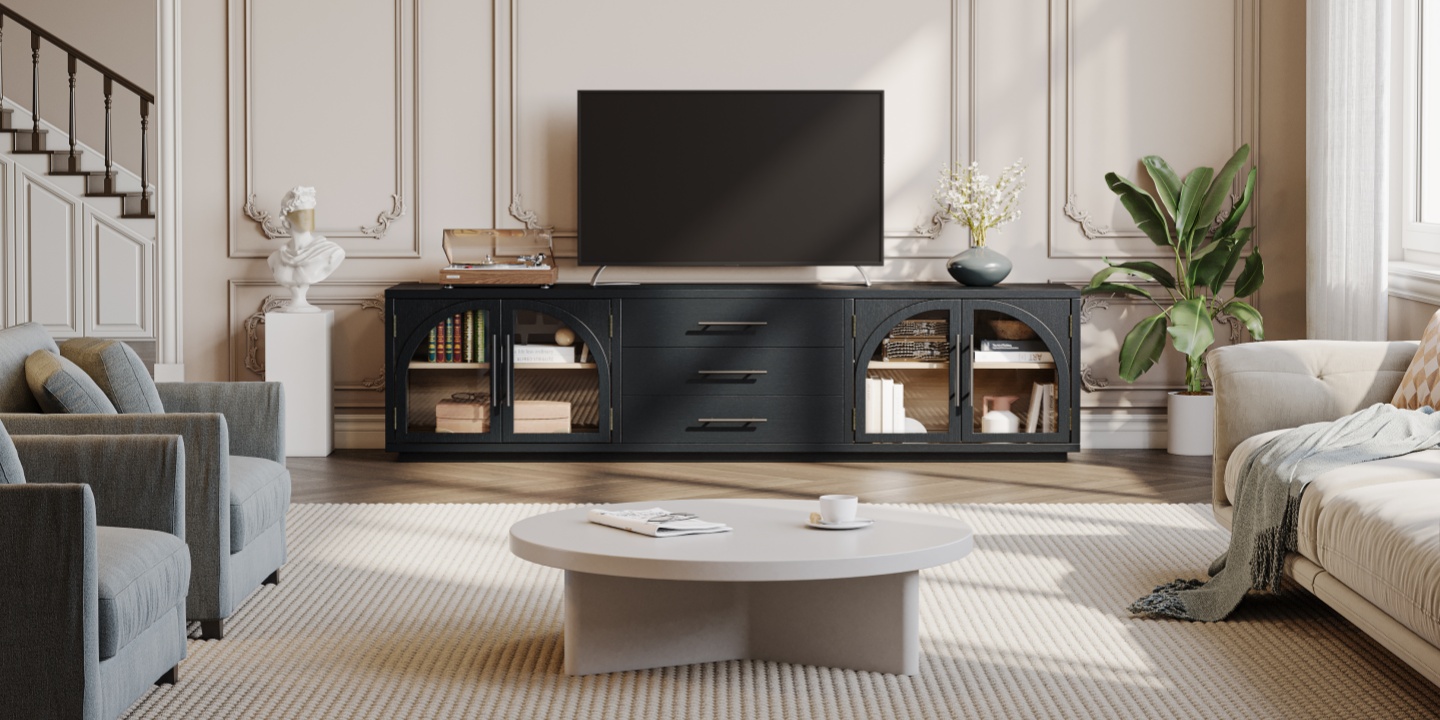
How to Measure Your TV Before Buying a Stand
Before choosing the right tv stand size, accurate measurements are the most important step. Many sizing mistakes happen because homeowners rely only on the TV screen size instead of checking the actual dimensions of the television and the entire entertainment setup. Taking a few minutes to measure correctly can help you avoid returns and create a safer, better-balanced living space.
Measure the actual TV width
Start by measuring the television from the left edge to the right edge—not diagonally. TV sizes are listed by diagonal screen measurements, so the number does not represent the actual width.
Knowing the real width helps you choose the correct tv stand dimensions and determine whether you need a standard console, a long tv stand, or a larger option.
Measure the stand/base width
Next, check how your TV sits on the furniture. Some televisions use a center pedestal base, while others have two feet positioned near the edges.
Measure the distance between the outer edges of the TV feet to ensure they fit completely on the stand surface. A TV may technically fit on a smaller console, but a wider large TV stand usually provides better stability and visual balance.
Account for soundbars and accessories
Your TV stand needs to support more than just the television. Consider additional items such as:
Soundbars
Gaming consoles
Streaming devices
Speakers
Decorative accessories
A properly planned tv stand size leaves enough surface area without making the setup feel crowded.
Leave enough side clearance
For the best appearance, experts typically recommend leaving around 3–6 inches of space on each side of the TV. This extra room improves proportion, creates a cleaner look, and allows flexibility if you upgrade to a larger screen later.
Choosing the right measurements before buying ensures your TV stand looks intentional and functions comfortably for everyday use.
What Size Should Your TV Stand Be?
The most common question homeowners ask is:
What size TV stand should I buy?
The answer depends on your television, room layout, and design preference. However, there are reliable rules that work for most homes.
The ideal rule (stand should be 6–12 inches wider than the TV)
The most widely recommended guideline is:
Your TV stand should be 6–12 inches wider than your television.
This means:
A 65-inch TV usually works best with a 70–78 inch stand.
A 75-inch TV often pairs well with a 78–84 inch stand.
An 85-inch TV typically looks better with an 84-inch or larger console.
This approach creates visual balance while providing practical benefits.
A wider stand:
Improves stability
Provides storage
Creates space for accessories
Makes the room feel more professionally designed
When following a tv stand size guide, this is the easiest rule for most shoppers to remember.
Minimum acceptable width
Sometimes homeowners have space limitations and cannot choose their ideal size.
In these cases, the minimum acceptable tv stand size depends on the television base.
A smaller stand may work if:
The TV base fits completely on the surface
The weight capacity is sufficient
The stand is stable
The room design still feels balanced
However, choosing the absolute minimum size is usually not recommended for large televisions.
For example, while a 60-inch stand might technically support some 65-inch TVs, many homeowners find that the proportions look too narrow.
This is especially noticeable with modern large-screen televisions.
Recommended width for best appearance
If aesthetics are important, choose a wider console.
Interior designers often prefer a TV stand that extends beyond the television because it creates a stronger horizontal line in the room.
A wider large TV stand can make a living room appear:
More organized
More spacious
More intentional
For open-concept homes, an oversized entertainment console can also help define the living area.
This is why many modern homes choose a long tv stand instead of a standard-sized media cabinet.
Extra-wide TV stands for modern interiors
Large televisions have changed how people think about entertainment furniture.
Years ago, smaller TV consoles were common because televisions were smaller. Today, 75-inch and 85-inch screens are increasingly popular, creating demand for wider furniture.
An extra-wide large TV stand works especially well in:
Large living rooms
Open floor plans
Home theaters
Entertainment walls
Many homeowners choose an 84 inch TV stand because it offers the ideal combination of size, storage, and flexibility.

What Size TV Stand for 65 Inch TV?
When homeowners search for what size tv stand for 65 inch tv, the answer depends on the television’s actual width, room size, and how much storage or display space you need. A 65-inch TV is one of the most common choices for living rooms, but choosing the wrong tv stand size can make the setup look unbalanced or limit functionality.
Actual width of a 65-inch TV
A 65-inch television is measured diagonally, not from side to side. Most 65-inch TVs are approximately 56–58 inches wide, depending on the frame design and speaker placement.
Understanding the real width is important because a TV stand does not need to match the screen size number. It needs to provide enough surface space and visual balance.
Recommended TV stand width
For most homes, a 70–78 inch TV stand is the ideal range for a 65-inch TV.
A wider stand provides extra space for speakers, decorations, and entertainment devices while creating a more polished appearance. Many interior professionals recommend choosing a stand that extends 6–12 inches beyond each side of the TV whenever possible.
Best long TV stand options
A long tv stand works especially well with a 65-inch television because it creates a wider horizontal line and improves room proportions. It is a practical choice for homeowners who need additional storage for media equipment, books, or décor.
Ideal room layouts
A 65-inch TV pairs well with:
Medium living rooms: 70–72 inch stands for balanced proportions
Large living rooms: 78 inches or wider for a more dramatic look
Open-concept spaces: Long consoles that help define the entertainment area
Choosing the right tv stand size ensures your 65-inch TV feels naturally integrated into your room rather than oversized or out of place.
What Size TV Stand for 75 Inch TV?
When homeowners search what size tv stand for 75 inch tv, the most common mistake is choosing a console based only on the TV screen number. A 75-inch television is large enough to become the focal point of a living room, so the right tv stand size should provide proper support, balanced proportions, and enough space for accessories.
How wide is a 75-inch TV?
A 75-inch TV is measured diagonally, not horizontally. Most 75-inch televisions are approximately 65–67 inches wide, depending on the bezel and frame design.
This means a 75-inch TV does not necessarily need a 75-inch stand. A wider console creates better visual balance and prevents the television from appearing too large for the furniture underneath.
Why 72-inch stands are the minimum
A 72-inch TV stand can work with some 75-inch televisions because it is slightly wider than the actual screen width. However, it leaves limited side clearance and may not provide enough room for soundbars, décor, or additional devices.
For homeowners with smaller spaces, a 72-inch console can be a practical solution, but it is considered the minimum option when choosing the right tv stand size for a 75-inch TV.
Why designers recommend an 84 inch TV stand
Many interior professionals recommend an 84 inch TV stand for 75-inch televisions because it creates a more proportional entertainment wall. The additional width improves stability, provides extra storage, and allows room for future upgrades.
For example, the Lira 84" Oak Media Console is designed to accommodate TVs up to 85 inches. Crafted with American solid oak, engineered wood, and oak veneers, it combines a durable structure with practical features such as four rear cable cutouts, adjustable shelves, soft-close drawers, and doors. Its wide design makes it suitable for homeowners looking for a stylish large TV stand that supports modern entertainment setups.
Best furniture layouts
A 75-inch TV works best with:
Large living rooms: An 84-inch console creates a balanced focal point.
Open-concept homes: A wider stand helps define the entertainment area.
Home theaters: Additional storage space keeps devices organized.
When deciding what size tv stand for 75 inch tv, consider the entire room—not just whether the television physically fits. A properly sized long tv stand can transform a simple TV setup into a complete entertainment centerpiece.
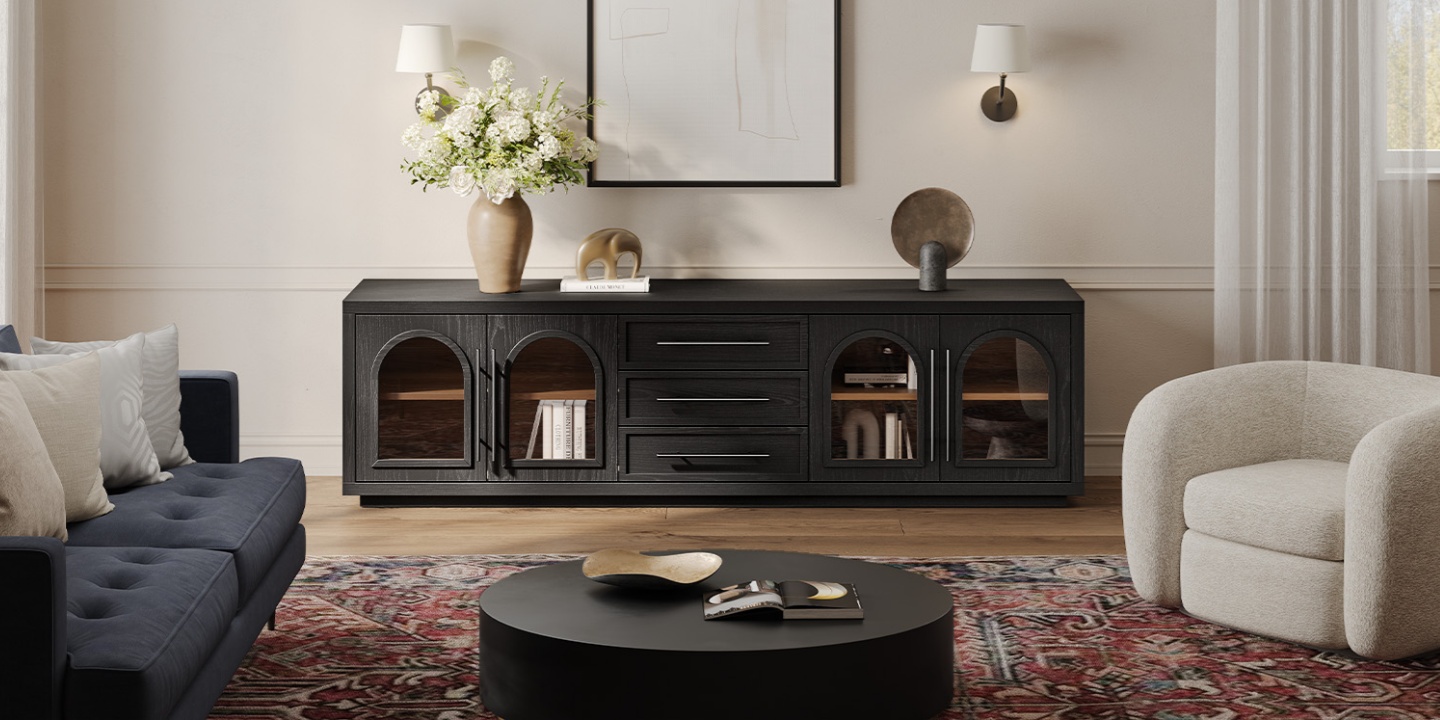
Will a 75 Inch TV Fit on a 72 Inch Stand?
A common question when choosing the right tv stand size is: Will a 75 inch TV fit on a 72 inch stand? The short answer is yes, but whether it is the best choice depends on your TV base, room layout, and design preferences.
Technically yes—but should you?
Most 75-inch TVs are approximately 65–67 inches wide, which means they can physically fit on a 72-inch stand. However, the available side space is limited.
A 72-inch console can work in smaller spaces, but it may not provide the ideal appearance or flexibility.
Safety considerations
When using a 72-inch stand, make sure the TV base sits completely on the surface and the stand can support the TV’s weight. Consider factors such as:
TV base width and placement
Stand weight capacity
Stability on the floor
Space for cables and accessories
A properly selected tv stand size reduces safety concerns and creates a more secure setup.
Visual balance
Although a 72-inch stand may fit, a larger long tv stand often looks better beneath a 75-inch TV. Extra width creates breathing room around the screen and prevents the television from visually overpowering the furniture.
When an 84 inch TV stand is the better option
An 84 inch TV stand is usually the preferred choice for homeowners who want better proportions, additional storage, and a more premium entertainment area. It works especially well in large living rooms, open layouts, and spaces where the TV is the main focal point. For long-term flexibility, choosing a larger large TV stand is often a smarter investment.
Is It Okay if the TV Stand Is Smaller Than the TV?
Another common concern when choosing tv stand size is whether the furniture can be narrower than the television.
The answer depends on the situation.
When it's acceptable
A smaller TV stand may be acceptable if:
The TV base fits securely
The stand has enough weight capacity
The television is stable
The setup does not look visually awkward
For example, some TVs have a center pedestal base, allowing them to sit safely on a narrower surface.
However, this is more about technical compatibility than ideal design.
Risks of using a smaller stand
A smaller stand can create several issues:
Reduced stability
A narrow surface provides less margin for error.
Limited accessory space
There may not be enough room for:
Soundbars
Speakers
Decorations
Poor visual proportion
The television may appear too large compared with the furniture.
When investing in a new large TV stand, most homeowners prefer choosing a size that complements the screen rather than simply accepting the minimum fit.
Stability vs aesthetics
The best tv stand size balances both safety and appearance.
A stand should not only hold the television—it should support the entire room design.
A wider long tv stand often creates a more sophisticated look because it adds horizontal balance beneath a large screen.
This is why many interior designers recommend going slightly larger rather than smaller.
Why an 84 Inch TV Stand Is Becoming the Most Popular Choice
Large-screen televisions have changed furniture trends.
Many homeowners now prefer an 84 inch TV stand because it provides the right combination of style, storage, and flexibility.
Better proportions for 75–85 inch TVs
The biggest advantage of an 84 inch TV stand is proportion.
A 75-inch television paired with an 84-inch console creates comfortable side spacing and a more balanced appearance.
Instead of making the TV look oversized, the furniture helps anchor it.
This is one reason the 84 inch TV stand frequently appears in modern living room designs.
Extra storage
Large entertainment setups require storage.
An 84-inch console can provide space for:
Streaming devices
Gaming systems
Controllers
Books
Blankets
Decorative accessories
A well-designed large TV stand keeps clutter hidden while maintaining a clean appearance.
Room symmetry
A wider console creates a stronger visual foundation.
In rooms with large walls, a small stand can leave empty areas that make the furniture arrangement feel incomplete.
An 84 inch TV stand helps create symmetry between:
Television
Furniture
Wall space
Decorative elements
Future-proofing your entertainment center
Technology changes quickly.
Many homeowners upgrade from:
55-inch TVs to 65-inch TVs
65-inch TVs to 75-inch TVs
75-inch TVs to larger screens
Choosing a slightly larger tv stand size today can prevent replacing furniture later.
A quality 84 inch TV stand gives you flexibility for future upgrades.
Choosing the Right TV Stand Based on Room Size
The perfect tv stand size depends heavily on your room.
A stand that looks perfect in a large home may overwhelm a small apartment.
Apartments
For apartments, focus on:
Efficient storage
Proper scale
Clean design
A compact long tv stand can provide enough width without making the room feel crowded.
Avoid oversized furniture that reduces walking space.
Living rooms
Most living rooms benefit from a balanced approach.
Consider:
TV size
Sofa distance
Wall width
Storage requirements
A properly sized large TV stand can become the centerpiece of the room.
Open-concept homes
Open layouts require furniture that defines spaces.
A wider console helps create a visual boundary between:
Living area
Dining area
Kitchen space
A long, low-profile design works especially well.
Home theaters
Home theaters require more planning.
Consider:
Equipment storage
Cable management
Speaker placement
Viewing height
A larger tv stand size is often beneficial because it provides room for multiple devices.
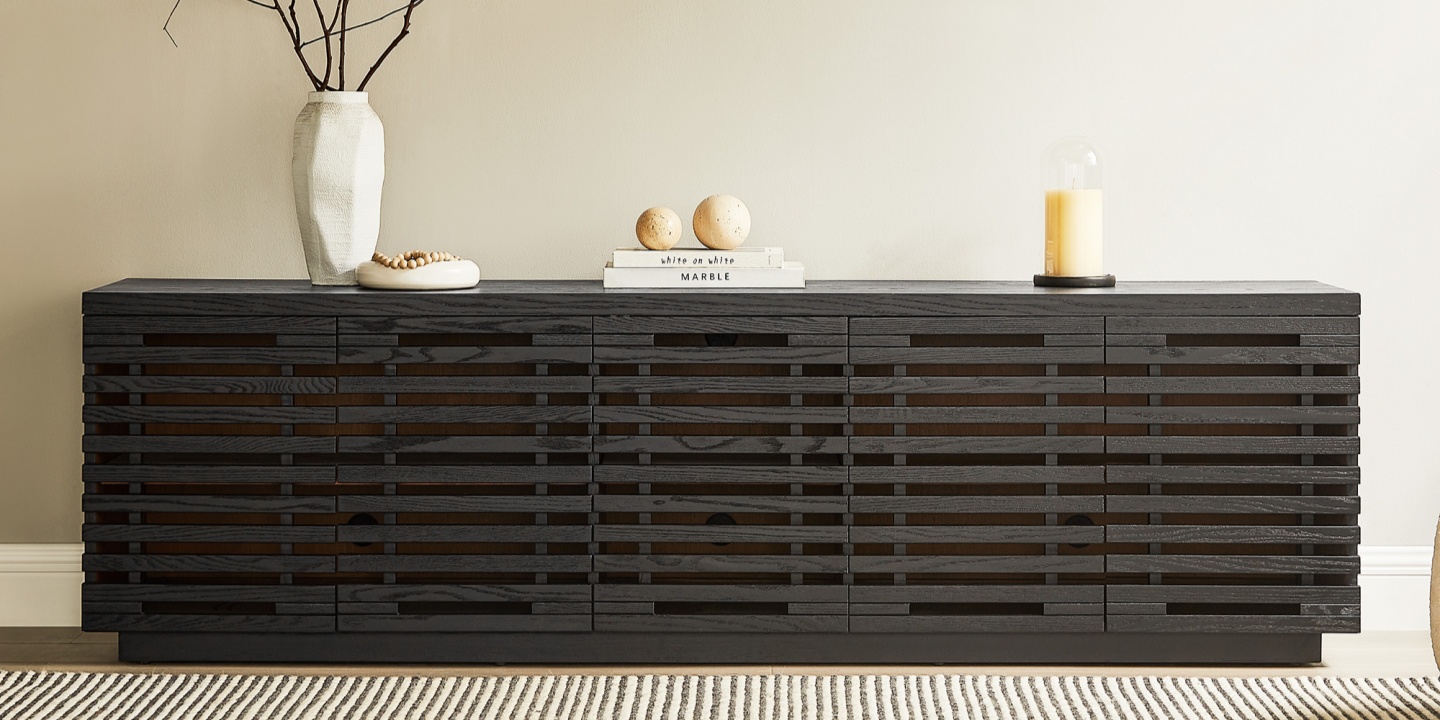
Additional Buying Considerations Beyond TV Stand Size
Choosing the correct tv stand size is important, but several other factors affect your final decision.
Weight capacity
Always check the stand’s weight rating.
A beautiful console is not useful if it cannot safely support your television.
Cable management
Modern entertainment setups often include multiple cables.
Look for features such as:
Cable openings
Rear access panels
Organized compartments
Good cable management keeps the area cleaner.
Storage needs
Think about your daily habits.
Do you need space for:
Gaming consoles?
Books?
Remote controls?
Media accessories?
A larger large TV stand may be worthwhile if storage matters.
Material durability
A TV stand is a long-term furniture purchase.
Consider:
Construction quality
Surface durability
Finish
Maintenance requirements
Viewing height
A correct tv stand size includes height, not only width.
The screen should be comfortable to view without forcing your neck upward.
Matching your interior style
Your TV stand should complement your home.
Consider:
Room color
Existing furniture
Design style
Overall atmosphere
A well-selected console can transform the entire entertainment area.
Common TV Stand Size Mistakes to Avoid
Choosing the right tv stand size seems simple, but many homeowners make mistakes that affect safety, comfort, and the overall look of their entertainment space. Understanding common sizing problems can help you select a stand that fits your TV today and works well in the future.
Buying based only on screen size
One of the most common mistakes is assuming a 65-inch TV needs a 65-inch stand or a 75-inch TV needs a 75-inch stand. TV sizes are measured diagonally, not by actual width.
For example:
Always check real measurements before choosing your tv stand size.
Ignoring actual TV width
Different televisions have different frame designs and base placements. A stand that looks suitable by screen size may not provide enough surface space for the TV feet.
Measuring the TV width and base position helps ensure a safer and more balanced setup.
Choosing insufficient depth
Many buyers focus only on width and forget about depth. Proper tv stand dimensions should allow space for TV legs, cables, gaming devices, and other accessories.
A shallow console may create installation issues or make cable management difficult.
Blocking ventilation
Entertainment devices generate heat, so avoid overcrowding shelves or cabinets. A well-designed large TV stand should provide airflow around electronics to support better performance.
Not planning for future TV upgrades
Technology changes quickly. Choosing a slightly larger long tv stand or an 84 inch TV stand can give you flexibility if you upgrade to a bigger screen later. Planning ahead helps you avoid replacing furniture unnecessarily.
Final Thoughts: Choosing the Right TV Stand Size Is About Balance
Finding the right tv stand size is not simply about matching numbers. It is about creating a safe, comfortable, and visually balanced entertainment space.
The most important points to remember:
Measure your actual TV width, not only the screen size.
Choose a stand 6–12 inches wider than your television whenever possible.
Consider tv stand dimensions, including height and depth.
A long tv stand works well for modern large-screen setups.
A large TV stand provides better storage and room balance.
An 84 inch TV stand is often ideal for 75-inch and larger televisions.
Always consider your room layout and future upgrades.
Whether you are deciding what size tv stand for 65 inch tv or researching what size tv stand for 75 inch tv, the right choice will make your television feel like part of the room—not just an object placed against the wall.
A carefully selected TV stand does more than hold your screen. It completes your living space.
Frequently Asked Questions
What size should your TV stand be?
The ideal tv stand size should usually be 6–12 inches wider than your TV. This creates better visual balance, improves stability, and provides enough space for accessories such as soundbars or décor.
For example:
When choosing a stand, always consider the actual TV width rather than only the screen size.
Will a 75 inch TV fit on a 72 inch stand?
Yes, a 75-inch TV can fit on a 72-inch stand in many cases. Most 75-inch TVs are around 65–67 inches wide, leaving a few inches of space on each side.
However, a 72-inch stand is considered the minimum option. For better proportions, more storage, and a more balanced appearance, many homeowners prefer an 84 inch TV stand.
Is it okay if the TV stand is smaller than the TV?
It can work in certain situations, but it is generally not recommended. A smaller stand may be acceptable if the TV base fits completely, the weight capacity is sufficient, and the setup remains stable.
However, a narrower stand can make the television look oversized and provide less space for accessories. A properly sized tv stand size should support both safety and room design.
Can a 60 inch TV stand fit a 65-inch TV?
Sometimes, but it depends on the TV base design. A 65-inch TV is typically around 56–58 inches wide, so it may physically fit on a 60-inch stand.
However, the extra clearance is limited. For better stability and aesthetics, a 70–78 inch TV stand is usually a better choice for a 65-inch television.
What size TV stand for 65 inch TV?
For a 65-inch TV, the recommended stand width is generally 70–78 inches.
A wider console provides enough side space, improves visual balance, and allows room for soundbars, gaming devices, and decorations.
When searching for what size tv stand for 65 inch tv, focus on actual TV dimensions, room size, and storage needs—not just the screen measurement.
What size TV stand for 75 inch TV?
For a 75-inch TV, most experts recommend a stand between 78 and 84+ inches wide.
An 84 inch TV stand is often considered an ideal option because it creates better proportions, provides additional storage, and supports future upgrades.
When deciding what size tv stand for 75 inch tv, measure your TV width and consider the overall wall space.
Where can I find a good TV stand for a 75-inch TV?
A good TV stand for a 75-inch TV should offer the right tv stand size, durable construction, practical storage, and enough space for modern entertainment setups. For most 75-inch televisions, a stand between 78 and 84 inches wide is recommended to create better proportions and provide room for soundbars, gaming consoles, and décor.
You can find well-designed options at Hernest. Options such as the Lira 84" Oak Media Console are designed to accommodate TVs up to 85 inches while providing features like cable management, adjustable shelves, and spacious storage.
Can I use a TV stand that is bigger than my TV?
Yes. In many cases, a larger stand is actually the preferred choice.
A wider long tv stand creates better visual balance, adds storage space, and prevents the TV from looking too large for the furniture underneath.
A larger console is especially useful if you plan to upgrade your television size in the future.
What is the ideal viewing height for a TV?
The ideal viewing height depends on your sofa height and seating position, but generally, the center of the TV screen should be close to eye level when seated.
For many living rooms, this means the center of the screen is approximately 42–48 inches from the floor.
When selecting tv stand dimensions, consider height as carefully as width to create a comfortable viewing experience.
Should I choose a wall-mounted TV or place it on a TV stand?
Both options have advantages.
A wall-mounted TV can save floor space and create a cleaner appearance, while a TV stand provides practical benefits such as:
Storage for media devices
Cable organization
Space for décor
A furniture element that anchors the room
Even with a mounted TV, a properly sized console underneath can improve room balance and complete the entertainment area.