Stuffed animals have a way of taking over a room one toy at a time. A few favorites become a basket, the basket becomes a shelf, and eventually plush toys end up on the bed, sofa, floor, and every spare corner.
Quick answer: The best stuffed animal storage system combines open storage for daily favorites with closed storage for overflow. Start by sorting the collection, then choose baskets, shelves, hammocks, cabinets, or storage furniture based on how many toys you actually keep.
The easiest fix is not always a bigger toy bin. A better system separates the toys your child uses every day from the ones that can stay out of sight. Keep daily favorites somewhere easy to reach, then use furniture, cabinets, drawers, or under-bed storage for the overflow.
The right setup depends on how many stuffed animals you have, where they are used, and how much space you can give them. Start with the collection itself, then choose the storage.
Table of Contents
- Start by Counting and Sorting the Collection
- Choose Stuffed Animal Storage by Collection Size
- Stuffed Animal Storage Ideas for Display
- Hide Stuffed Animals in Furniture You Already Need
- Stuffed Animal Storage Ideas for Small Bedrooms and Nurseries
- How to Store Stuffed Animals Long Term
- Build a Stuffed Animal Storage Routine That Sticks
- What to Avoid When Storing Stuffed Animals
- FAQs
- What is the best way to store a lot of stuffed animals?
- How do you store stuffed animals without them getting dusty?
- Is it better to display or hide stuffed animals?
- How many stuffed animals can you keep in one basket?
- Can you store stuffed animals in vacuum storage bags?
- What is the best way to store stuffed animals long term?
- How do you keep pests out of stored stuffed animals?
- Should you wash stuffed animals before storing them?
- Where should you not store stuffed animals?
Start by Counting and Sorting the Collection
Before buying baskets, bins, or furniture, gather all the stuffed animals in one place. It is much easier to choose the right storage when you can see the actual collection instead of estimating how much space it takes up.
Sort the plush into three groups.
Daily favorites
These are the stuffed animals your child sleeps with, carries around, or reaches for regularly. Keep these in open storage at a comfortable height.
A low shelf, basket, cubby, or open cabinet works well because the toys are easy to grab and easy to put away.
Occasional favorites
These are toys your child still recognizes and enjoys but does not use every day. They can move to a higher shelf, closed cabinet, or storage bin and rotate back into the active collection later.
Ready to move on
Some plush toys simply stop getting attention. If your child does not remember a toy or has not played with it for a long time, consider donating it, passing it to another child, or putting it aside for a later decision.
If you plan to donate stuffed animals, check the organization's current donation policy first. Some shelters, children's programs, and community groups accept gently used plush toys, while others only accept new items.
Keep what your family actually wants to store, then build the system around that collection.
Choose Stuffed Animal Storage by Collection Size
There is no single best stuffed animal organizer for every home. A small collection can live comfortably in one basket, while a large collection usually needs a combination of open and closed storage.
These are starting points rather than hard limits. A small room may need a more compact system even with a larger collection, while a playroom can handle more open display.
Choose storage based on how the toys are actually used.
Stuffed Animal Storage Ideas for Display
Open storage is a good choice when stuffed animals are part of the room rather than something you want completely hidden.
It also makes cleanup easier. When every plush has an obvious place, a child can put it away without opening several boxes or asking for help.
Use open shelving or a bookcase
Low, open shelves give stuffed animals a defined home without making the room feel like it is built around toy storage.
You can organize them by type, color, character, or simply by which ones your child reaches for most often. If the collection changes regularly, leave some space between groups so new favorites have somewhere to go.
A taller bookcase can also work in a shared bedroom or playroom, but keep safety in mind. Tall furniture should be properly anchored to the wall. The U.S. Consumer Product Safety Commission's furniture safety guidance recommends anchoring furniture that could tip, particularly when children are present.
For everyday plush, open shelving is usually more practical than a cabinet with doors because children can see and reach everything without opening and closing furniture.
Turn a display cabinet into grown-up storage
Not every stuffed animal needs to live in a children's basket.
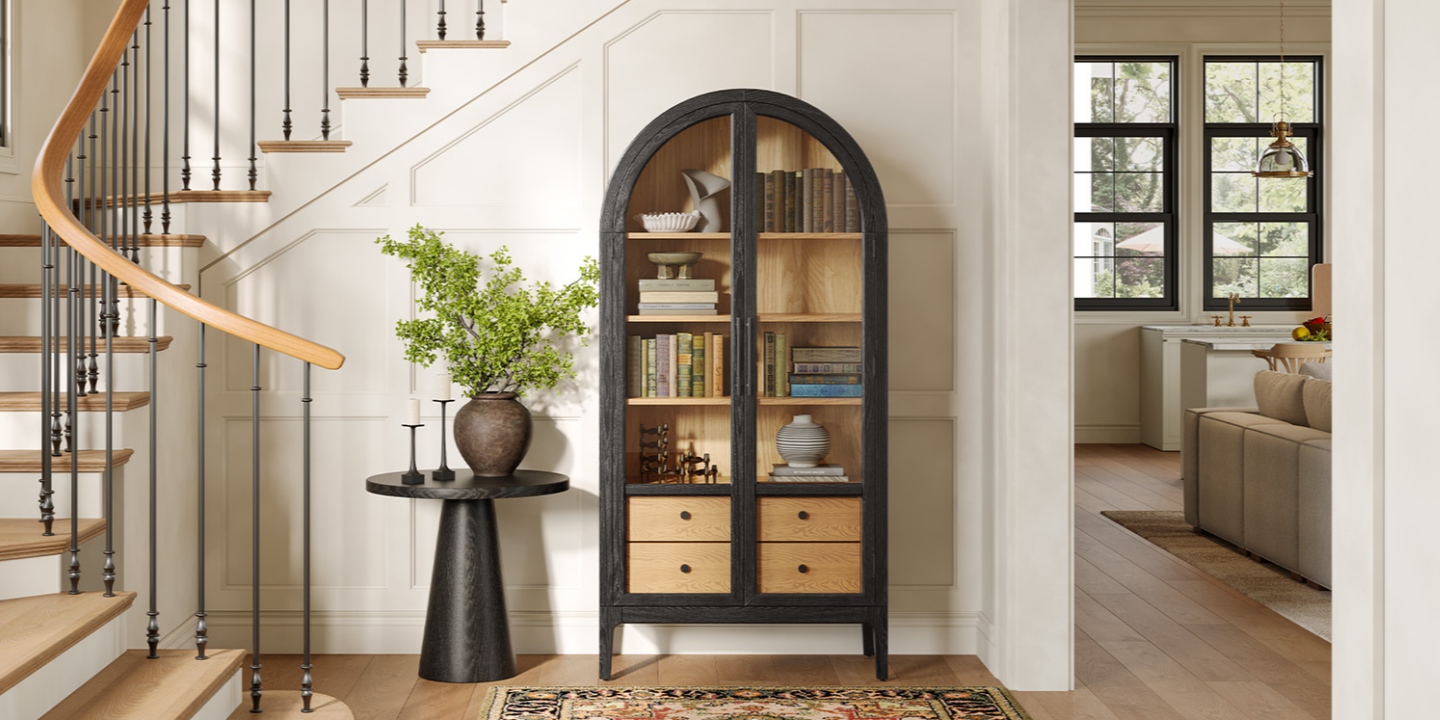
If plush toys are spilling into the living room, a cabinet can give the collection a more intentional place while still keeping some favorites visible. Open shelving can hold the plush your family wants to display, while drawers or closed sections can store smaller or sentimental pieces.
The Valborg 36" Oak Cabinet is one example of this approach. Its closed shelving works for display, while the drawers provide closed storage for smaller items. The oak finish and arched detailing also make it easier to use the piece as regular living-room furniture rather than dedicated toy storage.
If you choose a tall cabinet for a room where children play, install the included anti-tip hardware and follow the manufacturer's instructions.
Try a corner hammock or stuffed animal zoo
A corner hammock is one of the simplest ways to get plush toys off a bed or floor without taking up much floor space.
It works particularly well for medium-sized collections where the toys are still used regularly. If the hammock is packed too tightly or mounted too high, younger children may struggle to retrieve their favorites.
A stuffed animal zoo is another option. These usually use a simple frame with elastic cords across the front, allowing children to pull individual toys out without emptying the entire container.
If you build one yourself, smooth and finish any exposed wood edges and secure the frame properly to the wall. For heavier collections, use appropriate mounting hardware and follow the load rating of the wall and hardware.
Hide Stuffed Animals in Furniture You Already Need
For larger collections, stuffed animal storage furniture can be more useful than adding another toy bin to the room.
Furniture with built-in storage can absorb the overflow without adding another large organizer to the room. That matters when the living room needs to serve several purposes at once.
Use a lift-top coffee table
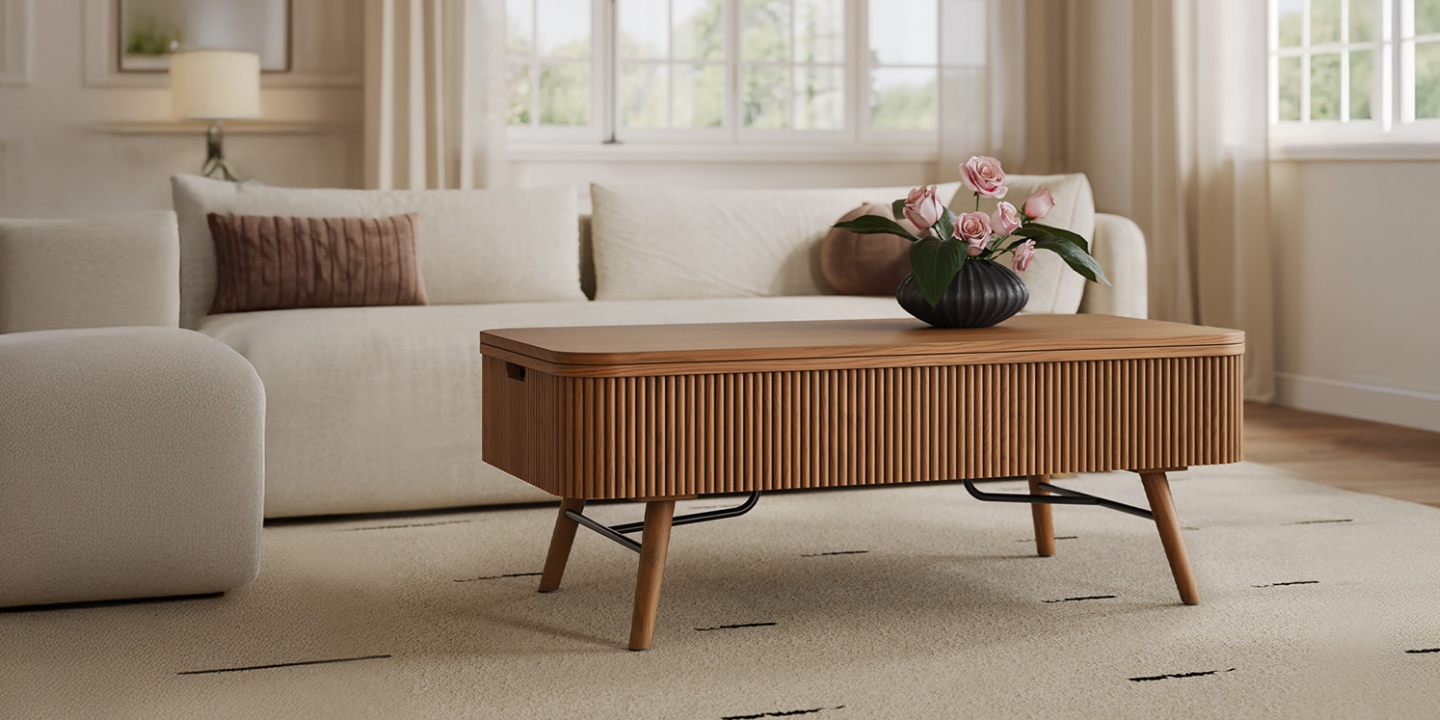
A lift-top coffee table can hide smaller stuffed animals while also serving its normal purpose as a coffee table.
The Magnus 47" Lift-Top Oak Coffee Table is a useful example. Its lift-top compartment creates concealed storage in the center of the room, while the drawers provide additional space for smaller household items.
For stuffed animal storage, use the hidden compartment for the plush that tend to migrate into the living room during the day. When guests arrive, the toys can disappear without requiring a separate toy chest.
Leave enough room for the lift-top mechanism to open comfortably rather than filling the compartment to the top.
Use the media console for overflow
The space under a TV is often one of the largest pieces of unused storage potential in a living room.
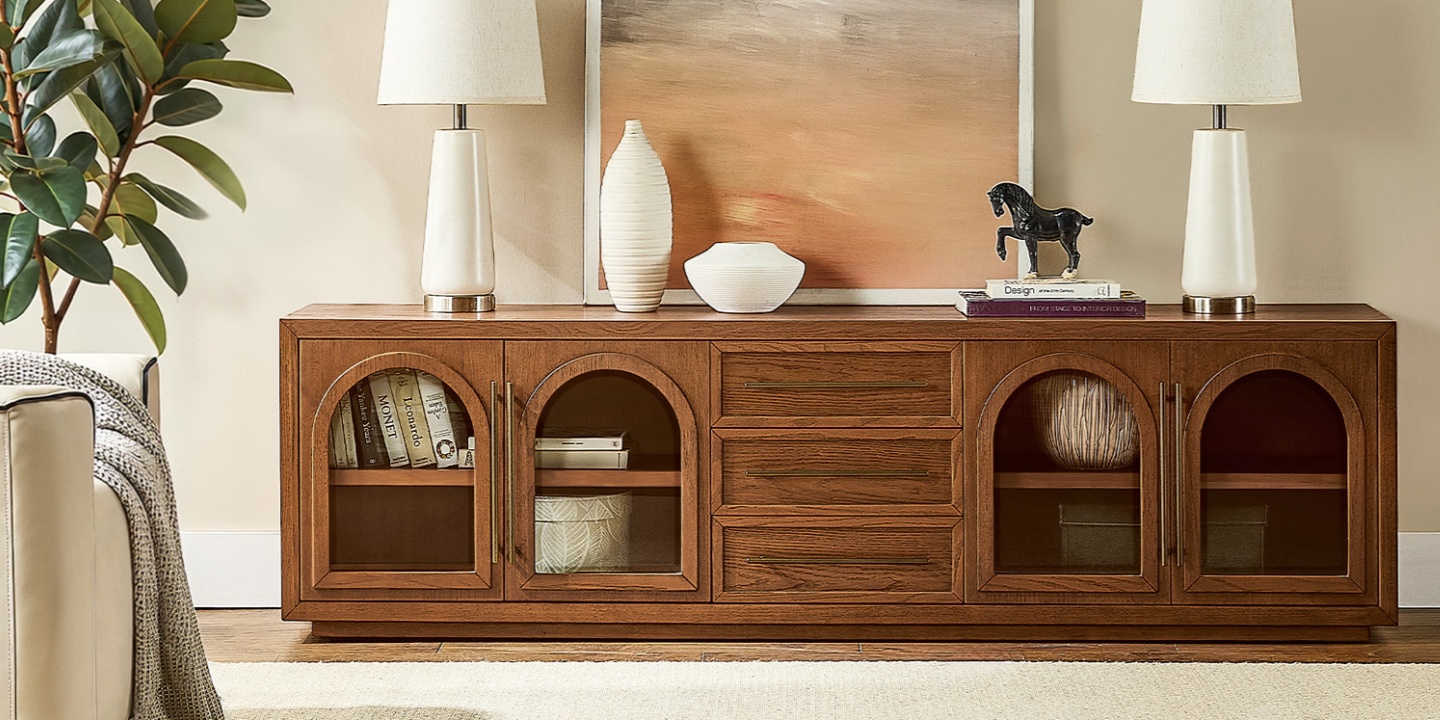
A media console with closed cabinets or drawers can hold stuffed animals that are not part of the daily rotation. It is especially useful for larger collections because the storage disappears behind furniture doors.
At 84 inches wide, the Lira 84" Oak Media Console works best on a larger TV wall and provides closed cabinet and drawer storage beneath the screen. For a family with a substantial plush collection, this type of furniture can take the place of a separate toy-storage unit while keeping the room visually cleaner.
Before using a media console for toy storage, check the product's actual dimensions and weight limits, and follow the TV installation and furniture anchoring requirements.
Stuffed Animal Storage Ideas for Small Bedrooms and Nurseries
A small bedroom does not have much room for another bulky storage unit. Instead of adding more furniture, look for storage opportunities that are already part of the room.
Give a bedside table a second job
A small side table can provide a home for one or two bedtime favorites without taking up much floor space.
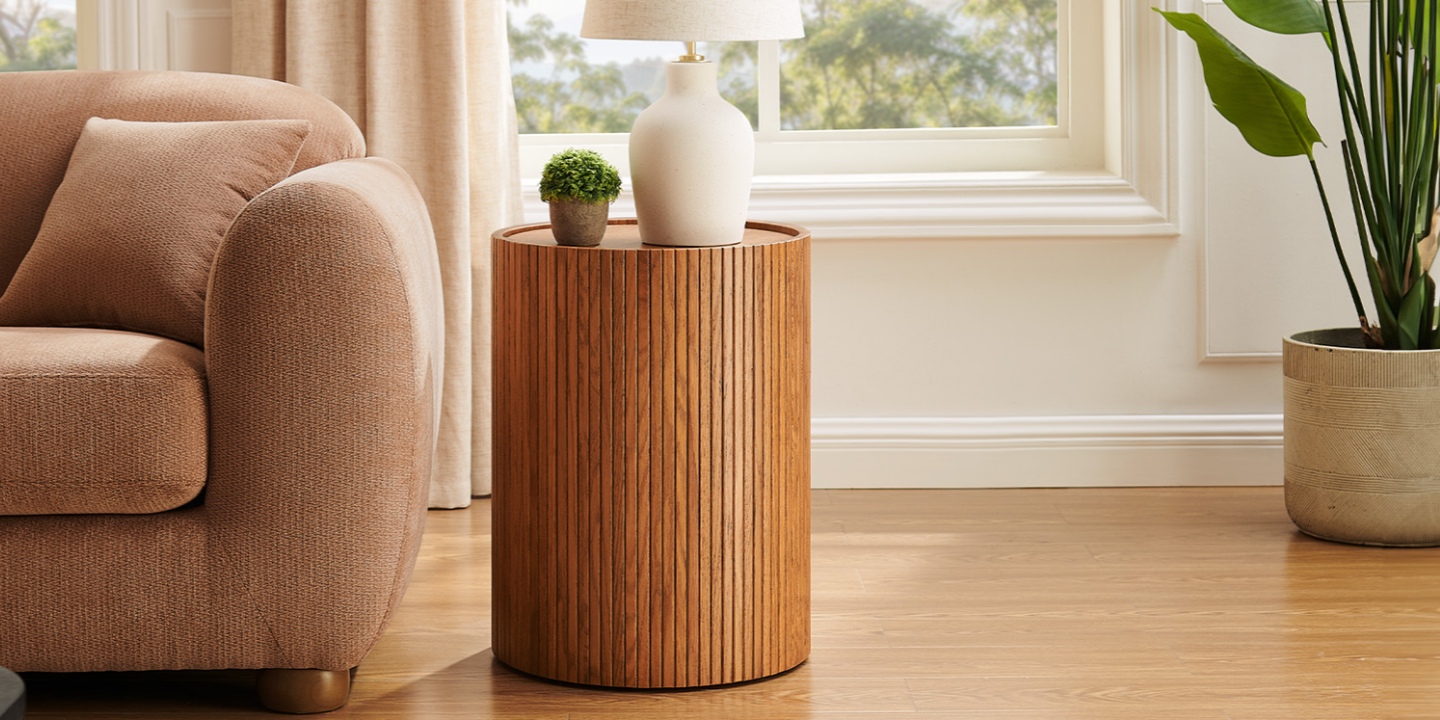
The Elliot 16" Solid Oak Side Table combines a compact footprint with concealed storage and open shelving. The open section can hold a book and a couple of plush toys, while the hidden compartment keeps smaller items out of sight.
Because it is not designed as children's furniture, it can also move with the room as the child gets older. That makes it more useful than a piece that only works during the nursery years.
Use the back of the door
The back of a bedroom or closet door is easy to overlook.
A hanging organizer with clear pockets can hold smaller stuffed animals without taking up floor space. It also keeps the toys visible, which is useful when children want to choose one without emptying a box.
Check the organizer's weight limit and make sure the door can open and close normally once it is loaded.
Make use of the space under the bed
Under-bed storage works well for stuffed animals that are out of the daily rotation.
Use rolling bins or low-profile containers that are easy to pull out. Keep the toys you want your child to access frequently somewhere easier to reach, and reserve under-bed storage for seasonal rotation, keepsakes, or less frequently used plush.
Clear or labeled containers make this system easier to maintain because you can see what is inside without pulling every bin into the room.
How to Store Stuffed Animals Long Term
Daily stuffed animal storage is mostly about organization. Long-term storage is different because fabric, stuffing, seams, and color can deteriorate if the environment is poor.
Wash and dry plush completely
Clean any stuffed animal before putting it into long-term storage, following the care instructions on the toy.
Most importantly, make sure it is completely dry before placing it in a closed container. Trapped moisture can lead to unpleasant odors, mold growth, and fabric damage over time.
If a plush toy cannot go through a washing machine, spot-clean or hand-wash it according to the manufacturer's instructions and allow it to dry thoroughly before storing it.
Keep plush away from direct sunlight
Direct sunlight can fade fabric over time.
For long-term storage, choose a cool, dry, low-light location instead of a sunny window, attic, garage, or damp basement. A bedroom closet, interior cabinet, or dry under-bed area is usually a better choice.
Protect against dust and pests
Closed cabinets and clean storage bins reduce dust and make it easier to check the condition of the collection.
Instead of relying on scented products to control pests, focus on keeping the storage area clean and dry and inspecting stored plush periodically. If you use cedar products or other pest-deterrent products, follow the product's instructions and keep anything unsuitable for children out of their reach.
For valuable or sentimental stuffed animals, breathable protective storage is preferable to simply compressing everything into the smallest possible container.
Be careful with vacuum storage bags
Vacuum bags can reduce the volume of soft items, making them useful when closet space is limited.
However, compression changes the shape and loft of plush toys. That makes vacuum bags better suited to occasional or long-term storage than to stuffed animals that a child uses every day.
For sentimental pieces that need to be stored for years, consider whether preserving their original shape is more important than saving a little space.
Build a Stuffed Animal Storage Routine That Sticks
The best organizer will not solve the problem if putting toys away takes too much effort.
Keep the routine simple:
Put daily favorites at a child's reachable height.
Give each group a clear storage location.
Label bins when several children share the same space.
Return plush to storage at the same time each day, such as before bedtime.
Rotate less-used toys instead of letting the active collection grow indefinitely.
When the main basket or shelf is full, decide what should leave before adding more storage.
A simple one-in, one-out rule can also help. When a new stuffed animal comes home, your child chooses whether an older one should move out of the active collection.
A good system does not need to keep the room perfect. It just needs to make cleanup quick enough that everyone will actually do it.
What to Avoid When Storing Stuffed Animals
Some storage methods look convenient but create problems later.
Avoid damp or unstable storage areas
Attics, garages, and basements can experience larger temperature and humidity changes than the main living areas of a home. Unless the space is properly climate controlled, it is generally better to store fabric items somewhere more stable.
Don't overload hammocks or shelves
Every storage product has a practical load limit. Overloading a hammock can make it sag, while a packed shelf becomes difficult for children to use and can make furniture less stable.
Leave enough space for individual toys to be removed without pulling the entire collection down.
Keep plush away from direct sun
If stuffed animals are displayed on open shelves, avoid placing them directly in strong sunlight for long periods. Rotating the collection can also help limit prolonged exposure.
Don't leave tall furniture unanchored
A bookcase or cabinet loaded with stuffed animals can still pose a tip-over risk. Anchor tall furniture according to the manufacturer's instructions, particularly in rooms used by children.
Don't compress everything just to make it fit
Storage should make the collection easier to live with, not simply make it disappear.
If a bin is so full that you have to pull everything out to find one toy, the system is too full. Separate everyday favorites from the rest and give each group a more appropriate home.
FAQs
What is the best way to store a lot of stuffed animals?
The best stuffed animal storage system combines open storage for daily favorites with closed storage for overflow. Keep everyday plush on low shelves, in baskets, or in a hammock where children can reach them. Store the rest in cabinets, drawers, under-bed bins, or other closed furniture.
How do you store stuffed animals without them getting dusty?
Closed cabinets, drawers, and lidded storage bins provide the simplest protection from dust. For plush displayed on open shelves, use a soft brush or lint roller periodically and rotate the collection so individual toys do not sit untouched for long periods.
Is it better to display or hide stuffed animals?
Use both. Display the stuffed animals your child plays with regularly, and hide the overflow or sentimental pieces in closed storage. This keeps favorites accessible while preventing the room from becoming visually crowded.
How many stuffed animals can you keep in one basket?
There is no universal number because plush toys vary widely in size. A better rule is to stop when the basket becomes difficult to access or toys spill onto the floor. If your child has to empty the entire basket to find one favorite, it is time to divide the collection.
Can you store stuffed animals in vacuum storage bags?
Yes, vacuum bags can work for occasional or long-term storage when the toys are clean and completely dry. They are less suitable for daily favorites because compression reduces the toys' loft and can change their shape.
What is the best way to store stuffed animals long term?
Clean and fully dry the toys first, then keep them in a clean, dry, low-light location. Avoid prolonged direct sunlight and unstable areas such as damp basements or unconditioned garages. For sentimental pieces, avoid unnecessary compression.
How do you keep pests out of stored stuffed animals?
Keep the storage area clean and dry, avoid storing plush near food, and inspect stored toys periodically. Closed containers can reduce dust and exposure to pests, but regular inspection is still important for long-term storage.
Should you wash stuffed animals before storing them?
Yes, if the care instructions allow it. Clean the toy according to its label and let it dry completely before placing it in a closed container. Any remaining moisture can create odor and fabric problems during storage.
Where should you not store stuffed animals?
Avoid places with unstable temperature or humidity, such as unconditioned attics, garages, and damp basements. Direct sunlight can also fade fabric. A clean, dry indoor closet, cabinet, or other stable storage area is usually a better choice.