



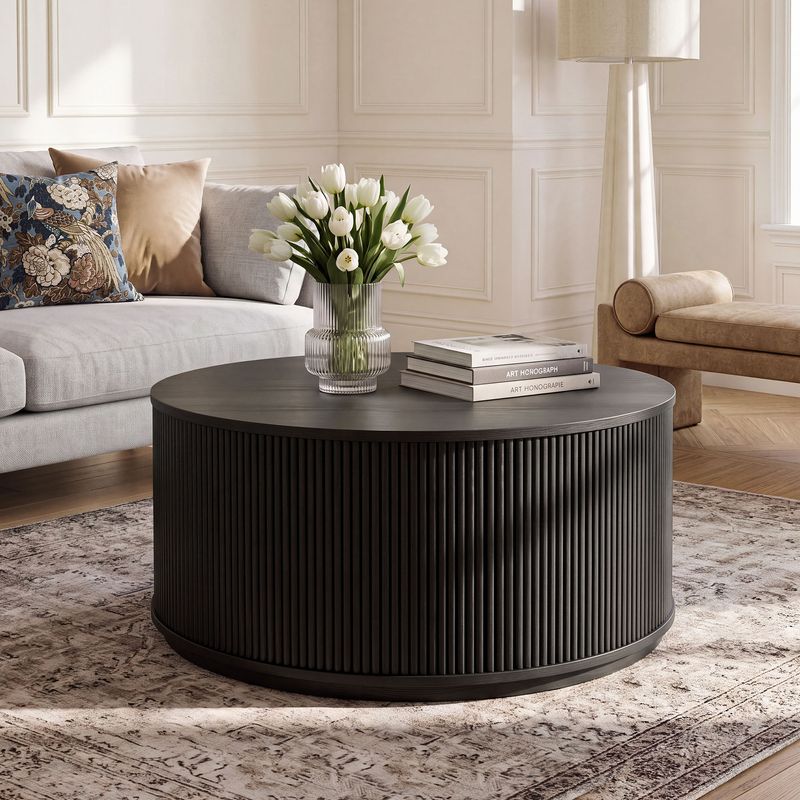
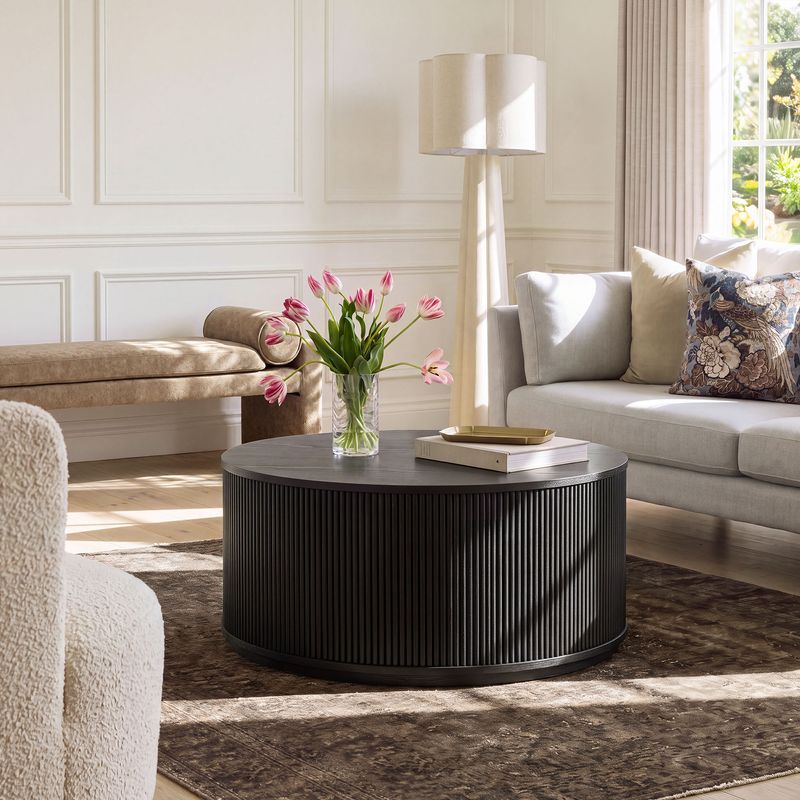


Find the Right Round Coffee Table for Your Living Room
A round coffee table brings a softer shape to the living room while providing a central surface for drinks, books, and everyday essentials. Its curved outline contrasts with the straight edges of sofas, media consoles, and rectangular rugs, helping a seating area feel more balanced. It can work equally well in a compact conversation area or a larger living room anchored by a sectional.
Choosing the right table involves more than picking a shape you like. Diameter, height, material, base design, and storage all affect how comfortably it fits your space. A round oak coffee table adds natural warmth, a burl wood design introduces distinctive grain, and a marble top creates a more polished focal point.
Hernest offers round coffee tables in different materials and designs to suit a range of living room needs. Compare the styles below to find a table that complements your seating, fits your room, and works with the way you live.
Read More
Why Choose Round Coffee Tables?
A Softer Shape for Different Living Room Styles
The curved outline of a round coffee table provides a visual counterpoint to the straight lines found in many sofas, cabinets, and architectural details. It can soften a room with a large sectional or balance a layout built around rectangular furniture.
A circular tabletop also creates a natural center for a seating arrangement. Sofas and chairs can face toward it from different angles, making the space feel connected without requiring every seat to line up along the same axis.
A Practical Option for Shared Seating Areas
Because a round table has no projecting corners, people can approach it from different sides without navigating around sharp edges. This can be useful in conversation areas where several seats surround one central surface.
The shape alone, however, does not determine how much room a table needs. A wide tabletop or substantial pedestal can still occupy considerable floor space. Measure the available area and consider the base as well as the diameter before making a decision.
Explore Round Coffee Tables by Material and Design
Material has a direct effect on the look and care requirements of a coffee table. Hernest's designs offer three distinct directions: the warmth and functionality of oak, the expressive pattern of burl wood, and the natural variation of Carrara marble.
Round Wood Coffee Tables: Warmth and Everyday Function
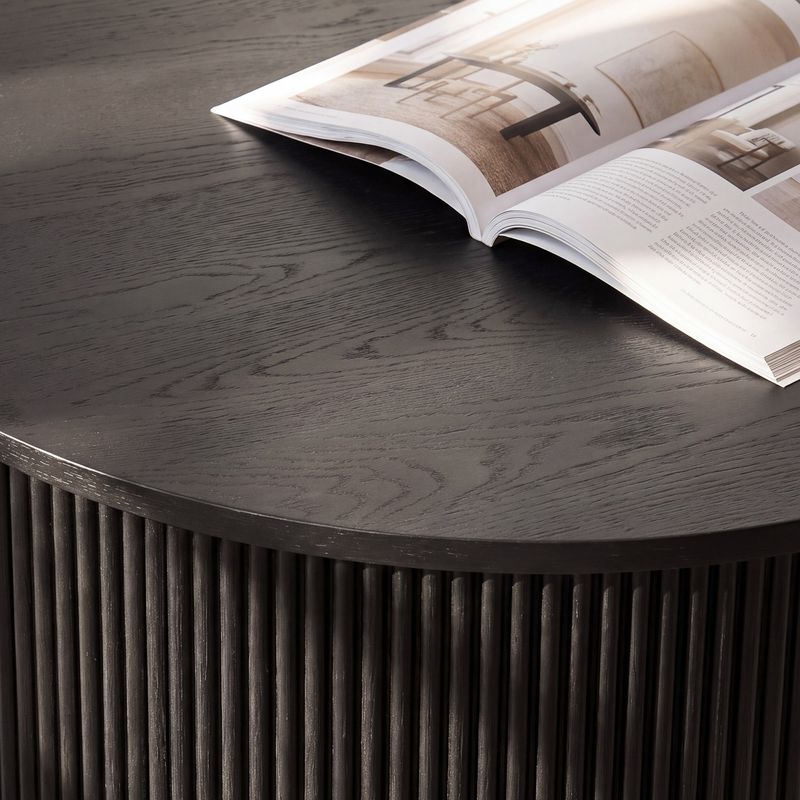
A round wood coffee table is a versatile choice for living rooms with upholstered seating, natural textures, or other wood furniture. Its grain adds visual warmth, while the material can create a cohesive connection with flooring, shelving, and side tables.
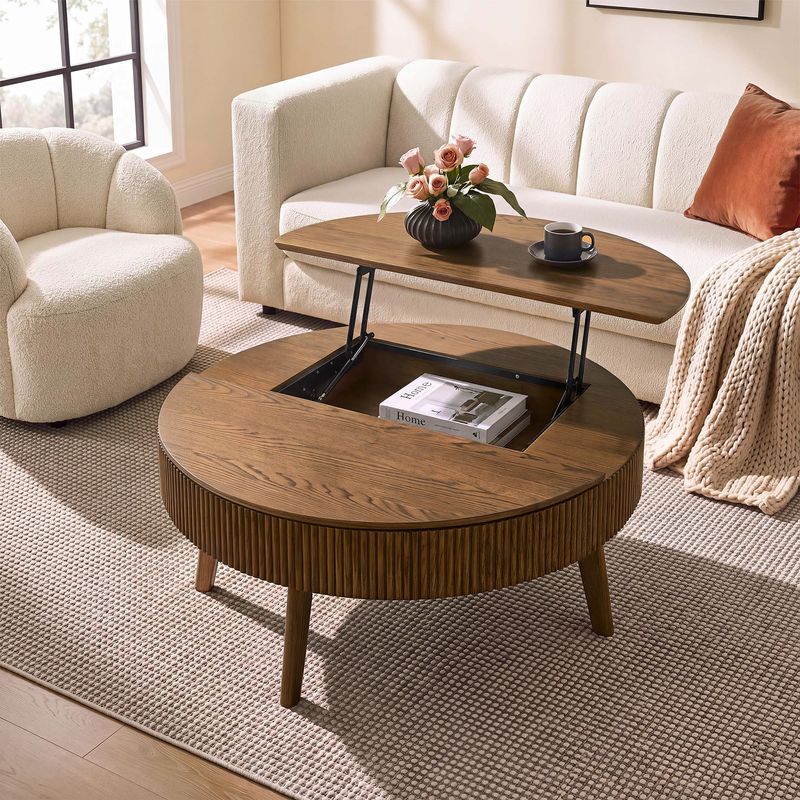
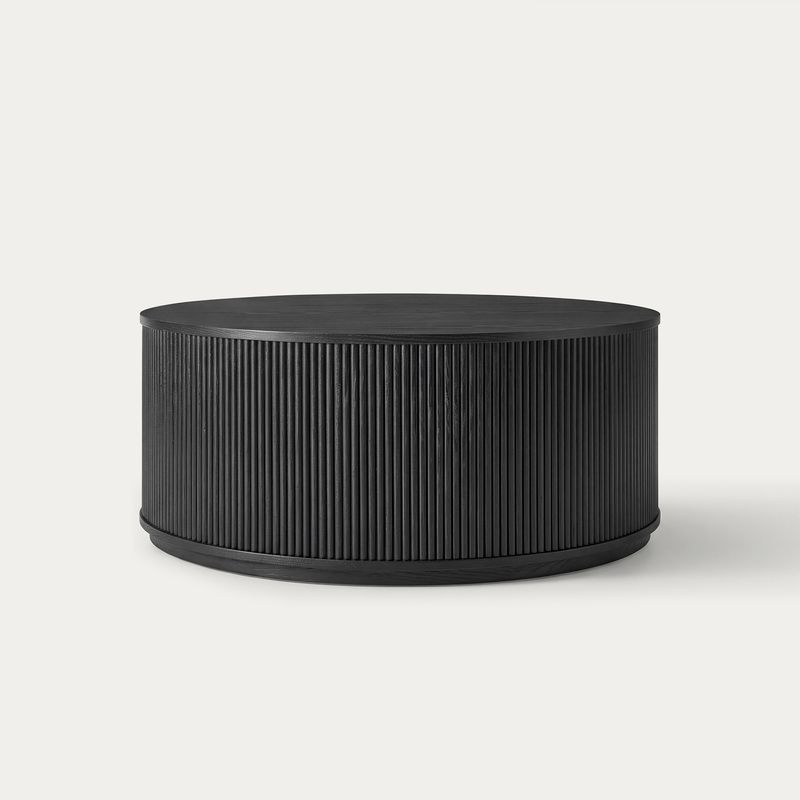
For a combination of wood character and practical features, consider the Magnus 39-Inch Lift-Top Oak Coffee Table. Made with American solid oak, rubberwood, and engineered wood with oak veneers, it features tapered solid oak legs and fluted detailing around its circular form.
Magnus is particularly useful when the coffee table needs to do more than hold drinks and decorative objects. Its lift-top surface rises to 25.5 inches, creating a more convenient position for working on a laptop, reading, or having a casual meal from the sofa. Concealed compartments beneath the top provide separate spaces for items such as remotes and coasters.
Measuring 39.4 inches in diameter, the table has a recommended weight capacity of 100 lbs. It is worth considering if you want a round oak coffee table with a combination of natural wood details, accessible storage, and a flexible tabletop.
Burl Wood Coffee Tables: Distinctive Grain and Visual Depth
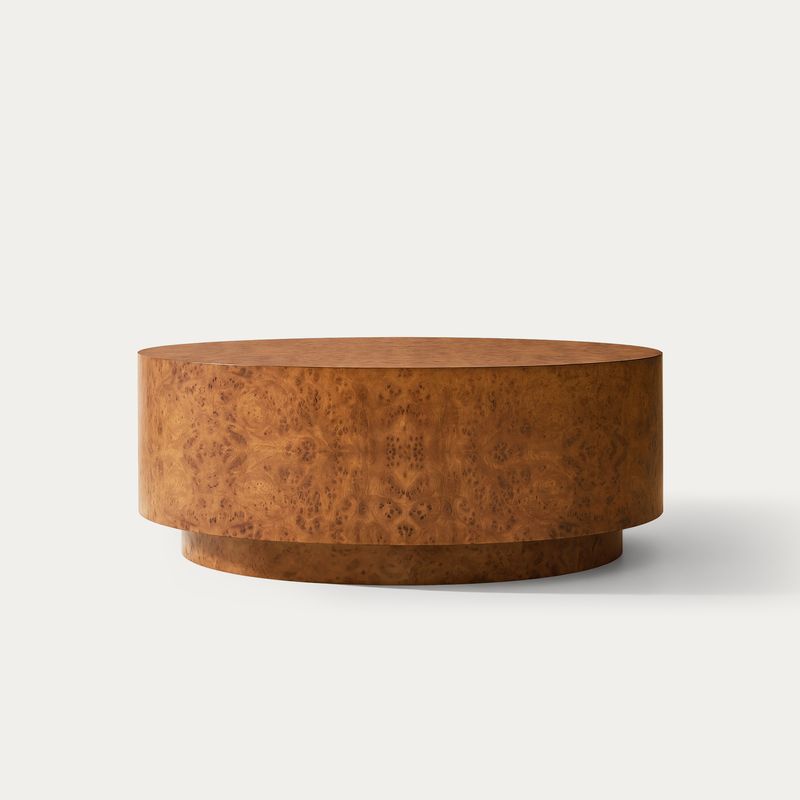
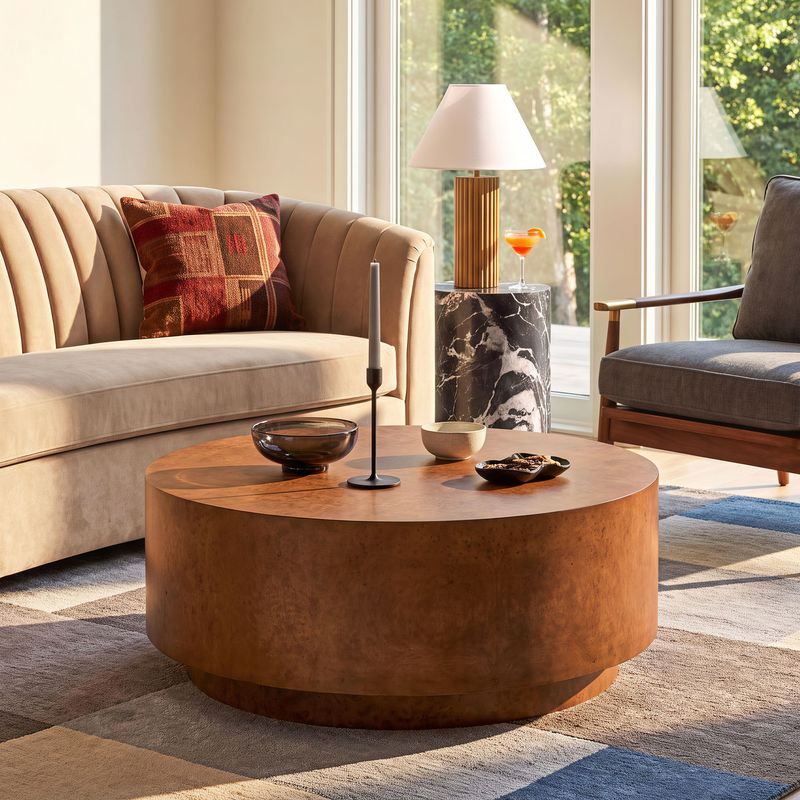
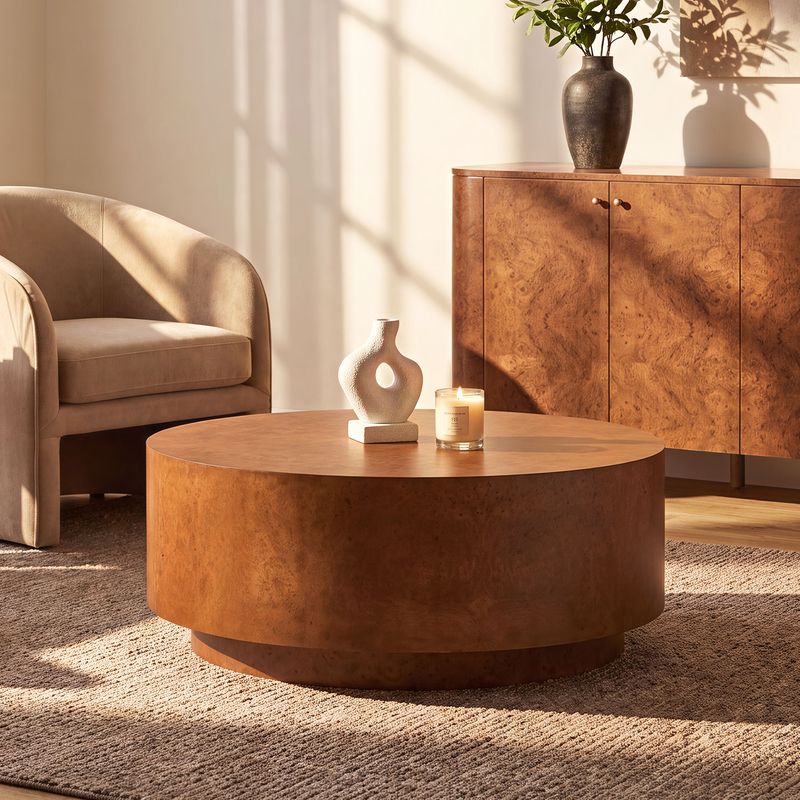
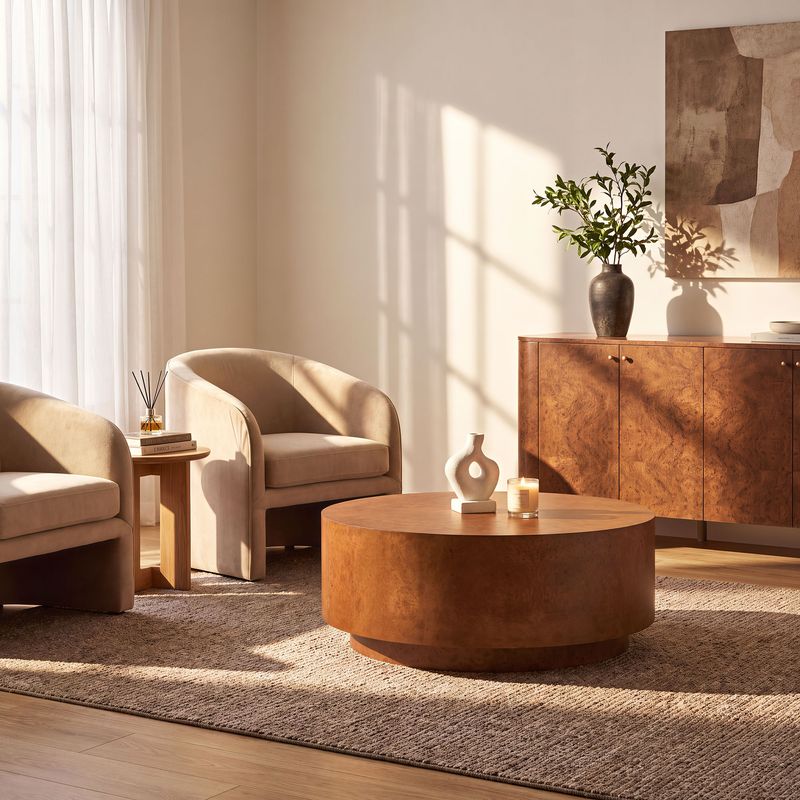
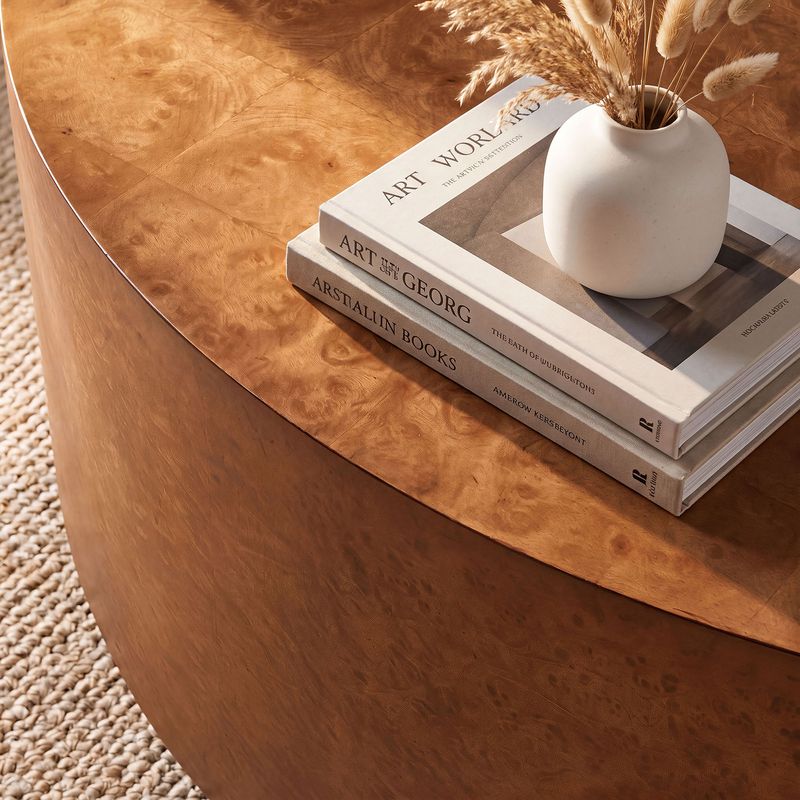
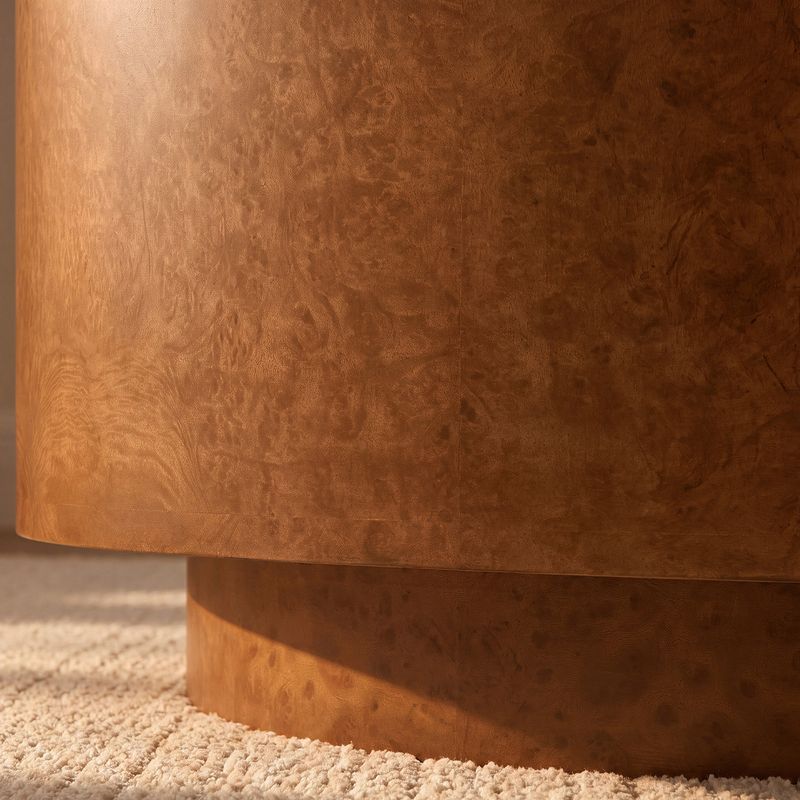
Burl wood stands out for its irregular grain patterns and varied markings. Instead of a uniform wood appearance, burl veneers create a more expressive surface, making them a good choice when the coffee table is intended to draw attention.
The Colle 42-Inch Burl Coffee Table combines rubber wood and engineered wood with American walnut burl and ash wood burl veneers. Its paneled surface brings together different grain patterns and tonal variations, while a sculptural cross-shaped pedestal gives the round tabletop a distinctive foundation.
At 42 inches in diameter and 18 inches high, Colle has a substantial presence in the seating area. Its recommended weight capacity is 230 lbs. Choose this design if you prefer a coffee table with expressive wood patterning and a more sculptural silhouette rather than a quieter, uniform finish.
Marble Round Coffee Tables: A Refined Focal Point
A marble round coffee table introduces natural stone variation and a polished surface to the living room. The stone's visual character contrasts with upholstered seating and wood finishes, making it a natural focal point in a more restrained furniture arrangement.
The Armonia 41-Inch Carrara Marble Coffee Table pairs a Carrara marble surface with wood elements. Its circular profile balances the visual presence of the stone, while the combination of materials gives it a different character from an all-wood design.
Marble is a natural material, so its appearance may include variations in veining and tone. It also needs appropriate care: use coasters, wipe spills promptly, and follow the product's care instructions. Armonia is worth considering if you want the natural character of stone to take a more prominent role in your living room.
Round Coffee Tables with Storage: Keep Essentials Close
If remotes, coasters, books, and other small items tend to collect on your tabletop, a coffee table with storage can help keep the seating area organized. Concealed compartments provide a place for everyday essentials without requiring another cabinet or leaving everything in view.
A lift-top design adds another use to the table. Raising the surface can bring it closer to a comfortable working or dining position while creating access to storage underneath. The Magnus 39-Inch Lift-Top Oak Coffee Table combines these functions in a round design, making it a practical option for a living room used for work, meals, and relaxation.
Before choosing a storage coffee table, think about what you plan to keep inside and how often you will need to reach it. If you also need room for electronics and larger household items, Hernest's media consoles can provide additional living room storage.
How to Choose the Right Round Coffee Table Size
The best diameter and height depend on your sofa, the available floor space, and how people move around the seating area. A table should be easy to reach without making the room feel crowded.
Choose a Diameter That Fits Your Sofa
A useful starting point is to look for a coffee table around two-thirds the length of your sofa. This is a general design guideline, not a fixed requirement. The right proportion also depends on sofa depth, the number of seats, and the space available in front of them.
For a sectional, measure the main seating area and consider how far the table will extend toward the open side. A table that is too wide may interfere with movement, while one that is too small can feel disconnected from the seating.
Compare the Table Height with Your Sofa
A coffee table is generally most comfortable when its surface is close to the sofa seat height or slightly lower. This makes drinks and other essentials easier to reach without leaning too far forward.
Measure your sofa seat before choosing a table. If you are considering a lift-top model, check both its standard height and its raised height to make sure the extended surface will work for your intended activities.
Leave Enough Clearance for Movement
Allow enough space between the coffee table and surrounding seating for people to sit down, stand up, and move through the room. Around 18 inches is a commonly used starting point, although the ideal distance depends on the furniture and the layout.
How to Choose a Round Coffee Table Base
The base influences a table's visual weight, stability, and the amount of open space beneath it. Consider how its shape relates to the tabletop and the seating around it.
Pedestal Bases
A pedestal base supports the tabletop from a central point, leaving the perimeter more open. This can make it easier to arrange chairs around the table without working around several legs. It is a useful option for seating areas where people approach the table from different directions.
Four-Leg Bases
Four-leg designs offer a familiar furniture silhouette. Slim or tapered legs can keep the table looking relatively open, while their placement affects how easily people can approach the tabletop from different seats.
Sculptural Bases
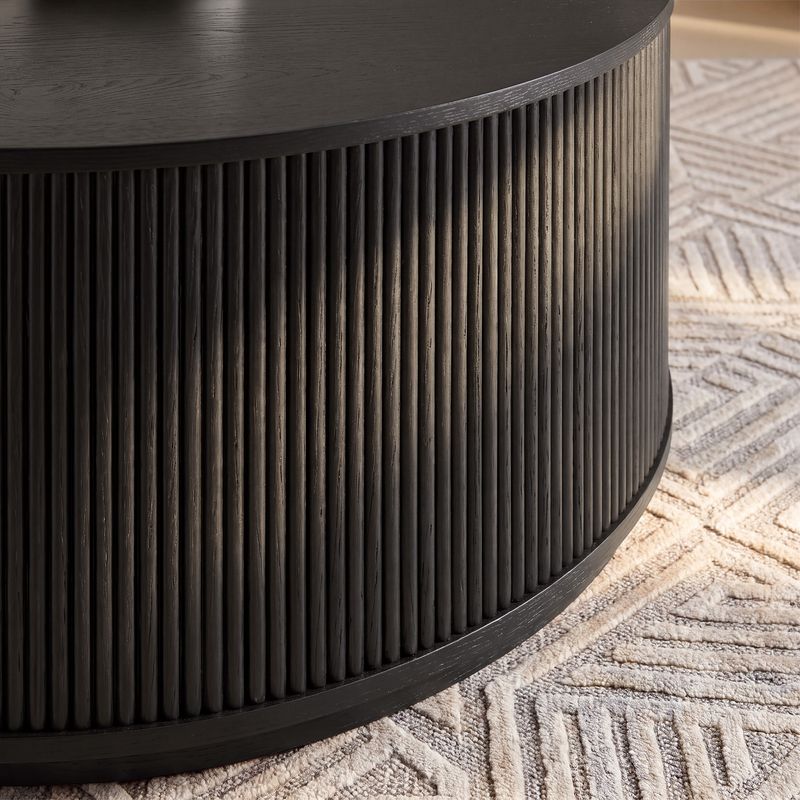
A sculptural base can give a round coffee table a stronger design presence. Cross-shaped supports and fluted details add structure beneath the tabletop, making the base part of the overall look rather than simply a support.
Colle's cross-shaped pedestal, for example, gives its burl surface a distinctive foundation. When choosing a similar design, consider how much visual weight the base adds and whether it balances the material and proportions of the tabletop.
Match a Round Coffee Table to Your Living Room Layout
For Sectional Sofas
A round coffee table can contrast with the broad, angular shape of a sectional and provide a shared surface for people sitting along different sections. Choose a diameter that remains within comfortable reach without blocking the open side or the main walking path.
Explore Hernest's sectional sofas to compare seating options for this type of arrangement.
For Sofas and Loveseats
When a sofa faces a loveseat or accent chairs, a round coffee table can sit naturally at the center of the conversation area. Its curved edge works well when seats are arranged at different angles rather than in a single straight line.
Browse Hernest's sofas and loveseats for seating options that can be paired with a circular table.
For Smaller Living Rooms
In a compact living room, prioritize a diameter that leaves a clear route between the seating and other parts of the room. A table with a visually open base may help keep the arrangement from feeling too heavy, but it is still important to compare the overall footprint with the available floor space.
If a central coffee table would make the layout difficult to navigate, a smaller side table may be a more suitable choice. Explore Hernest's side tables for another way to keep essentials within reach.
For Open-Concept Spaces
In an open-concept home, the coffee table helps establish the living area as a distinct zone. Position it in relation to the sofa and rug so the seating arrangement feels connected without interrupting the flow between areas.
For a coordinated setup, explore Hernest's living room furniture.
How to Style a Round Coffee Table
Start with one or two decorative pieces rather than covering the entire surface. A low vase, a small stack of books, or a decorative bowl can create a focal point while leaving room for drinks and everyday items.
A tray helps group smaller accessories and makes them easier to move when you need more tabletop space. Vary the height and texture of the objects, but keep taller decorations low enough that they do not interrupt conversation across the seating area.
The rug also affects how the table sits within the room. A rug that extends beyond the coffee table and reaches beneath the front legs of the seating can help connect the arrangement. Explore Hernest's rugs for options that complement your sofa and table.
For a cohesive look, consider the finishes already in the room. Oak can reinforce warm wood tones, burl can add pattern to understated upholstery, and marble can introduce contrast against softer fabrics. A few well-chosen details are usually more effective than adding accessories simply to fill the surface.
Find Your Round Coffee Table at Hernest
The right round coffee table should fit your seating area, provide a useful everyday surface, and complement the materials and finishes in your home. Choose oak for natural warmth and added functionality, burl for distinctive grain and a sculptural presence, or Carrara marble for the character of natural stone.
Explore Hernest's coffee tables collection to compare round coffee tables with other shapes, materials, and functional designs. Check your room measurements, consider your storage needs, and choose a design that works with the way you use your living room.