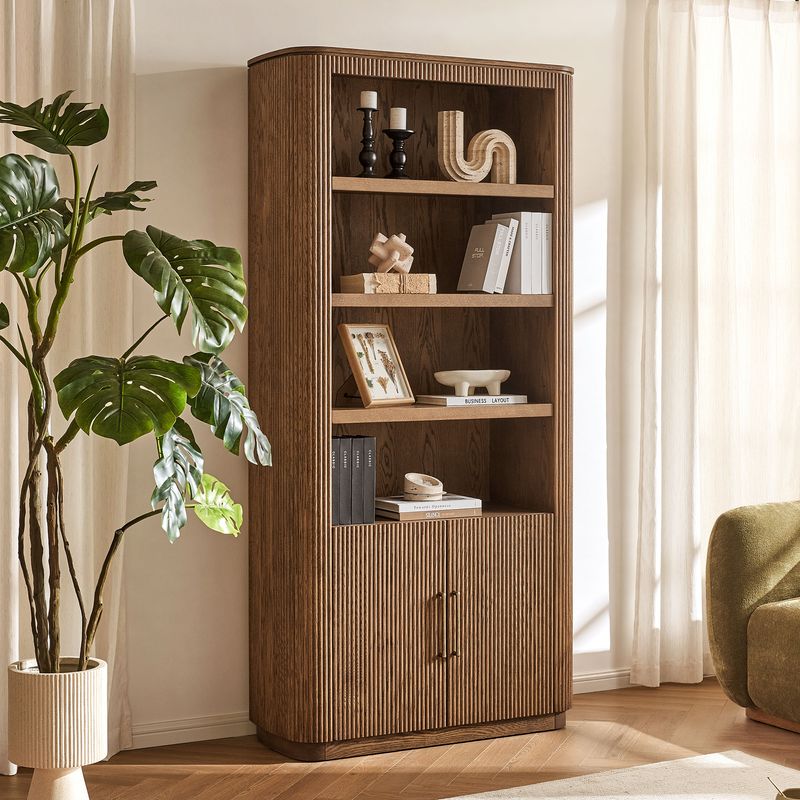
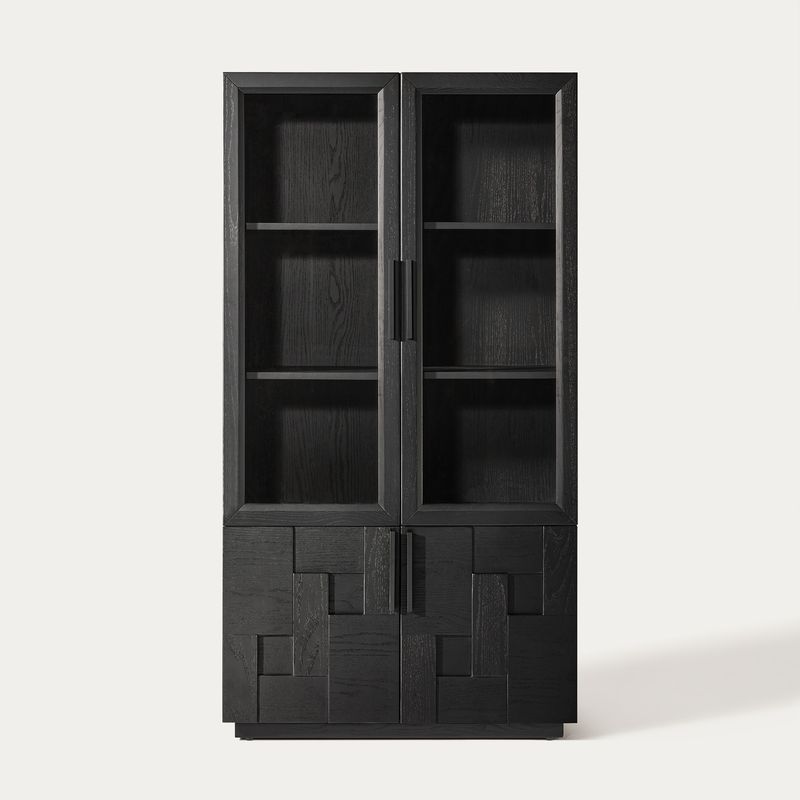
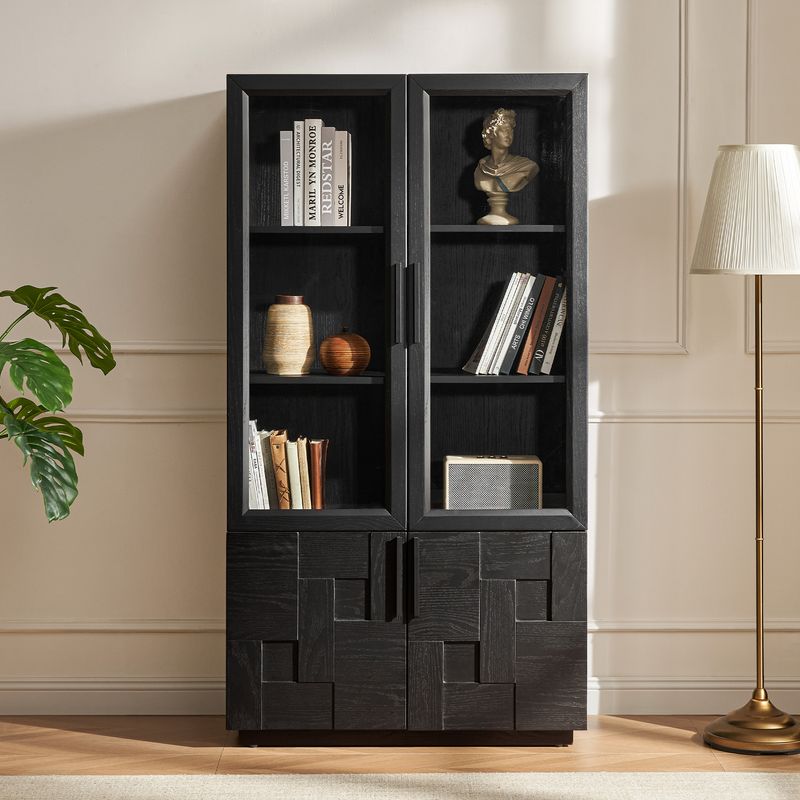
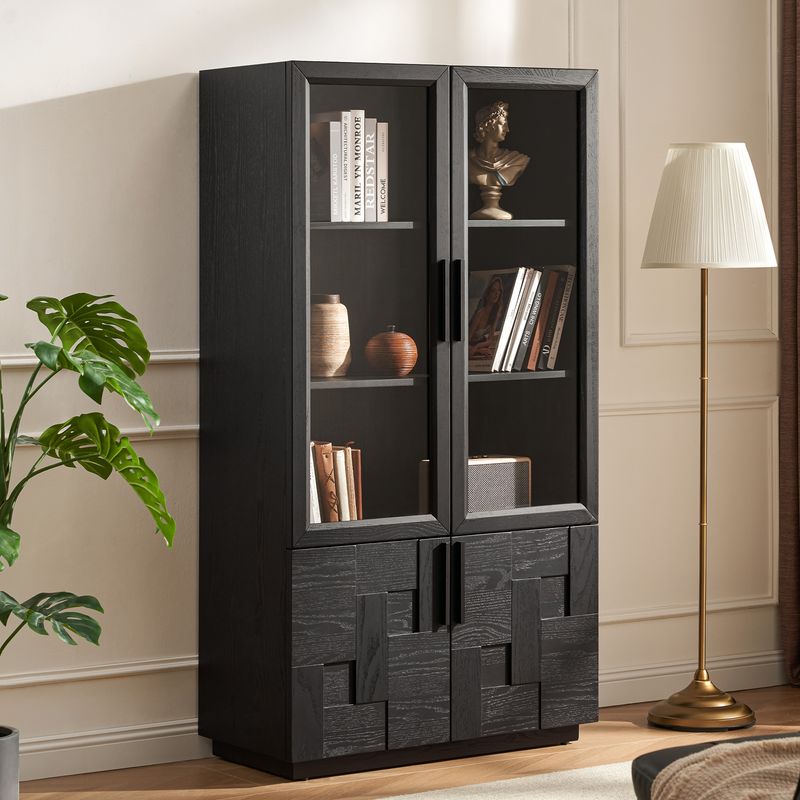
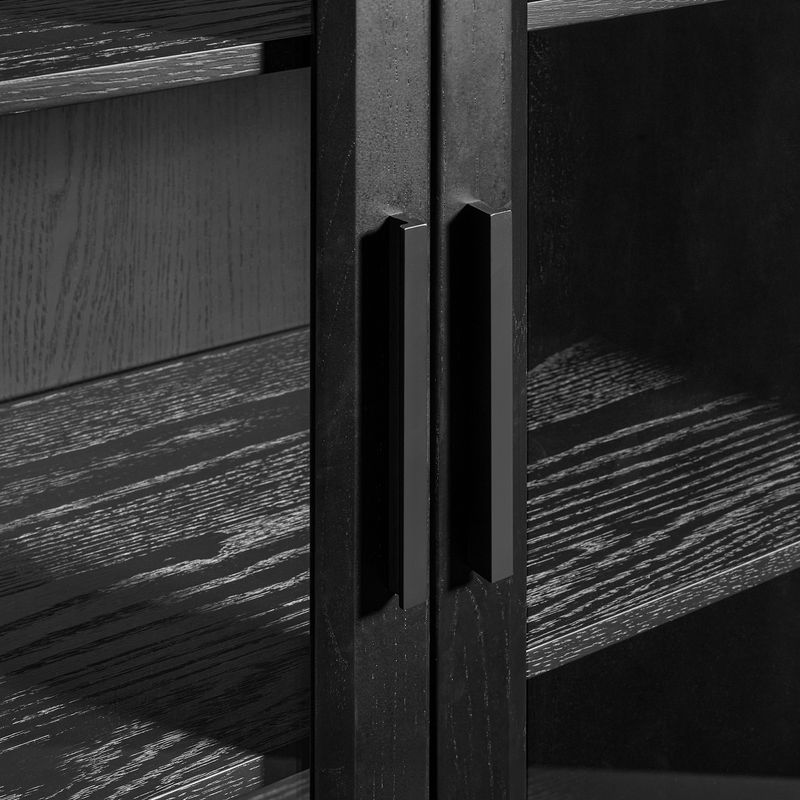
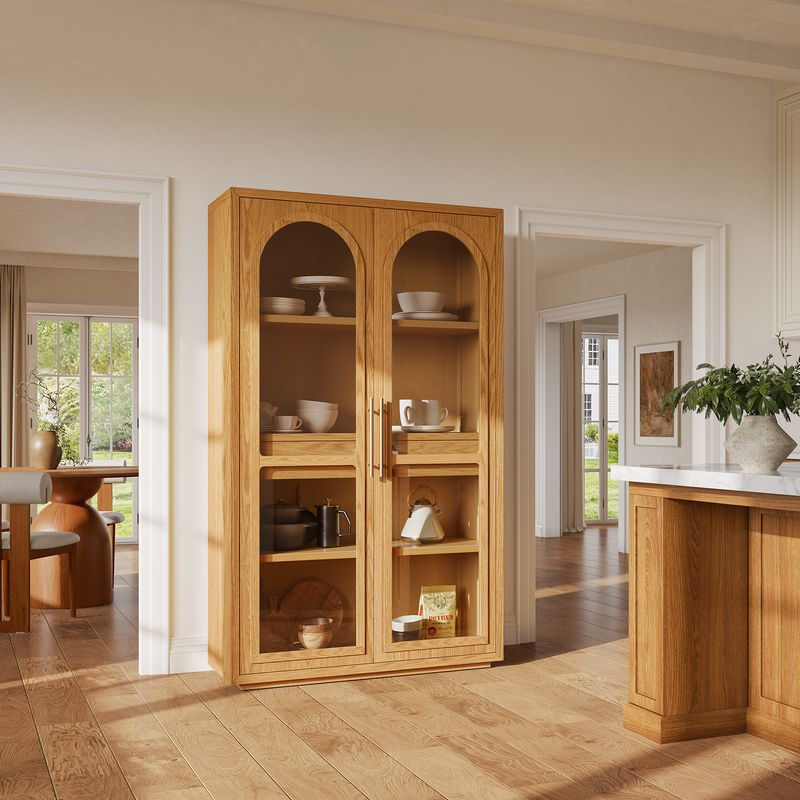
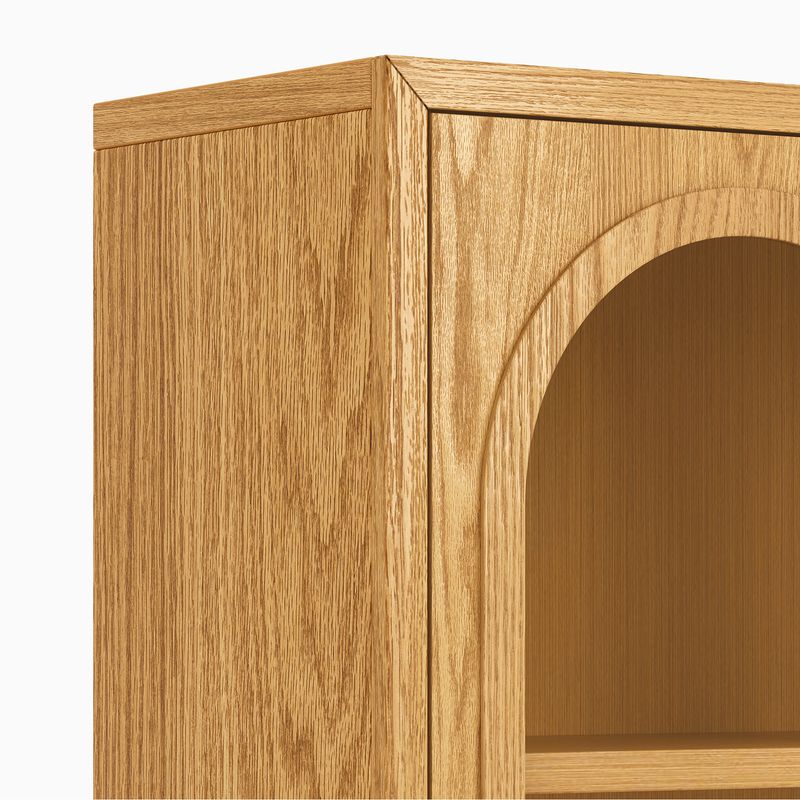
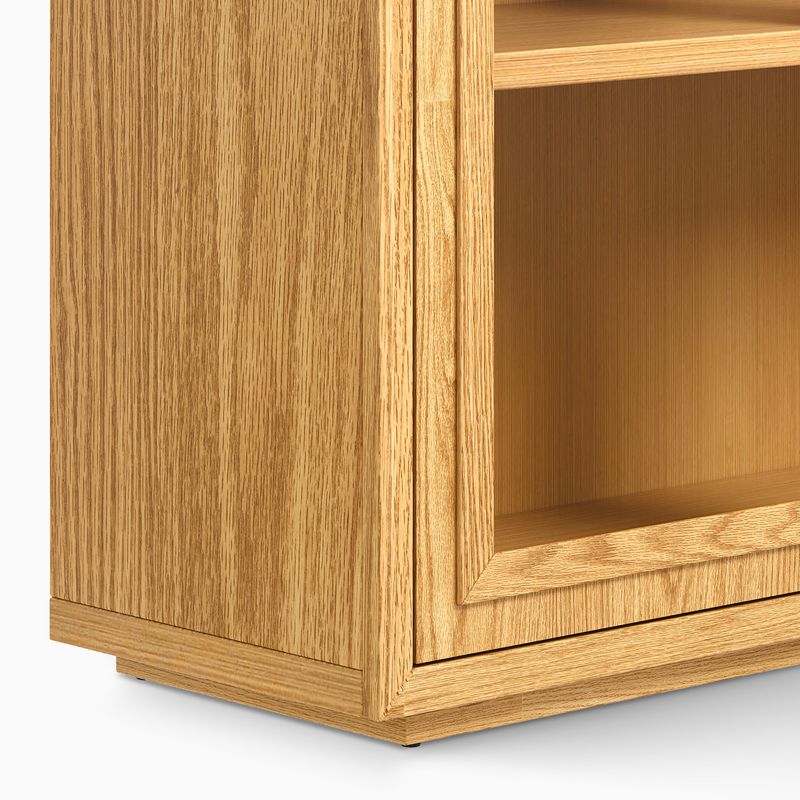
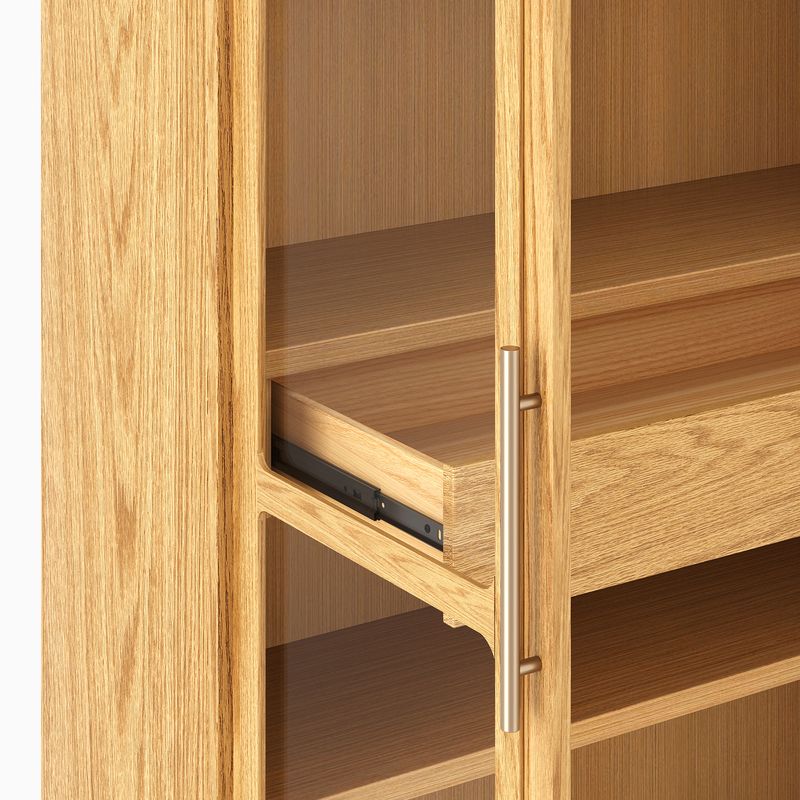
Find the Right Bookcases for Every Room
A good bookcase does more than hold books. It can turn an unused wall into practical storage, give everyday objects a proper place, and bring structure to a room that still feels a little unfinished.
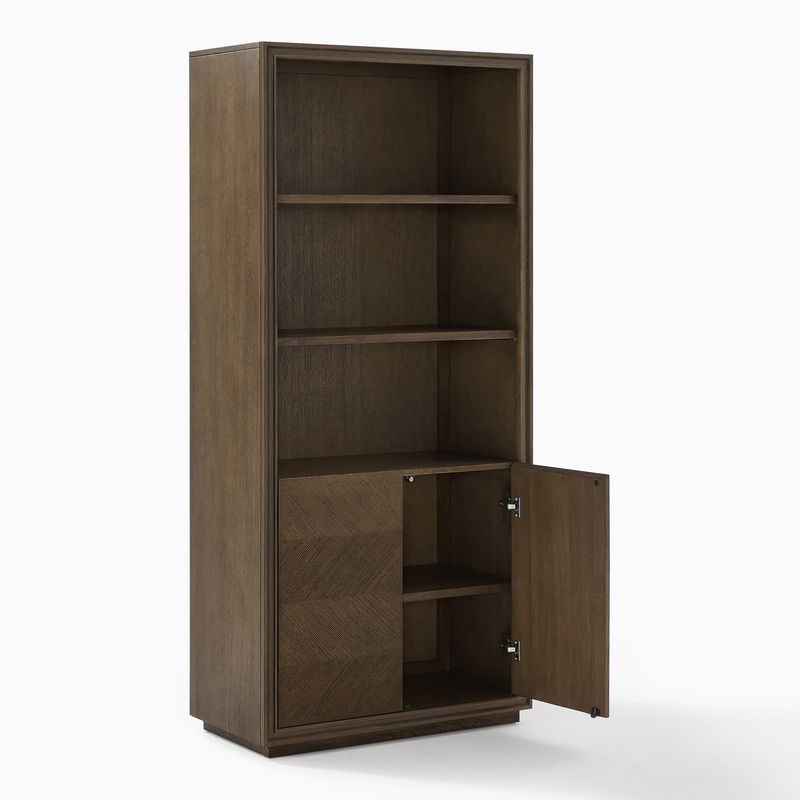
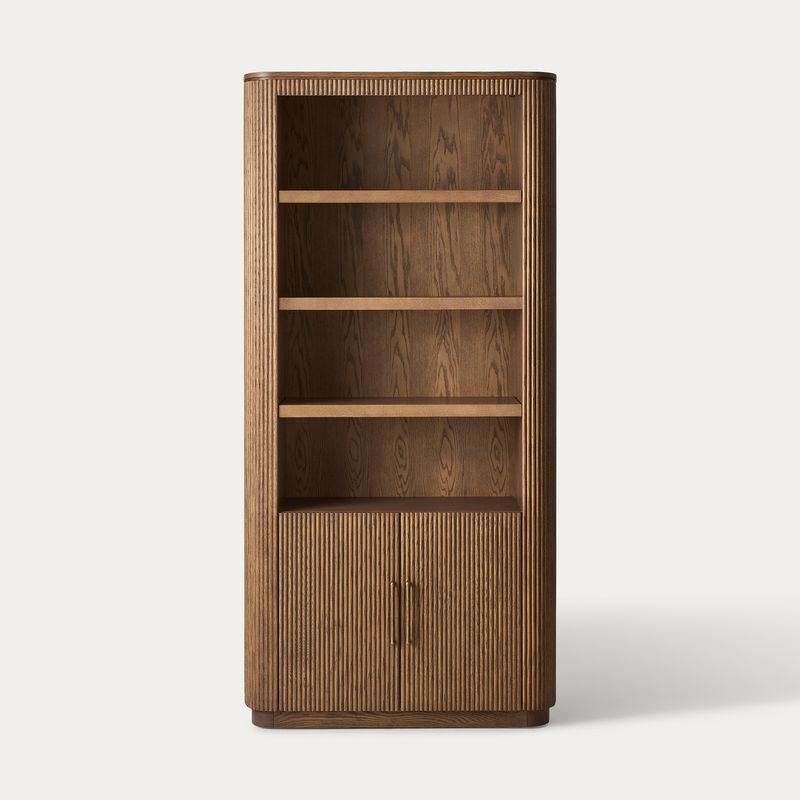
At Hernest, our bookcases are designed around the way people actually live. You might need a tall piece for a growing book collection, a compact shelving unit beside the sofa, or a bookcase with storage that keeps paperwork, electronics, and everyday clutter behind closed doors.
The best place to start is with a few simple questions. How much space do you have? What needs to go inside? Do you want to display those items or hide them? And is this piece meant for one room only, or should it still make sense if your home changes around it?
Explore Hernest bookcases for living rooms, bedrooms, home offices, dining spaces, and other areas where storage and furniture need to work together. From open shelving for books and décor to designs with drawers and enclosed compartments, the right piece adds storage without making the room feel overfilled.
Read More
Choose Bookcases by Size and Space
The right size depends less on whether a room is large or small and more on how you want to use the wall.
A tall piece makes use of vertical space. A wide unit gives a long wall a stronger visual anchor. A narrow design slips into places where a larger storage cabinet would simply get in the way.
Before browsing, think about the shape of the available space rather than looking only at the overall size of the room. Wall width, ceiling height, walking clearance, and nearby furniture all influence which proportions will feel right.
Tall Bookcases for Vertical Storage
Tall bookcases are a sensible choice when floor space is limited but there is plenty of unused wall height. Apartments, home offices, bedrooms, and narrow living rooms often benefit from vertical storage rather than another wide piece of furniture.
A taller design keeps its footprint relatively compact while providing room for books, framed photographs, decorative objects, and storage baskets. It can also visually connect lower furniture, such as a sofa or media console, with a taller ceiling.
If you need additional storage without giving up more floor space, a tall bookcase is often the better fit. Just remember that the actual shelf dimensions matter as much as the overall height, particularly if you plan to store oversized books or large display pieces.
Wide Bookcases for Larger Walls
A wide bookcase gives a large wall a stronger sense of purpose. It also provides more room to combine practical storage with objects that make a space feel personal, from books and artwork to ceramics, baskets, and framed photographs.
Wide bookcases are particularly useful in larger living rooms, home offices, and open-plan interiors where a narrow shelving unit might look undersized.
When furnishing a long wall, consider whether one substantial piece or several coordinated units better suits the room. A single wide bookcase often creates a cleaner, more architectural look, while multiple pieces offer greater flexibility if you expect your layout to change.
Narrow Bookcases for Small Spaces
A narrow bookcase can make good use of space beside a sofa, between windows, in a hallway, or in an otherwise neglected corner.
For smaller rooms, the goal is not necessarily to buy the smallest piece available. Instead, look for shelving that provides enough usable storage without taking over the room. A slim profile can preserve walking space while still giving books, baskets, records, or office supplies somewhere to go.
When wall width is limited, a narrow design may be the most practical solution. Check the individual shelf depth and vertical clearance before buying, though. A beautiful slim bookcase is of little use if the items you want to store barely fit on it.
Shop Bookcases by Storage Needs
Storage needs vary from one household to another. Some people want every shelf open and visible. Others would rather keep cables, paperwork, toys, and miscellaneous items behind doors.
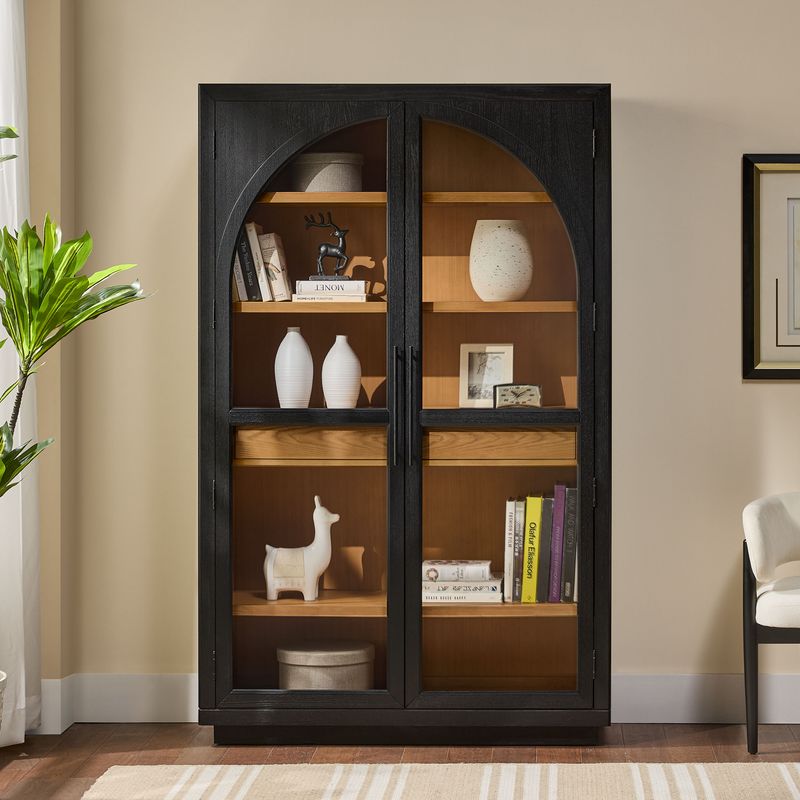
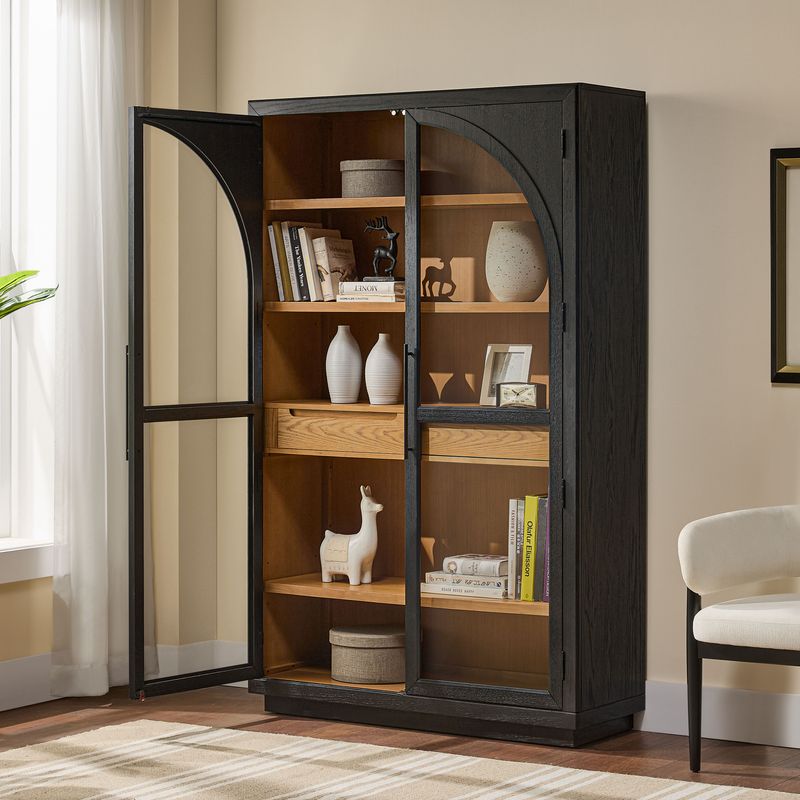
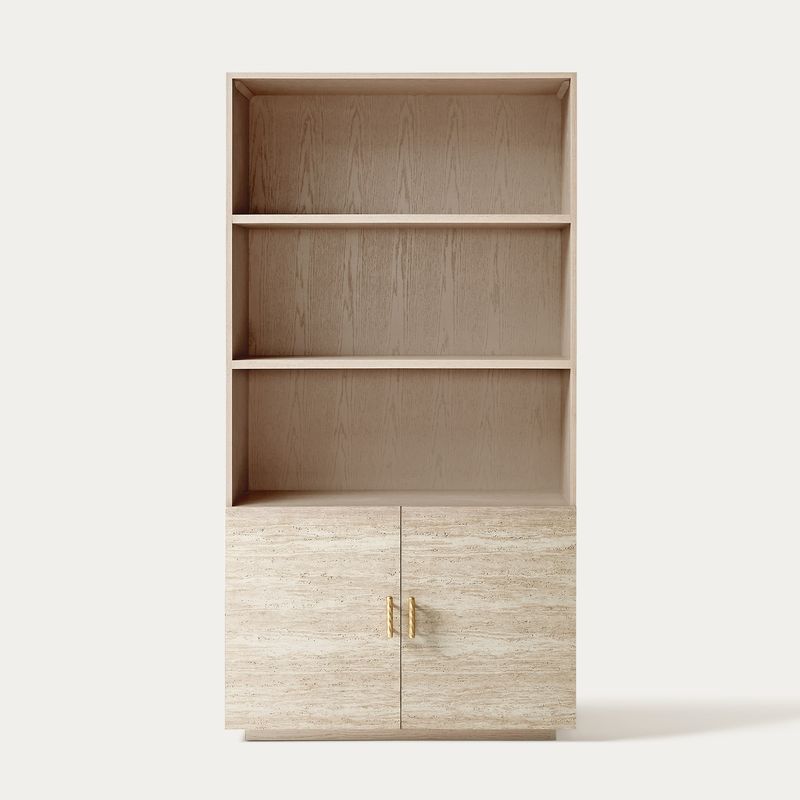
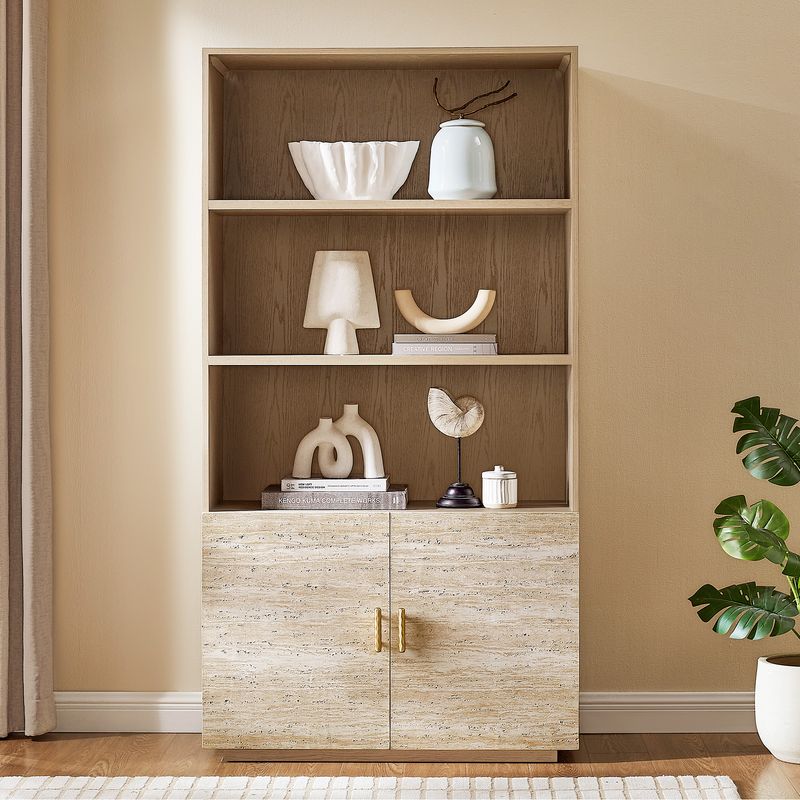
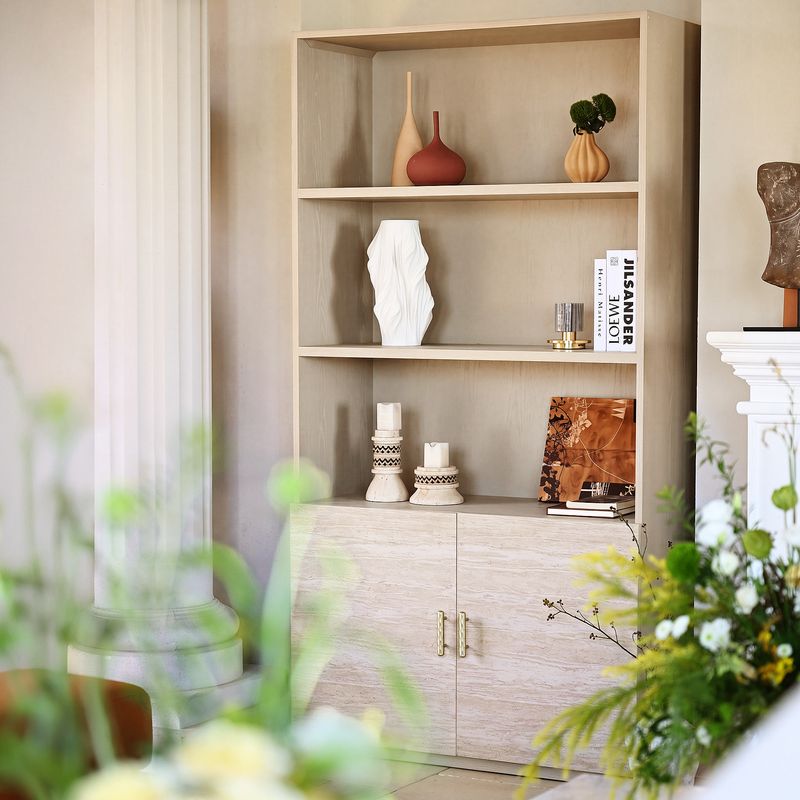
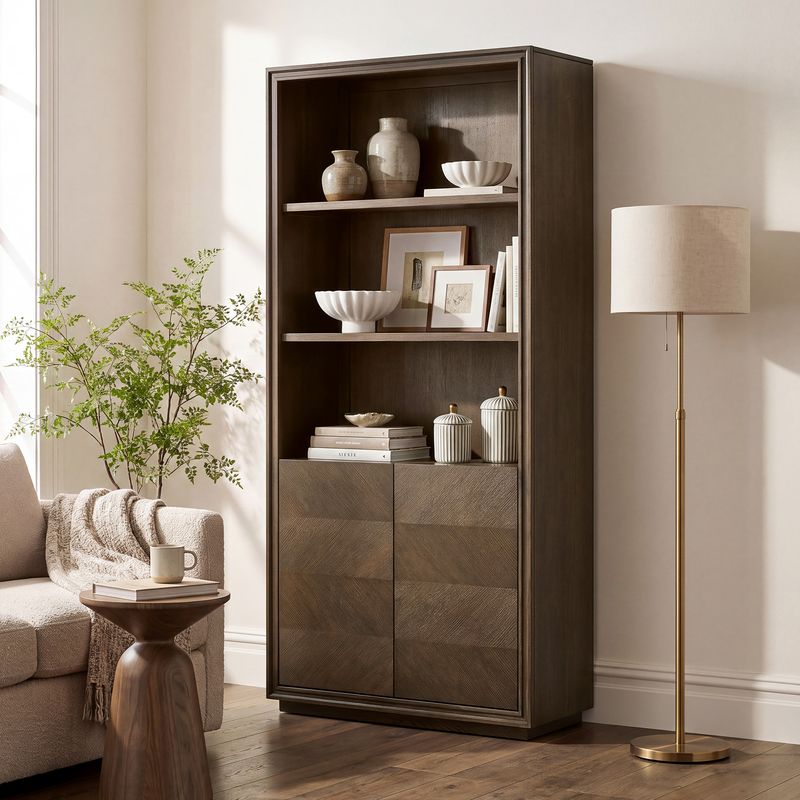
The right bookcase with storage often combines both approaches: open shelves for the things you enjoy seeing and enclosed compartments for the things you would rather not look at every day.
Open Shelving for Books and Display
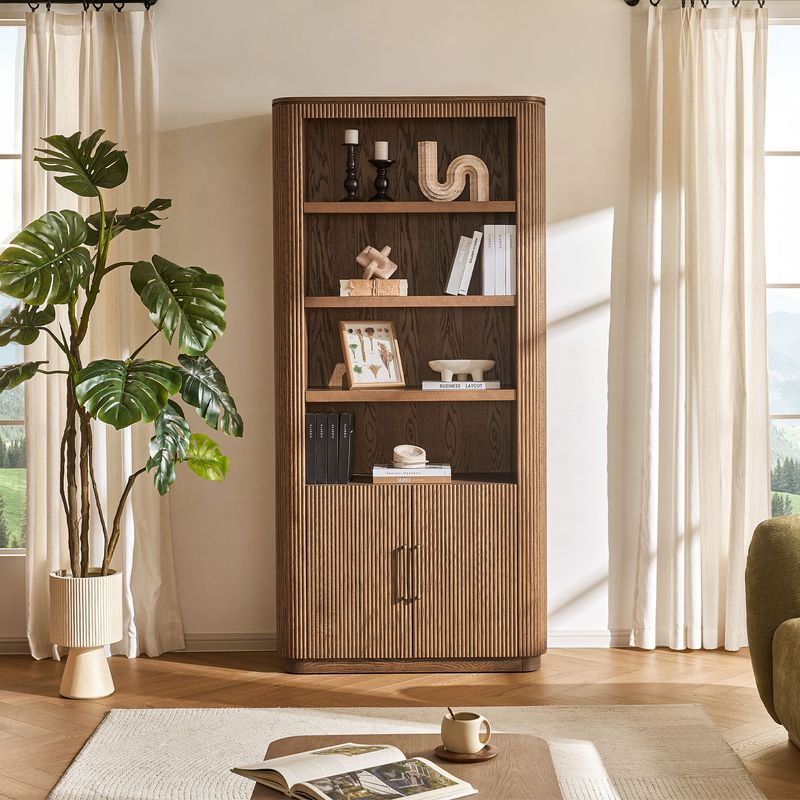
Open bookcases make storage part of the room's decoration. They provide space for books, artwork, plants, personal collections, and objects gathered over time.
The most relaxed arrangements rarely fill every shelf from edge to edge. Try mixing vertical rows of books with a few horizontal stacks, then leave space for one or two larger objects. A basket can handle smaller items while adding texture, and a piece of artwork can break up a run of similar shapes.
Open shelving works particularly well when visibility and easy access matter. It is also a natural choice when the items you store are part of how you want the room to look.
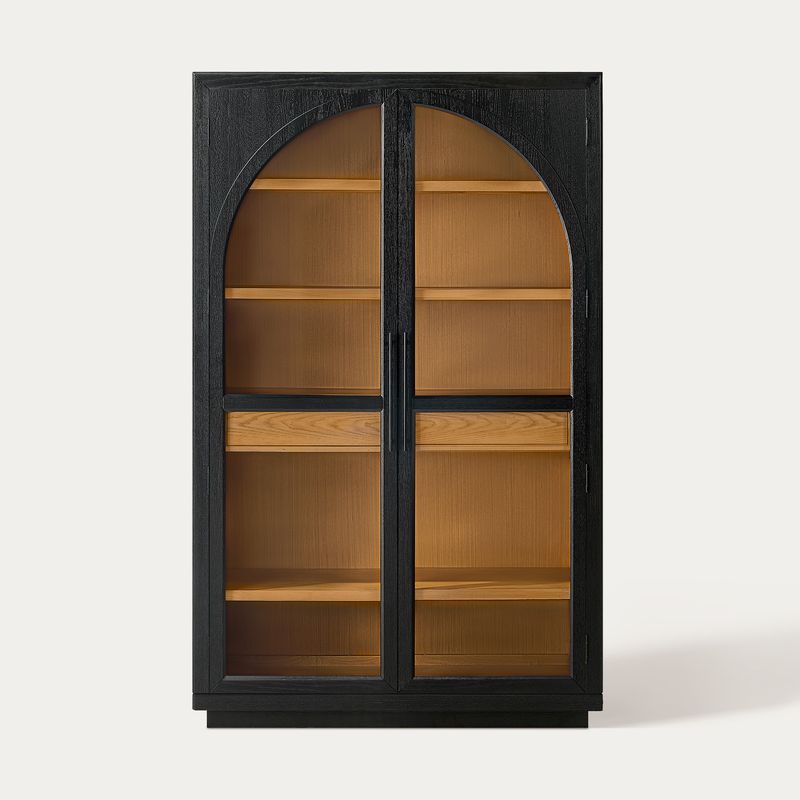
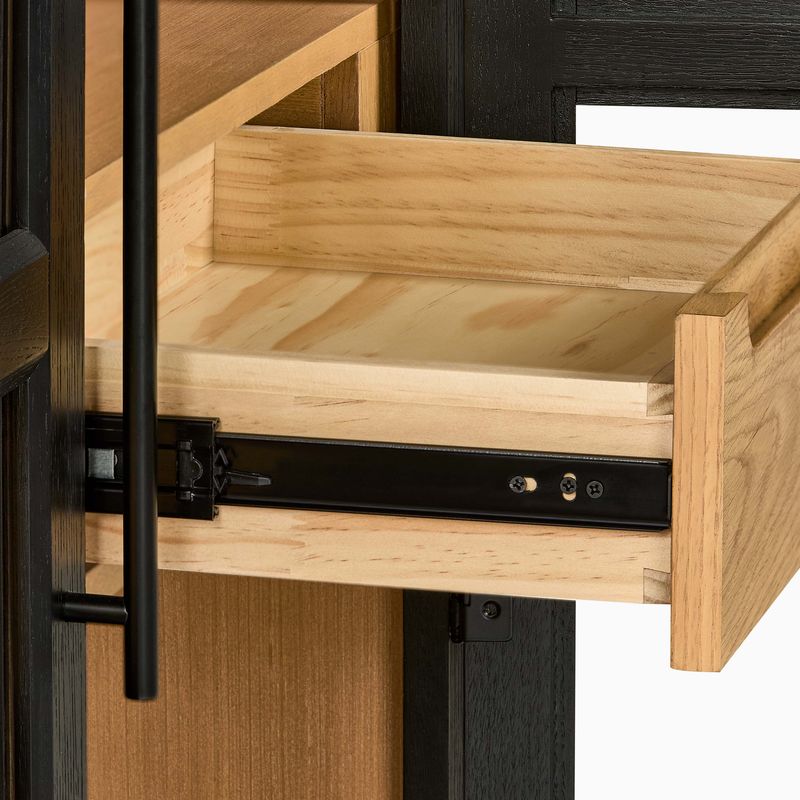
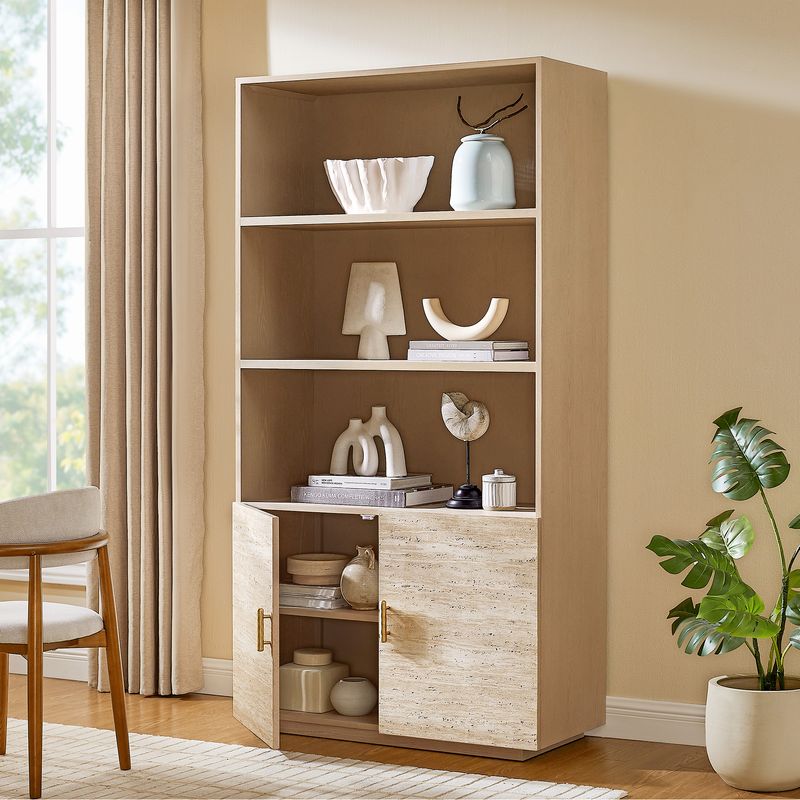
Bookcases With Drawers or Cabinets
Some things are useful without being particularly attractive. Chargers, paperwork, remote controls, office supplies, toys, and loose cables are usually better hidden than displayed.
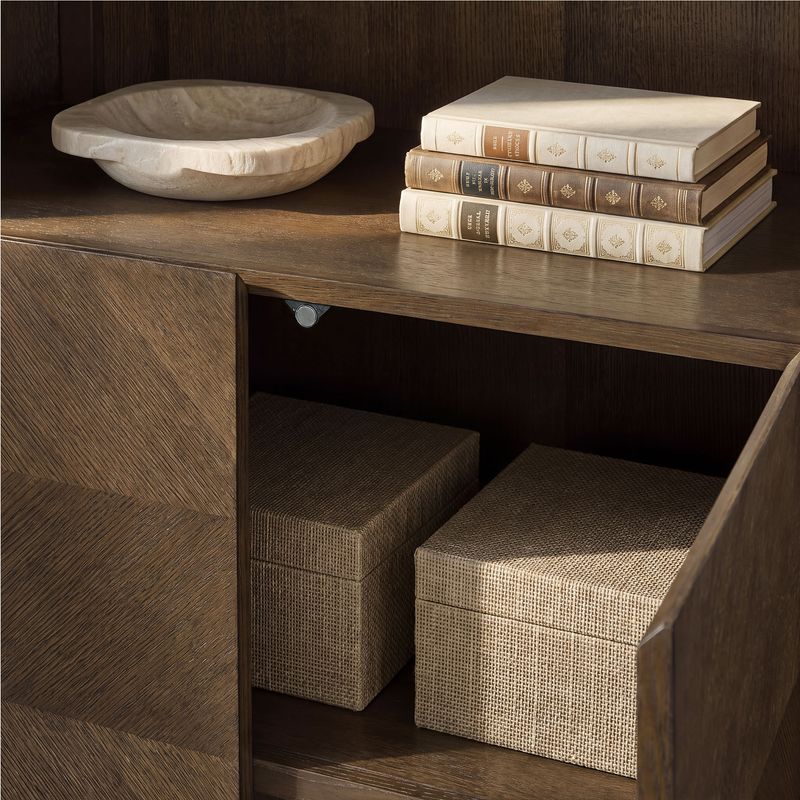
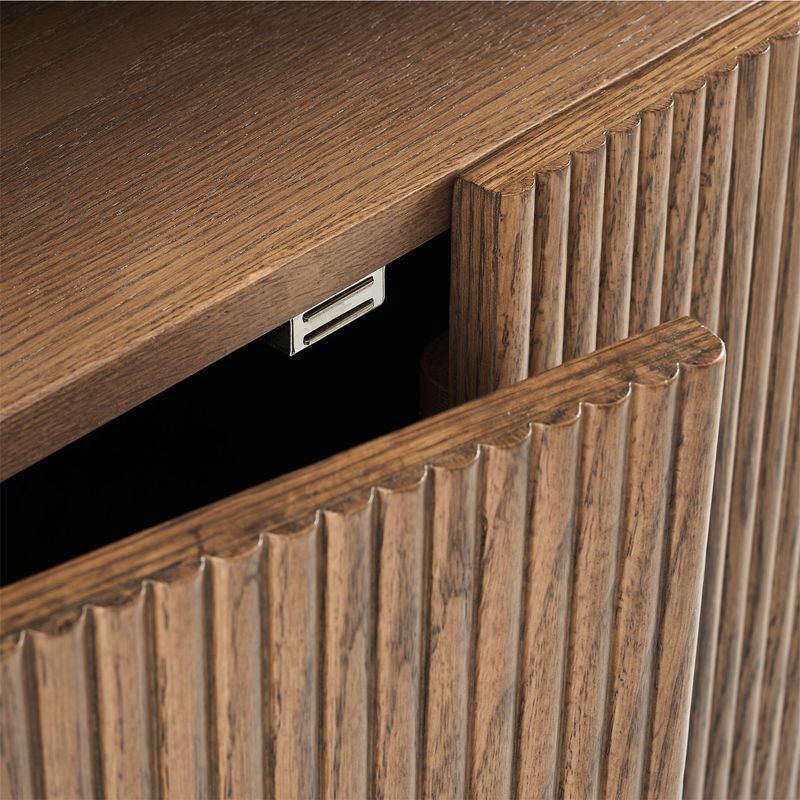
A bookcase with drawers or cabinets gives you a place for those items while keeping the visible shelves focused on books and décor.
This type of storage is particularly useful in multipurpose rooms. In a home office, it can separate work materials from decorative objects. In a living room, enclosed compartments can absorb everyday clutter without turning the entire room into a storage area.
Flexible Storage for Changing Needs
Furniture rarely stays loyal to one room forever. A shelving unit might begin in a home office, move to a bedroom after a rearrangement, and eventually find a place in the living room.
That is one reason versatile bookcases are worth considering. Look for proportions, finishes, and storage layouts that do not depend on a single room or function.
For households furnishing a home gradually, flexible shelving also makes it easier to add storage over time without committing immediately to a built-in solution.
Living Room Bookcases and Storage Ideas
The living room is often where a bookcase has the most to do. Books belong there, naturally, but so do photographs, collected objects, plants, artwork, baskets, and many of the smaller things that make a home feel lived in.
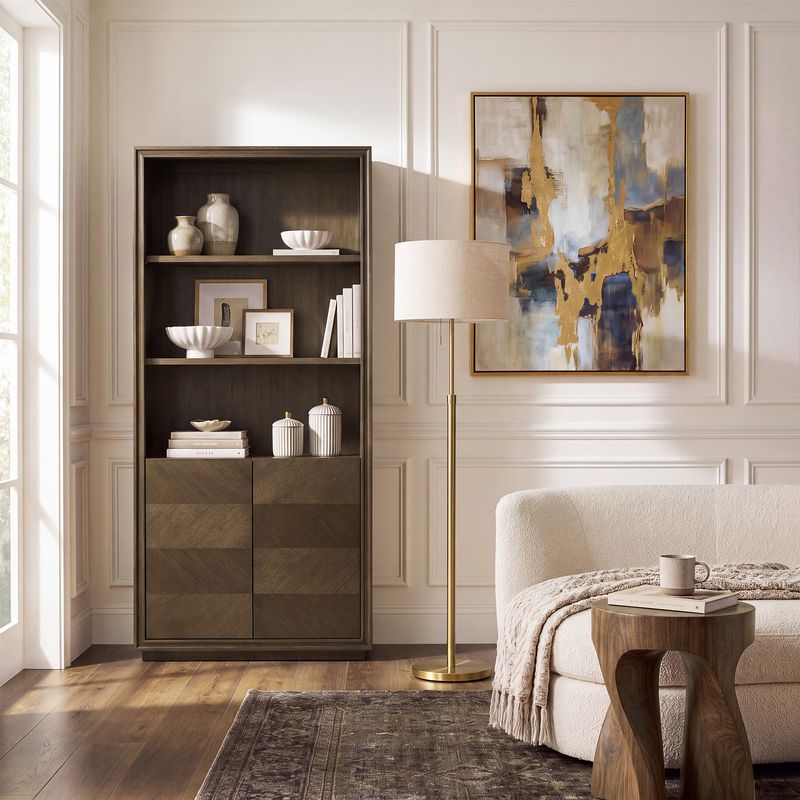
Well-proportioned living room bookcases can also help organize the room itself. A tall unit beside a sofa can frame the seating area, while a wider piece can give a blank wall a clearer purpose.
Bookcases That Frame a Seating Area
In a larger living room, shelving can help define the area around a central piece of furniture. Two visually coordinated units placed around a media console, for example, can make the wall feel more intentional without relying on oversized artwork.
This approach is particularly useful for rooms with high ceilings or large stretches of uninterrupted wall. The bookcases add vertical interest while providing storage that earns its place.
Open Shelving or Concealed Storage?
Open shelving works best when books and personal objects are part of the room's visual character. Drawers or cabinets make more sense when you need storage for the less attractive parts of everyday life.
Many living rooms benefit from a combination of both. Visible shelves can hold the things you want to enjoy, while enclosed sections handle electronics, cables, or smaller items that tend to accumulate.
Bookcases for Small Living Rooms
A smaller room can still handle a substantial bookcase. The trick is choosing one that earns its footprint without choking off the walking space.
Open designs may feel visually lighter, while narrow or lower units can preserve sightlines. The right choice depends on how much storage you actually need and where the furniture sits within the room.
A small living room does not require a small bookcase. It requires a bookcase that leaves enough room for people to move comfortably.
Bookcases for Different Rooms
The same bookcase can serve very different purposes depending on where it lives. In a home office, storage usually comes first. In a bedroom, visual calm matters more. In a dining room, shelving often doubles as display space.
Home Office Bookcases
A home office bookcase may need to hold reference books, files, printers, storage boxes, and decorative objects all at once.
If easy access is the priority, open shelving is usually the better fit. Drawers or cabinets become more useful when paperwork and office supplies need to disappear at the end of the day.
If the workspace is visible from the rest of the home, combining display space with concealed storage can make the room feel less like a permanent office.
Bedroom Bookcases
A bedroom bookcase can provide a home for bedtime reading, framed photographs, small objects, and storage baskets.
Narrow designs are often useful against an unused wall or in a corner, while lower shelving may fit beneath a window if the dimensions allow.
Because bedrooms are meant to feel restful, it is worth being selective about what remains visible. A mix of books and a few personal objects generally feels calmer than shelves filled with miscellaneous storage.
Dining Room Bookcases
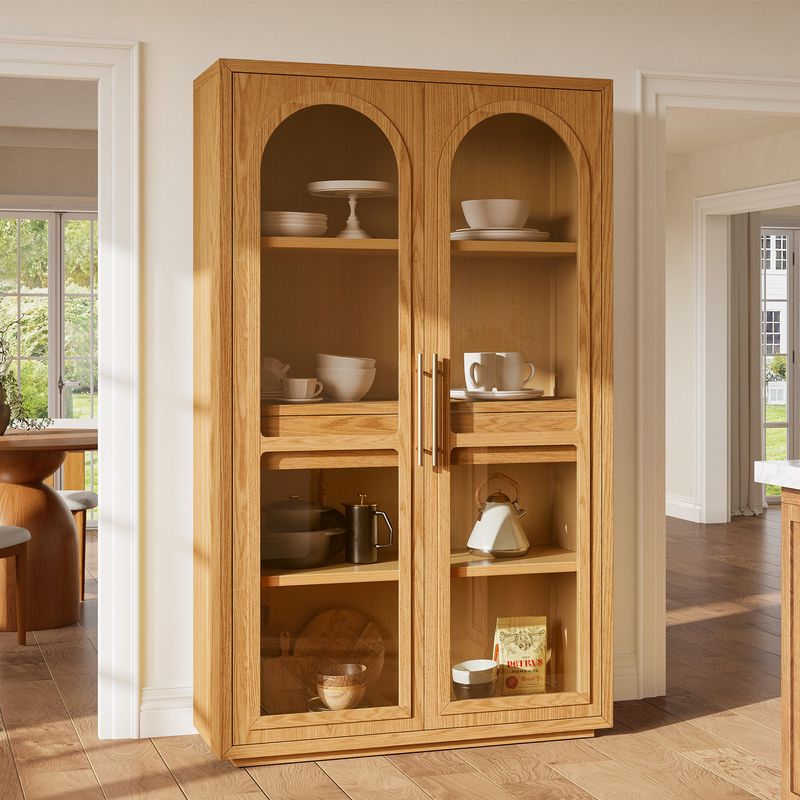
Bookcases are not limited to books. In a dining room, shelving can hold serving pieces, cookbooks, glassware, table linens, and decorative objects.
A design with both open and concealed storage is particularly useful here. Display the pieces you enjoy using and keep less attractive household items behind closed doors.
The result often feels more relaxed than a traditional display cabinet while still providing meaningful storage.
Mid-Century Modern Bookcases for Everyday Storage
A bookcase should provide useful storage, but it also becomes part of the room's architecture. Its height, finish, and proportions influence how the wall feels even when the shelves are not full.
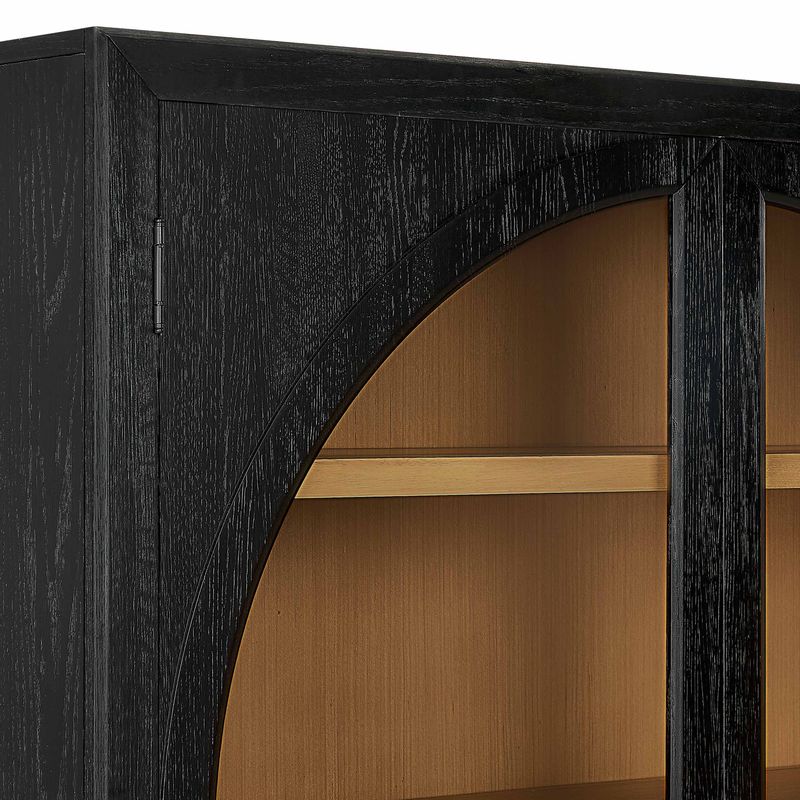
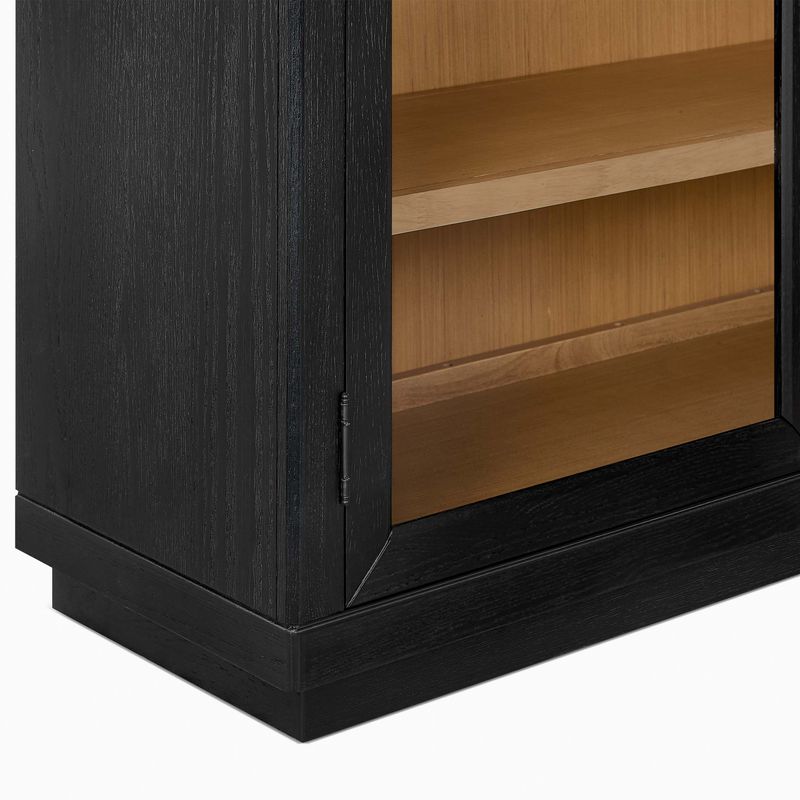
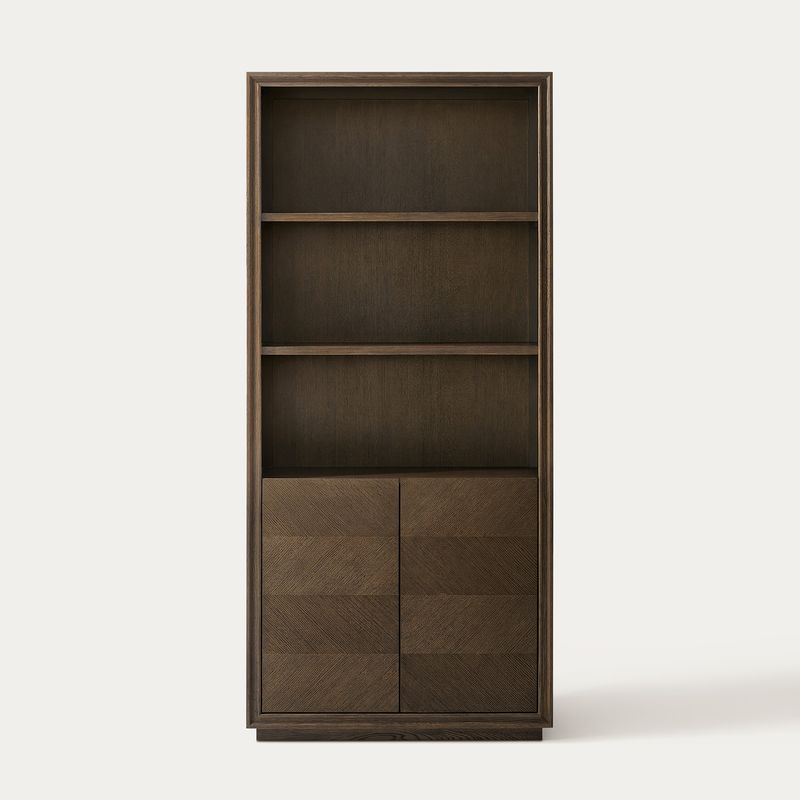
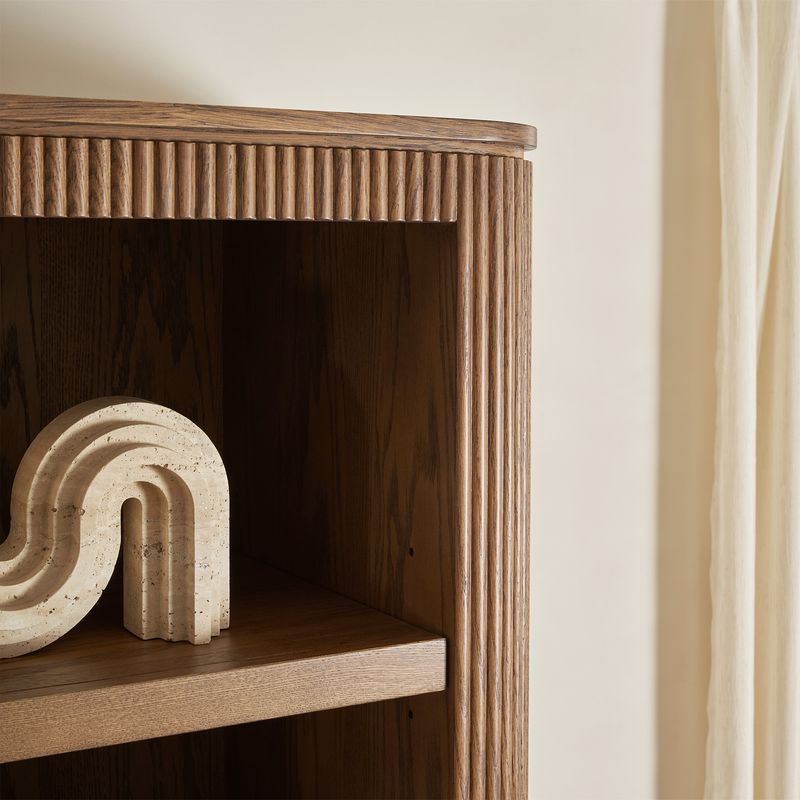
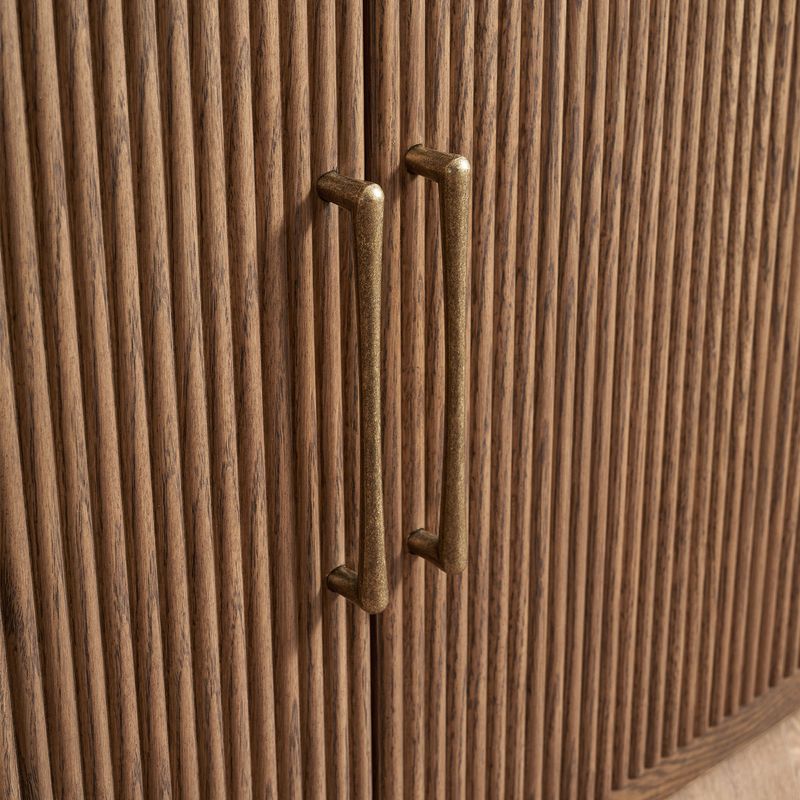
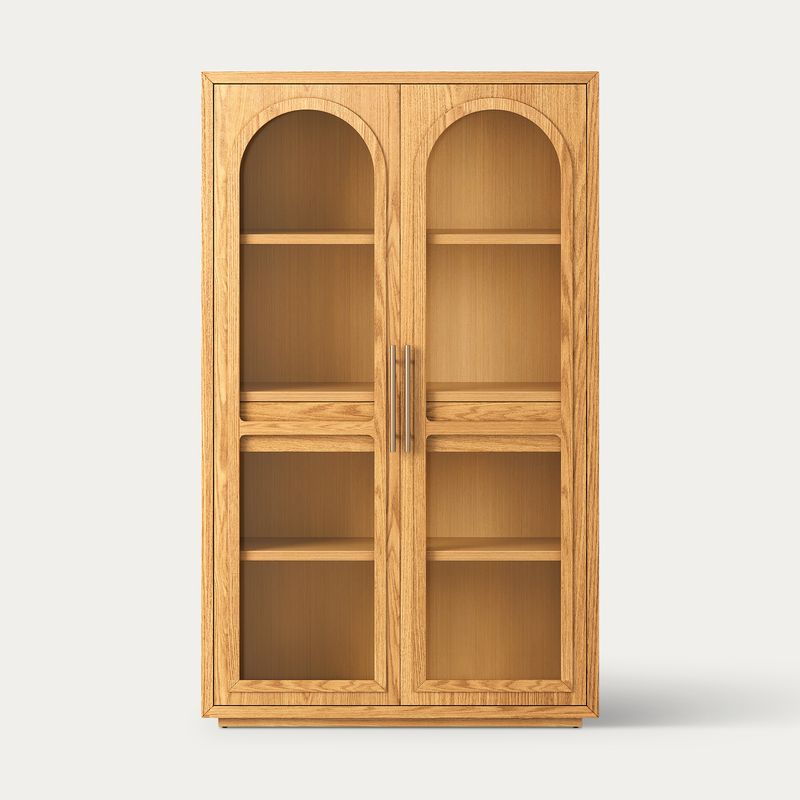
Hernest bookcases bring Mid-Century Modern character into everyday storage, pairing warm wood finishes and clean-lined silhouettes with practical shelving and concealed storage designed for real homes.
Warm Wood Tones and Clean Lines
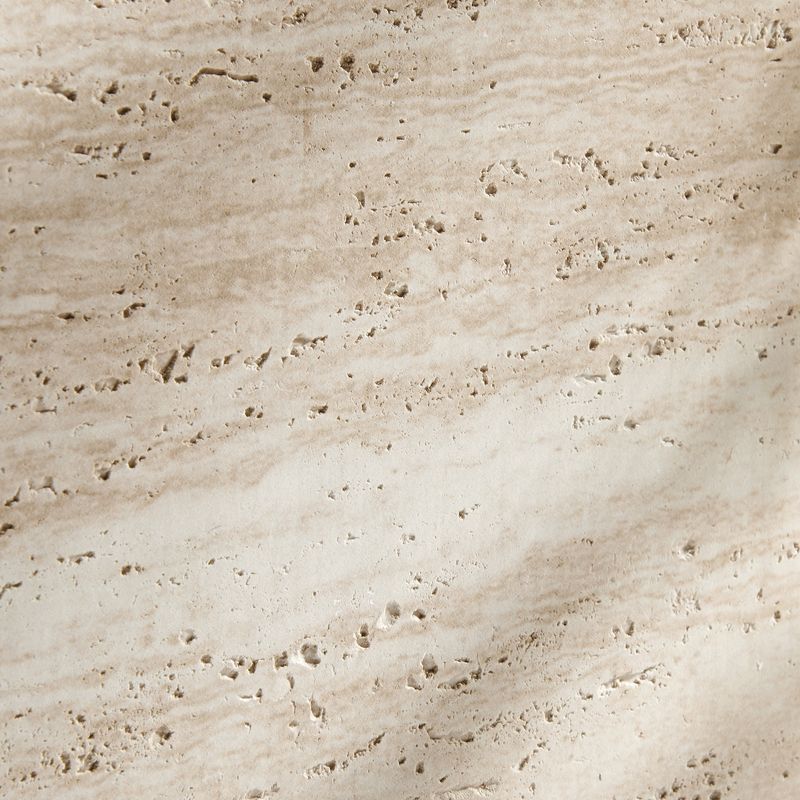
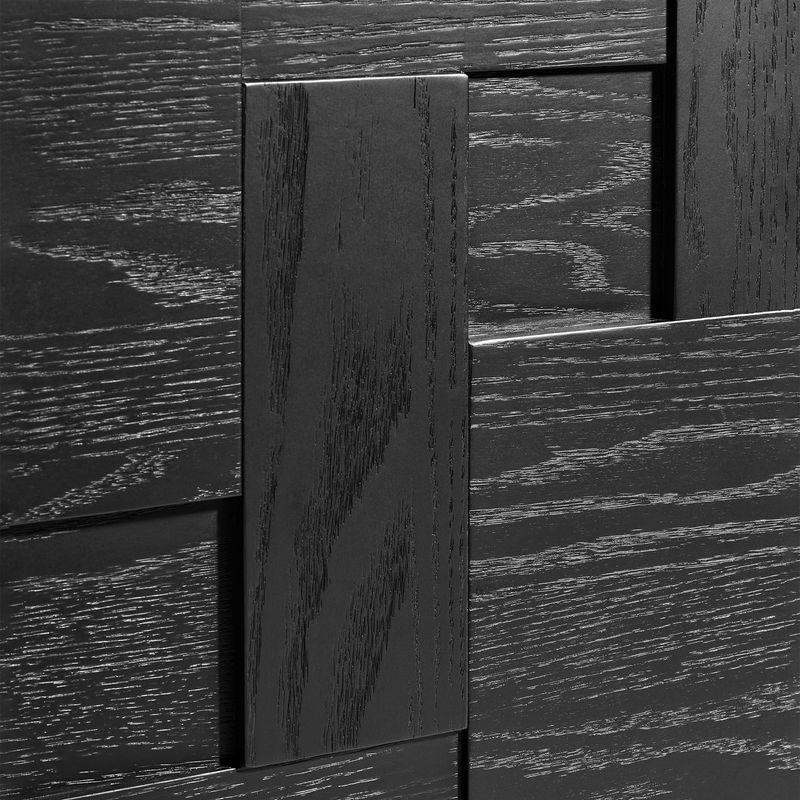
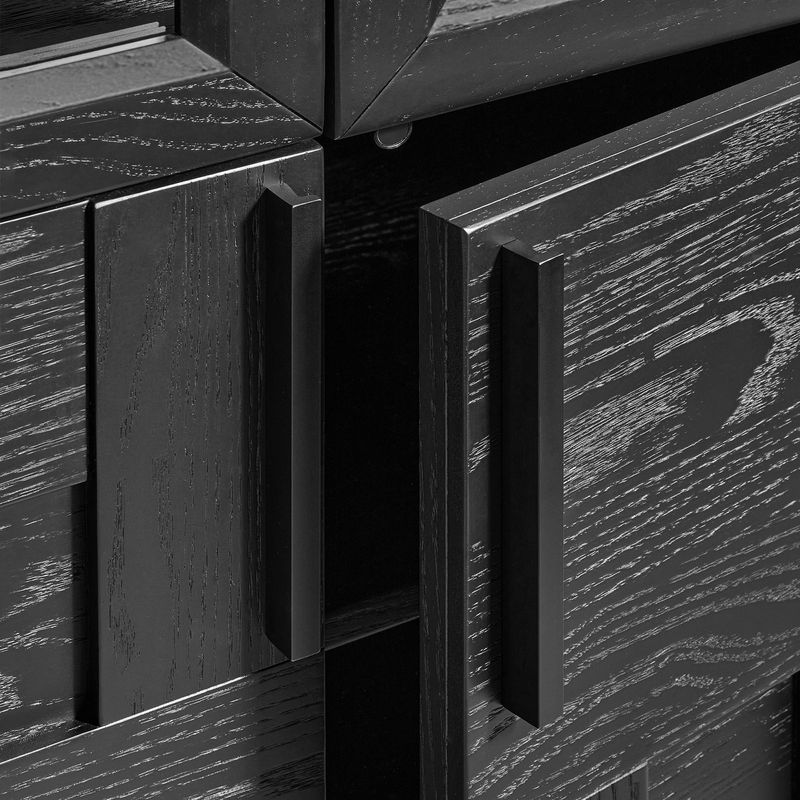
Mid-Century Modern furniture is often valued for its balanced proportions and visual simplicity. Warm wood finishes can add depth to a room, while cleaner silhouettes help larger storage pieces feel less heavy.
That combination makes a bookcase easier to integrate with other furniture over time. Rather than dominating the room, the shelving can support the overall arrangement.
Shelf Depth and Storage Capacity
The overall dimensions of a bookcase tell only part of the story. The usable shelf depth and vertical clearance determine what you can actually store.
Standard books generally require less depth than binders, records, storage boxes, or oversized art books. Before choosing a design, identify the largest items you expect to place on the shelves and compare their dimensions with the usable interior space.
This is particularly important when a bookcase will serve as real storage rather than simply as a decorative display.
Support for Books and Everyday Collections
Books can add significant weight when shelves are fully loaded, especially with hardcovers, art books, or dense collections.
When comparing bookcases, the number of shelves is only part of the equation. Shelf thickness, material, unsupported span, and vertical supports all matter, particularly when the unit will carry rows of hardcovers, art books, or other heavy collections.
If you are building a substantial library at home, structural details deserve just as much attention as appearance.
What to Check Before Buying a Bookcase
A few practical checks can prevent a storage solution from becoming a sizing problem after delivery.
Product Dimensions
Check the overall height, width, and depth against the actual space available. Remember to account for baseboards, nearby furniture, outlets, windows, and door swings.
Storage Needs
Measure the largest items you expect to store. Books, binders, baskets, and decorative objects do not require the same shelf depth or vertical clearance.
Room Clearance
A bookcase should add storage without becoming an obstacle. Consider how people move through the room and leave enough clearance for normal traffic.
Furniture Safety
Tall freestanding furniture should be used according to the manufacturer's installation and safety instructions. Secure a bookcase to the wall when required or recommended, particularly in households with young children.