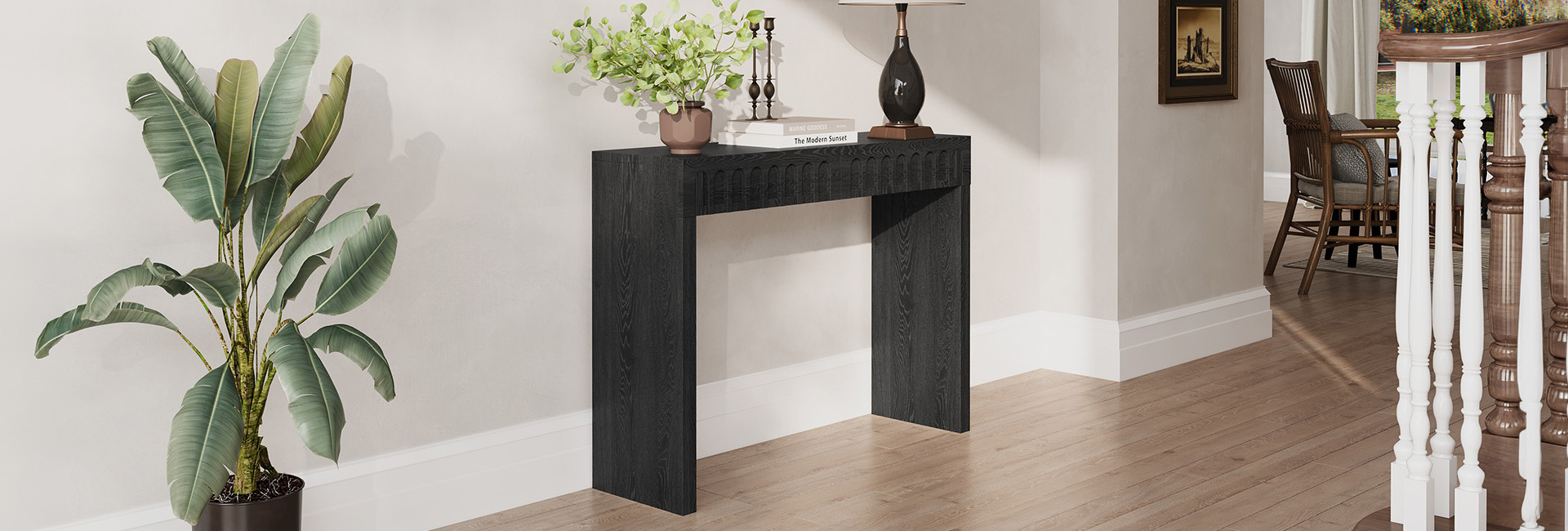
A console table is a long, narrow piece of furniture designed to add both function and style to modern homes. If you are wondering what is a console table, it is typically a slim table placed against a wall, behind a sofa, in an entryway, or along a hallway to provide decorative display space and practical storage.
The meaning of console table has evolved over time. Traditionally, console tables were created as elegant wall-supported furniture pieces used for decoration. Today, they have become versatile home essentials that combine visual appeal with everyday functionality.
With their narrow profile, console tables are ideal for areas where traditional furniture feels too bulky. They can organize entryway essentials, display artwork and accessories, divide open spaces, or create a stylish focal point in living rooms.
What Is a Console Table? Definition and Meaning
A console table is a narrow, elongated table that is usually positioned against a wall or behind seating furniture. Unlike dining tables or coffee tables, console tables are designed with a slimmer depth to fit transitional spaces such as entryways, hallways, and living rooms.
The console table definition focuses on three characteristics:
Long and narrow shape
Slim depth for space efficiency
Decorative and functional purpose
Modern console tables are available in many styles, including solid wood console tables, oak console tables, metal designs, and contemporary mixed-material options.
The History Behind Console Tables
The word "console" originated from the French term referring to a supporting bracket. Traditional console tables were often designed to appear attached to walls with decorative supports. Over time, furniture makers transformed them into freestanding pieces suitable for modern homes.
What Is a Console Table Used For? Common Purposes in Modern Homes
The purpose of a console table is multifaceted, adapting to the needs of the space it inhabits. At its core, it serves as a surface for display and a subtle divider of space, all without overwhelming a room.
Here are its primary functions:
The Entryway Drop Zone: In a foyer, it is the first piece of furniture you encounter. It provides a dedicated spot for keys, mail, and a bowl for daily essentials, while a mirror above creates a last-minute check point before heading out.
A Platform for Art Objects: A console table is an ideal stage for sculptural pieces, a curated stack of art books, or a striking ceramic vase. Its narrow depth ensures the focus remains on the objects displayed, not the table itself.
A Decorative Statement Piece: Even in a hallway with no other furniture, a well-chosen console table introduces materiality, color, and form. It turns a passageway into a gallery.
Subtle Room Division: In an open-plan space, placing a console table behind a sofa creates a visual boundary between the living and dining areas without blocking light or flow.
Practical Storage: Many console tables incorporate drawers or lower shelves, offering hidden or open storage for living room essentials, dining linens, or hallway items.
Where to Place a Console Table
The beauty of a console table lies in its adaptability. Here are the most impactful locations in a home:
In an Entryway
This is the most classic placement. A console table in the entryway sets the tone for your entire home. It should be both welcoming and functional. Choose a piece with a durable surface to withstand daily use and perhaps a drawer to neatly tuck away clutter.
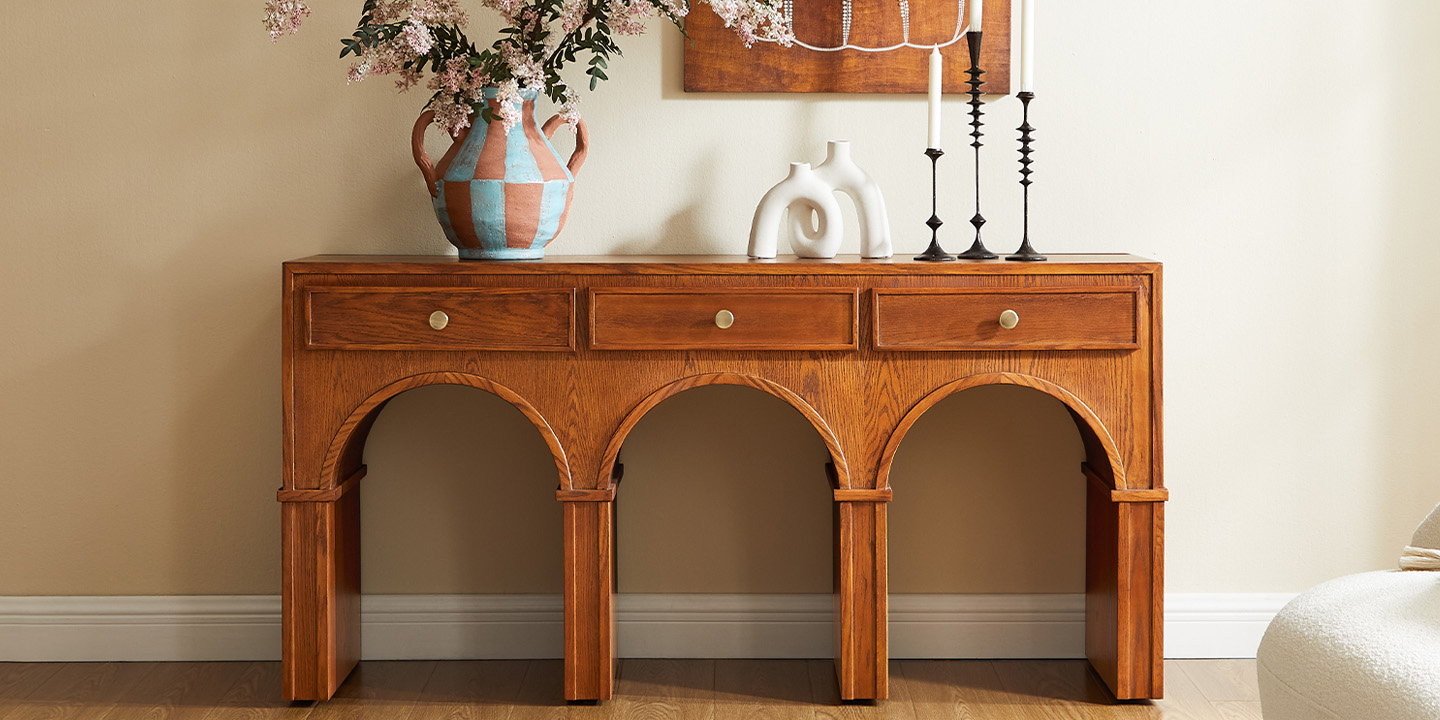
HERNEST Pick for Entryways: Solvind Console Table
For an entryway that makes an immediate architectural impression, the Solvind Console Table is an exceptional choice. Inspired by the arches of the Puente De Toledo, its sculptural form and warm oak grain create a functional work of art. The hidden drawer provides discreet storage for keys and mail, maintaining a clean, minimalist surface that speaks to modern naturalism.
In a Hallway
Long, narrow hallways can feel like afterthoughts. A console table interrupts the length, providing a visual resting point. Use it to display a single, dramatic piece of art or a collection of smaller objects to draw people through the space.
Behind a Sofa
Placing a console table behind a sofa is a clever way to add function in a living room. It can hold lamps for ambient lighting, a tray for drinks, or charging stations for devices, keeping them off side tables and within easy reach. Ensure the table is slightly lower than the sofa's back height.
Under a Window
A console table under a window creates a sunny spot for plants or a quiet place to display a collection of glass or ceramics. It transforms an unused wall into a focal point.
Framing a Fireplace
Floating a console table adjacent to a fireplace mantel, rather than directly in front of it, can create a balanced and curated vignette, anchoring the seating area around the hearth.
Common Console Table Placement Ideas
Console Table in an Entryway
In many American homes, the entryway is the first area guests see. A console table creates a practical landing zone for everyday essentials such as keys, wallets, mail, and decorative accessories.
Console Table Behind a Sofa
In open-concept homes, placing a console table behind a sofa is one of the most popular ways to define living areas without using walls or large furniture dividers.
Console Table in a Hallway
A hallway console table helps transform an empty passage into a functional design moment while maintaining comfortable walking space.
Console Table vs. Side Table: What's the Difference?
When comparing a console table vs side table, the biggest difference comes down to size, placement, and purpose. A console table is designed to support larger areas and create visual structure, while a side table provides convenient access beside seating furniture.
These two furniture pieces are often confused, but they serve distinct purposes. Understanding the difference is key to furnishing your home correctly.
| Feature | Console Table | Side Table (or End Table) |
|---|---|---|
| Primary Shape | Long and narrow | Compact and often square or round |
| Typical Placement | Against a wall, in an entryway or hallway | Next to or beside a sofa, armchair, or bed |
| Standard Height | 28-32 inches, similar to dining table height | Usually matches the height of the adjacent chair's arm (20-26 inches) |
| Core Function | Decorative display, transitional surface, subtle room divider | Functional support for a drink, lamp, or book within arm's reach |
| Depth | Shallow (12-18 inches) to maintain walkways | Deeper, proportionate to the seating it accompanies |
A side table is for utility within a seating arrangement. A console table is for defining a space and creating a moment. You wouldn't place a console table next to an armchair for your coffee, just as a large side table would look awkward and bulky in a narrow hallway.
Console Table vs Entry Table: What Is the Difference?
In practical terms, the answer is nuanced. An "entryway table" is simply a console table used in a specific context. The form is the same: a narrow, long table. However, the design intent for an entryway might prioritize durability and integrated storage more than a console used purely for display in a living room.
Think of it this way: all entryway tables are console tables, but not all console tables are ideally suited to be entryway tables. An entryway piece often benefits from a lower shelf for shoes or baskets, or a drawer for mail, while a console in a formal living room might be chosen purely for its aesthetic lines.
Can a Console Table Be Used as a TV Stand?
Yes, a console table can be used as a TV stand, but it requires careful consideration. This is an increasingly popular use, especially for slimmer, wall-mounted televisions.
Size and Weight: Ensure the table's length and width comfortably accommodate the TV's base or feet. Check the table's weight capacity against the TV's weight.
Depth: This is the most critical factor. A standard console table is 14-18 inches deep, which is shallower than a traditional media unit (often 18-24 inches). This works best for flat-screen TVs. If your TV has a deep stand, the console may be too shallow to support it safely.
Cable Management: Look for tables with open backs or pre-drilled holes to neatly manage cables.
Aesthetic: The slim profile of a console table can create a sleek, minimalist media setup that feels less bulky than traditional entertainment centers.
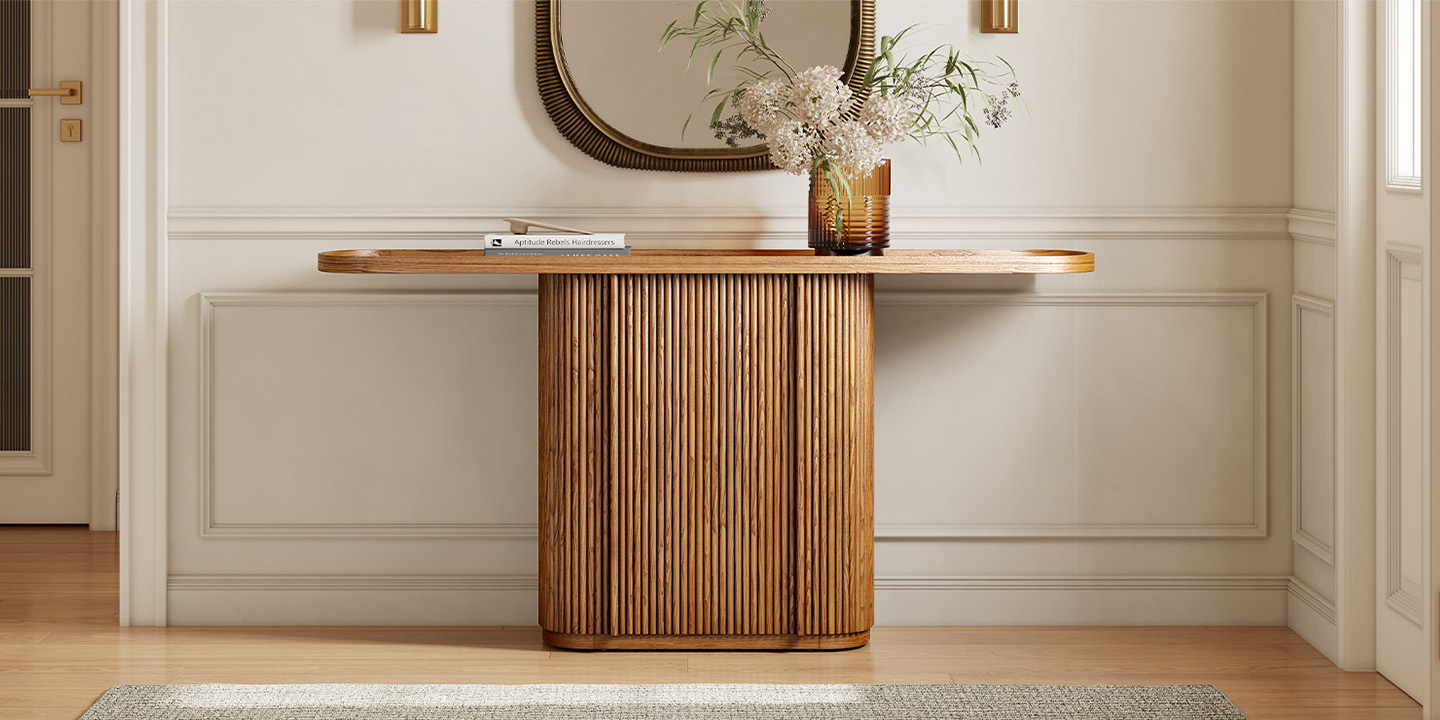
HERNEST Pick for Media and Living Spaces: Marisol Console Table
If you are considering a console for a media setup or as a stylish room divider, consider this option:
Its plump, rounded wooden strips and fluted detailing offer a modern look. With 26-inch high cabinets featuring adjustable shelves, it provides substantial concealed storage for media components, games, or living room essentials, all while maintaining a warm, tactile presence.
Best Materials for a Durable Console Table
Solid Wood Console Tables
Solid wood is one of the best materials for a durable console table because it offers:
Long-lasting strength
Natural grain patterns
Timeless appeal
Oak Console Tables
Oak is especially popular because it combines durability with warm natural tones that work well with modern, Scandinavian, and mid-century interiors.
How to Choose the Right Console Table
Selecting the perfect console table involves balancing form and function. Here’s what to consider:
Size & Proportion: Measure your space meticulously. In a hallway, leave at least 36-42 inches of walkway clearance. For a console table, the width should be proportional to the wall it sits on—aim for it to be slightly smaller than the wall's length.
Function: Determine its primary role. Is it for display, storage, or daily use? If you need to hide clutter, choose a style with drawers or cabinets. For a pure display piece, an open frame or a single shelf might be ideal.
Material & Durability: Consider the location. An entryway table should have a durable, easy-to-clean surface like the Renata Travertine-Textured Console Table, whose engineered stone top is both striking and resilient. In a low-traffic living area, the warmth of solid wood, like the oak used in the Rolf or Solvind, adds unmatched depth.
Style Harmony: Your console table should complement your existing decor. A mid-century modern home might call for the clean arches of the Solvind or Valborg collections, while a space emphasizing natural textures would be enhanced by the Renata's organic finish or the Marisol's warm fluting.
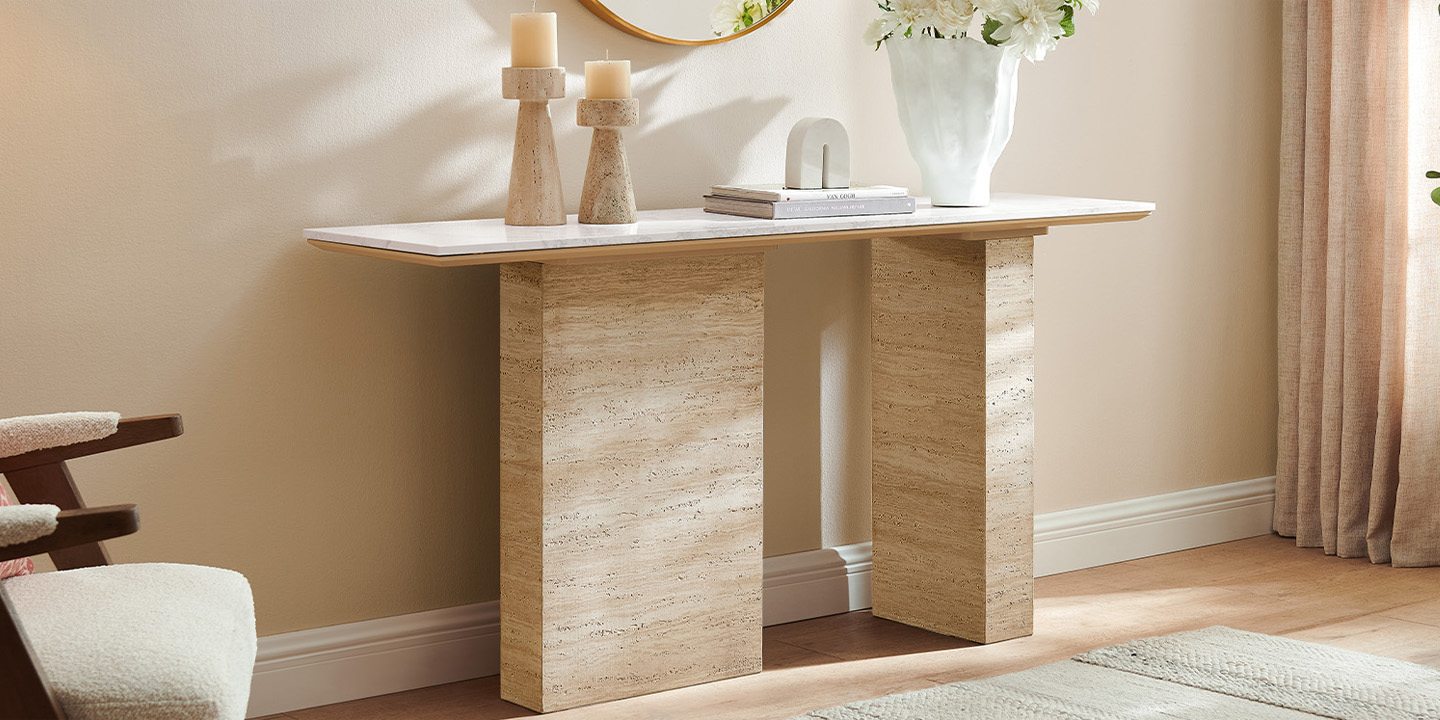
HERNEST Pick: Renata Travertine-Textured Console Table
Frequently Asked Questions About Console Tables
What height should a console table be?
Most standard console tables are 28 to 32 inches high, which aligns with average dining table height and works well for leaning on or placing lamps.
How deep is a typical console table?
The standard depth is between 12 and 18 inches. This narrow profile allows it to fit in tight spaces like hallways without obstructing movement.
Do console tables need to be against a wall?
While traditionally placed against a wall, they can also be used as stylish room dividers, especially when placed behind a sofa.
Can a console table be used in a bedroom?
Absolutely. It can serve as a sophisticated dressing table, a display surface for jewelry and perfumes, or a narrow media stand if you have a TV in the bedroom.
What's the best way to style a console table?
Use a mix of heights and textures. A large mirror or art piece above, a table lamp for height, a stack of books, and a personal object like a ceramic vase or sculpture creates a balanced and personal vignette.
What is the purpose of a console table?
A console table serves both decorative and practical purposes. It provides a surface for displaying lamps, artwork, plants, and accessories while also offering storage and organization in entryways, hallways, and living rooms.
Why is it called a console table?
The name console table comes from the French word "console," which originally referred to a supporting bracket. Traditional console tables were designed with decorative supports that made them appear attached to walls.
What is the difference between an entry table and a console table?
An entry table describes where the furniture is placed, while a console table describes its shape and design. A console table can be used as an entry table, but it can also be placed behind sofas, in hallways, or living spaces.
What is the difference between a console table and a side table?
A console table is longer and narrower, usually placed against walls or behind sofas. A side table is smaller and designed to sit beside chairs, sofas, or beds for convenient access to drinks, books, or lamps.
What are the best materials for a durable console table?
Solid wood, especially oak, is one of the best materials for a durable console table because it provides excellent strength, natural beauty, and long-term value.