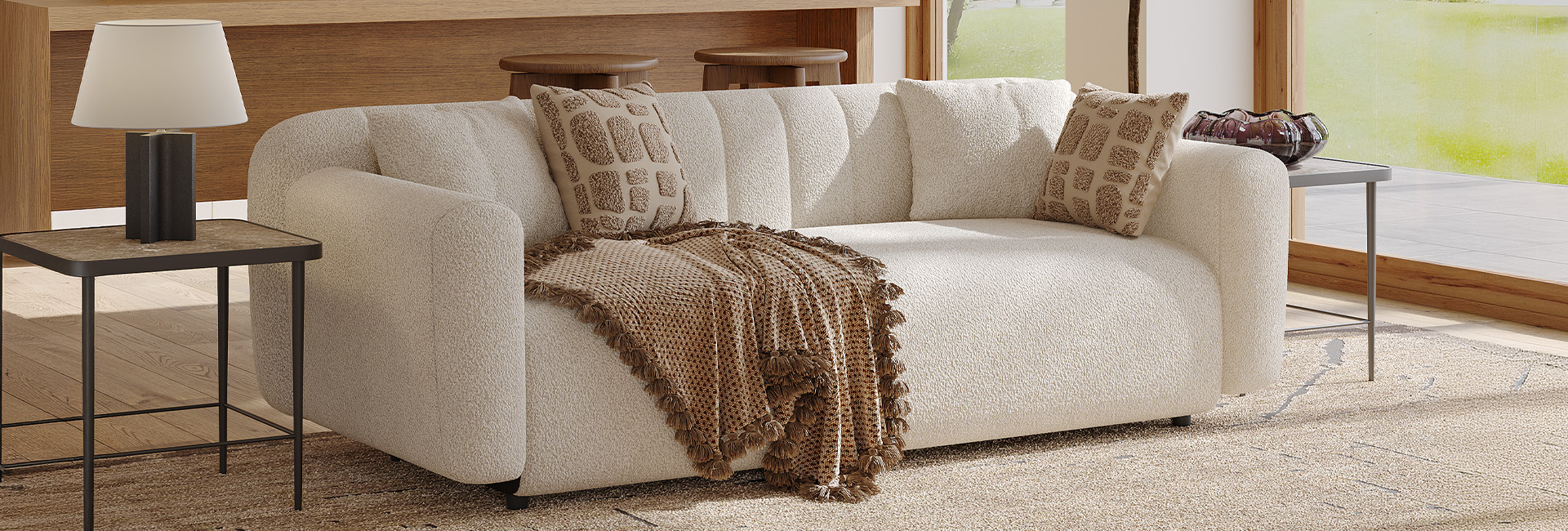
If you've started shopping, you've probably seen everything from $400 "deals" to sectionals that cost as much as a used car. The range is confusing—not because prices are random, but because what you're actually buying changes dramatically across levels. So, how much is a sofa in 2026?
Here is the short answer. In the U.S., most homeowners spend between $1,200 and $2,500 on a quality sofa that balances durability, comfort, and design. But whether you should land at $900 or $3,000 depends entirely on how you live, not just how you decorate.
This guide breaks down exactly what your money buys at every price tier, the hidden costs most guides ignore, and—most importantly—how to decide what "worth it" actually means for your home.
Table of Contents
- How Much Is a Sofa in the U.S. Right Now?
- What Is the Average Price for a Sofa in the U.S.?
- What Actually Determines Sofa Price? (Beyond the "Brand Tax")
- Is ,000 Too Much for a Couch?
- How Much Should You Really Spend? (Your 2026 Decision Framework)
- The Hidden Costs Most Buyers Forget
- Why "Premium Mid-Range" (,800–,200) Is the Smartest Buy in 2026
- FAQs
How Much Is a Sofa in the U.S. Right Now?
To give you an immediate anchor, here is the 2026 pricing landscape. Use this as your "cheat sheet" before diving deeper.
The 2026 reality: Inflation and material costs have pushed the "old" $1,000 sofa into the $1,300–$1,500 range. If your budget is under $800, you are firmly in "temporary" territory. If you need this sofa to last through daily life, kids, and pets, plan to start at $1,200+.
What Is the Average Price for a Sofa in the U.S.?
Data suggests the average American household spends between $1,400 and $1,800 on a new, full-size sofa.
However, "average" can be misleading.
Online DTC Brands: Usually fall between $1,200–$2,200. You are paying for fewer middlemen, but quality varies wildly.
Traditional Retail Stores: Often range from $1,500 to $3,000. You are paying for showroom overhead.
Big Box Stores: Can hit $600–$1,200, but frame quality is often downgraded to hit that price tag.
Prices also vary by region. Buyers in NYC or LA often pay 10-15% more for delivery and higher warehousing costs compared to the Midwest. "Free shipping" is never free—it's built into the margin.
What Actually Determines Sofa Price? (Beyond the "Brand Tax")
To move beyond guesswork, you need to look under the cushion—literally. Here is what separates a $900 sofa from a $2,200 sofa.
1. Materials: The Obvious, But Often Misleading Factor
Frame: Kiln-dried hardwood (oak, poplar, rubberwood) costs more but prevents sagging. Plywood or particle board will warp.
Upholstery: Polyester is cheap. Bouclé, top-grain leather, or performance weaves cost more but offer texture and longevity.
Cushions: Low-density foam flattens in 1-2 years. High-resiliency foam or wrapped feather blends (often found in the $2,000+ range) hold their shape.
2. Construction & Craftsmanship
A fast-assembled sofa using staples will fail at the joints. Mortise and tenon or dowel-reinforced joints, combined with corner blocking, separate sofas that last 3 years from those that last 15.
3. Size & Configuration
A standard sofa uses less material than a large sectional. Modularity adds cost—the engineering required to make pieces lock together securely while remaining easy to separate is significant.
4. Brand Positioning & Design Value
This is where HERNEST sits. Design-driven brands in the $1,800–$2,200 range aren't "expensive"—they are priced for craft. You are paying for a silhouette that doesn't look dated in two years, and proportions that actually fit a human body.
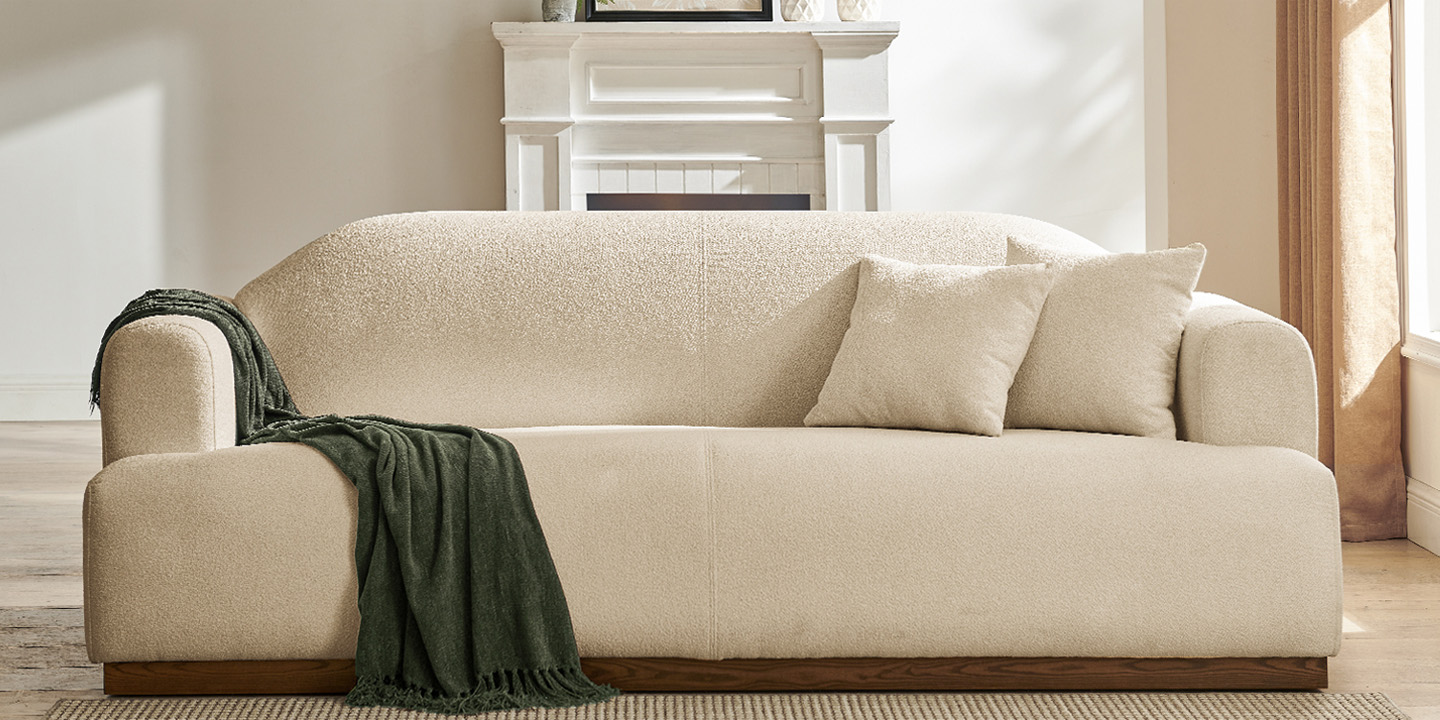
The Brise 91" Sofa sits at the premium end of the mid-range tier. Its cost reflects solid wood construction, a plush bouclé texture inspired by mid-century organic forms, and generous seat depth. You aren't paying for a logo; you are paying for a streamlined silhouette that turns your living room into a curated space, not a furniture showroom.
Is $5,000 Too Much for a Couch?
This is one of the most searched questions in furniture, and the answer isn't "yes" or "no"—it's "it depends."
Yes, $5,000 is too much IF:
You are in a temporary home.
The price comes purely from a luxury label badge, not materially better construction.
You prioritize trends (bright colors, ultra-specific shapes) over longevity.
No, $5,000 is not too much IF:
It uses museum-grade materials (solid walnut, full-aniline leather).
It is fully customizable and hand-built.
It anchors a large, primary living space you use daily.
But here is the logic most guides miss: The Cost Per Year Rule.
Stop looking at the price tag. Look at the annual cost of ownership.
A $5,000 sofa used for 15 years = $333/year.
A $1,200 sofa that sags and looks worn out in 4 years = $300/year.
They cost almost the same per year.
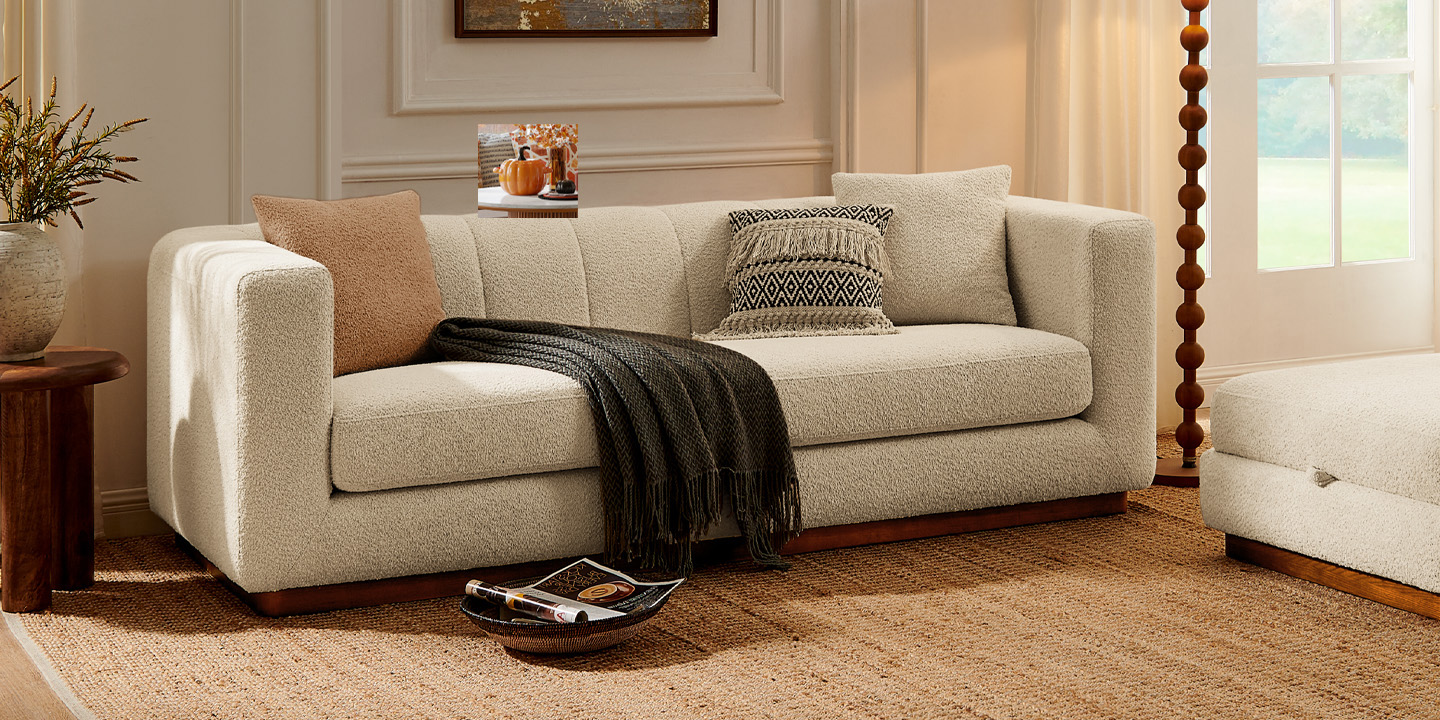
This is why the "cheaper" option is often the financially worse decision. A well-constructed sofa in the $2,000 range—like the Svalbard 90" Sofa with Ottoman —is engineered for longevity. With its solid frame, generous 25.5" seat depth, and integrated ottoman storage, it's designed to function beautifully for a decade. At $213 per year over 10 years, it isn’t an expense; it's an amortized investment in your daily comfort.
How Much Should You Really Spend? (Your 2026 Decision Framework)
Stop comparing price tags in isolation. Use this simple framework based on your actual life stage, not just your budget.
For most HERNEST customers, the "Growing Family" or "Design Upgrade" brackets apply.
If you love the warm, textured look of bouclé but need it to work in a modern, non-fussy space:
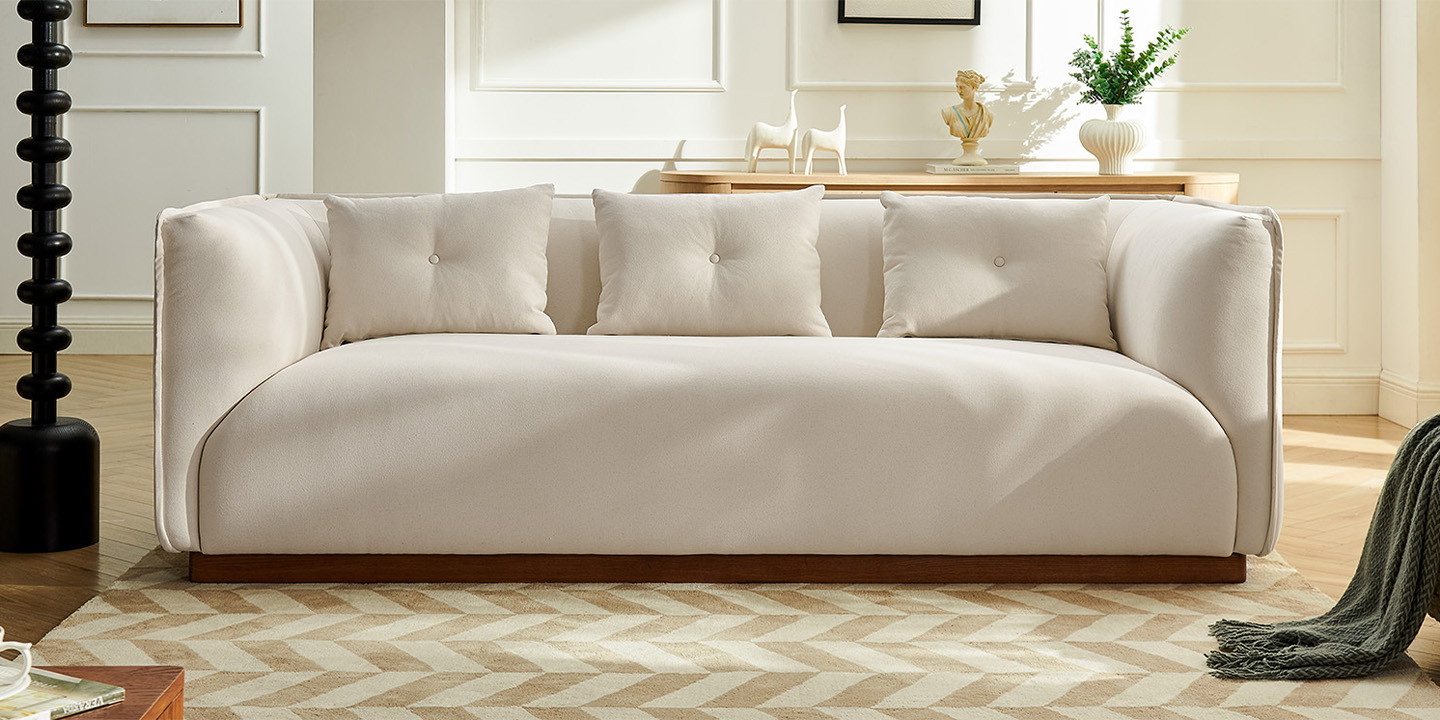
The Enkel 91" Sofa delivers that relaxed silhouette without the impracticality of ultra-low backs. It's designed for actual TV watching and conversation, not just looking pretty in a catalog. (Note: Product link available upon request)

The Hidden Costs Most Buyers Forget
Povison mentions assembly. Castlery mentions value. Both miss the full financial picture. Here is the real math:
Shipping & White Glove Delivery: “Free shipping” usually means curbside. Getting it inside and set up can cost $100–$250 extra. If a brand includes threshold delivery and setup in the price, that’s $200+ of hidden value.
Assembly Time: Flat-pack sofas take 45-90 minutes of your time. If your time is worth $50/hr, that’s a $40–$75 hidden cost.
Return Fees: Many budget brands charge 20-30% restocking fees + return shipping. A $1,200 sofa you dislike could cost you $400+ just to send back.
Fabric Protection: Stores push $100+ protection plans. Often, a high-quality performance fabric chosen upfront negates the need for this entirely.
HERNEST addresses this directly:
With 60-Day Returns and a 3-Year Warranty, the risk of your investment is minimized. You aren't gambling on a final sale.
Why "Premium Mid-Range" ($1,800–$2,200) Is the Smartest Buy in 2026
Here is the synthesis of this entire guide.
The $900–$1,200 market is crowded with "good enough" sofas. They look fine in photos. They feel okay in the first year.
The $3,000+ market is for specific use cases (extreme luxury, massive sectionals).
The "sweet spot" for 2026 is $1,800–$2,200.
At this price:
You exit the “particle board” danger zone entirely.
You access designer-led aesthetics (like the vertical panelling of Svalbard or the rounded minimalism of Brise).
You get suspension systems and cushion densities that don’t degrade in 24 months.
You often receive concierge delivery (in-room placement).
It is the "buy once, cry once" threshold for the modern home.
FAQs
How much is a sofa?
In the U.S., sofas range from 0 for basic budget models to over ,000 for luxury. The majority of quality, long-lasting sofas for everyday family use fall between ,200 and ,500.
What is the average price for a sofa?
The average American spends between ,400 and ,800 on a new, full-size sofa. However, to ensure solid hardwood frames and high-density cushions, expect to be at the higher end of this range or slightly above.
How much does a typical 3-seater sofa cost?
A typical 91" (standard 3-seater) sofa with decent quality starts around 0, but a well-built, durable, and design-led 3-seater typically costs ,600–,200.
Is ,000 too much for a couch?
It depends. It is too much for a standard, non-custom piece. It is not too much for a large, fully customizable, heirloom-quality sectional or a designer piece made from premium materials like solid walnut and full-grain leather. Use the Cost Per Year rule to evaluate.
What is a realistic budget for a sofa?
A realistic budget for a sofa you intend to keep for 5-10 years is ,500–,500. This range offers the best return on investment in terms of comfort, durability, and style retention.
Why are some sofas so much more expensive?
Higher price usually reflects better materials (solid hardwood frames vs. plywood), superior construction (reinforced joinery), premium upholstery (bouclé, top-grain leather), and included services like white-glove delivery.
When is the best time to buy a sofa in the U.S.?
Major furniture sales occur during President's Day (February), Memorial Day (May), Labor Day (September), and Black Friday (November). However, many DTC brands like HERNEST offer new customer incentives or bundle discounts year-round.