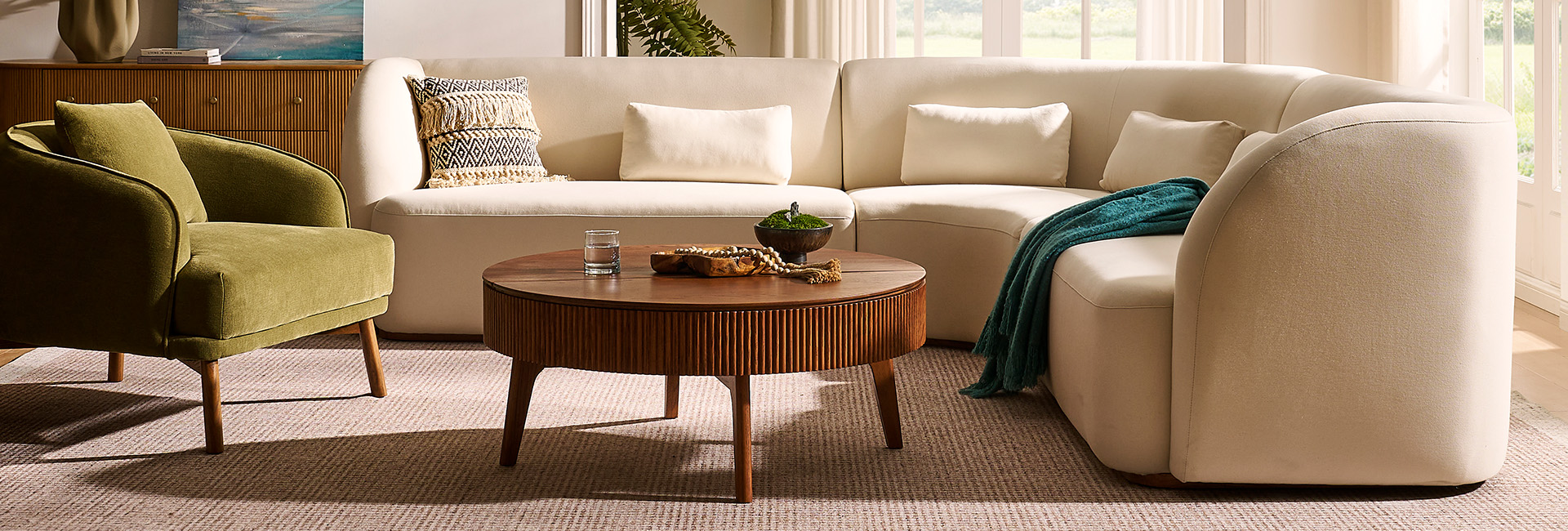
Getting the distance right between your coffee table and sofa is a crucial part of a functional, flowing living room layout. While a coffee table is often the centerpiece of a living space, its placement can either enhance your room's comfort or create a daily obstacle. This ultimate guide combines the precision of a how-to article with the forward-thinking perspective of design trends, providing you with clear measurements, design rules, and practical tips to create the perfect setup.
This guide will cover everything from the ideal inches and centimeters of clearance to understanding key design principles like the 2/3 rule. We'll also explore how to choose the right coffee table dimensions and shape for your space, ensuring your living room is both stylish and perfectly livable.
Table of Contents
- What Is the Proper Distance Between a Sofa and a Coffee Table?
- Is a Coffee Table 15 Inches From the Couch Okay?
- What Is the 2/3 Rule for Sofas and Coffee Tables?
- Where Should a Coffee Table Be Placed in a Living Room?
- Coffee Table Size Guide: Width, Height, and Proportions
- Choosing the Right Shape: Round vs. Oval Coffee Tables
- Common Coffee Table Spacing Mistakes to Avoid
- Final Checklist: Perfect Coffee Table Placement at a Glance
- FAQs
What Is the Proper Distance Between a Sofa and a Coffee Table?
The ideal distance for both comfort and function is typically between 14 and 18 inches (approximately 35 to 45 centimeters). This range allows you to easily reach for a drink or book while still having enough legroom to get in and out of your sofa comfortably.
For different room sizes and needs, you can refer to this spacing guide:
Is a Coffee Table 15 Inches From the Couch Okay?
Yes, a 15-inch distance is an excellent choice. This measurement sits in the sweet spot of the ideal range and is considered by many designers to be a "goldilocks" distance—not too close, not too far.
-
Why it works: 15 inches provides ample legroom for most people while keeping the table surface easily accessible from a seated position. It balances spaciousness with practicality.
-
Best for: This distance is highly versatile and works well in the majority of living rooms with standard-sized sofas.
-
Consider less: You might opt for the minimum 12 inches if your room is particularly compact or if you have a lower-profile sofa.
-
Consider more: Choose a distance of 18 inches or more if you have a very deep sofa, prefer a more formal and open feel, or need to accommodate high-traffic walkways.
What Is the 2/3 Rule for Sofas and Coffee Tables?
Beyond distance, proportion is key. The 2/3 rule is a classic design guideline that states your coffee table should be roughly two-thirds the length of your sofa. This creates a balanced and harmonious visual relationship between the two main pieces.
-
Quick Example: For a standard 90-inch long sofa, look for a coffee table around 60 inches in length.
-
For Sectional Sofas: With an L-shaped sectional, the coffee table should generally be about two-thirds the length of the main seating side it faces.
-
For Loveseats: A smaller sofa pairs well with a more compact coffee table or even a set of nesting tables, maintaining the proportional feel.
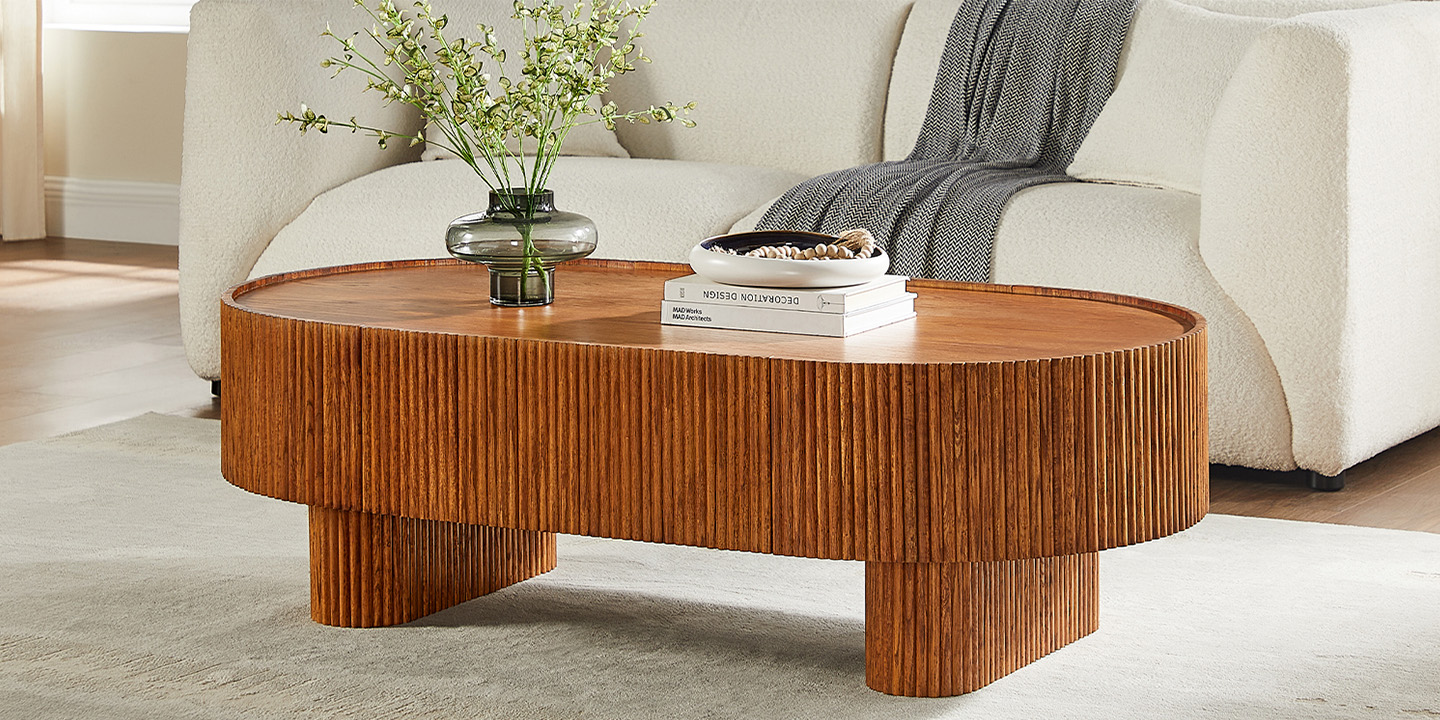
An oval table like the Marisol Oak Coffee Table is a great candidate for applying the 2/3 rule. Its 55-inch length makes it a proportionate fit for sofas around 82 inches long.
Where Should a Coffee Table Be Placed in a Living Room?
Placement depends on your furniture arrangement and how you use the space.
-
Centered with a Standard Sofa: The most common and balanced placement is to center the coffee table directly in front of your sofa, maintaining the 14-18 inch gap.
-
With a Sectional: In an L-shaped sectional corner, center the table within the "L" to ensure it's accessible from both sides. Allow for similar clearance on all sides.
-
Offset Placement: For a more dynamic look or in a room with a strong focal point like a fireplace, you can offset the table slightly. Just ensure it remains within easy reach of the primary seating.
-
In Relation to the TV: There’s no single rule, but the coffee table should not obstruct the view from the sofa to the TV. A good practice is to ensure a clear "viewing corridor." In a typical setup, the coffee table will sit roughly halfway between the sofa and the media console.
Coffee Table Size Guide: Width, Height, and Proportions
Choosing the right size is as important as placing it correctly.
-
Height: The tabletop should be level with or just slightly lower (1-2 inches) than the seat cushion of your sofa. This makes reaching for items natural and comfortable.
-
Width/Depth: As a general guide, your coffee table should be between one-half and two-thirds the width of your sofa. A table that's too narrow looks insignificant; one that's too wide can overwhelm the space and hinder movement.
Here is a quick reference for width:
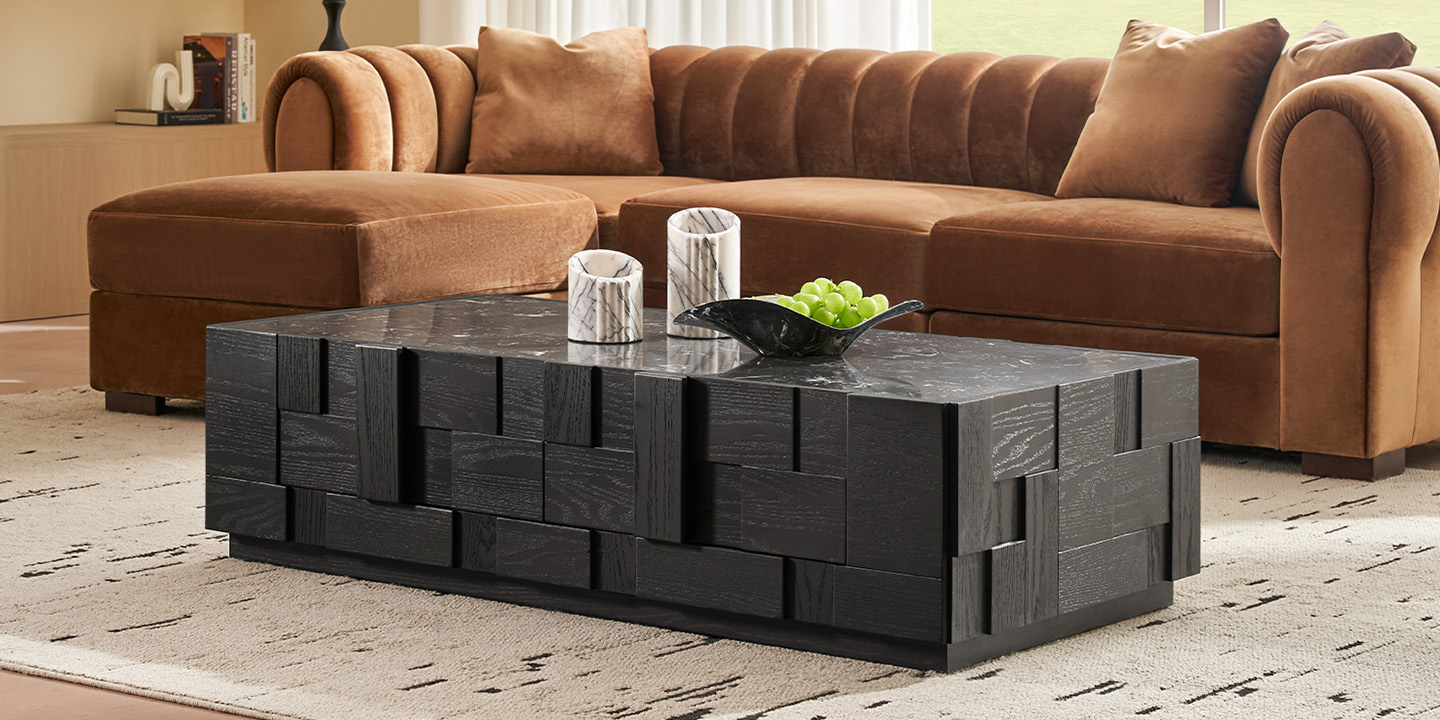
For spaces that demand both presence and storage, a table like the Casimir Coffee Table offers substantial surface area and hidden drawers, fitting well with larger sofas according to these proportional guidelines.
Choosing the Right Shape: Round vs. Oval Coffee Tables
The shape of your table affects both the room's flow and its style.
-
Round Coffee Tables:
-
Advantages: Excellent for traffic flow with no sharp corners, making them ideal for homes with children. They encourage conversation from all sides and can soften a room with lots of angular furniture.
-
Best For: Smaller rooms, rooms with high traffic, and creating a softer, more social atmosphere.
-
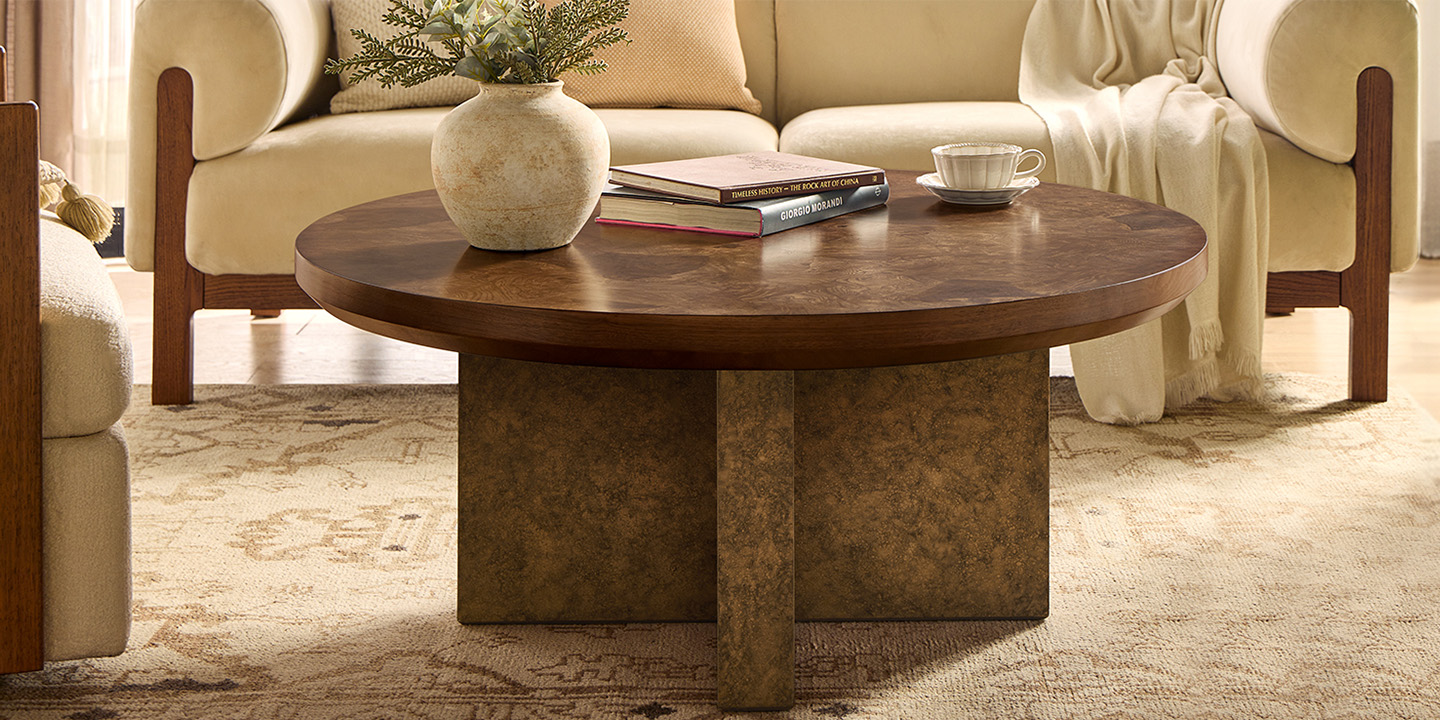
A table like the Colle Round Burl Coffee Table is a perfect example, offering a soft, sculptural form that works beautifully in cozy or eclectic spaces.
-
Oval Coffee Tables:
-
Advantages: Combine the softness of a round table with the greater surface area and directional feel of a rectangle. They can make a room feel more elongated and are often easier to navigate around than rectangular tables.
-
Best For: Narrower rooms, pairing with long sofas, and those who want a gentle shape without sacrificing too much usable table space.
Common Coffee Table Spacing Mistakes to Avoid
-
Too Far Away (>20 inches): Forces you to stretch uncomfortably to reach drinks, making the table impractical.
-
Too Close (<12 inches): Makes getting in and out of the sofa feel like a hurdle and can make the space feel cramped.
-
Table Too Large for the Sofa: A table that dwarfs the sofa or extends far beyond its arms disrupts visual balance and consumes valuable floor space.
-
Ignoring the Rug: If you use an area rug, all front legs of the sofa and the coffee table should ideally sit on it to anchor the space. The coffee table should be centered on the rug.
-
Blocking Traffic Lanes: Always ensure at least 24 inches (60 cm) of clear walking space around the entire seating area, including around the coffee table.
Final Checklist: Perfect Coffee Table Placement at a Glance
Before you finalize your layout, run through this list:
-
Distance Check: 14-18 inches between the sofa's front edge and the table.
-
Proportion Check: Table length is roughly 2/3 of the sofa length.
-
Height Check: Tabletop is level with or just below the sofa seat cushion.
-
Traffic Flow: At least 24 inches of walking space around the grouping.
-
Focal Point: The arrangement maintains a clear view to the room's focal point (TV, fireplace, etc.).
-
Rug Alignment: Both furniture pieces are anchored on the area rug (if using one).
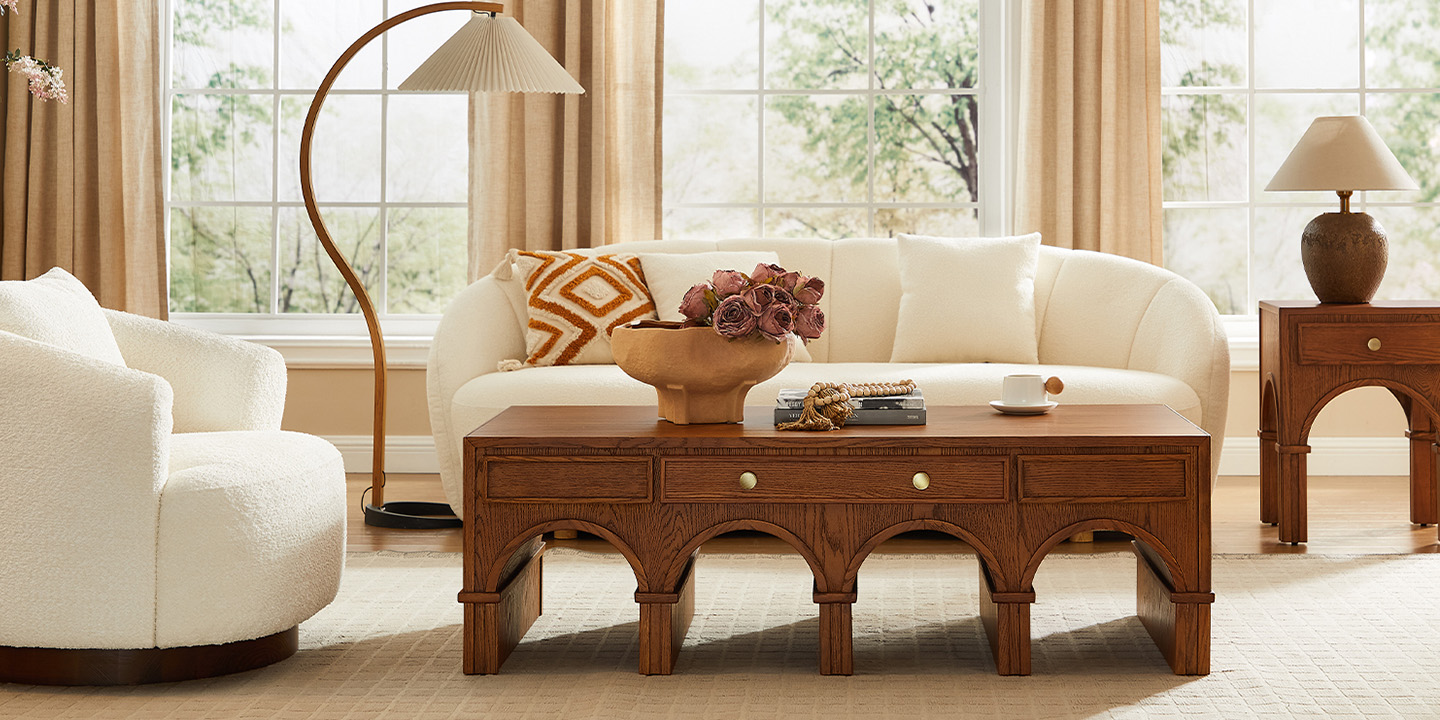
FAQs
What is the minimum safe distance between a sofa and a coffee table?
The absolute minimum for functional clearance is 12 inches (30 cm). Any less will likely feel cramped and hinder comfortable seating.
Can I use an ottoman instead of a coffee table?
Absolutely. As noted by designers, ottomans are a popular, casual alternative. For a hard surface, simply add a large tray on top to hold items. This offers great flexibility and extra seating.
My living room is very small. Do I even need a coffee table?
Not necessarily. Designers emphasize that in small spaces, traditional coffee tables can waste square footage. Consider flexible alternatives like nesting tables, a storage trunk, or simply using sturdy side tables to free up floor space.
How do I measure the distance correctly?
Measure from the front edge of the sofa's seat cushion (where you sit) to the nearest edge of the coffee table. This is your functional clearance zone.
Does the 2/3 rule apply to round coffee tables?
Yes, but you consider the diameter. The diameter of a round coffee table should also be roughly two-thirds the length of the sofa it faces for visual balance.