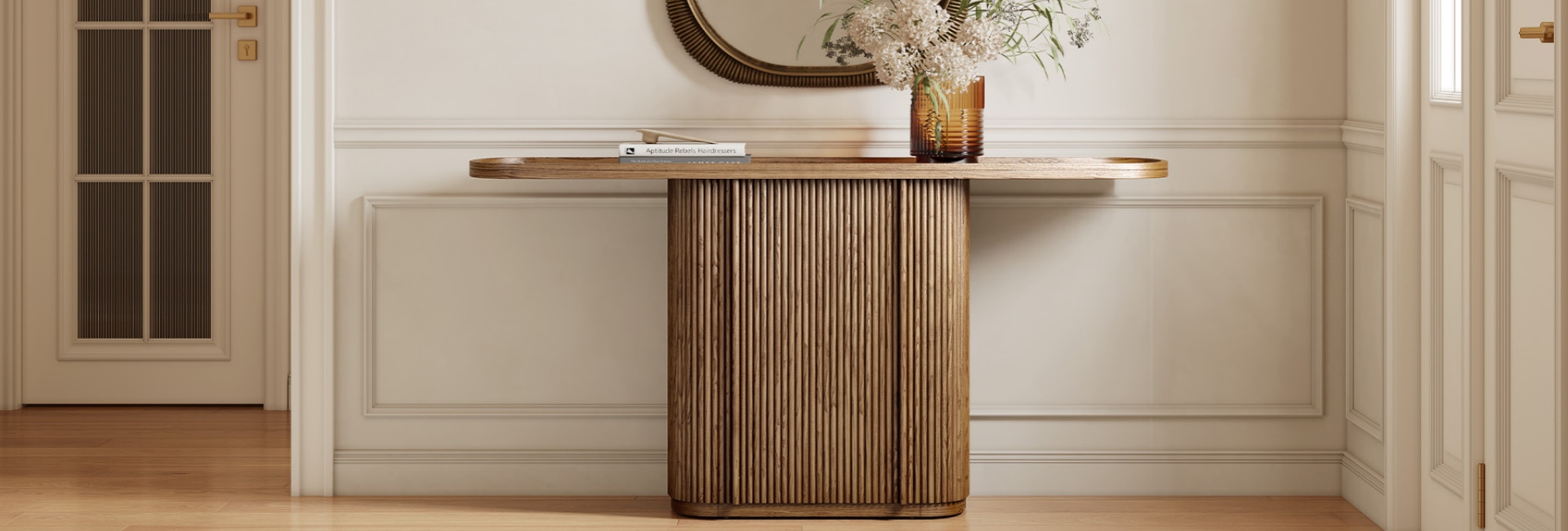
An empty entryway, a narrow hallway, or the space behind a sofa can be difficult to furnish. A console table offers a practical way to use these areas without adding the bulk of a full-size cabinet or desk. Depending on its design, it can hold everyday essentials, display decorative objects, provide extra storage, or help connect different parts of a room.
The best console table is not necessarily the largest or most decorative option. Its dimensions, storage capacity, materials, and placement should match the space and how you plan to use it. This guide covers console table ideas for different rooms, the main styles to consider, typical dimensions, and practical ways to choose and style one.
Table of Contents
- What Is a Console Table?
- Console Table Ideas for Different Rooms
- Types of Console Tables to Consider
- Console Table vs. Entryway Table vs. Side Table
- How to Choose the Right Console Table
- Typical Console Table Dimensions
- How to Style a Console Table Without Cluttering It
- When Should You Avoid Using an Entry Table?
- Find a Console Table That Fits Your Space
- FAQs
- What Are the Different Types of Console Tables?
- What Is a Console Table Used For?
- What Is the History of the Console Table?
- How Do You Choose a Console Table?
- What Is the Difference Between a Console Table and an Entryway Table?
- When Should You Avoid Using an Entry Table?
- What Are Typical Dimensions for Console Tables?
What Is a Console Table?
A console table is a relatively narrow, often rectangular table designed to sit against a wall or behind a sofa. Compared with a coffee table or dining table, it generally has a smaller depth and a more compact footprint, making it useful in transitional spaces and along walls.
Console tables come in a range of designs, from simple open-leg frames to models with drawers, shelves, cabinets, or decorative bases. Some prioritize display space, while others provide concealed storage for items such as keys, mail, chargers, and small household accessories.
What Is a Console Table Used For?
A console table can serve several purposes depending on its location:
Entryway: Keep keys, mail, and other everyday essentials within reach.
Living room: Fill the space behind a sofa or create a display area against a wall.
Hallway: Add a surface for artwork, a lamp, or a small decorative arrangement.
Dining room: Hold serving accessories, table linens, or items used when entertaining.
Bedroom: Provide a compact surface for accessories, books, or decorative objects.
Home office: Keep supplies organized when a full desk is unnecessary.
The key is to choose a design that supports the room's actual needs. A table with drawers may be more useful near an entrance, while an open-frame design can suit a living room where visual lightness matters.
Console Table Ideas for Different Rooms
A console table can work in several parts of the home, but the most effective setup depends on the available space and the activities that happen there.
1. Create a Functional Entryway
An entryway console table gives everyday items a designated place as you come and go. A model with one or two drawers can keep keys, sunglasses, and mail out of sight, while the tabletop remains available for a small tray or lamp.
For a compact entrance, look for a shallow design that leaves enough room for the door to open and people to pass comfortably. A round mirror above the table can soften the arrangement, while a wall-mounted mirror can be useful when floor space is limited.
Practical idea: Place a small catchall tray near the door-facing side of the table and reserve the remaining surface for one decorative object. This keeps the setup useful instead of turning it into a drop zone for clutter.
2. Use a Console Table Behind a Sofa
The space behind a sofa can look unfinished, especially when the back of the sofa faces an open dining area or entryway. A console table can create a visual transition between the seating area and the rest of the room.
Choose a table that complements the sofa's length and height. A pair of table lamps can provide additional ambient lighting, while a few books or low-profile accessories can add interest without crowding the surface.
Before buying, check the space between the sofa and the wall or walkway. The table should not obstruct a passage, interfere with reclining furniture, or make it difficult to reach outlets.
Practical idea: In an open-plan living room, use the console table to visually define the seating zone. Keep the decoration relatively low if you want the room to feel open and connected.
3. Make a Narrow Hallway More Useful
A long hallway may have enough room for a slim console table but not for a deep cabinet. A narrow design can introduce a useful surface without taking up as much floor space.
Wall art or a mirror can help the arrangement feel intentional. If the hallway receives little natural light, a suitable lamp may also make it feel more welcoming, provided there is a safe and convenient way to power it.
Measure the narrowest part of the passage before selecting a table. A design that looks slim in a product photo may still reduce the usable walking area in your home.
Practical idea: Choose a simple frame and limit the tabletop to a few items. In a tight hallway, open space around the furniture often matters more than adding extra decoration.
4. Add a Serving Surface to the Dining Room
A console table can provide extra surface space in a dining room, particularly when you do not have room for a larger sideboard. It can hold serving pieces, folded napkins, or decorative items when the table is not in use.
If you need substantial storage for dinnerware, glassware, or table linens, a sideboard may be a better fit. Console tables generally work best when you need a smaller surface rather than the capacity of a full storage cabinet.
For occasional entertaining, keep the tabletop flexible so you can clear it quickly when you need additional serving space.
5. Add a Compact Surface to a Bedroom
In a bedroom, a console table can hold a jewelry tray, books, or a small lamp. It may also work beneath a wall mirror or piece of artwork when a traditional vanity or larger dresser would take up too much room.
Think about the height of nearby furniture and the way you move around the room. A table that blocks a wardrobe door or narrows the route between the bed and the wall will be less useful, even if its design suits the space.
For everyday organization, consider drawers or a lower shelf rather than relying entirely on the tabletop.
Types of Console Tables to Consider
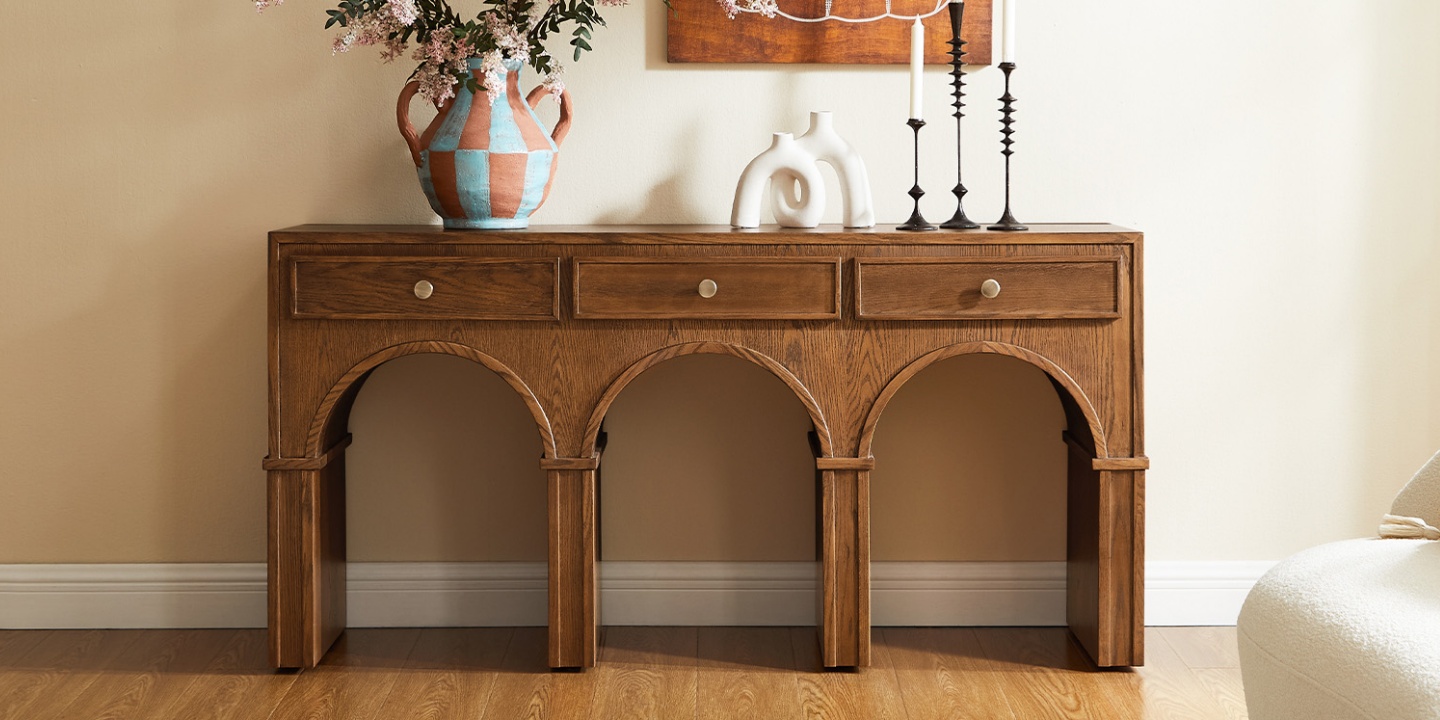
Console tables vary in shape, storage, construction, and appearance. The right type depends on whether you prioritize display space, organization, or a particular room layout.
1. Open-Frame Console Tables
Open-frame console tables feature exposed legs and a relatively unobstructed base. Their lighter appearance can work well in narrow hallways, smaller entryways, and rooms where a bulky piece of furniture would feel overwhelming.
They are a good choice for displaying decorative objects, but they offer limited concealed storage. If you need to hide mail, electronics, or miscellaneous items, consider a model with drawers or cabinets instead.
2. Console Tables With Drawers
A console table with drawers provides a place to store smaller belongings while keeping the tabletop relatively clear. This design is particularly useful in entryways, where keys, wallets, and mail tend to accumulate.
Check the drawer dimensions and internal layout rather than judging storage capacity by appearance alone. Also consider whether the drawers can open fully without hitting a nearby wall, sofa, or other piece of furniture.
3. Console Tables With Shelves
Models with lower shelves provide additional room for baskets, books, or decorative objects. They can be useful when you want visible storage without the closed appearance of a cabinet.
However, open shelving makes stored items part of the overall look. Use baskets or a consistent arrangement if you want the space to appear organized.
4. Console Tables With Cabinets
A console table with cabinet storage conceals items behind doors, giving the room a cleaner appearance. This option can be useful in living rooms and entryways where you want a combination of display space and hidden storage.
Before choosing one, check the depth of the cabinet, shelf configuration, door swing, and any stated weight limits. A compact exterior does not necessarily mean every model will accommodate larger household items.
5. Minimalist and Decorative Console Tables
Some console tables emphasize clean lines, simple silhouettes, and restrained detailing. Others feature sculptural legs, distinctive bases, contrasting finishes, or more decorative hardware.
When choosing a design, consider the furniture already in the room. A table does not need to match every finish, but its proportions and materials should feel compatible with the surrounding pieces.
Console Table vs. Entryway Table vs. Side Table
These terms can overlap, so the distinction is often more about placement and function than a strict furniture classification.
What Is the Difference Between a Console Table and an Entryway Table?
A console table describes a style of furniture, while an entryway table describes a table by its location or intended use. An entryway table can be a console table, but it does not have to be.
For example, a narrow console with drawers can work well beside an entrance. A small cabinet or round table may also serve as an entryway table if its shape and dimensions suit the space.
What Is the Difference Between a Console Table and a Side Table?
The main difference is usually the intended placement and proportions. A console table is generally longer and narrower, making it suitable for walls, hallways, and the back of a sofa. A side table is often smaller and designed to sit next to a seat or bed.
If you need a surface for a lamp, remote control, or drink beside an armchair, a side table may be more convenient. If you need a longer surface along a wall, a console table is usually the more practical option.
How to Choose the Right Console Table
The most suitable console table should fit the available space, support its intended use, and work with the furniture around it. Evaluate these factors before making a purchase.
1. Measure the Available Space
Measure the width, depth, and height of the area where you plan to place the table. Check nearby doors, drawers, windows, vents, outlets, and walkways to make sure the furniture will not interfere with them.
For a hallway or entryway, pay particular attention to the remaining walking space. A table may fit against the wall but still make the passage feel cramped.
For a table behind a sofa, measure the actual gap and consider how far the sofa projects into the room. Do not rely on the room's overall dimensions alone.
2. Choose a Height That Suits Its Use
A console table should relate comfortably to the furniture and objects around it. For a table behind a sofa, compare its height with the sofa back. For an entryway table, consider whether the surface will be convenient for placing and retrieving everyday items.
If you plan to use table lamps, check the height of the lamp and shade in relation to nearby seating and artwork. The combined arrangement should look balanced without blocking views or creating glare.
3. Decide How Much Storage You Need
Think about what the table will hold on a typical day.
Display only: An open-frame table may be enough.
Small everyday items: Drawers can help keep the surface clear.
Books or baskets: A lower shelf can provide accessible storage.
Items you want to conceal: Look for doors or enclosed compartments.
Check the dimensions of the actual storage spaces, not just the overall table size. A drawer may be too shallow for the items you want to keep in it.
4. Compare Materials and Construction
Console tables are available in wood, metal, glass, stone, and combinations of materials. Each has different visual and maintenance considerations.
Wood: Offers a range of grain patterns, tones, and finishes. Check the product specifications to distinguish solid wood from veneer or other wood-based construction.
Metal: Can create a slim profile and a more industrial or contemporary appearance. Check the finish and care instructions.
Glass: Helps maintain a visually open look, although fingerprints and dust may be more noticeable.
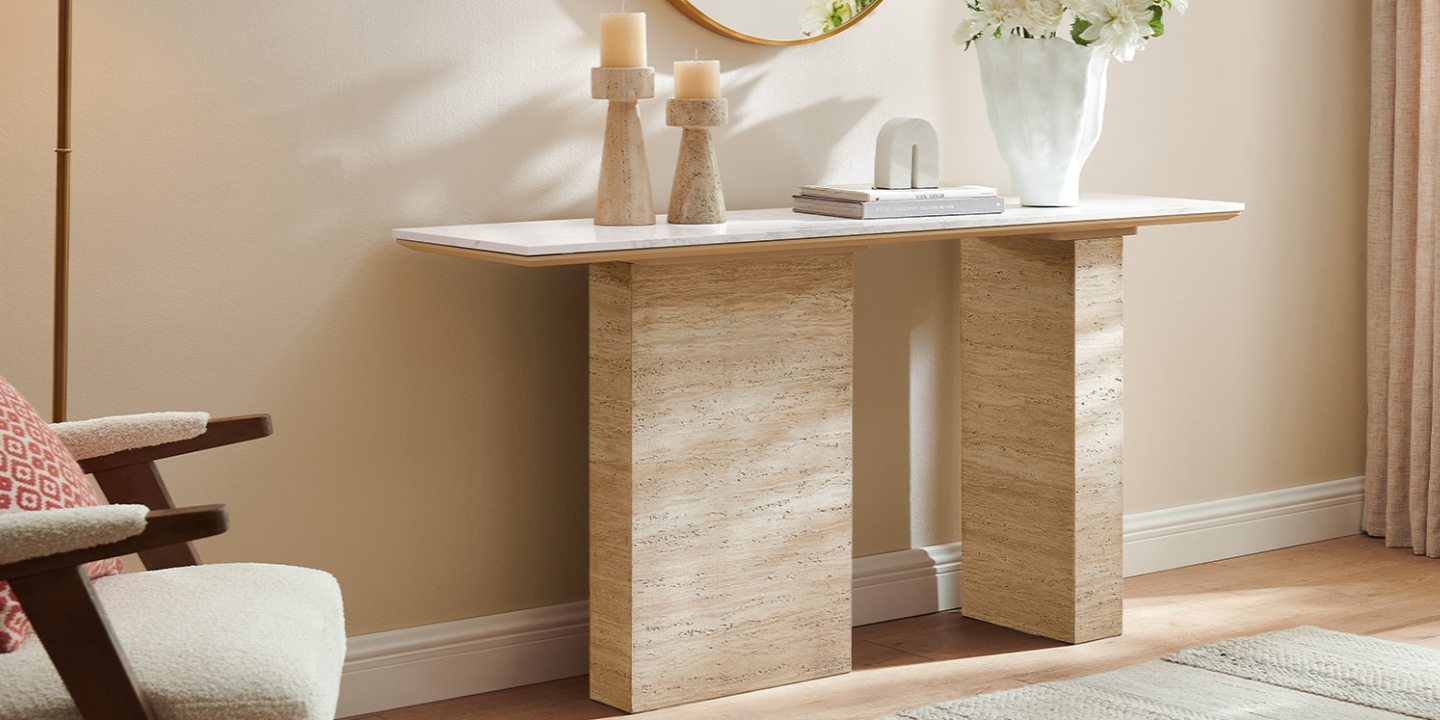
Stone and stone-look surfaces: Can create a substantial, textured appearance. Confirm whether the surface is natural stone, engineered material, or a decorative finish.
Also review the product's stated weight capacity, assembly requirements, care instructions, and finish details. Material names alone do not tell you how durable a particular table will be.
5. Match the Design to the Room
Consider the surrounding furniture, flooring, lighting, and wall finishes. A console table can coordinate with the room without matching every piece exactly.
For example, a warm wood finish may complement a room with natural wood furniture, while a slim metal frame may work well alongside other furniture with exposed metal details. If the room already has several prominent patterns or decorative finishes, a simpler table may provide visual balance.
The goal is to make the table feel connected to the room rather than like an unrelated addition.
6. Check Stability and Assembly Details
A console table may be used to hold lamps, framed photographs, books, and other objects, so stability matters. Review the product's construction details, stated weight limit, and any wall-anchoring instructions.
Tall, narrow furniture may be more susceptible to tipping, especially in homes with children or pets. Follow the manufacturer's safety guidance and use the supplied or recommended anchoring hardware where applicable.
Typical Console Table Dimensions
Console tables do not have one universal standard size. Their dimensions vary by design, intended location, and storage configuration. The ranges below are general shopping references to help you narrow down your options, not fixed industry standards.
Always check the specific product dimensions before ordering. A table's legs, drawers, cabinet doors, and overhanging top can affect how much usable space it occupies.
How Long Should a Console Table Be Behind a Sofa?
A useful starting point is to choose a console table that is shorter than the sofa and visually balanced with its overall length. Some shoppers use roughly two-thirds to three-quarters of the sofa's length as an initial estimate, but this is a design guideline rather than a rule.
For example, behind a 72-inch sofa, a table around 48–54 inches long may be worth considering. A shorter table may suit a compact room, while a longer one may look more balanced behind a wide sofa if enough clearance remains.
Also consider the sofa's arm shape, the table's leg placement, and whether you need room for lamps or other objects at either end.
How Much Clearance Should You Leave Around a Console Table?
The amount of clearance depends on the room and how people use it. A walkway that carries frequent foot traffic needs more room than a decorative area that people rarely pass through.
As a preliminary planning guide, you might aim for approximately 30–36 inches of clear walking space where practical. This is not a universal accessibility requirement or a guarantee that a particular layout will be comfortable. Door swings, mobility needs, furniture placement, and local requirements may call for more space.
Measure the actual route people will take, including the narrowest point. If a console table makes it difficult to pass another person or open a door, choose a shallower or shorter design.
How to Measure for a Console Table
Before buying, follow these steps:
Measure the wall or placement area. Record the usable width and the maximum depth available.
Check surrounding furniture. Measure the distance to sofas, beds, doors, and other objects that may limit placement.
Mark the footprint. Use painter's tape to outline the proposed table dimensions on the floor.
Test the walking route. Walk through the area and open nearby doors or drawers to check for conflicts.
Confirm the product specifications. Verify overall dimensions, storage dimensions, assembly needs, and any clearance requirements.
This simple check can help prevent a table from arriving only to prove too large for the space.
How to Style a Console Table Without Cluttering It
Styling works best when the arrangement suits the table's size and purpose. You do not need to fill every inch of the surface to make it look finished.
Start With One Focal Point
A mirror, framed artwork, or a distinctive decorative object can anchor the arrangement. Choose a focal point that fits the wall and table rather than automatically selecting the largest available piece.
If you hang artwork or a mirror, consider its placement in relation to the tabletop and nearby furniture. Leave enough visual space between the objects so the arrangement does not feel crowded.
Vary the Height of Decorative Objects
Combining objects of different heights can create visual interest. For example, a table lamp or vase can sit alongside a short stack of books and a small tray.
Keep the tallest objects from obstructing a doorway, blocking a frequently used view, or interfering with nearby lighting. On a narrow table, a few carefully chosen pieces are often more practical than a large collection of accessories.
Leave Some Empty Space
An uncluttered surface is easier to maintain and more useful for everyday tasks. Leave part of the tabletop open if you plan to put down keys, mail, or other belongings.
If you need a lamp, a tray, and storage space, plan those items first. Decorative objects should fit around the table's function rather than take over the entire surface.
Coordinate Materials and Finishes
Repeat one or two materials or colors from the surrounding room to create a connection. For example, a wood console can relate to a nearby frame or cabinet, while metal accents can echo the finish of a floor lamp.
Exact matching is not necessary. Differences in grain, texture, or finish can work well as long as the overall combination feels intentional.
For more detailed decoration inspiration, explore Hernest's console table styling ideas.
When Should You Avoid Using an Entry Table?
An entry table is not always the best solution for an entrance. Consider another layout if:
The entryway is too narrow: A table may reduce the usable walking space or interfere with the door.
You need substantial enclosed storage: A cabinet with doors or a storage bench may better accommodate shoes, bags, and larger items.
The surface would collect clutter: If there is no practical place to store everyday belongings, a tabletop may become an ongoing source of mess.
The area needs to remain clear: Some entrances work better with wall hooks, floating shelves, or no additional furniture.
The table would obstruct accessibility or safe movement: Prioritize a clear, usable route over decorative furniture.
In a small home, the best choice may be a shallow console, a wall-mounted shelf, or a different storage solution altogether. The right option is the one that supports how you move through the space.
Find a Console Table That Fits Your Space
A console table can make an entryway more organized, give a hallway a purpose, or provide a useful surface behind a sofa. The best choice depends on the space available, the items you need to store or display, and the way the table will be used every day.
Start with measurements, decide whether open or concealed storage is more useful, and compare materials and construction before choosing a design. Then keep the styling proportionate to the table so the finished arrangement remains functional.
FAQs
What Are the Different Types of Console Tables?
Common types include open-frame console tables, designs with drawers, models with lower shelves, and tables with enclosed cabinets. Some prioritize a lightweight appearance, while others offer more storage. The best type depends on where the table will go and what you plan to keep on it.
What Is a Console Table Used For?
A console table provides a narrow surface for display, everyday essentials, lighting, or small storage items. It is commonly placed in entryways, hallways, living rooms, and bedrooms. Some designs also work as extra serving surfaces in dining rooms.
What Is the History of the Console Table?
Console tables developed from decorative furniture used in European interiors, including designs associated with wall-mounted brackets and elaborate architectural ornament. Over time, the form evolved into freestanding furniture used for both decoration and practical storage. Historical designs vary considerably, so the term does not refer to one single shape or period.
How Do You Choose a Console Table?
Measure the available width and depth, check nearby doors and walkways, and choose a height that suits the intended use. Then decide whether you need drawers, shelves, or enclosed storage. Compare the materials, construction, care instructions, and stated weight capacity before purchasing.
What Is the Difference Between a Console Table and an Entryway Table?
A console table describes a furniture type, while an entryway table describes a table by its placement or purpose. A console table can be used in an entryway, but other table styles can serve the same function. The important considerations are size, access, and storage needs.
When Should You Avoid Using an Entry Table?
Avoid adding an entry table if it blocks a door, narrows a walkway, interferes with accessibility, or leaves too little room for everyday movement. If you need more storage than a slim table can provide, consider a cabinet, storage bench, or wall-mounted solution.
What Are Typical Dimensions for Console Tables?
As a general shopping reference, console tables are often around 28–32 inches high, 30–72 inches wide, and 10–18 inches deep. These are approximate ranges, not universal standards. Always check the individual product's dimensions and measure the intended location before buying.