



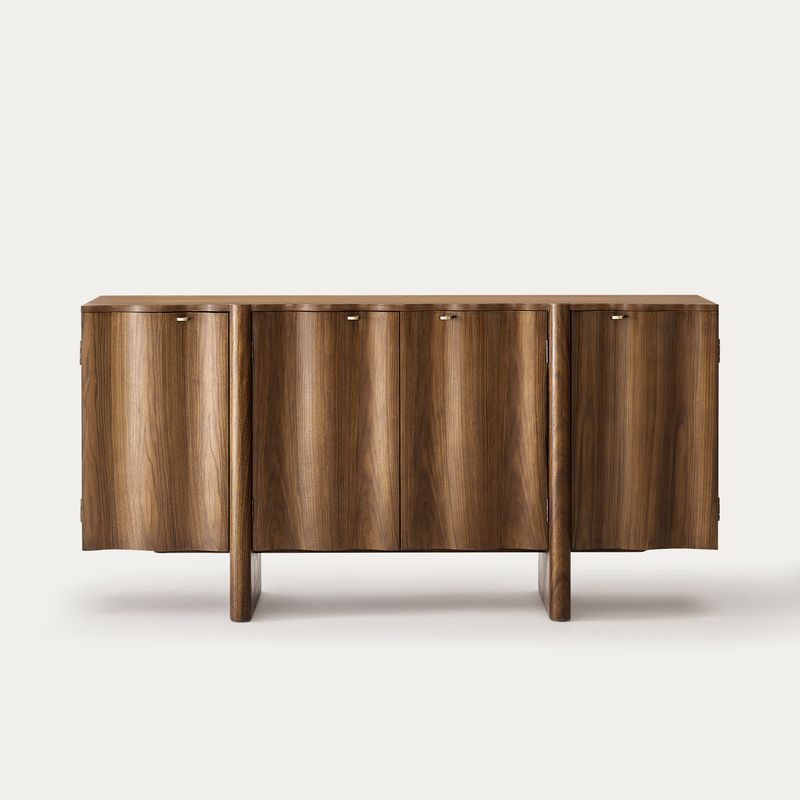
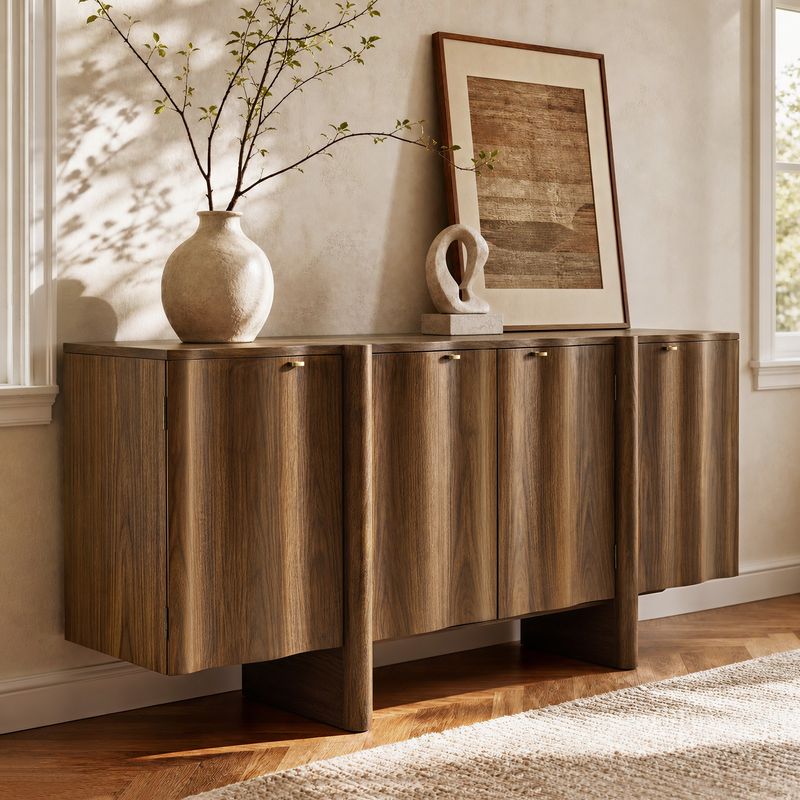
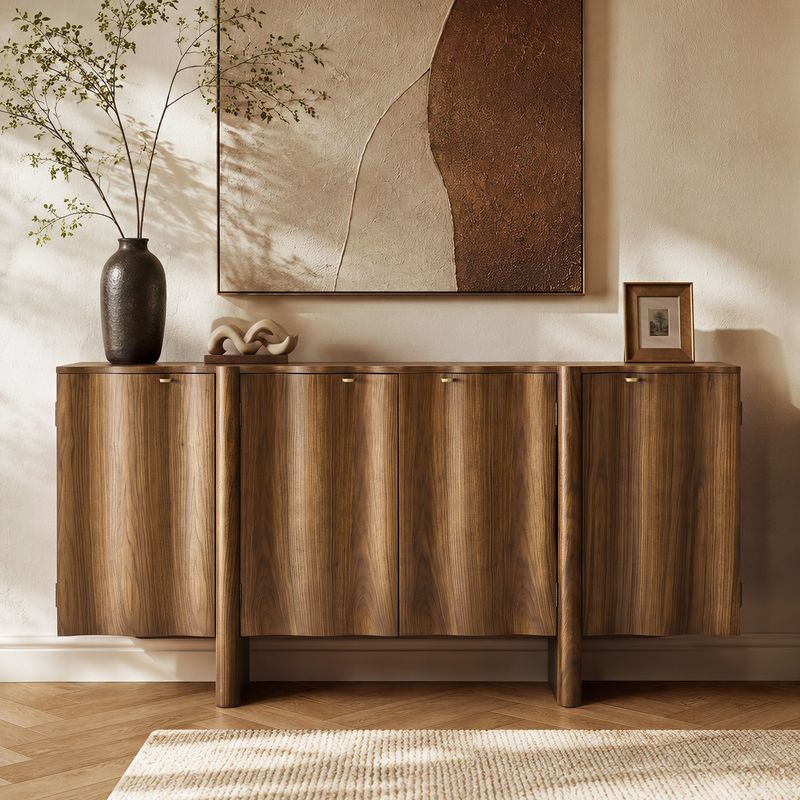
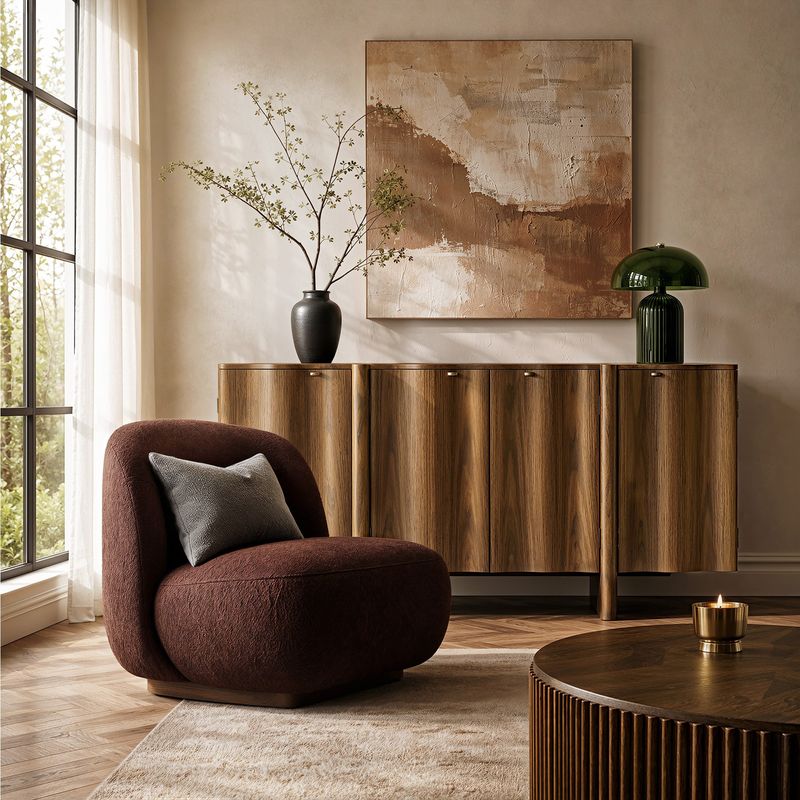




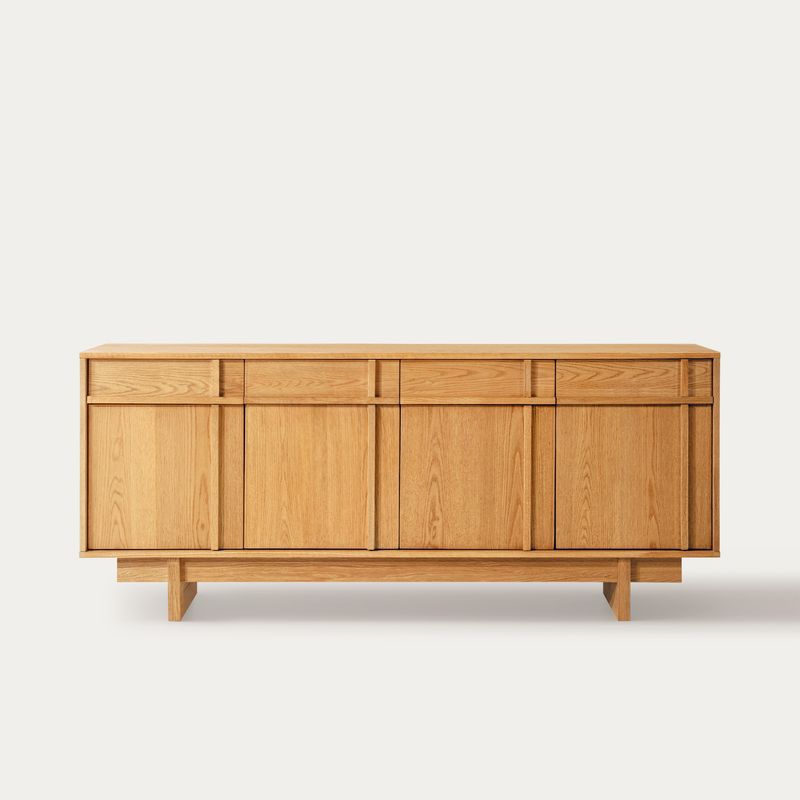
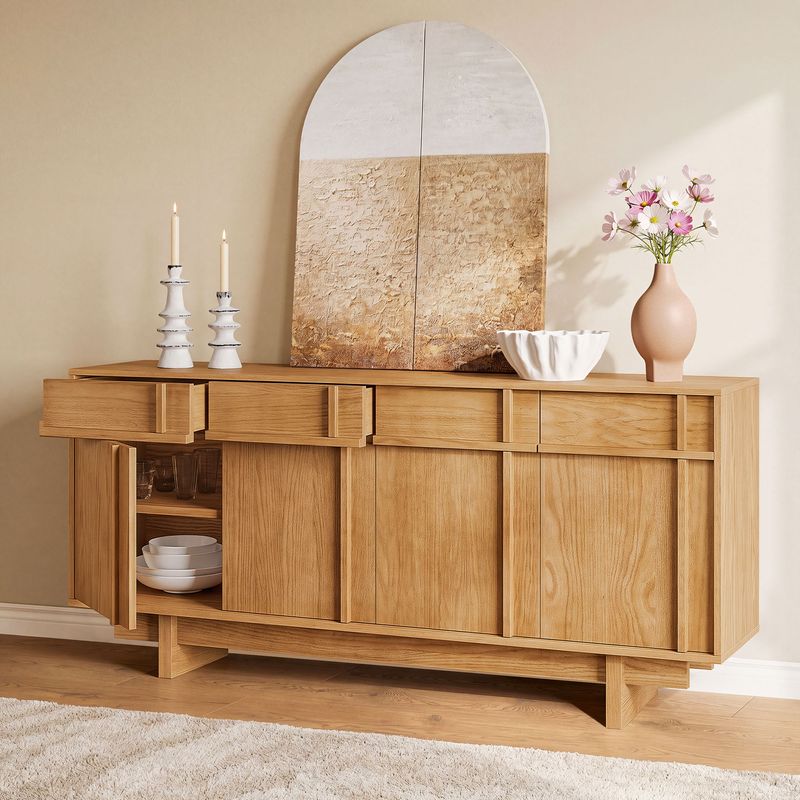
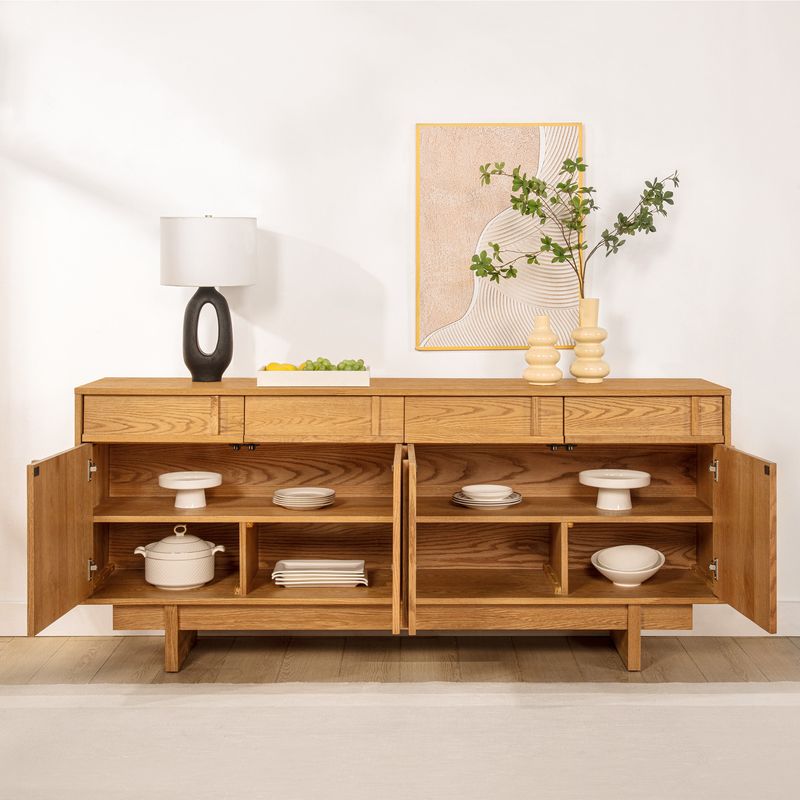
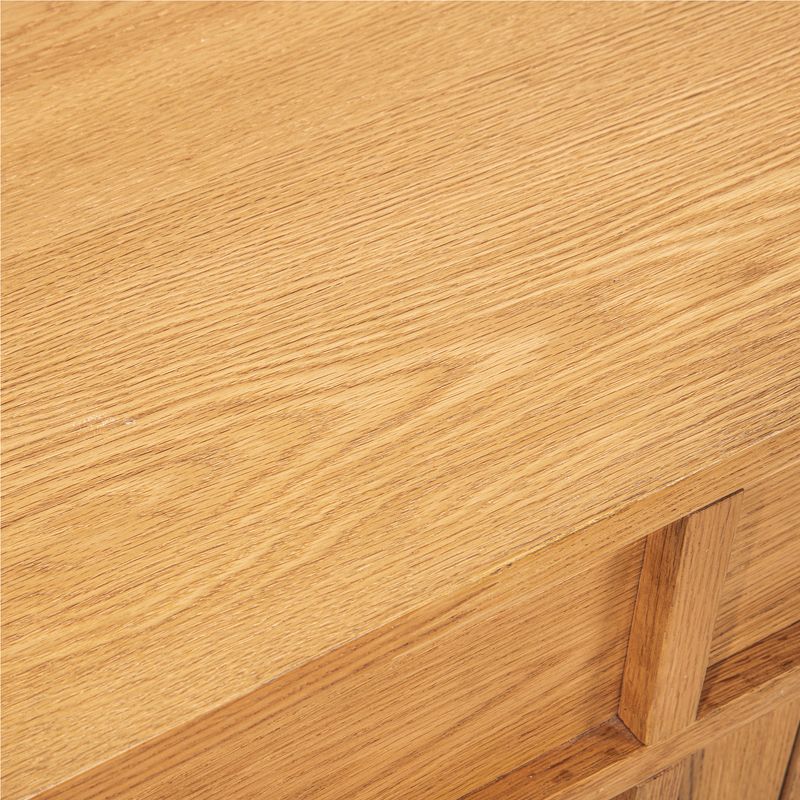
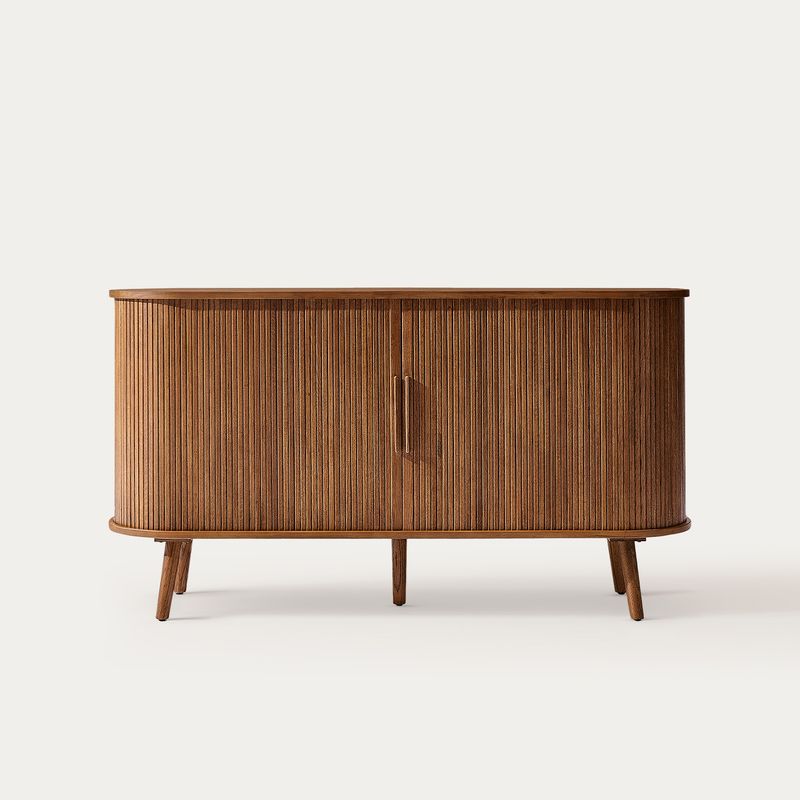
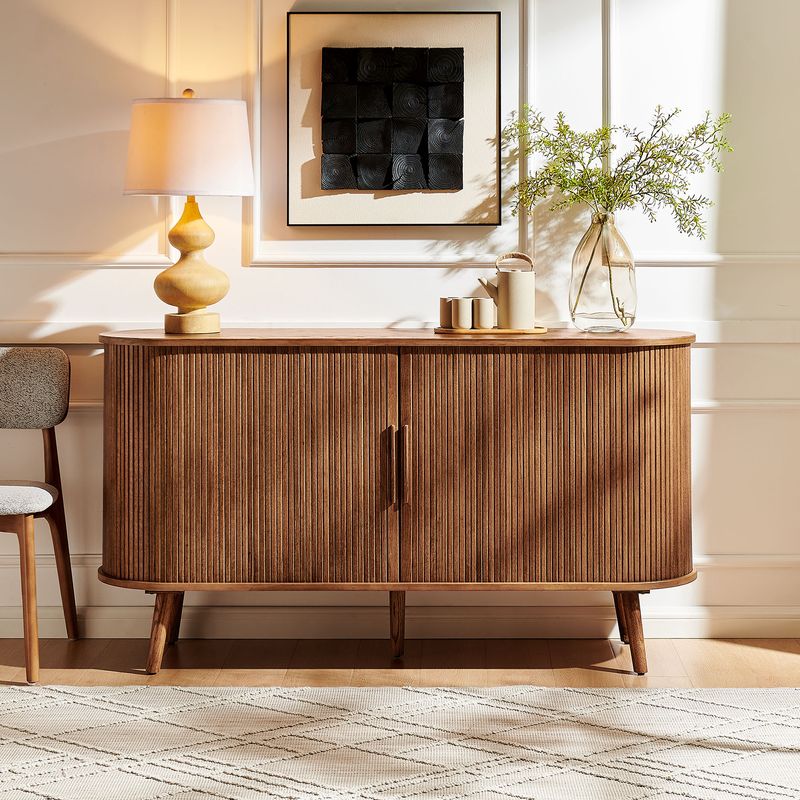
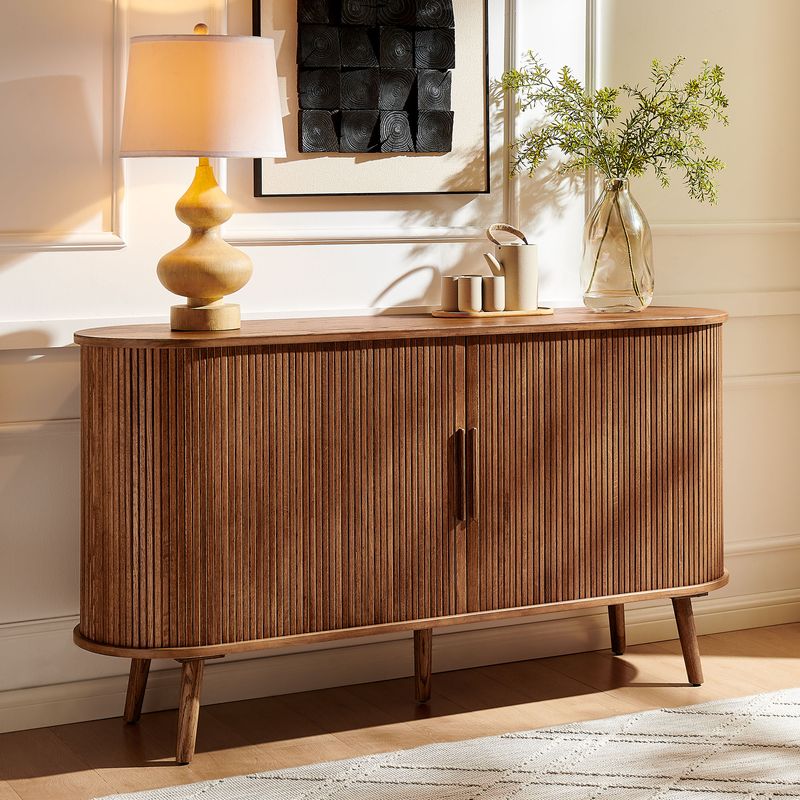
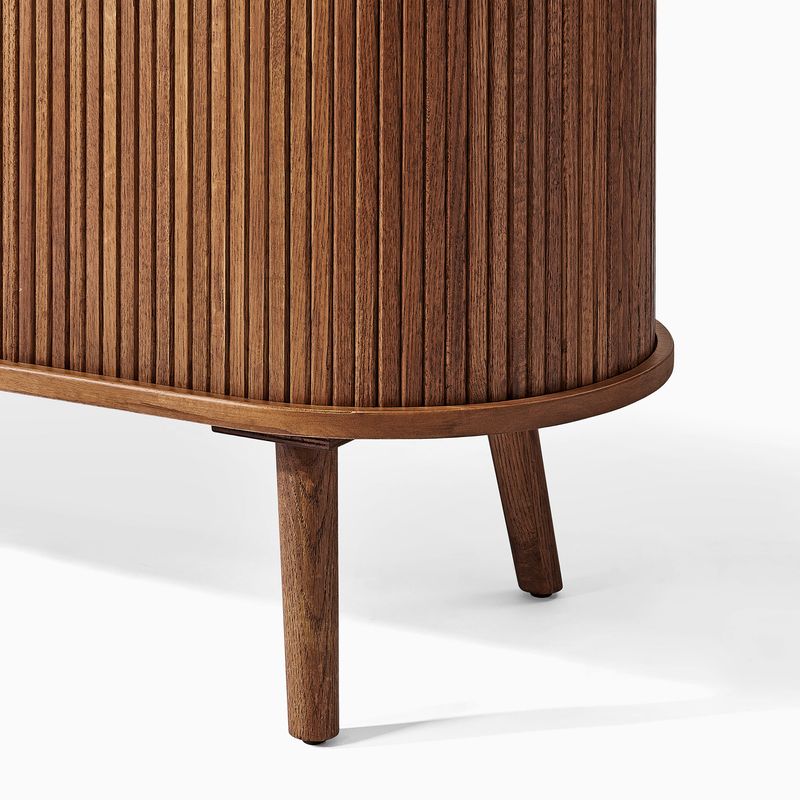


Find a Sideboard That Fits Your Space and Storage Needs
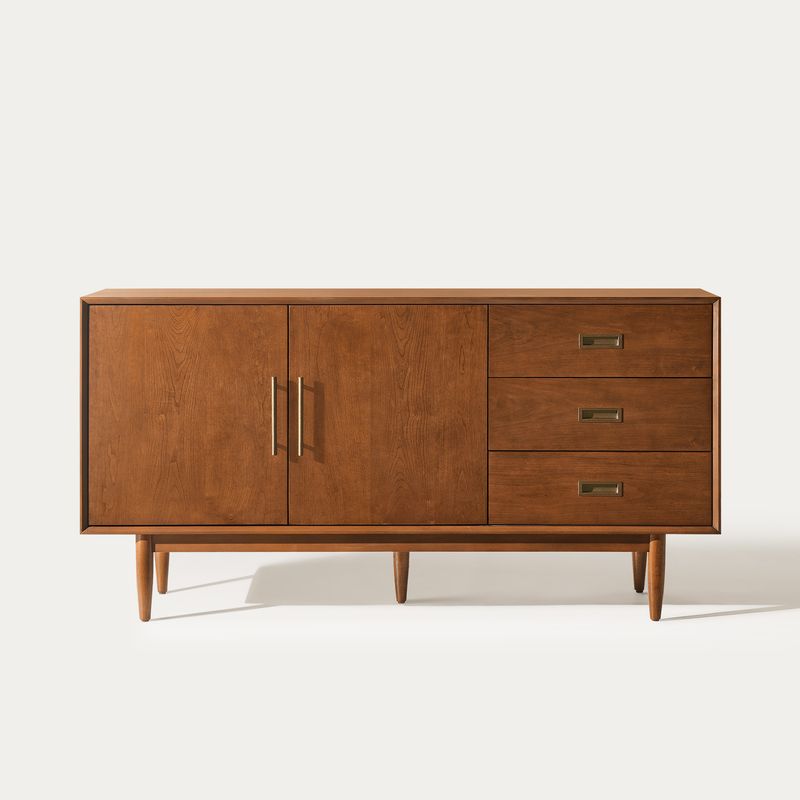
Choosing the right sideboard starts with understanding what you need it to do. Are you looking for a dining room cabinet to organize dinnerware and serving essentials? Do you need extra storage in the living room? Or are you trying to fill an empty wall with furniture that combines practical storage and distinctive design?
The best choice depends on more than appearance. Cabinet width and depth determine how well it fits your room, while drawers, cabinet doors, and adjustable shelves affect what you can store inside. Materials and finishes also play a role in how the piece complements your existing furniture.
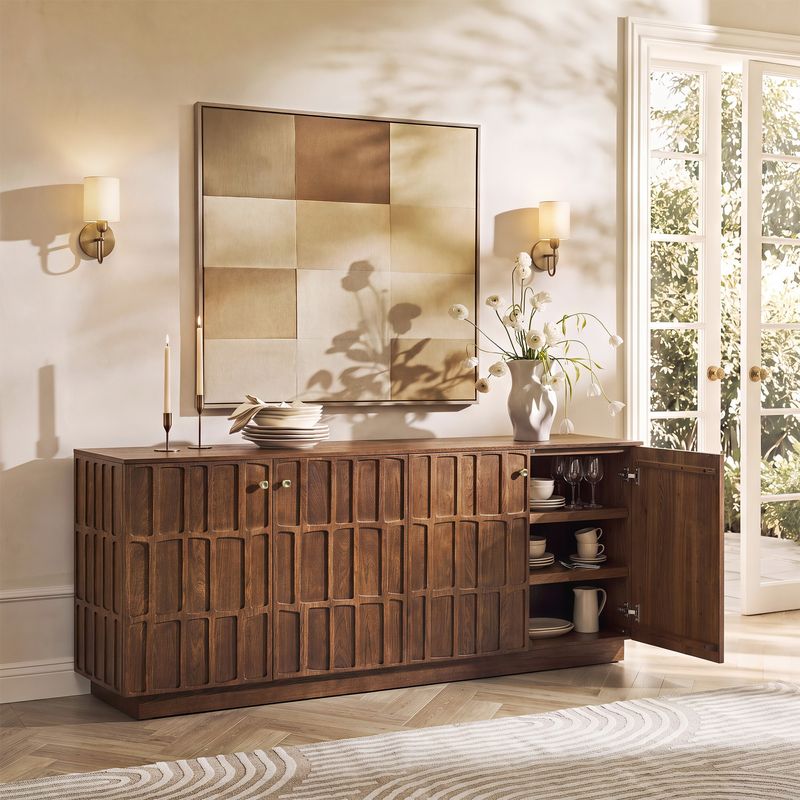
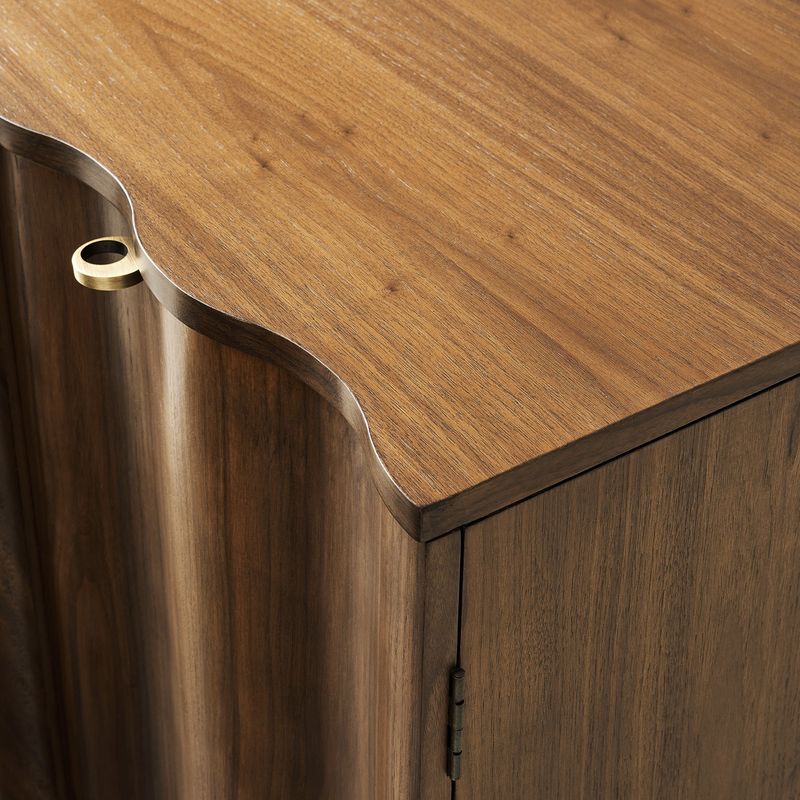
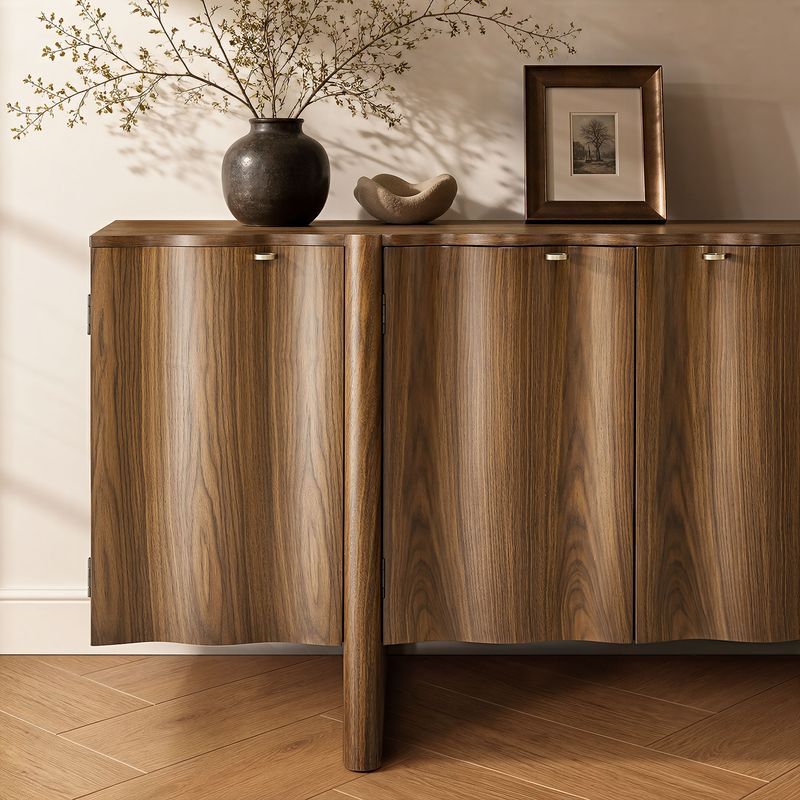
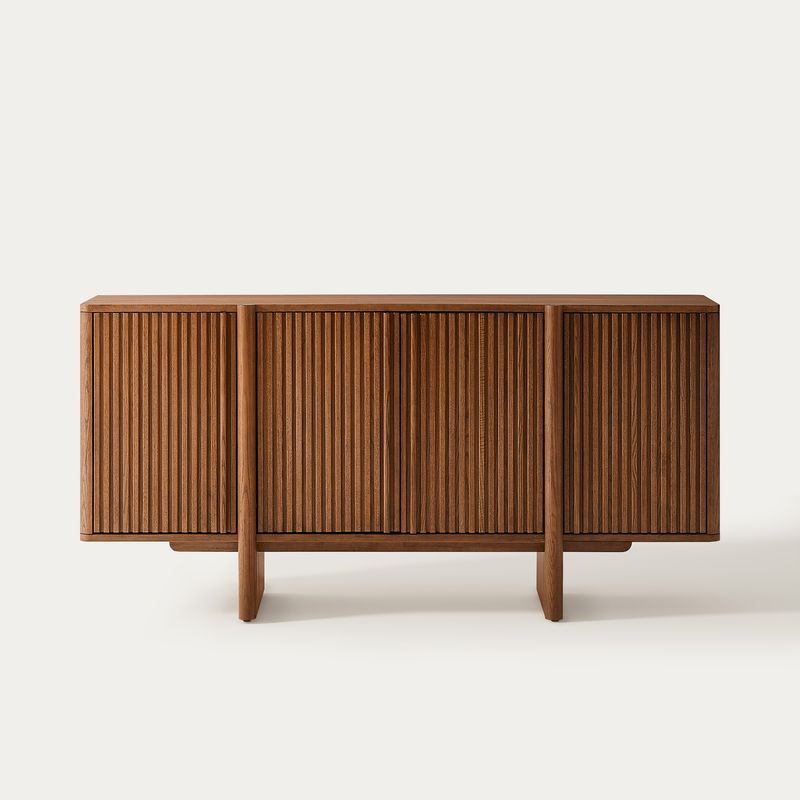
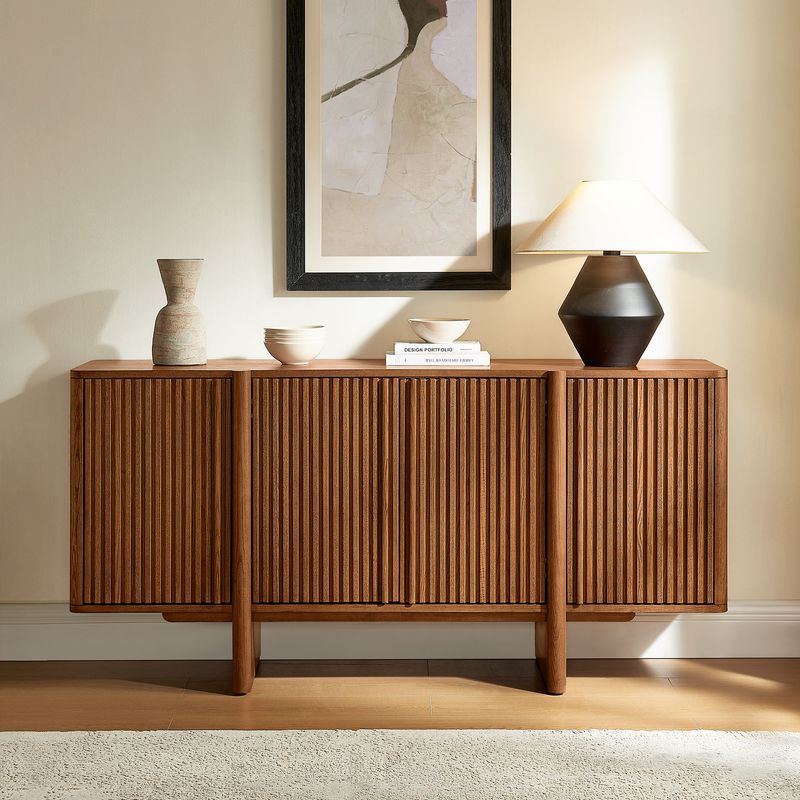
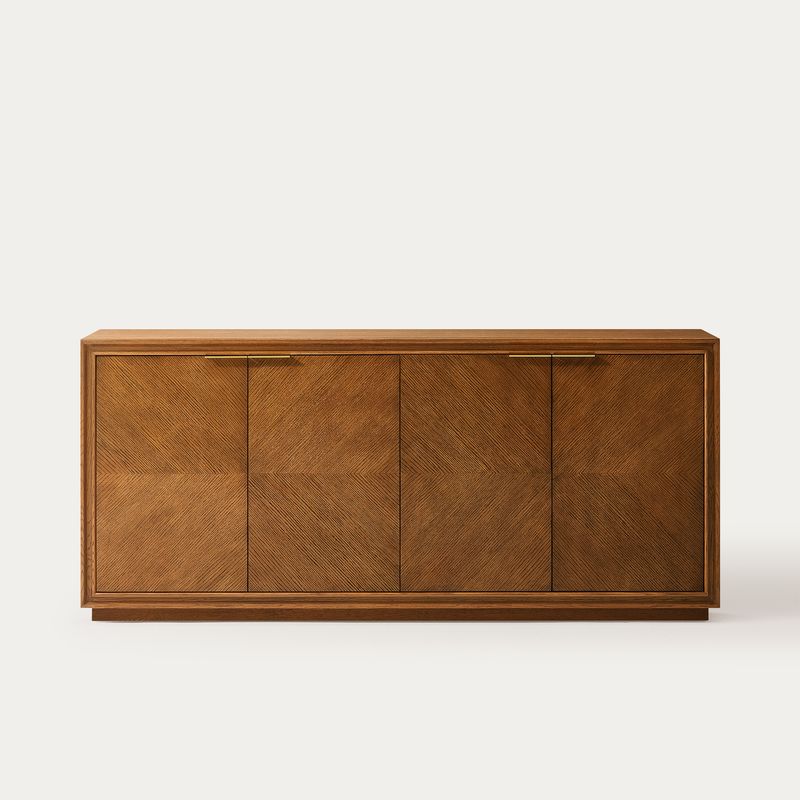
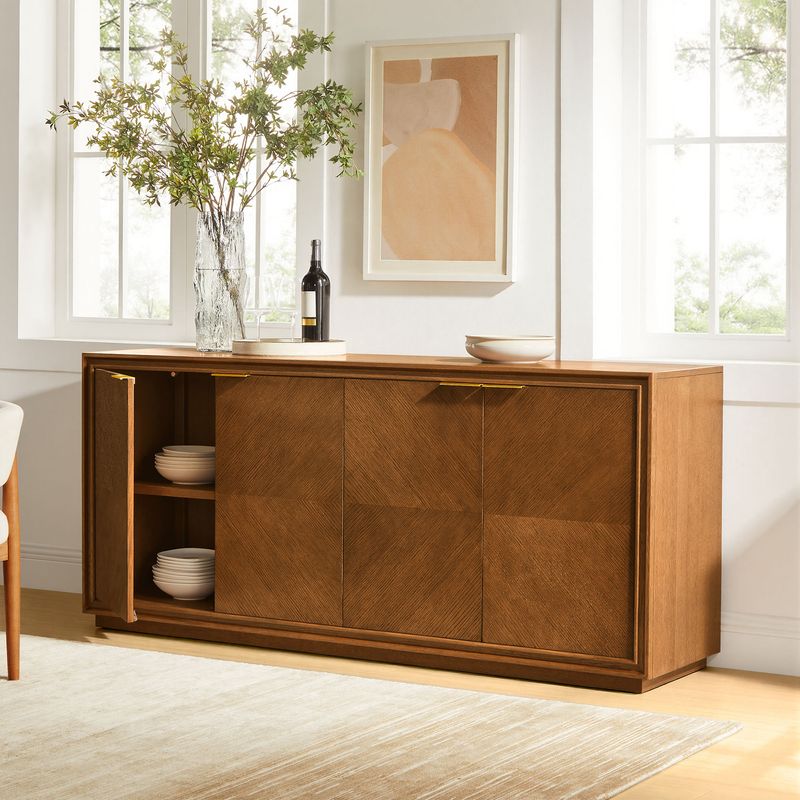
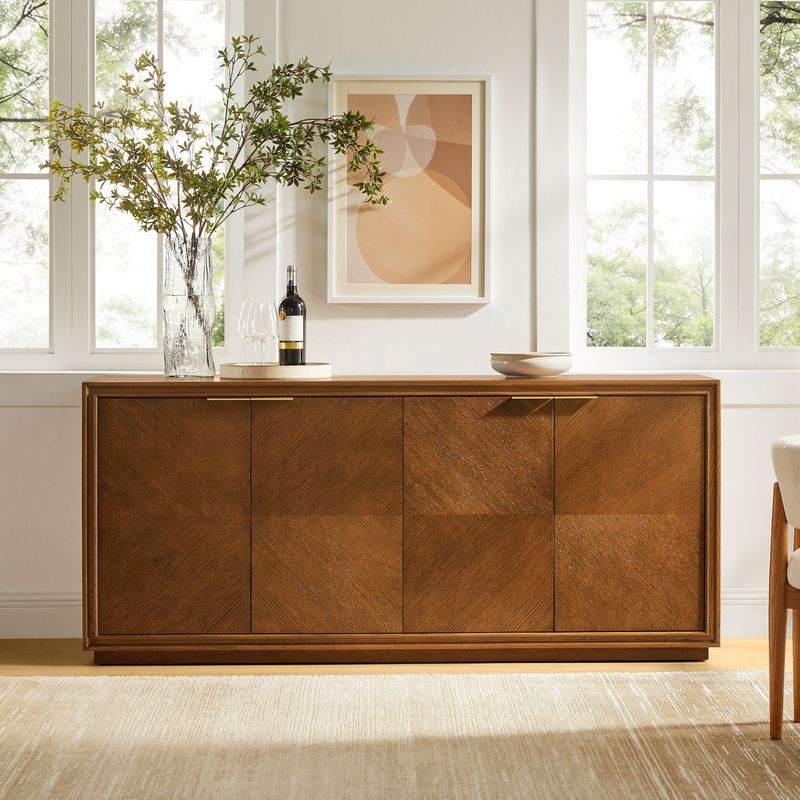
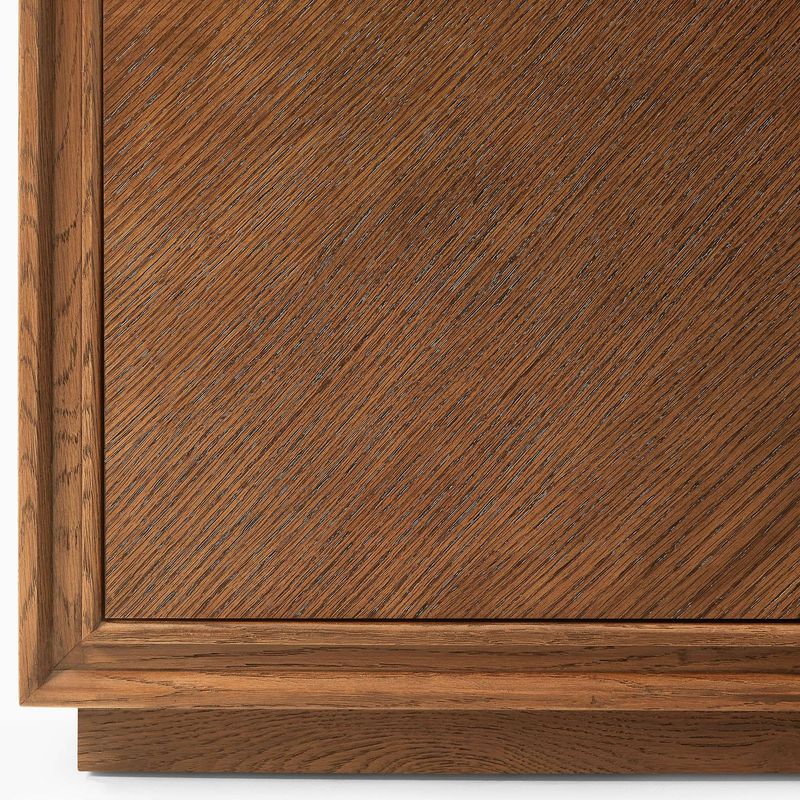
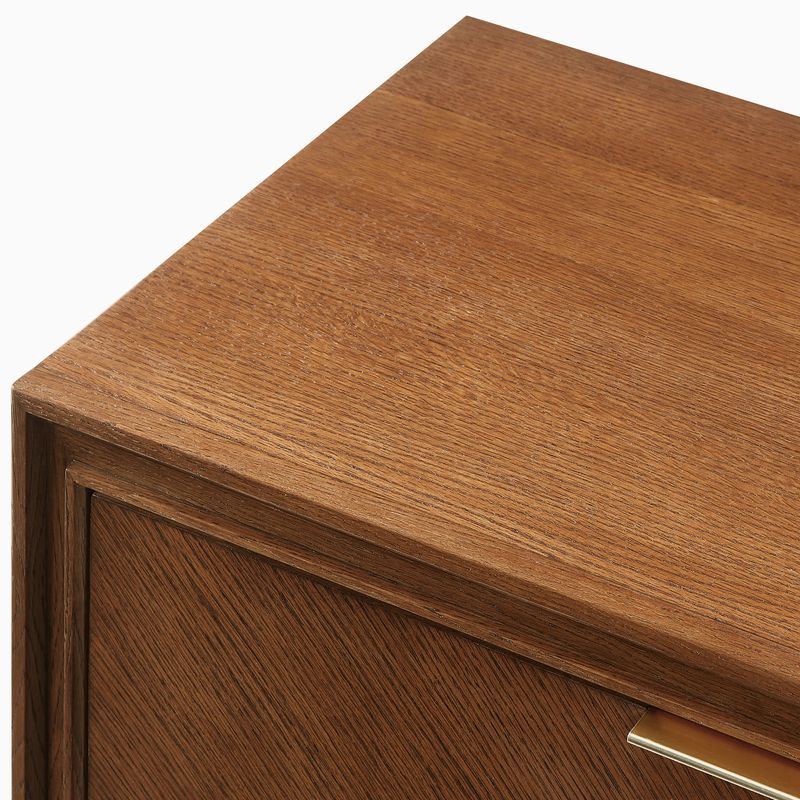
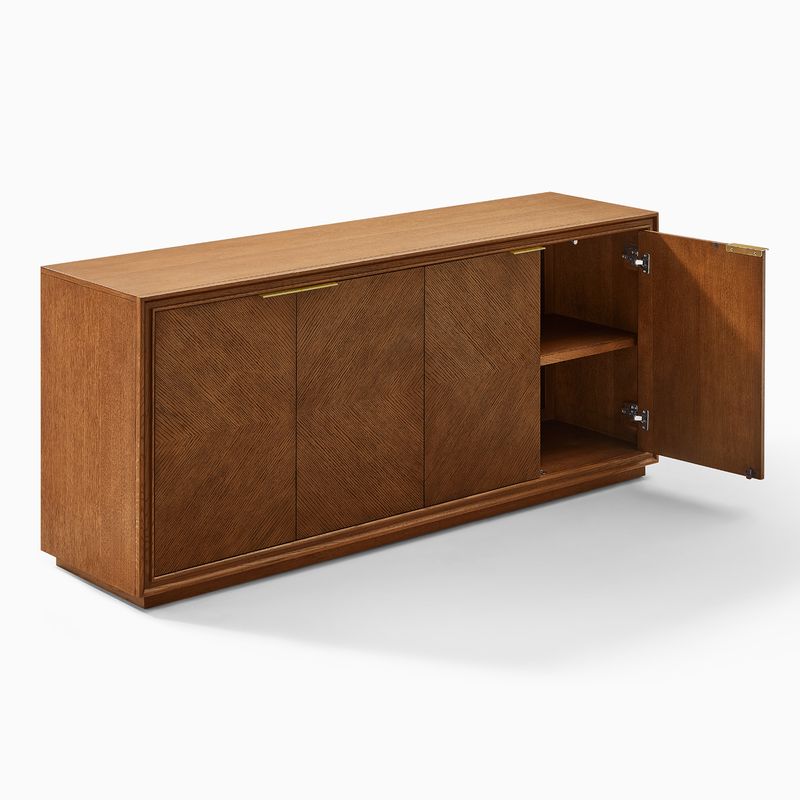
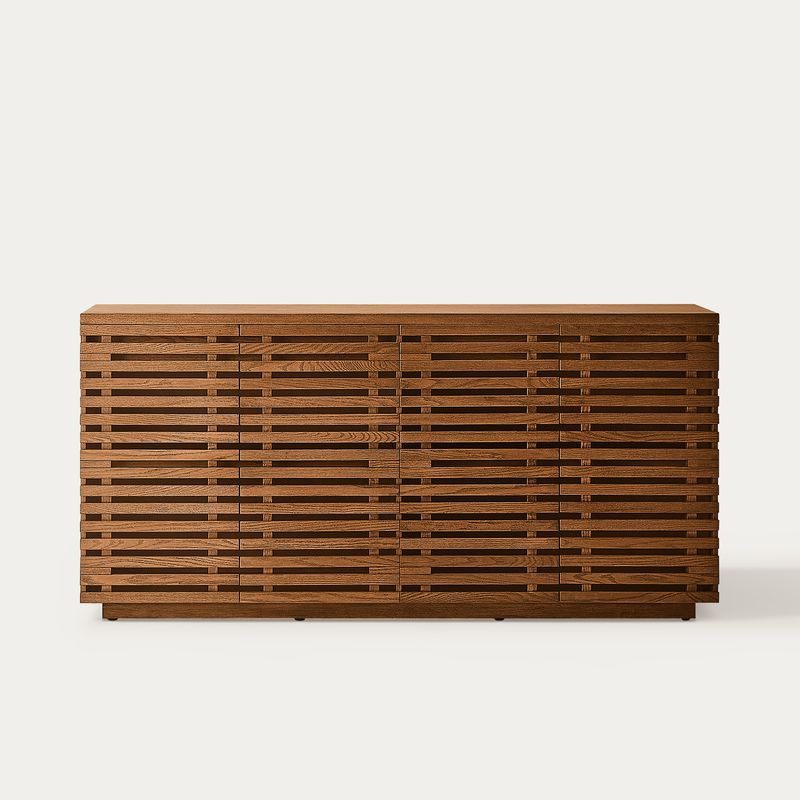
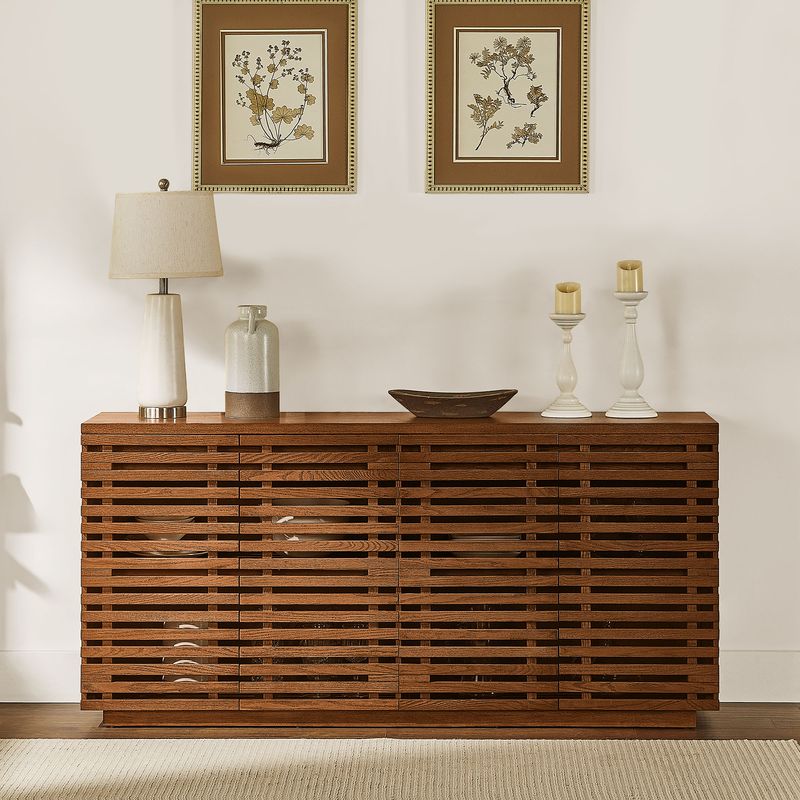
At Hernest, you can explore sideboards in different sizes, wood finishes, and designs. From warm oak and ash details to burl-inspired surfaces and travertine-textured panels, the collection offers options for different spaces and storage needs. Compare the styles below to find a sideboard that works for your home.
Read More
Explore Sideboards by Material, Finish, and Storage
The material and front design influence a sideboard's appearance, while its interior layout determines how useful it will be. Consider both when comparing the following designs.
Wood Sideboards with Natural Grain and Textured Details
Wood sideboards bring warmth and natural texture to dining rooms and living spaces. Different wood species, finishes, and decorative details create distinct looks, from understated grain patterns to more pronounced fluting.
Vera 72-Inch Sideboard
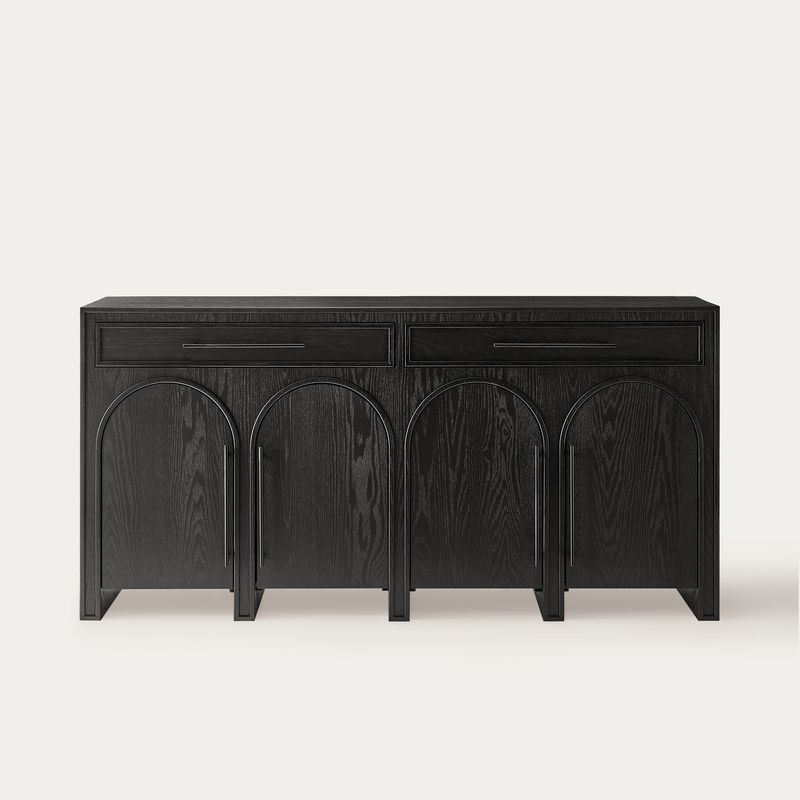
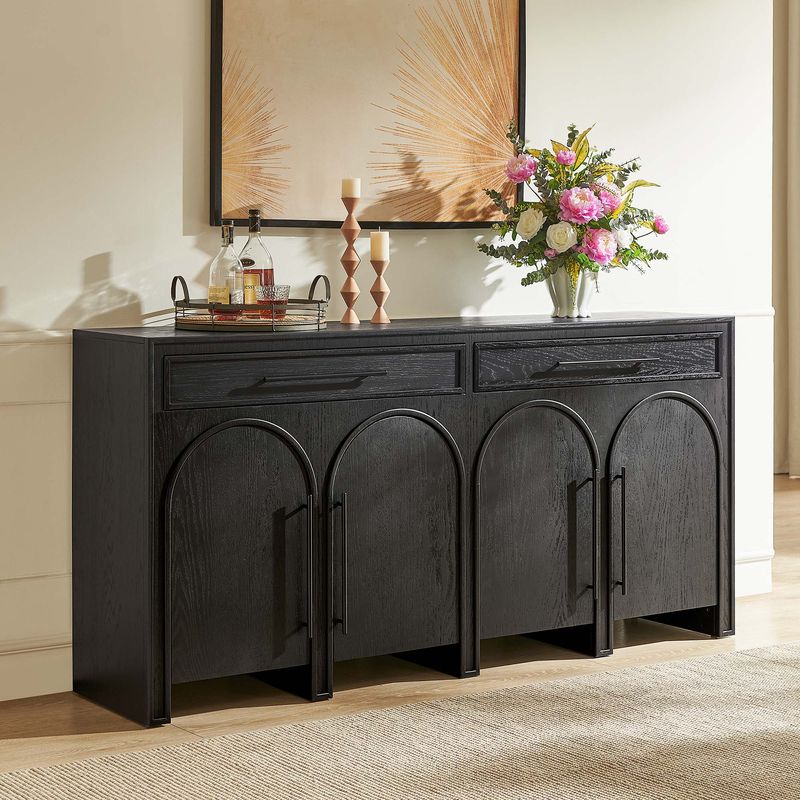
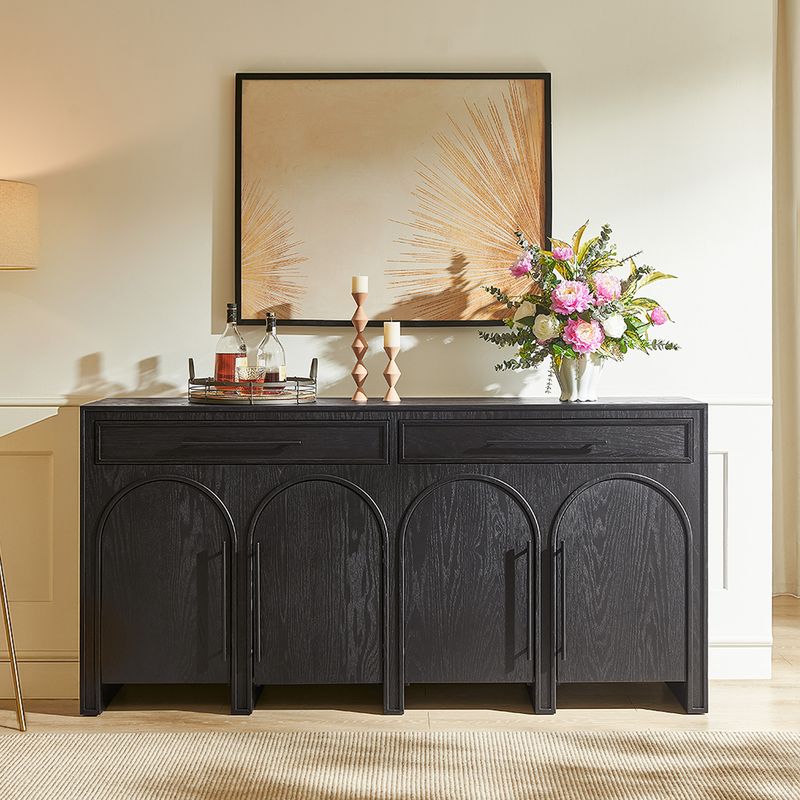
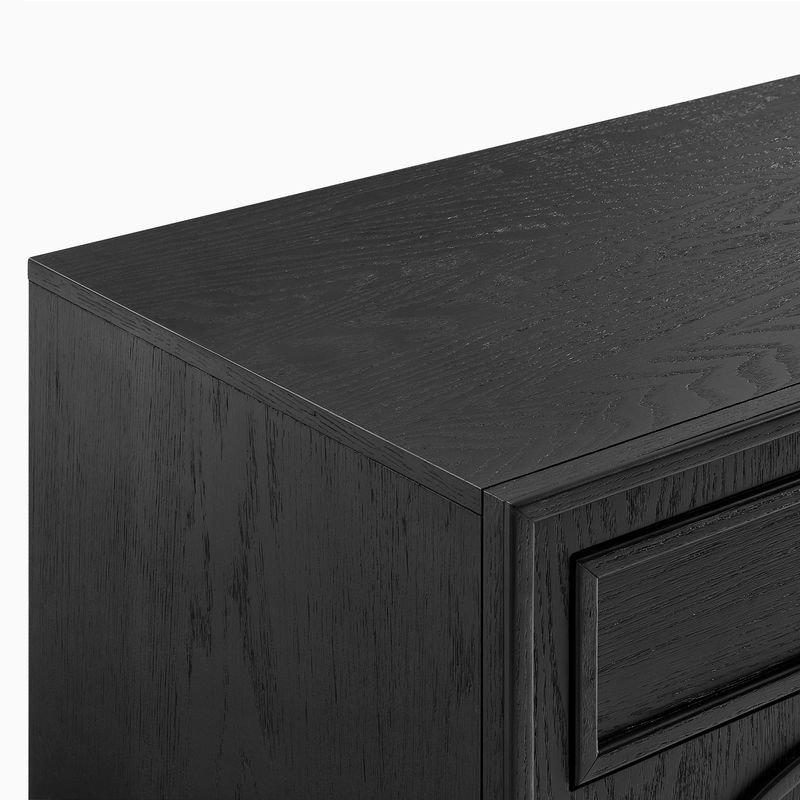
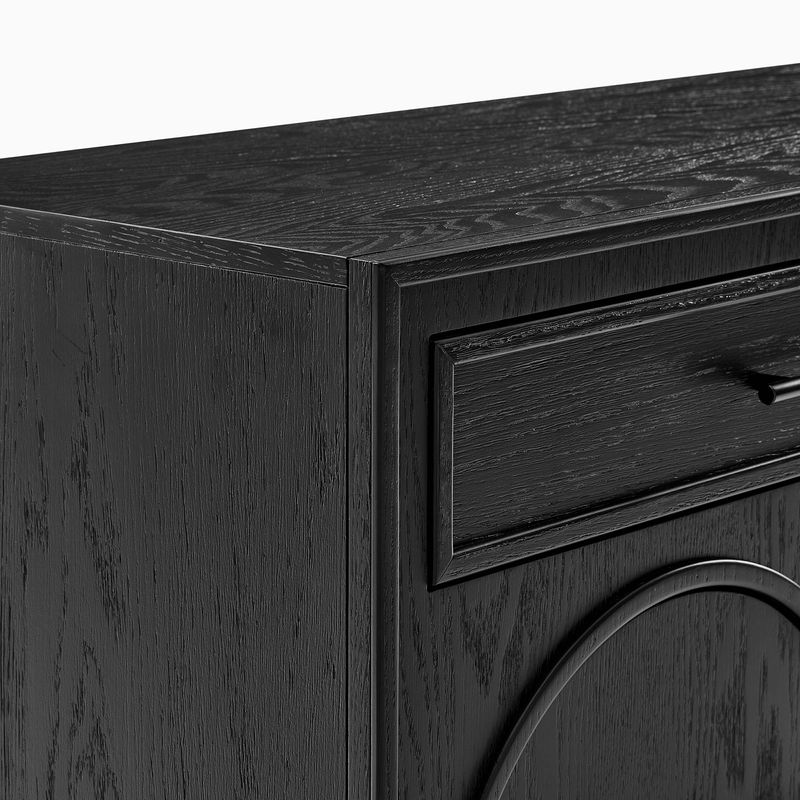
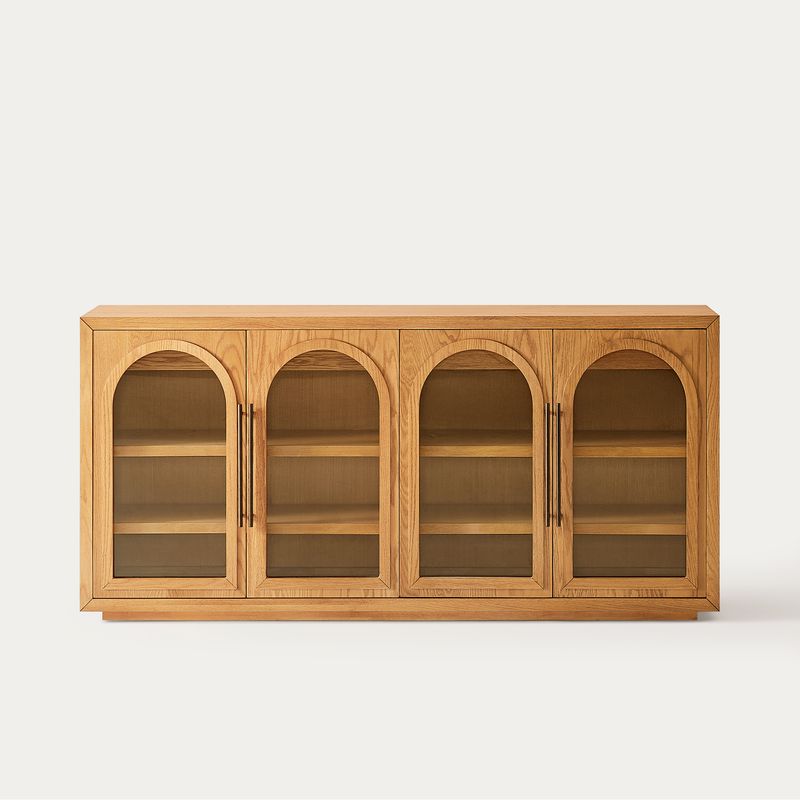
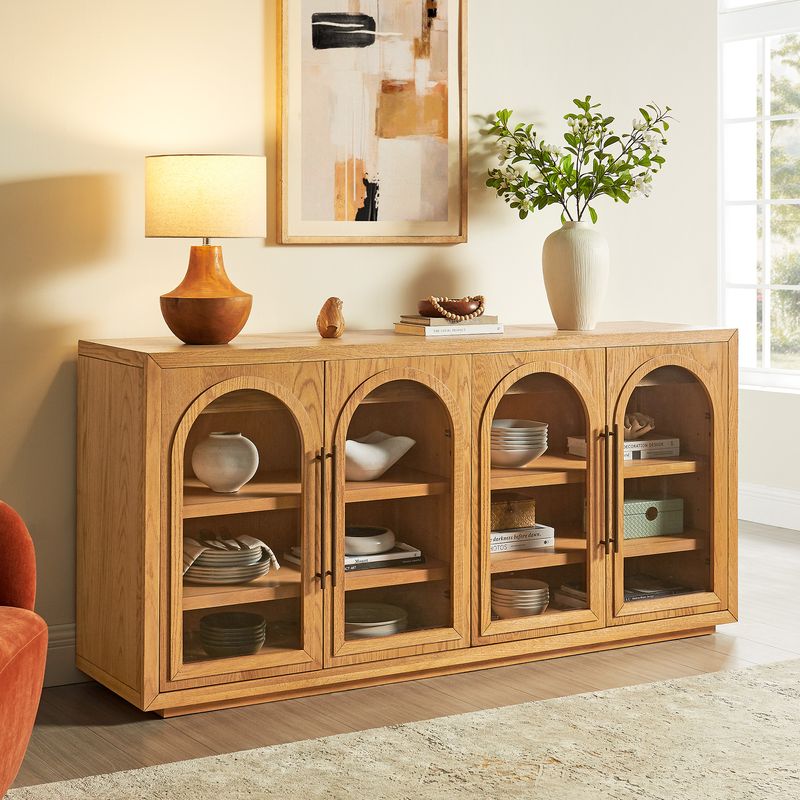
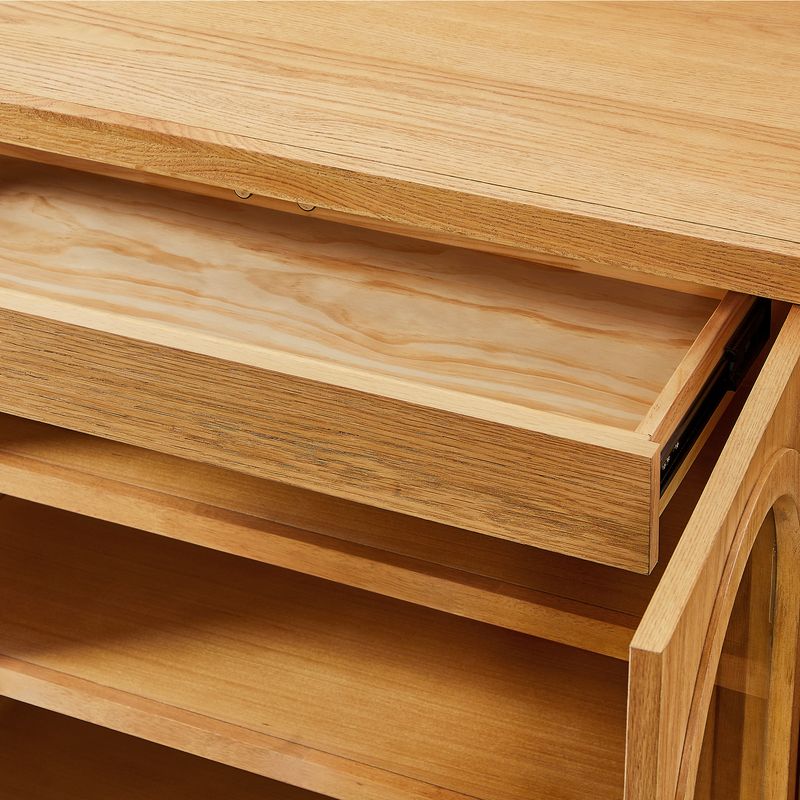
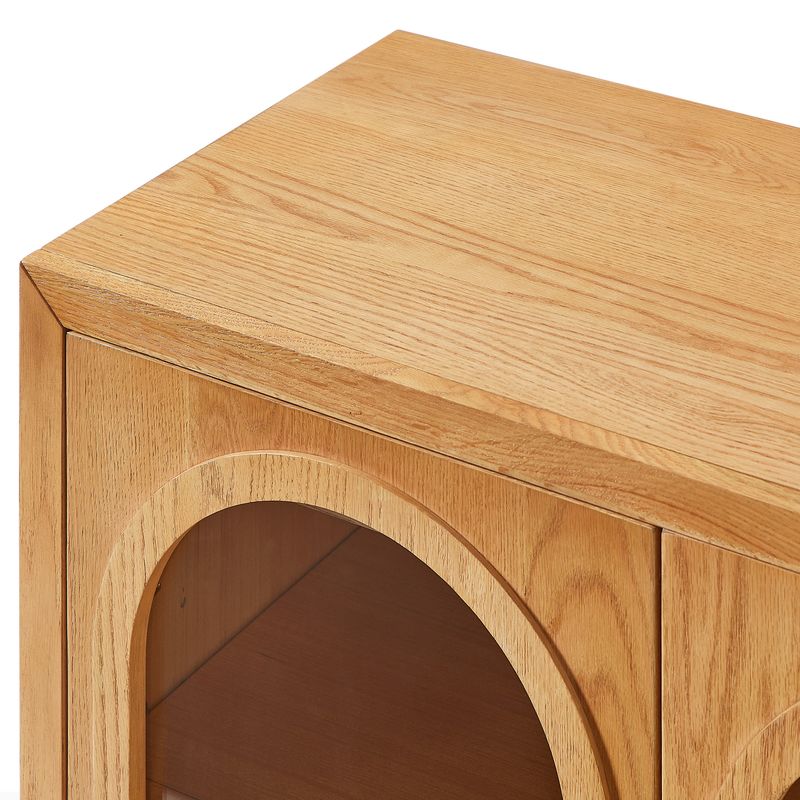
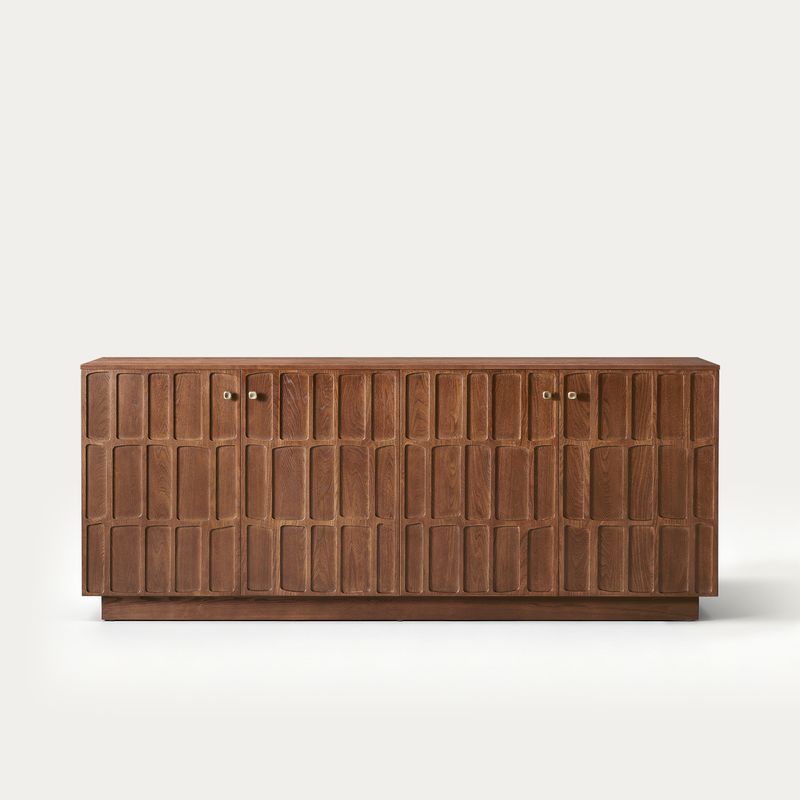
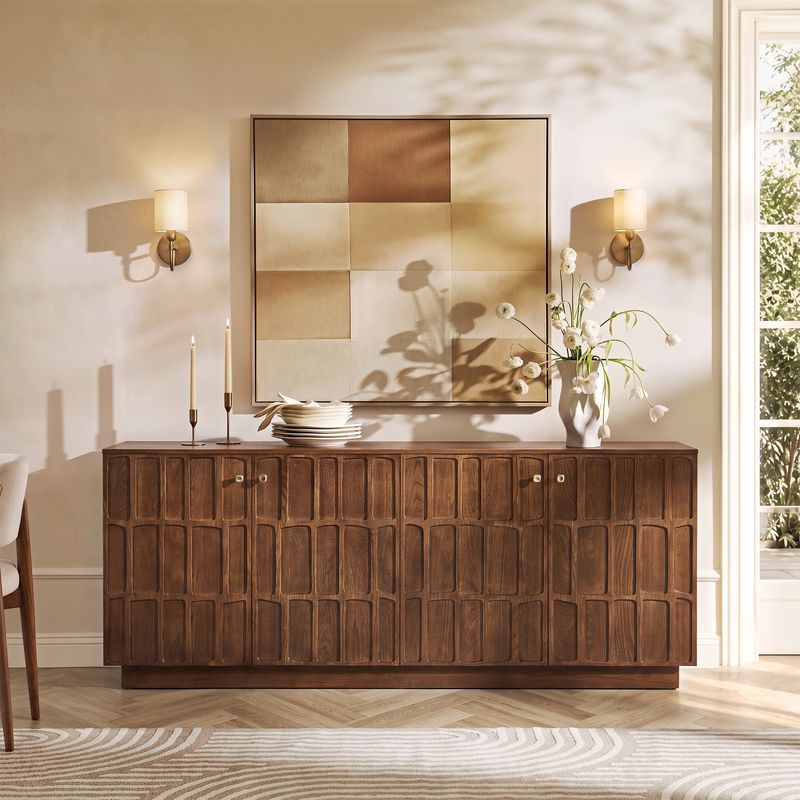
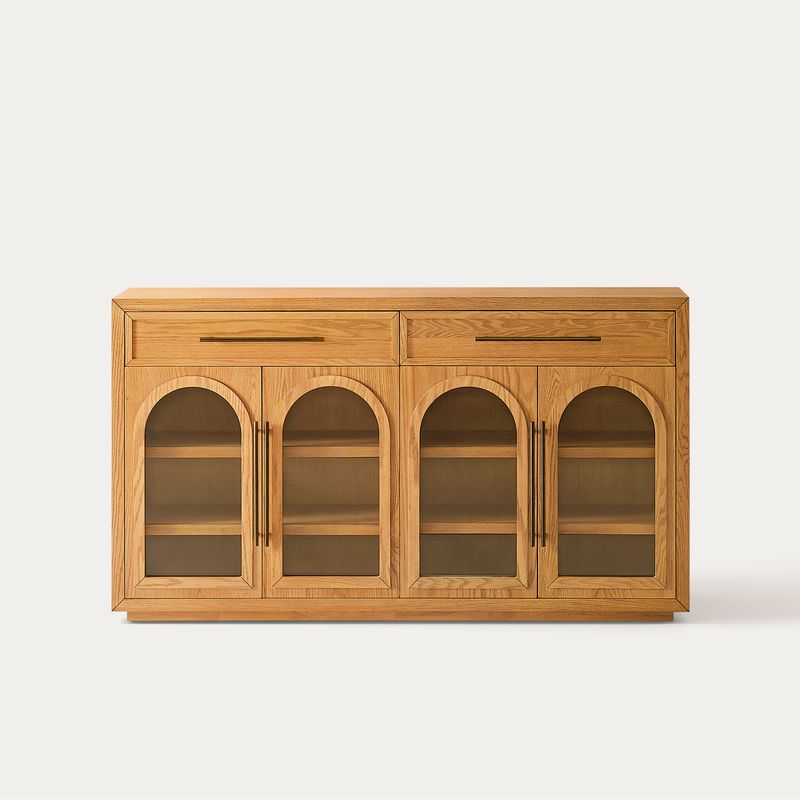
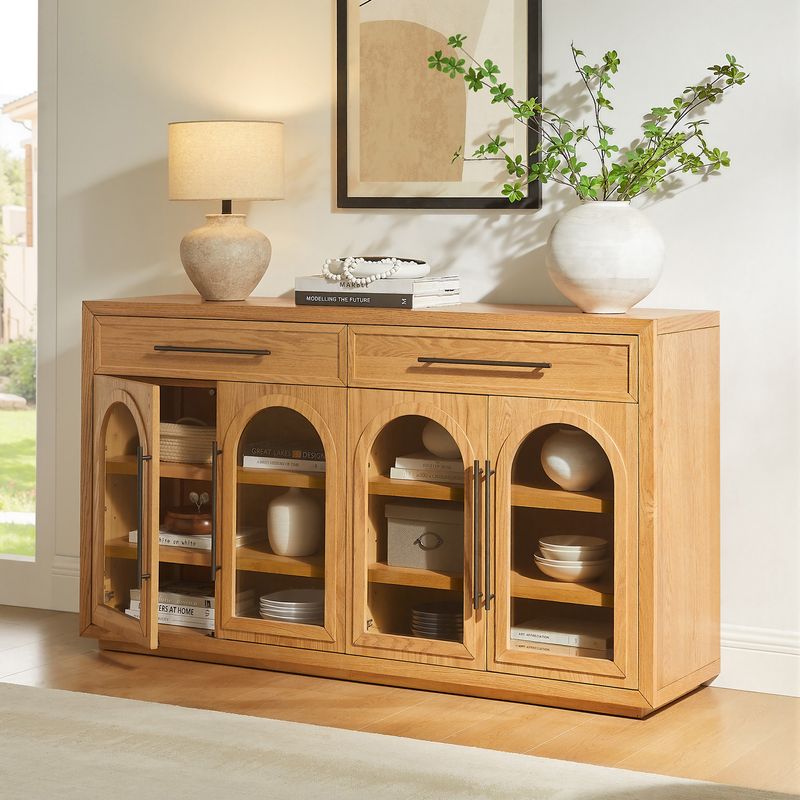
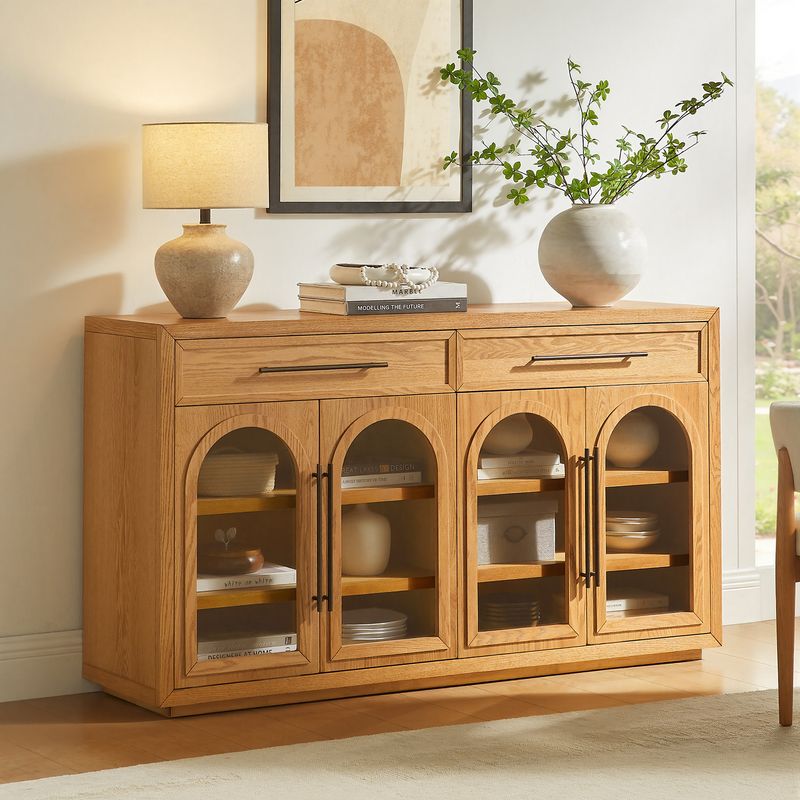
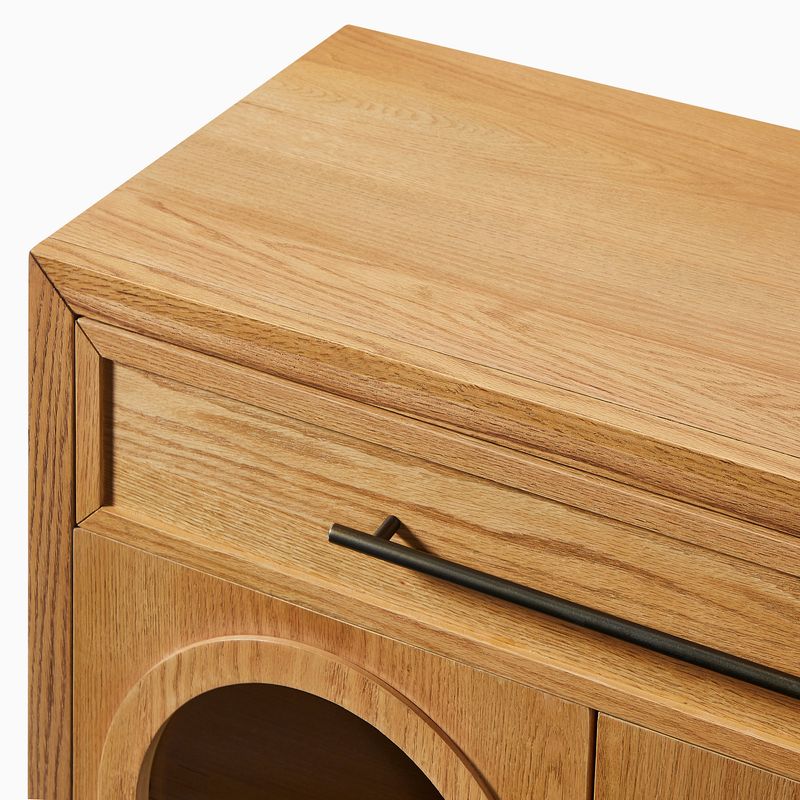
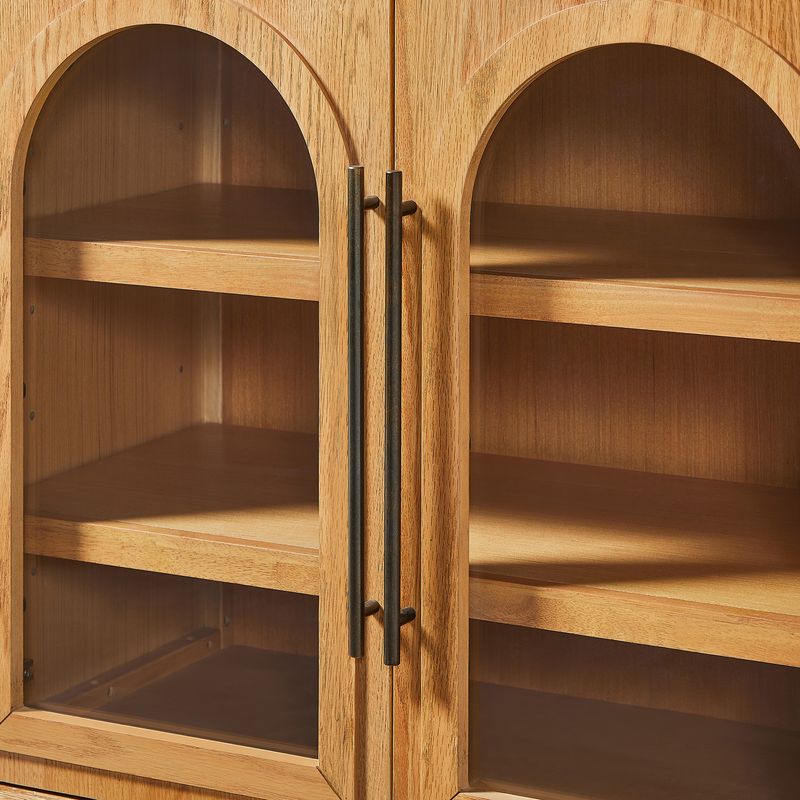
The Vera 72-Inch Sideboard features a wire-brushed black oak finish and four arched cabinet doors. Its curved detailing gives the wide front a distinctive profile, while two upper drawers provide separate storage for smaller accessories.
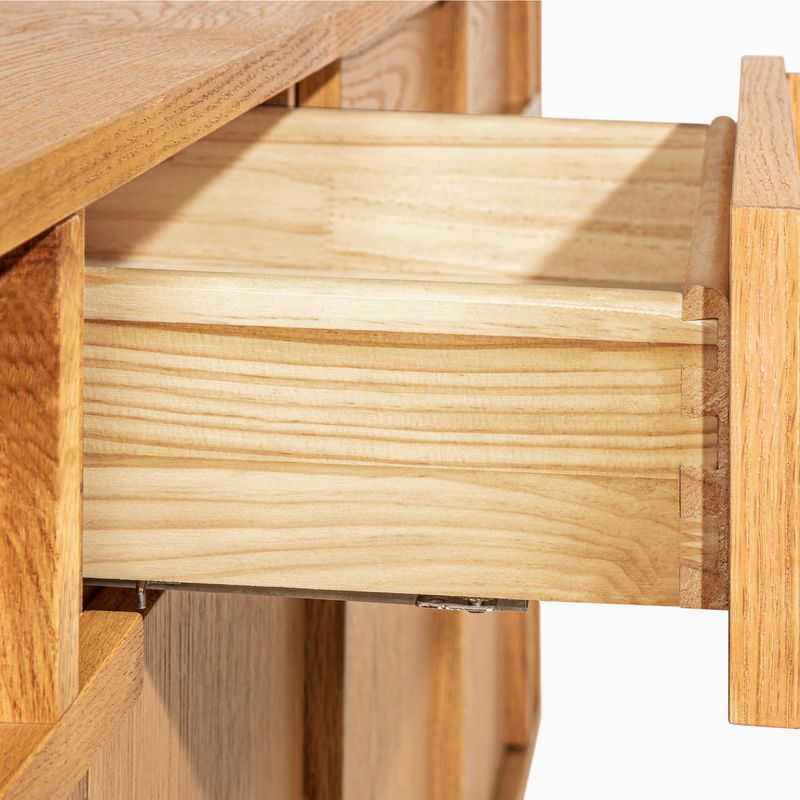
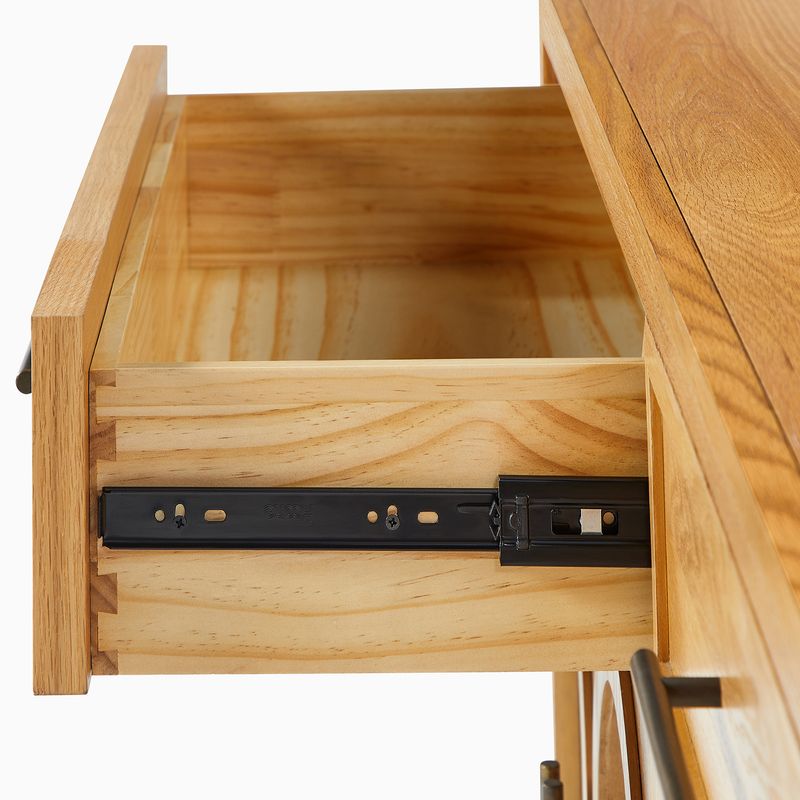
Vera combines pine and engineered wood with American oak veneers. Its drawers feature dovetail joints, adding a traditional construction detail. Measuring 72 inches wide, 16 inches deep, and 36 inches high, it offers a relatively shallow profile for a wide cabinet.
Choose Vera if you want a darker wood finish, architectural door detailing, and a combination of drawer and cabinet storage.
Skimra 72-Inch Oak Sideboard
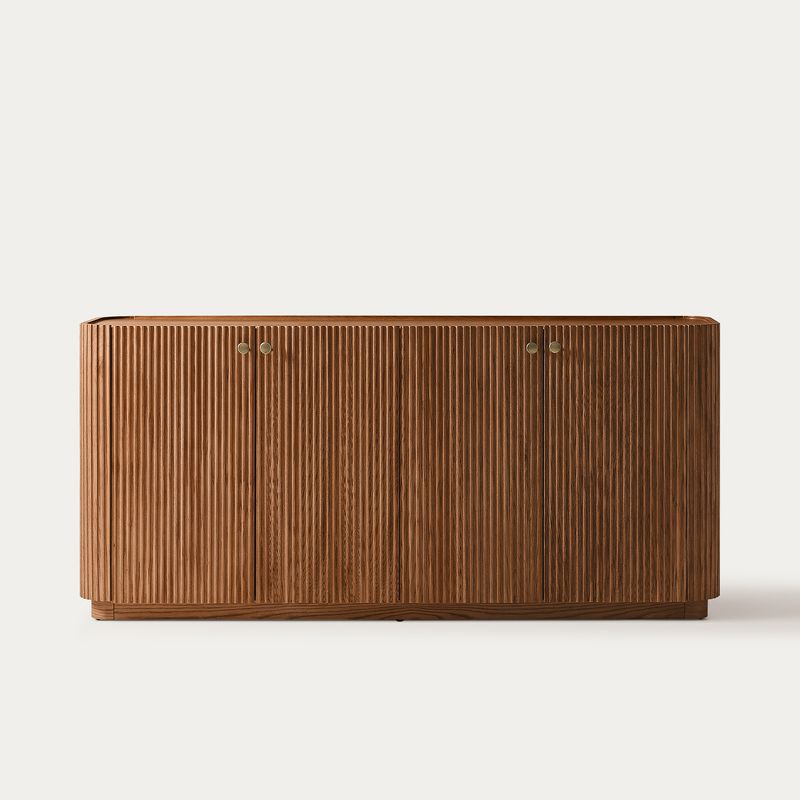
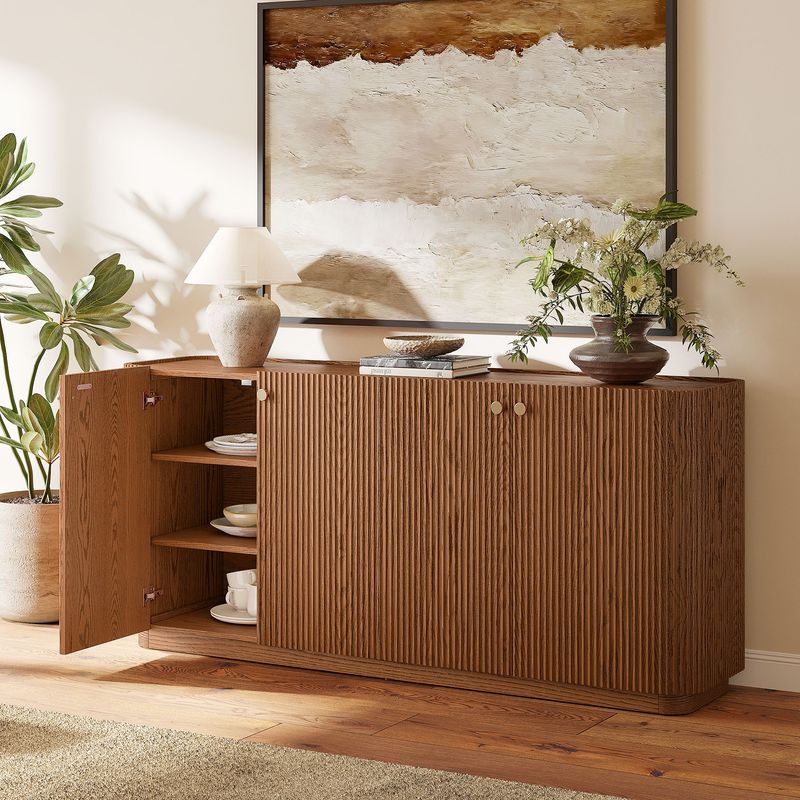
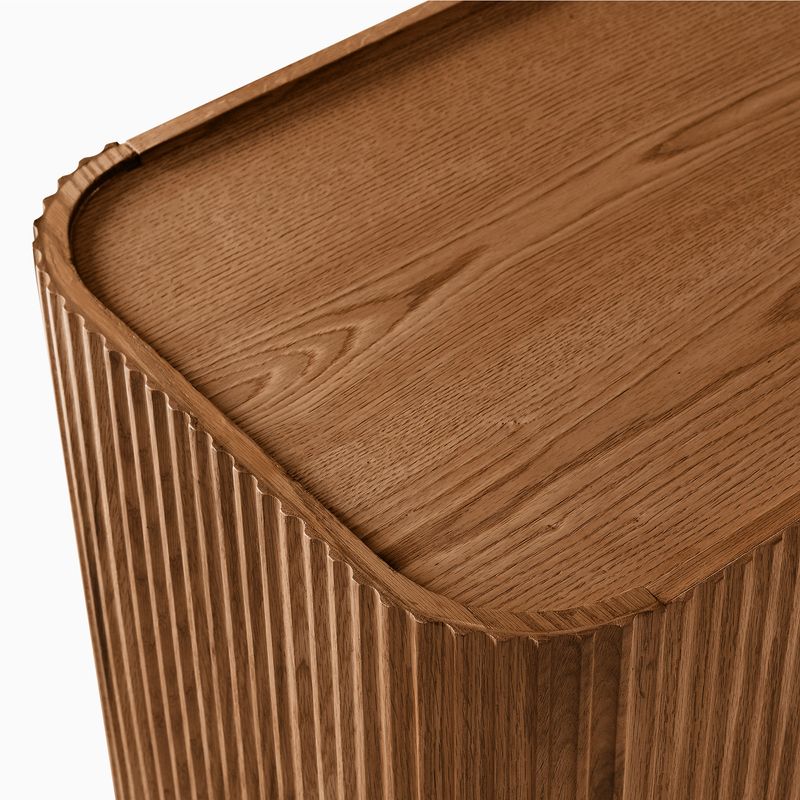
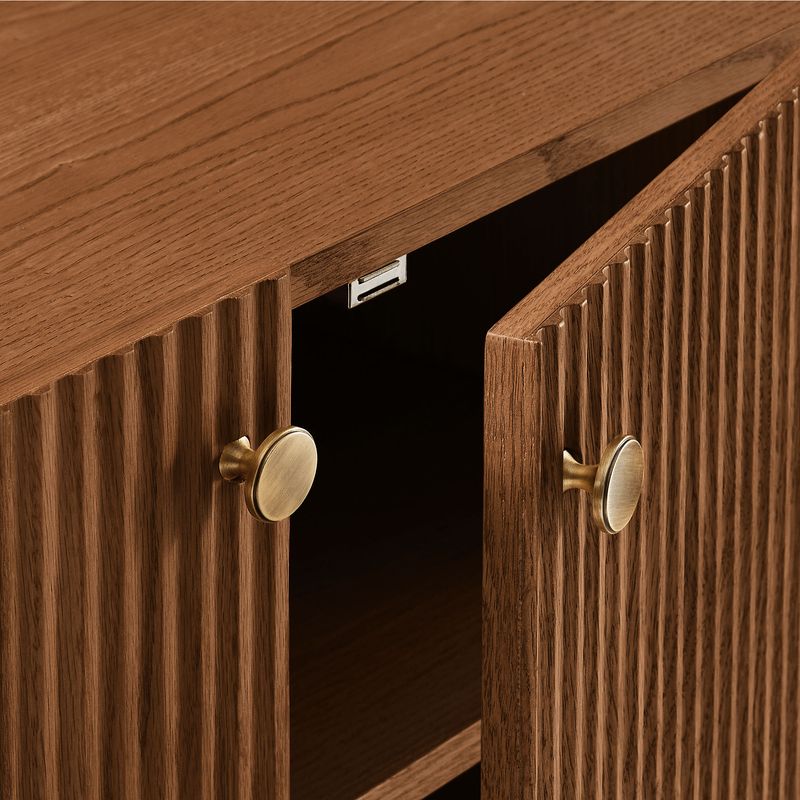
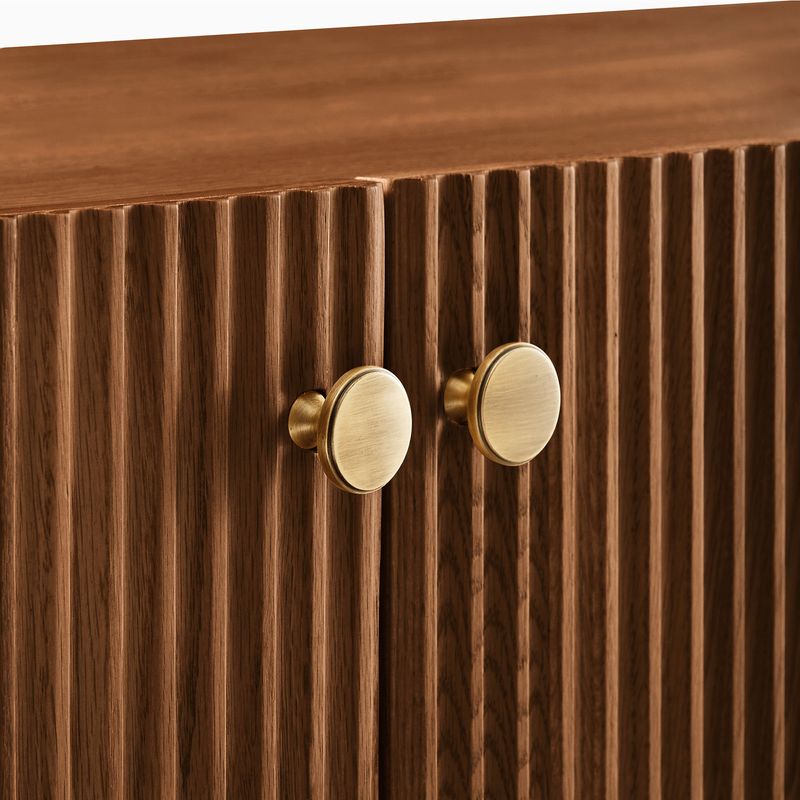
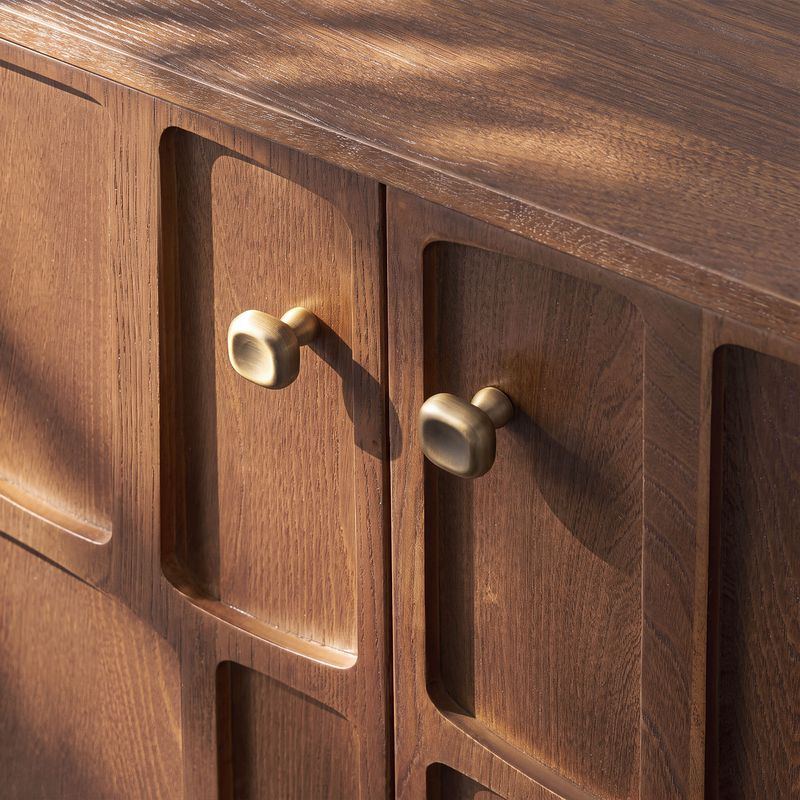
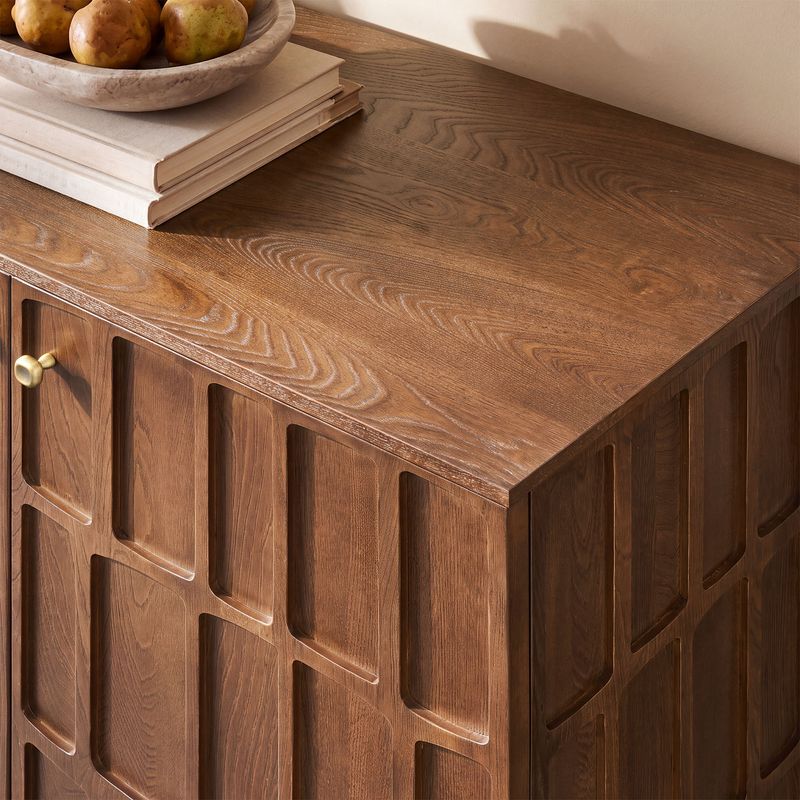
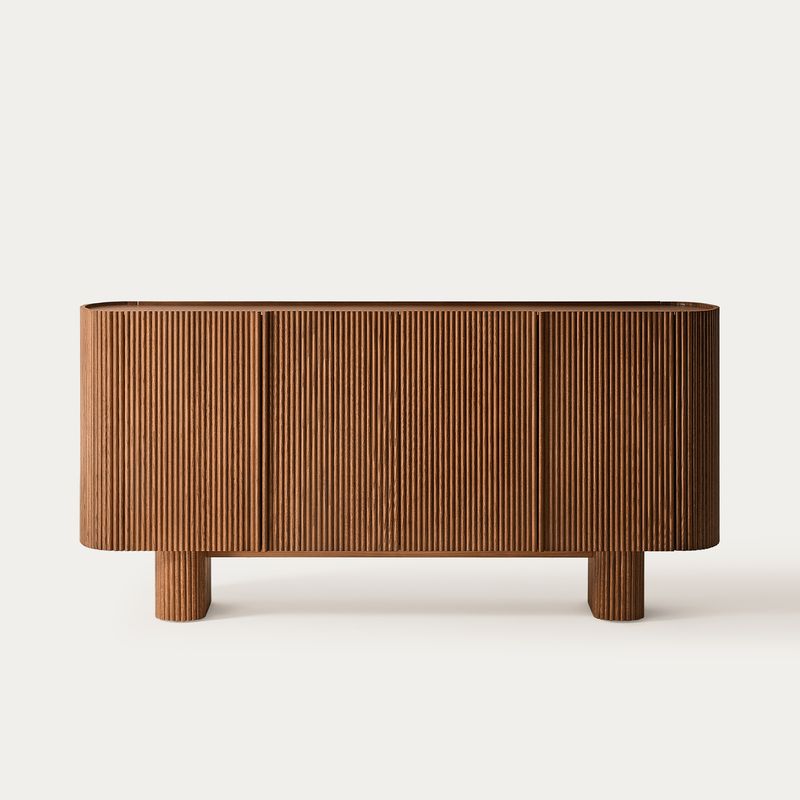
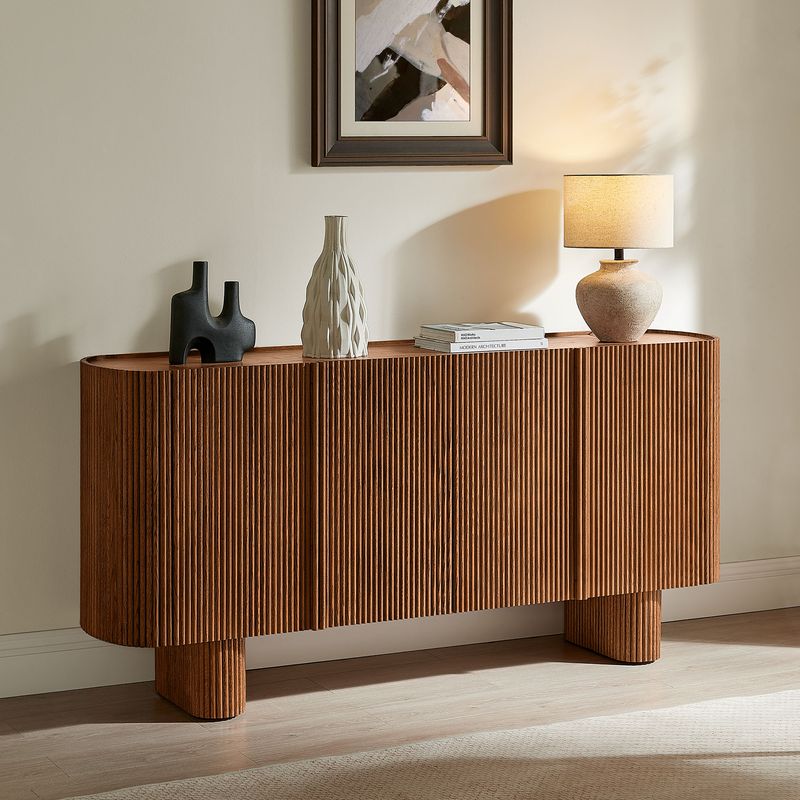
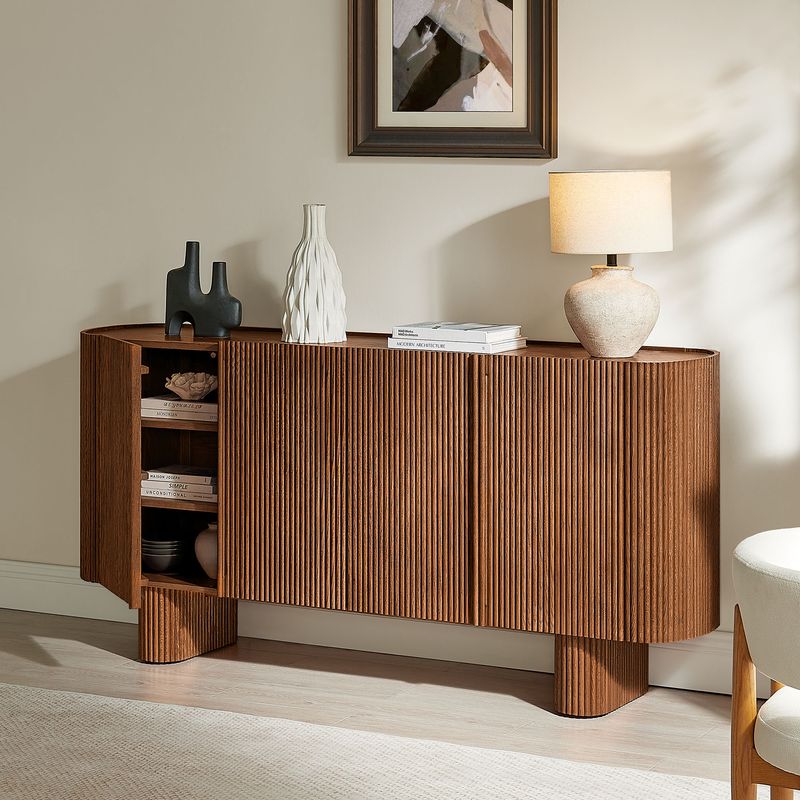
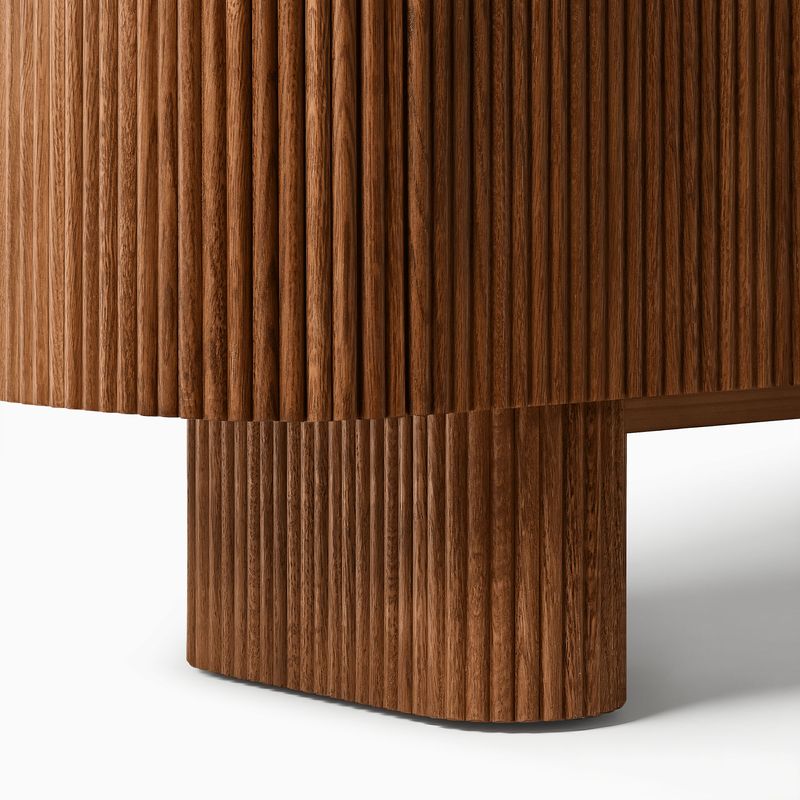
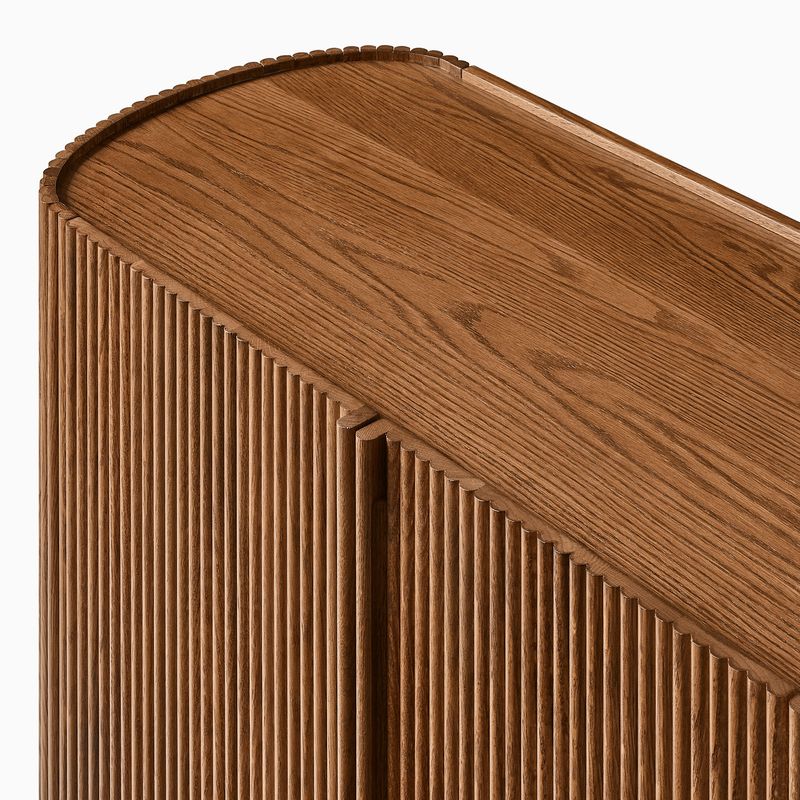
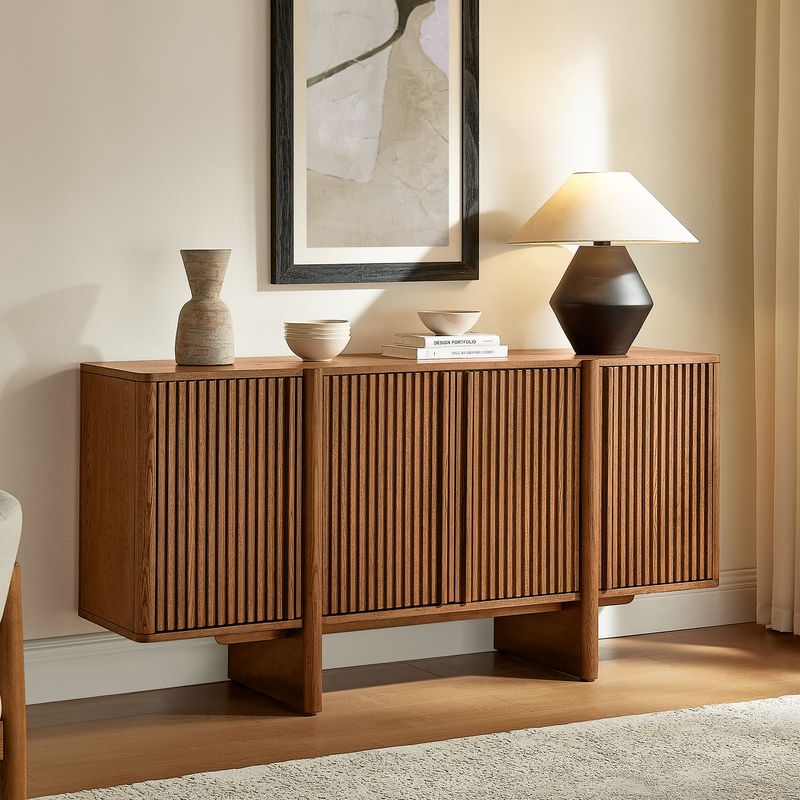
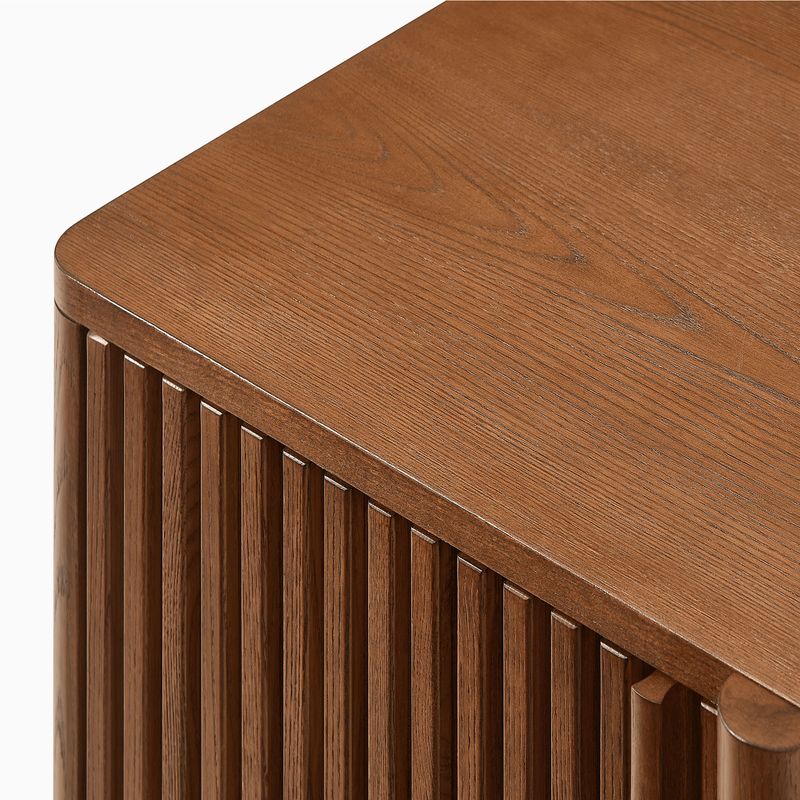
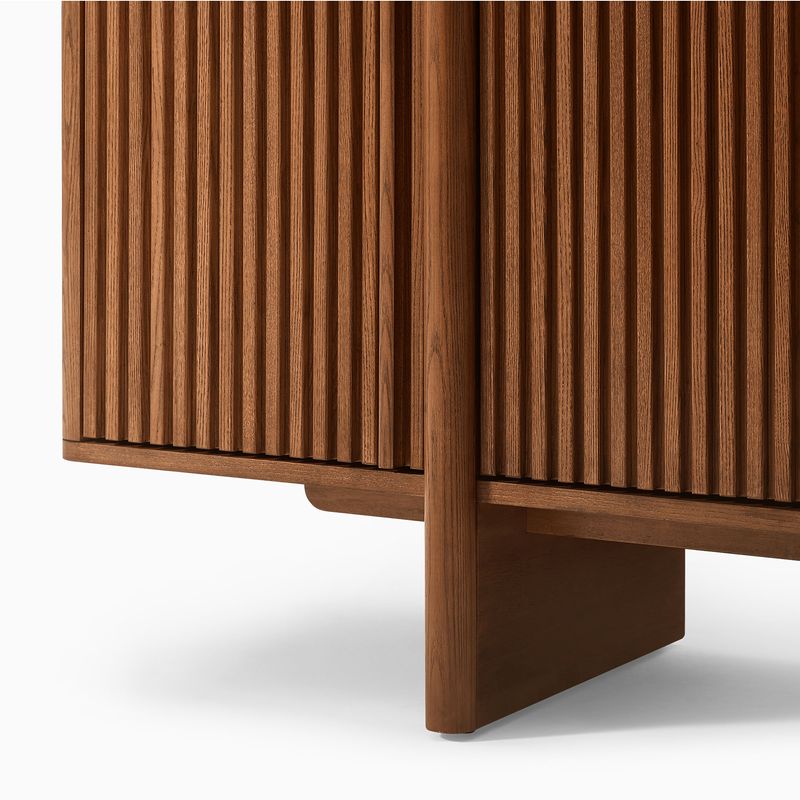
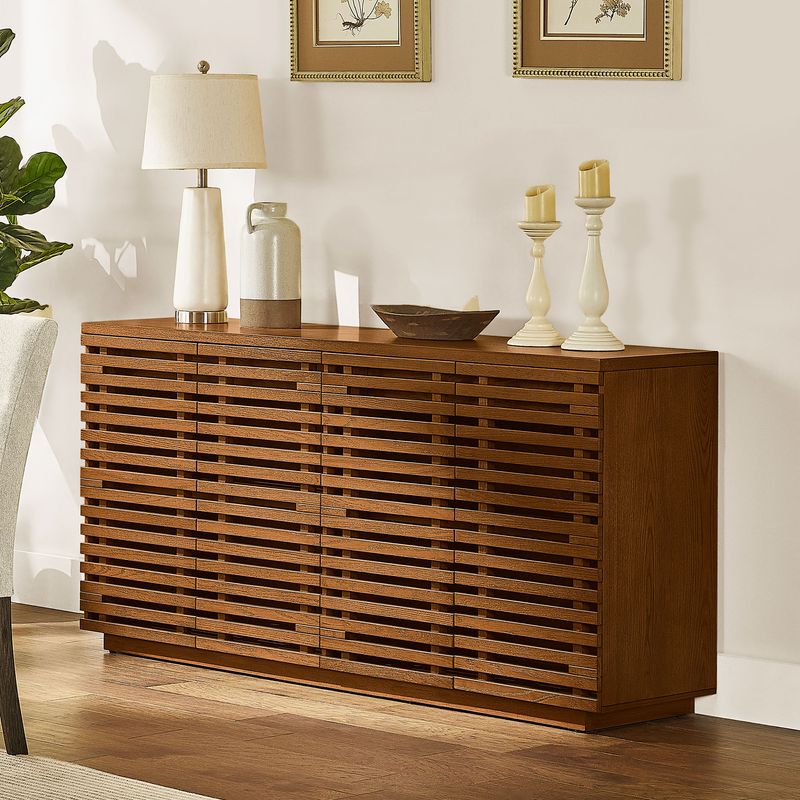
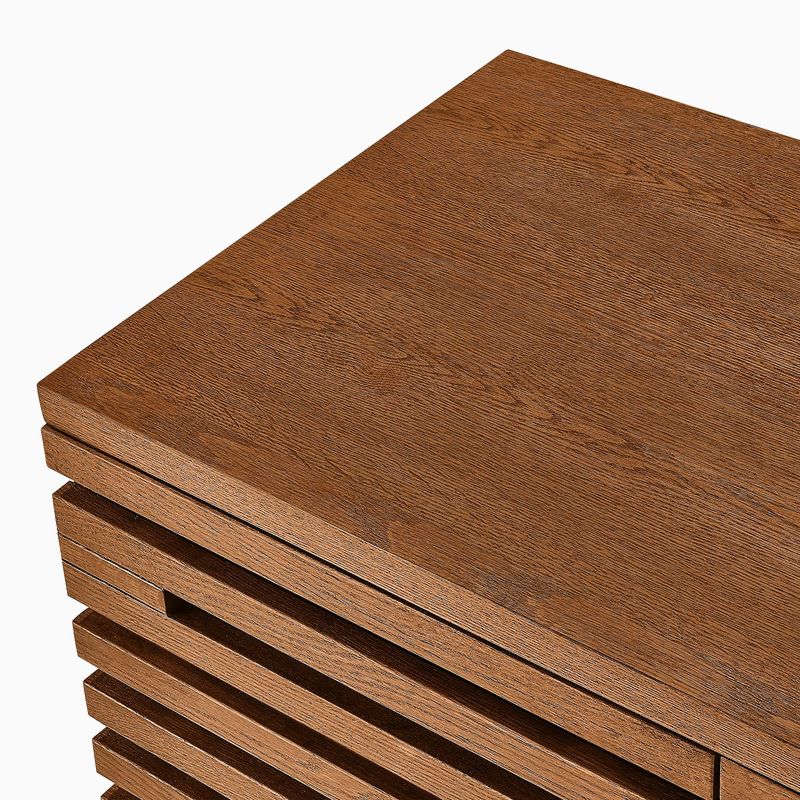
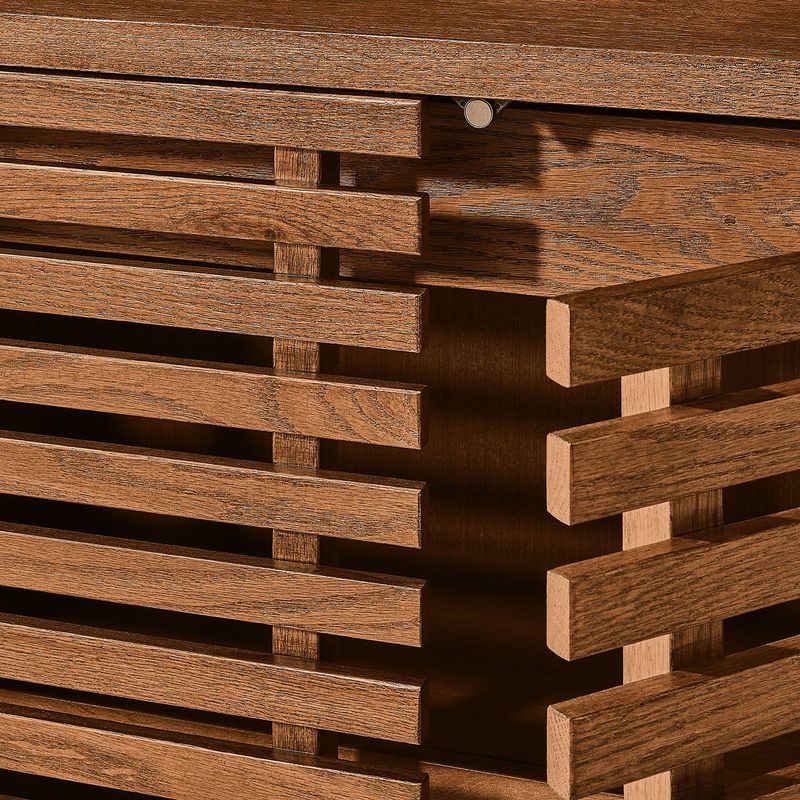
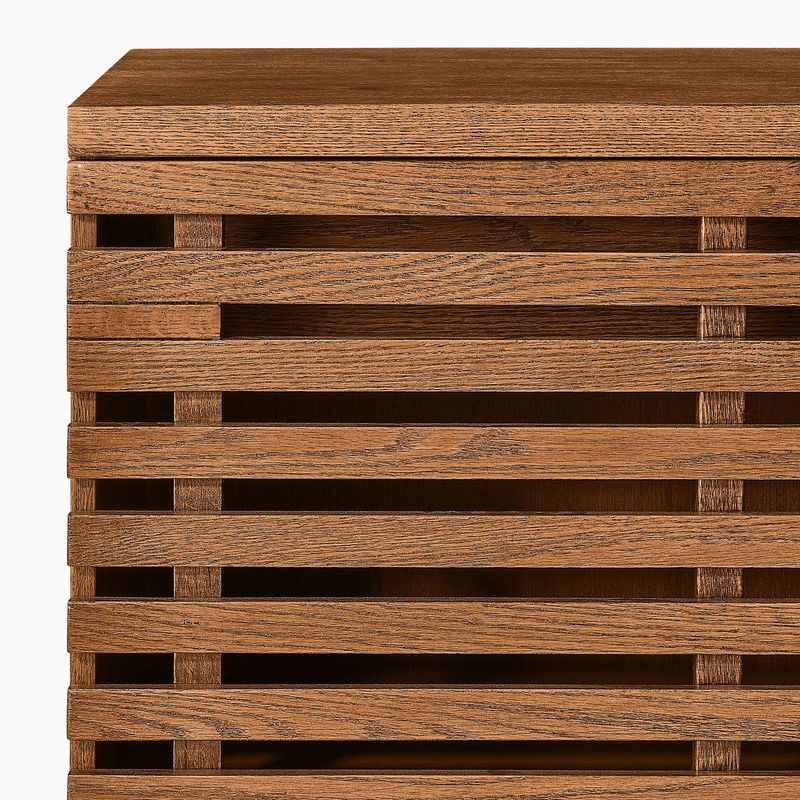
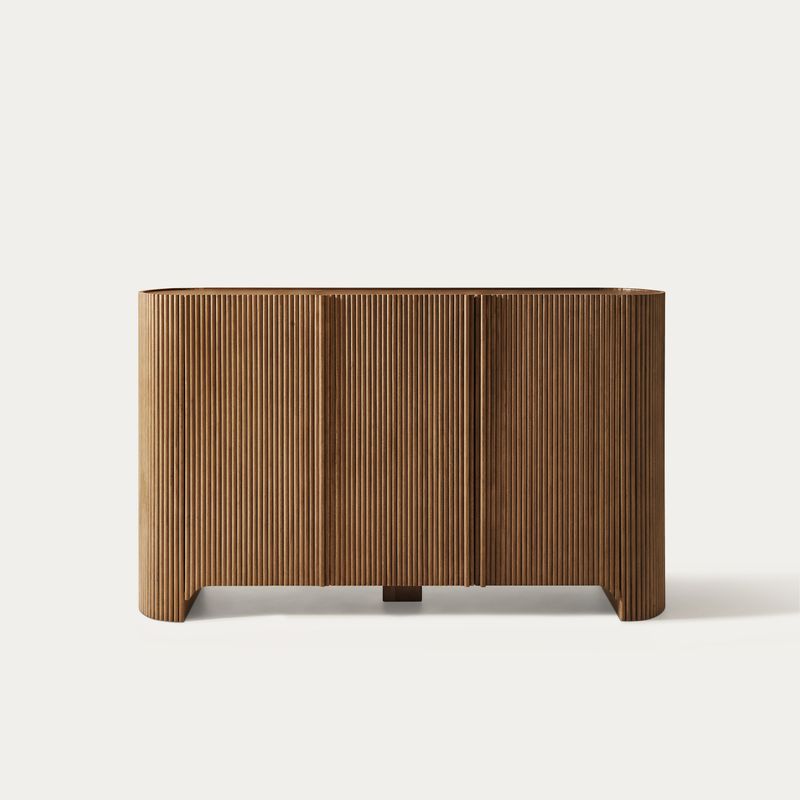
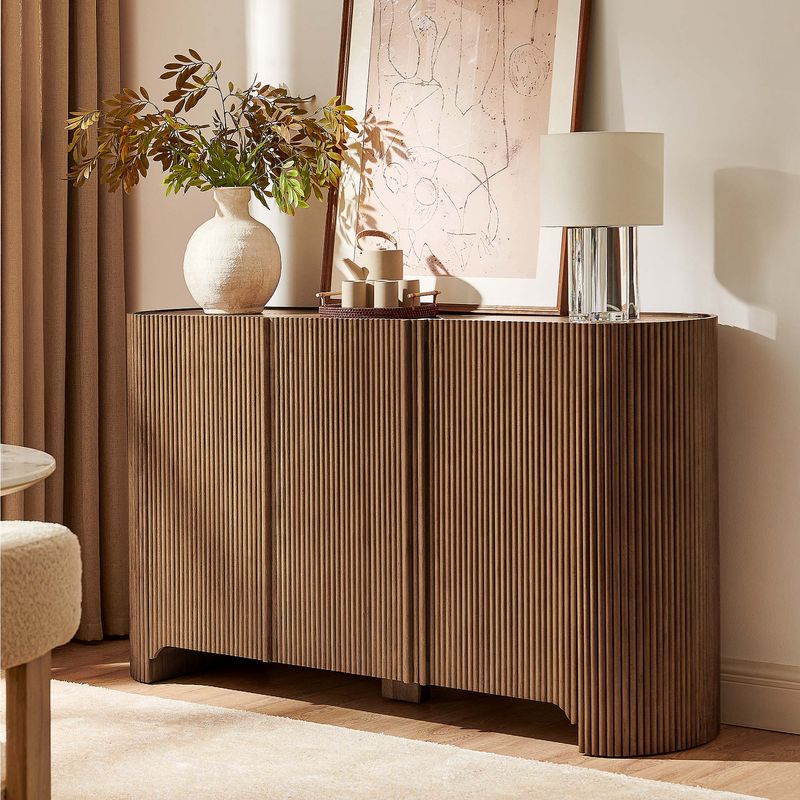
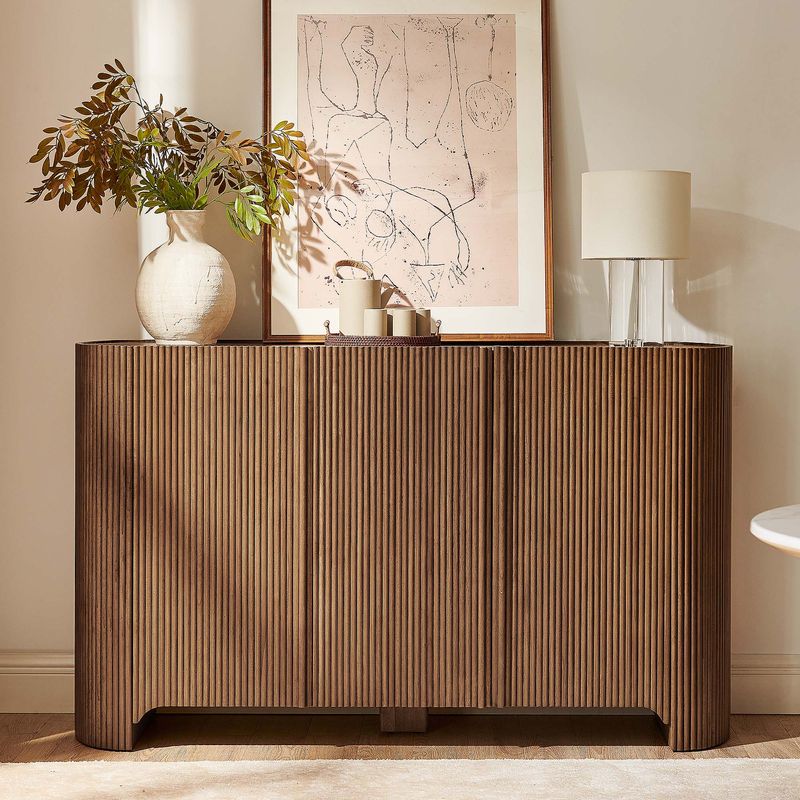
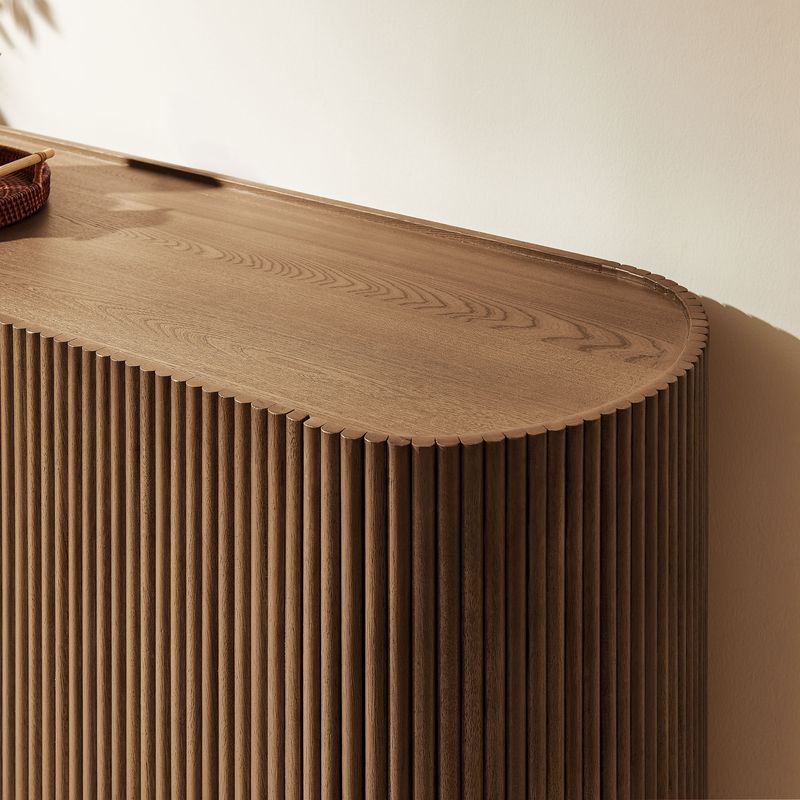
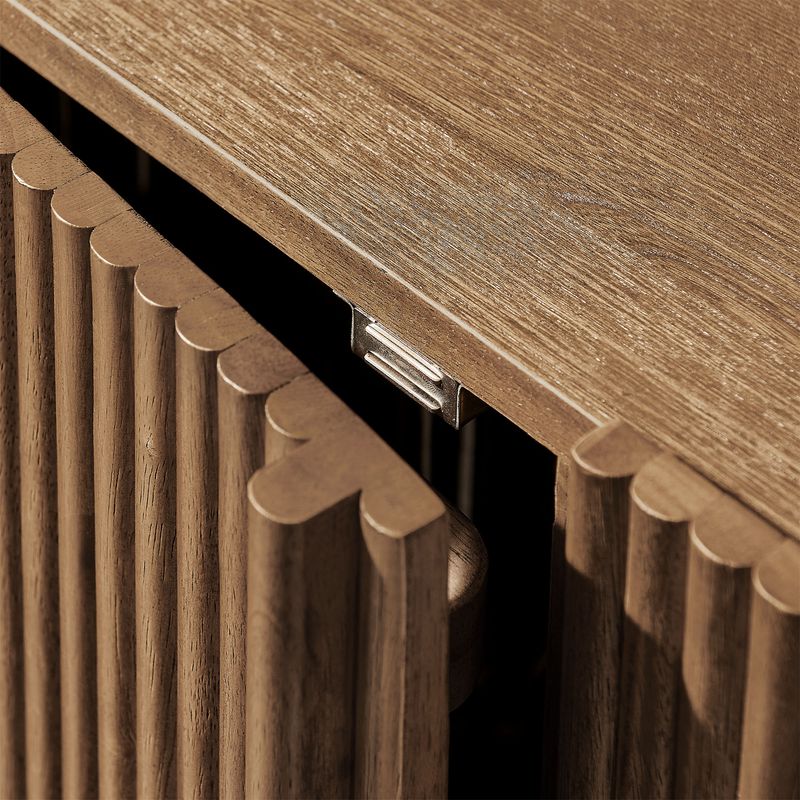
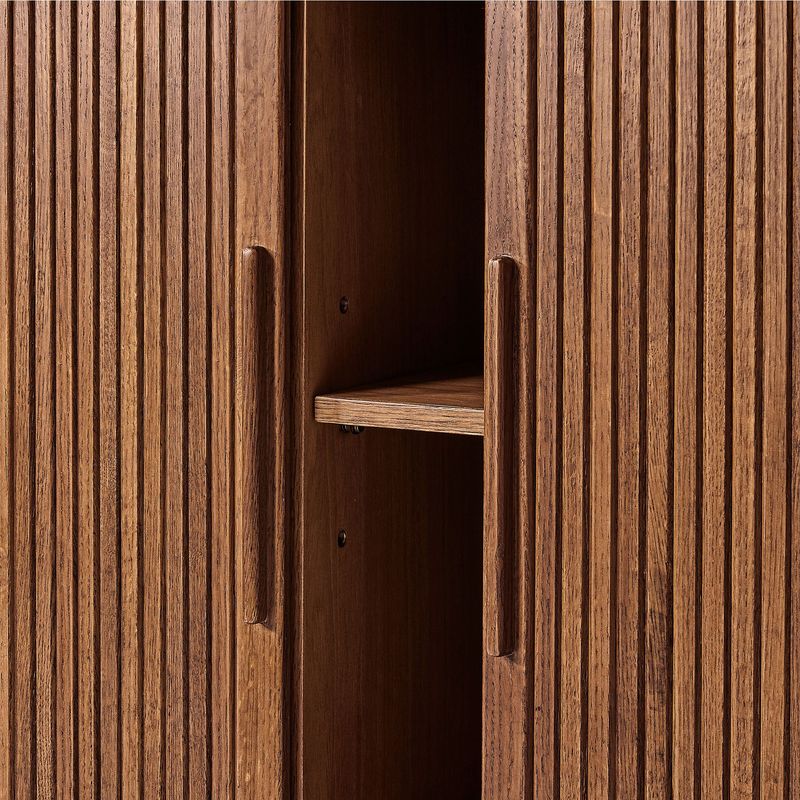
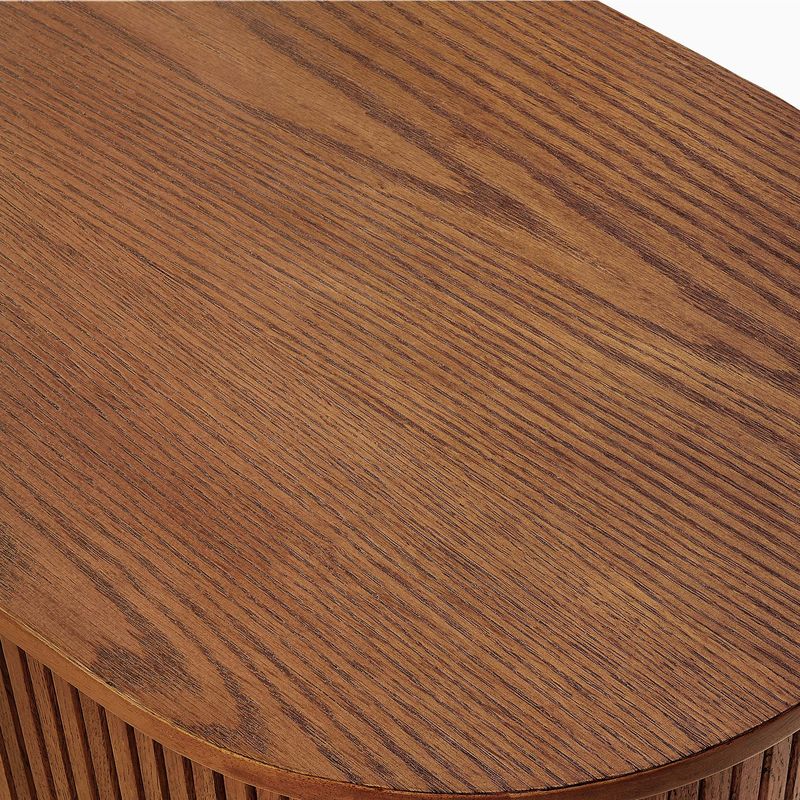
For a warmer wood tone, the Skimra 72-Inch Oak Sideboard features wave-inspired fluting crafted from solid oak. The repeating texture adds dimension across the cabinet front without relying on contrasting colors or decorative hardware.
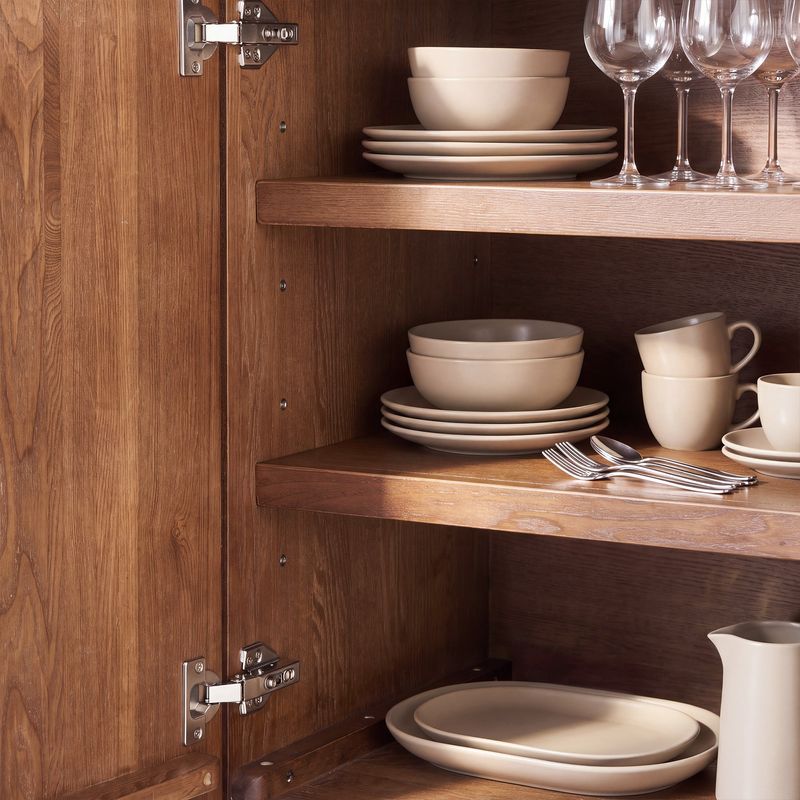
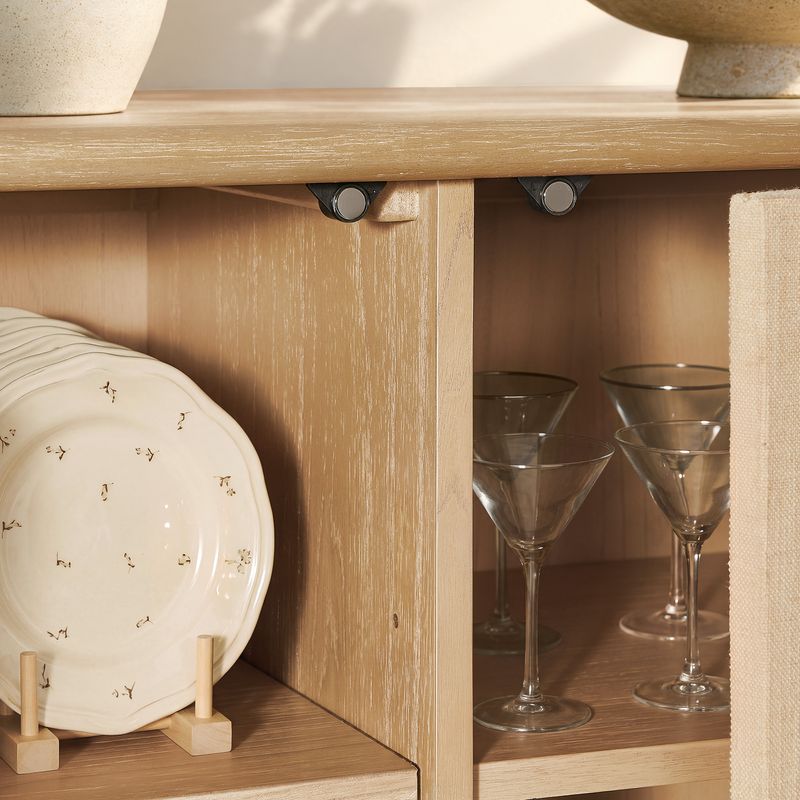
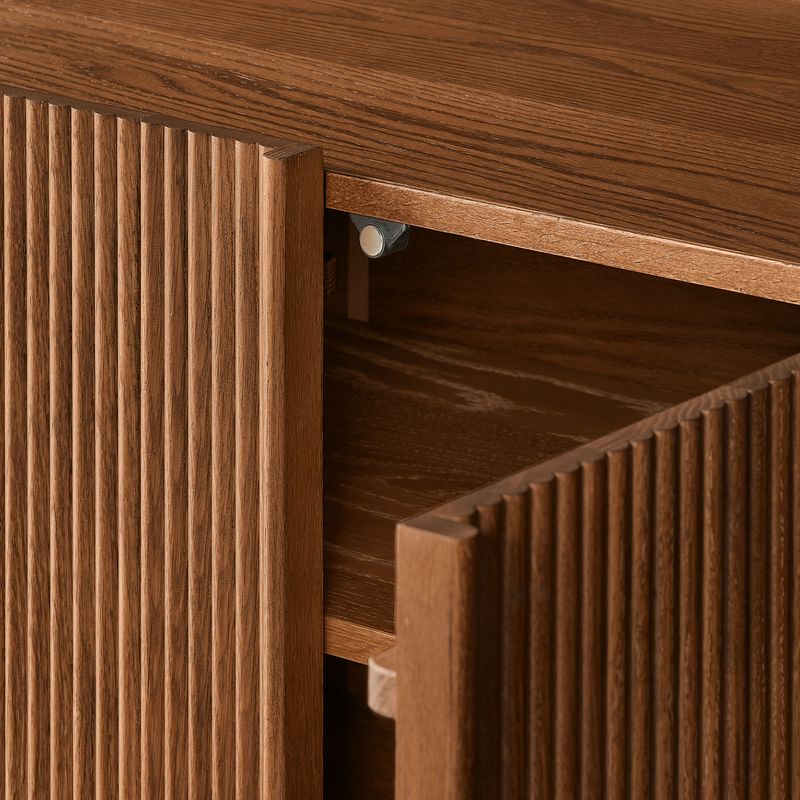
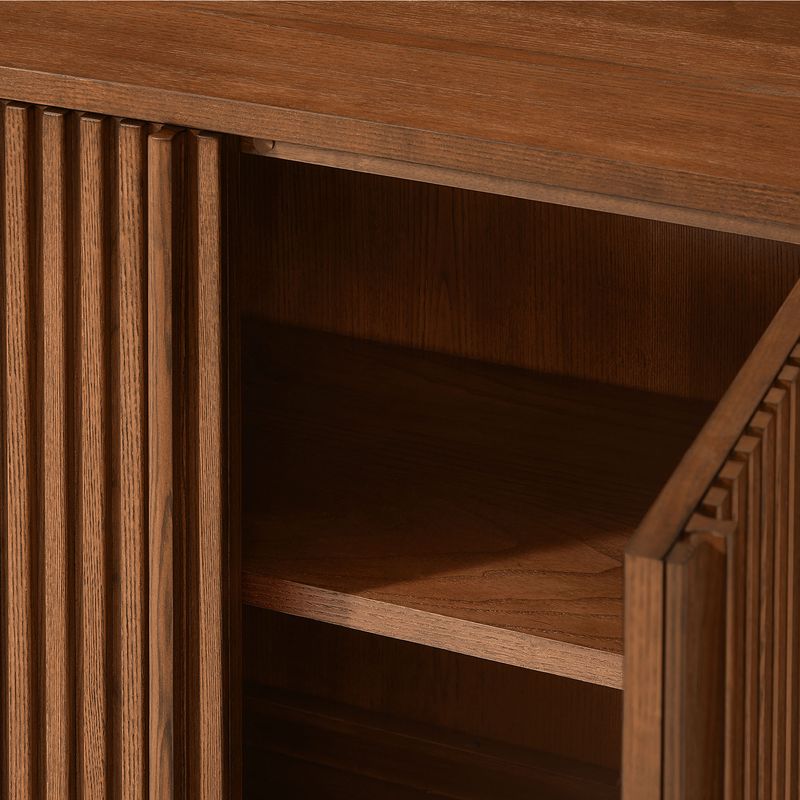
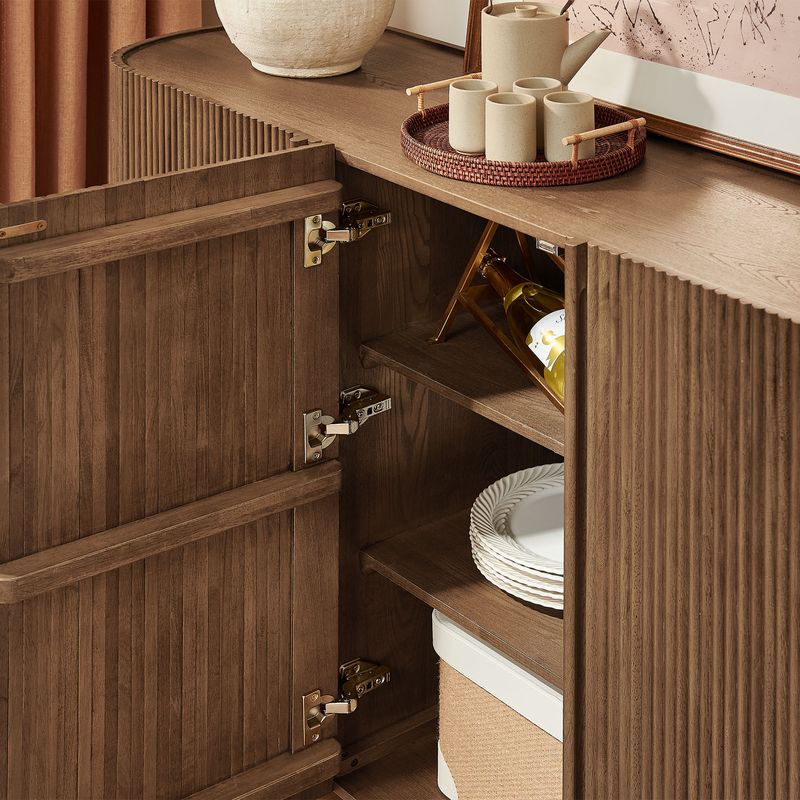
Skimra is made with American solid oak and engineered wood with oak veneers. Its adjustable shelves provide flexibility for organizing dinnerware, serving pieces, and household essentials of different heights.
At 72 inches wide, 18.1 inches deep, and 33.1 inches high, it has a deeper profile than Vera. Consider Skimra if warm oak detailing and adaptable enclosed storage are higher priorities than built-in drawers.
Sabina 64-Inch Ash Wood Sideboard
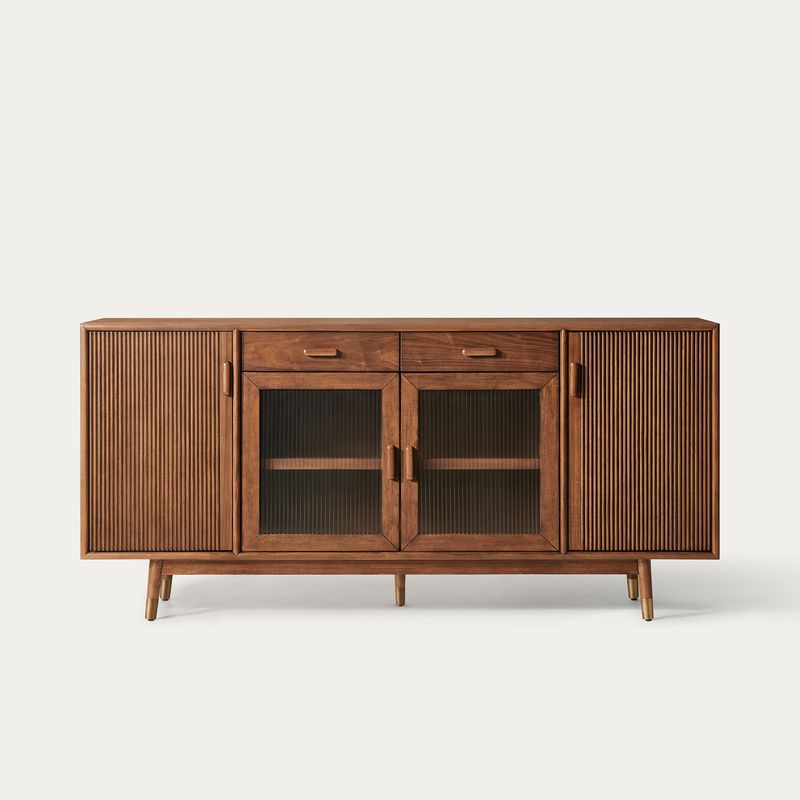
If a 72-inch cabinet feels too wide for your room, the Sabina 64-Inch Ash Wood Sideboard offers a more compact alternative. Its warm brown finish and square fluted detailing create a structured look, while the integrated handles keep the front visually consistent.
Sabina is crafted from American solid ash wood, rubberwood, and plywood with ash wood veneers. Its interior includes larger and smaller storage compartments, helping you organize belongings by size.
Measuring 64.4 inches wide, 16.7 inches deep, and 31.5 inches high, Sabina is the narrowest of the six featured designs. It is worth considering for a smaller dining area or living room where you want textured wood detailing without using as much wall space.
Sideboards with Distinctive Textures and Finishes
If you prefer something beyond a conventional wood-grain cabinet, textured panels and decorative veneers can add visual interest. These designs work particularly well in rooms with neutral colors and simpler furniture.
Renata 71-Inch Travertine-Textured Sideboard
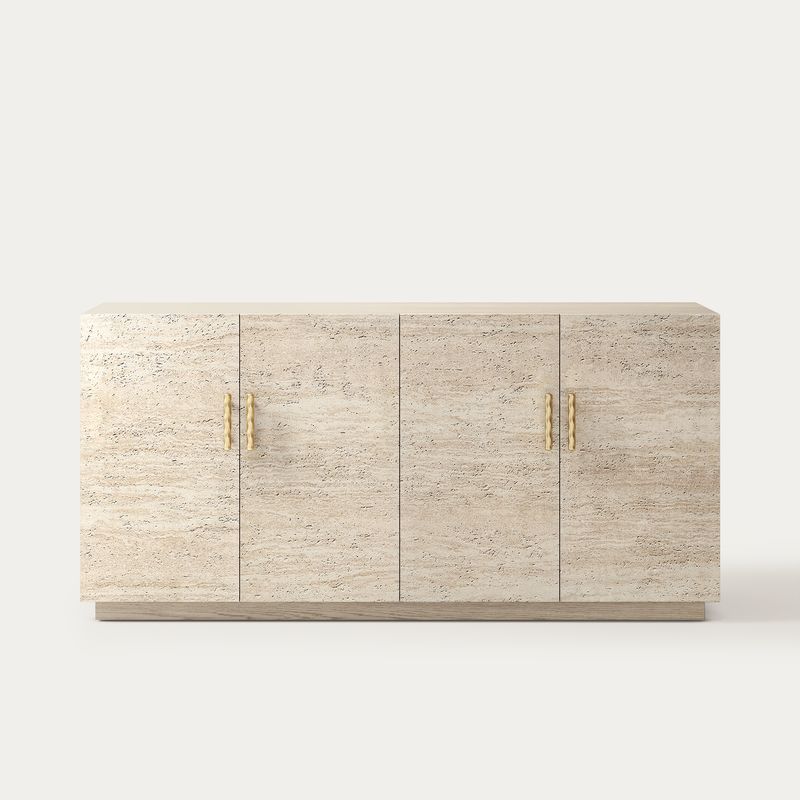
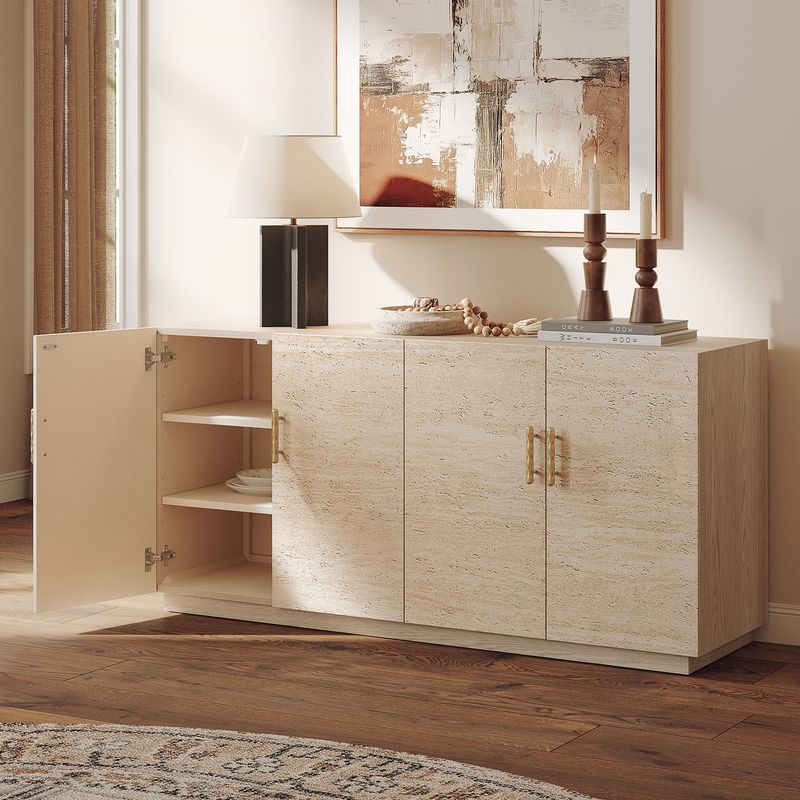
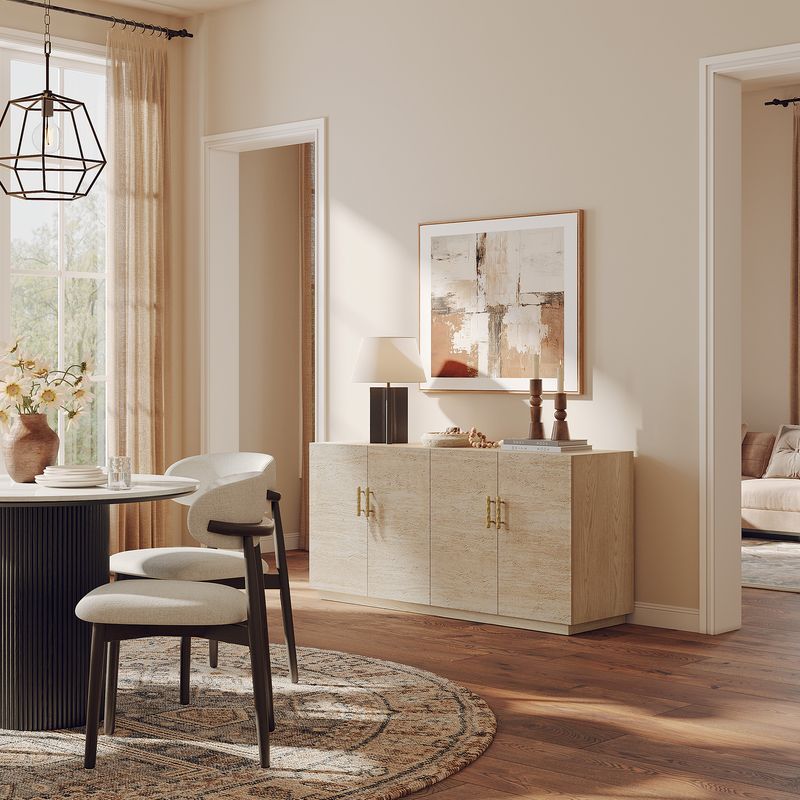
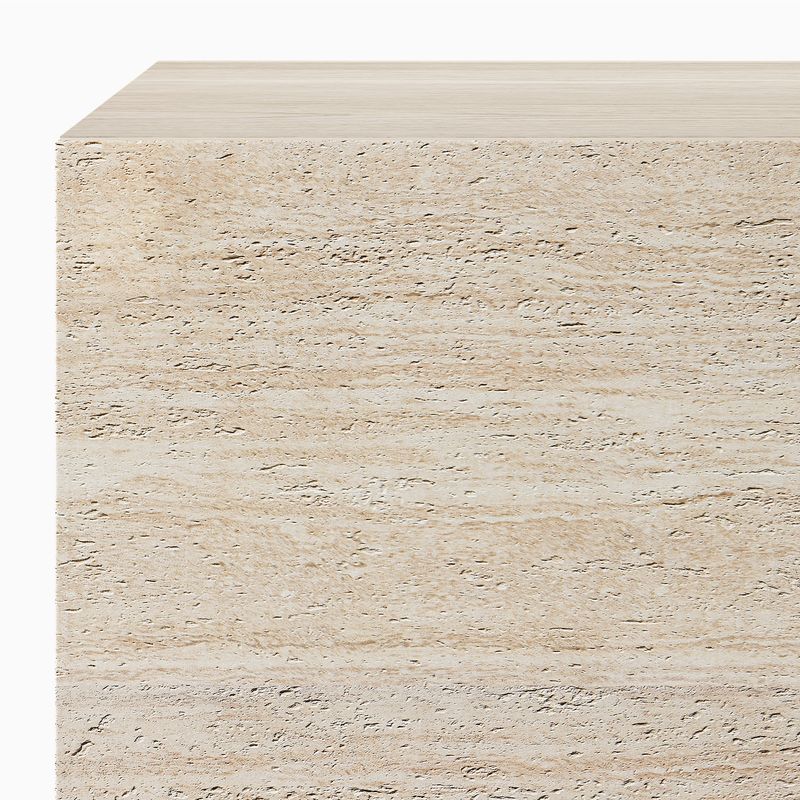
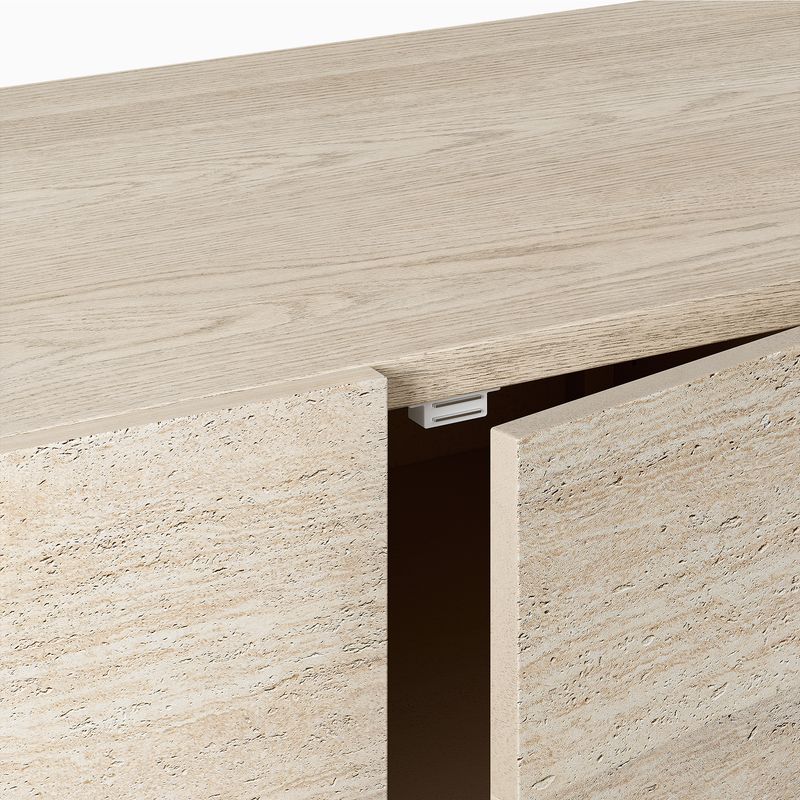
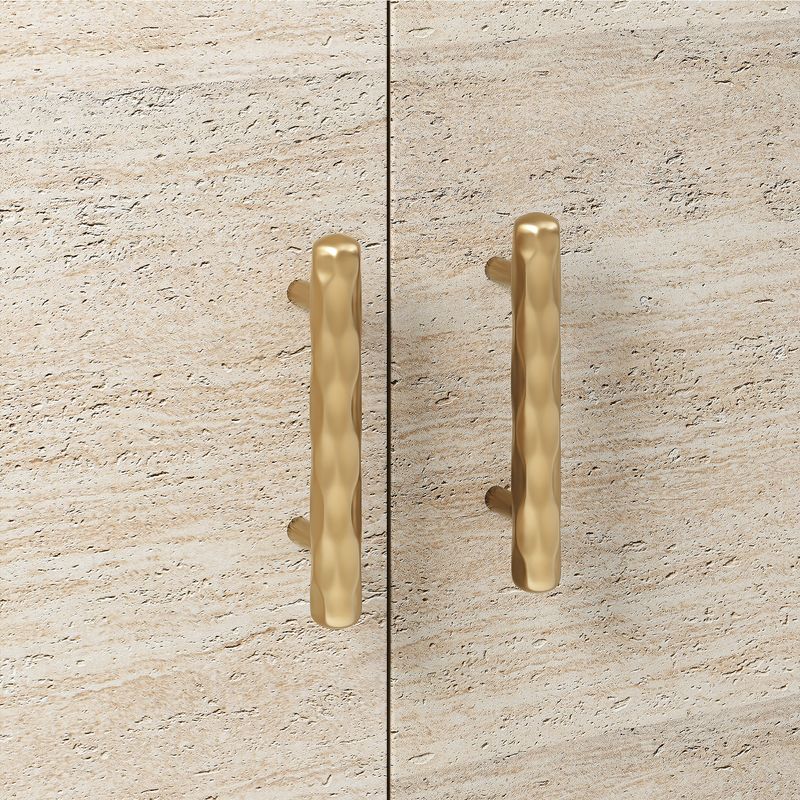
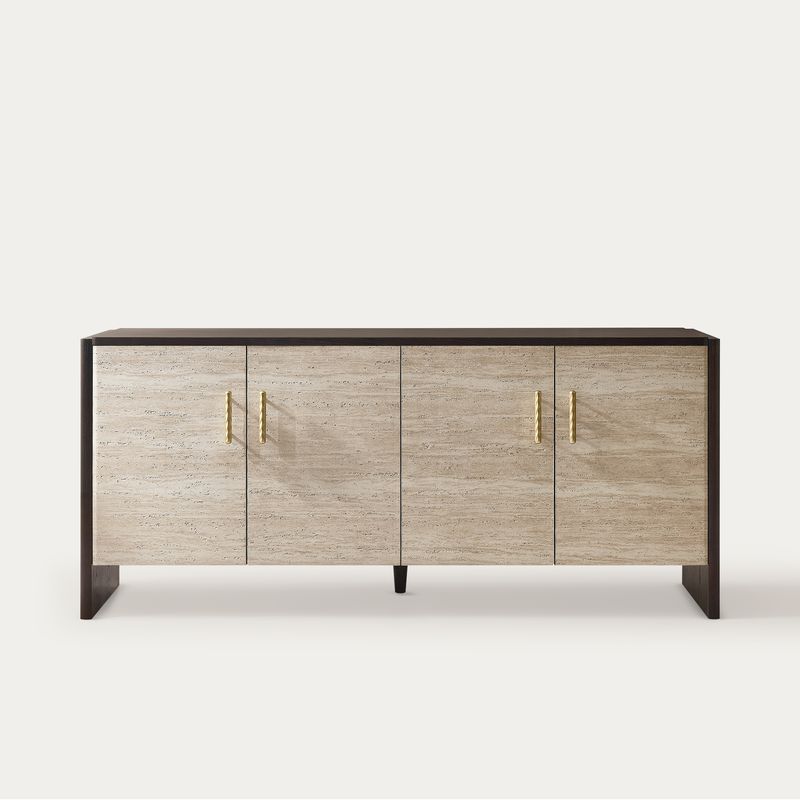
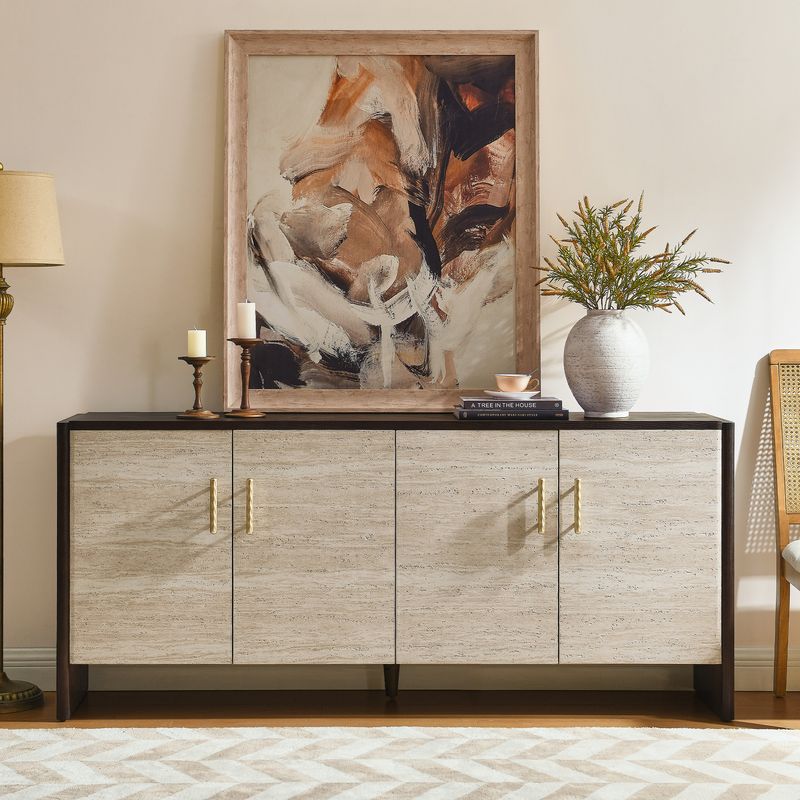
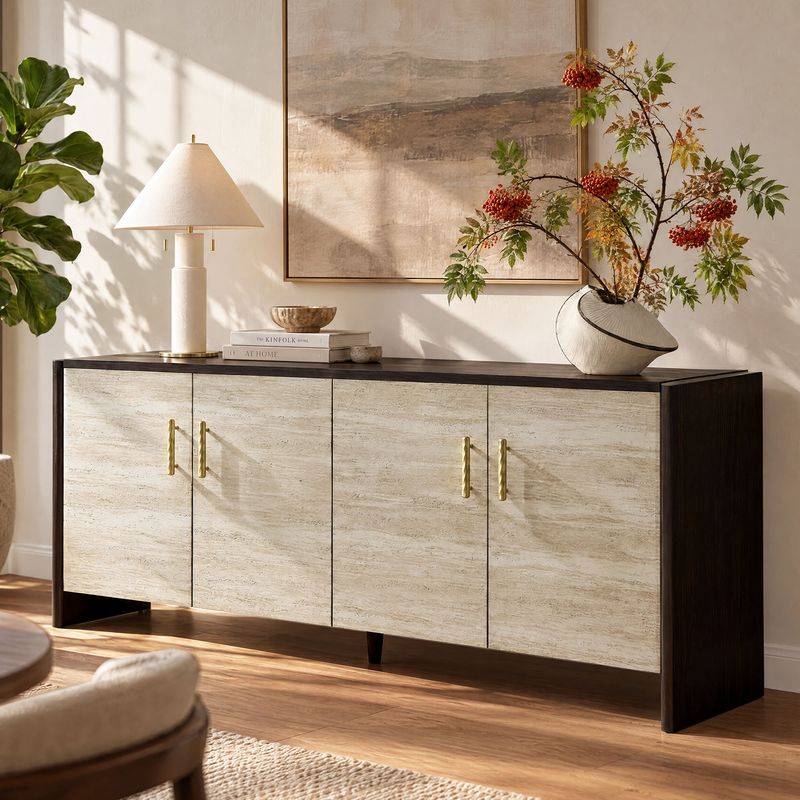
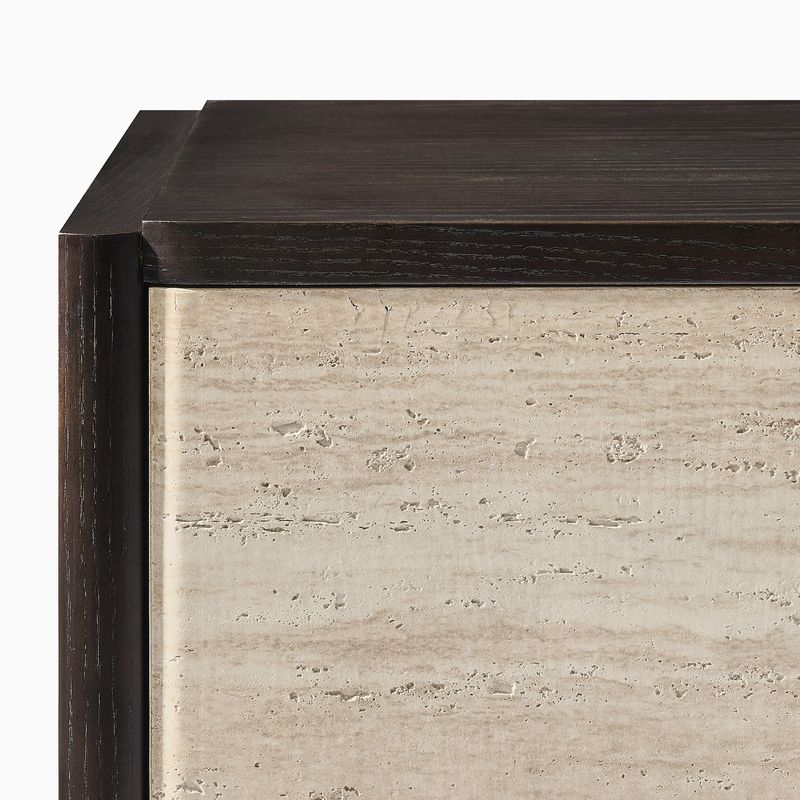
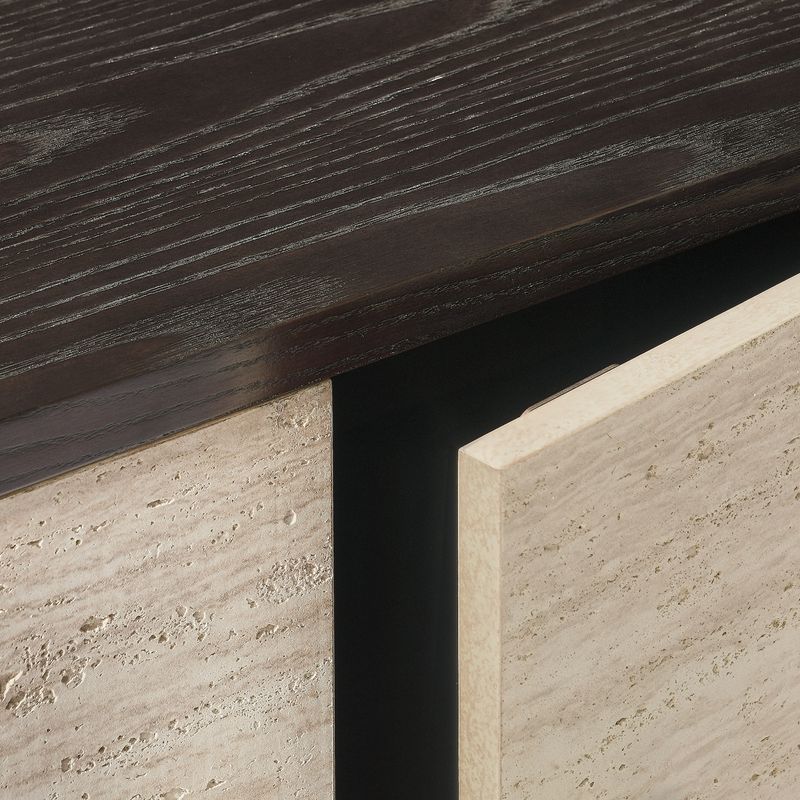
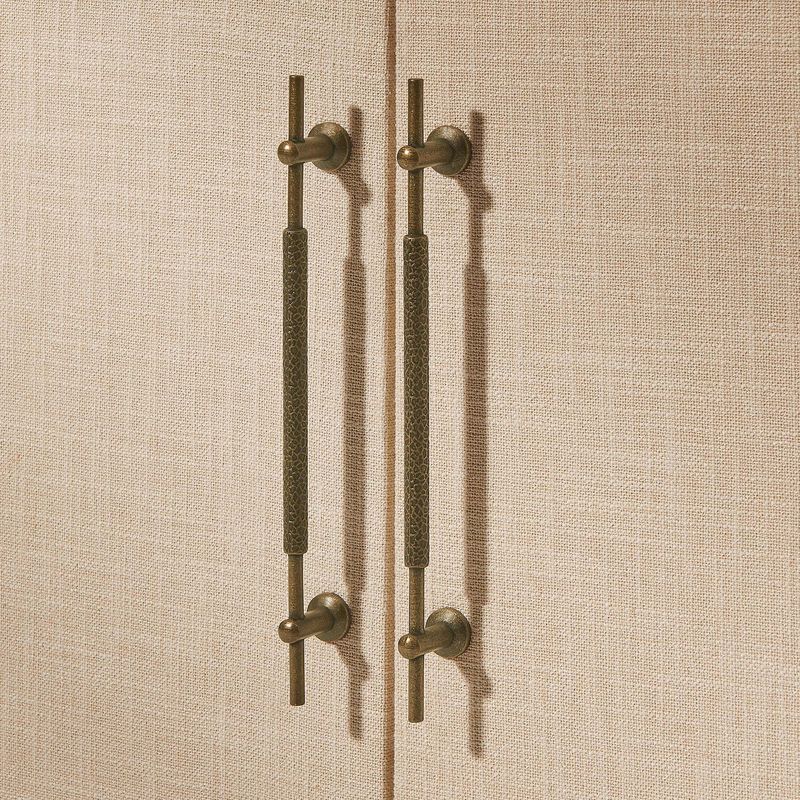
The Renata 71-Inch Travertine-Textured Sideboard pairs beige, travertine-inspired panels with a dark wood-grain frame. Light brass-toned hammered hardware adds a subtle contrast.
Its travertine-like appearance comes from a textured resin finish rather than natural travertine stone. The construction combines resin and engineered wood with American ash veneers. Adjustable interior shelves provide flexibility for storing tableware and other household items.
Renata measures 71 inches wide, 15.7 inches deep, and 31.7 inches high. Its relatively shallow depth makes it a practical option when you want a wide cabinet without extending too far into the room. Choose it for a stone-inspired appearance and a light-and-dark finish combination.
Bodil 72-Inch Burl Sideboard
The Bodil 72-Inch Burl Sideboard features burl veneers arranged in a distinctive decorative pattern. A beveled frame adds definition around the cabinet front, while four push-to-open doors maintain a clean appearance without prominent external pulls.
Behind the doors, adjustable shelves offer flexibility for organizing dinnerware, glassware, and other household essentials. Bodil is crafted from rubberwood and engineered wood with burl veneers.
At 72 inches wide, 18.1 inches deep, and 33.1 inches high, Bodil has a substantial presence. Consider it when you want the cabinet itself to become a focal point rather than simply provide background storage.
Large Sideboards for Wider Walls
A wider sideboard can anchor a large dining room wall and provide an extended surface for lamps, artwork, or serving accessories. Make sure the cabinet fits the wall and leaves enough room for doors and nearby furniture.
Walter 80-Inch Linen-Blend Sideboard
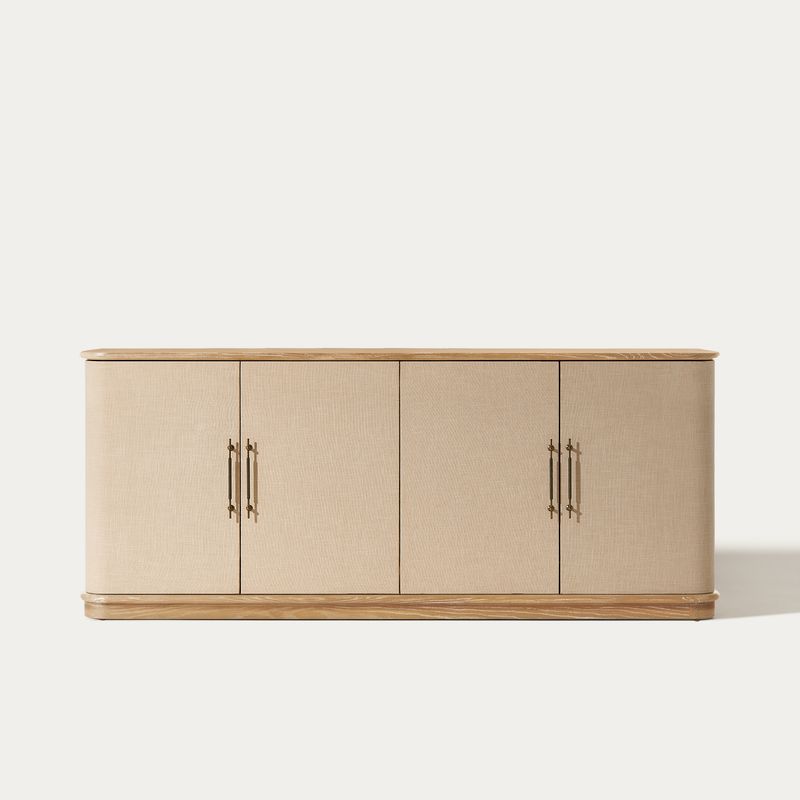
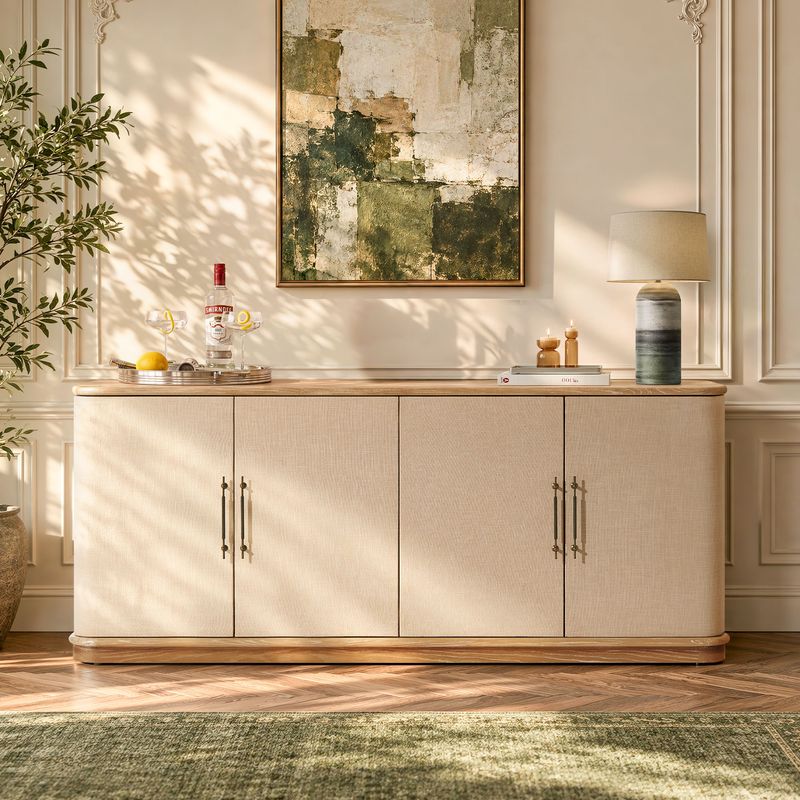
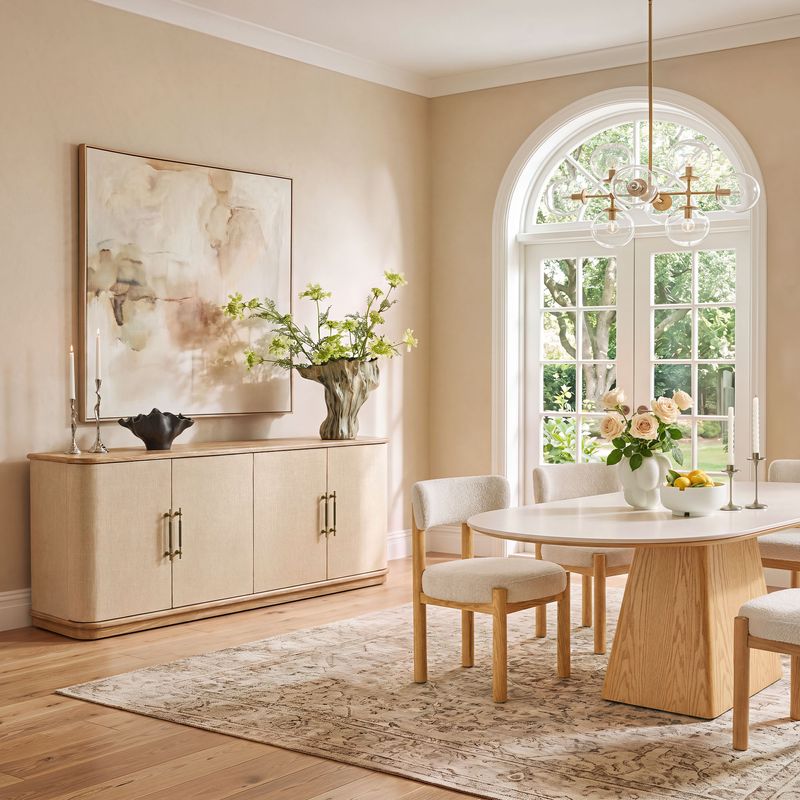
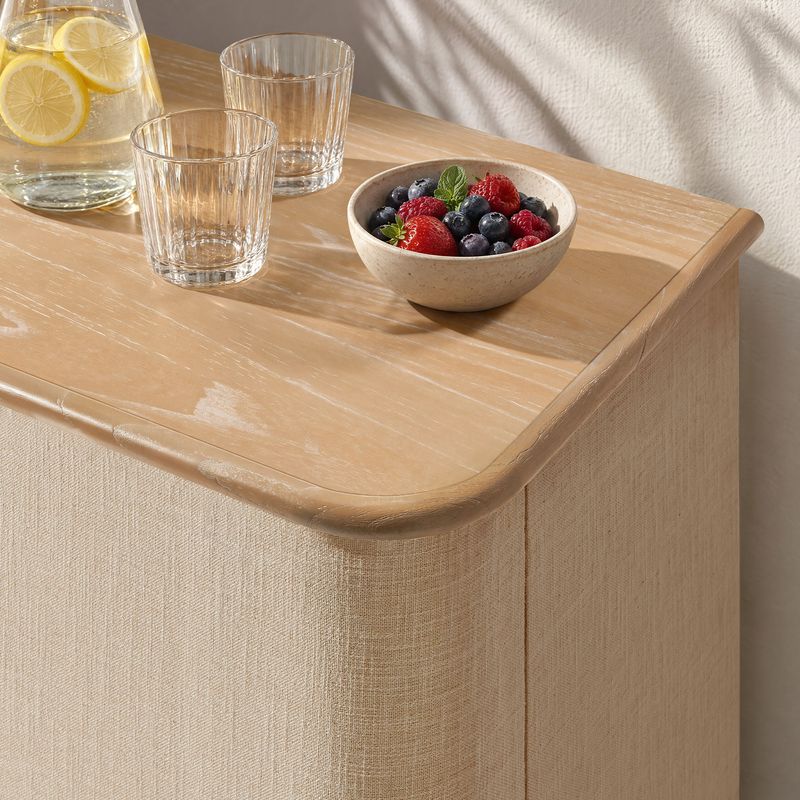
The Walter 80-Inch Linen-Blend Sideboard is the widest design featured here. It combines a light brown cerused Mindi wood frame with sand-colored linen-blend fabric doors. Rounded framing softens its long silhouette, while the fabric fronts introduce a tactile contrast to the wood.
Its construction uses Mindi wood and engineered wood with Mindi veneers. Measuring 80.1 inches wide, 18.1 inches deep, and 33.1 inches high, Walter is best suited to a larger wall or dining area.
Choose Walter if you need greater wall coverage and prefer a mix of wood and fabric rather than a conventional all-wood cabinet.
Which Hernest Sideboard Should You Choose?
If you have narrowed your options down to a few designs, compare their differences in storage, finish, and overall dimensions.
Vera vs. Skimra: Drawers or Textured Oak?
Both cabinets are 72 inches wide, but their storage layouts differ. Vera has two drawers in addition to its cabinet compartments, making it a better fit if you want to separate smaller accessories from larger belongings. Skimra focuses on adjustable cabinet storage and solid oak fluting. Choose Vera for its mixed storage layout and arched doors, or Skimra for warm oak texture and a more streamlined cabinet front.
Renata vs. Bodil: Stone-Inspired Texture or Burl Veneers?
Renata pairs beige travertine-inspired panels with a dark frame and has a depth of just 15.7 inches. Bodil features burl veneers, a beveled frame, and push-to-open doors, with a deeper 18.1-inch profile. Consider Renata if you prefer a lighter finish and need a shallower cabinet. Choose Bodil if a more decorative wood pattern is your priority.
Walter vs. Sabina: Wider Coverage or a Compact Fit?
Walter measures 80.1 inches wide, making it suitable for a larger wall where a long cabinet can anchor the room. Sabina is 64.4 inches wide and offers a more compact alternative with warm ash detailing. Choose Walter when wall coverage and its wood-and-fabric combination matter most; consider Sabina when you need a narrower cabinet.
Where to Use a Sideboard
A sideboard can work in several rooms. Its best placement depends on what you plan to store and how much floor space is available.
Dining Room
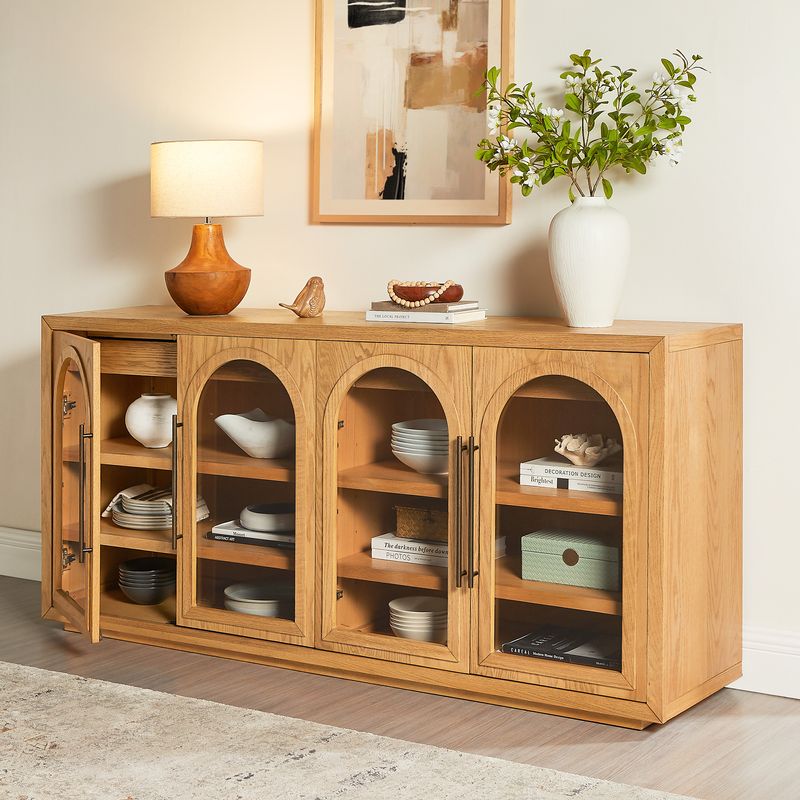
A dining sideboard keeps plates, bowls, serving dishes, table linens, and entertaining accessories close to the dining table. Adjustable shelves can accommodate items of different heights, while drawers are useful for smaller pieces such as napkins and placemats.
If you regularly host meals, consider how the cabinet relates to your dining table and chairs. Make sure it does not obstruct movement or access to other furniture.
Living Room
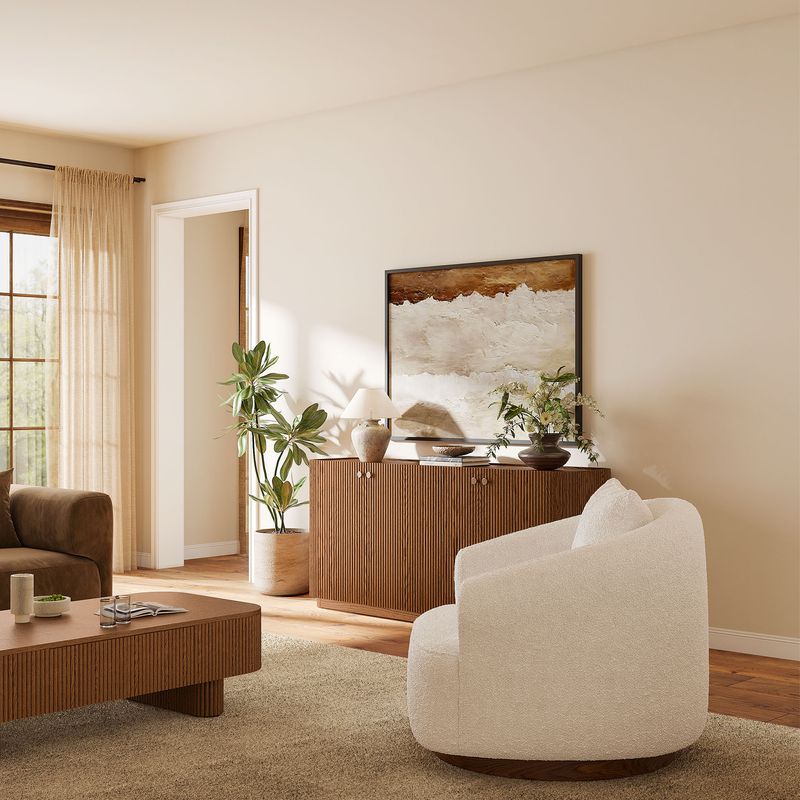
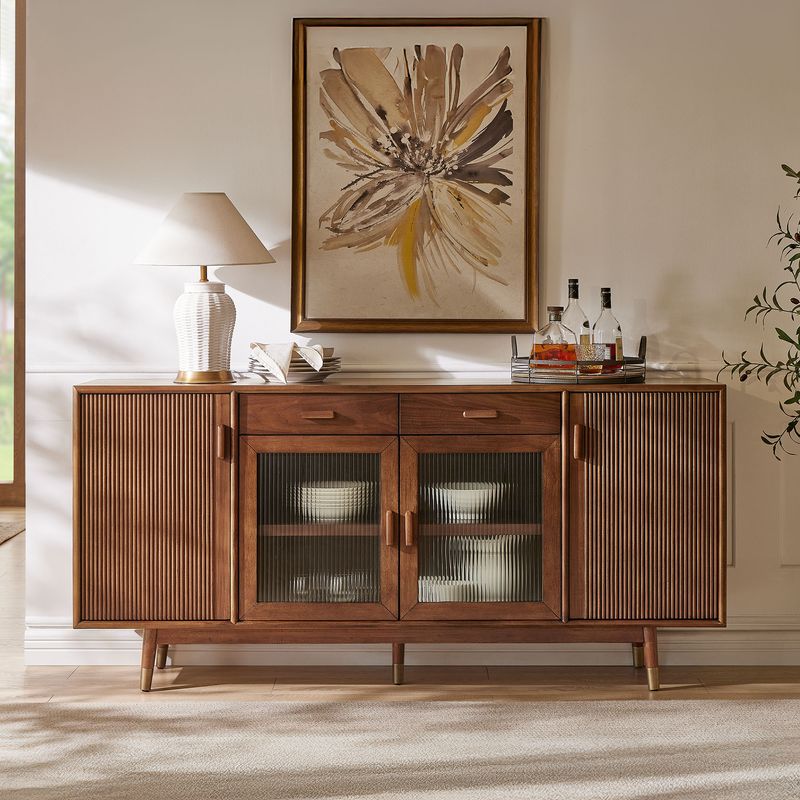
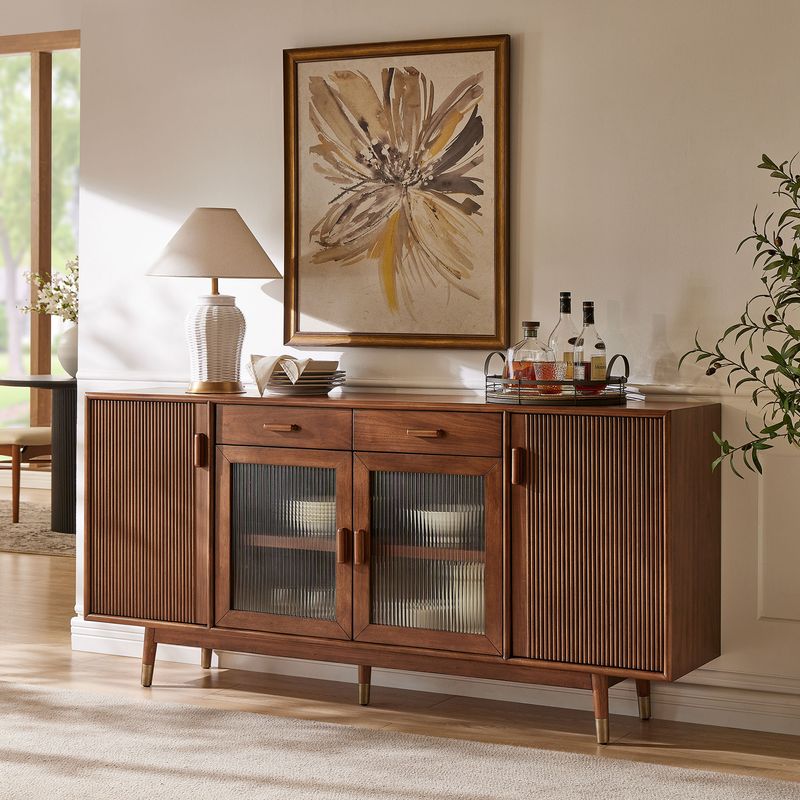
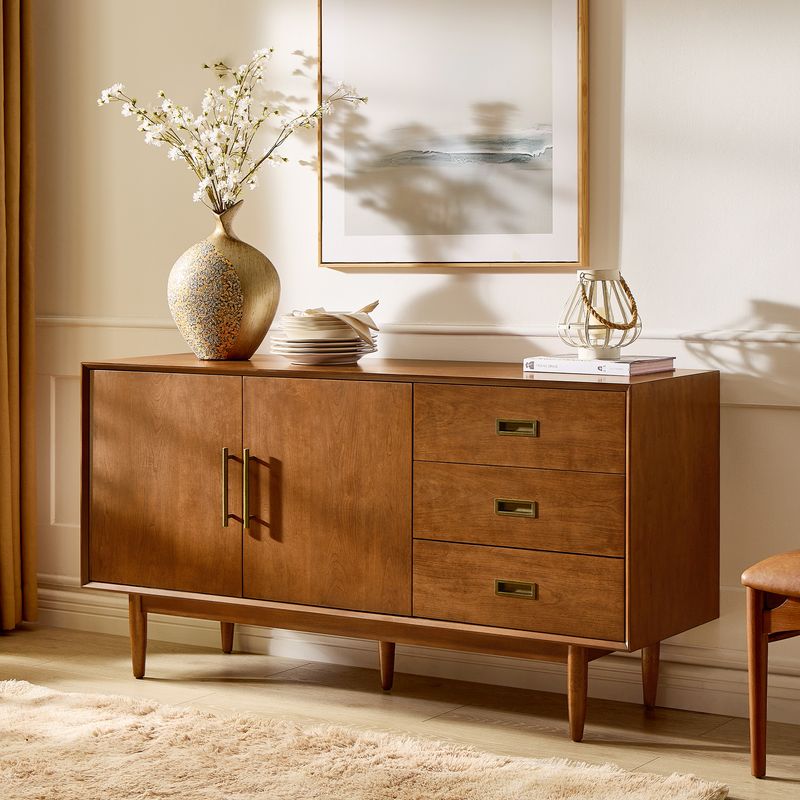
In a living room, a sideboard can store books, board games, electronics accessories, blankets, and other everyday belongings. Its top can also support a lamp, framed artwork, a vase, or a decorative tray.
Check the cabinet's height and depth if you plan to place it beneath wall art or near a sofa. A shallower design may preserve more floor space, while a deeper cabinet can accommodate larger belongings.
Entryway or Hallway
A sideboard can provide convenient storage for bags, keys, mail, and seasonal accessories near an entryway. In a narrow passage, a shallower option such as Renata or Vera may be easier to accommodate than a deeper cabinet.
Keep the top surface simple with a small tray, lamp, or mirror so the area remains practical for everyday use.
How to Choose the Right Sideboard Size
Before choosing a design, measure the available wall space and consider how the cabinet will affect nearby furniture and walkways. Width, depth, and height all matter.
Compare Width with Your Available Wall Space
Measure the wall where you plan to place the sideboard, including nearby doorways, windows, and trim. Leave enough space around the cabinet so it does not feel crowded.
The six featured designs offer different widths:
● Sabina: 64.4 inches
● Renata: 71 inches
● Vera and Skimra: 72 inches
● Bodil: 72 inches
● Walter: 80.1 inches
A narrower cabinet may suit a compact dining area, while a wider design can provide more wall coverage in a spacious room.
Check Depth and Walking Clearance
Depth determines how far a sideboard extends into the room. A deeper cabinet may provide more interior capacity, but it can also reduce the space available for chairs and foot traffic.
The featured designs range from 15.7 inches deep for Renata to 18.1 inches for Skimra, Bodil, and Walter. Vera is 16 inches deep, while Sabina is 16.7 inches deep.
Measure from the wall to the nearest furniture or walkway. Also allow enough room for cabinet doors and drawers to open comfortably. Around 36 inches of clearance is a useful planning target for a main walkway, although the appropriate amount depends on your room layout.
Consider Height and Interior Storage
A sideboard's height affects both its appearance and how comfortably you can use the top. For example, Vera stands 36 inches high, while Sabina is 31.5 inches high.
Overall dimensions do not tell you everything about storage capacity. Check the interior measurements when you plan to store larger dishes or serving pieces. For example, Vera's drawers have interior dimensions of approximately 32.2 inches wide, 12.8 inches deep, and 3.5 inches high. Skimra's interior shelf space is approximately 30.5 inches wide, 16.3 inches deep, and 9.2 inches high. These measurements can help you determine whether frequently used belongings will fit.
What to Check Before Buying a Wood Sideboard
A sideboard's appearance is only one part of the buying decision. Materials, storage layout, and construction details also affect how well it will work in your home.
Understand the Materials
Not every wood sideboard is made entirely from solid wood. Depending on the design, construction may combine solid wood, engineered wood, plywood, and wood veneers.
Solid wood offers the natural grain and character of the wood itself. Engineered wood and plywood are commonly used for structural components and panels. Veneers provide the appearance of selected wood species over a different substrate.
Check the material description for the specific model rather than assuming that a wood finish means the entire cabinet is solid wood.
Match the Storage Layout to Your Belongings
Drawers are useful for smaller items such as napkins, placemats, and serving accessories. Cabinet compartments are generally better suited to larger dishes, bowls, pitchers, and glassware.
Adjustable shelves make a cabinet more flexible when you store objects of different heights. If you have larger serving pieces or appliances, compare the interior measurements with the dimensions of those items.
Look at Construction and Everyday Details
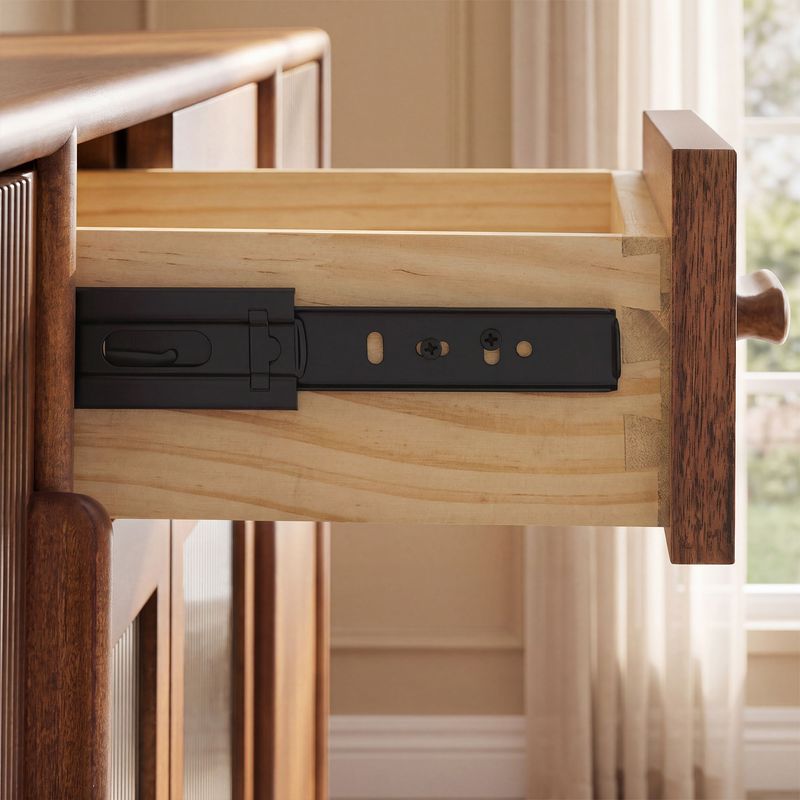
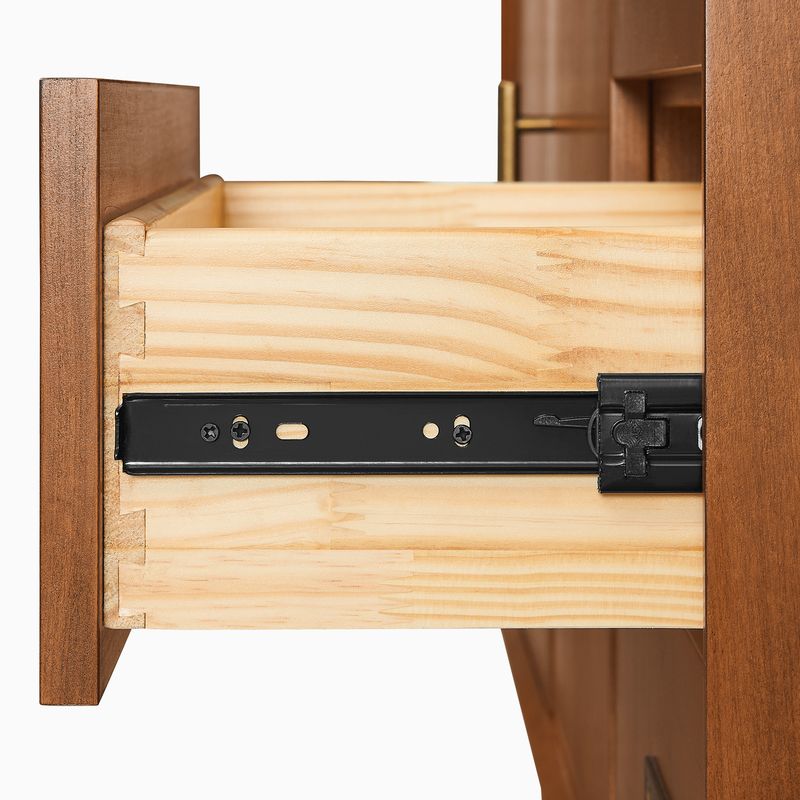
Door hardware, drawer construction, and shelf placement can affect everyday convenience. Dovetail drawer joints, for example, are a traditional joinery detail designed to create a strong connection between drawer sides and fronts. Vera includes dovetail-jointed drawers, while Bodil uses push-to-open doors for a cleaner cabinet front.
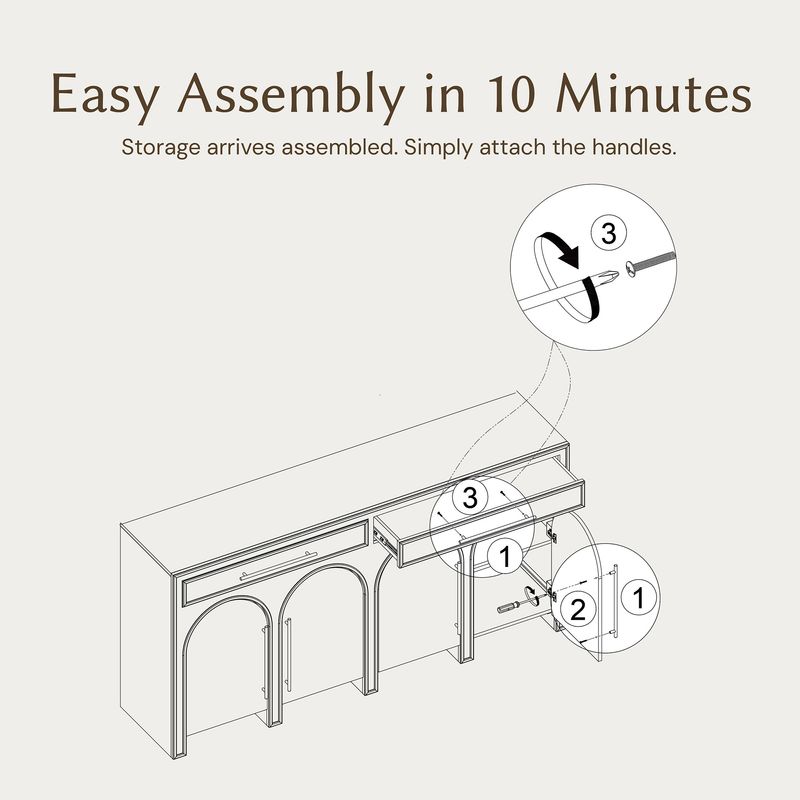
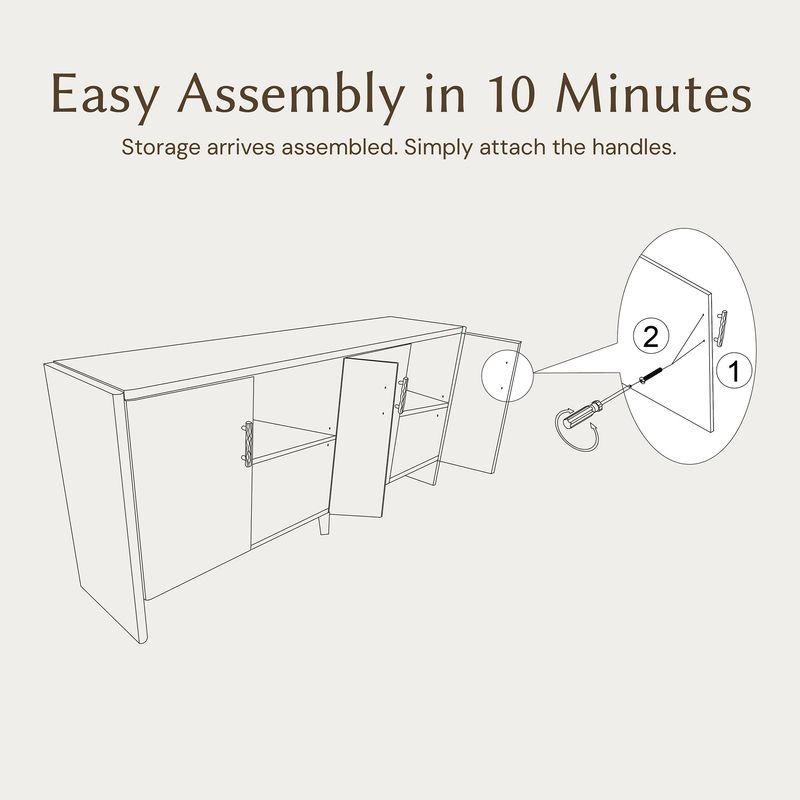
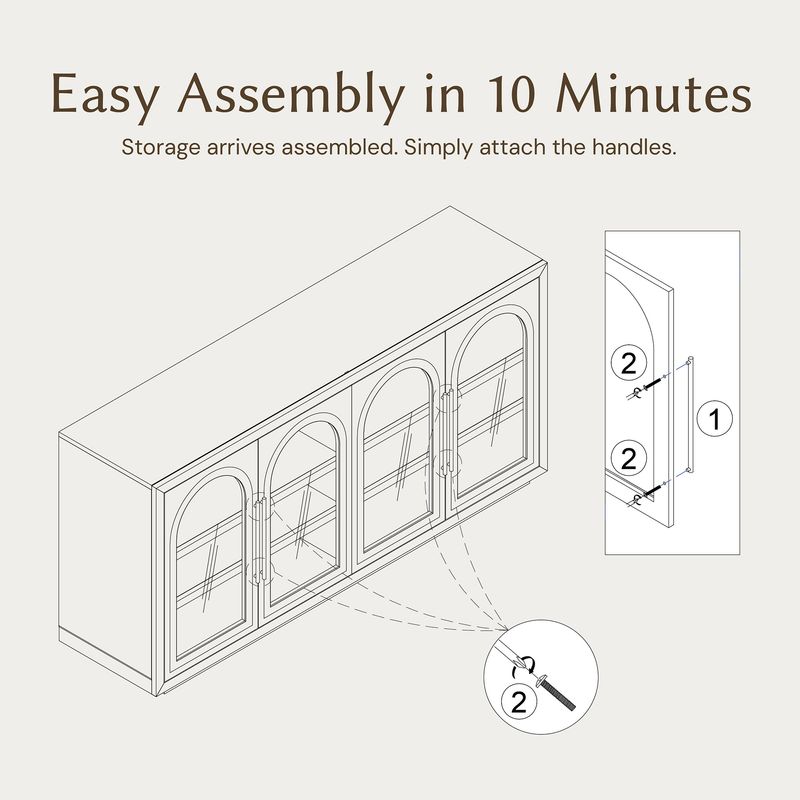
Also check whether the product requires assembly and whether its dimensions will fit through your entryway, hallway, and interior doorways.
Follow the Recommended Care Instructions
Different finishes and materials may require different cleaning methods. Use a soft cloth for routine dusting and follow the manufacturer's care instructions for the specific surface. Avoid harsh cleaners and excessive moisture unless the product guidance specifically allows them.
Fabric doors, resin-textured panels, and wood finishes may require different care methods, so check the instructions for your chosen design.
How to Style a Sideboard
A sideboard top can serve as a display surface without becoming cluttered. Start with one focal item, such as a lamp, vase, or framed artwork, then add a few smaller pieces for balance.
In a dining room, a tray can keep frequently used serving accessories together. In a living room, books and ceramics can complement the furniture around the cabinet. If the sideboard has a distinctive front, such as Vera's arches or Skimra's fluting, keep the top relatively simple so the detailing remains visible.
Find Your Sideboard at Hernest
The right sideboard should fit your available space, provide the storage you need, and complement the furniture already in your home. If you prefer a dark finish with drawers and arched doors, explore Vera. For warm oak texture, consider Skimra. If you need a narrower cabinet, Sabina offers a more compact option, while Walter provides greater width for larger walls.
You can also compare Renata's travertine-inspired panels with Bodil's burl veneer detailing to find a finish that suits your interior.
Explore the Hernest sideboard collection to compare designs, dimensions, finishes, and storage configurations. Find a cabinet that works for your dining room, living room, or entryway while bringing practical organization and distinctive style into your home.