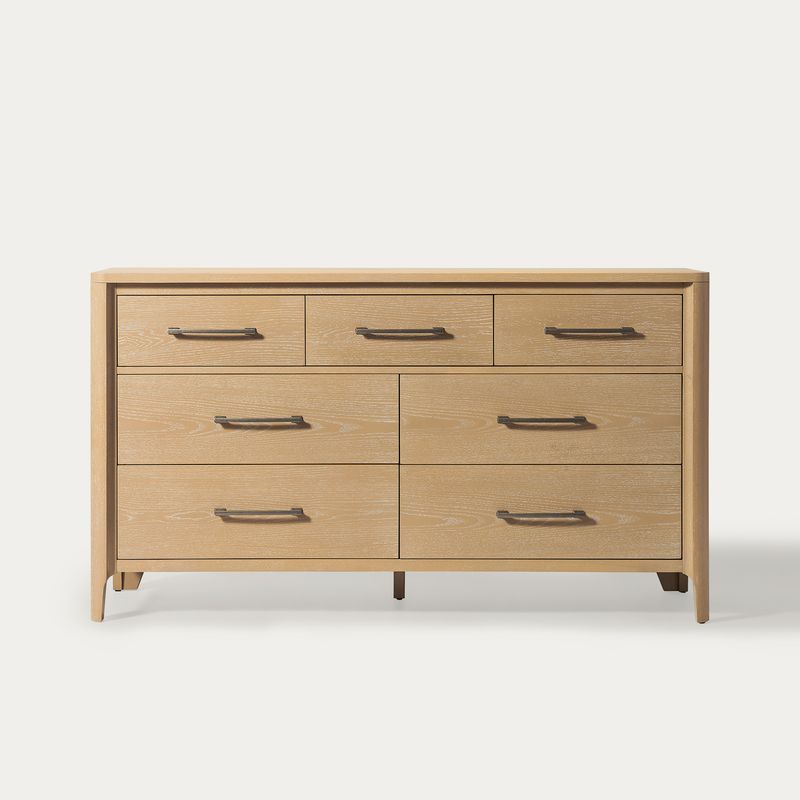
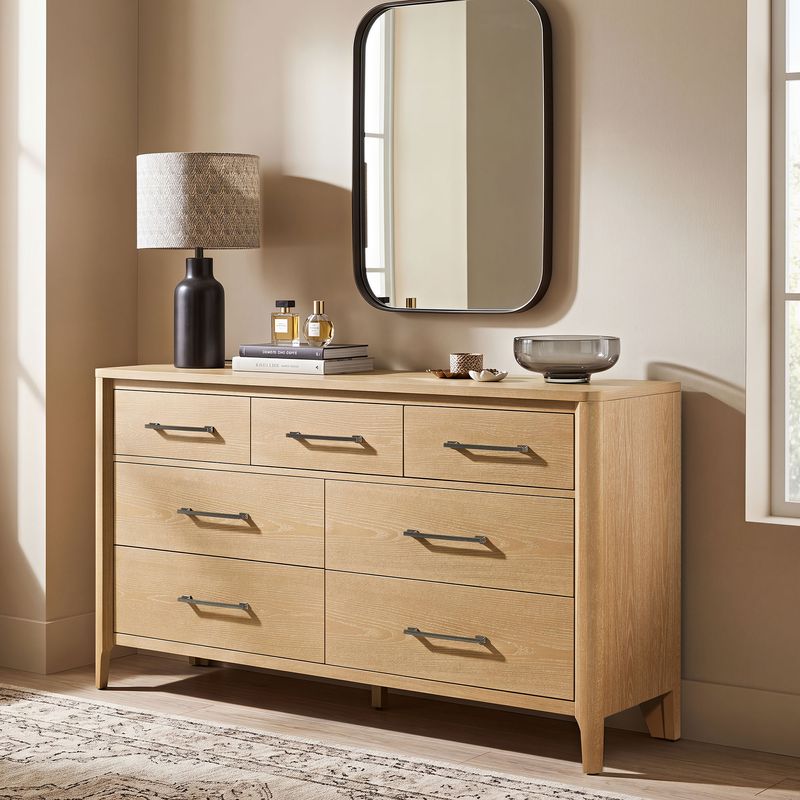
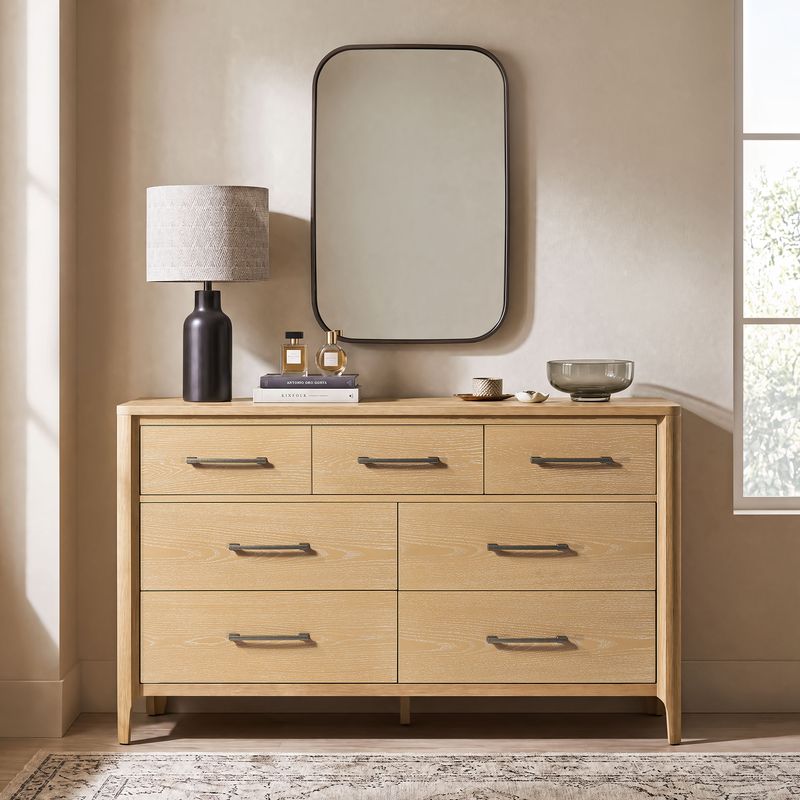
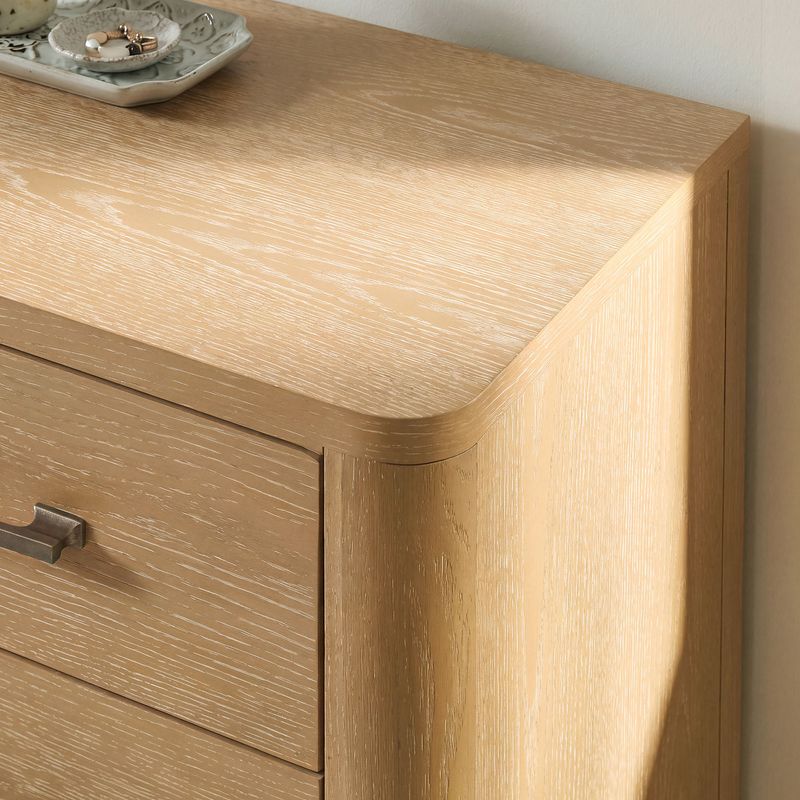




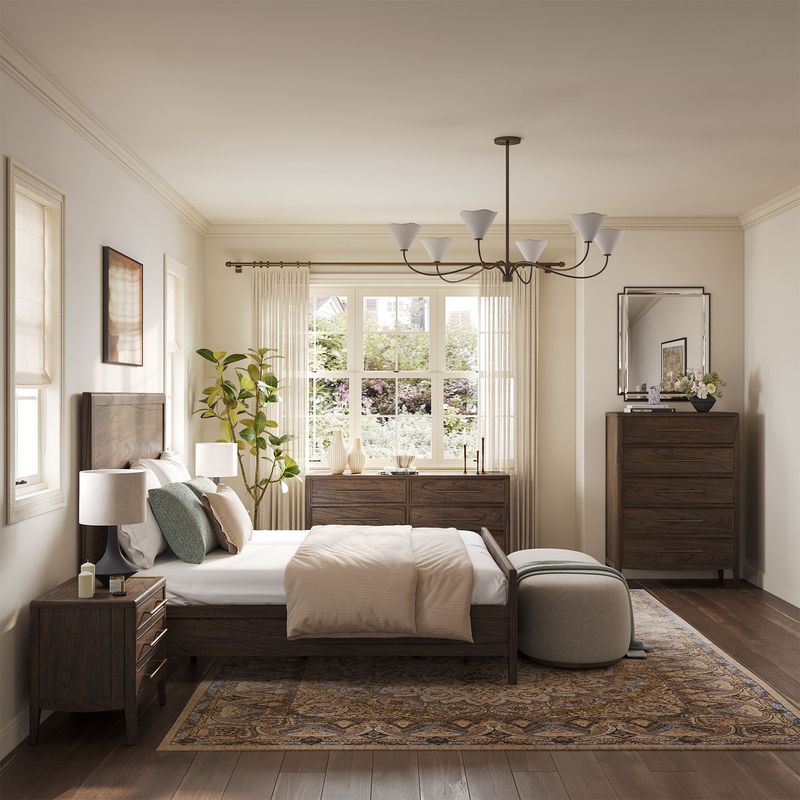








Find the Right Dresser or Chest for Your Bedroom
The right bedroom dresser should offer the storage you need without overwhelming your space. Hernest's collection of dressers and chests includes six-, seven-, and nine-drawer dressers, along with compact five-drawer chests to suit different room layouts, wardrobes, and storage needs.
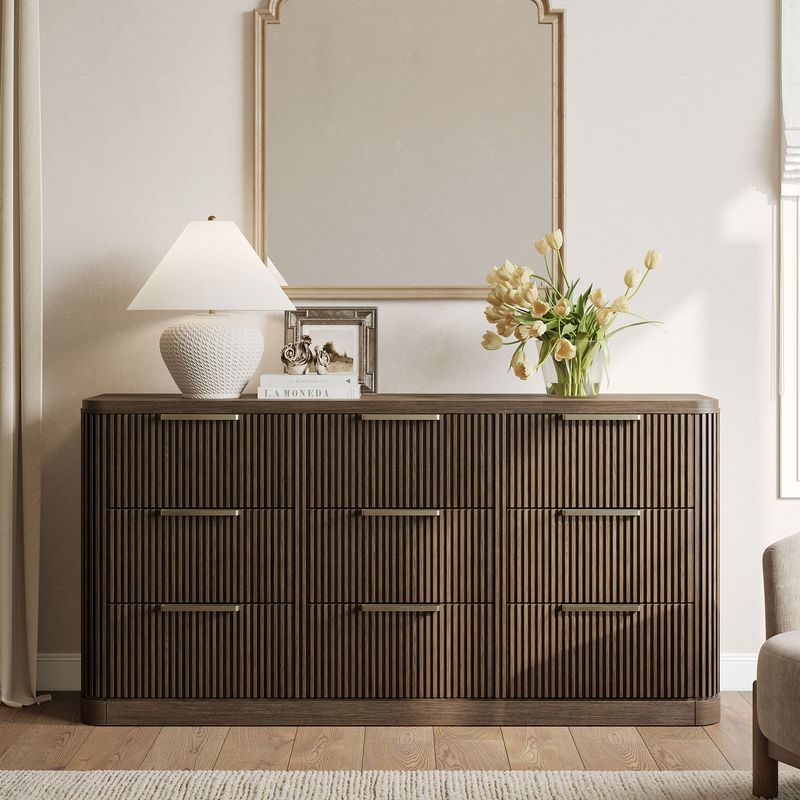
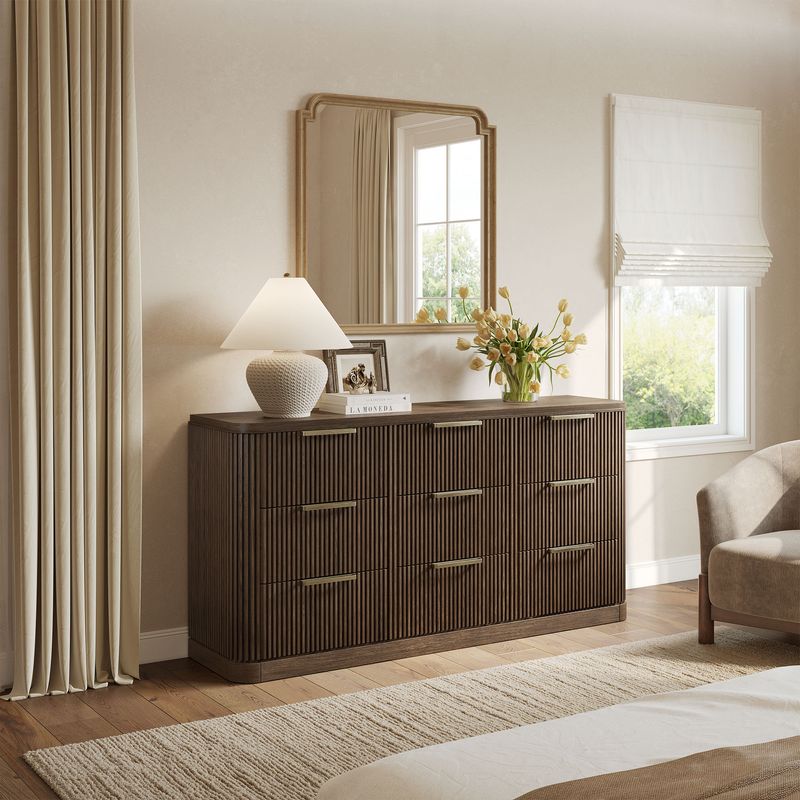
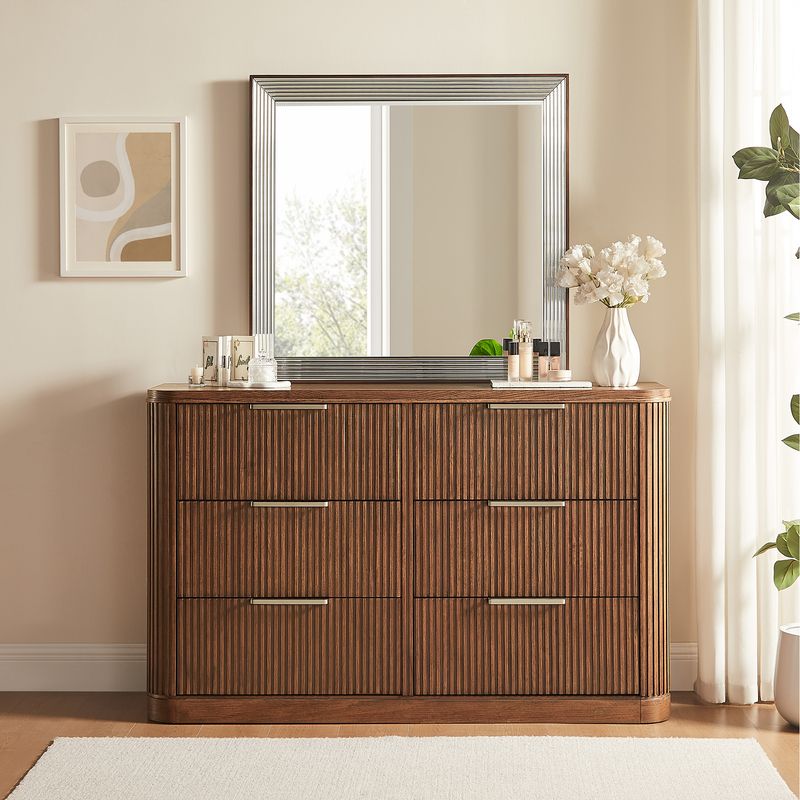
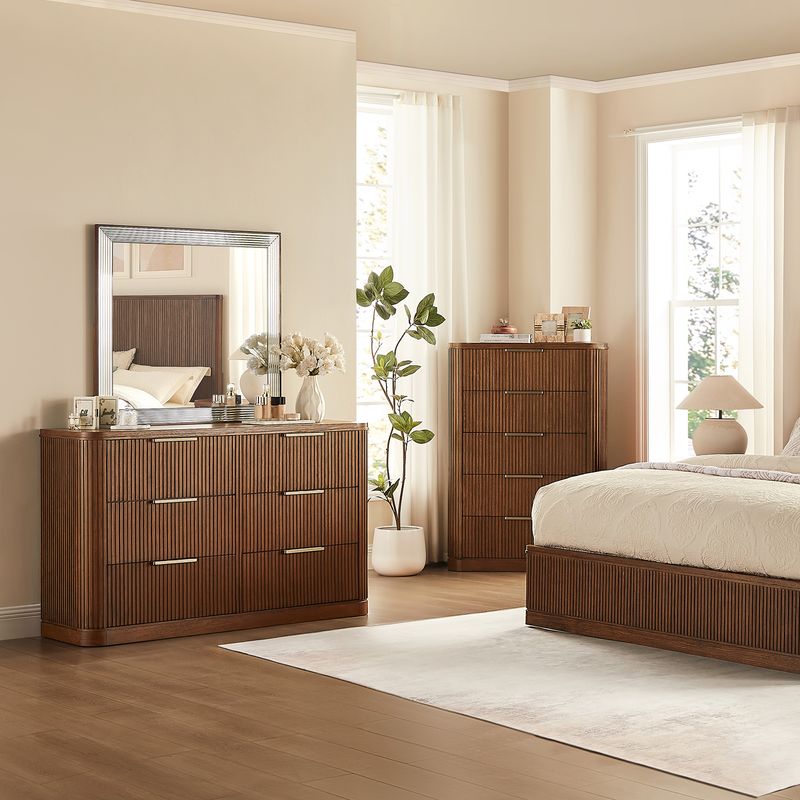
From Finnley's fluted fronts and Thursen's chevron detailing to Skugga's oak finishes and Renata's travertine-textured surfaces, each design brings a different look to your bedroom. Compare dimensions, drawer layouts, materials, and finishes to find a piece that works for your everyday routine and complements your existing furniture.
Read More
Choose a Dresser by Drawer Count
Drawer count is a useful starting point when shopping for a bedroom dresser, but it does not tell the whole story. Drawer depth, width, and arrangement determine how much you can store and how easily you can organize your belongings.
6 Drawer Dresser: Everyday Bedroom Storage
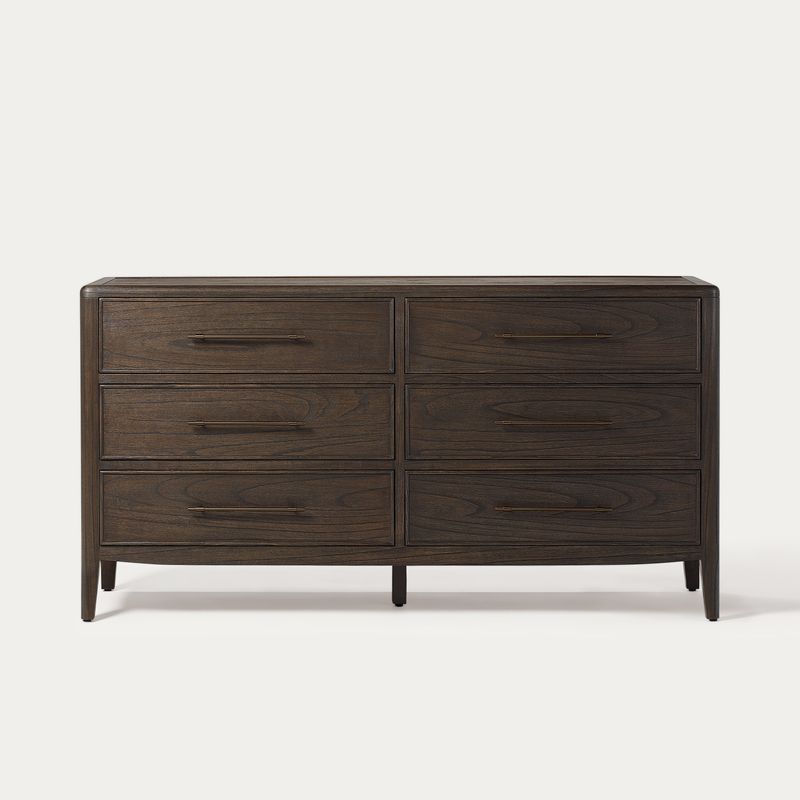
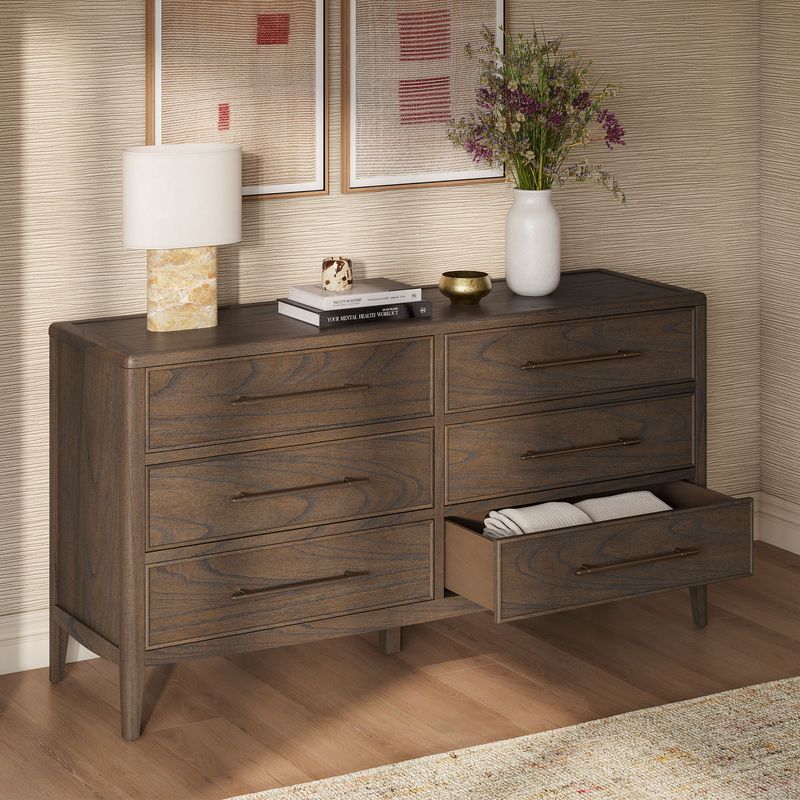
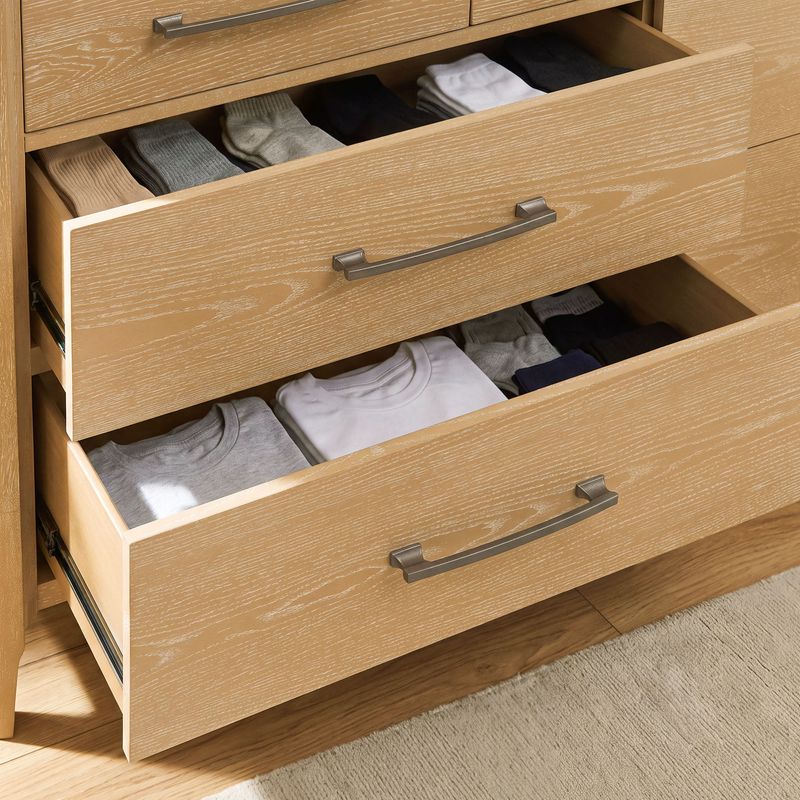
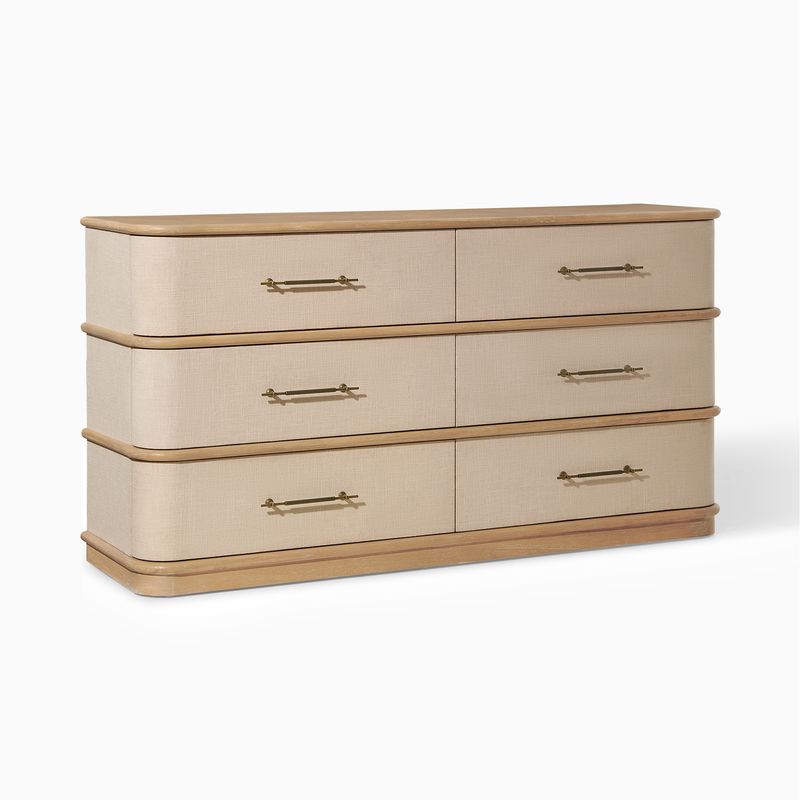
A 6 drawer dresser offers a practical balance of organization and horizontal storage. Use the compartments to separate everyday clothing, sleepwear, sweaters, and accessories while keeping frequently worn items within easy reach.
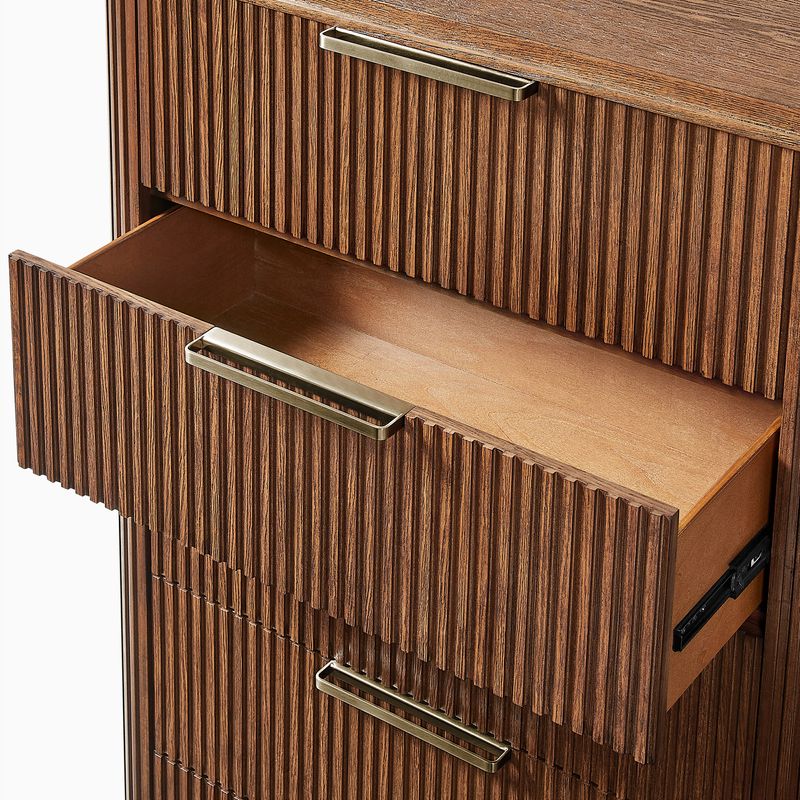
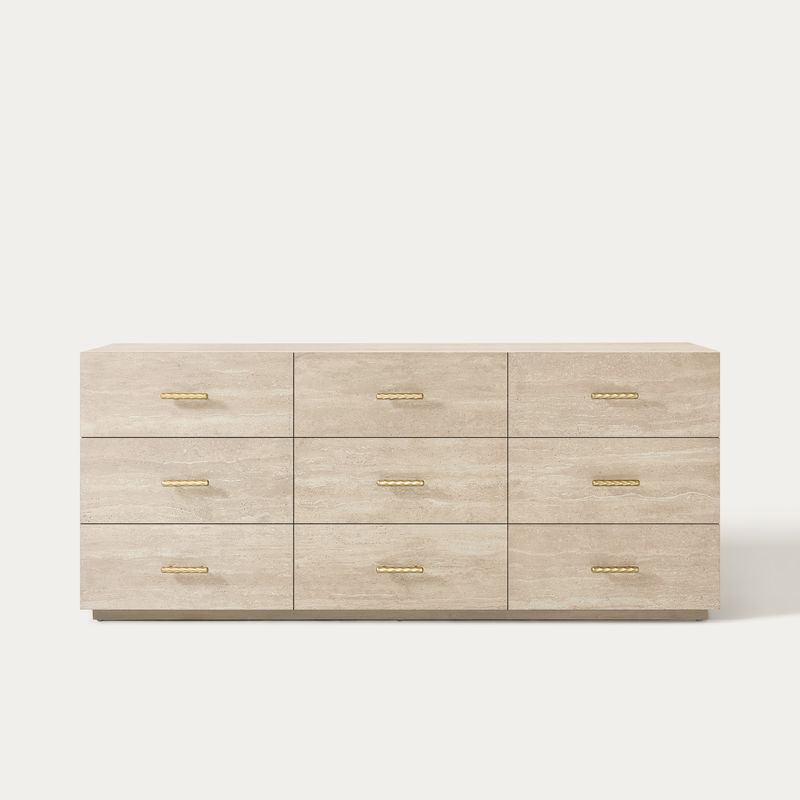
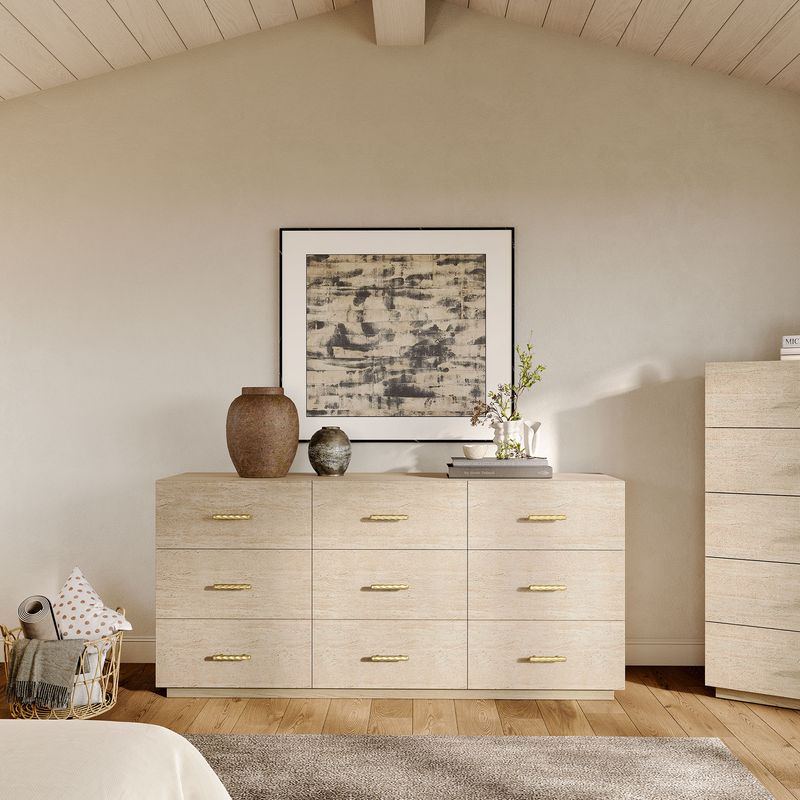
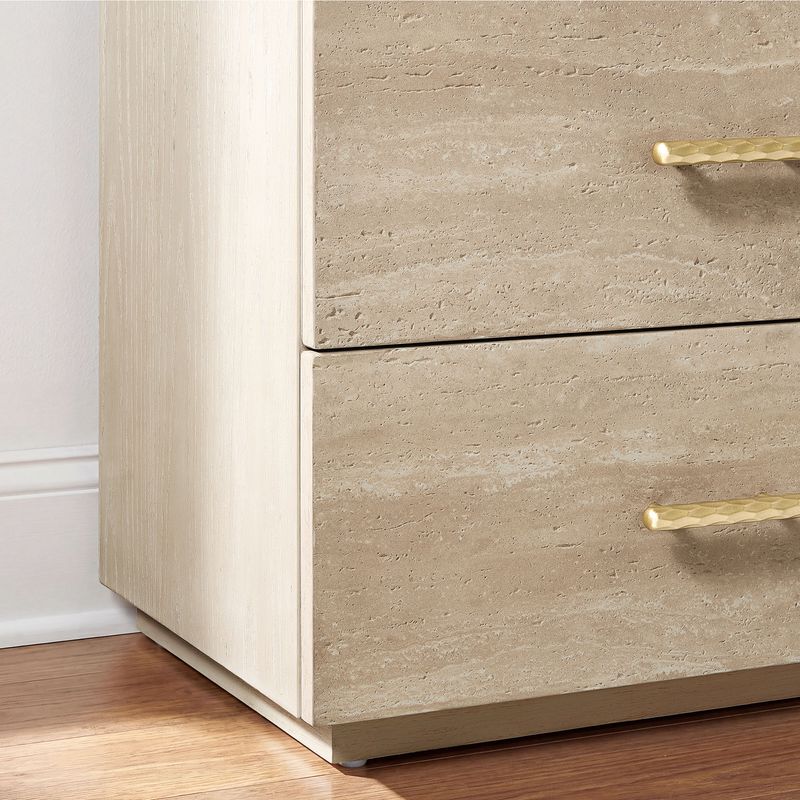
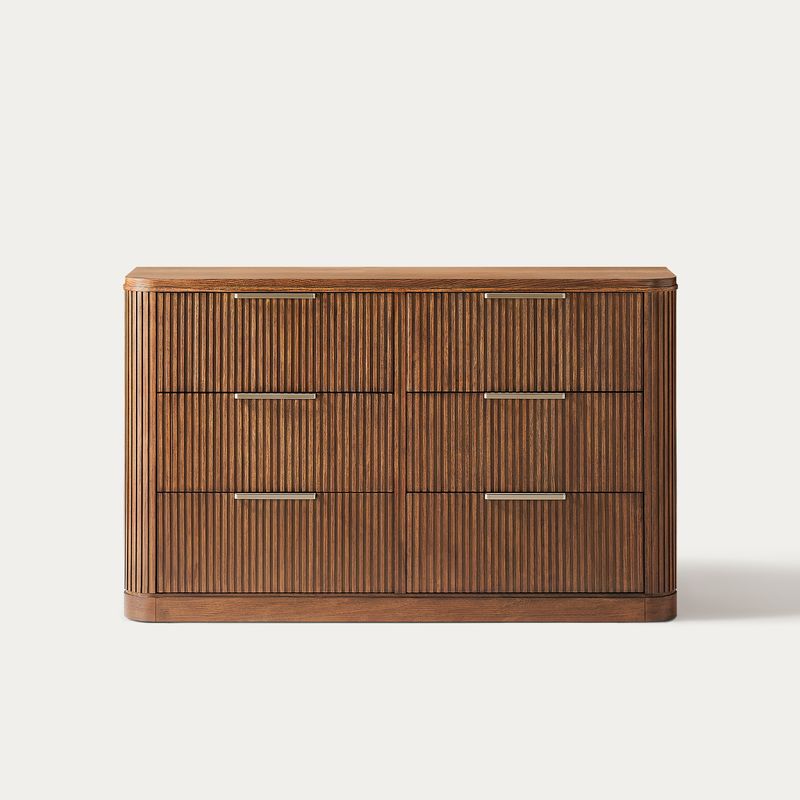
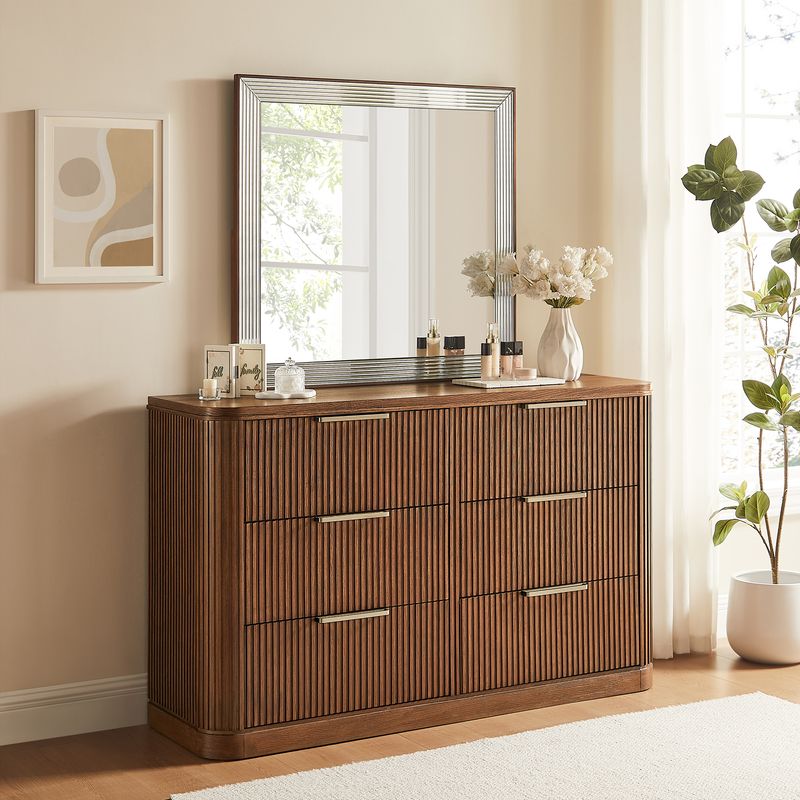
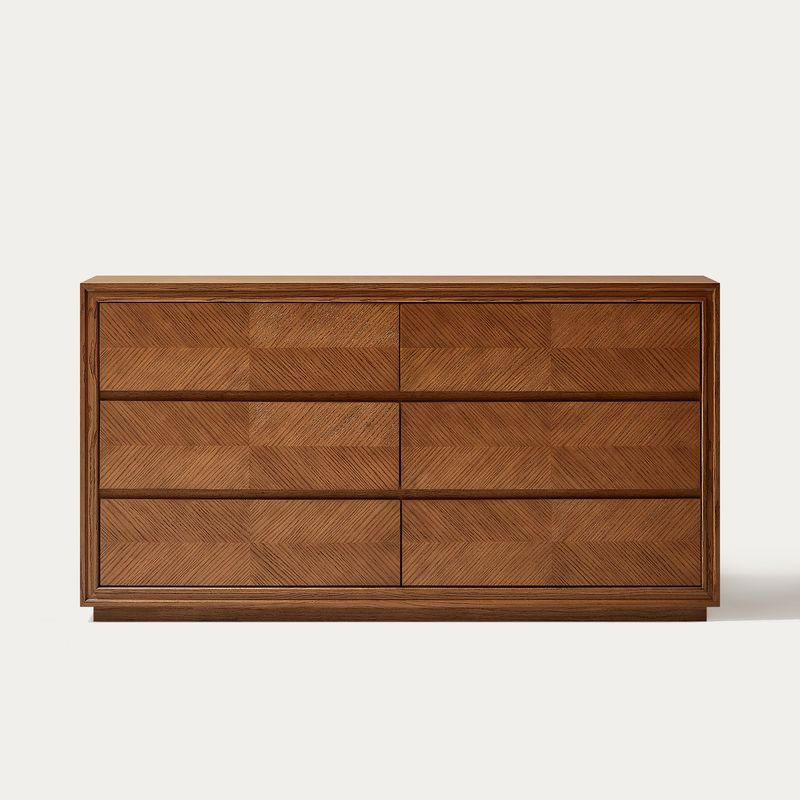
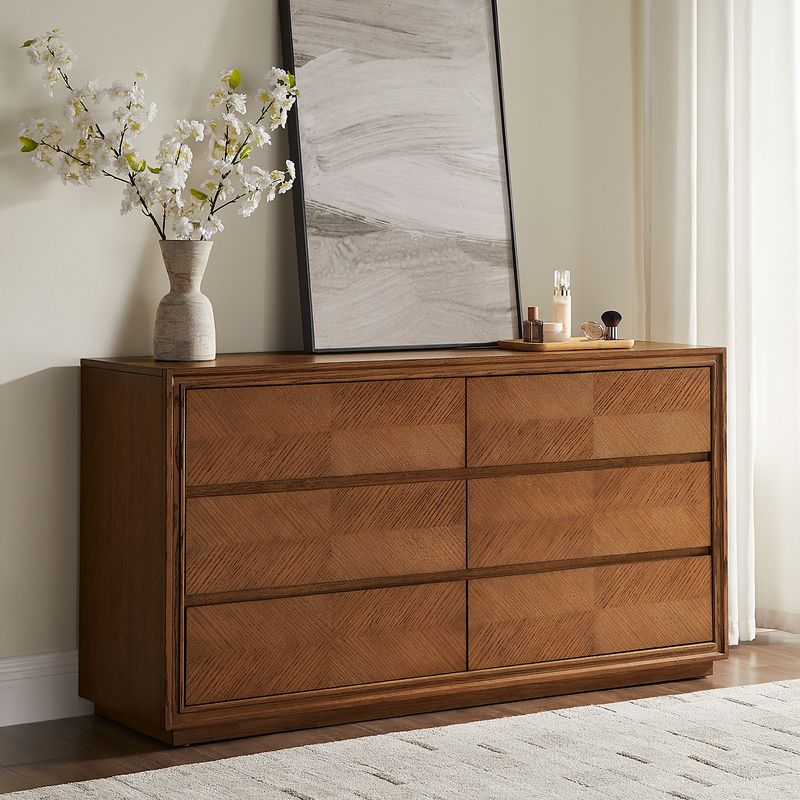
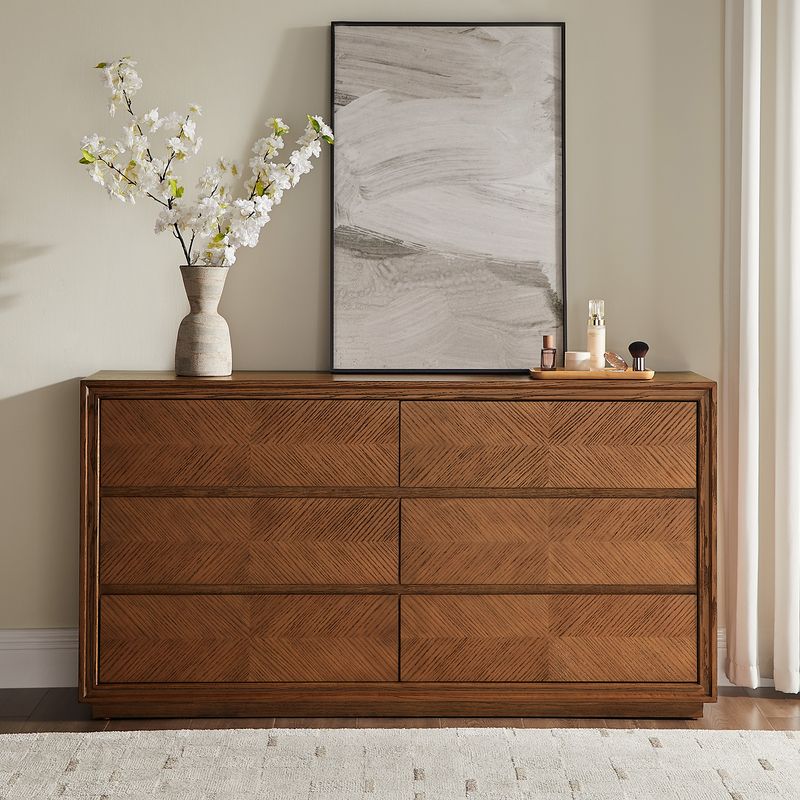
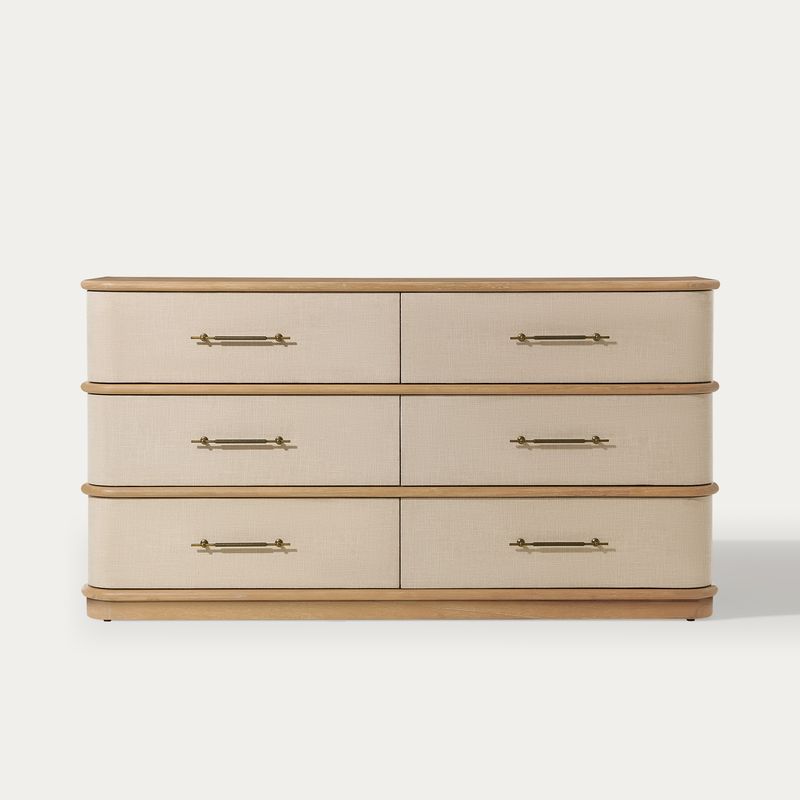
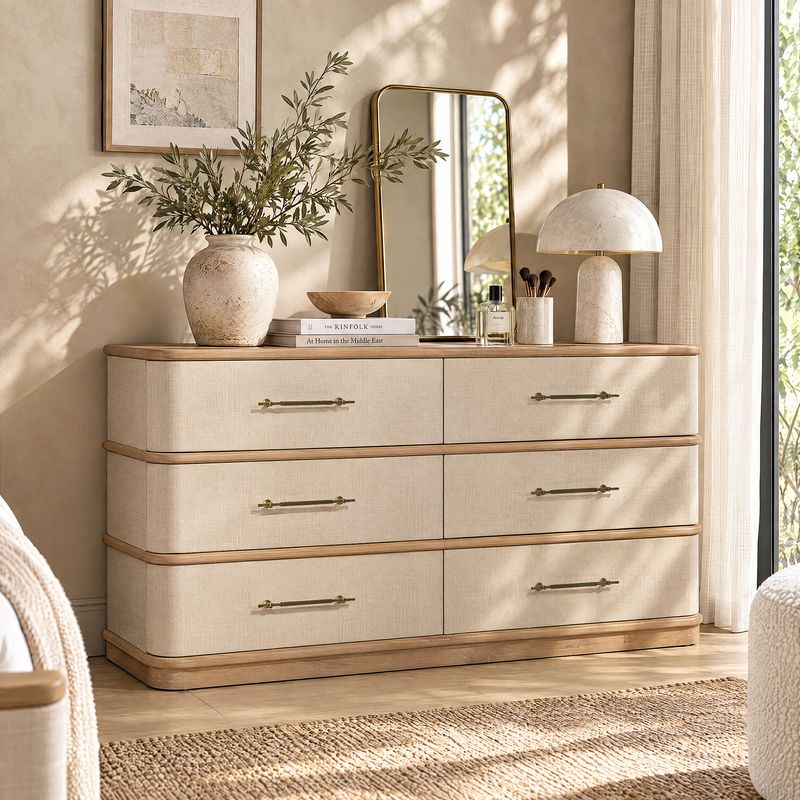
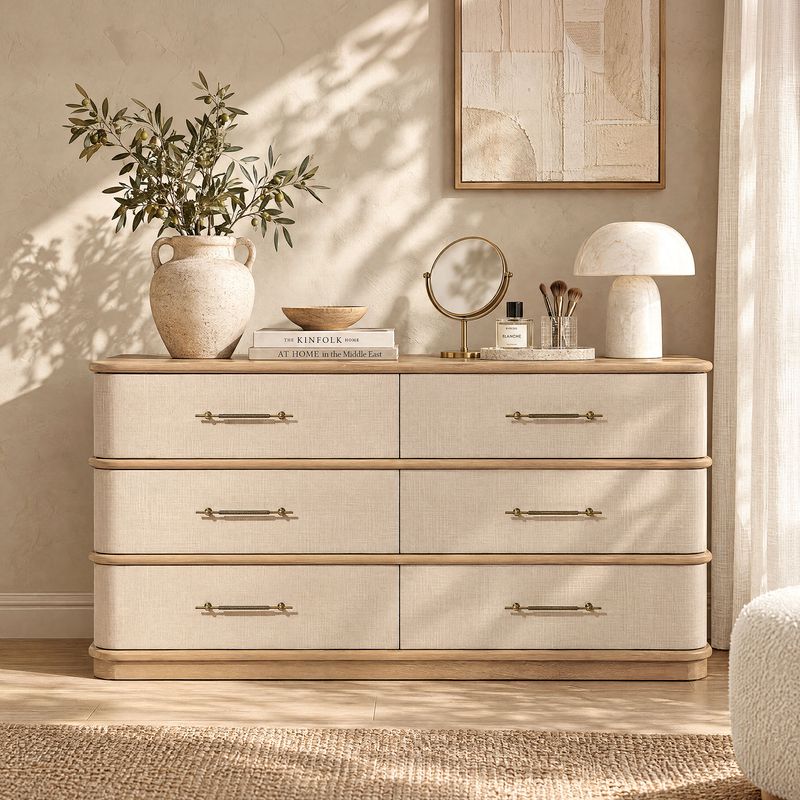
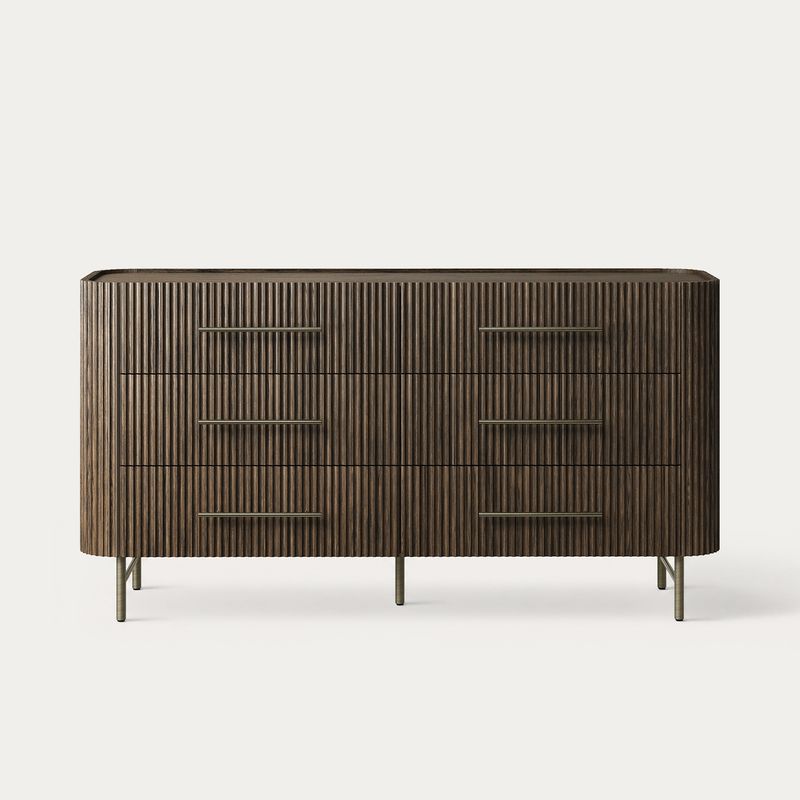
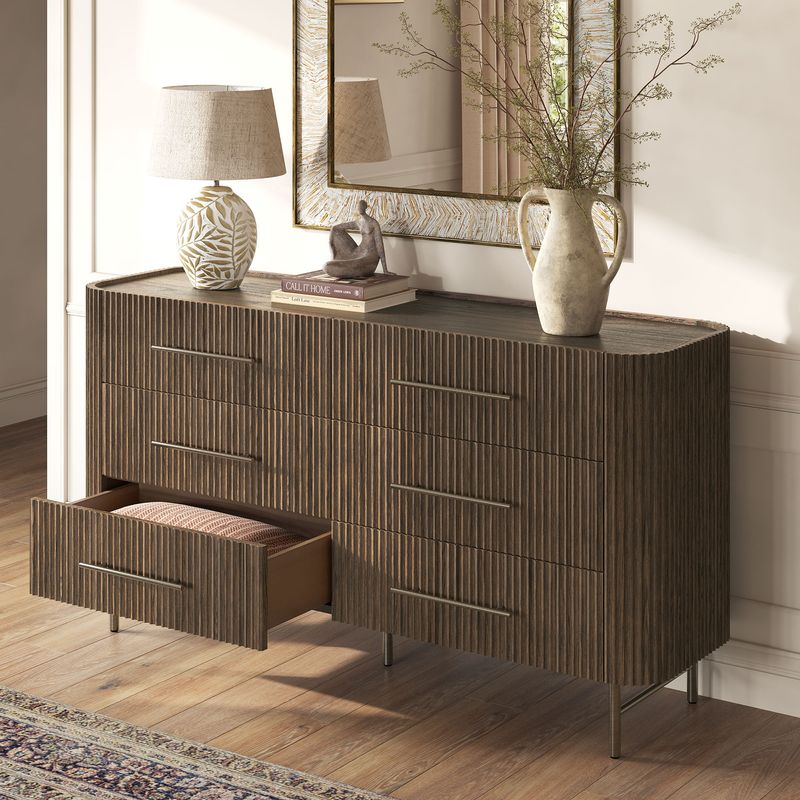
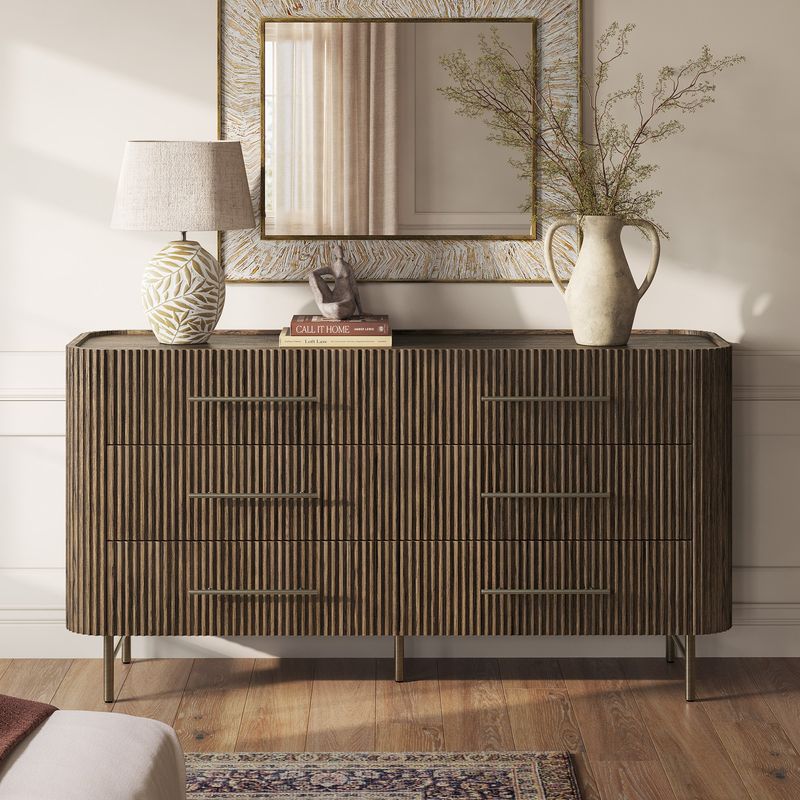
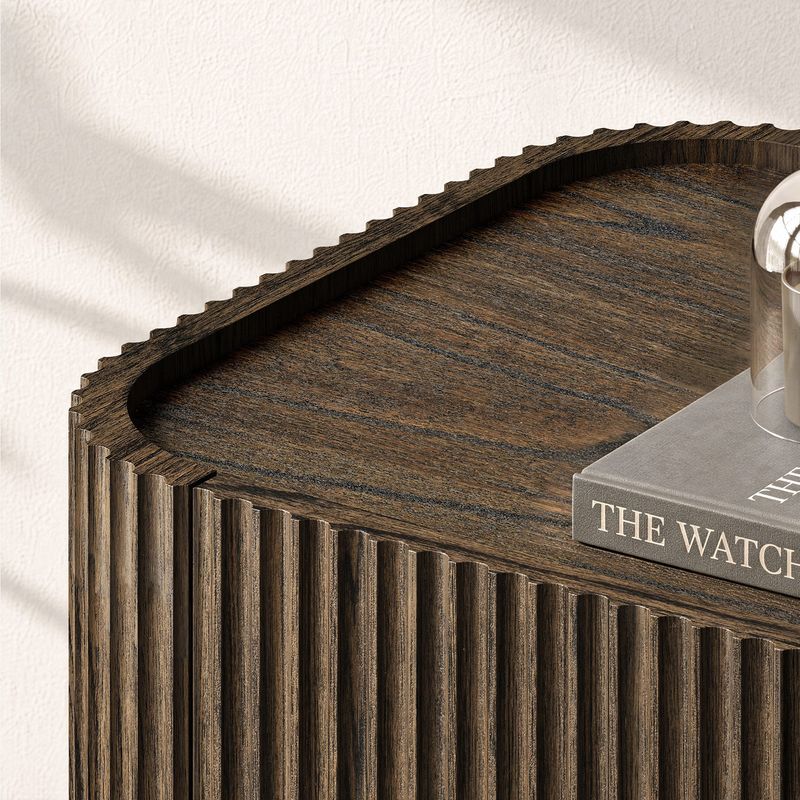
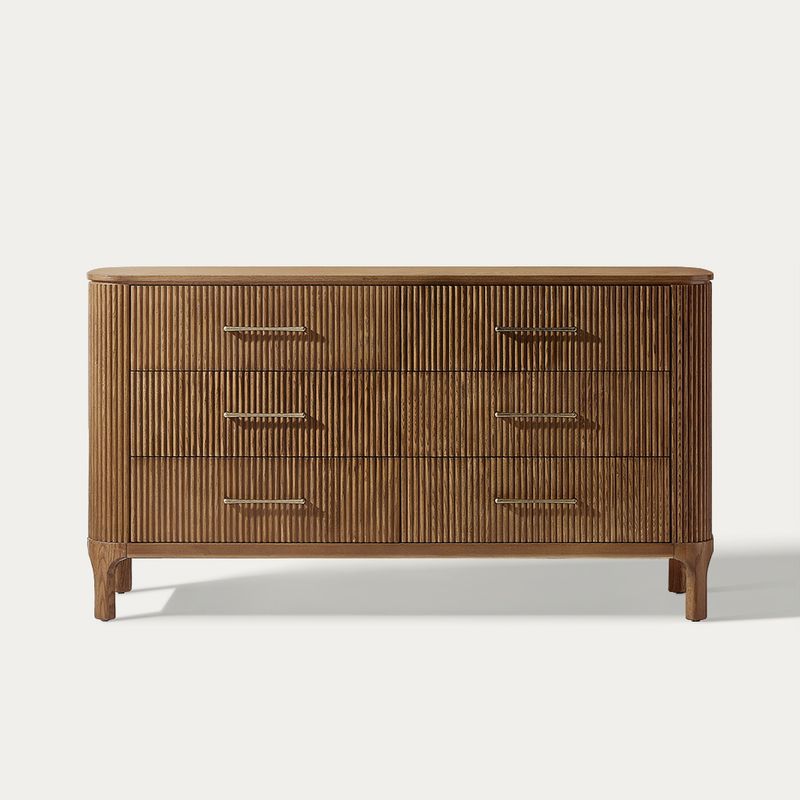
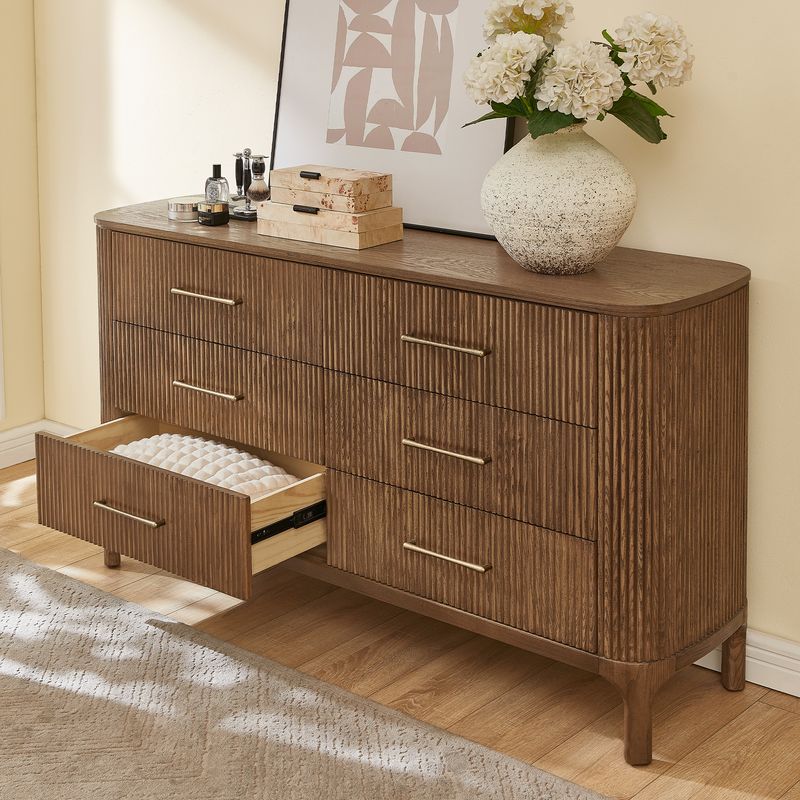
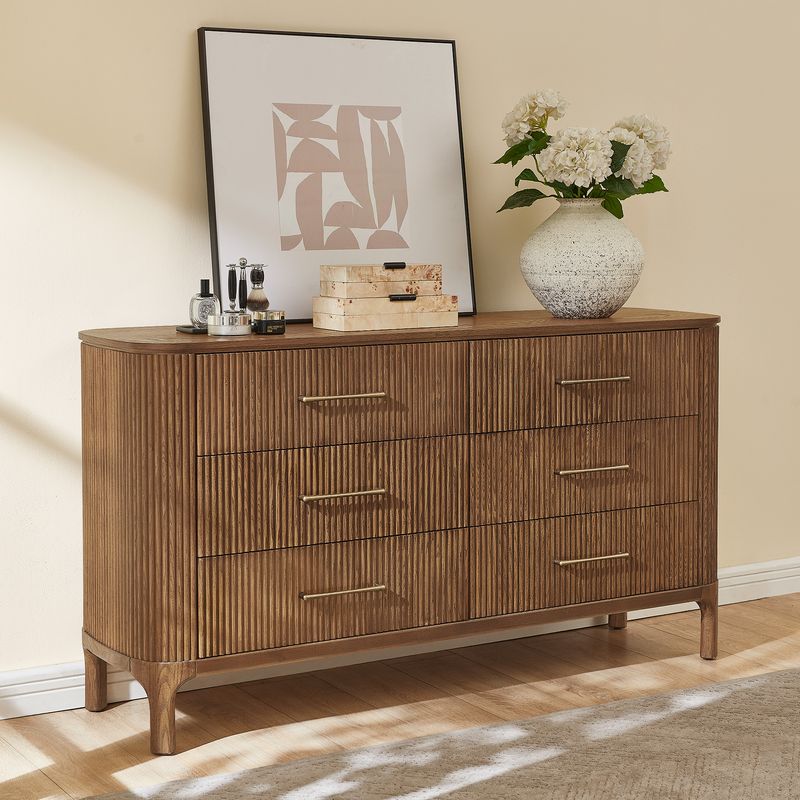
Hernest offers several designs in this configuration. The Finnley 62-Inch Fluted 6-Drawer Dresser features vertical detailing, while the Thursen 60-Inch Chevron 6-Drawer Dresser adds a geometric pattern. The Skugga 63-Inch Oak 6-Drawer Dresser offers an oak-focused finish, and the Renata 65-Inch Travertine-Textured 6-Drawer Dresser introduces a distinctive textured surface.
These options differ in appearance and proportions. Before choosing one, compare the overall dimensions and interior drawer measurements to determine whether the layout suits your clothing and available space.
7 Drawer Dresser: Flexible Organization
A 7 drawer dresser provides an additional compartment for separating clothing, accessories, or smaller belongings. Whether that extra drawer is useful depends on its size and arrangement, not simply the total count.
The Harold 64-Inch 7-Drawer Dresser and Kaden 55-Inch Mid-Century 7-Drawer Dresser offer different proportions and design directions. Compare their listed dimensions and drawer configurations to see which works better for your wardrobe.
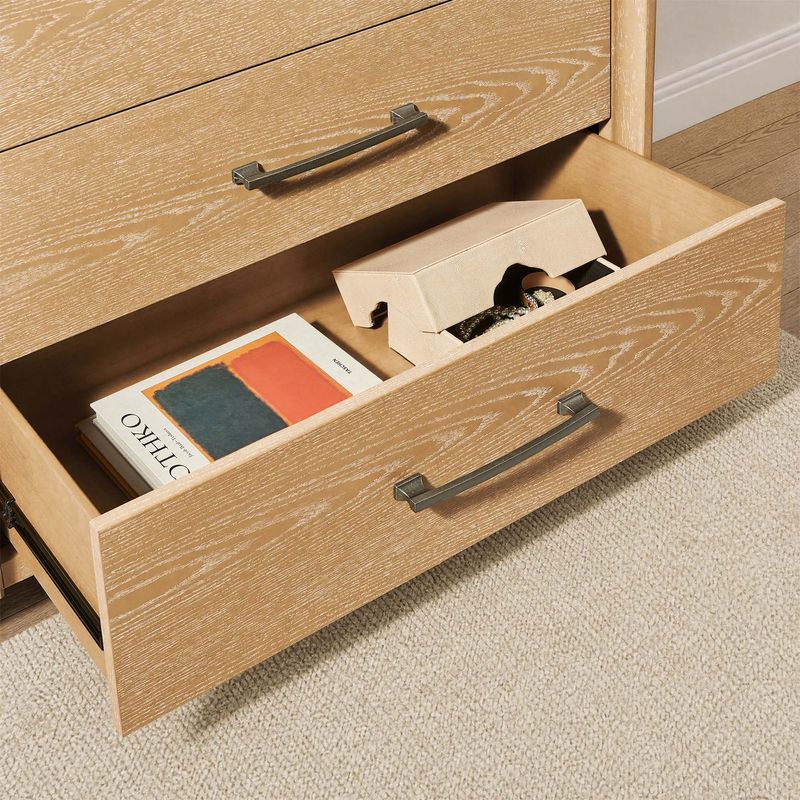
If you store many small items, a layout with several compact drawers may make organization easier. For jeans, sweaters, and other bulky clothing, deeper compartments may be more practical. Choose the arrangement that matches what you own rather than assuming more drawers always mean more usable storage.
9 Drawer Dresser: Storage for Larger Wardrobes
A 9 drawer dresser can help organize a larger wardrobe or shared bedroom. Multiple compartments make it easier to separate everyday garments, accessories, and seasonal clothing without mixing everything together.
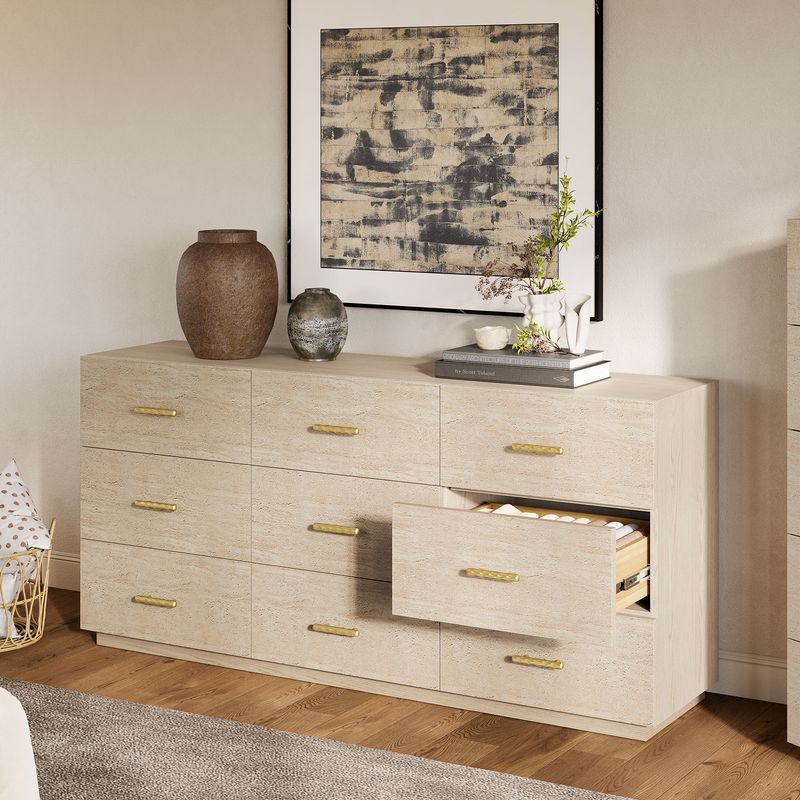
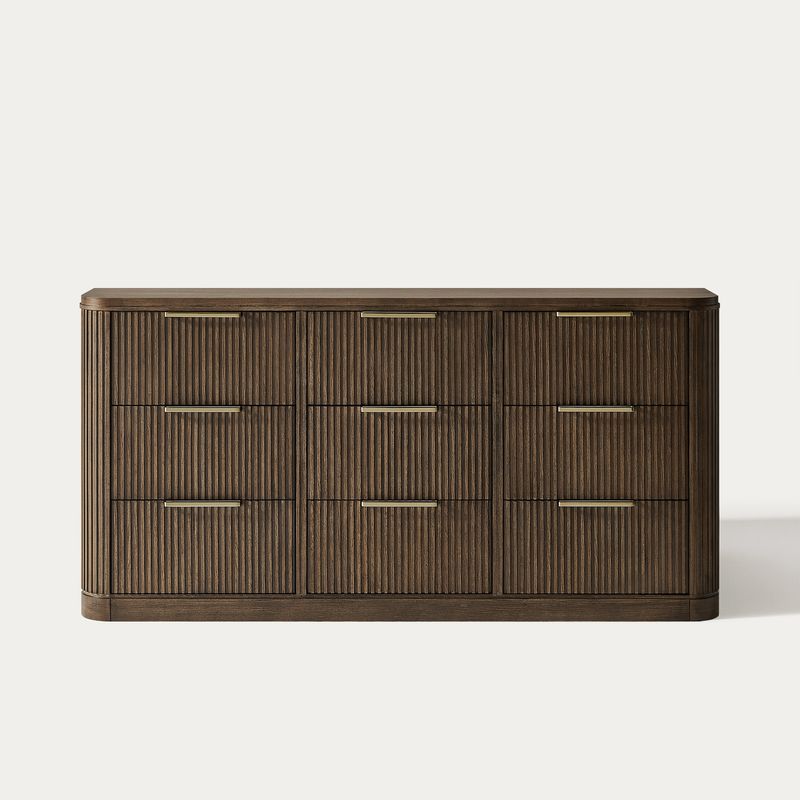
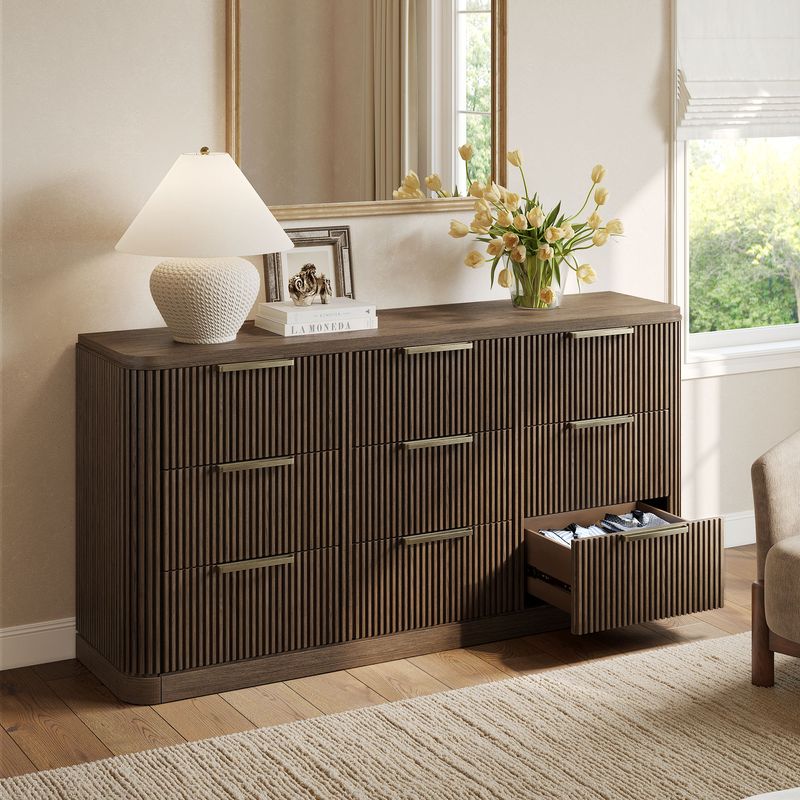
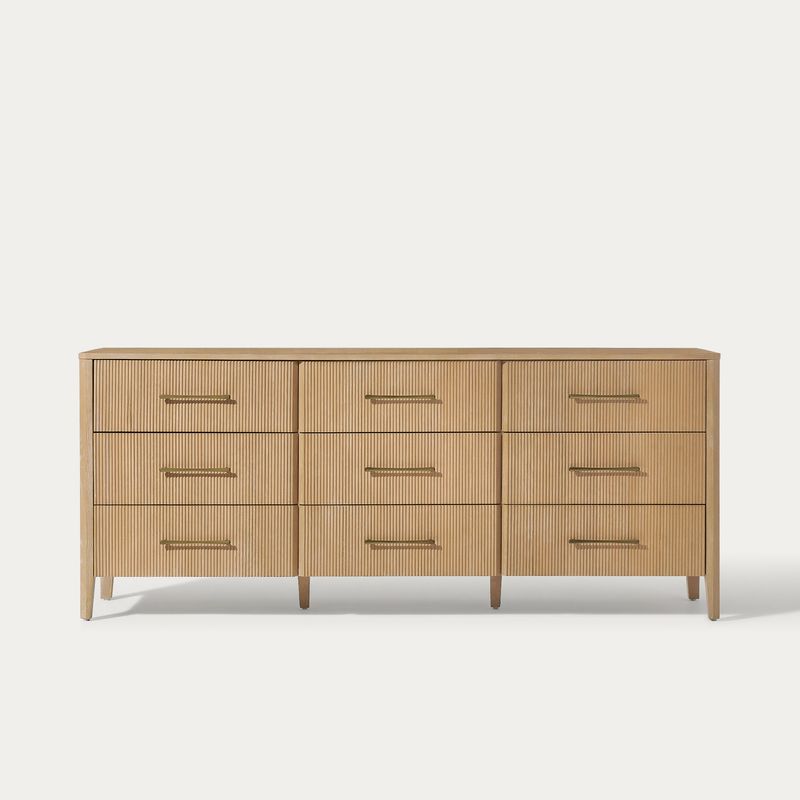
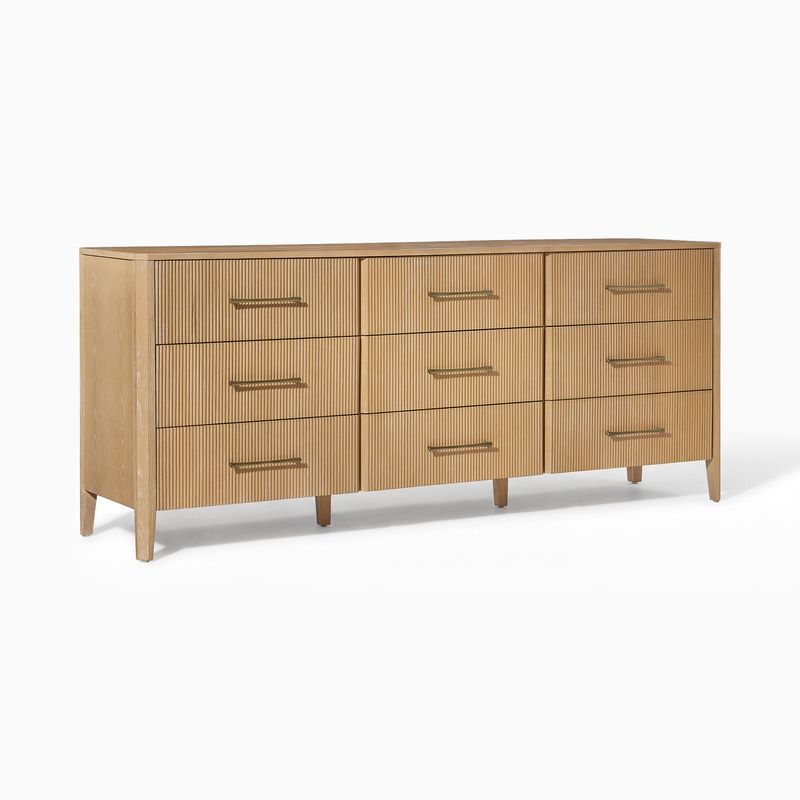
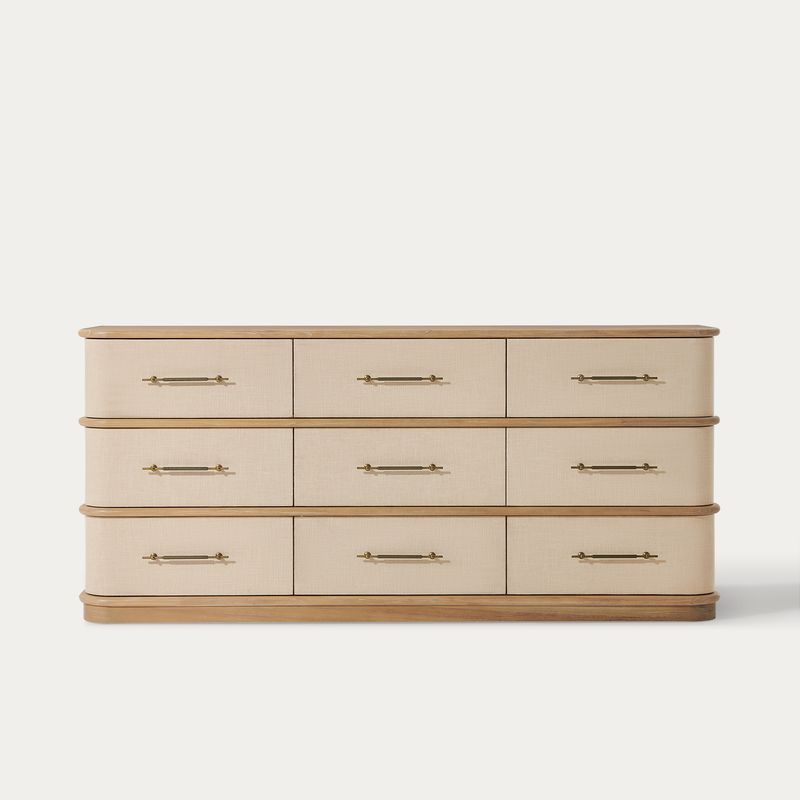
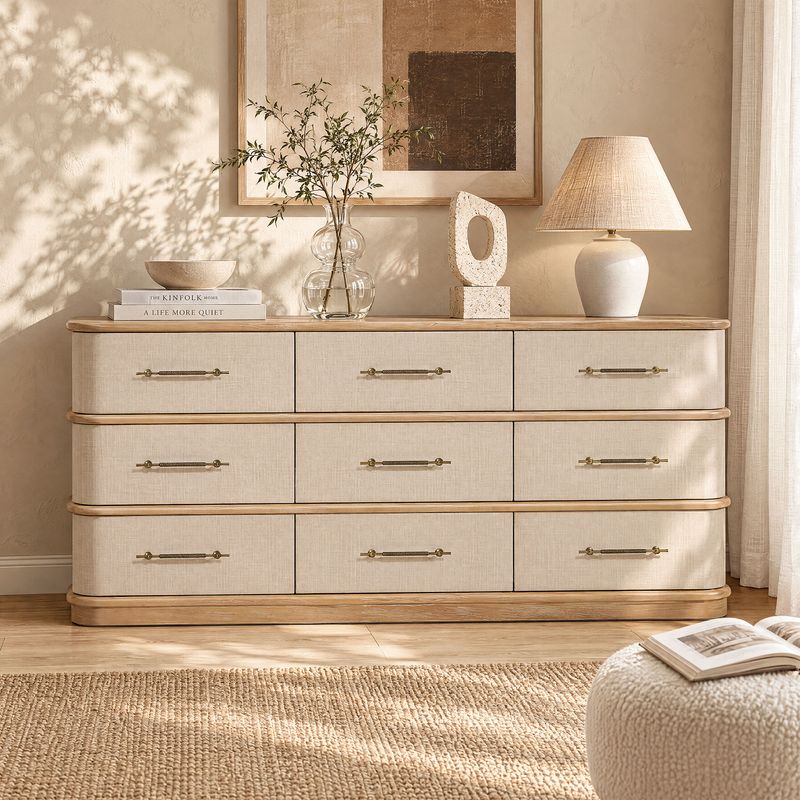
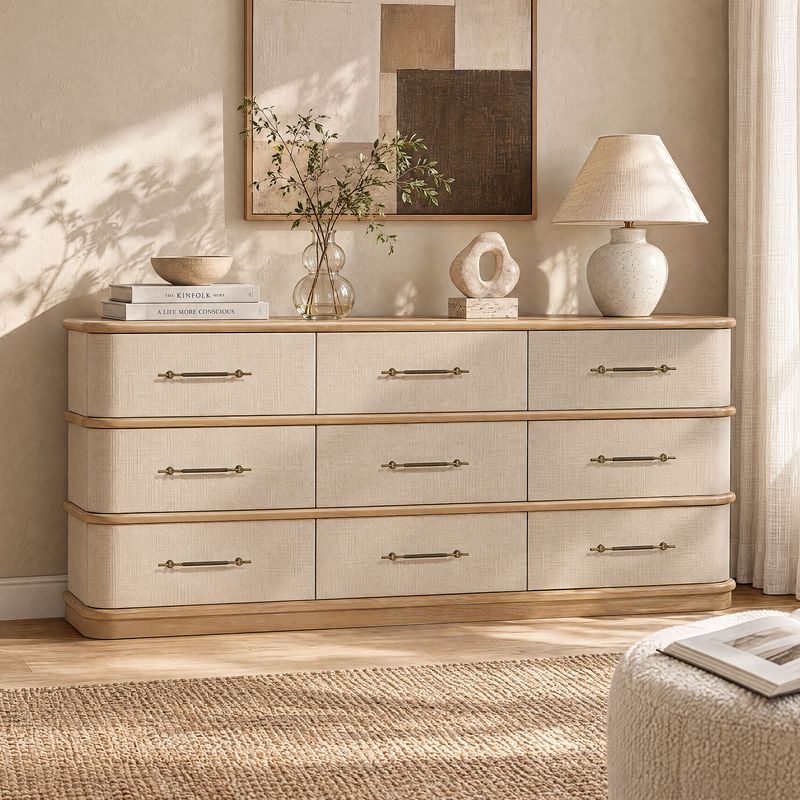
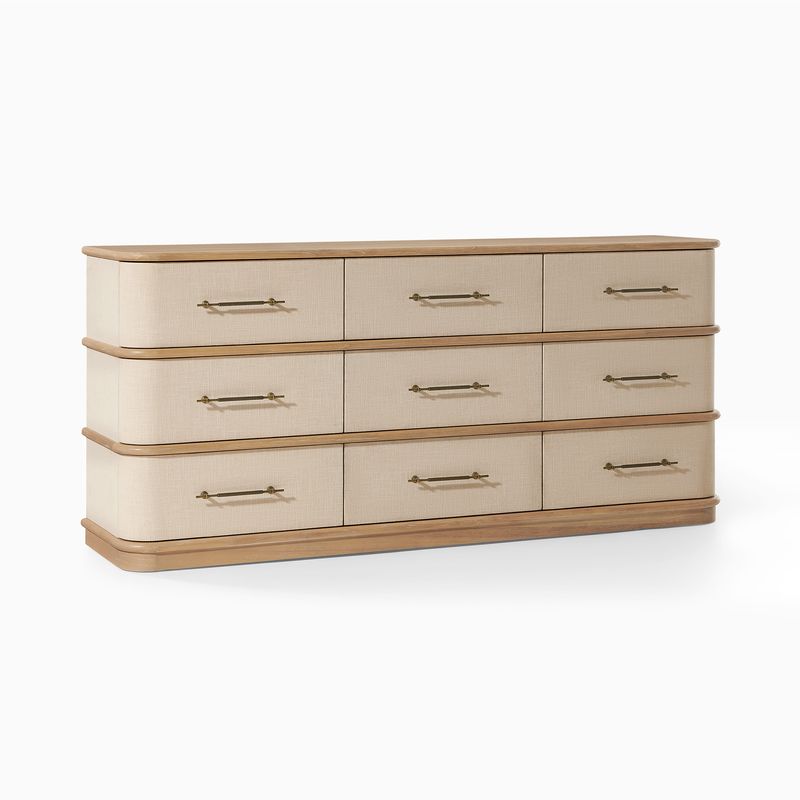
Hernest designs such as the Finnley 76-Inch Fluted 9-Drawer Dresser, Skugga 70-Inch Oak 9-Drawer Dresser, and Renata 80-Inch Travertine-Textured 9-Drawer Dresser offer different ways to combine wide storage with distinctive finishes.
Measure the intended wall before selecting a wide dresser. Leave enough clearance to open the drawers and move comfortably between the bed, dresser, and closet. If a wider piece would make the room feel crowded, consider a taller, narrower chest instead.
When to Choose a Chest of Drawers
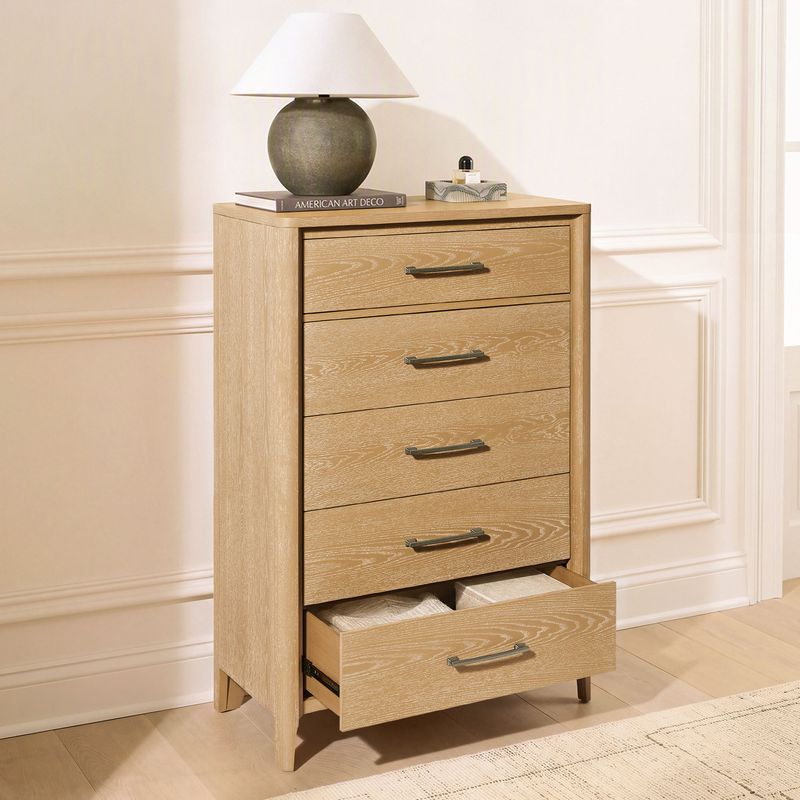
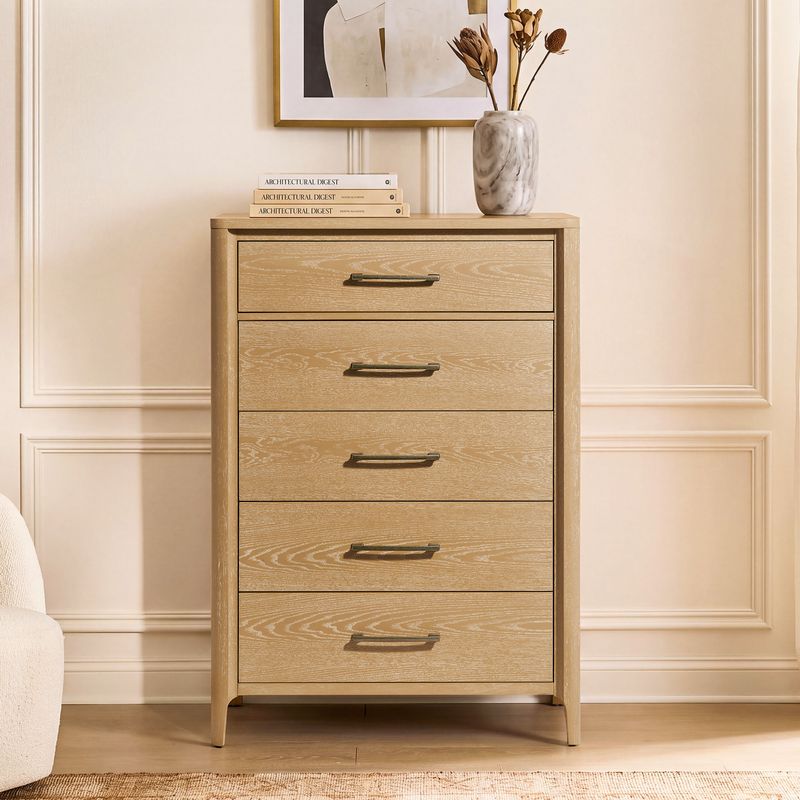
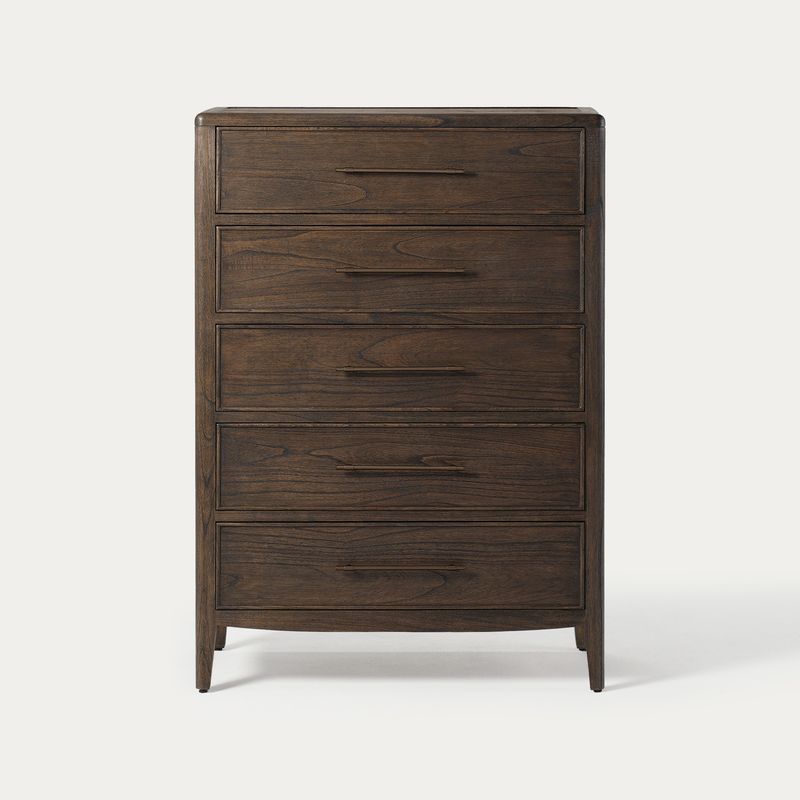
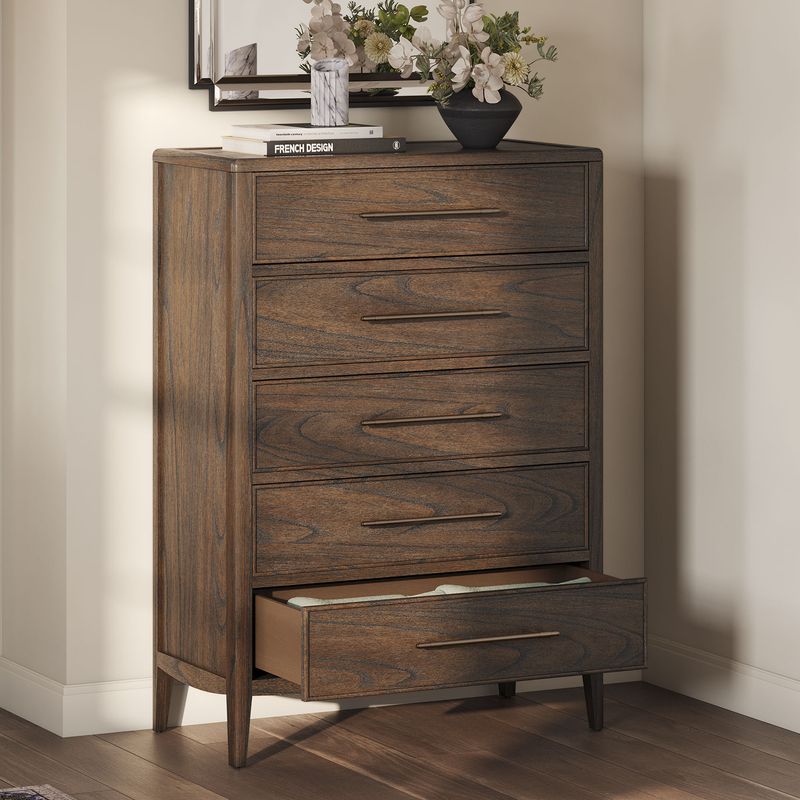
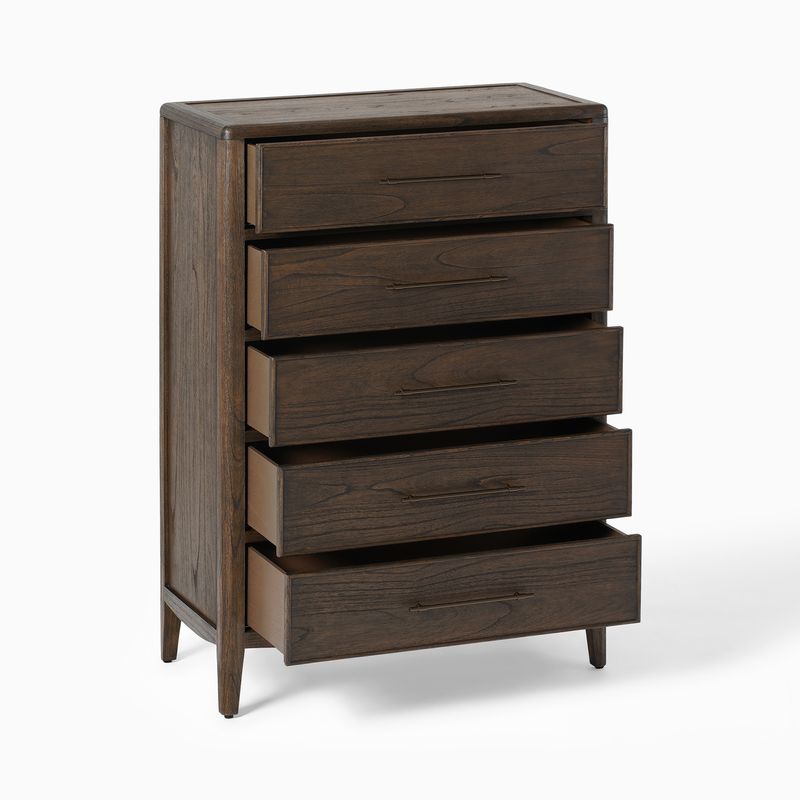
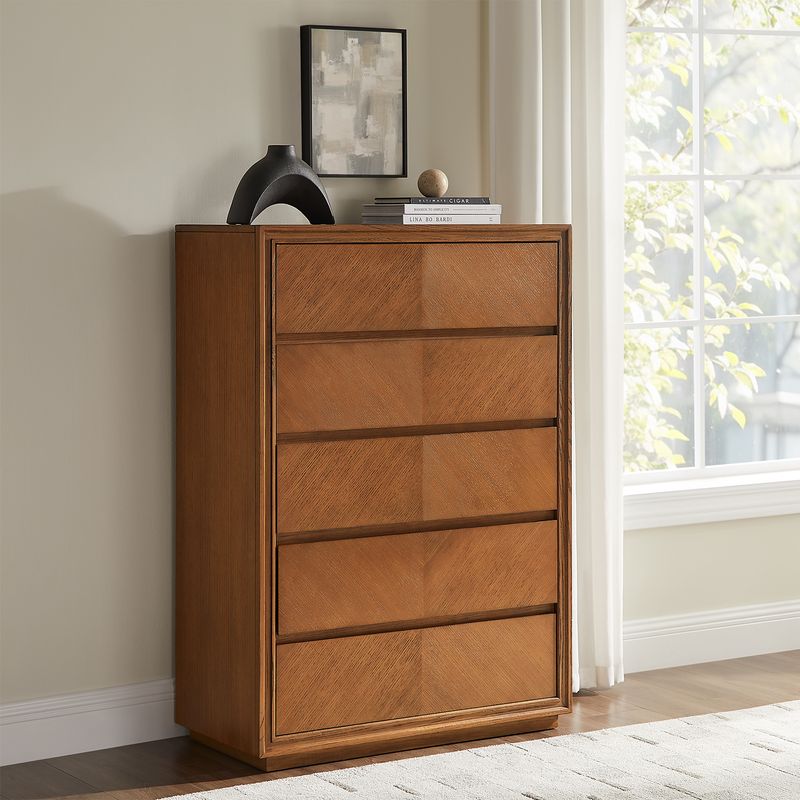
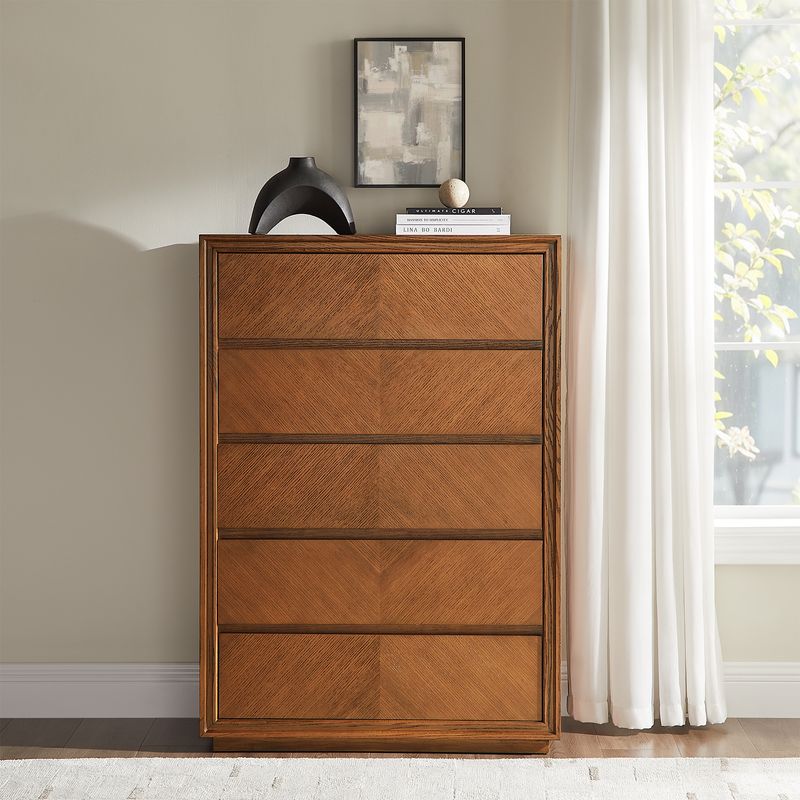
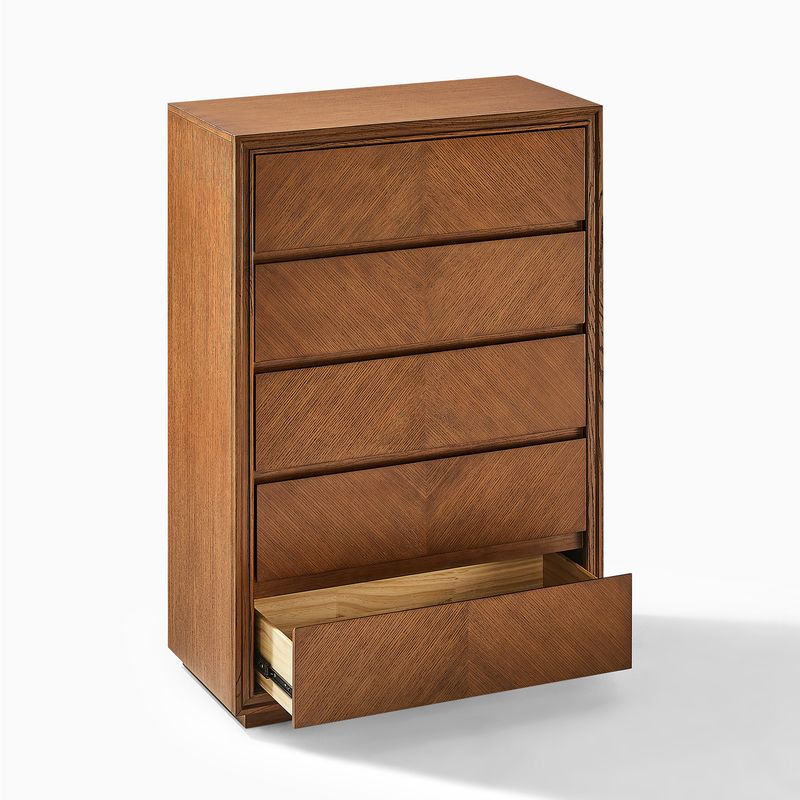
A chest of drawers is generally taller and narrower than a traditional wide dresser. Its vertical shape can make better use of limited floor space in apartments, guest bedrooms, and smaller primary bedrooms.
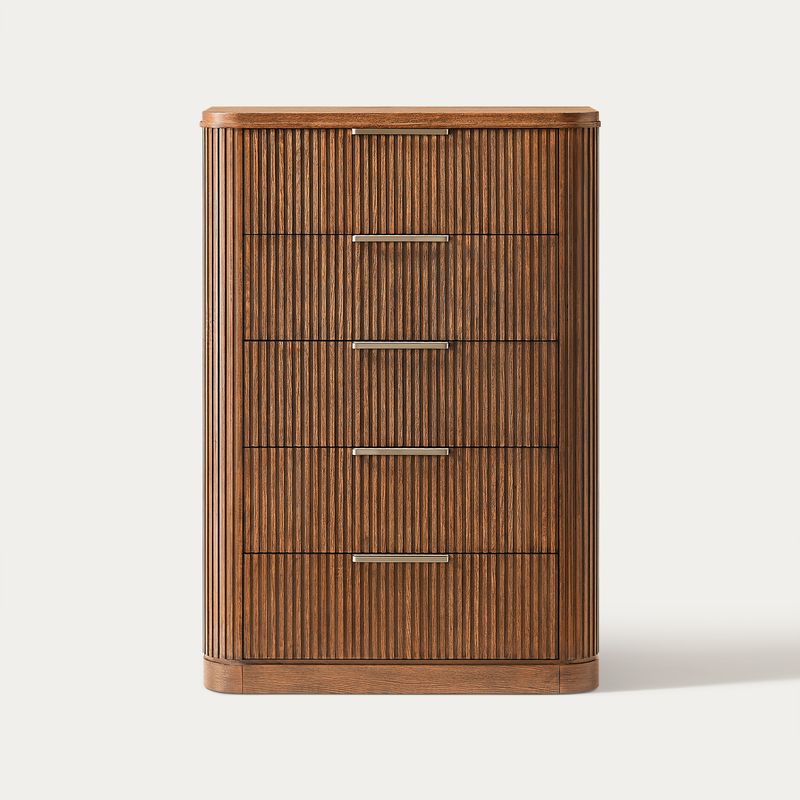
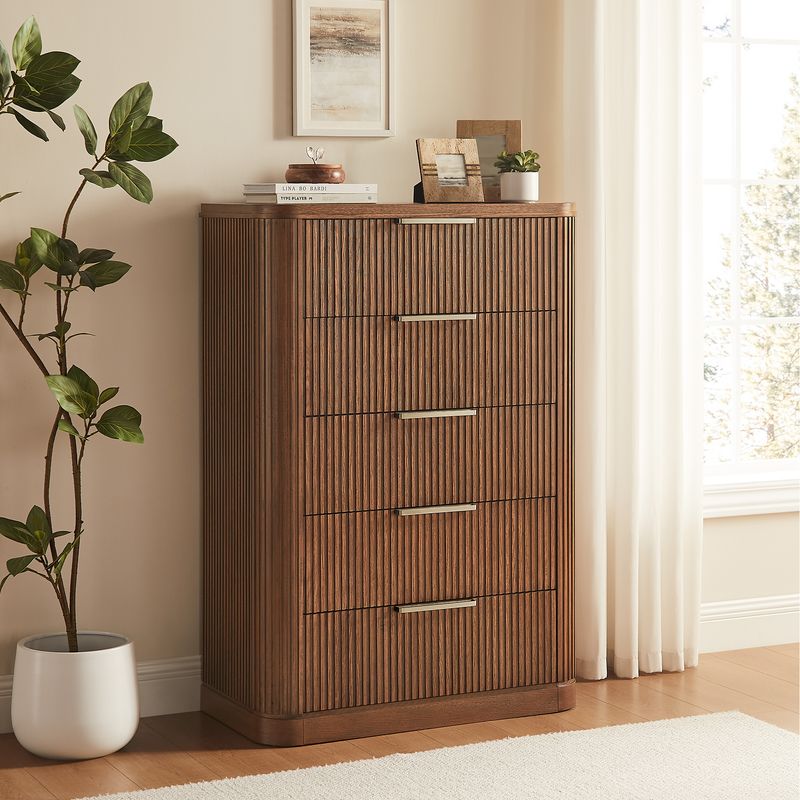
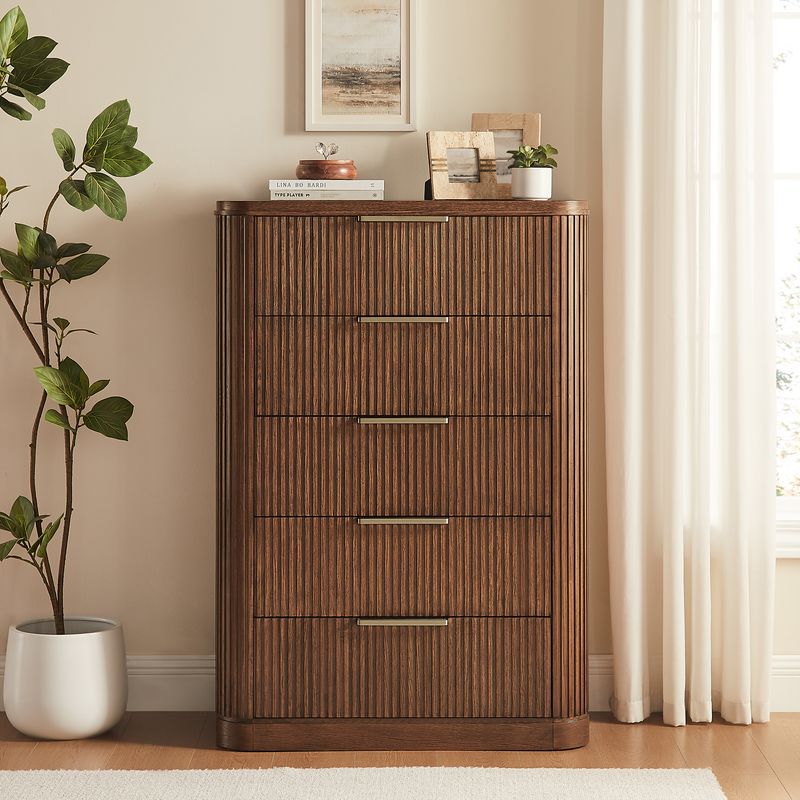
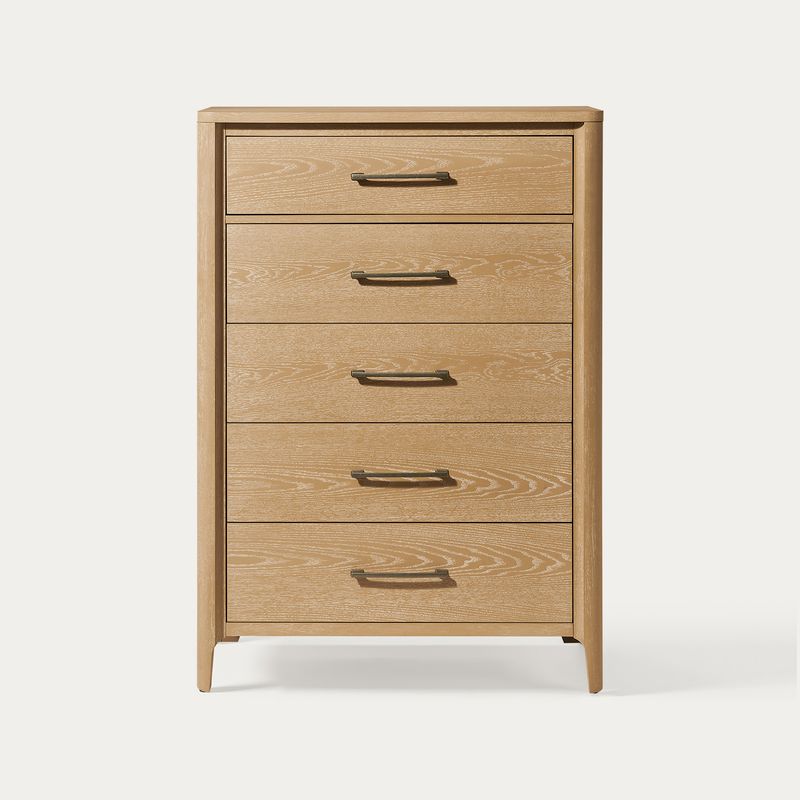
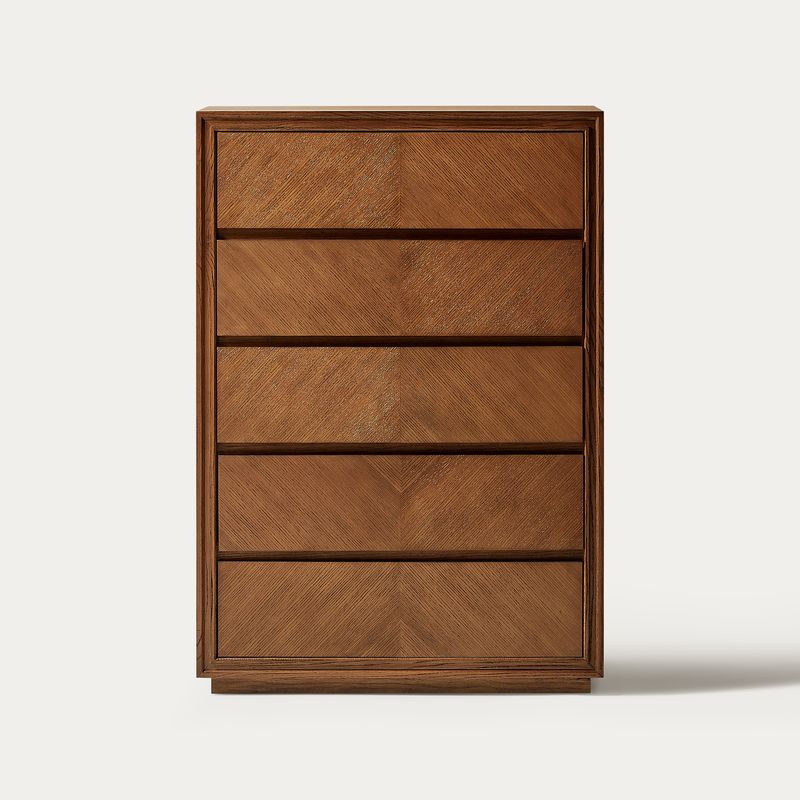
Hernest offers options such as the Finnley 38-Inch Fluted 5-Drawer Chest, Kaden 26-Inch Mid-Century 5-Drawer Chest, and Harold 38-Inch 5-Drawer Chest. Their different front details make it easier to coordinate additional storage with your existing bedroom furniture.
Tall Storage for Smaller Rooms
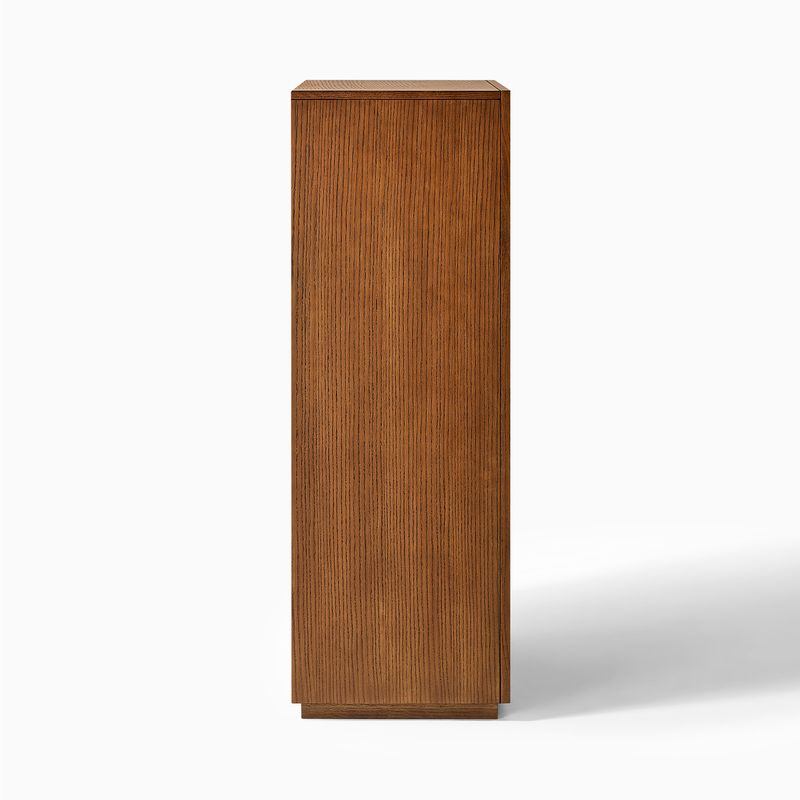
A narrow chest can fit beside a wardrobe or in a suitable corner where a wide cabinet would occupy too much wall space. Check its height and depth as well as its width, and make sure the drawers can open without blocking a doorway or walkway.
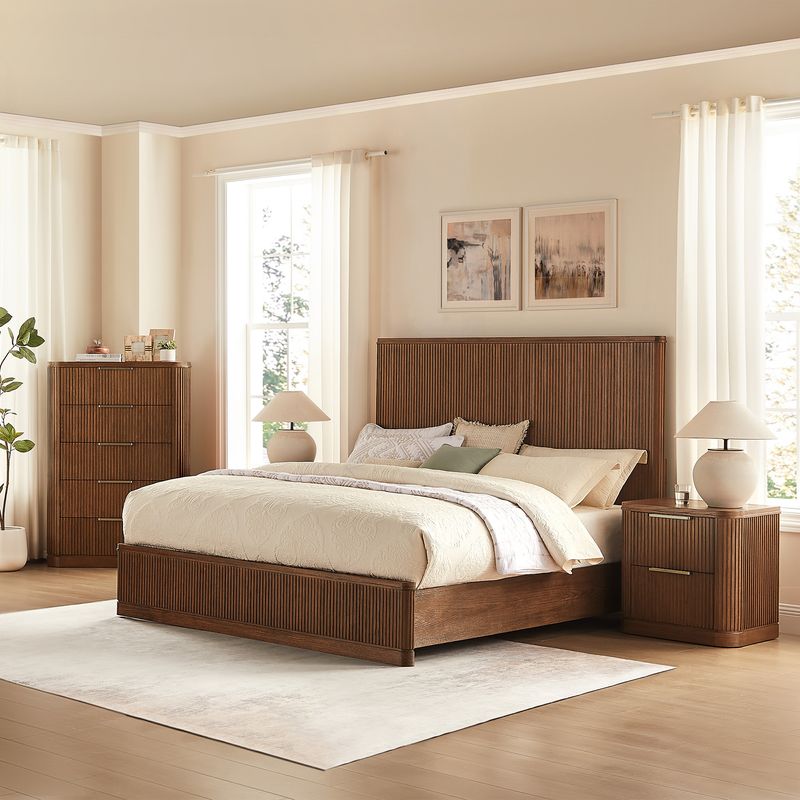
A chest can also complement a separate dresser. Use the wider piece for everyday clothing and the chest for accessories, sleepwear, or items you prefer to keep separate. This arrangement can provide more organized storage without requiring a single oversized cabinet.
Dresser vs. Chest of Drawers
A dresser is generally wider and lower, with drawers arranged horizontally and a broad top surface. A chest of drawers is typically taller and narrower, with drawers stacked vertically to make efficient use of floor space.
The distinction is not absolute, and retailers may use these terms differently. Compare actual dimensions, drawer layouts, and storage capacity rather than relying on the product name alone.
Measure Your Bedroom Before Buying
Start by measuring the available width, depth, and height of the intended location. Then account for drawer clearance, nearby furniture, and the walking space needed to move through the room.
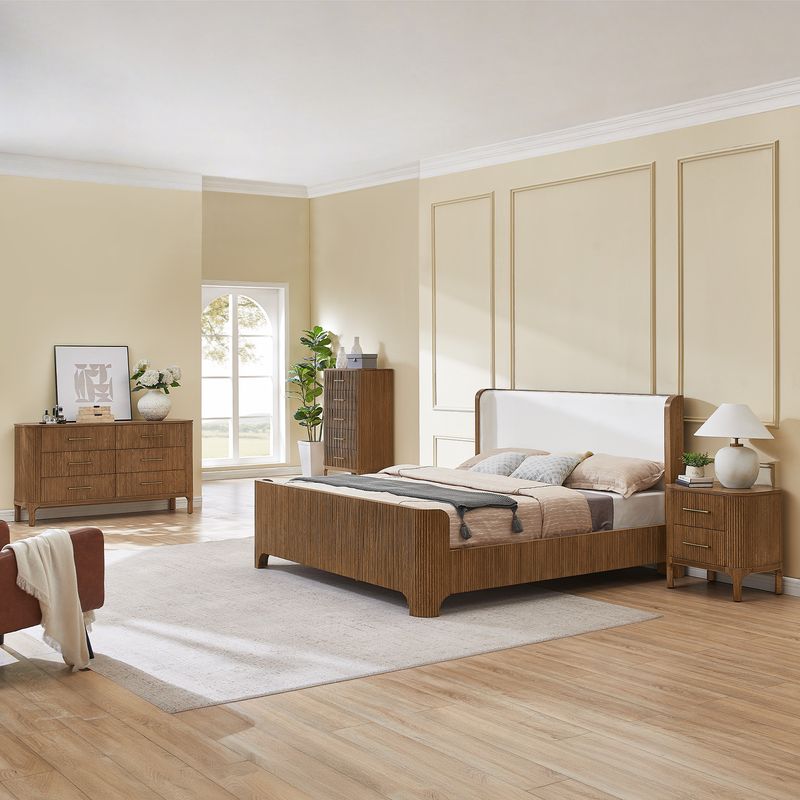
A dresser may fit against a wall when closed but become awkward to use once its drawers are open. Check the distance between the dresser and the bed, nightstands, closet doors, and other nearby furniture before making a decision.
It is also worth checking the delivery route. Doorways, hallways, and staircases can affect whether a wide or heavy piece can reach your bedroom. Review the product dimensions and assembly requirements before ordering.
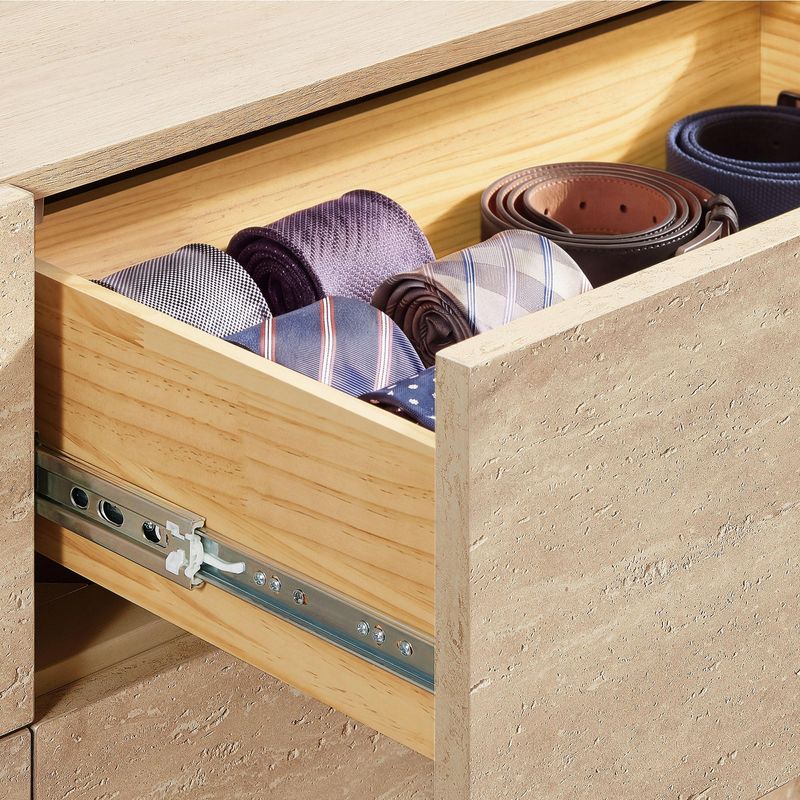
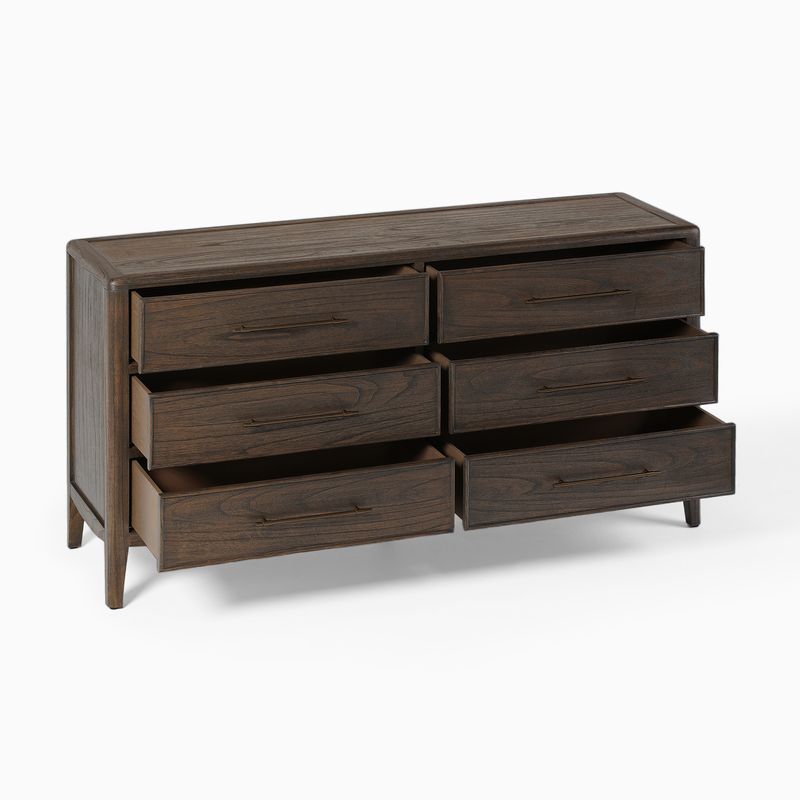
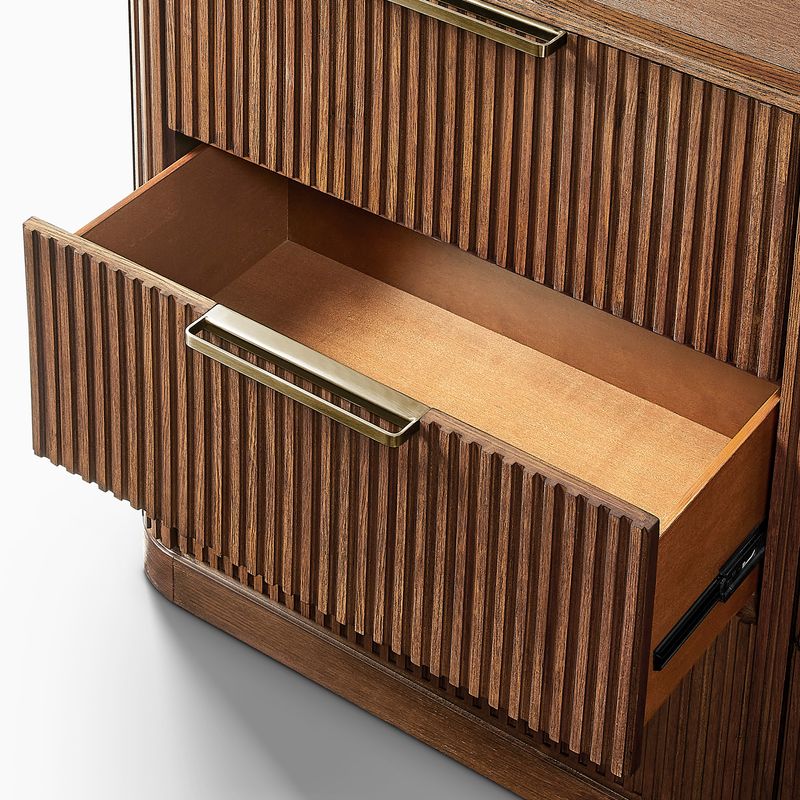
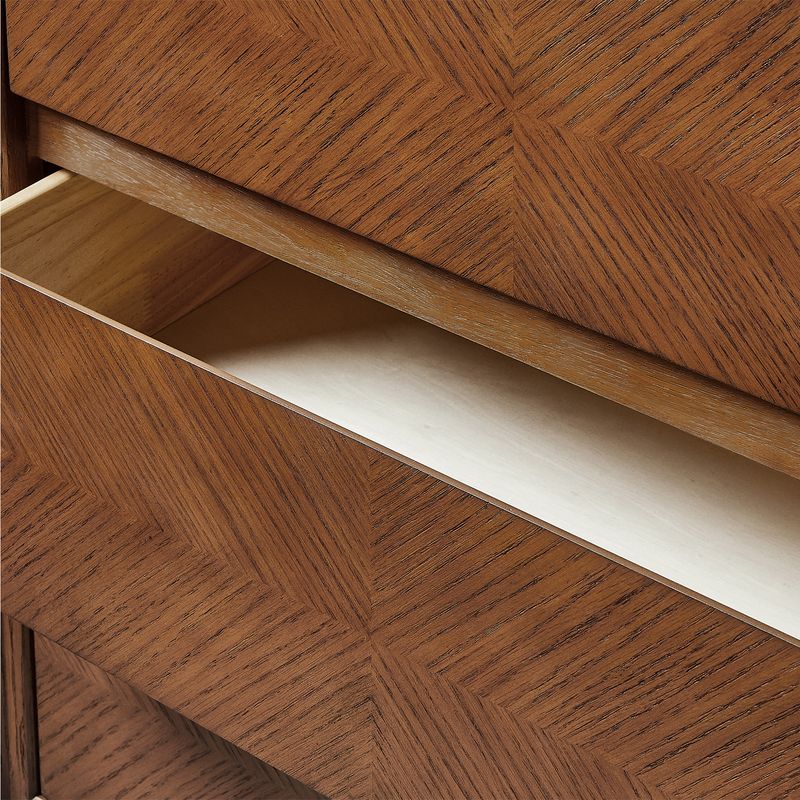
Finally, compare interior drawer measurements when they are available. Shallow drawers can work well for accessories and smaller garments, while deeper compartments may be better suited to sweaters and jeans. Two dressers with the same number of drawers can offer very different amounts of usable storage.
Choose the Right Wood Dresser and Finish
The material and finish of a dresser influence its appearance, construction, and care requirements. If you are shopping for a wood dresser, check the specifications for each model rather than assuming every wood-look surface is solid wood.
Wood Tones and Oak Finishes
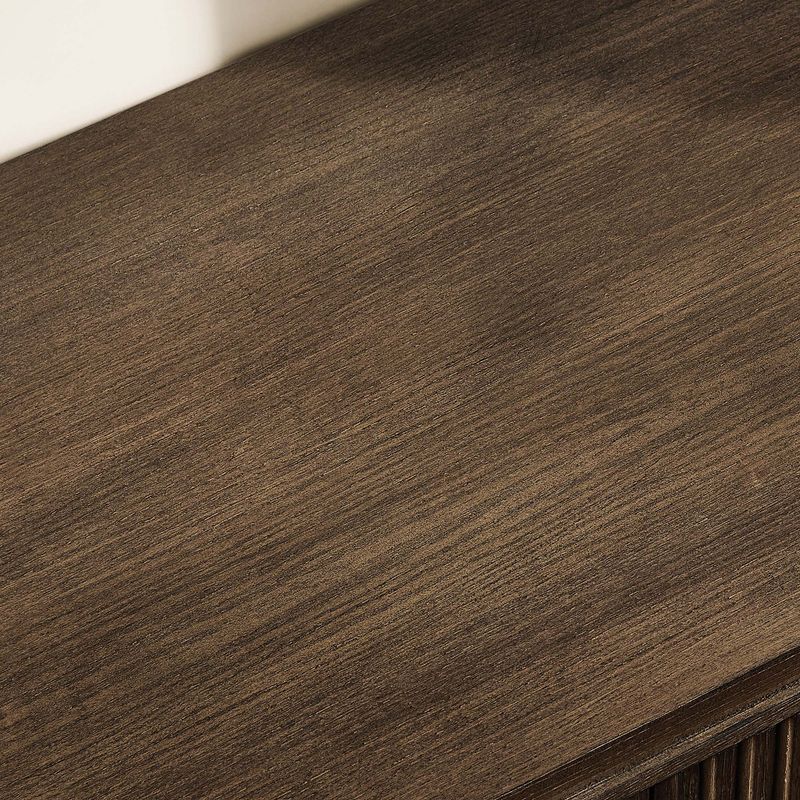
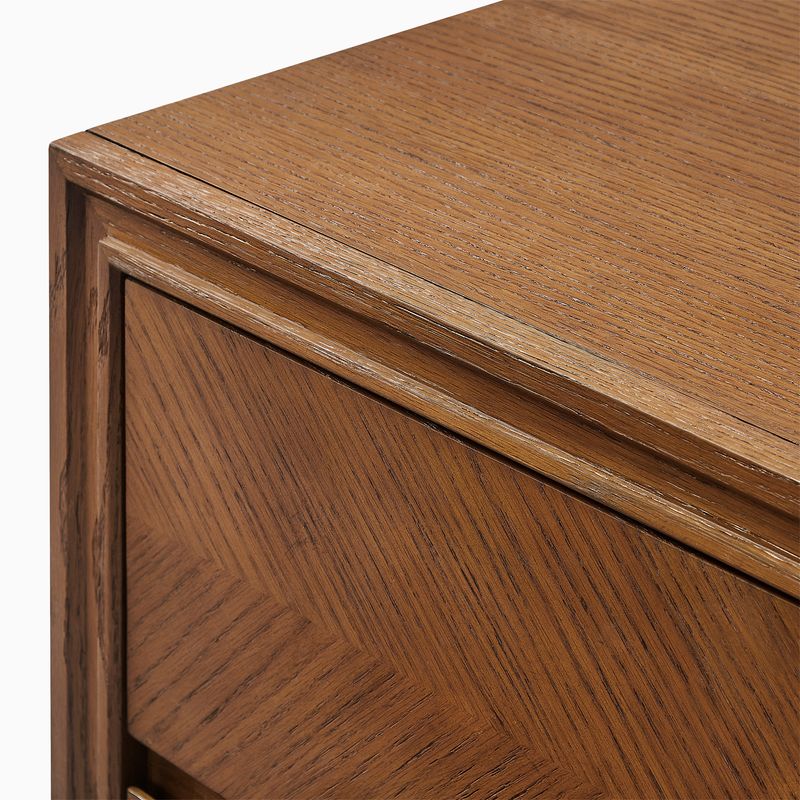
Dressers may use solid wood, engineered wood, veneers, or a combination of materials. These constructions differ in appearance, performance, and maintenance requirements, so it is important to understand which materials are used for the frame, drawer boxes, and exterior surfaces.
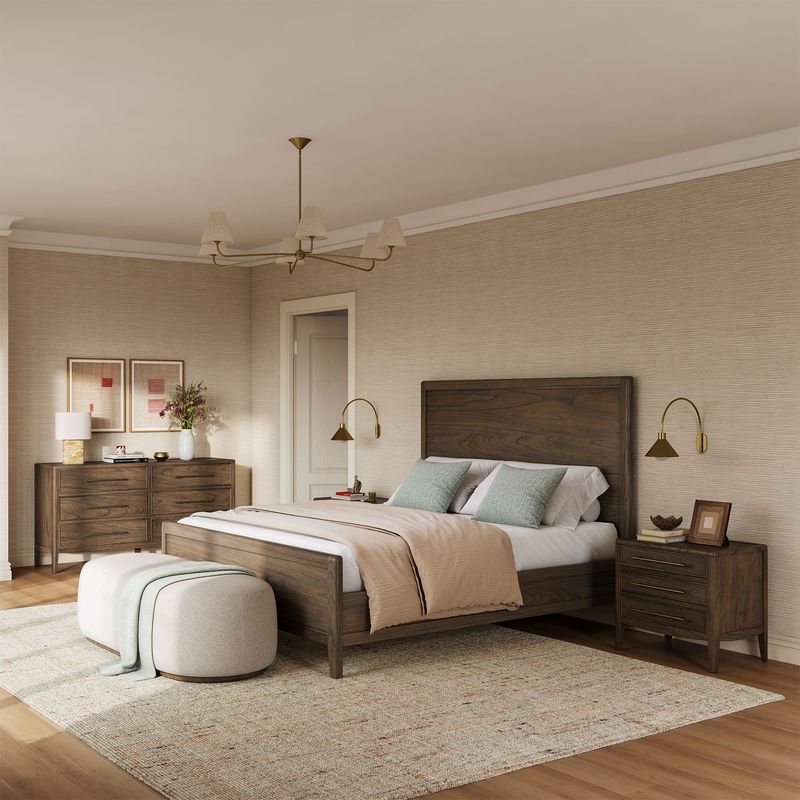
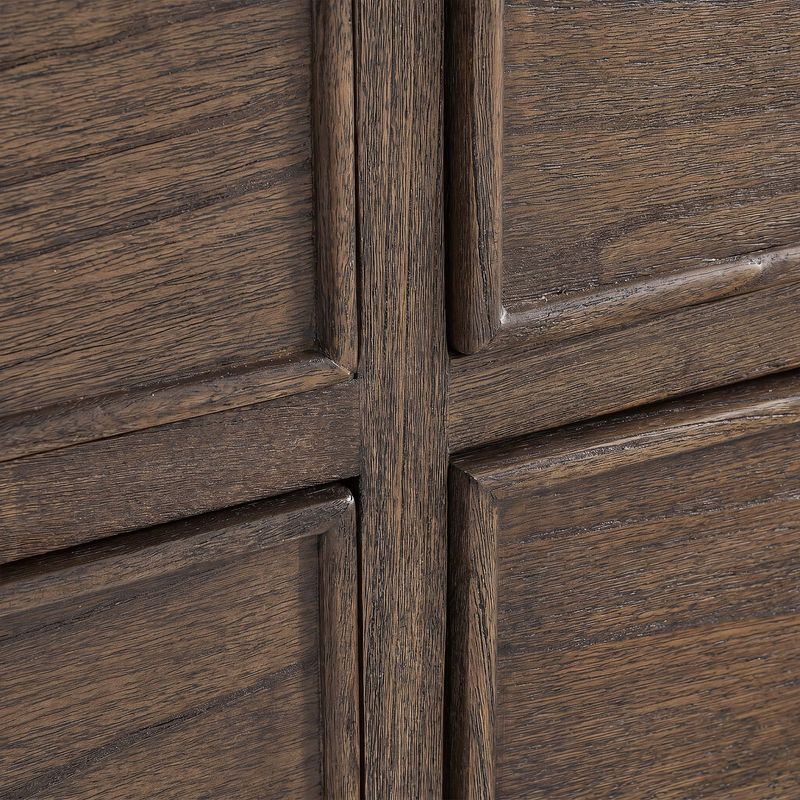
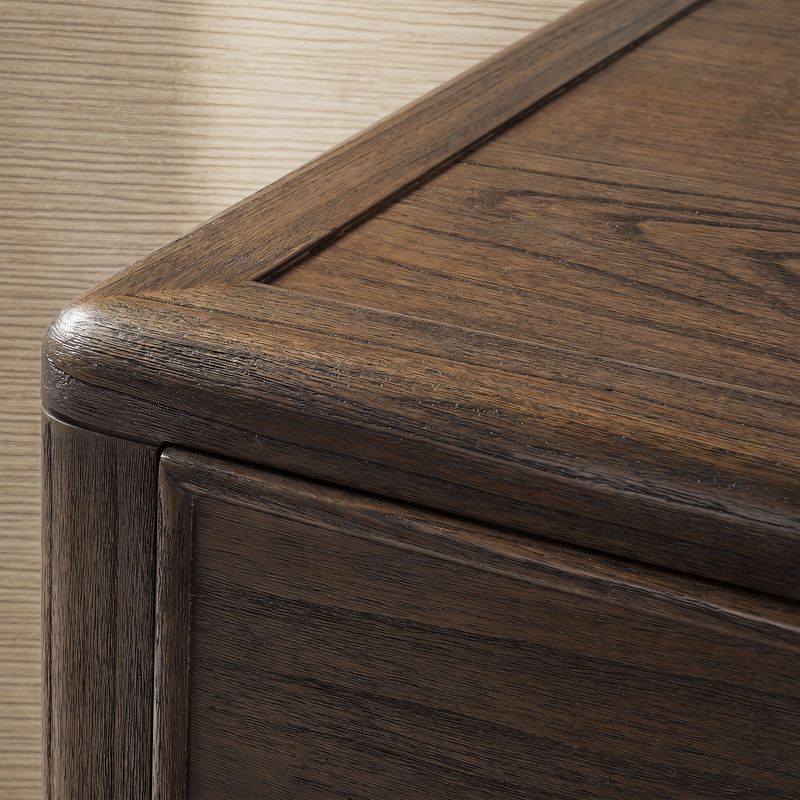
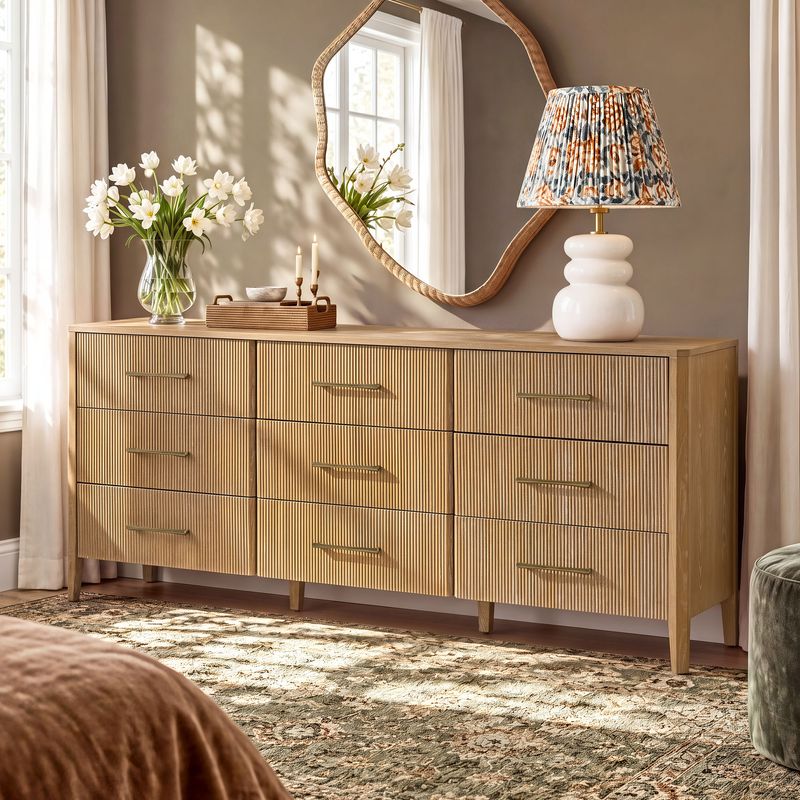
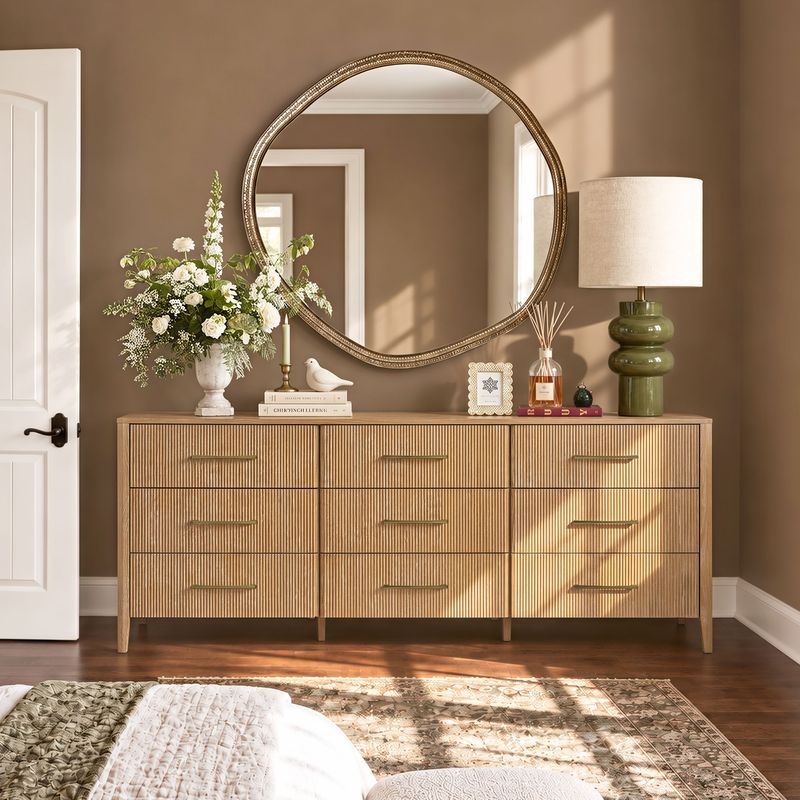
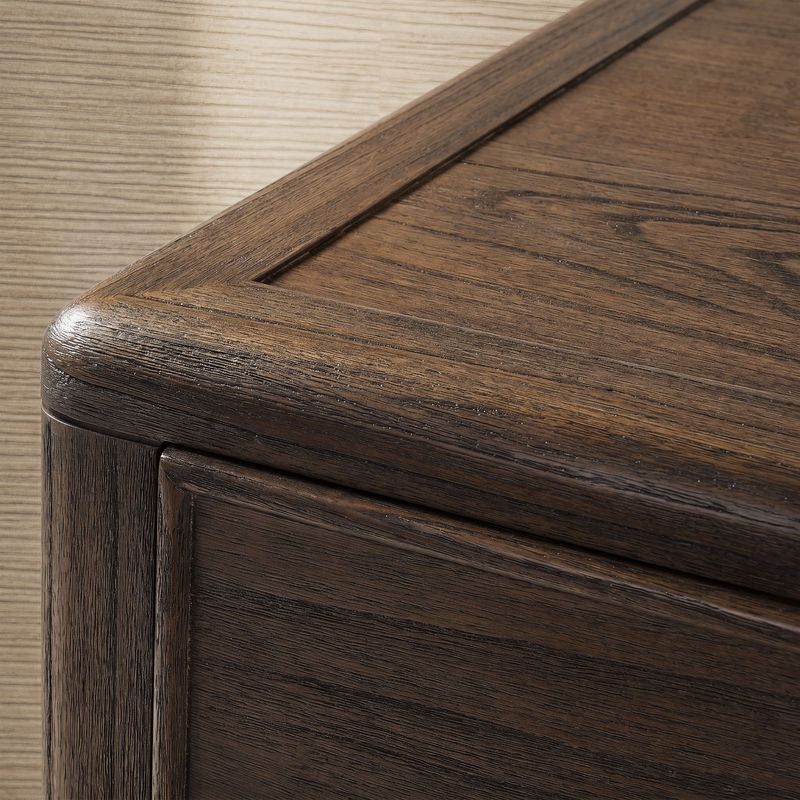
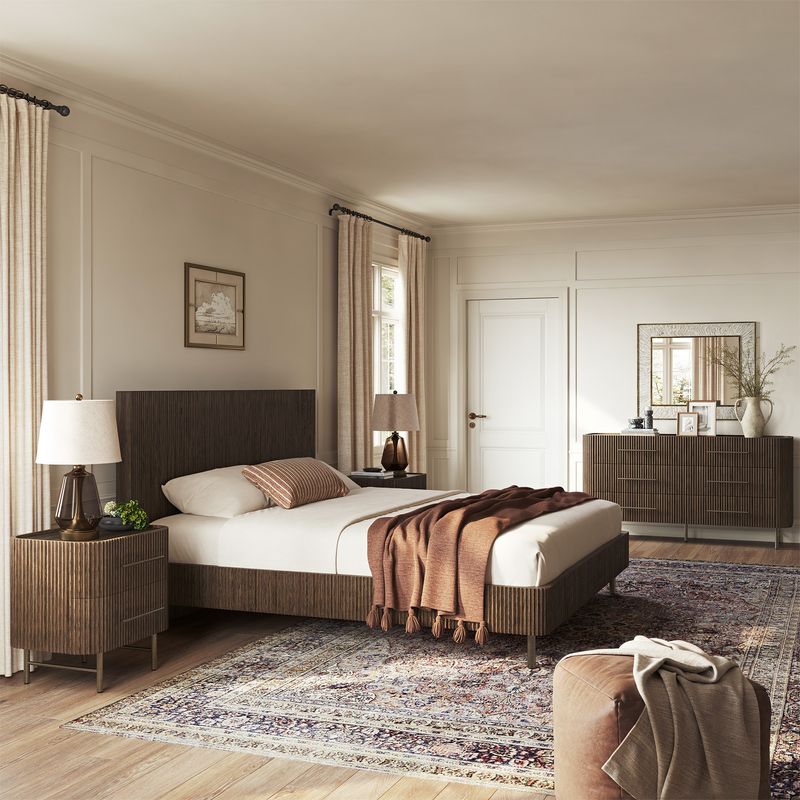
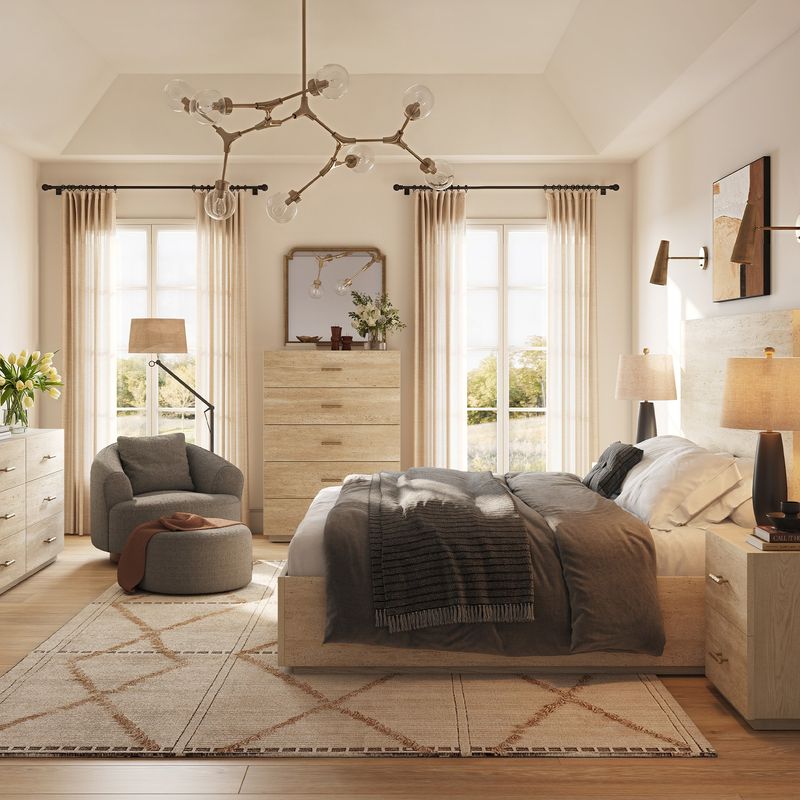
Hernest's Skugga designs offer an oak-focused look, while other collections feature different wood patterns and decorative finishes. Compare the tones with your bed, flooring, and nightstands to create a coordinated bedroom. Matching every piece exactly is not necessary; complementary undertones and proportions can create a more natural result.
Fluted, Chevron, and Textured Fronts
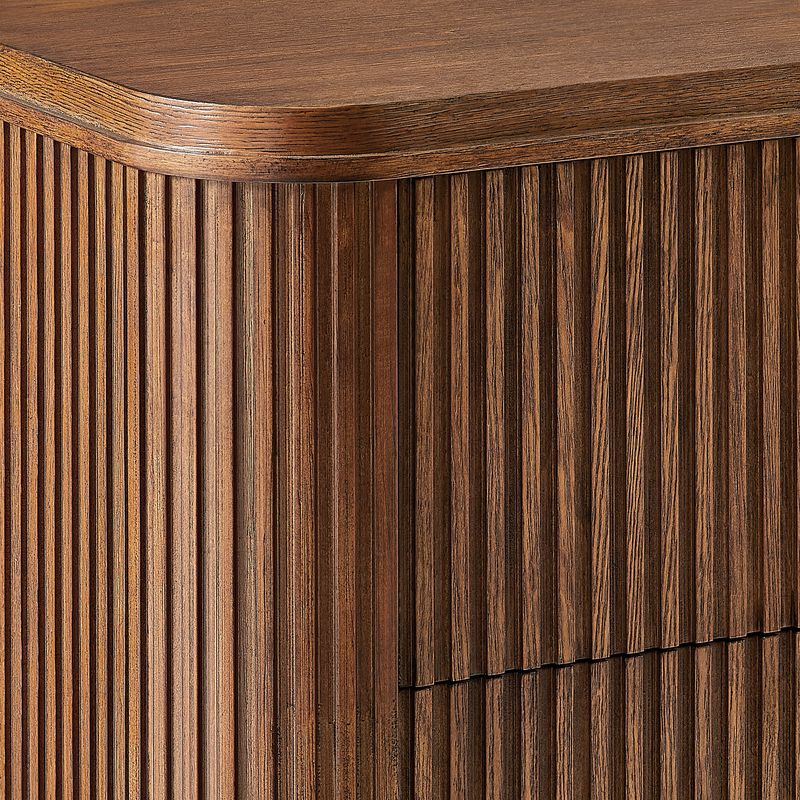
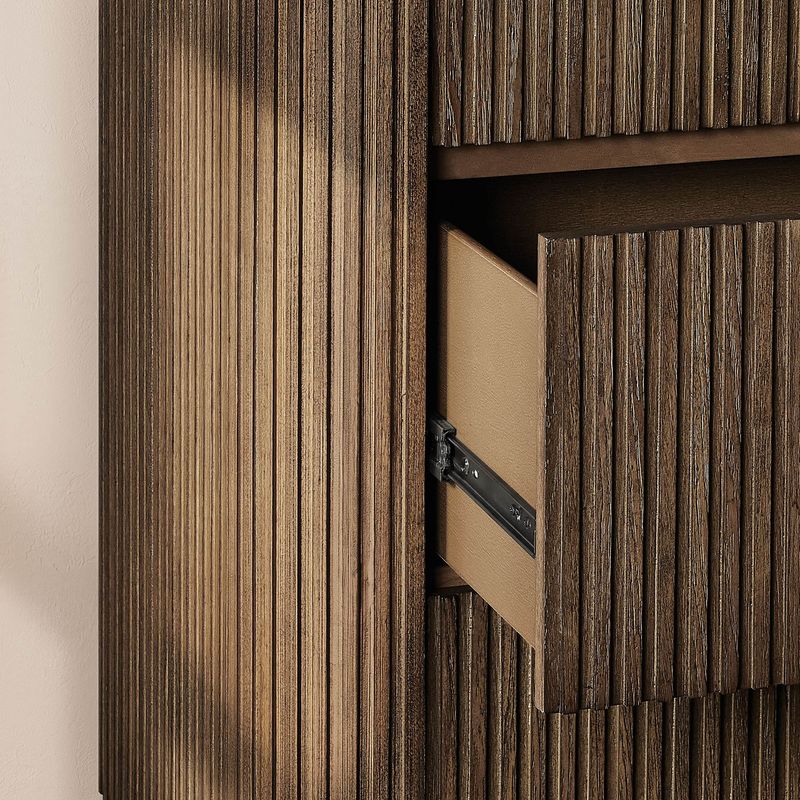
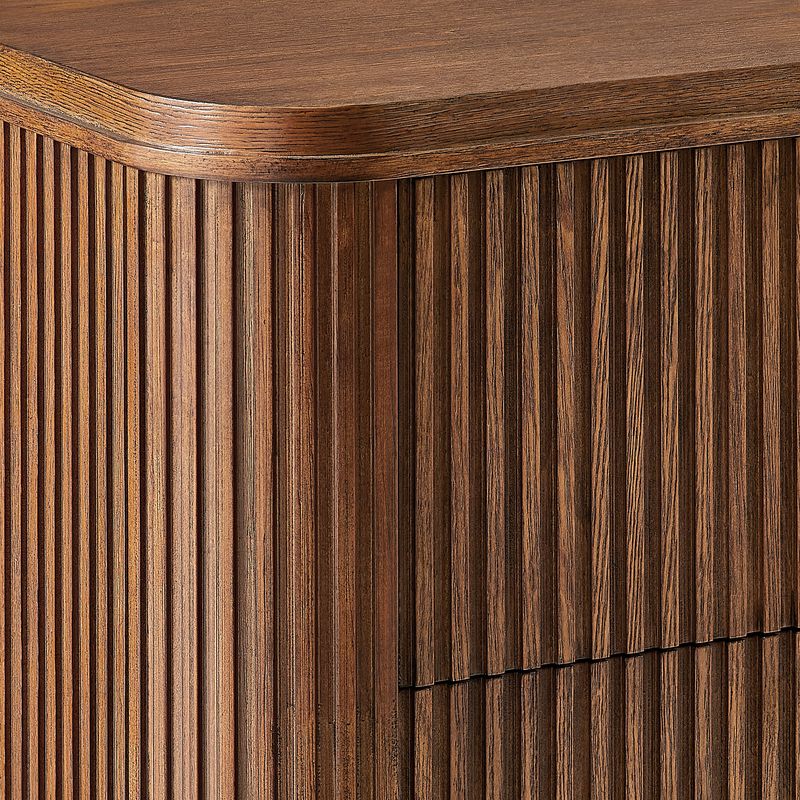
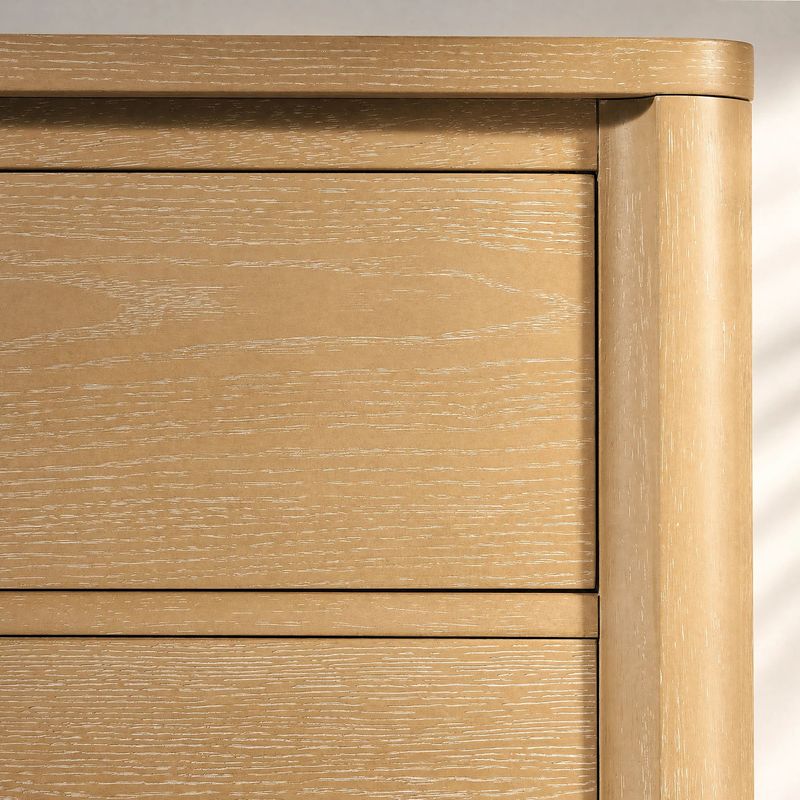
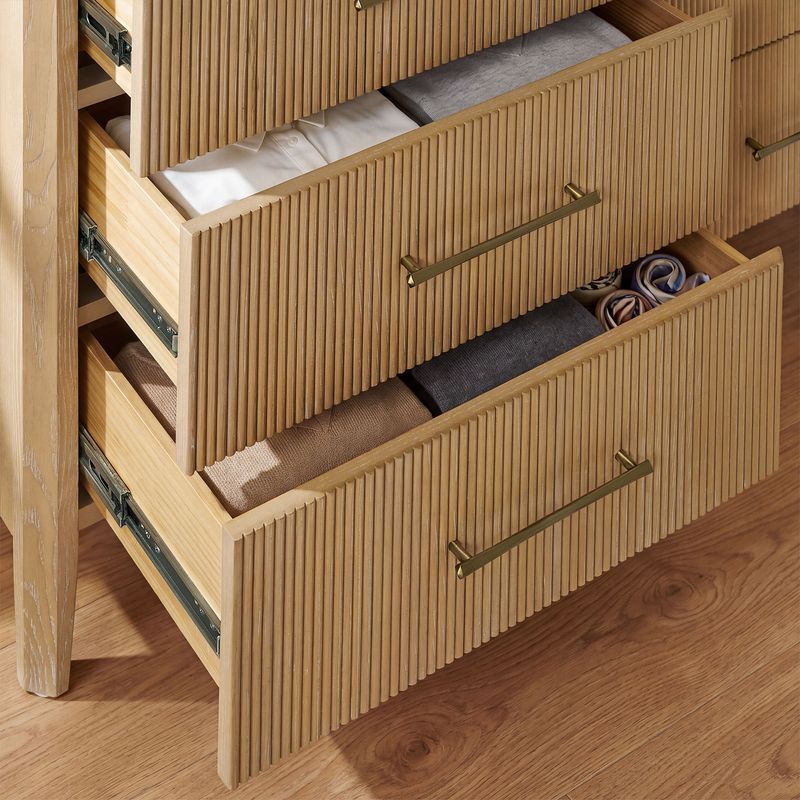
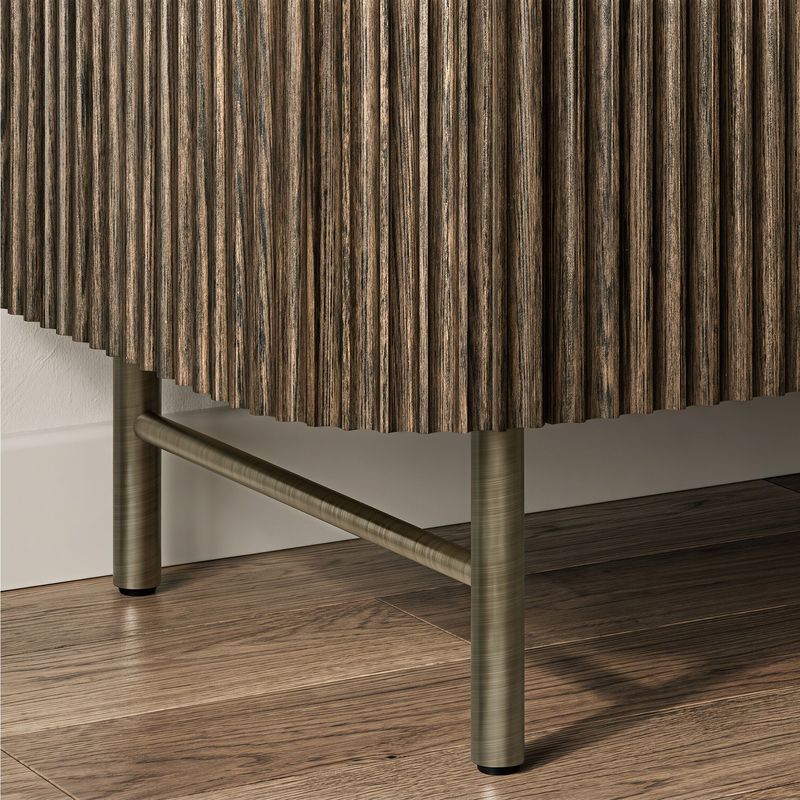
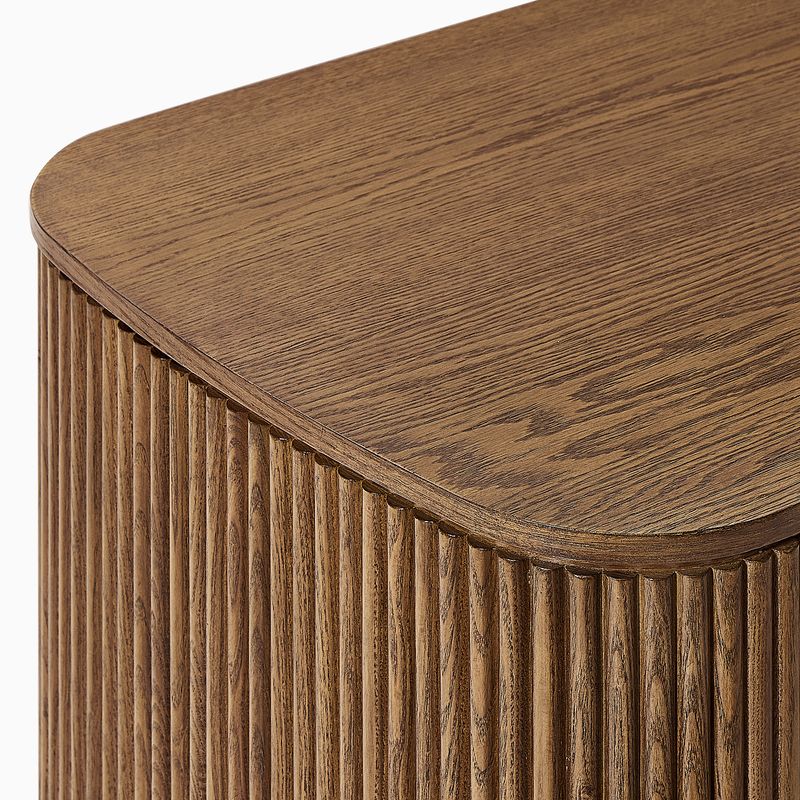
The front of a dresser can influence the overall character of your bedroom. Fluted detailing creates repeated vertical lines, chevron patterns add geometric interest, and textured finishes introduce another layer of visual detail.
Finnley features fluted detailing, Thursen uses a chevron pattern, and Renata offers a travertine-textured finish. If your bedding, rug, or artwork already has a bold pattern, a simpler dresser may provide better balance. In a more understated room, a distinctive front can become a focal point.
Consider the entire room when choosing a finish. A dresser should complement the surrounding furniture rather than compete with every other design element.
What to Check Before Choosing a Dresser
Materials, Hardware, and Assembly
Review the listed materials for the frame, drawer boxes, and exterior surfaces. If solid wood, engineered wood, or veneers are important to your decision, confirm which materials are used and where. A general material description may not explain the construction of every component.
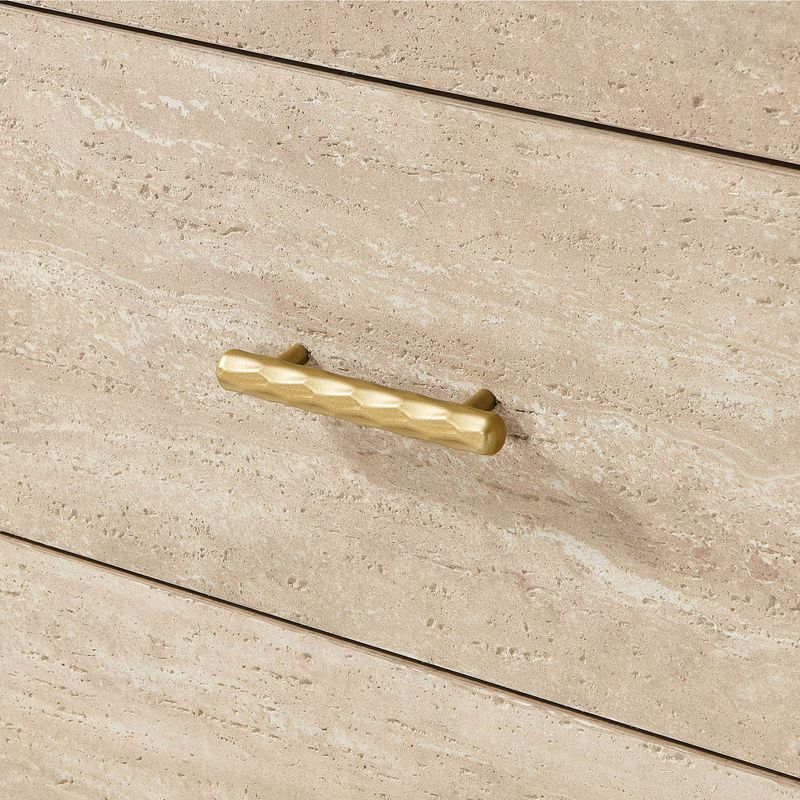
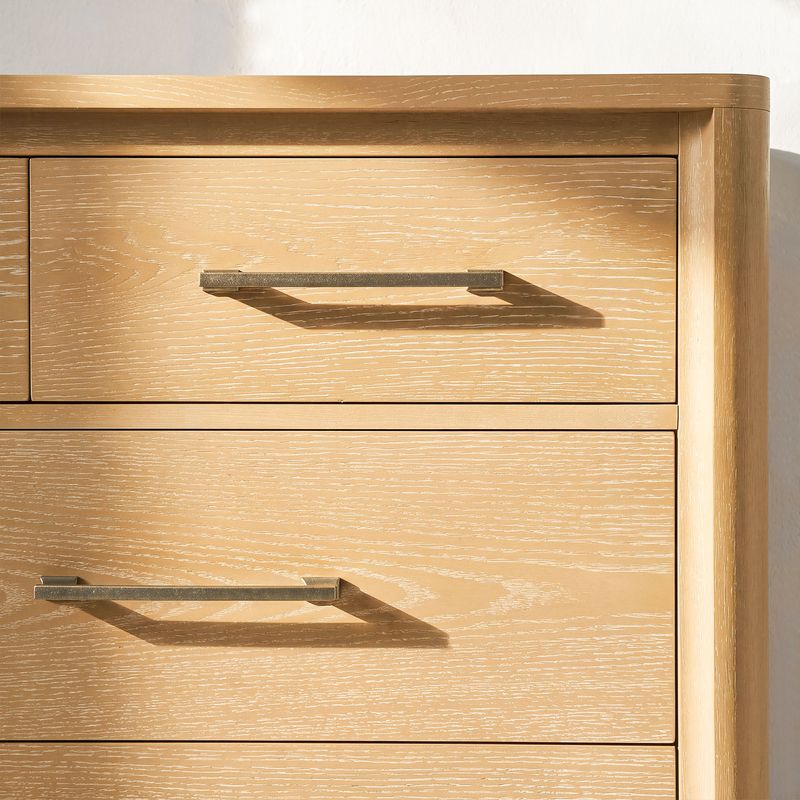
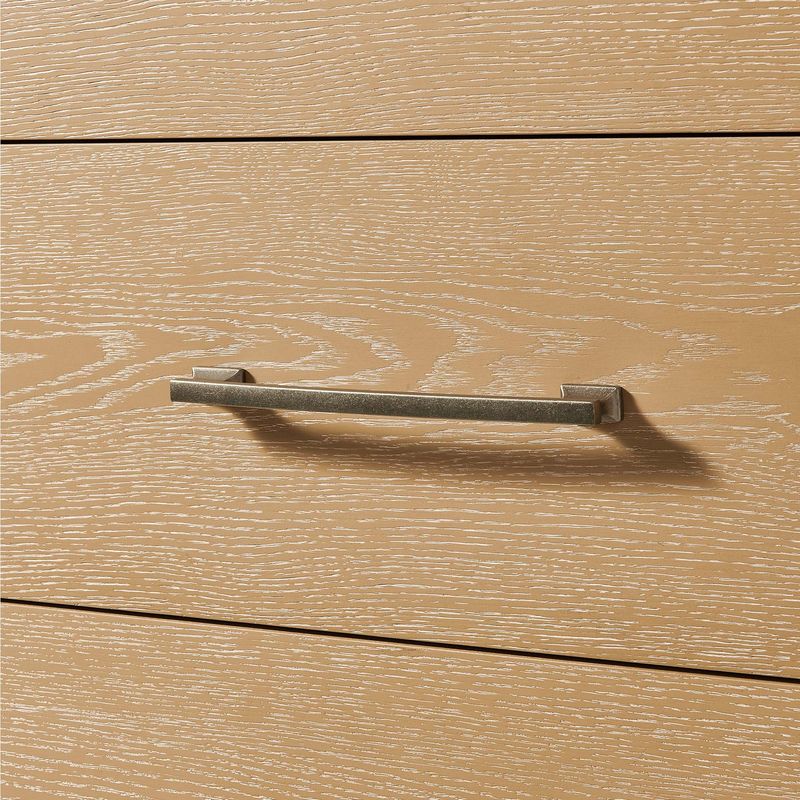
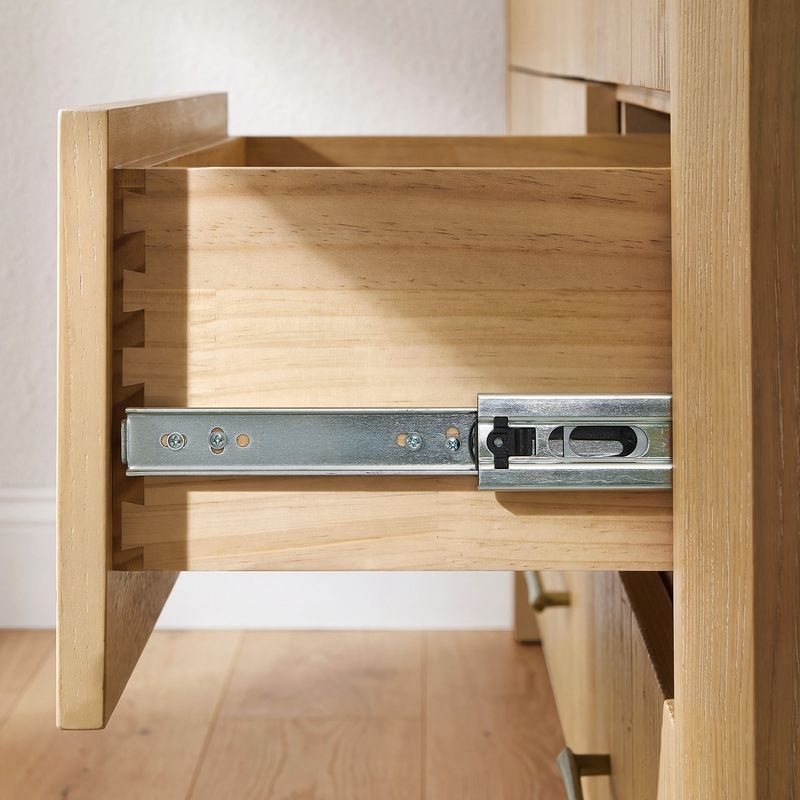
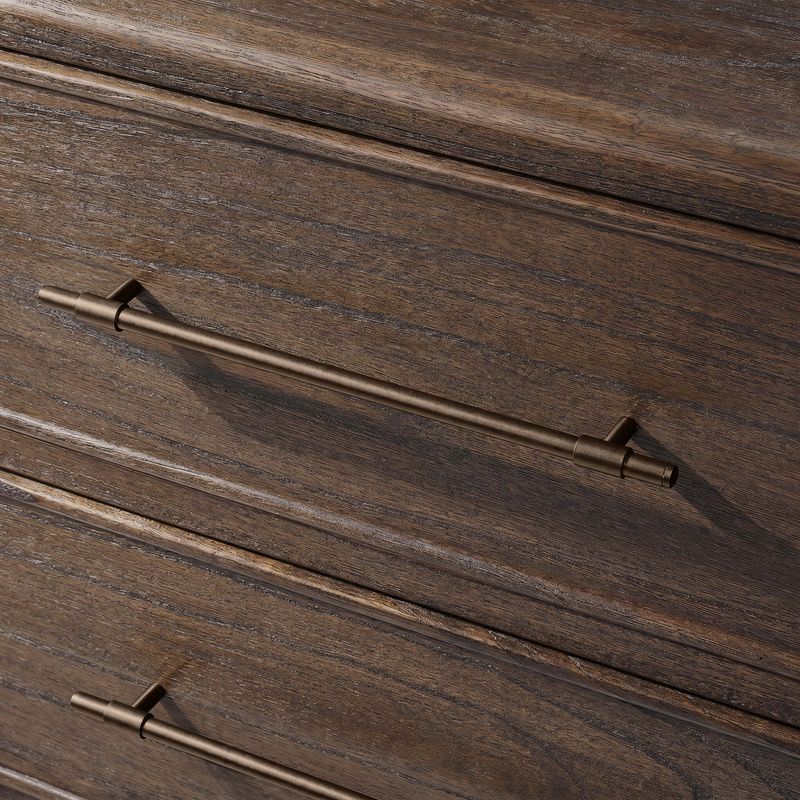
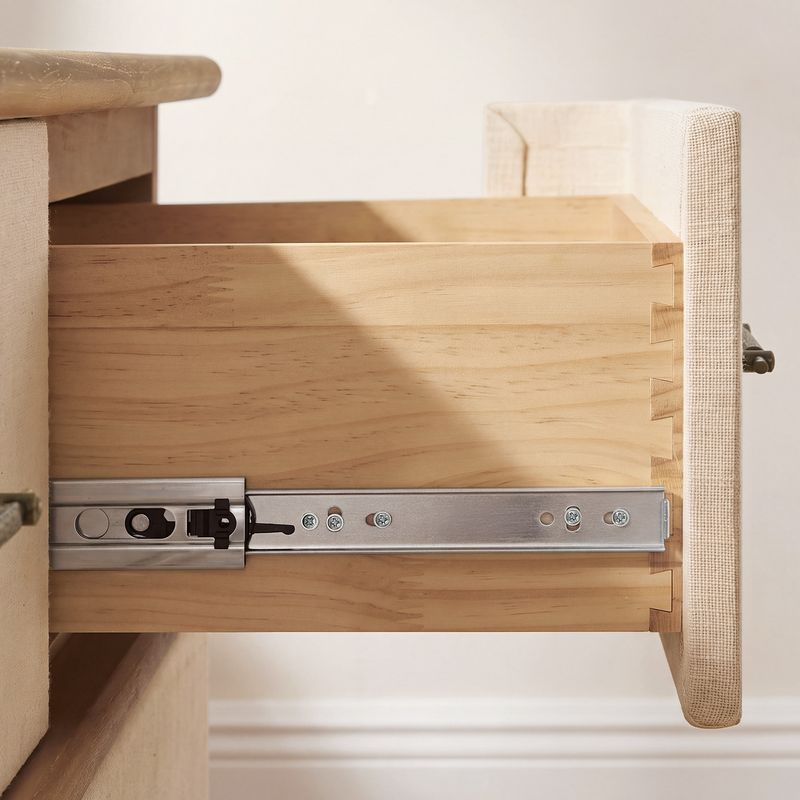
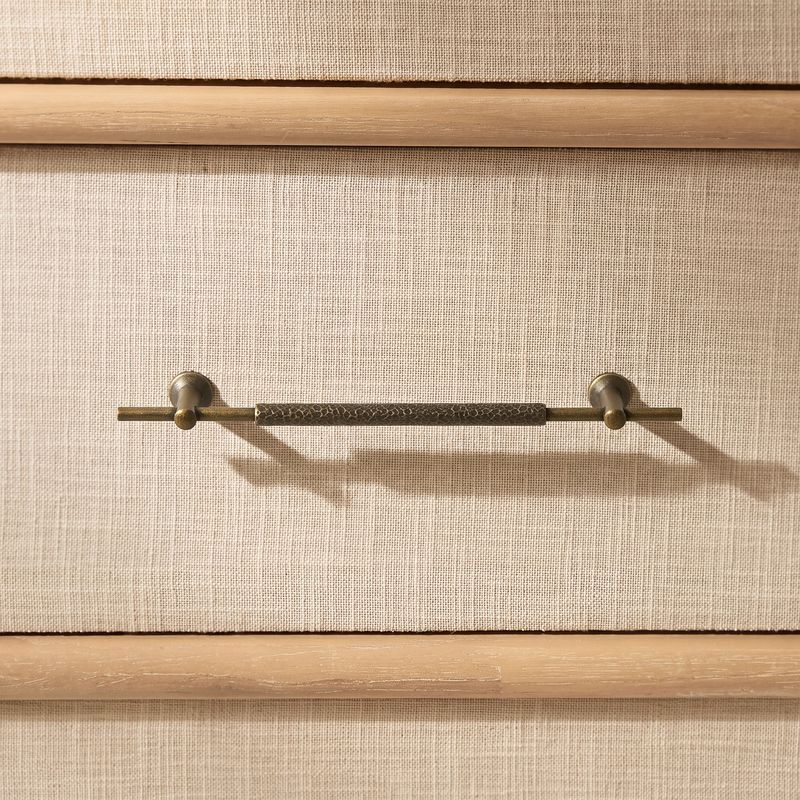
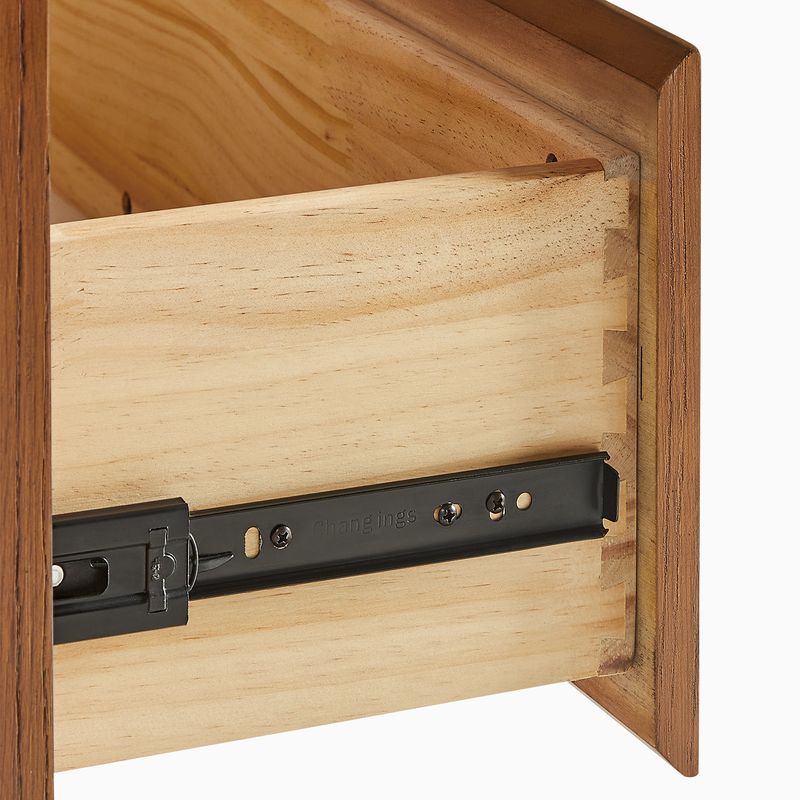
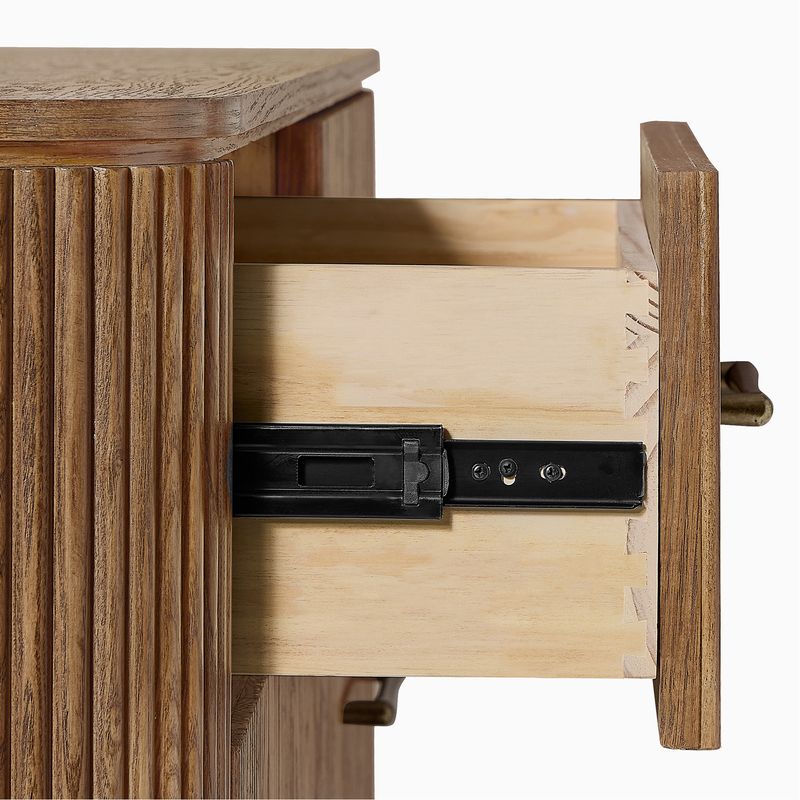
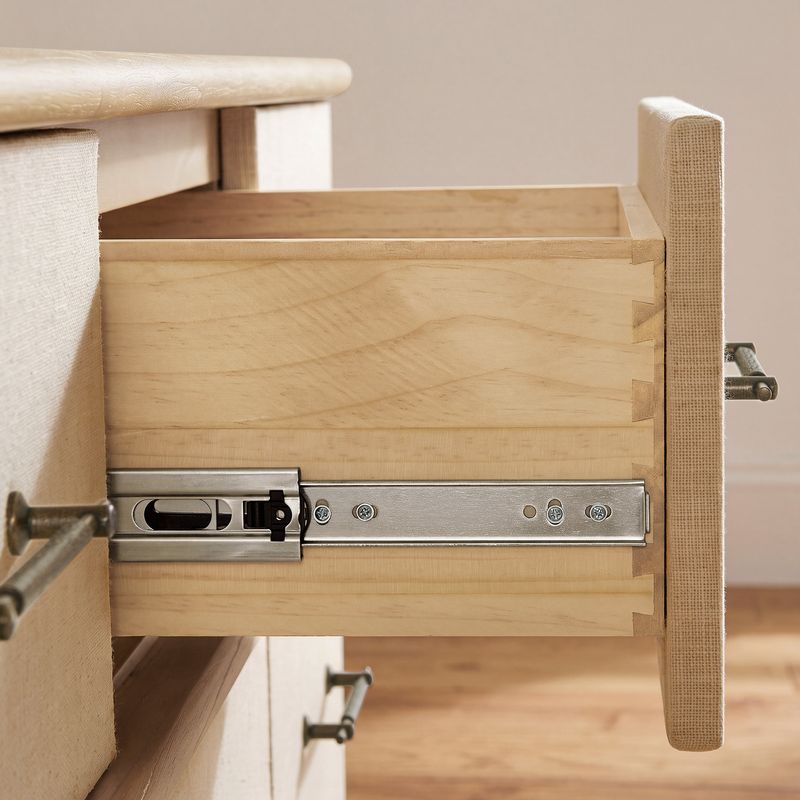
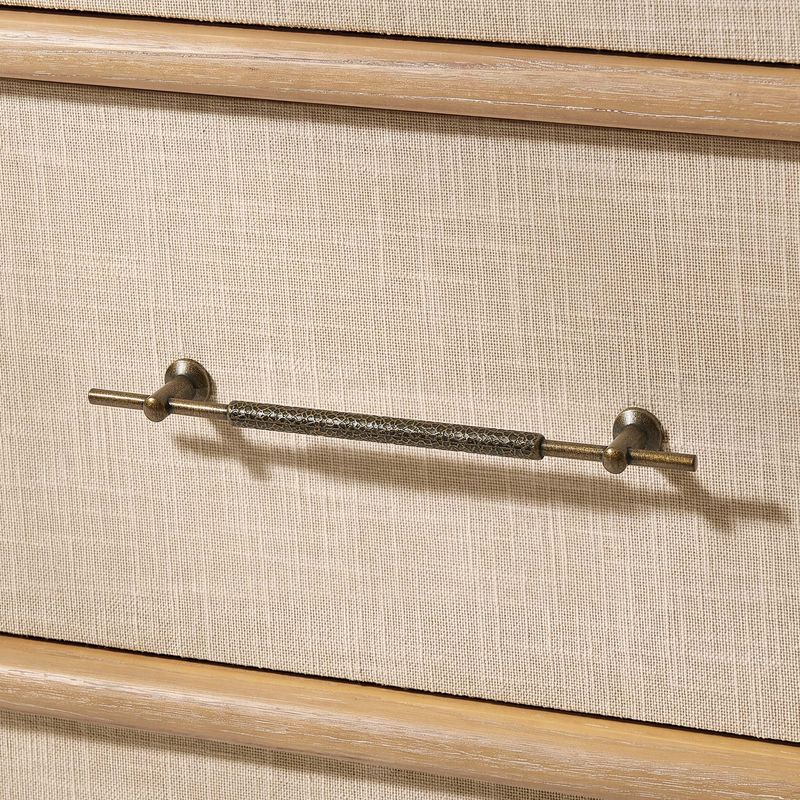
Check the product specifications for handles, drawer hardware, construction details, and assembly requirements. Features such as dovetail joints or soft-close mechanisms can be useful considerations when they are explicitly listed for the model. Do not assume every dresser includes the same hardware or drawer features.
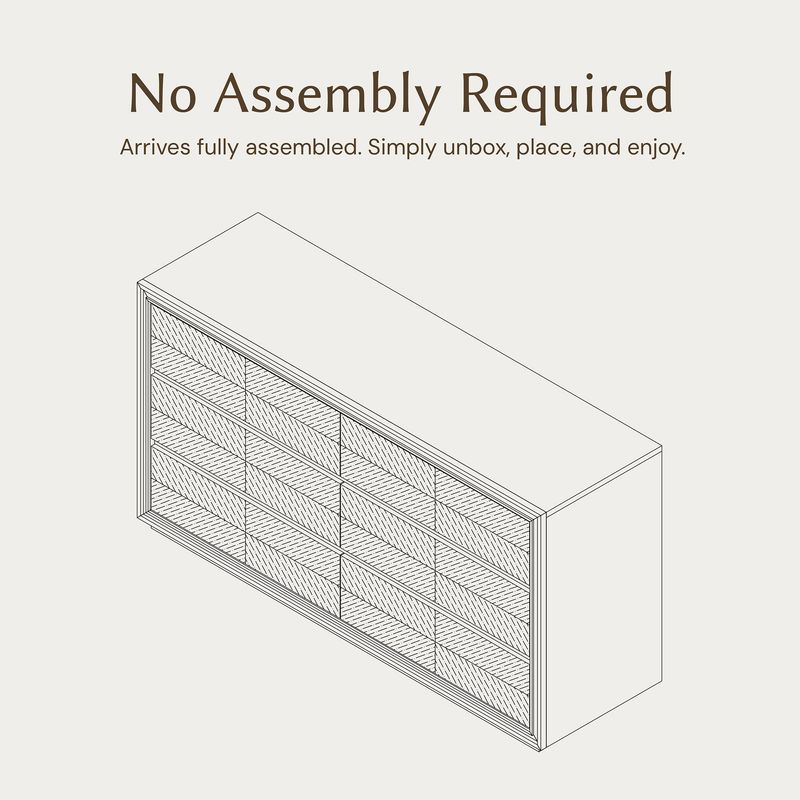
Also confirm whether the furniture arrives assembled or requires setup. This is particularly important if you have limited access to the bedroom or plan to move the piece through narrow hallways.
Stability and Safe Placement
Follow assembly and safety instructions, including recommendations for wall anchoring. Use the supplied anti-tip hardware as directed, distribute belongings sensibly, and avoid overloading drawers.
Keep heavier items in lower drawers when appropriate, and never allow anyone to climb on the furniture or use open drawers as steps. Proper assembly and placement help reduce the risk of tipping.
Keep Your Dresser Looking Its Best
Dust the surface with a soft cloth and clean spills promptly. Use cleaning products suitable for the listed finish, and avoid abrasive pads or harsh chemicals that could damage the surface. Protective pads or coasters can help reduce scratches and marks on the top.
Different materials may require different care methods. Follow the manufacturer's instructions for wood, veneers, and textured finishes, and check handles and other hardware periodically for loose components.
Gentle, consistent care can help preserve the dresser's appearance over time without exposing the finish to unnecessary moisture or aggressive cleaning products.
Shop Hernest Dressers & Chests
Explore Hernest dressers and chests to compare drawer configurations, dimensions, and finishes. Find the right fit for your bedroom, from compact five-drawer chests to wide nine-drawer dressers.
Whether you prefer Finnley's fluted detailing, Thursen's geometric pattern, Skugga's oak-focused look, or Renata's textured finish, consider how each piece will function in your room as well as how it will look. The right choice combines practical storage with a design that complements your bedroom.