Why Choose Oval Dining Tables?
Oval dining tables bring together the practical length of a rectangular table and the softer profile of a round one. Their curved ends can make it easier to move around the dining area while creating a more connected setting for family meals, casual breakfasts, or dinner with guests. They are especially useful in rooms where seating and walkways need to share the same space.
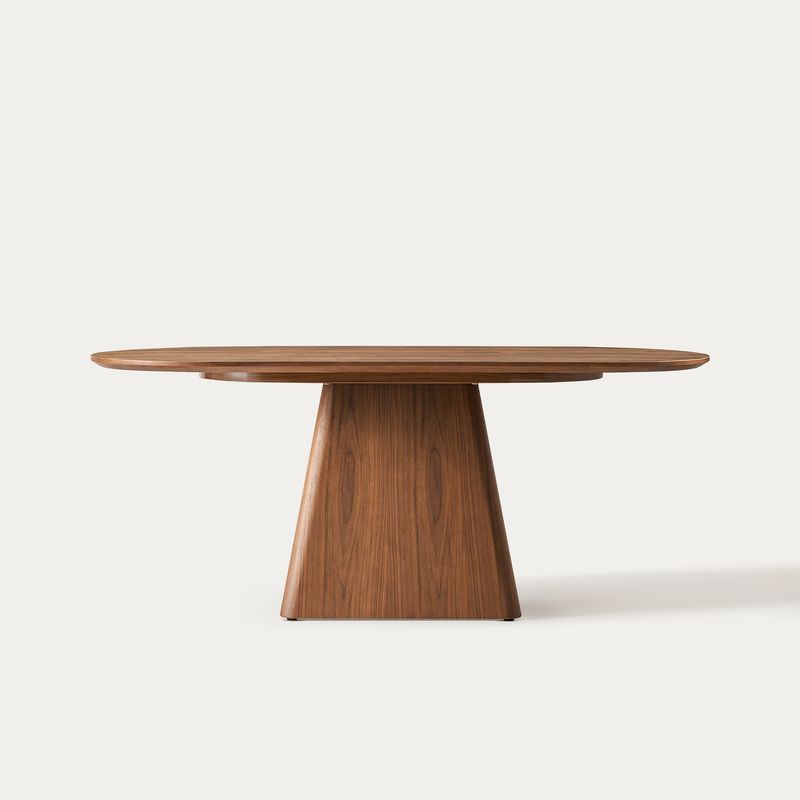
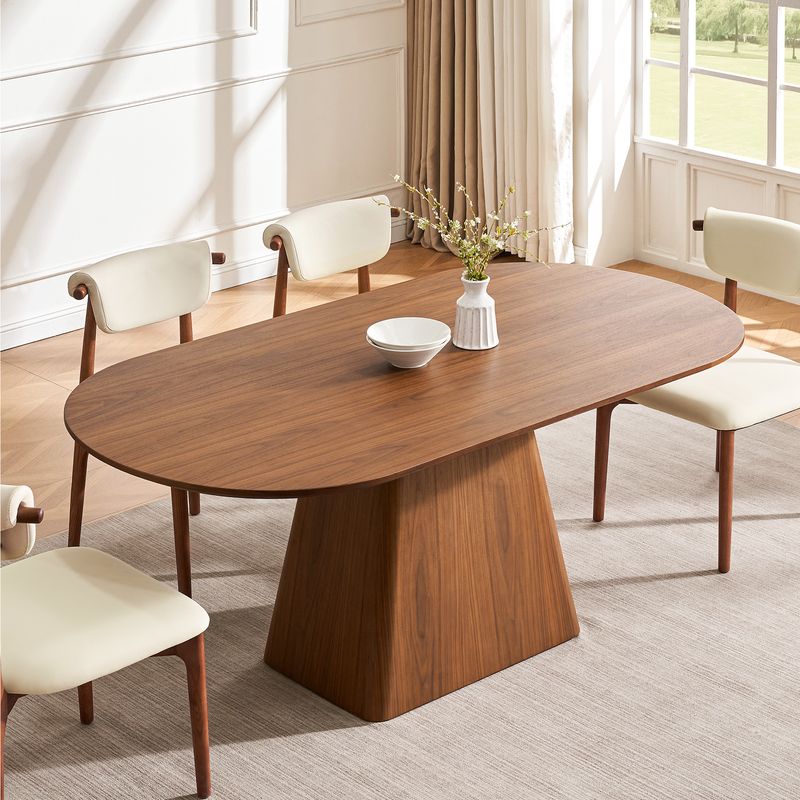
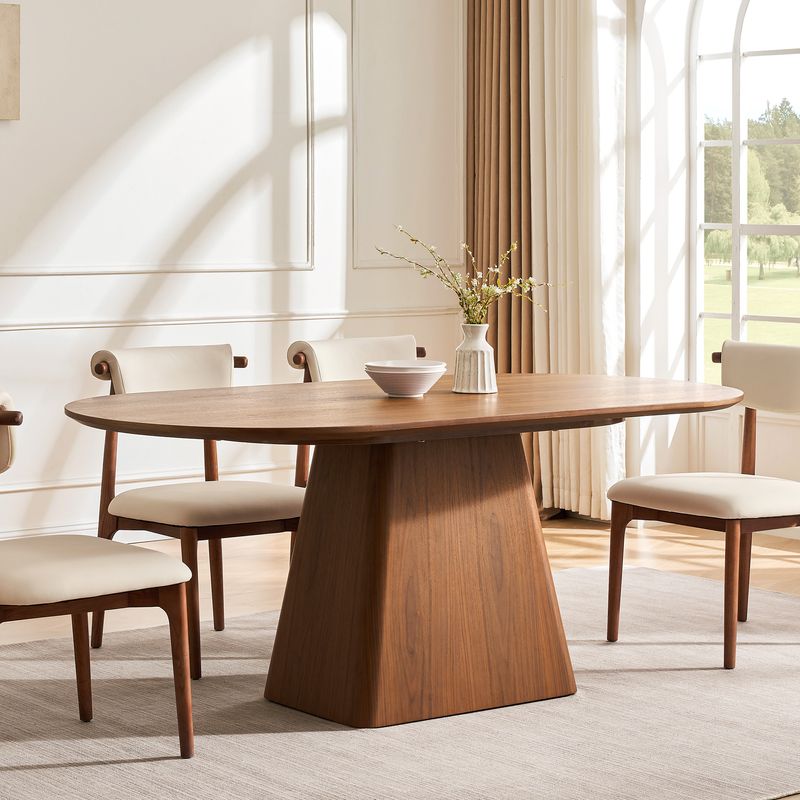
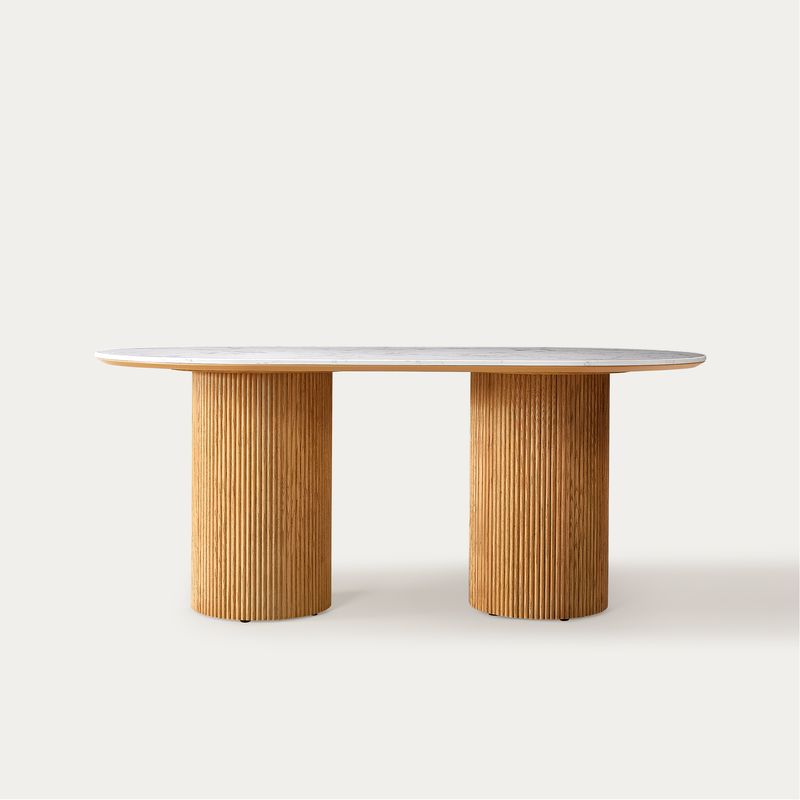
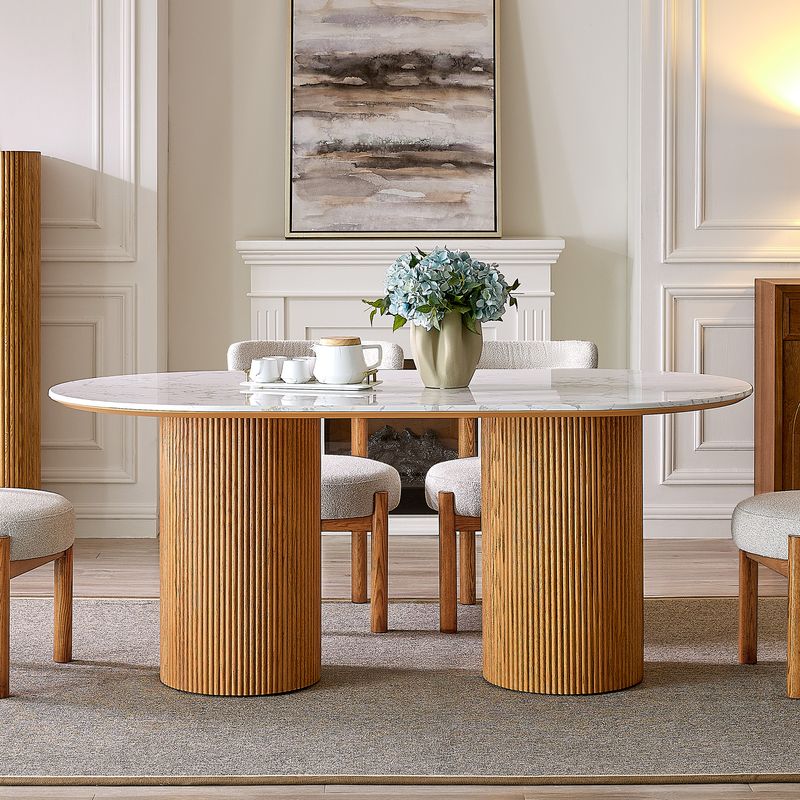
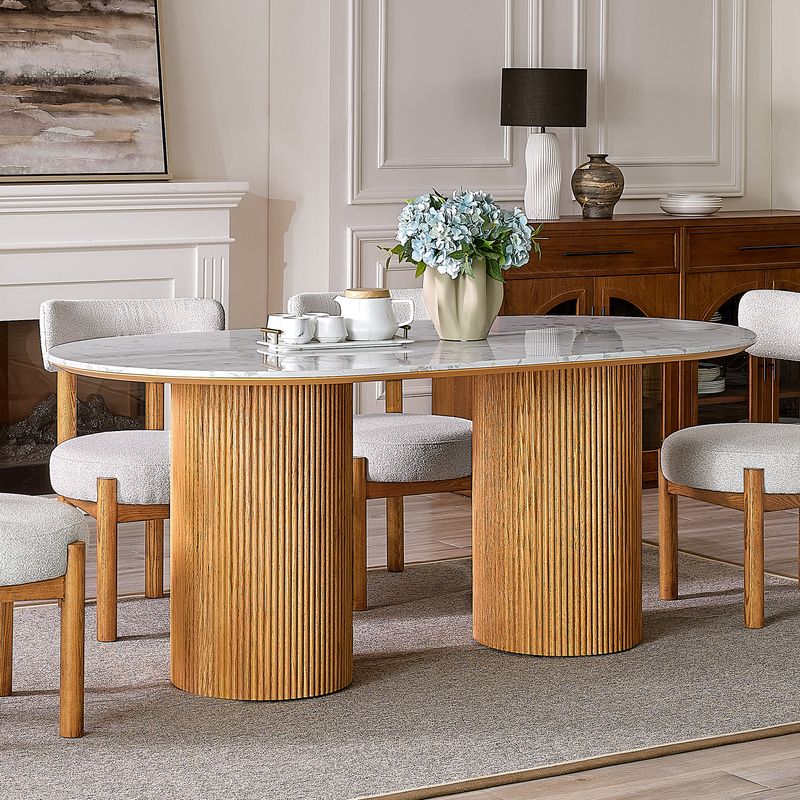
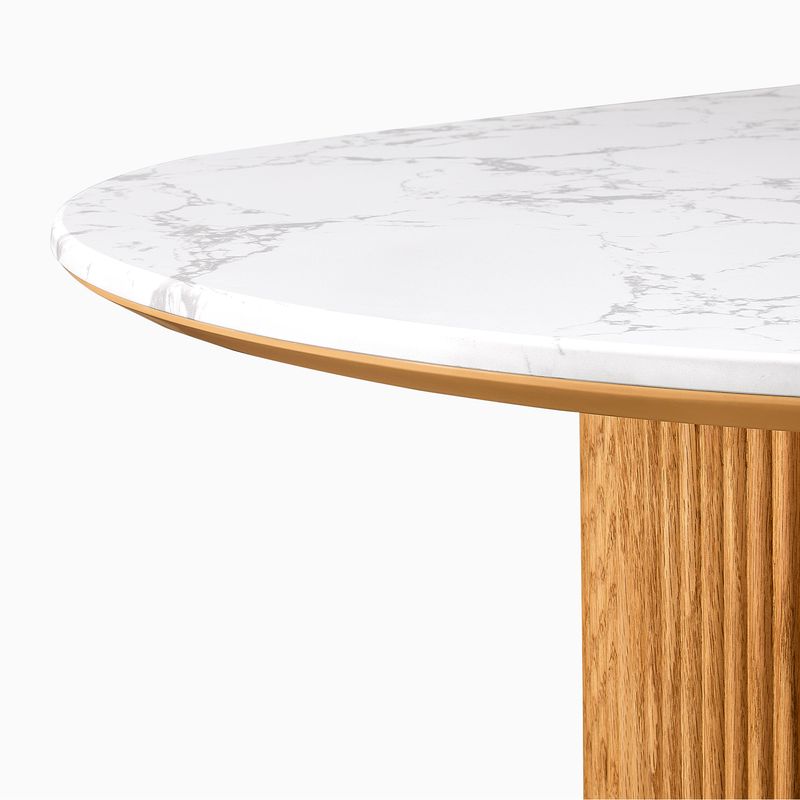
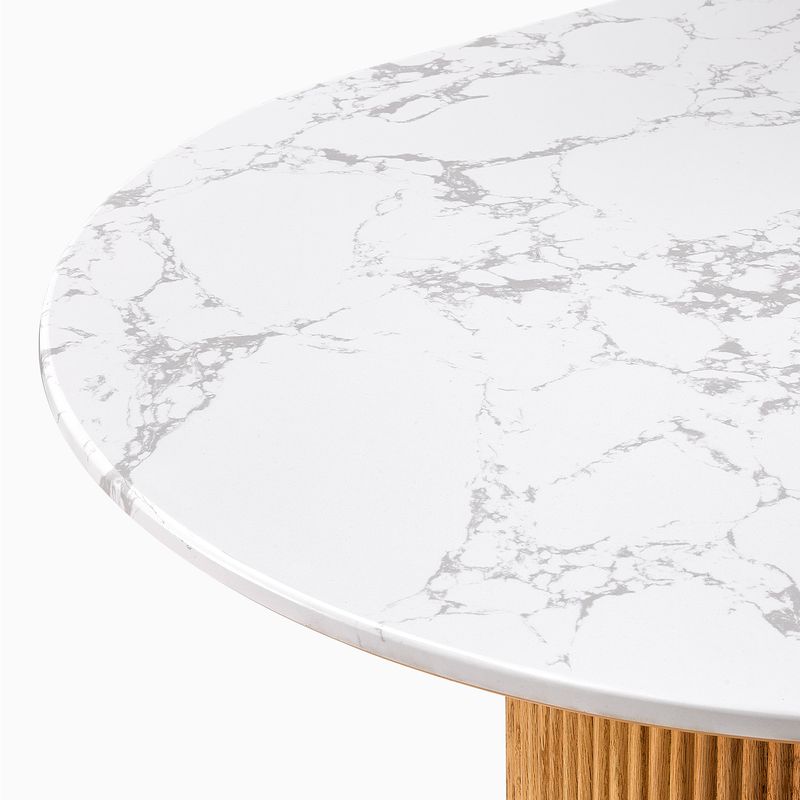
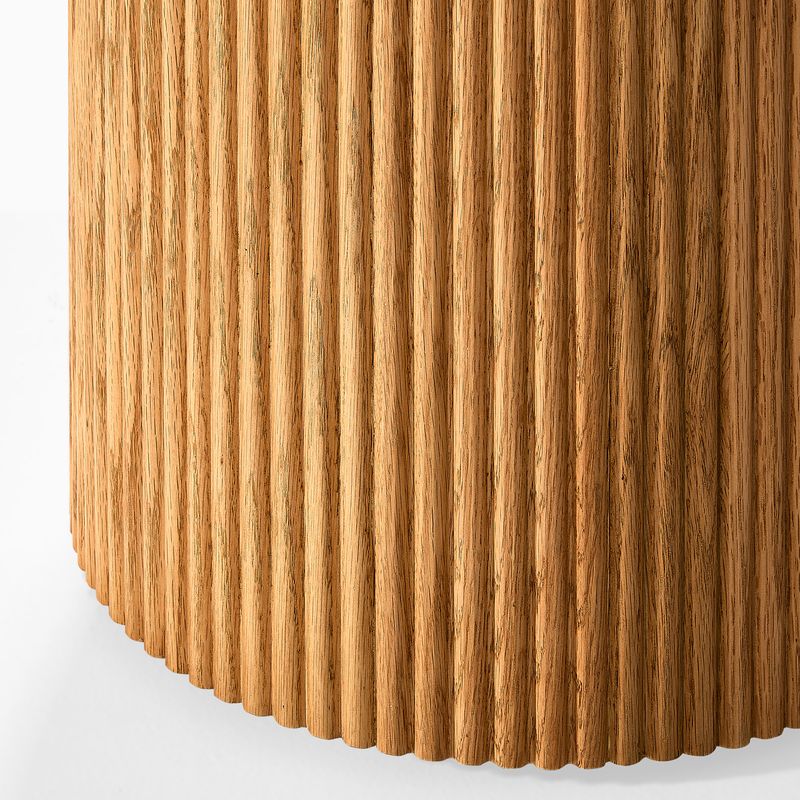
Hernest offers oval dining tables in 72-inch and 84-inch sizes, with designs featuring warm wood finishes, honed engineered stone, fluted details, and sculptural bases. Whether you need a table for everyday dining or a larger centerpiece for hosting, these options make it easier to find an oval dining table that fits your space, seating needs, and personal style.
Read More
A Softer Shape Without Giving Up Usable Space
An oval table can be a smart choice when you like the length of a rectangle but want less visual rigidity. The rounded ends eliminate sharp corners that can project into walkways, which can be helpful in open-concept rooms or narrower dining areas.
The important distinction is that an oval table does not necessarily have a smaller footprint than a rectangular table with similar dimensions. Its advantage comes from how that footprint interacts with the surrounding space. A curved end can make a passage feel easier to navigate, particularly when the table sits near a doorway, kitchen island, or frequently used walkway.
Built for Everyday Dining
The best oval dining tables are not simply about appearance. They need to accommodate the way you actually use your dining area.
A 72-inch table can be a practical starting point for four to six diners, while an 84-inch design provides additional tabletop space for serving dishes, place settings, and guests. Actual seating capacity depends on the table's width, chair dimensions, base design, and how much personal space you prefer.
Before choosing a size, measure the room and consider your chairs as part of the equation-not as an afterthought.
How to Choose the Right Oval Dining Table Size
Start with the available floor space, then determine how many people you normally seat. This approach prevents a common mistake: choosing a table based only on its seating capacity and discovering later that there is not enough room to pull out chairs comfortably.
As a practical planning benchmark, leave about 36 inches between the table edge and nearby walls or furniture. This gives seated diners room to move their chairs and provides a reasonable passage around the dining area. If people regularly walk behind occupied chairs, additional clearance is worth planning for.
Also measure door swings, cabinets, adjacent furniture, and other high-traffic areas before ordering.
Oval Dining Table for 4: A Compact Everyday Choice
An oval dining table for 4 can work particularly well in a breakfast nook, apartment dining area, or smaller open-plan space. Four people do not necessarily need a large tabletop, so choosing a proportional size can leave more room for movement.
Pay attention to the base as well as the tabletop. A pedestal design can eliminate corner legs and make chair placement more flexible. With a four-leg table, check where the legs sit relative to the chairs you plan to use.
If four people are your normal household size but you occasionally host, an extendable design can provide additional flexibility without requiring a large everyday footprint.
Oval Dining Table for 6: A Versatile Sweet Spot
For many homes, an oval dining table for 6 offers a useful balance between capacity and room size. A 72-inch oval is a common starting point for six people, although the exact seating capacity varies by tabletop width, chair size, and base configuration.
Think beyond the number of chairs. Six narrow dining chairs can fit differently from six wide upholstered chairs or armchairs. Serving dishes also take up valuable tabletop space, so a table that technically seats six may feel more comfortable when it has a little extra length or width.
72-Inch vs. 84-Inch Oval Dining Tables
Choosing between 72 and 84 inches usually comes down to how often you host and how much floor space you have available.
A 72-inch oval dining table is a practical choice for everyday dining when four to six people are the usual group. It provides enough length for a comfortable family meal while remaining easier to fit into a moderately sized dining area.
An 84-inch oval dining table gives you more room to spread out. The extra length can be useful for larger gatherings, serving-heavy meals, or households that prefer generous spacing between place settings. The trade-off is simple: an 84-inch table needs more surrounding space, so do not judge fit by tabletop length alone.
Whichever size you choose, measure the complete dimensions of the table and account for chair depth, chair width, and clearance around the dining area.
Find a Modern Oval Dining Table for Your Home
A modern oval dining table can make a room feel current without making it feel stark. The most successful designs usually rely on proportion, material, and a well-resolved base rather than excessive decoration.
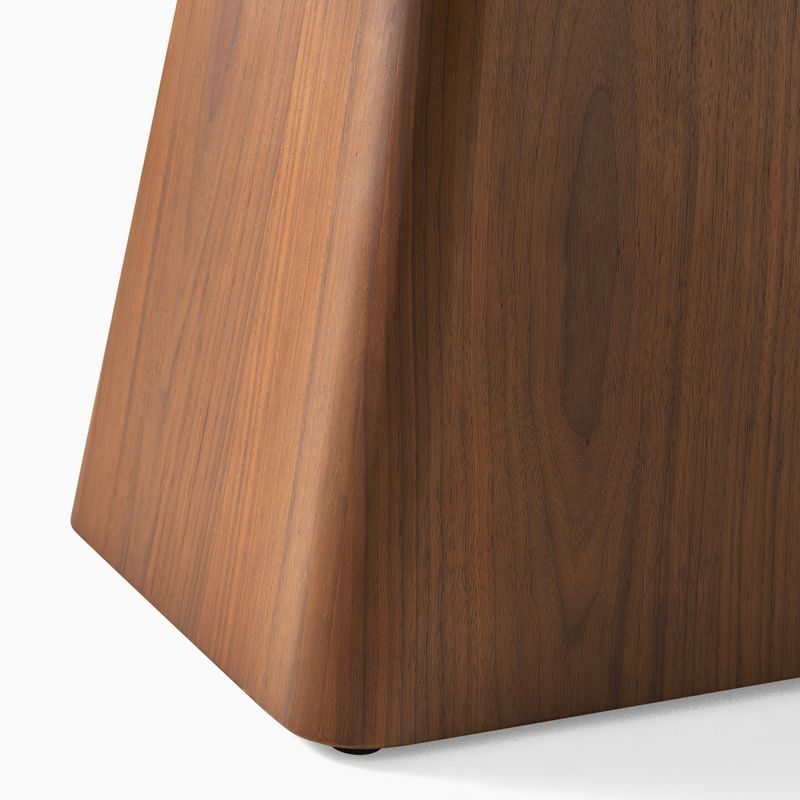
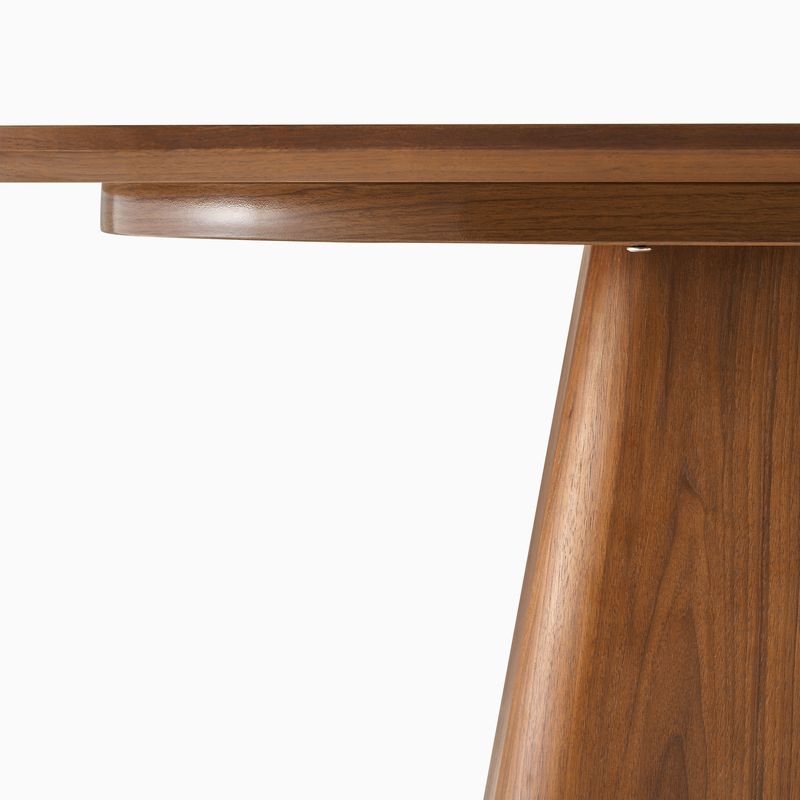
Hernest takes a material-focused approach to oval dining furniture. Depending on the design, the collection includes natural-looking wood finishes, deeper wood tones, honed engineered stone surfaces, fluted details, and sculptural pedestal bases. These elements allow the table to become a focal point while still working with the rest of the room.
Wood for Warmth and Everyday Character
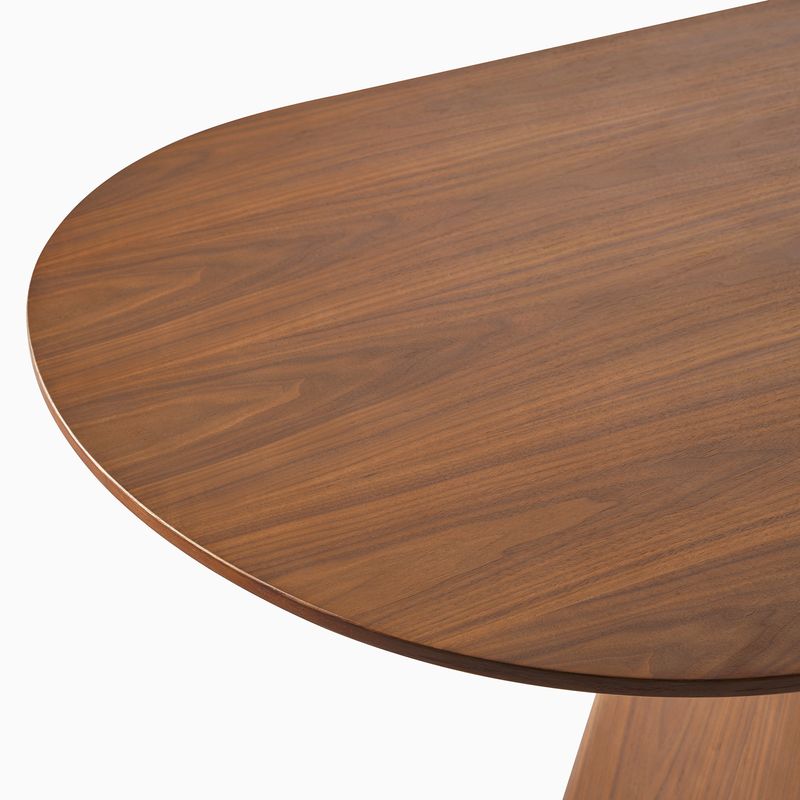
Wood is a natural fit for a dining area because its grain and finish add warmth without requiring additional decoration. Lighter oak tones can keep a room feeling open, while richer wood finishes create more contrast against lighter walls, upholstery, or flooring.
When comparing oval dining tables, look at the finish as carefully as the silhouette. A tabletop may have the right dimensions but still feel out of place if its tone clashes with your existing floors, cabinetry, or other furniture.
Engineered Stone for a More Refined Surface
Engineered stone can give an oval dining table a more substantial visual presence. A honed surface, for example, can introduce subtle variation and texture without the high-gloss appearance of a polished finish.
Because surface materials differ in their care requirements, always follow the specific manufacturer's cleaning and maintenance instructions. Everyday dining can involve spills, heat, and moisture, so understanding the care requirements before purchase is part of choosing the right tabletop.
Pedestal Bases for More Flexible Seating
The tabletop gets most of the attention, but the base can make a noticeable difference in everyday use.
Pedestal oval dining tables can provide more flexibility around the seating area because diners do not have to work around four separate corner legs. This can be particularly helpful when chairs are repositioned for guests or when people sit closer to the curved ends.
A sculptural base can also give the table a stronger visual presence from different angles, which matters when the dining area is visible from the kitchen or living room.
Do Oval Tables Take Up Less Space?
Not necessarily. An oval and rectangular table with similar length and width can occupy a similar amount of floor space.
The difference is how the space around the table functions. Rounded ends remove sharp corners, which can make circulation feel smoother and reduce the chance of bumping into a projecting corner when walking through the room.
For example, an oval table may work well when one end sits close to a frequently used walkway. The curved edge can make that transition feel less abrupt than a rectangular corner. But the table still needs adequate clearance for chairs and movement.
So, when comparing oval dining tables for a smaller room, focus on the full footprint and surrounding clearance, not simply the shape.
How to Style Oval Dining Tables
Once the size and layout are right, keep the styling relatively simple. The curved silhouette is already a visual feature, so you do not need to cover the tabletop with accessories.
Choose Chairs With the Table
Chair dimensions can change the seating experience considerably. Six compact side chairs will occupy less space than six wide armchairs, even when used around the same table.
Consider chair width, seat depth, and arm height before buying. A pedestal base can make positioning easier, while a table with multiple legs requires closer attention to where those legs fall in relation to the chairs.
Give the Table Room to Breathe
A rug can help define the dining zone in an open floor plan, but it should extend beyond the tabletop far enough that chairs remain supported when pulled away from the table.
Lighting can reinforce the table's elongated shape. A linear pendant or appropriately scaled fixture can visually connect with the length of an oval tabletop, while a centered fixture can draw attention to the table's base.
The main goal is proportion. Avoid choosing a light fixture or rug solely because it looks good on its own; consider how its size relates to the table and the surrounding furniture.
Why Choose Hernest Oval Dining Tables?
Hernest oval dining tables are designed around practical proportions, distinctive materials, and everyday usability. The collection includes 72-inch and 84-inch silhouettes, giving you options for more compact four-to-six-person dining as well as larger gatherings.
Material choices include warm wood finishes and honed engineered stone, while details such as fluting and sculptural bases add visual character. These features make it possible to choose based on more than size alone.
If you are deciding between an oval dining table for 4 and an oval dining table for 6, begin with the room dimensions and your usual seating needs. From there, consider tabletop material, chair placement, and the amount of space you want around the table.