Last week, a friend came over for dinner. As we settled into the living room with our wine, I watched her do something I'd seen a dozen times before without really noticing: she grabbed the throw pillow from the corner of the sofa and wedged it behind her lower back.
She shifted. She adjusted. She smiled and said, "I love this space. It's so beautiful."
But I knew what she wasn't saying: Your sofa is gorgeous, but it's killing my back.
In that moment, I understood something I'd been ignoring for years. We spend so much time curating the look of our homes—the right coffee table book, the perfect artisanal vase—that we've collectively forgotten that our homes are meant to hold us. Literally. Physically.
For a long time, I thought the problem was me. My posture. My height. My "weird" habit of never feeling quite comfortable. But after talking to more people—friends, colleagues, even strangers at dinner parties—I realized something: this isn't a personal problem. It's a design problem. And it's affecting more people than we care to admit.
This brings us to a question that seems simple but is surprisingly hard to answer: what is the most comfortable sofa?
If you search that phrase, you'll find thousands of results—lists, rankings, "expert" opinions—but most of them miss the point entirely. They focus on aesthetics, brand names, or subjective "softness." True comfort isn't about how a sofa looks in a showroom. It's about how it supports your body, hour after hour, day after day, without you ever having to think about it.
It's Not Your Fault: The Unspoken Discomfort We All Share
When I started asking around, the stories poured out.
A colleague confessed she never sits in her own living room anymore—she gravitates to the kitchen table because the sofa is too deep and leaves her neck craned. A neighbor admitted that every time guests leave, the first thing she does is rearrange the pillows, trying to find a configuration that actually supports her. Another friend, a new mom, told me she's stopped having people over altogether because her dining chairs are so uncomfortable that no one stays past dessert.
We all laughed about these stories, but underneath the humor was a shared frustration: our homes—the places we spend the most money and emotional energy on—are failing us.
We've been sold a version of home that prioritizes aesthetics over ergonomics, trends over tactility, and "photo-ready" over "body-ready." We scroll through Pinterest and Instagram, saving images of sleek sofas and minimalist dining sets, believing that if we just replicate that look, we'll finally feel settled. But when we do, we find ourselves doing the same thing my friend did: propping pillows, shifting uncomfortably, and wondering why we feel more at ease in a worn-out armchair at a café than in our own living room.
This isn't about taste. It's not about how much you spent, or whether you followed the right trends. It's about something much more fundamental: the relationship between your body and your space.
The "Pelvic Floor" of Your Home: What We Ignore Until It Fails
To understand why this happens, we have to look at something we rarely talk about: the structural, invisible systems that keep our spaces—and our bodies—functioning.
If you think about it, the way we treat our homes is eerily similar to how we used to treat postpartum health. For generations, women were told that leaky bladders, back pain, and core instability were just "part of being a mom." You endured it. You didn't talk about it. You assumed the problem was you.
We now know better. We now know that pelvic floor dysfunction isn't a character flaw—it's a physiological issue with clear causes and effective solutions.
Your home has a "pelvic floor," too. It's the unseen foundation of your daily comfort: the support system that holds you up without you having to think about it. And just like pelvic floor health, when it's compromised, the effects are subtle at first—until they become impossible to ignore.
Here are the three invisible pillars of home comfort that most of us overlook until they fail:
| Pillar | What It Does | Signs It's Failing |
|---|---|---|
| Seating Ergonomics | Supports spine alignment, distributes weight evenly, encourages natural posture. | You constantly shift positions, use pillows for back support, or feel stiff after sitting for 30 minutes. |
| Material Comfort | Provides the right balance of softness, breathability, and tactile warmth. | You avoid direct contact with the fabric, or you cover furniture with blankets to make it feel less "cold" or "slick." |
| Spatial Flow | Allows movement without thought; rooms feel intuitive and easy to inhabit. | You find yourself bumping into things, navigating awkward pathways, or avoiding certain areas of the room. |
When these pillars are strong, you don't notice them. You just feel good. You linger. You sprawl out with a book. You host dinners that go on for hours because no one wants to leave.
When they're weak, you adapt. You compensate. You throw pillows, rearrange furniture, and slowly, unconsciously, start using your home less and less.
How Modern Design Lost Its Way
How did we get here? It's not because designers don't care about comfort. It's because for the past decade, the industry has been obsessed with two things: visual minimalism and fast scalability.
Visual minimalism gave us low-profile sofas that look stunning in photos but offer zero lumbar support. It gave us rigid dining chairs with straight backs and shallow seats—beautiful for a dinner party that lasts an hour, unbearable for the everyday meals that make up real life.
Fast scalability meant furniture was designed to be shipped flat and assembled quickly, often at the expense of structural integrity and ergonomic nuance. A sofa might look identical to a high-end piece, but the internal support system—the springs, the foam density, the seat depth—is fundamentally different.
We ended up with homes that photograph beautifully but function poorly. And because the discomfort builds slowly, we blame ourselves. We think we chose the wrong color, or that we just need to "get used to it."
But you shouldn't have to get used to discomfort in your own home.
Reclaiming Your Space: A New Framework for Comfort
The good news is that fixing this doesn't require a full renovation or a massive budget. It requires a shift in perspective—from decorating for a space to designing for your body.
Here's a simple framework to start with.
1. Audit Your "High-Friction" Zones
Walk through your home and notice where you feel physical friction. These are the places where you adjust, hesitate, or avoid altogether.
The Sofa: Do you sit with your feet flat on the floor, or do you tuck them under you because the seat is too deep? Do you need two pillows behind your back to feel supported?
The Dining Table: Do your shoulders feel tight after a meal? Do you find yourself leaning forward onto the table?
The Workspace (if at home): Is your screen at eye level, or are you craning your neck? Do your wrists rest naturally on the desk?
Make a list. These are your priority areas.
2. Understand the Three Layers of Comfort
Comfort isn't one thing. It's a hierarchy. Most of us only address the top layer.
| Layer | Description | Examples |
|---|---|---|
| Layer 1: Support | The foundational structure that determines how your body is held. | Seat depth, backrest angle, cushion density, frame stability. |
| Layer 2: Adaptability | The ability to adjust to different bodies and postures. | Removable cushions, adjustable heights, modular configurations. |
| Layer 3: Sensorial | The tactile experience—how it feels against your skin. | Fabric texture, temperature regulation, breathability. |
If you buy a sofa with poor support (Layer 1), no amount of beautiful fabric (Layer 3) will make it comfortable. Start from the bottom.
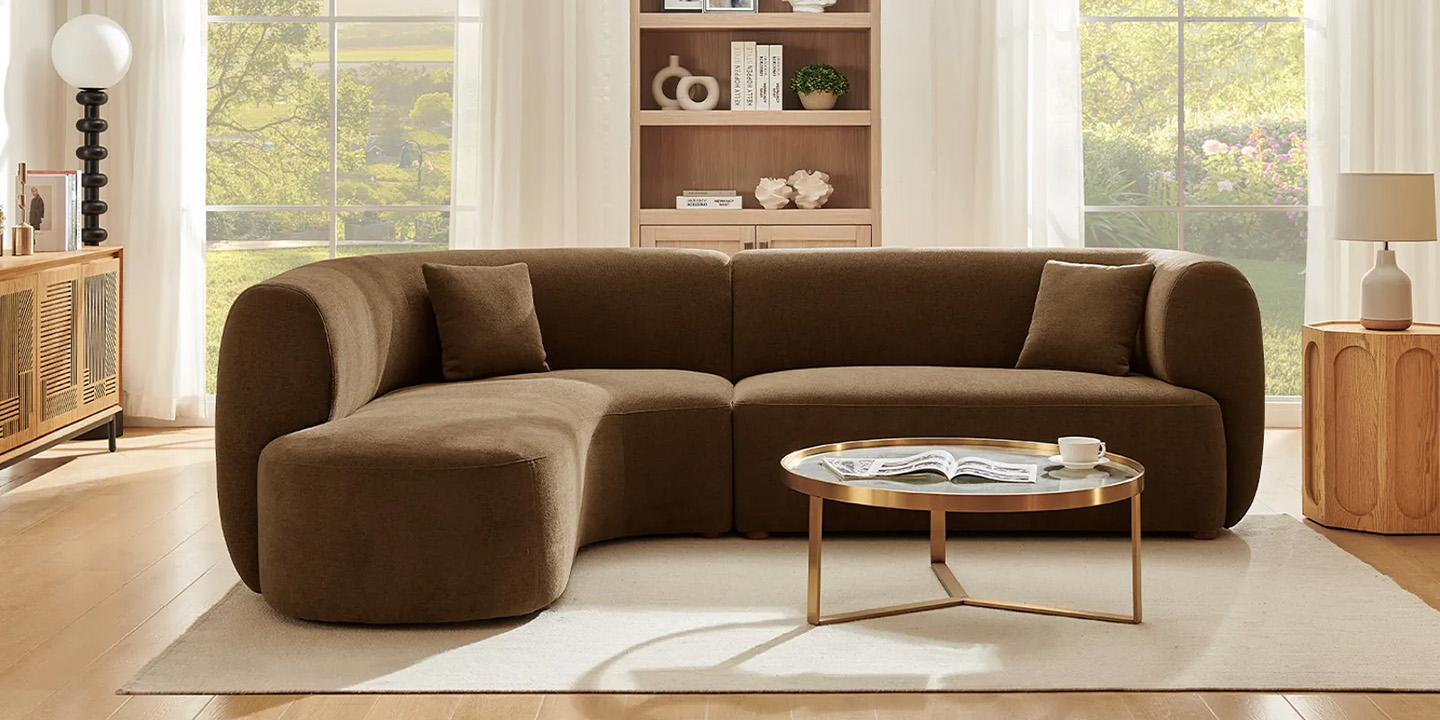
A sofa like the Krono Chaise Sectional from HERNEST exemplifies this foundation-first approach. Its gently curved silhouette isn't just aesthetic—it's ergonomic. The organic form cradles the body naturally, while the modular design allows you to configure it to your space and posture. The spacious chaise section offers a dedicated zone for full-body support, making it a piece you sink into, not onto.
3. Prioritize Longevity Over Novelty
One of the biggest shifts you can make is to stop buying furniture as if it were fashion. A sofa shouldn't be a seasonal trend. It should be an anchor—something that supports your life for years.
That means looking beyond aesthetics and asking questions like:
What is the foam density? (Higher density = longer-lasting support.)
What is the frame construction? (Solid wood frames outperform engineered wood over time.)
Can cushions be replaced or rotated over time?
Does the depth work for the range of bodies that will use it?
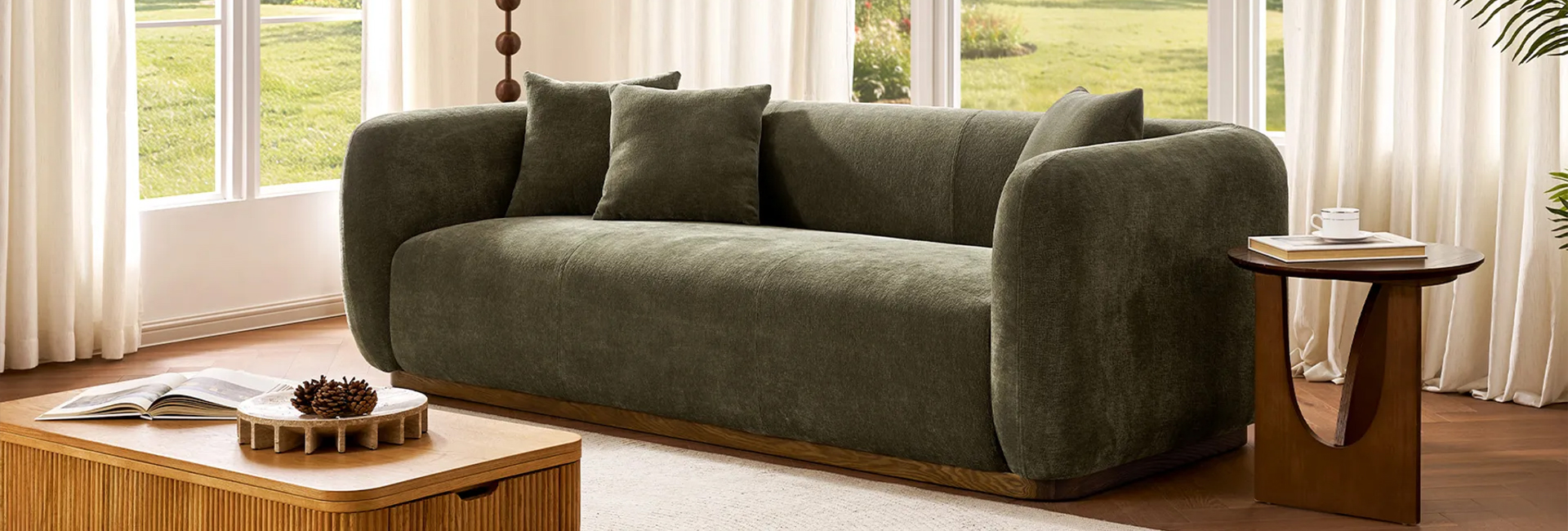
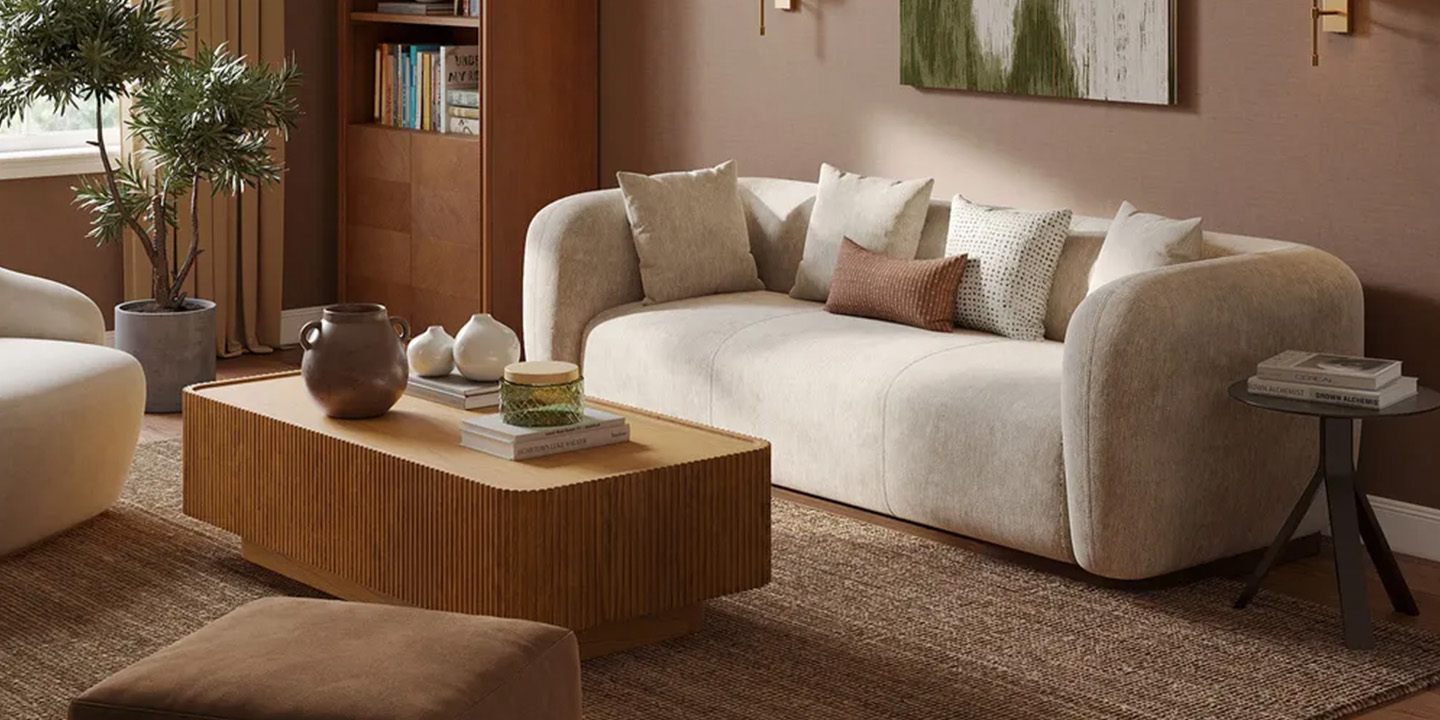
For those who value both deep-seated relaxation and enduring materials, the Jade Sofa offers a compelling balance. Its low-profile, deep-seat design encourages a lounging posture that many find essential for true comfort. Wrapped in performance-grade chenille, it delivers a soft, inviting texture without compromising durability. Paired with a recessed solid wood base, it's built to support real life—not just look good for a season.
A Better Way: Designing for Real Life
This is where thoughtful design comes in. When you start looking for furniture that prioritizes your body, you realize that the best pieces aren't the ones that shout the loudest in a showroom. They're the ones that fade into the background of your life—quietly, consistently, reliably comfortable.
That's the philosophy behind HERNEST. We don't design for Instagram. We design for the actual, messy, wonderful reality of how people live.
That means:
Ergonomics first. Every piece is tested for real-world comfort, not just visual appeal. Seat depths are calibrated for a range of heights. Backrest angles are designed to support, not just look sleek.
Materials that matter. We use natural, breathable fabrics and high-density foams that maintain their structure over time. Comfort shouldn’t degrade after six months.
Spaces, not just objects. We think about how furniture interacts with movement, light, and flow. A room should invite you in, not make you navigate obstacles.
Sometimes, comfort is best experienced in a dedicated spot—a reading nook, a corner by the window. The Mellow Accent Chair is designed for those moments. Its softly rounded proportions and generously cushioned seat create a cocoon-like feel, while the tapered solid wood legs keep the piece visually light. It's a reminder that comfort doesn't have to be bulky; it can be both refined and deeply inviting.
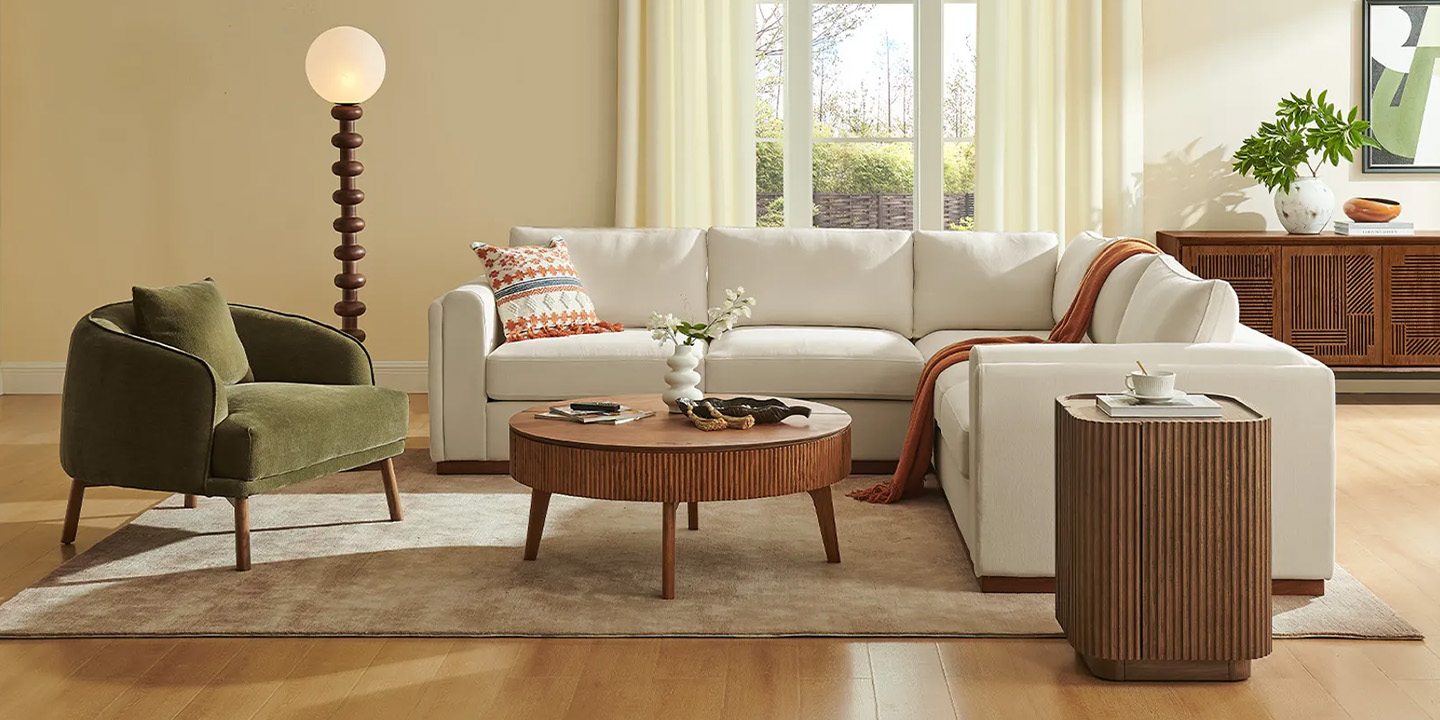
Three Ways to Start Your Comfort-First Space
If you're ready to move beyond the question of what is the most comfortable sofa and into actually finding yours, here's a quick guide to three distinct approaches—each represented by a HERNEST piece designed with layered comfort in mind.
| If You Want… | Consider This Model | Why It Works |
|---|---|---|
| A flexible, sculptural centerpiece for shared living | Krono Chaise Sectional | Modular configuration + curved ergonomics adapt to different postures and spaces. The chaise provides dedicated full-body support. |
| A deep-seat sofa for lounging that balances softness with durability | Jade Sofa | Low-profile, deep seat + performance-grade chenille fabric. Built on a solid wood base for lasting stability. |
| A compact, enveloping accent seat for personal retreats | Mellow Accent Chair | Curved back and plush cushioning create a cocoon-like feel. Tapered wood legs keep the form light and versatile. |
When you prioritize these things, something shifts. You stop thinking about your furniture. You stop rearranging pillows. You stop wondering why you feel off.
You just live.
Frequently Asked Questions on Comfortable Sofa
Q: What is the most comfortable sofa for everyday use?
A: The most comfortable sofa for daily use is one that balances supportive ergonomics with quality materials. Look for a seat depth that allows your feet to rest flat on the floor with your back supported, high-density foam cushions that maintain their shape, and a solid wood frame. Models like the Krono Chaise Sectional and Jade Sofa from HERNEST are designed with these priorities in mind.
Q: How do I know if my sofa is actually comfortable or if I've just gotten used to it?
A: Sit on it with your feet flat on the floor. Your knees should be level with or slightly higher than your hips. If your back isn't supported without a pillow, or if you feel pressure behind your knees, the ergonomics are off. True comfort doesn't require you to "get used to it."
Q: I love the look of low-profile sofas, but they always hurt my back. Is there a way to have both?
A: Yes—look for sofas with a deeper seat that allows you to recline slightly while still offering lumbar support. The key is in the backrest angle and cushion density. The Jade Sofa, for example, achieves a low visual profile while maintaining proper ergonomics through its deep-seat design and high-density cushioning.
Q: What's the most overlooked piece of furniture when it comes to comfort?
A: Accent chairs. People often choose them purely for style, but a well-designed accent chair—like the Mellow Accent Chair—can become a favorite spot for reading or relaxing. Look for a curved back, generous seat cushion, and a stable base.
Q: How often should I replace my sofa?
A: A well-made sofa should last 7–15 years depending on use. The first signs of decline are usually in the cushions (loss of support) or the frame (squeaking, visible sagging). Higher-quality materials—like solid wood frames and high-density foam—will extend this lifespan significantly.
Q: Is comfort more important than aesthetics in furniture?
A: They aren't mutually exclusive. The goal is to find pieces where aesthetics and comfort are considered together from the start. A truly well-designed piece doesn't sacrifice one for the other.
Q: Can I make my existing furniture more comfortable without replacing it?
A: Often, yes. Add a supportive cushion with high-density foam. Replace worn-out filling in sofa cushions. Use a footrest to adjust your seated posture. But if the frame itself is unsupportive or the dimensions don't fit your body, those fixes will only go so far.
Q: Where can I find sofas that prioritize both ergonomics and design?
A: Brands like HERNEST focus on exactly this balance. Models such as the Krono Chaise Sectional, Jade Sofa, and Mellow Accent Chair are designed with layered comfort in mind—from internal support structures to tactile materials—so you don't have to choose between how it looks and how it feels.