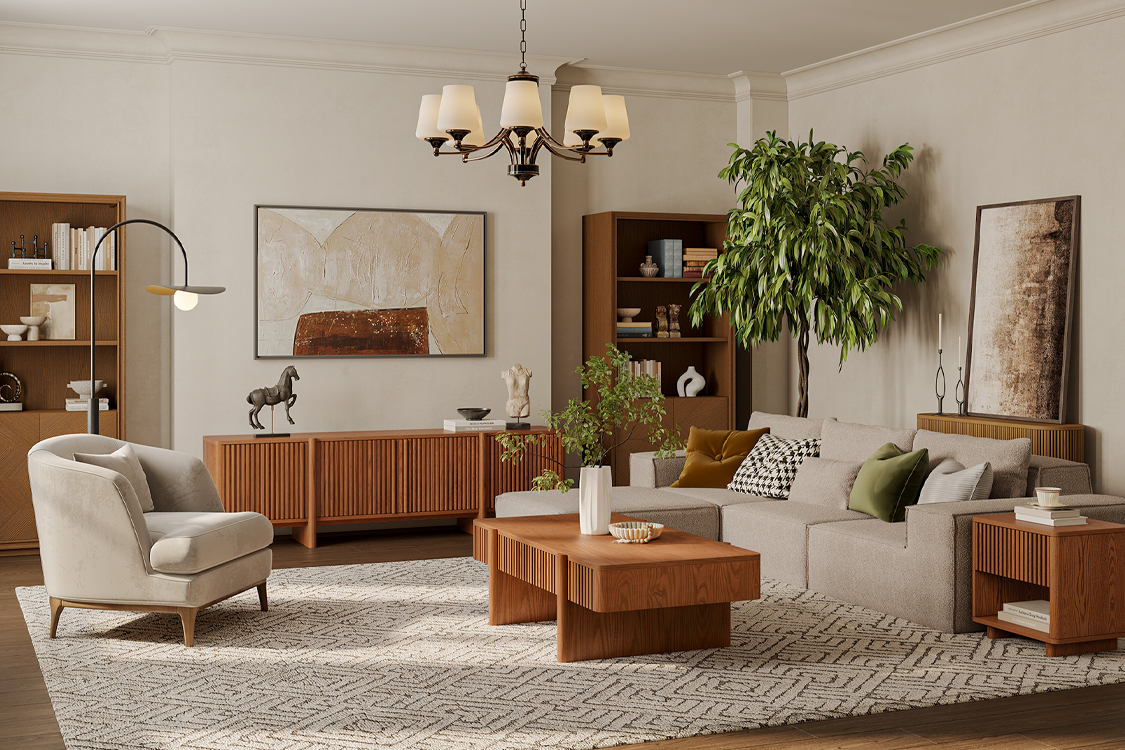
If you’re not sure how to anchor your living room style, there’s one timeless approach designers consistently return to: warm minimalism. No matter how trends shift, this style remains a top choice for interiors that feel calm, elevated, and truly lived-in.
At the heart of a warm minimalist living room is a thoughtfully chosen media console. More than just a TV stand, it visually grounds the space, organizes everyday essentials, and sets the overall tone of the room. This guide walks you through how to choose the right one—focusing on style, texture, and effortless coordination.
What Is Warm Minimalism?
A warm minimalist living room is built on balance. These core elements define the style:
Soft, neutral color palettes: Think warm whites, beiges, sand, taupe, soft greys, and muted browns that layer effortlessly and age beautifully.
Clean, simple silhouettes: Furniture features smooth lines and gentle curves, avoiding heavy ornamentation or overly sharp edges.
Natural materials: Wood, stone, linen, leather, and ceramic bring authenticity and warmth to the space.
Tactile textures: Visual interest comes from texture—fluted wood, woven fibers, brushed grain—not bold patterns or high contrast.
Purposeful styling: Every piece has intention, from storage solutions to lighting placement.
A warm minimalist media console should embody these qualities—quietly anchoring the room without overpowering it.
Warm Minimalism vs. Minimalism vs. Organic Modern
These styles are closely related but offer different moods:
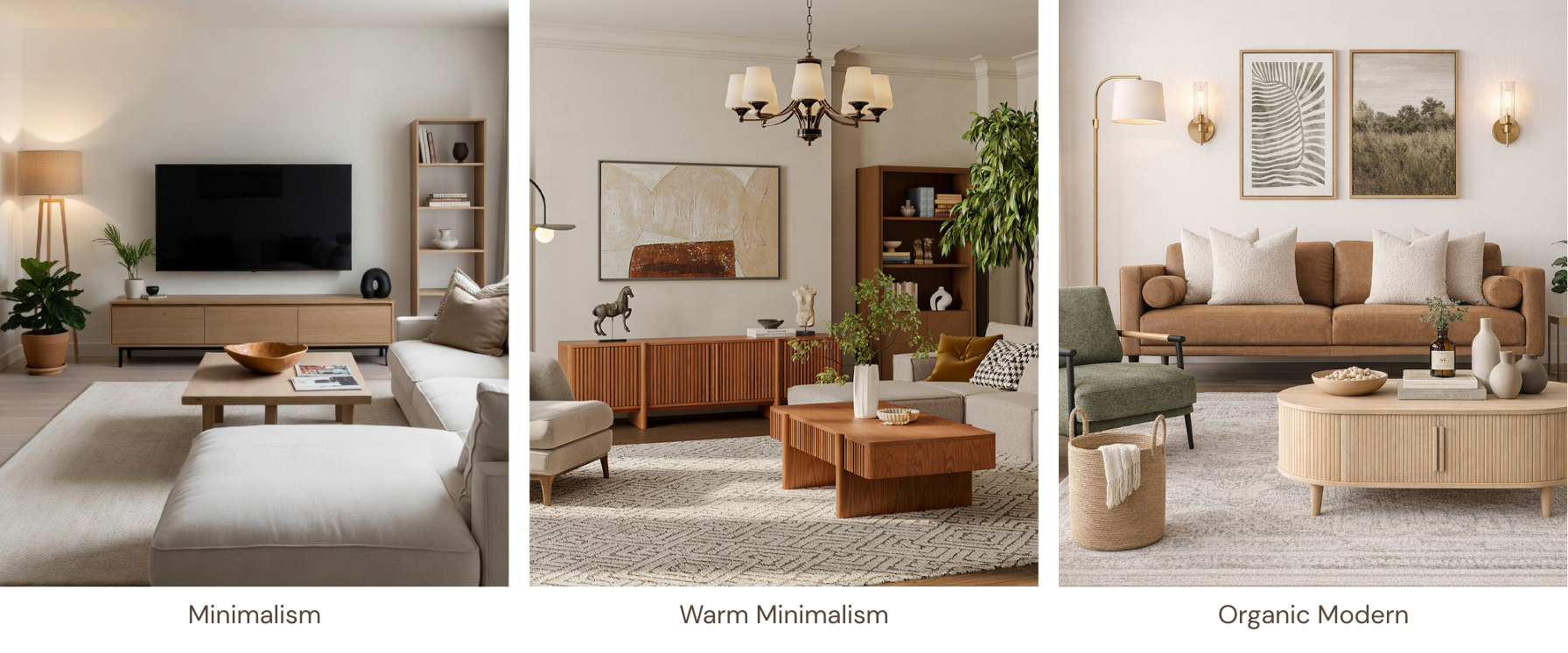
Warm Minimalism: Clean lines softened by warm wood tones, subtle textures, and inviting materials. Calm, balanced, and highly versatile.
Minimalism: More restrained and architectural. Often cooler in tone, with fewer textures and a stronger emphasis on negative space.
Organic Modern: A blend of modern structure and natural influence—clean lines paired with earthy colors, rich textures, and biophilic elements like plants and natural light.
Warm minimalism is the refined, cozy evolution of minimalist design. Compared to organic modern, it relies less on bold material contrast and more on tonal harmony—making it easier to mix, match, and live with effortlessly.
Textures and Tactile Elements That Matter
In warm minimalist interiors, texture does the heavy lifting. The right materials add depth without visual noise.
Natural Wood Grains
Soft oak, ash, or warm brown finishes bring warmth and subtle variation
Wire-brushed or lightly textured wood highlights natural grain
Versatile enough to blend with nearly any interior style
Best for: Creating a calm, timeless foundation.
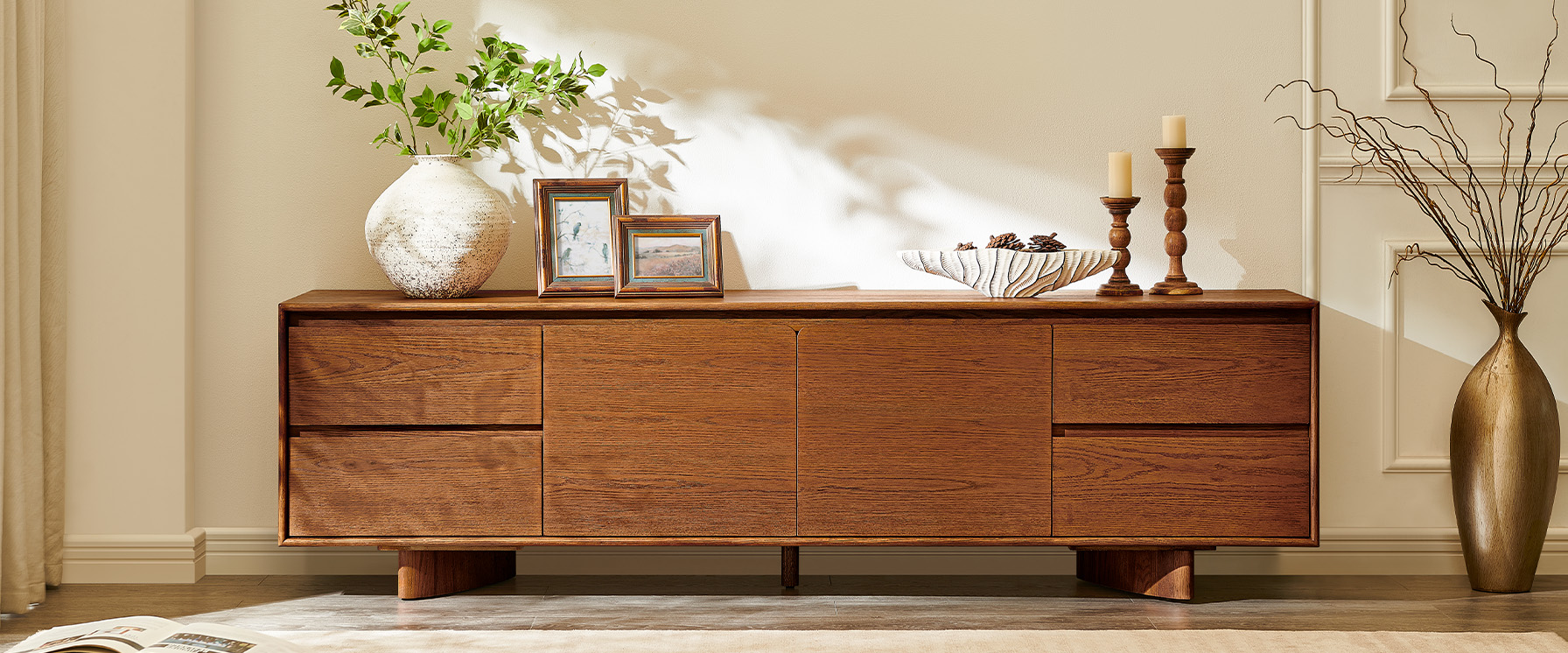
HERNSET's Anton Media Console, finish is wire brushed to highlight its rich grain
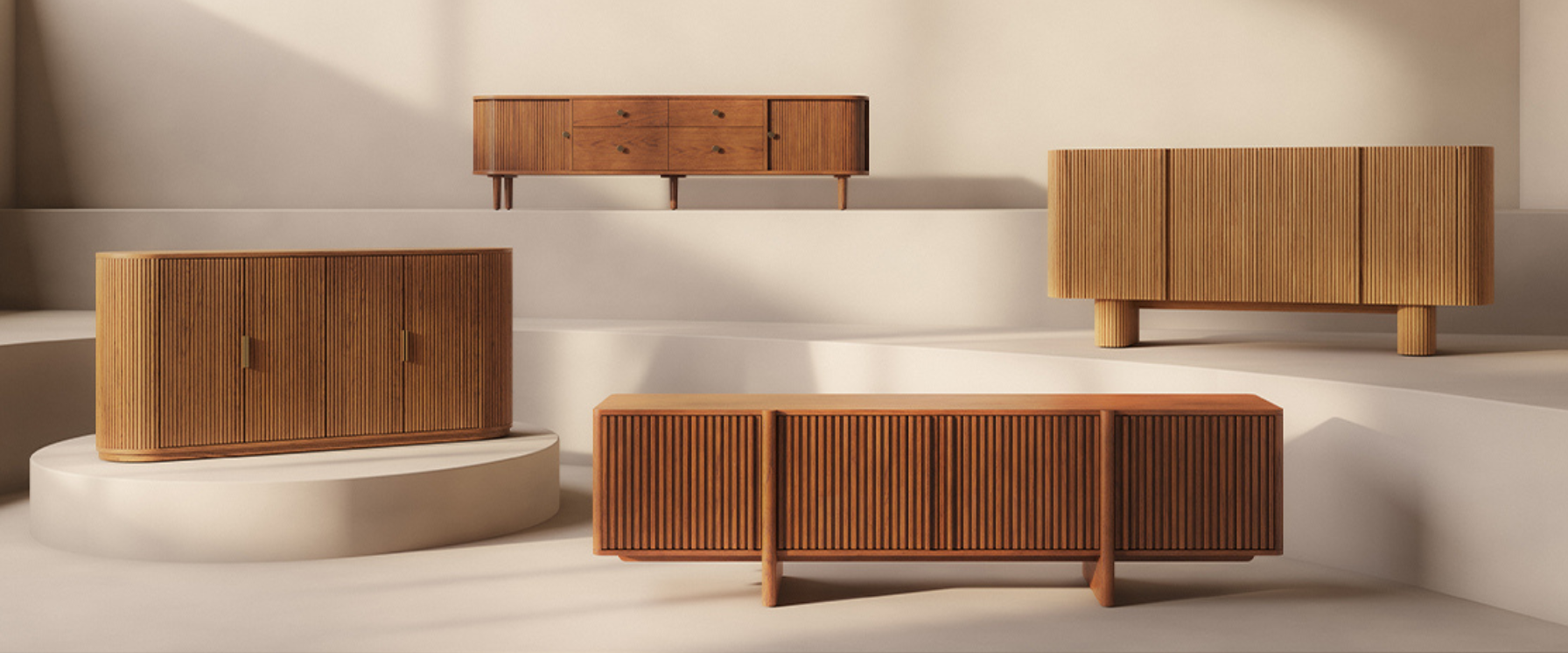
Fluted Wood
Vertical grooves create gentle light and shadow
Adds dimension while maintaining a clean silhouette
Ideal for media console fronts or side panels
Best for: Elevating minimalist furniture with understated sophistication.
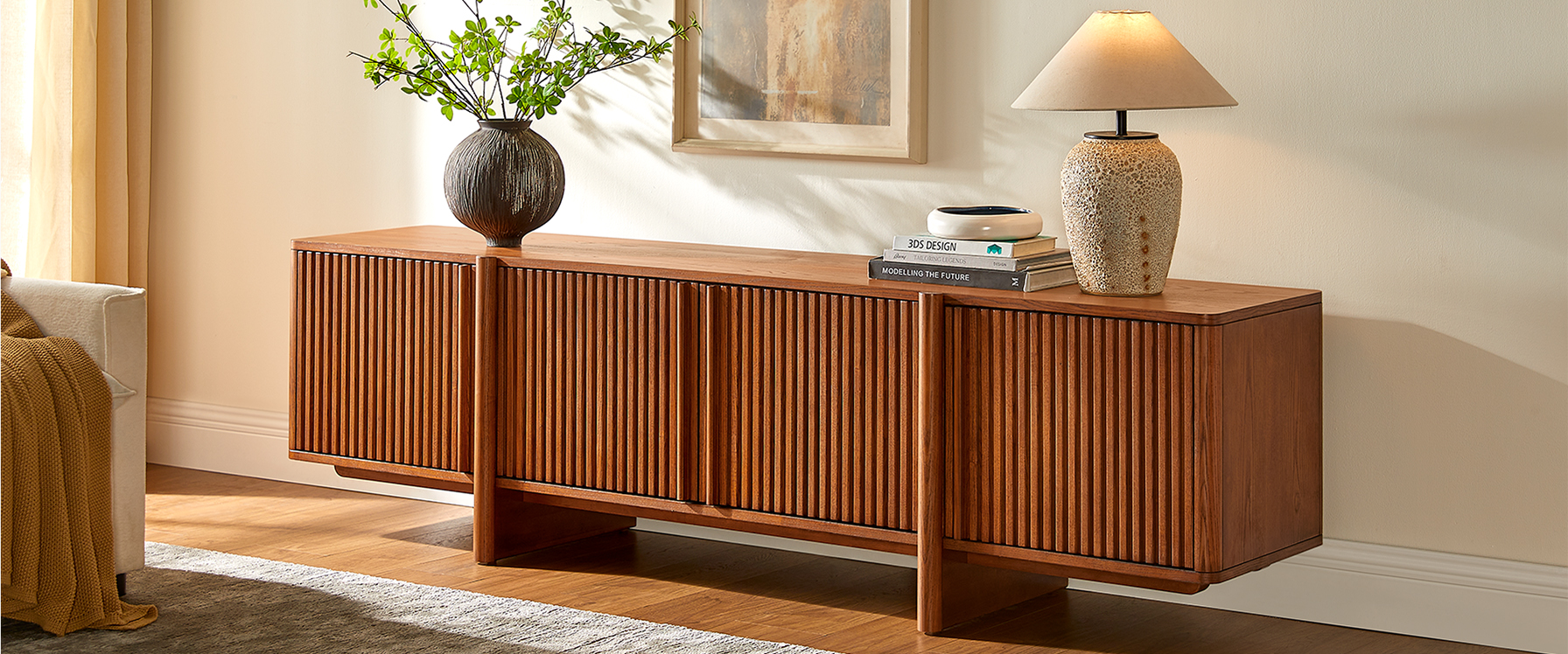 HERNEST's Sabina Ash Wood Media Console, best-selling fluted furniture
Travertine Texture
Imperfect, porous surfaces add an organic, earthy feel
Neutral and tactile without feeling cold or glossy
Pairs beautifully with wood and soft upholstery
Best for: Adding contrast and depth to neutral living rooms.
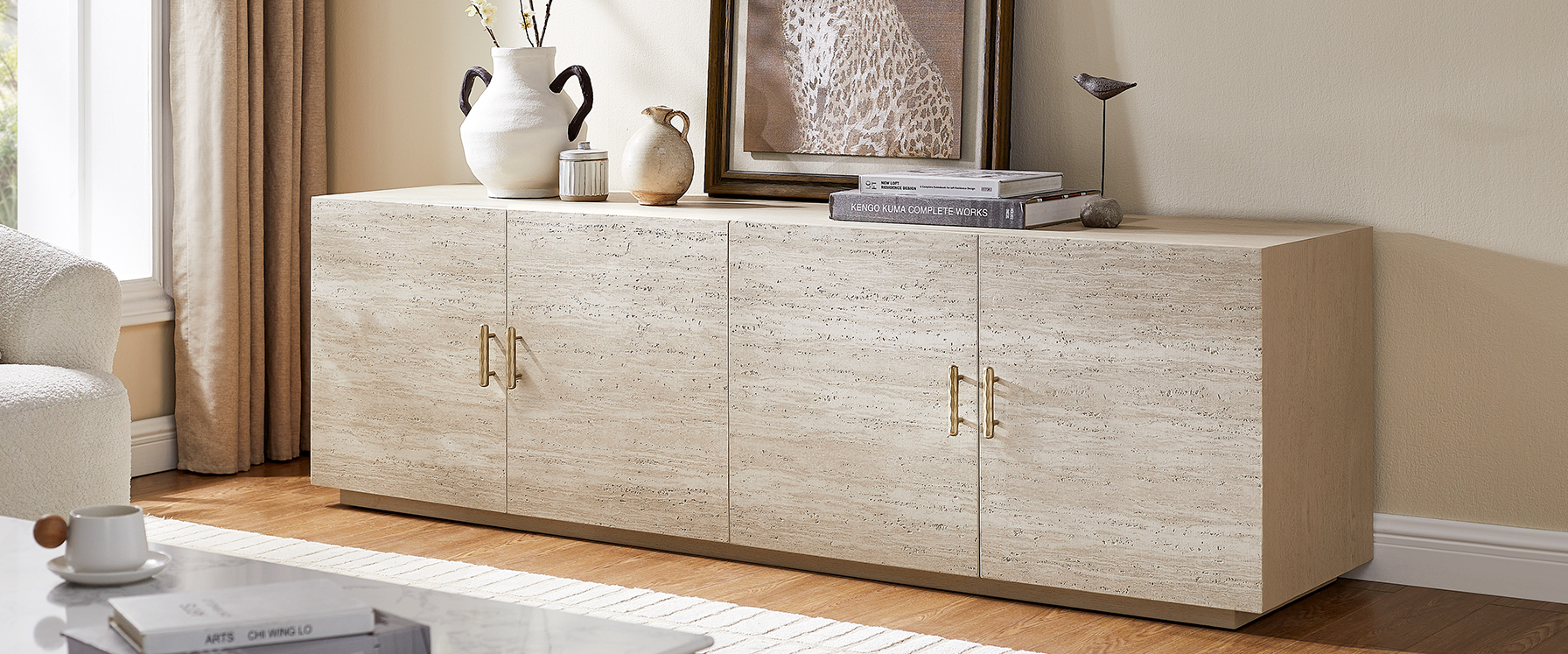 HERNEST's Renata Travertine-Textured Media Console, find serenity in "imperfection"
Rattan and Wood Mix
Introduces warmth and handcrafted character
Lightens the visual weight of solid wood furniture
Adds an airy, relaxed feel without breaking minimalism
Best for: Layering texture in warm, casual minimalist interiors.
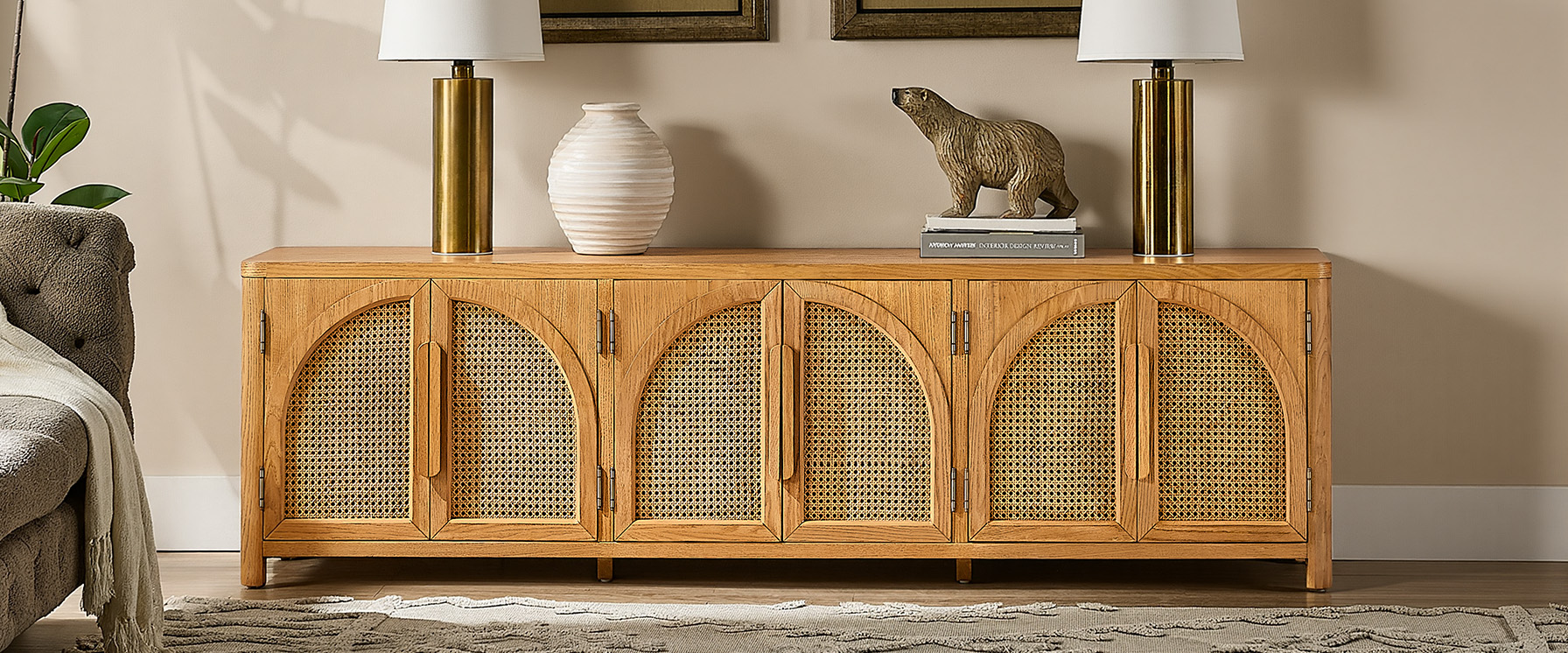 HERNEST's Alvborg Rattan Media Console, merges soft, natural elements with structured refinement, offering a fresh, airy aesthetic
Style Matching Guide: Making It All Work Together
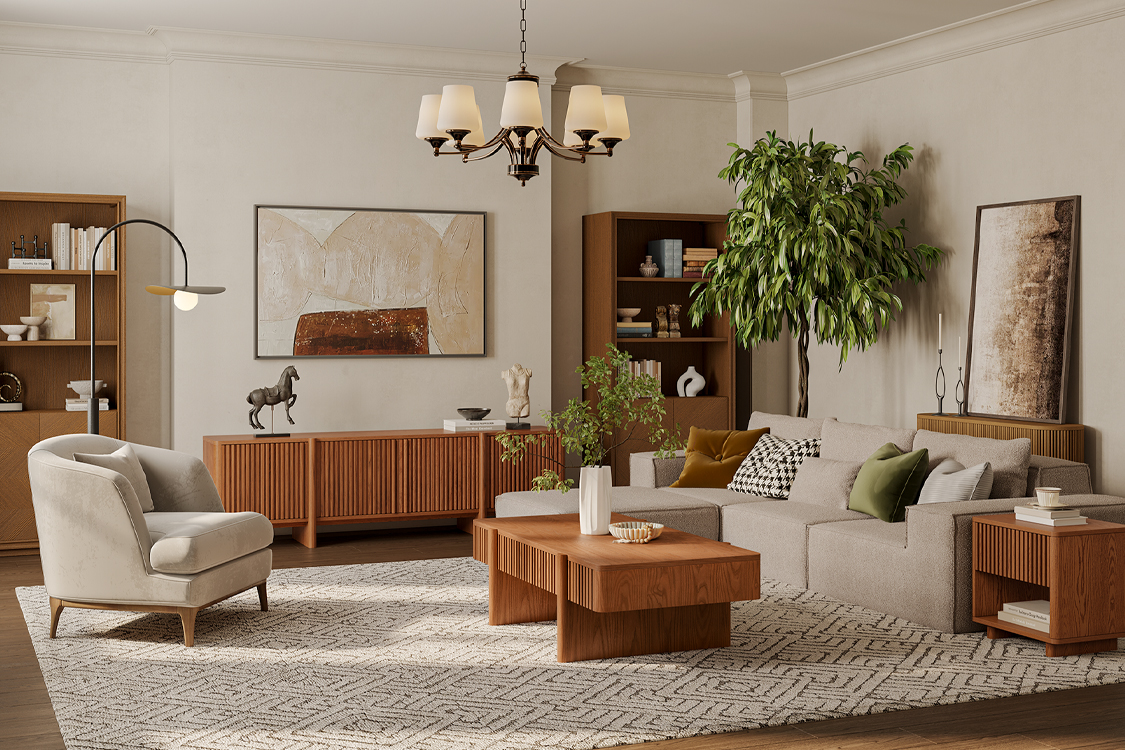
A warm minimalist living room doesn’t require every piece to match perfectly. Cohesion comes from tone, texture, and proportion.
Pair a low-profile sofa with a streamlined media console to keep sightlines open
Match wood tones loosely—similar warmth matters more than identical finishes
Balance smooth surfaces with tactile elements like bouclé seating or woven rugs
Echo materials across the room (wood legs, stone accents, soft metals)
Keep décor minimal and intentional—let materials and craftsmanship speak
The goal is simple: a space that feels cozy, flexible, and easy to live with—where pieces layer naturally and nothing feels overthought or stressful.
FAQs About Media Console
What’s the difference between a media console, TV console, and TV stand?
Media Console: A low-profile, functional piece with storage for electronics, perfect for a warm minimalist space.
TV Console: Focuses more on aesthetics, with less storage, ideal for creating a sleek display.
TV Stand: A simpler, smaller option, mainly for holding the TV with minimal storage.
A media console is the best choice for a warm minimalist living room, offering both style and storage.
How wide should a TV stand or media console be for my TV size?
How wide should a TV stand or media console be for my TV size in a warm minimalist living room?
Your console should be 6–12 inches wider than your TV for balance.
55-inch TV: Console width around 60–70 inches
65-inch TV: Console width around 70–80 inches
75-inch TV: Console width 80 inches+
This ensures a proportionate, sleek look for a warm minimalist setup.
What is fluted furniture?
Fluted furniture refers to pieces that feature vertical grooves in their design, typically on the surfaces of cabinet doors, media consoles, or accent pieces. The vertical lines create a soft play of light and shadow, adding texture and dimension to the furniture.
In a warm minimalist living room, fluted furniture can be used to elevate a simple, clean-lined piece like a media console, providing a subtle yet sophisticated visual interest without overwhelming the space.