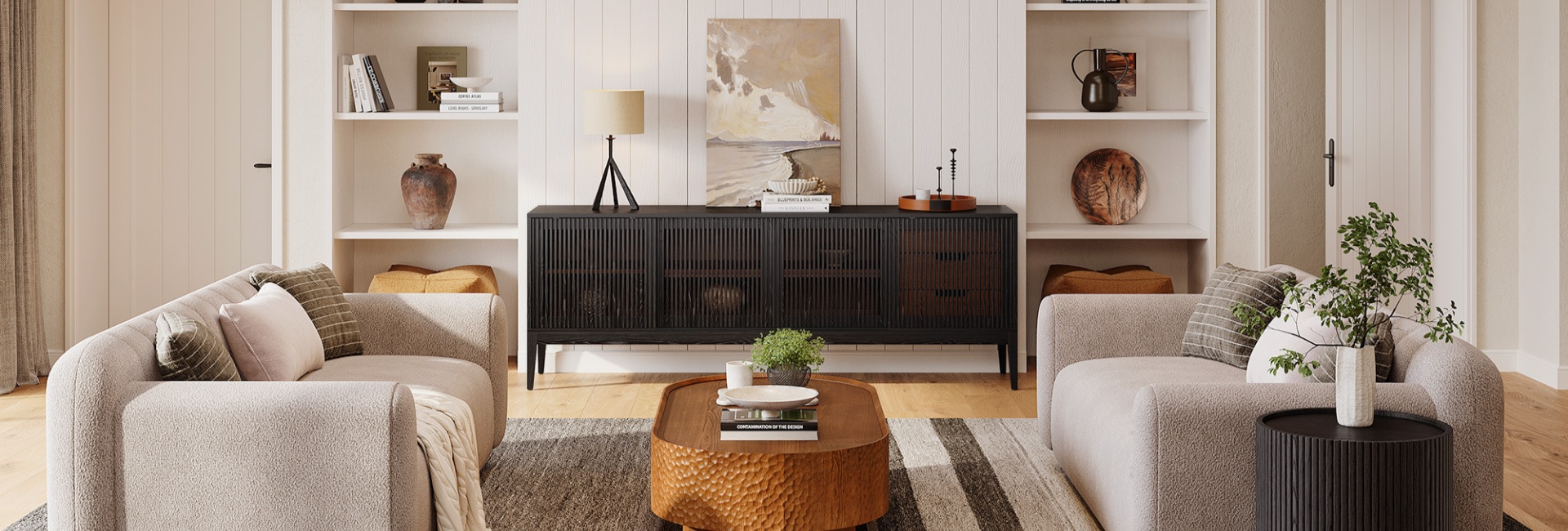
Choosing the right TV stand height can make a noticeable difference in your living room. A console that is too tall may position the screen above your natural line of sight, while one that is too low may make viewing uncomfortable depending on your seating position.
There is no single height that works for every home. Your ideal setup depends on your seated eye level, the actual height of your TV screen, the clearance between the screen and console, and whether you watch from a sofa, recliner, or another seat.
If you're comparing furniture options, browse Hernest's media consoles to explore different widths, finishes, and storage configurations. Prefer retro-inspired details and clean lines? The Mid-Century Modern TV Stands collection offers another place to start.
Before choosing a design, measure your viewing setup to determine how tall your TV stand should be.
Table of Contents
- Why TV Stand Height Matters
- What Is the Ideal TV Stand Height?
- How Tall Should a TV Stand Be for Different TV Sizes?
- Tall TV Stand for 65-Inch TV: When Does It Make Sense?
- 24-Inch-High TV Stand vs. 30-Inch-High TV Stand
- TV Stand Height Calculator: Find Your Measurement
- Wall-Mounted TVs vs. TV Stands: Does Height Still Matter?
- Choosing the Right TV Stand Beyond Height
- TV Stand Options from Hernest
- Final Thoughts
- FAQs
Why TV Stand Height Matters
TV stand height affects more than the appearance of your entertainment area. It influences where the screen sits relative to your eyes, how comfortably you can watch from your usual seat, and how much room you have for other equipment.
If you regularly tilt your head upward or look down at the screen, review your TV placement. Positioning the screen near your seated eye level is a useful starting point, although reclined seating, room layout, and personal comfort can affect the final position.
Remember to account for equipment, too. A soundbar placed between the console and screen can reduce available clearance, while gaming consoles and receivers need enough space for ventilation. Measure these items before settling on a stand height.
What Is the Ideal TV Stand Height?
For many living rooms, a practical starting point is to position the center of the TV screen close to the viewer's seated eye level. This is a guideline rather than a fixed rule, so use your own measurements instead of relying on a standard furniture height.
The following formula helps estimate the appropriate TV stand height.
How to Calculate TV Stand Height
TV stand height = seated eye level − half the TV screen height − screen-bottom offset
Each measurement has a specific meaning:
-
Seated eye level: The distance from the floor to your eyes when sitting in your usual viewing position.
-
TV screen height: The vertical height of the visible screen, measured from its bottom edge to its top edge.
-
Screen-bottom offset: The vertical distance between the top of the console and the bottom edge of the visible screen.
For example, suppose your seated eye level is 42 inches, your TV's visible screen is 32 inches tall, and the bottom of the screen will sit 2 inches above the console.
The calculation is:
42 − (32 ÷ 2) − 2 = 24 inches
In this example, a 24-inch-high TV stand would place the screen center approximately at seated eye level.
The 2-inch offset is an assumption, not a standard clearance for every setup. If your TV rests on its original stand, measure the actual distance between the console surface and the bottom of the visible screen. For a wall-mounted TV, measure the planned clearance above the console.
How to Measure Your Seated Eye Level
-
Sit on your sofa or chair in your usual viewing position.
-
Relax your shoulders and keep your head in a natural position.
-
Measure from the floor to the level of your eyes, asking someone to help if necessary.
-
Repeat the measurement from other seats if you regularly watch TV in different positions.
-
Use your most common viewing position as the starting point.
Measure while seated rather than standing. Your standing height does not tell you where the screen should sit for everyday viewing.
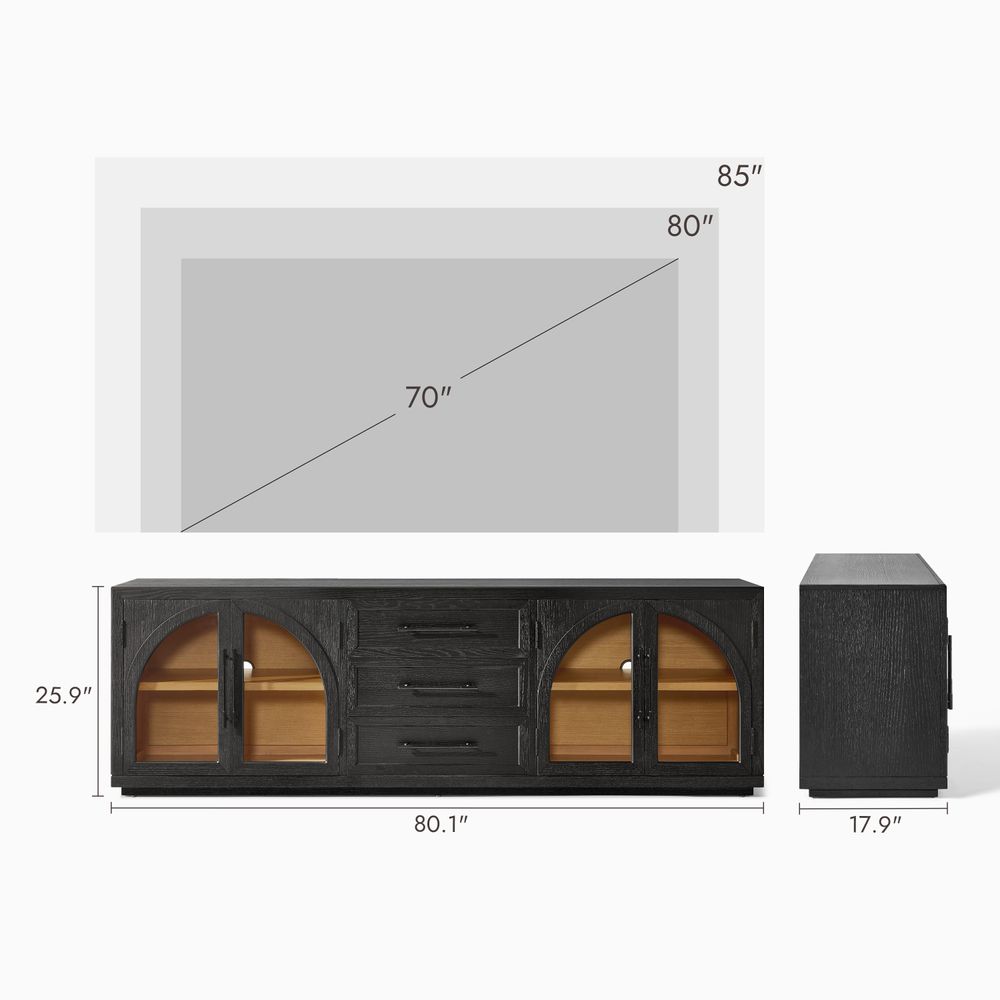
Valborg 80-Inch Oak Media Console
View Product
How Tall Should a TV Stand Be for Different TV Sizes?
Your TV's diagonal size can help you estimate its dimensions, but it does not tell you the exact height of the screen. A 65-inch TV, for example, measures approximately 32 inches high when using a typical 16:9 screen shape, excluding the stand and other external components.
The table below uses approximate screen heights for common 16:9 televisions. The example stand heights assume a seated eye level of 42 inches and a 2-inch gap between the console and the bottom of the visible screen.
These figures are illustrative estimates, not standard recommendations. Actual screen dimensions and seating positions vary, so measure your TV before choosing a console.
The pattern is worth noting: a larger TV does not automatically require a taller stand. If the goal is to keep the screen center near seated eye level, a taller screen may call for a shorter console.
Before purchasing, also check the television's base footprint, the console's usable surface area, and any clearance needed for a soundbar. If you plan to wall-mount the screen, you can choose the console height separately while keeping the overall viewing position comfortable.
Tall TV Stand for 65-Inch TV: When Does It Make Sense?
A tall TV stand for a 65-inch TV can work in some living rooms, but the final screen position matters more than the console height alone.
Consider a 65-inch television with an approximate visible screen height of 32 inches placed on a 30-inch console. If the bottom of the screen sits 2 inches above the console, the center of the screen will be approximately 48 inches above the floor:
30 + 2 + (32 ÷ 2) = 48 inches
If your seated eye level is around 42 inches, the screen center would be about 6 inches above eye level. Whether that position feels comfortable depends on your seating, viewing angle, and personal preference.
A taller console may still suit elevated seating, a raised platform, or a room where the television is often viewed while standing. The important step is to check the actual screen-center height before deciding.
When a 24-Inch-High TV Stand Works Well
A 24-inch-high TV stand can be a useful starting point for a 65-inch TV if your seated eye level is around 42 inches, the screen is approximately 32 inches tall, and the bottom of the screen sits 2 inches above the console.
Under those assumptions, the screen center lands close to seated eye level. A console at this height may also work well in a living room with a standard sofa and a relatively low-profile entertainment setup.
Before buying, check the console's width, depth, and weight capacity. If you plan to add a soundbar or other equipment, make sure the available space works with the television's base and screen position.
When a 30-Inch-High TV Stand Makes Sense
A 30-inch-high console may be more suitable when the viewer sits higher, the screen is smaller, or the room layout calls for a raised viewing position.
It may also provide a useful surface height for decorative objects or a multipurpose living room. However, if the TV sits directly on the console, raising the console raises the screen as well.
If you're considering a 30-inch stand for a 65-inch television, calculate the screen-center height first. In the example above, the screen center sits approximately 48 inches above the floor, which is 6 inches above a 42-inch seated eye level.
That arrangement may work for some households, but it should not be assumed to suit every sofa or viewing position.
Are Higher TV Stands Always a Problem?
No. Higher TV stands are not inherently uncomfortable. The important consideration is where the screen ends up relative to your usual viewing position.
A higher stand can suit elevated seating or a room where people often watch TV while standing. It may be less suitable for a low sofa if it places the screen well above the viewer's natural line of sight.
If you're unsure about a proposed height, use painter's tape to mark the intended screen center on the wall. Sit in your usual viewing position and assess the placement before committing to a furniture arrangement.
24-Inch-High TV Stand vs. 30-Inch-High TV Stand
The difference between a 24-inch and a 30-inch TV stand is only 6 inches, but it can noticeably change screen placement.
Neither height is automatically better. The right option depends on your seated eye level, the TV's actual dimensions, and the gap between the screen and console.
If you're deciding between the two, calculate the screen-center height for each option before comparing styles and storage features.
TV Stand Height Calculator: Find Your Measurement
Use these steps to estimate the appropriate console height for your living room.
Step 1: Measure seated eye level. Sit in your usual viewing position and measure from the floor to your eyes.
Step 2: Measure the visible screen height. Measure vertically from the bottom edge of the screen to the top. If you only know the diagonal size, check the manufacturer's specifications for the actual screen dimensions.
Step 3: Divide the screen height by two. This gives you the distance from the bottom of the screen to its center.
Step 4: Measure or estimate the screen-bottom offset. For a TV resting on a console, measure the clearance created by its base. For a wall-mounted TV, measure the planned gap above the console.
Step 5: Apply the formula.
TV stand height = seated eye level − half the screen height − screen-bottom offset.
For instance, if your seated eye level is 40 inches, your screen is 30 inches tall, and the gap is 2 inches, the estimated stand height is:
40 − (30 ÷ 2) − 2 = 23 inches
If the result does not match an available furniture height, compare nearby options and recalculate the screen position. Wall mounting may provide more flexibility because the console and television can be positioned independently.
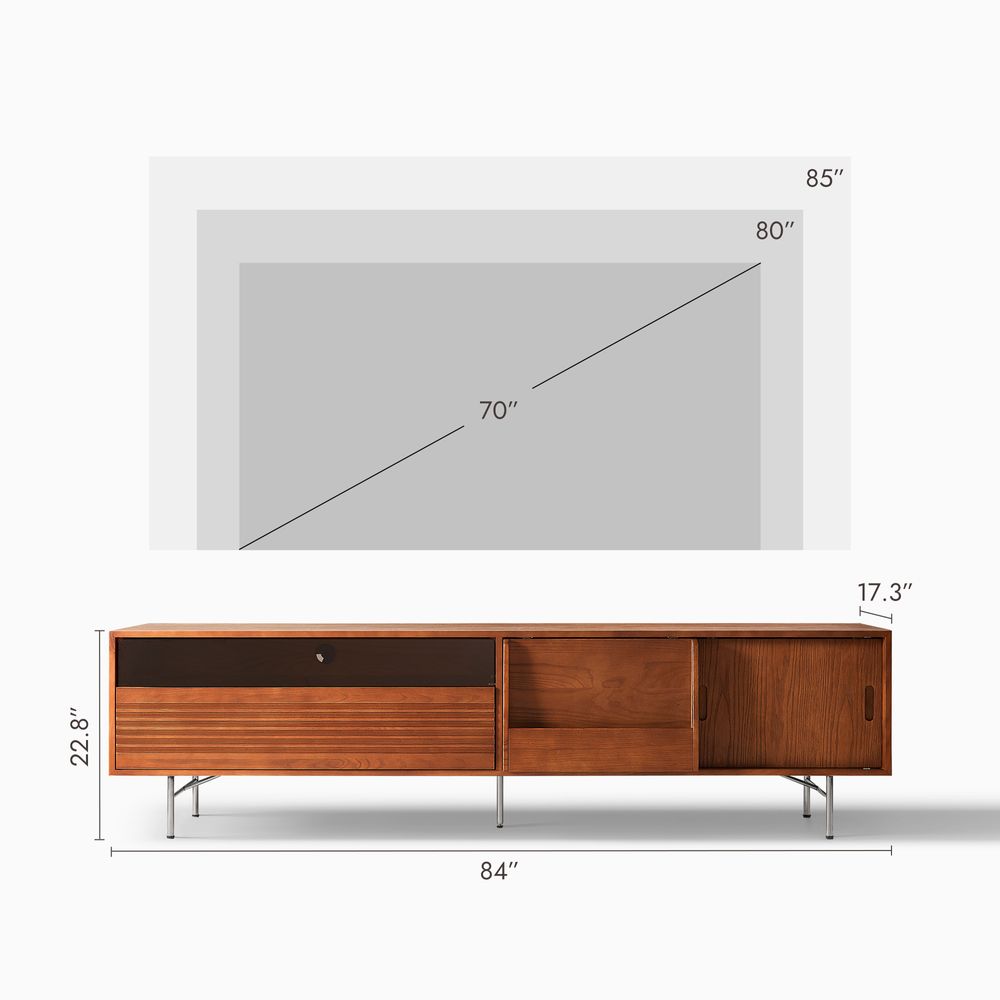
Frode 84-Inch MCM Media Console
View Product
Wall-Mounted TVs vs. TV Stands: Does Height Still Matter?
Yes. Wall mounting allows you to position the screen independently of the console, but viewing height still matters.
This can be useful if you prefer a taller media console for storage but want the screen to remain closer to seated eye level.
Before installing a wall-mounted TV:
-
Measure your seated eye level.
-
Estimate the screen center using the actual TV dimensions.
-
Locate the wall studs and choose a mounting system rated for your television.
-
Account for soundbars, cables, outlets, and connected equipment.
-
Check the proposed position from the seats you use most often.
Avoid mounting a TV high simply because there is open wall space above the console. A screen positioned well above your natural viewing position may be less comfortable during longer viewing sessions.
Choosing the Right TV Stand Beyond Height
Once you have a suitable height range, compare the console's width, depth, storage, and construction. These details determine whether the furniture works with your television and living room.
Check the Console Width
Measure the width of your TV and the wall where you plan to place it. A console that is too narrow may look unbalanced beneath a large screen, while an excessively wide piece can crowd a smaller room.
If the TV will rest on the console, check the manufacturer's requirements for its base and supported weight. The console must provide a suitable surface for the television's feet or pedestal.
Consider Depth and Stability
Compare the depth of the console with the footprint of the TV base. The television should sit securely according to the manufacturer's installation instructions, without an unsupported or unstable arrangement.
If the TV has feet near the outer edges, check both the usable surface width and depth before purchasing.
Account for Soundbars and Other Equipment
Measure your soundbar before choosing a console. Confirm that it will not obstruct the screen or remote-control sensor and that there is enough space for the equipment to sit securely.
Gaming consoles, receivers, and other electronics may also need room for ventilation. Check the console's storage dimensions and cable openings against the devices you intend to use.
Choose Storage That Matches Your Needs
Open shelves provide easy access to media devices, while drawers and cabinet doors help keep smaller items out of sight. Cable cutouts can make wire management easier.
Think about the equipment you already own and leave room for anything you expect to add. A console should accommodate your television and everyday electronics without making the entertainment area difficult to use.
TV Stand Options from Hernest
If you're looking for a wide media console with storage, the Hernest Lira 84-Inch Oak Media Console is worth comparing with your room measurements.
The Lira measures 84 inches wide, 18.1 inches deep, and 24 inches high. Its four arched glass doors, three central drawers, adjustable shelves, and four rear cord cutouts provide space for media equipment and living room essentials. The console is designed for TVs up to 85 inches and has a recommended weight capacity of 230 pounds.
Its 24-inch height makes it a useful option to evaluate if you're comparing lower TV stands. Whether it suits your setup depends on the dimensions of your television, the height of its base, and your seated eye level. Measure these details before deciding.
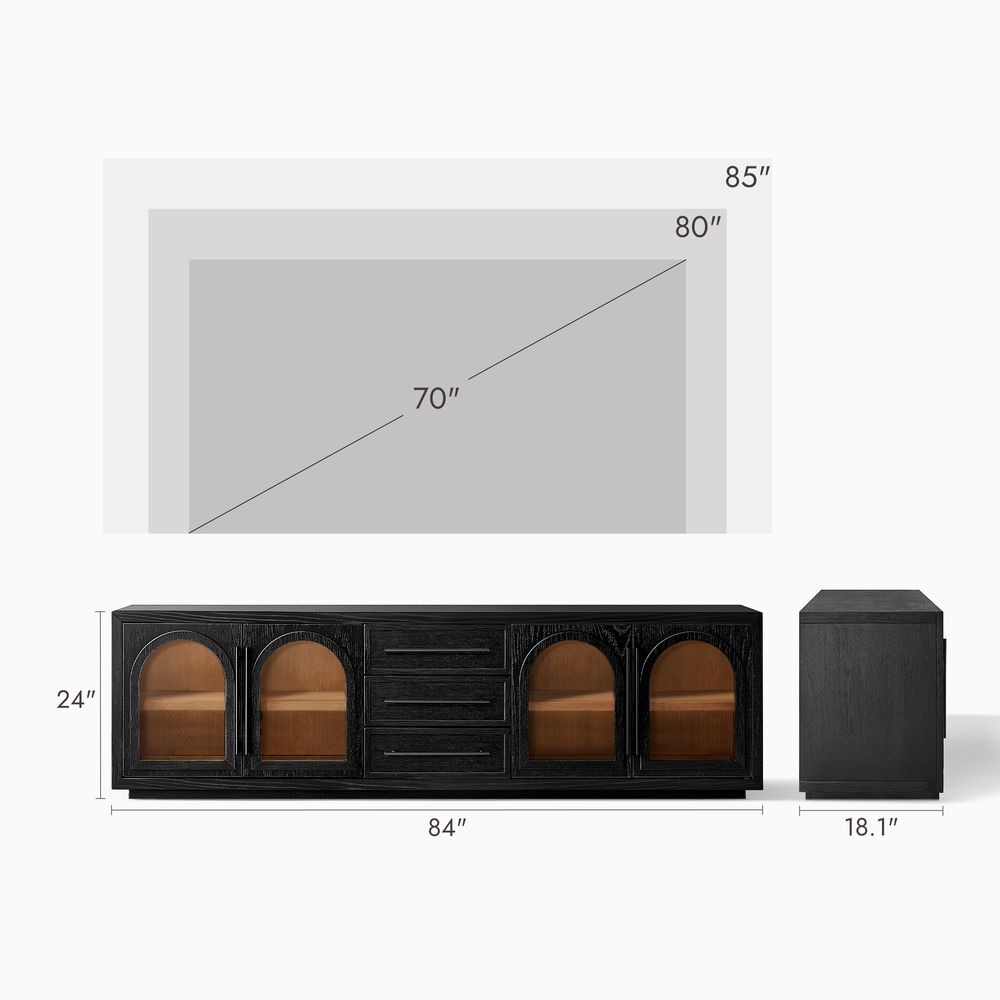
Lira 84-Inch Black Oak Media Console
View Product
Final Thoughts
The right TV stand height comes down to the relationship between your seated eye level, screen dimensions, and console clearance. Measure these three factors before choosing furniture, then check the width, depth, storage, and weight capacity.
A 24-inch stand may suit one living room, while a 30-inch stand may work better in another. Use the measurements to narrow your options, then compare designs that fit your space and everyday needs.
FAQs
What Is the Ideal Height for a TV Stand?
The ideal TV stand height depends on your seated eye level, the height of your TV screen, and the gap between the screen and console. A useful starting point is to position the center of the screen near seated eye level. Measure your actual setup rather than relying on one standard height.
Is 16 Inches Too Low for a TV Stand?
Not necessarily. A 16-inch TV stand can work with low seating, a larger screen, or a setup where the screen is positioned appropriately for seated viewing. The important question is whether the screen center aligns comfortably with your viewing position. Calculate the height before ruling out a low console.
Is 32 Inches Too Tall for a TV Stand?
A 32-inch TV stand may be too tall for some standard sofa arrangements, especially when a large television rests directly on top. However, it can work with higher seating or different viewing needs. Calculate the final screen-center height before deciding.
Is It Better for a TV to Be Too High or Too Low?
Neither is ideal for every situation. A screen that sits too high may encourage you to tilt your head upward, while one that sits too low may require you to look downward. Aim for a position that feels natural from your usual seat, taking your seating style and personal comfort into account.
How Tall Should My TV Stand Be for a 65-Inch TV?
For a typical 65-inch, 16:9 television with an approximate screen height of 32 inches, a 24-inch stand is one possible starting point if seated eye level is around 42 inches and the screen-bottom offset is 2 inches. Your TV's actual dimensions and seating position may lead to a different result.
Where Can I Find a Good TV Stand for a 75-Inch TV?
Start with Hernest's media console collection. Compare the console's usable width, depth, and weight capacity with your TV's actual dimensions and base footprint. Then calculate the stand height using your seated eye level and the screen's height. A console advertised for a 75-inch or larger TV may fit the television horizontally, but its height still needs to suit your viewing position.