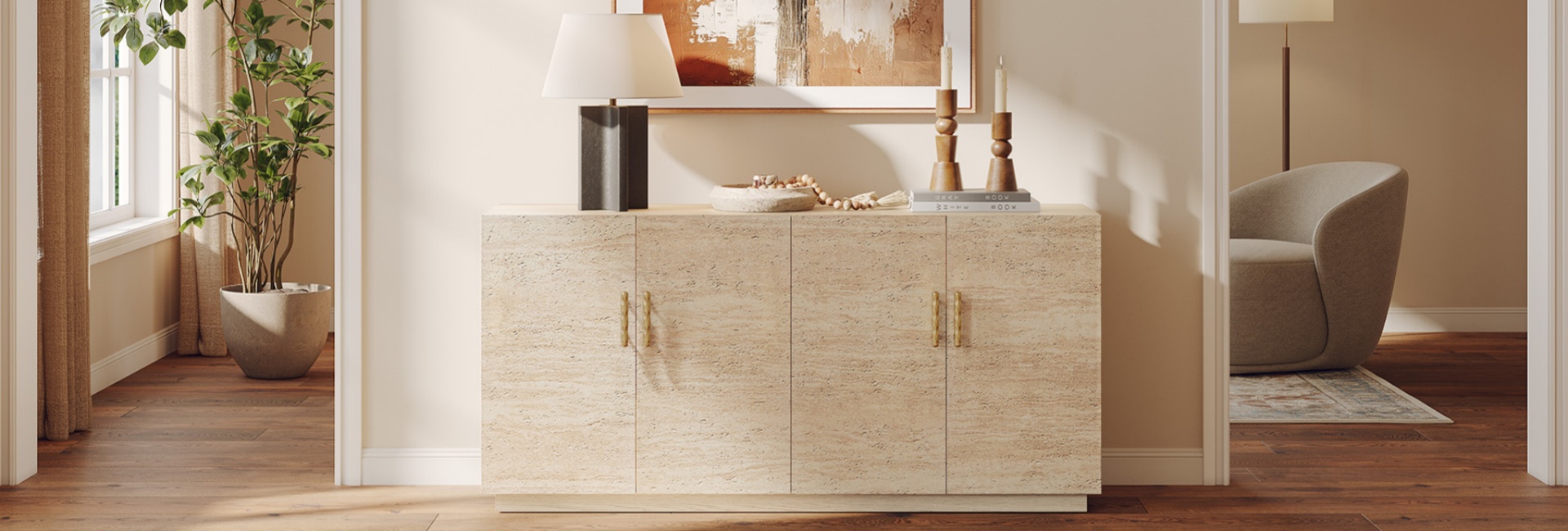
If you've ever wondered what is a sideboard, you're not alone. A sideboard is one of the most versatile furniture pieces for modern homes, offering both stylish storage and everyday functionality. But what is a sideboard furniture piece, what is a sideboard used for, and what's the difference between sideboard and buffet? This guide answers those questions with expert insights and practical advice. You'll discover the meaning of sideboard, learn where it works best, compare it with similar furniture, and find tips for choosing the right one. Whether you're furnishing a dining room, living room, or entryway, this guide will help you confidently choose a sideboard that fits your space and lifestyle.
What Is a Sideboard?
What Is a Sideboard Furniture?
If you're wondering what is a sideboard, think of it as a low, freestanding storage cabinet designed to combine function and style. Traditionally placed in dining rooms, today's sideboards are equally at home in living rooms, entryways, bedrooms, and home offices. Most feature a mix of drawers, cabinets, and shelves, making them ideal for storing dinnerware, books, electronics, or everyday essentials while providing a surface for décor.
The Meaning of Sideboard
The meaning of sideboard has evolved over time. Originally, it referred to a cabinet placed beside a dining table for serving food and storing tableware. Today, the term describes a versatile storage piece that balances organization with design, making it a practical choice for modern homes.
Why Is It Called a Sideboard?
The name comes from its original position at the side of a dining room. In 18th-century Europe, households used sideboards to hold serving dishes, silverware, and drinks before meals were brought to the table. As homes became less formal, the furniture remained—but its role expanded. Today, understanding what is a sideboard means recognizing it as a multifunctional cabinet that offers storage, display space, and lasting style in almost any room.
The History of Sideboards
Early European Origins
The history of what is a sideboard dates back to 18th-century Europe, where it was an essential piece of dining room furniture in affluent homes. Originally crafted from hardwoods such as oak and walnut, sideboards were placed against the wall beside the dining table to store silverware, fine china, linens, and serving dishes. During formal dinners, they also served as a convenient station for preparing and presenting meals, reflecting both craftsmanship and social status.
How Sideboards Evolved into Modern Furniture
As homes became more casual and open-plan, the role of the sideboard expanded beyond the dining room. Today, what is a sideboard furniture piece is no longer limited to entertaining guests. It functions as versatile storage in living rooms, entryways, bedrooms, and home offices while providing a stylish display surface.
This evolution explains what is a sideboard used for in modern homes—combining practical storage with timeless design.
What Is a Sideboard Used For?
Perhaps the most practical question homeowners ask is what is a sideboard used for.
The short answer is simple: almost anything.
Unlike furniture designed for one specific purpose, sideboards adapt to changing lifestyles. Their combination of enclosed storage and open display space makes them suitable for nearly every room.
Let's explore the most common ways homeowners use sideboards today.
Dining Room Storage
The dining room remains the traditional home of the sideboard—and for good reason.
A well-designed dining room often requires storage for items that aren't used every day but should remain easily accessible.
A dining room sideboard can neatly organize:
Dinner plates
Serving platters
Glassware
Table linens
Silverware
Seasonal dishes
Wine accessories
Candles
Instead of crowding kitchen cabinets, these items remain close to the dining table whenever guests arrive.
During holidays such as Thanksgiving or Christmas, the sideboard also becomes a serving station for appetizers, desserts, or beverages, reducing traffic around the dining table and making entertaining feel effortless.
Living Room Organization
One of the biggest changes in recent years is the growing popularity of using sideboards in living rooms.
Many homeowners no longer ask only what is a sideboard used for in dining spaces—they're discovering how valuable it can be for everyday living.
A living room sideboard is ideal for storing:
Board games
Books
Remote controls
Streaming devices
Chargers
Blankets
Children's toys
Photo albums
Because everything stays hidden behind cabinet doors, the room feels cleaner and more organized without sacrificing convenience.
At the same time, the wide top surface offers space for artwork, family photos, indoor plants, or statement lighting, allowing the sideboard to become both a practical storage piece and a design feature.
Entryway Storage
The entryway is one of the busiest areas of any home, yet it's often the most overlooked when it comes to storage. If you've ever found yourself searching for keys or sorting through a pile of unopened mail, you'll quickly understand what is a sideboard used for beyond the dining room.
A sideboard in the entryway creates a practical "drop zone" where everyday essentials have a dedicated place.
Common items to store include:
House and car keys
Wallets
Sunglasses
Mail and packages
Reusable shopping bags
Pet leashes
Umbrellas
Shoe care accessories
Unlike a narrow console table, a sideboard offers concealed storage that keeps visual clutter out of sight while maintaining a welcoming first impression.
Interior designers often recommend pairing an entryway sideboard with a large mirror. The mirror reflects natural light, makes the space feel larger, and provides one last opportunity to check your appearance before heading out the door.
Bedroom Storage
Although dressers remain the traditional storage solution for bedrooms, a sideboard can be an excellent alternative or complement, especially in larger rooms or guest bedrooms.
A bedroom sideboard is perfect for storing:
Extra bedding
Seasonal clothing
Decorative pillows
Towels
Jewelry organizers
Books
Personal keepsakes
Because most sideboards are lower than dressers, they create a lighter visual profile while still offering generous storage capacity.
Many homeowners also use the top surface as a stylish display area for framed photos, candles, ceramic vases, or bedside reading materials.
If you're furnishing a guest room, a sideboard provides convenient storage without making the room feel crowded.
Home Office Storage
As remote and hybrid work continue to shape modern lifestyles, home offices have become more multifunctional than ever.
This is another reason why understanding what is a sideboard used for can help you make smarter furniture decisions.
Instead of relying solely on filing cabinets, many homeowners use sideboards to organize:
Office supplies
Printer paper
Cables and chargers
Important documents
Office equipment
Craft materials
Technology accessories
A sideboard keeps these essentials organized while maintaining a clean, professional appearance during video meetings.
Because it doubles as a display surface, it can also showcase books, awards, plants, or artwork that add personality to your workspace.
Decorative Display Space
Storage may be the primary function of a sideboard, but its spacious top surface is equally valuable.
Professional interior designers often describe a sideboard as an opportunity to create a focal point without overwhelming the room.
Popular styling choices include:
Oversized artwork
Decorative mirrors
Table lamps
Indoor plants
Sculptural vases
Coffee table books
Candles
Ceramic accessories
One decorating technique frequently recommended by designers is the Rule of Three, which groups objects of varying heights, textures, and shapes to create visual balance.
For example, you might pair:
A tall table lamp
A medium-sized vase with fresh greenery
A stack of design books with a decorative object on top
This layered arrangement creates depth while allowing the sideboard to remain functional.
Difference Between a Sideboard and a Buffet
One of the biggest sources of confusion when shopping for furniture is the difference between sideboard and buffet. The terms are often used interchangeably, yet they have distinct historical origins.
Understanding these differences helps you choose the right furniture for your space without getting distracted by terminology.
Sideboard vs Buffet
When discussing the difference between sideboard and buffet, it's important to know that today's furniture retailers often use both names for nearly identical products.
Historically, however, there was a subtle distinction.
A buffet was traditionally designed specifically for serving food during formal meals.
A sideboard, while also used in dining rooms, gradually expanded into other parts of the home.
Today, the difference between sideboard and buffet is largely based on marketing terminology rather than construction.
In American homes, many people use whichever term feels more familiar.
If you're shopping online, don't be surprised if identical products appear under both names.
Sideboard vs Credenza
Another common comparison is sideboard versus credenza.
Although the two look similar, their origins differ.
A credenza originally appeared in offices rather than dining rooms. It was designed to store paperwork, office supplies, and business materials.
Typical characteristics include:
Long, low profile
Minimal decorative details
Sliding or hinged cabinet doors
Professional appearance
Modern credenzas are still widely used in executive offices, but they're increasingly found in dining rooms and living spaces as well.
Meanwhile, a sideboard generally features:
Decorative styling
Larger drawers
More visible hardware
Strong emphasis on both storage and entertaining
For most homeowners, either option works well. Your choice depends more on style preferences than functionality.
Sideboard vs Console Table
People often confuse sideboards with console tables because both are commonly placed against walls.
The similarities end there.
A console table is:
Narrow
Shallow
Lightweight
Designed primarily for display
A sideboard is:
Deeper
Wider
Built for significant storage
Better suited for everyday organization
If your goal is displaying decorative accessories in a hallway, a console table may be sufficient.
If you need to hide clutter while adding style, a sideboard is the better investment.
Sideboard vs Cabinet
A cabinet is a broad furniture category that includes many different storage pieces.
A sideboard is one specific type of cabinet.
General cabinets can be:
Tall pantry cabinets
Kitchen cabinets
Bathroom cabinets
Utility cabinets
A sideboard differs because it typically features:
Low height
Wide proportions
Decorative design
Combination of drawers and cupboards
Furniture-grade construction
While every sideboard is technically a cabinet, not every cabinet qualifies as a sideboard.
Sideboard vs Dresser
Dressers and sideboards both provide enclosed storage, but they serve different purposes.
A dresser is specifically designed for bedrooms and clothing storage.
It usually includes:
Multiple stacked drawers
Taller proportions
Minimal open shelving
A sideboard typically combines:
Drawers
Cabinet doors
Shelves
Display surface
If your primary need is clothing organization, choose a dresser.
If you want versatile storage that works throughout the home, a sideboard offers far more flexibility.
Different Types of Sideboards
Choosing the right sideboard starts with understanding the different styles available. While they all offer storage and display space, each type has its own character, making it better suited to certain interiors and lifestyles.
Traditional Wooden Sideboards
Traditional wooden sideboards are known for their timeless craftsmanship and lasting durability. Often crafted from hardwoods such as oak, walnut, or cherry, they feature natural wood grain, classic panel detailing, and generous storage. They're an excellent choice for homeowners who want furniture that can transition through changing décor trends while maintaining its appeal.
Typical features include:
Rich natural wood finishes
Spacious drawers and cabinets
Classic molding or framed doors
Long-lasting construction
These sideboards work particularly well in traditional, farmhouse, and transitional interiors.
Modern Sideboards
Modern sideboards emphasize clean lines, simple silhouettes, and practical functionality. Instead of ornate details, they rely on smooth surfaces, minimalist hardware, and neutral finishes to create a sleek, uncluttered appearance.
Common characteristics include:
Flat-panel doors
Hidden or integrated handles
Matte or natural finishes
Streamlined geometric shapes
Because of their understated design, modern sideboards blend easily into contemporary living rooms, dining spaces, and open-concept homes.
Mid-Century Modern Sideboards
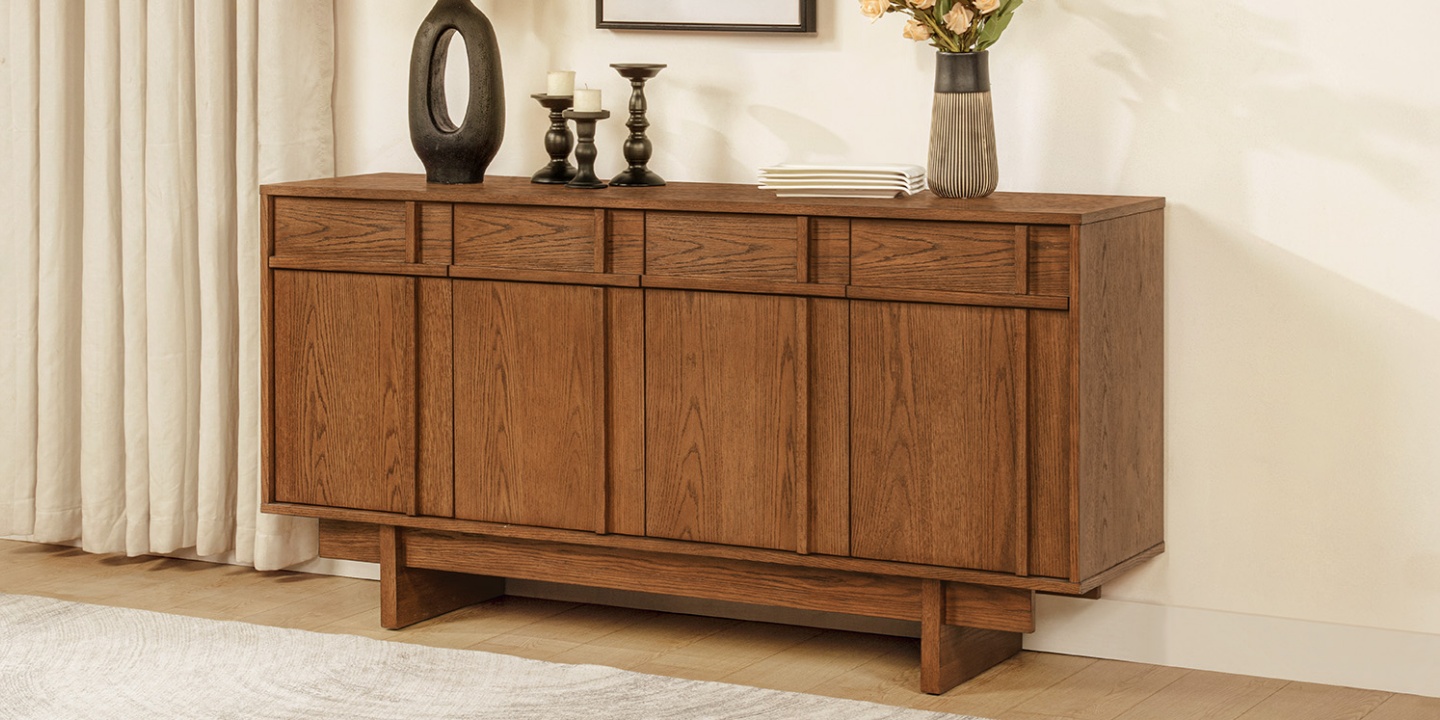
Mid-century modern sideboards remain one of the most popular choices for homeowners seeking both style and functionality. Inspired by the design principles of the 1950s and 1960s, they typically feature clean lines, balanced proportions, warm wood tones, and carefully considered details that never feel excessive.
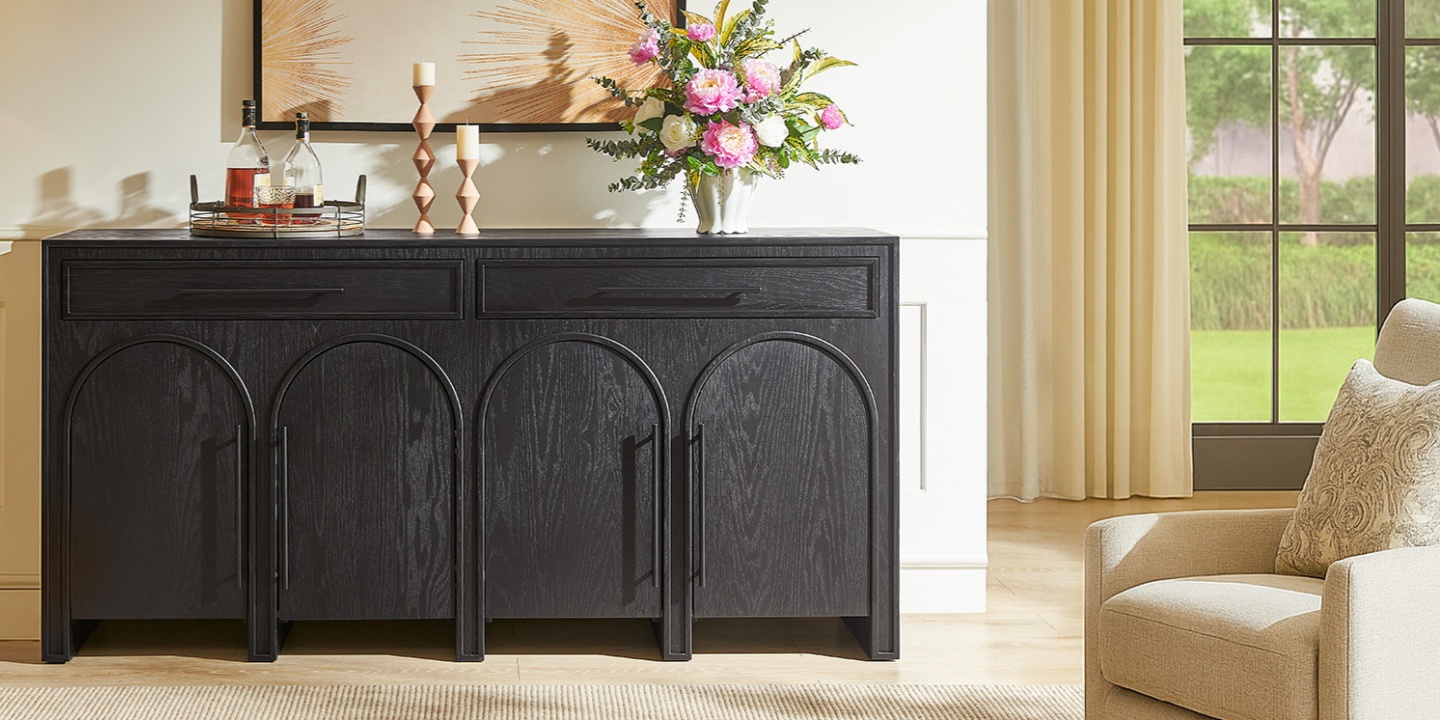
A great example is the Vera 72" Oak Sideboard, which combines sculptural arched detailing with a refined silhouette to create a striking focal point in a dining room or living space. Crafted from kiln-dried pine and engineered wood with American oak veneers, it highlights the natural beauty of the wood through a multi-step wire-brushed finish. Thoughtful features such as dovetail drawers, soft-close hinges, and soft-close drawer slides enhance both durability and everyday usability, ensuring smooth operation and reliable performance for years to come. This combination of premium craftsmanship and functional storage perfectly reflects why mid-century modern sideboards remain a favorite in today's homes.
Fluted Sideboards
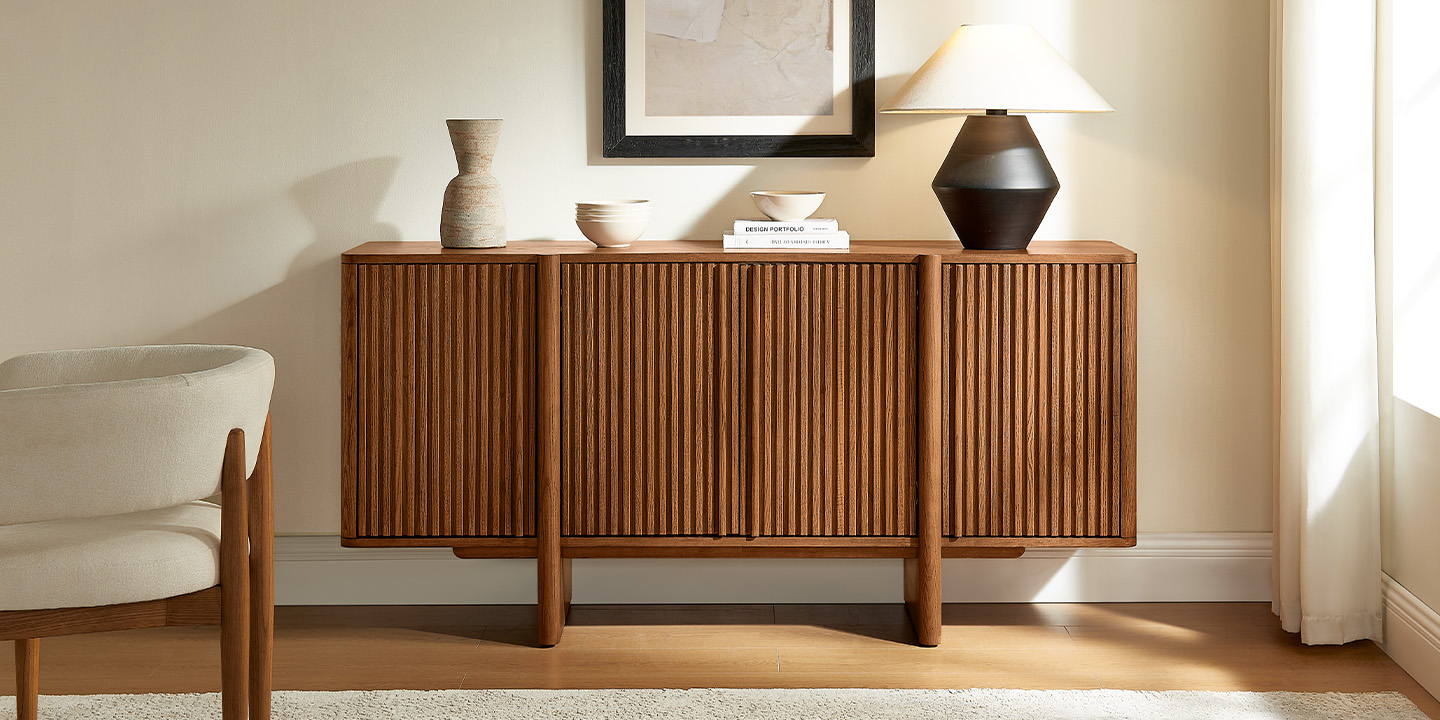
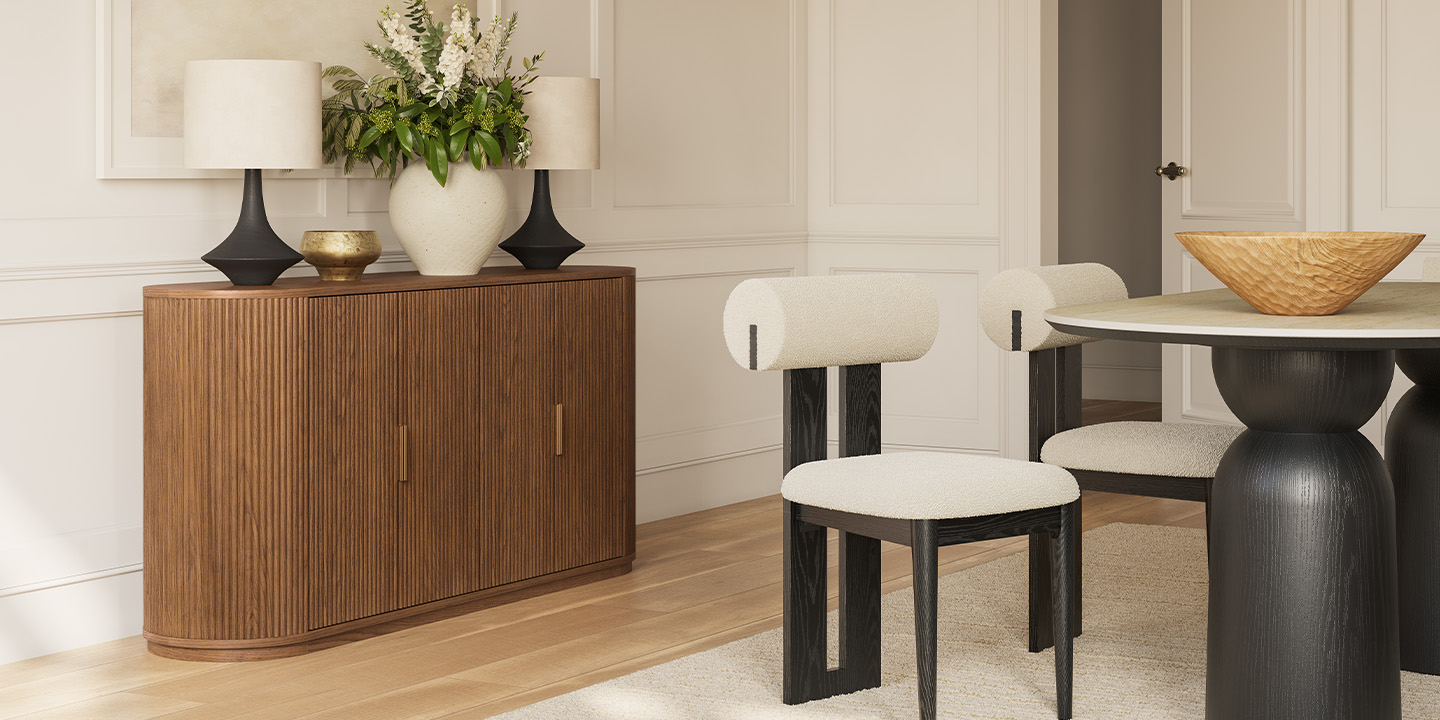
Fluted sideboards have become a defining trend in contemporary interiors. Their vertically grooved door fronts introduce subtle texture and depth, allowing the cabinet to stand out without overpowering the room.
Compared with smooth-front designs, fluted sideboards offer:
Whether placed in a dining room, entryway, or living room, fluted sideboards pair beautifully with natural materials, curved décor, and modern lighting, making them an excellent choice for homeowners who want functional storage with elevated design.
What Materials Are Sideboards Made From?
The material of a sideboard directly affects its durability, appearance, maintenance, and long-term value. While several materials are available, solid wood remains the preferred choice for homeowners seeking furniture that combines timeless style with lasting performance.
Solid Wood
Solid wood is widely regarded as the premium material for sideboards because of its natural beauty, exceptional strength, and longevity. Woods such as oak, walnut, and ash develop unique grain patterns that make every piece one of a kind. Unlike synthetic materials, solid wood can often be refinished or repaired, allowing it to maintain its appearance for decades.
A well-crafted solid wood sideboard offers several advantages:
Outstanding durability for everyday use
Natural wood grain that becomes more characterful over time
Easy to refinish if scratched or worn
Excellent stability with proper care
Timeless appeal that complements both traditional and modern interiors
Although solid wood typically costs more upfront, many furniture experts consider it a worthwhile long-term investment because it can outlast lower-quality alternatives and adapt to changing décor styles.
Engineered Wood
Engineered wood is a practical option for homeowners looking for a balance between affordability and performance. Made by bonding wood fibers or layers together, it offers greater dimensional stability and is less likely to warp in changing humidity.
High-quality engineered wood sideboards often feature real wood veneers, providing the appearance of solid wood at a more accessible price point. Construction quality, hardware, and craftsmanship remain important factors when evaluating these pieces.
Metal
Metal is commonly used for frames, legs, or decorative accents rather than the entire cabinet. It provides excellent structural support and pairs well with wood to create industrial, contemporary, or minimalist designs.
Glass Accents
Glass is often incorporated into cabinet doors or display panels to create a lighter, more open look. It allows homeowners to showcase decorative pieces, fine china, or collectibles while protecting them from dust.
For homeowners seeking furniture that combines premium craftsmanship, lasting durability, and timeless design, solid wood remains the benchmark against which all other sideboard materials are measured.
How to Choose the Right Sideboard
Choosing the right sideboard is not just about finding a design you like. A well-selected sideboard should fit your room, match your lifestyle, and provide practical storage for years to come. Before making a purchase, consider your available space, storage needs, interior style, and material quality.
Measure Your Space
Before shopping for a sideboard, start by measuring the area where you plan to place it. Consider the wall length, nearby furniture, door openings, and walking paths to ensure the piece feels balanced rather than crowded.
For comfortable movement, interior designers typically recommend leaving around 30–36 inches of clearance in front of a sideboard. In dining rooms, make sure chairs can be pulled out easily without hitting the cabinet.
Choose the Right Storage Configuration
Think about what is a sideboard used for in your home. The best storage layout depends on the items you want to organize.
A combination of drawers and cabinets often provides the greatest versatility.
Match Your Interior Style
A sideboard should complement your existing décor rather than compete with it. Natural wood finishes work well with warm, timeless interiors, while minimalist designs suit contemporary spaces. Consider elements such as color, texture, hardware, and silhouette when choosing a style.
Select Durable Materials
Material quality plays a major role in long-term satisfaction. Solid wood offers natural beauty and durability, while engineered wood can provide stability and affordability. Pay attention to craftsmanship details such as sturdy construction, quality hardware, and durable finishes.
Pick the Right Size
The ideal sideboard should match the scale of your room and surrounding furniture. A small space may benefit from a compact design, while larger dining rooms or open-concept areas can accommodate wider pieces.
A properly sized sideboard should provide enough storage without overwhelming the room, creating a practical and visually balanced addition to your home.
How to Style a Sideboard Like an Interior Designer
A sideboard is more than a storage cabinet—it can become a visual centerpiece that adds personality and warmth to your home. Professional designers often treat the surface above a sideboard as a styling opportunity, combining practical function with carefully chosen décor.
Add Artwork or Mirrors
The wall above a sideboard plays an important role in creating balance. A large piece of artwork can introduce color and character, while a mirror can reflect light and make a room feel more spacious. For better proportions, choose artwork or mirrors that are around two-thirds the width of the sideboard.
Layer Decorative Objects
Avoid placing accessories in a straight line. Instead, create depth by combining different heights, shapes, and textures. A simple arrangement might include a tall vase, a stack of books, a small sculpture, and natural greenery.
Use Proper Lighting
Lighting can transform the appearance of a sideboard, especially in the evening. Table lamps, wall sconces, or accent lighting highlight decorative pieces while creating a warm and inviting atmosphere.
Decorate Seasonally
One advantage of a sideboard is its flexibility throughout the year. Update the display with fresh flowers in spring, natural textures in summer, warm candles in autumn, or festive greenery during the holidays. Small seasonal changes can refresh the entire room without replacing the furniture.
Common Mistakes When Buying a Sideboard
Even beautiful furniture can become disappointing if it doesn't fit your space or lifestyle.
Here are the mistakes professionals see most often.
Choosing the Wrong Size
An oversized sideboard can overwhelm a room, while one that's too small may look insignificant.
Always consider:
Wall width
Ceiling height
Nearby furniture
Walking space
Scale matters just as much as style.
Ignoring Storage Needs
Some buyers focus only on exterior appearance.
Instead, ask yourself:
What will I actually store?
How often will I access these items?
Do I need drawers or shelves?
Will my storage needs change?
Choosing the right interior layout is just as important as selecting the right finish.
Overlooking Material Quality
Furniture should last for years, not just until the next trend arrives.
Look beyond surface finishes and evaluate:
Joinery
Hardware
Drawer construction
Finish durability
Overall craftsmanship
Higher-quality construction often provides better long-term value than lower-priced alternatives.
Forgetting Traffic Flow
A sideboard should improve your room—not make it harder to move through.
Avoid placing it where it blocks:
Door swings
Walkways
Dining chairs
Natural circulation paths
Always test clearances before final placement.
Matching Everything Too Perfectly
Many homeowners assume every wood finish must match exactly.
Professional designers disagree.
Instead of identical finishes, aim for complementary tones.
Mixing slightly different wood grains often creates a more natural, layered interior.
The goal is coordination, not duplication.
Why Choose a Hernest Sideboard?
Choosing a sideboard is about finding the right balance between design, durability, and everyday functionality. A well-crafted sideboard should not only improve organization but also add character to your living space. Thoughtful materials, refined details, and versatile storage make it a practical investment for modern homes.
Premium Solid Wood Construction
Quality materials are the foundation of a long-lasting sideboard. Solid wood offers natural grain variation, strength, and timeless appeal that develops more character over time. Features such as durable finishes, carefully crafted surfaces, and sturdy construction help ensure the furniture remains beautiful through years of daily use.
Mid-Century Modern Craftsmanship
Mid-century modern design is valued for its clean lines, balanced proportions, and connection to natural materials. The Rolf 63" Oak Sideboard reflects these principles with its solid oak fluted detailing, rounded edges, and minimalist silhouette. Crafted with American solid oak, plywood, and oak veneers, it highlights the warmth and texture of natural wood through a multi-step wire-brushed and glazed finish. Adjustable shelves and soft-close hinges add practical convenience while maintaining its refined appearance.
Functional Storage for Modern Homes
Modern homeowners need furniture that does more than look good. A thoughtfully designed sideboard provides flexible storage for:
Designed for Dining Rooms, Living Rooms & Entryways
A versatile sideboard can adapt to different areas of the home. Use it in the dining room for tableware, the living room for organization and display, or the entryway for everyday essentials. With the right design, a sideboard becomes more than storage—it becomes a functional centerpiece that enhances the overall feel of your space.
Final Thoughts
Understanding what is a sideboard is about more than learning a furniture definition—it's about recognizing how one thoughtfully designed piece can solve multiple everyday challenges. From organizing dinnerware and office supplies to creating a beautiful display for your favorite décor, a sideboard offers a rare combination of practicality, versatility, and timeless style.
Whether you're exploring the meaning of sideboard, comparing the difference between sideboard and buffet, learning what is a sideboard furniture, or deciding what is a sideboard used for, the key is choosing a design that fits both your space and the way you live. A well-crafted sideboard isn't just another storage cabinet—it's an investment in a more organized, functional, and welcoming home.
Frequently Asked Questions About Sideboards
What is the difference between a sideboard and a buffet?
The main difference between sideboard and buffet comes from their traditional use. A buffet was originally designed specifically for dining rooms and serving food, while a sideboard was created for storing tableware and providing additional serving space. Today, the two terms are often used interchangeably, as both typically feature cabinets, drawers, and a wide surface for storage and display.
Why is it called a sideboard?
A sideboard gets its name from its original placement at the side of a dining room. In the 18th century, European households used sideboards to store dishes, silverware, linens, and serving items before meals. Over time, the design evolved into a versatile storage piece used throughout modern homes.
What is the point of a sideboard?
The main purpose of a sideboard is to provide practical storage while adding decorative value. It helps organize everyday essentials, keeps clutter hidden, and creates a surface for displaying artwork, lamps, plants, or serving items.
Are wooden sideboards outdated?
No. Wooden sideboards remain one of the most timeless furniture choices. Natural wood offers warmth, durability, and a classic appearance that works with many interior styles, including traditional, modern, and mid-century designs. High-quality wooden furniture can also last for decades with proper care.
What is a sideboard used for?
If you're wondering what is a sideboard used for, the answer depends on your space. Sideboards are commonly used for storing dinnerware, glassware, linens, books, electronics, office supplies, and household accessories. They can also serve as a display surface for décor.
Can a sideboard be used in a living room?
Yes. A sideboard works well in living rooms as a storage and display solution. It can hold media accessories, blankets, books, games, or decorative items while helping maintain a clean and organized space.
Is a sideboard the same as a credenza?
Not exactly. Although they share similar appearances, sideboards and credenzas have different origins. Sideboards traditionally belong to dining spaces, while credenzas were originally used in offices for storing documents and supplies. Today, both can be used throughout the home.
What size sideboard should I buy?
The right size depends on your room dimensions, storage needs, and surrounding furniture. Measure your available wall space and leave enough clearance for comfortable movement. A sideboard should provide storage without making the room feel crowded.
What can I put on top of a sideboard?
Popular sideboard styling ideas include mirrors, artwork, table lamps, vases, plants, books, candles, and decorative trays. Combining different heights and textures creates a balanced, designer-inspired look.
Where should a sideboard be placed?
Traditionally placed in dining rooms, sideboards now work well in living rooms, entryways, bedrooms, and home offices. The best location is a wall area where it provides useful storage while maintaining good traffic flow.