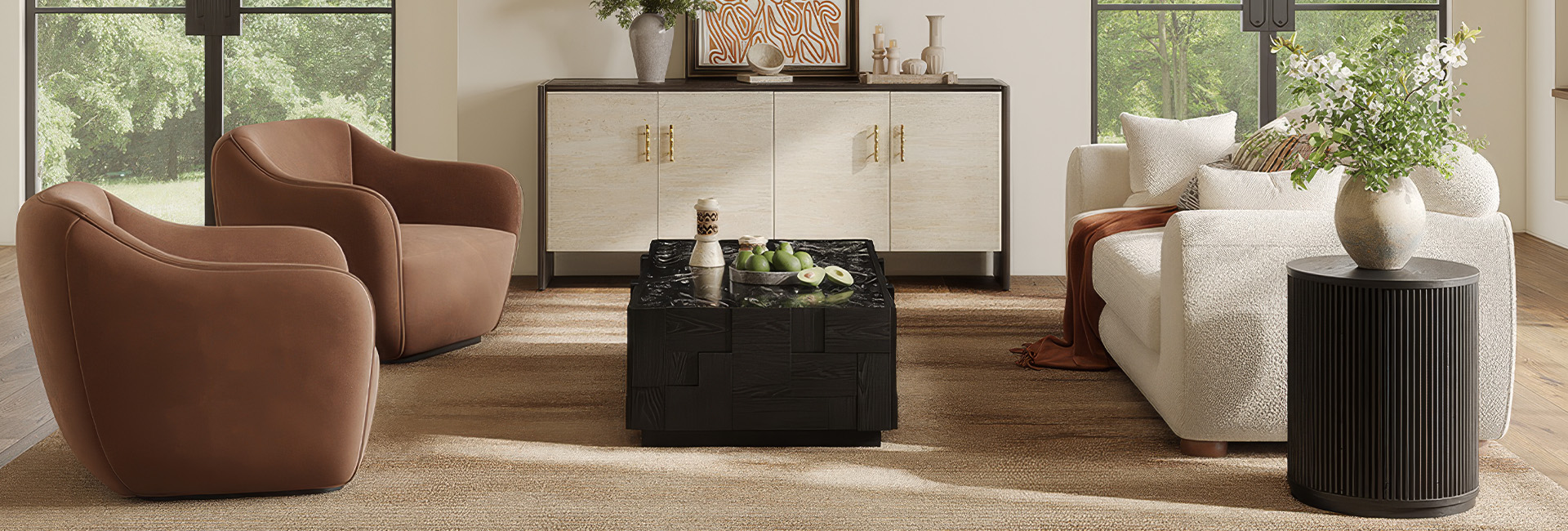
Polished and effortlessly chic, modern living room design is luxurious yet inviting. Furniture in moody tones, textiles in plush finishes, ambient lighting, and brass accents work together to define the look and set the mood.
At the center of it all is a thoughtfully chosen media console. More than just a place for your TV, it anchors the room visually, organizes everyday essentials, and sets the tone for your overall living room style.
A Brief History of Modern Interior Style
Modern interior design emerged as a response to overly ornate interiors, emphasizing clean lines, functionality, and intentional design. As lifestyles evolved alongside industrial progress, this philosophy expanded into a range of expressions—from minimalist and Scandinavian to transitional and contemporary.
Today, modern is less about strict rules and more about balance, branching into styles such as Mid-Century Modern, Scandinavian, Transitional, Industrial, and more—all united by simplicity, function, and timeless appeal.
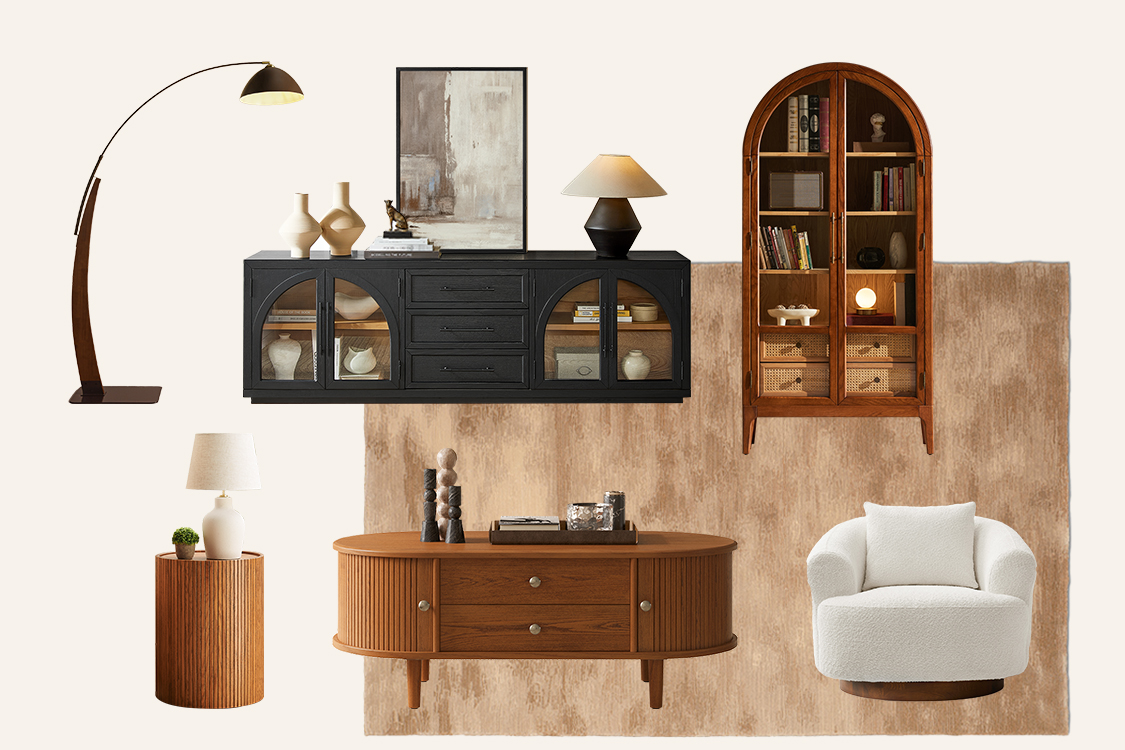
What Defines Modern Style?
Key Elements
Clean, intentional lines – streamlined silhouettes with no unnecessary ornamentation
Functional design – furniture that prioritizes usability and smart storage
Natural materials – wood, leather, stone, and metal used honestly
Balanced proportions – pieces that feel grounded, never oversized or flimsy
Neutral-forward palette – warm browns, soft beiges, greys, and blacks that age well and layer easily
A well-designed media console should feel timeless, grounded, and quietly confident—never trendy for trend’s sake.
Modern vs. Transitional vs. Contemporary Interior Style
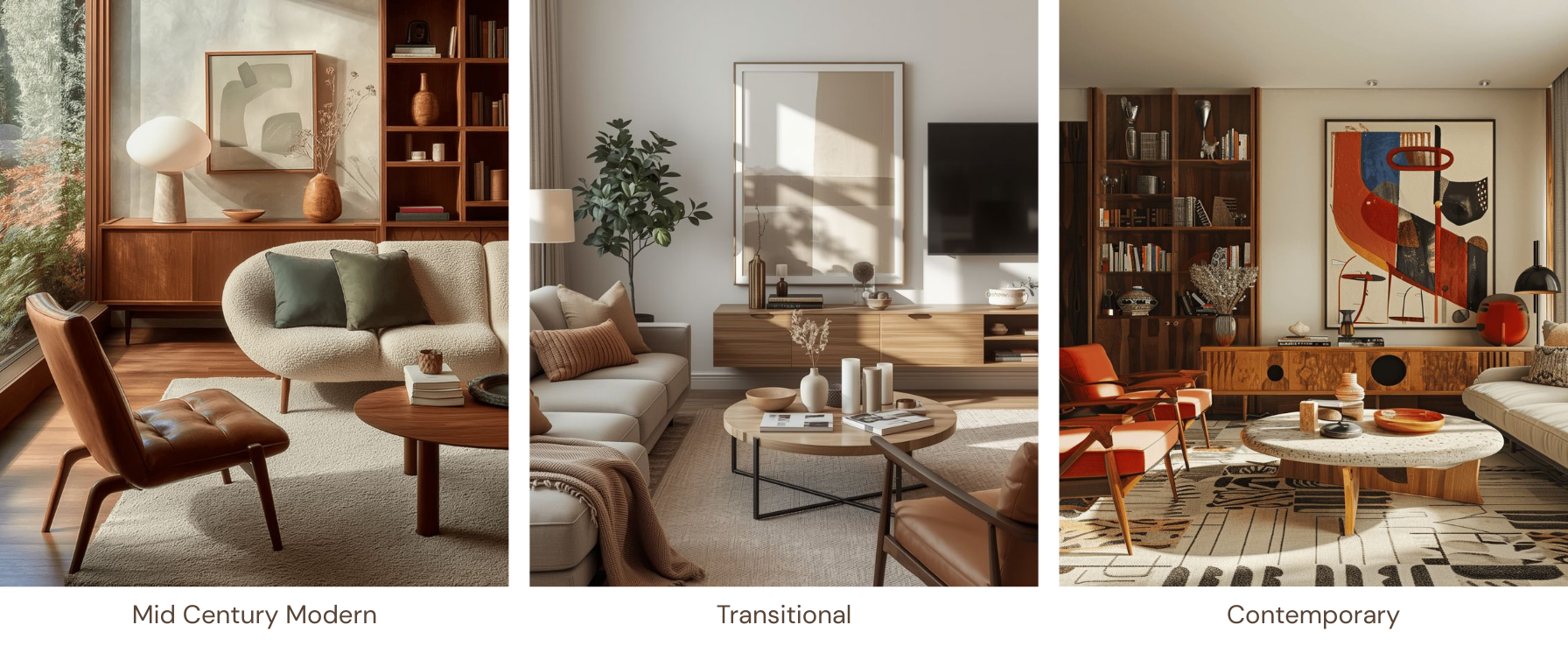
Mid-Century Modern: Defined by warm wood tones, tapered legs, and iconic silhouettes from the 1940s–60s. Retro-inspired yet clean, structured, and enduring.
Transitional: A blend of modern and traditional design. Softer edges, neutral palettes, and flexible styling make it ideal for homes that evolve over time.
Contemporary: Trend-forward and ever-changing, often featuring bold shapes, high-contrast finishes, and materials that reflect current design movements.
Size Guide by TV Size (Quick Reference Chart)
A media console should visually support your TV—not overwhelm it or look undersized.
A reliable rule of thumb: choose a console 6–10 inches wider than your TV.
TV Size | Recommended Console Width | Why It Works |
55″ TV | 60″–70″ | Leaves space for soundbars and decor while keeping proportions light—great for apartments or smaller living rooms |
| 65″ TV | 70″–80″ | Creates a stable, balanced look; prevents the TV from feeling top-heavy |
| 70″ TV | 80″–90″ | Extra width and center support help prevent sagging and improve long-term durability |
| 75″ TV | 85″ and wider | Requires careful planning—check weight capacity, depth, and support points |
Tip: If you plan to upgrade your TV in the future, choosing a slightly longer console now can save you from replacing furniture later.
For oversized setups, pairing a long console with shelves or modular storage keeps the room visually balanced and functional.
Leg Styles & Looks
Leg design affects more than aesthetics—it impacts stability, cleaning, and everyday usability.
Tapered Legs - The classic mid-century signature
Pros:
Iconic, lightweight look
Easier to clean underneath
Makes rooms feel more open
Watch for: Longer consoles should include center support legs for stability
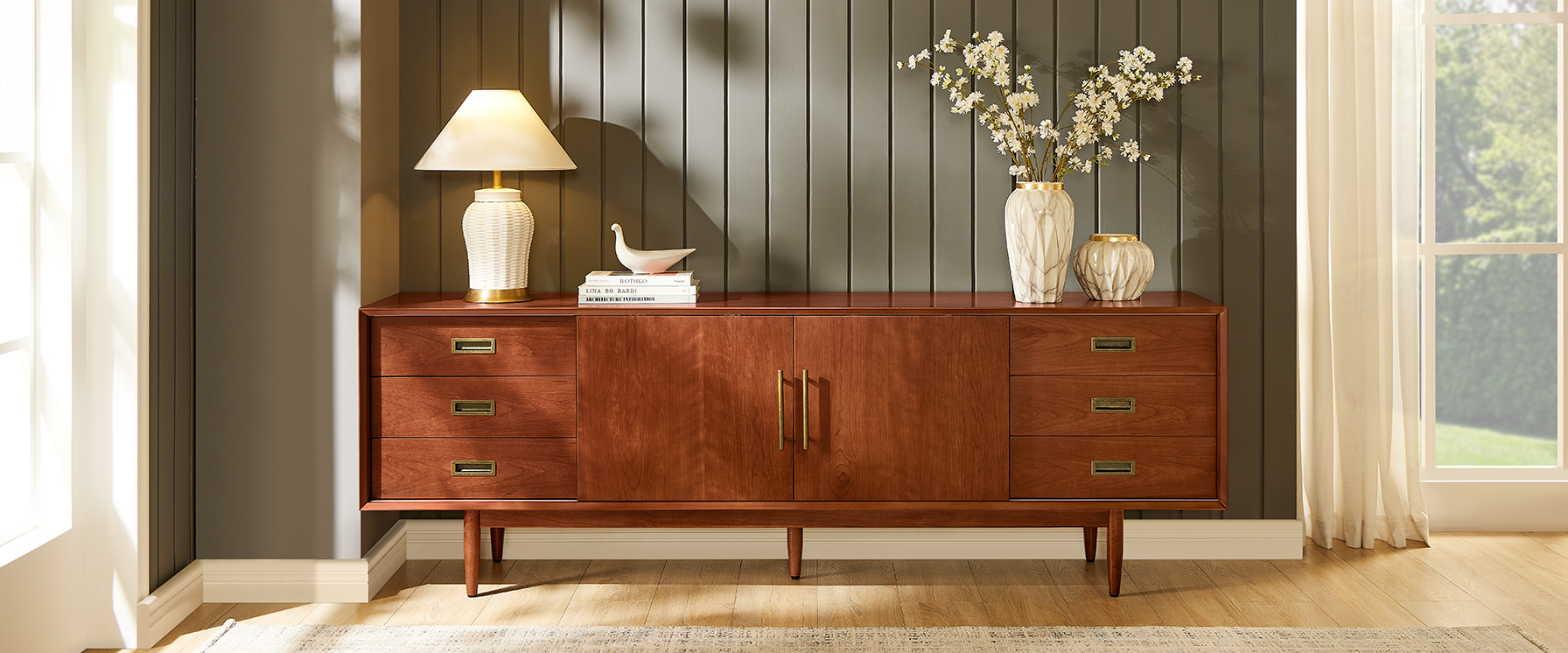
HERNEST's Kaden Mid-Century Media Console
Boxy Bases - A solid, grounded alternative
Pros:
Strong visual weight
Excellent stability for larger TVs
Works well in modern or transitional interiors
Cons:
Heavier appearance
Less clearance for cleaning
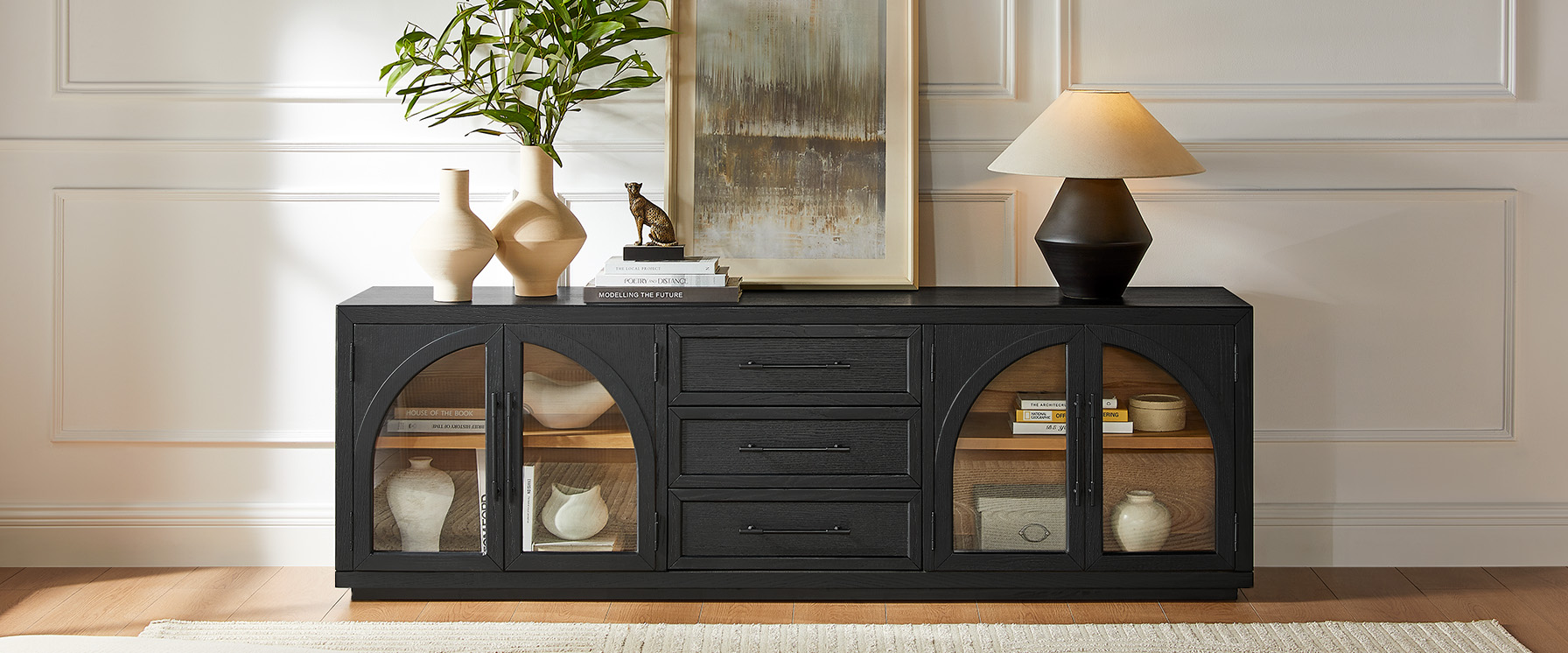 HERNEST's Best-Selling Valborg Oak Media Console
Sled Base - A continuous frame that rests along the floor
Pros:
Extremely stable
Even weight distribution
Cons:
Harder to clean underneath unless slightly raised
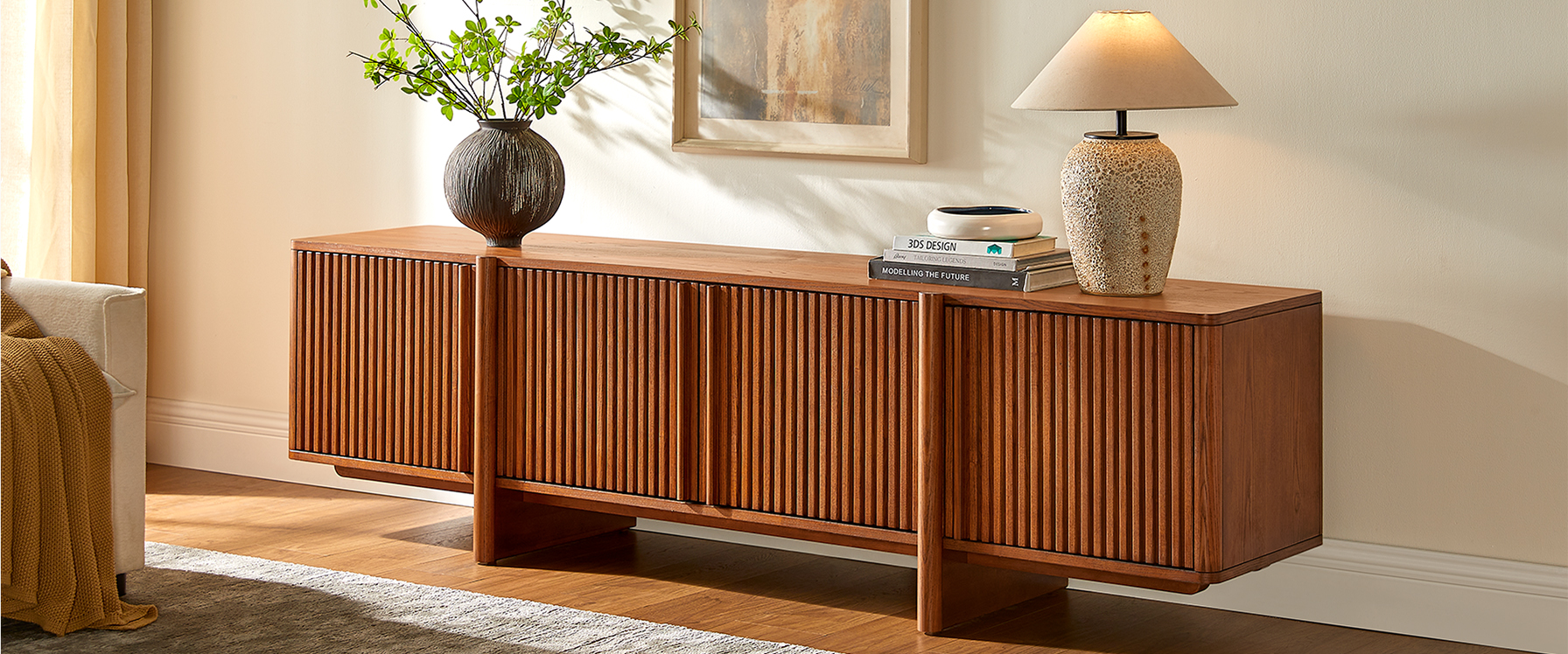 HERNEST's Sabina Ash Wood Media Console, with elegant fluted texture
Style Matching Guide
A modern living room doesn’t require every piece to follow the same design rulebook. The most inviting spaces are layered, balanced, and personal.
Coordinating Furniture
Match wood tones loosely—not perfectly
Low-profile sectional sofas balance beautifully with slim-leg media consoles
Bouclé seating adds texture without overpowering the look
Echo metal finishes (black, brass, bronze) across legs, lighting, and hardware
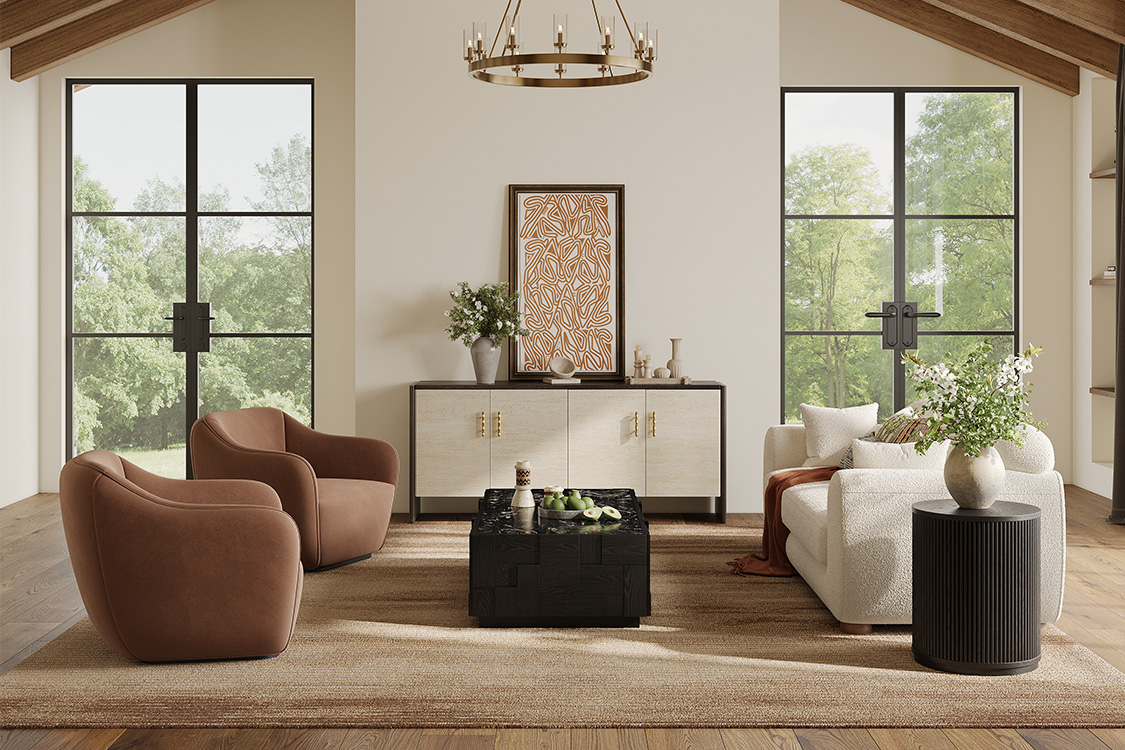
Balancing Scale
Use rugs, wall art, or lighting to visually anchor the console
Keep decor intentional and minimal—let the console’s craftsmanship stand out
Limit the room to one or two main materials to avoid visual clutter
FAQs About Media Console
What’s the difference between a media console, TV console, and TV stand?
These terms are often used interchangeably, but there are subtle differences:
Media console usually refers to a wider, low-profile piece designed to store electronics, cables, and media accessories while supporting a TV. It’s the most common choice for modern living rooms.
TV console often emphasizes style and display, with a similar function but sometimes less storage.
TV stand is a more general term and can include simpler or smaller pieces with minimal storage.
For a Mid-Century Modern living room, a media console is typically the best option due to its balance of storage, scale, and clean-lined design.
How wide should a Mid-Century Modern TV stand be for my TV size?
As a general rule, your TV stand or media console should be at least 6–12 inches wider than your TV on each side. This creates visual balance and helps anchor the screen.
55-inch TV: Console width around 60–70 inches
65-inch TV: Console width around 70–80 inches
75-inch TV: Console width 80 inches or wider
This sizing works well for most U.S. living rooms and helps maintain proper proportions in a Mid-Century Modern setup.
Is solid wood better than veneer for a Mid-Century Modern TV stand?
Both options can be great—it depends on your priorities:
Solid wood offers long-term durability, natural grain variation, and ages beautifully over time, making it ideal for a premium, heirloom-quality piece. However, it is heavier and can be more susceptible to warping or cracking with changes in temperature and humidity, and it may require more ongoing care and maintenance.
Wood veneer provides the look of real wood with better stability, less warping, and often a more accessible price point. High-quality veneer is widely used in authentic Mid-Century Modern furniture.
For everyday use in modern homes, both solid wood and veneer can perform well when properly constructed.