



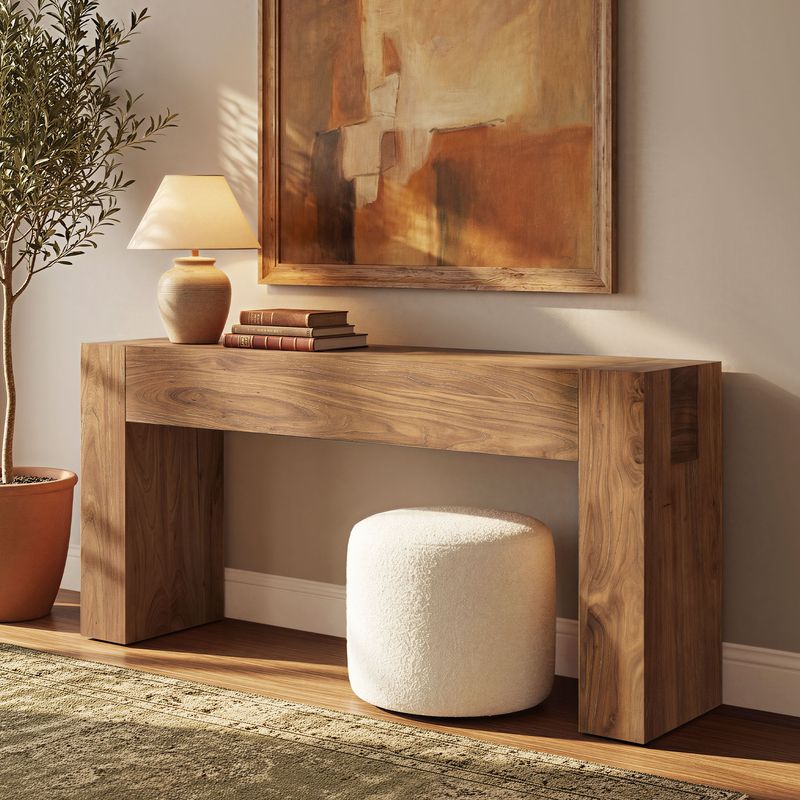
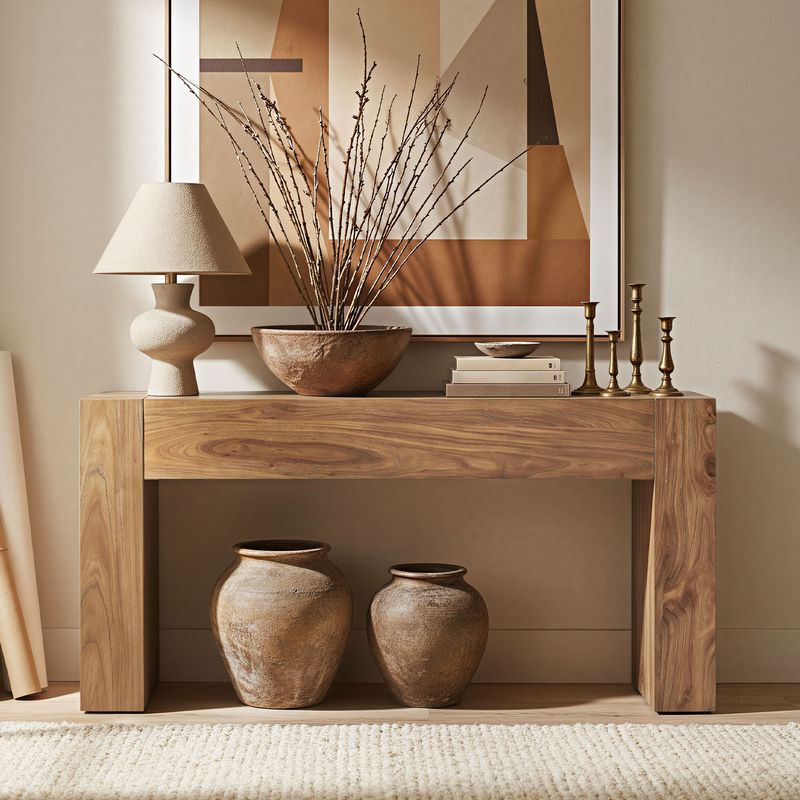


Find a Console Table That Fits Your Space
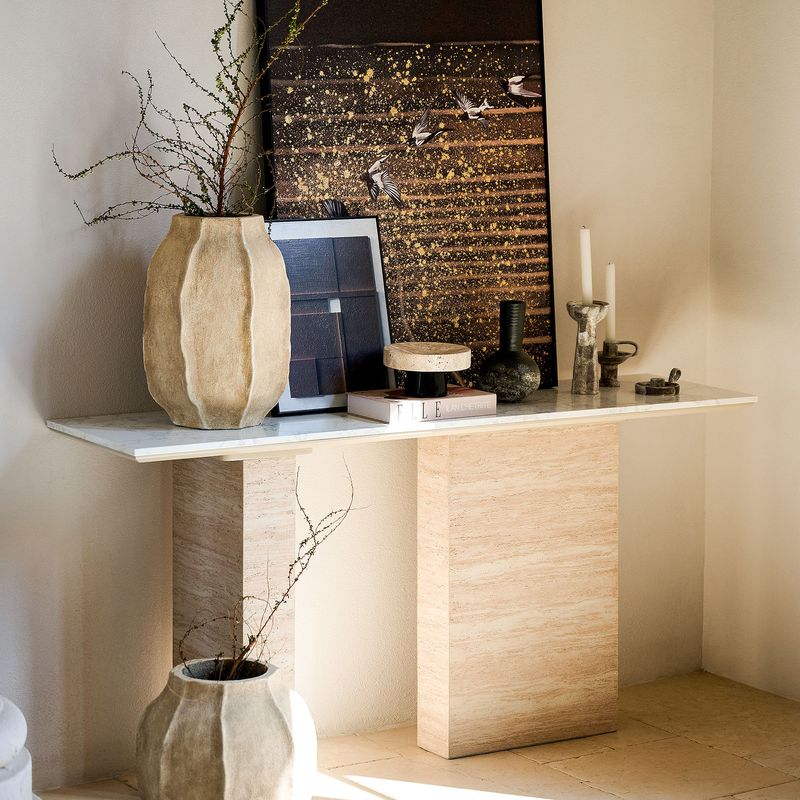
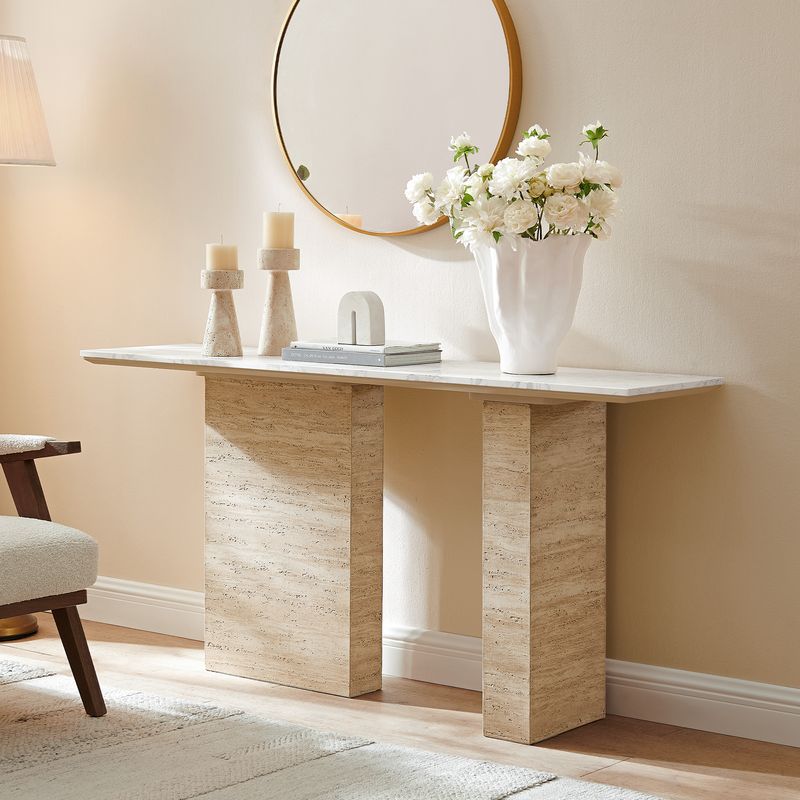
A console table can make an empty wall more useful without taking up the footprint of a large cabinet. Place one in an entryway for keys and mail, behind a sofa for lighting and décor, or in a hallway to give an overlooked area a clear purpose.
At Hernest, console tables range from compact floating designs to longer pieces with distinctive wood patterns, fluted details, and concealed storage. The right choice depends on three practical questions: where will the table go, how much room do you have, and what do you need it to hold?
Start with measurements before choosing a finish. A narrow entryway may call for a shallow design, while a spacious living room can accommodate a deeper tabletop or a more sculptural silhouette. Once the dimensions work, consider whether oak tones, burl patterns, or architectural details will complement your existing furniture.
Read More
What Is a Console Table Used For?
A console table is a narrow table commonly placed against a wall or behind a sofa. Unlike a coffee table, which sits in front of seating, a console usually occupies the edges of a room. Its relatively slim profile makes it useful for displaying décor, organizing everyday essentials, or adding a small amount of storage.
Create a More Functional Entryway
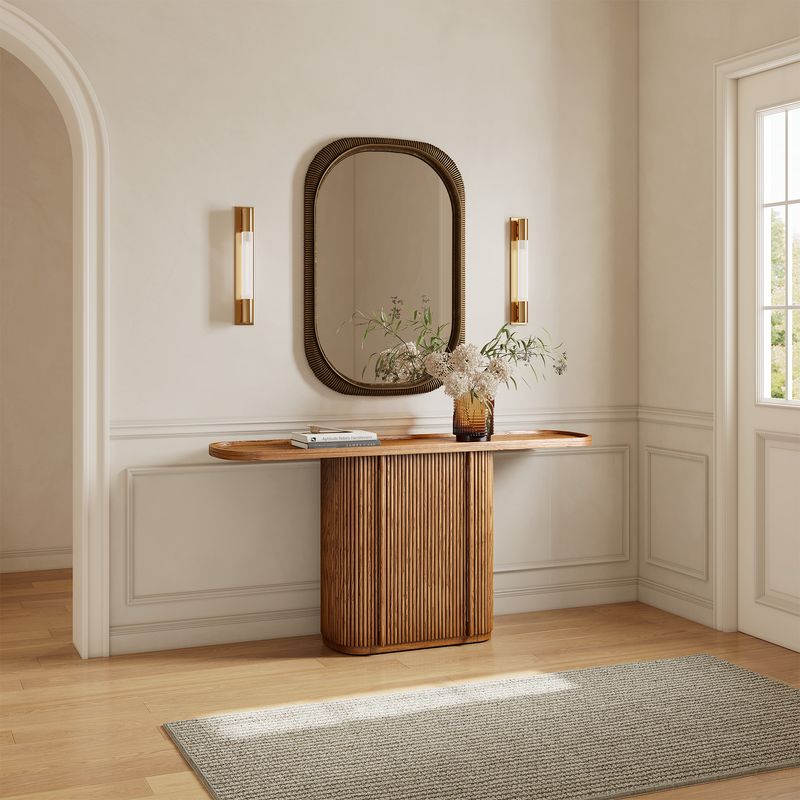
An entryway console provides a convenient place for keys, mail, sunglasses, and other items you reach for before leaving home. Add a tray to keep small belongings together, then use a mirror or framed artwork above the table to make the entrance feel finished.
If you need to keep everyday items out of sight, look for a console with drawers. In a smaller foyer, depth matters just as much as width. Measure the space between the wall and the nearest doorway or walkway before choosing a design.
The Rolf 47-Inch Floating Console Table is a compact option with a wall-mounted profile and drawers for small essentials. It measures 47.2 inches wide, 11.8 inches deep, and 7.9 inches high. Its recommended weight capacity is 40 pounds, and wall mounting is required, so check the installation guide and wall suitability before use.
Add Function Behind a Sofa
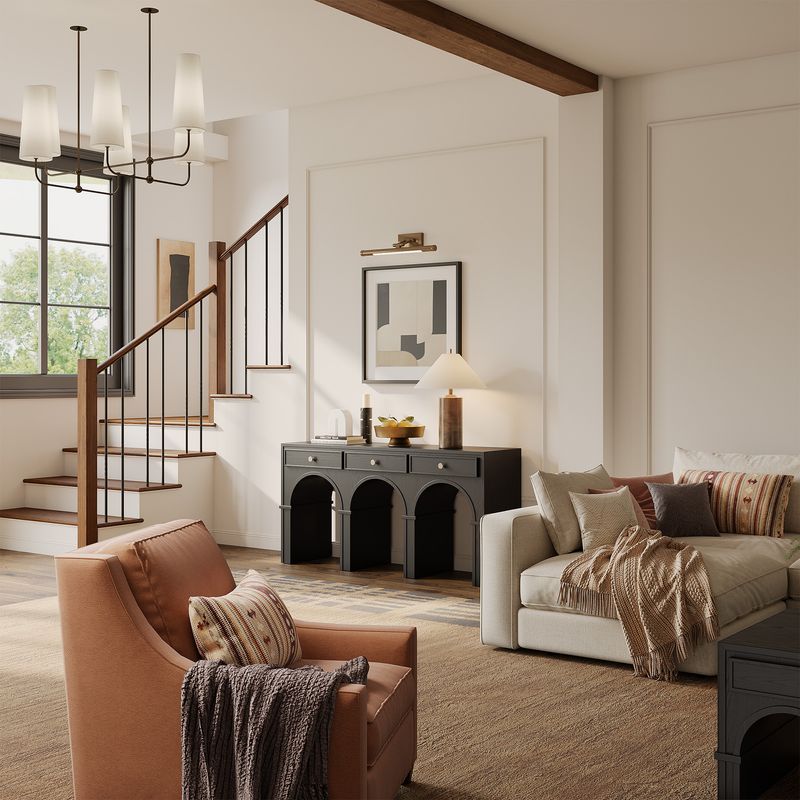
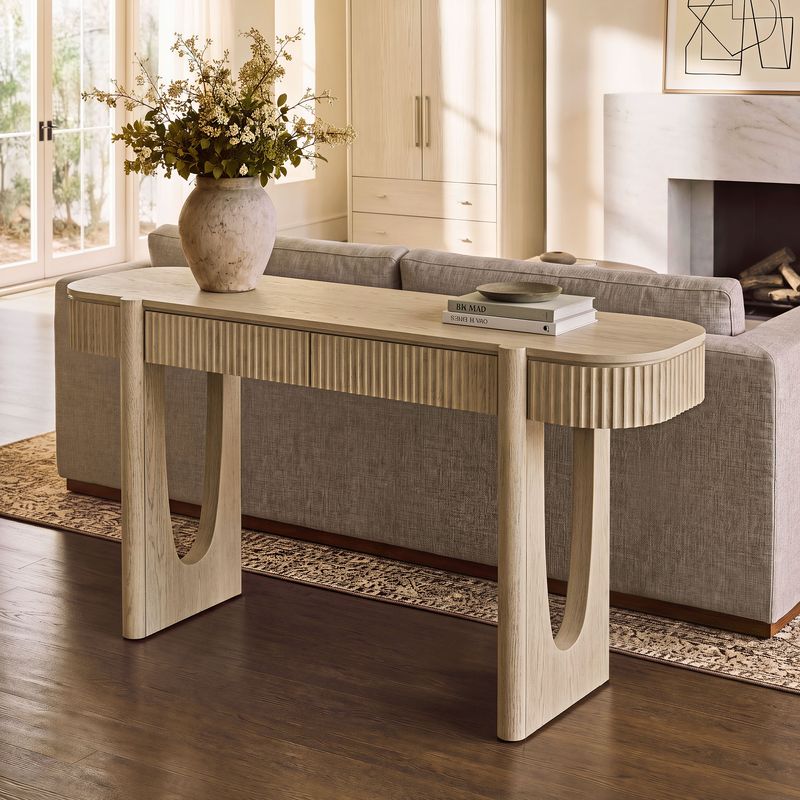
A console behind a sofa can give the seating area a more finished appearance while creating a surface for a lamp, books, or a few decorative objects. It is particularly useful when a sofa sits away from the wall in an open-plan living room.
Measure the sofa's length and back height before choosing a table. A furniture sizing guide recommends that a console behind a sofa be "no taller than the back of the sofa and about 2/3 the length of the sofa." Treat this as a starting point rather than a strict rule; the best proportions depend on the sofa and room layout.
Also account for the space behind the table. A console that looks right beside the sofa may still make the room feel cramped if it reduces a frequently used walkway.
Make a Hallway More Useful
A hallway console can provide a display surface without requiring a large storage unit. Choose a slim design if people regularly pass through the area, and keep the tabletop arrangement simple enough that it does not feel crowded.
For a narrow hallway, measure the available depth and consider the space needed to open nearby doors. A lamp, a small vase, or a framed photograph may be all the table needs. The aim is to add purpose without turning a clear passage into an obstacle.
How to Choose the Right Console Table Size
The right size depends on the wall, nearby furniture, and how the table will be used. Measure the width, depth, and height of the intended location before ordering, and account for door swings, walkways, and other furniture.
How Long Should a Console Table Be?
Behind a sofa, a console around two-thirds of the sofa's length is a useful starting point. For example, a 72-inch sofa could work with a table around 48 inches long, depending on the sofa's shape and the available floor space. A slightly longer or shorter option may look better in a particular layout.
Against a wall, consider the wall's usable length rather than its full width. Leave visual breathing room at each end, especially if the table will sit below a mirror or artwork.
Hernest offers different lengths for different layouts. Rolf and Vidar are approximately 47 inches wide, while Briar and Skimra are approximately 60 inches wide. These dimensions provide a practical comparison when deciding between a compact accent piece and a longer display surface.
How Deep Should a Console Table Be?
Depth determines how much surface you gain and how much floor space remains. A shallow design can be useful in an entryway or hallway, while a deeper table may provide more room for lamps, books, and decorative objects.
Rolf is 11.8 inches deep, making it worth considering where floor space is limited. By comparison, Vidar is 15.9 inches deep, Skimra is 16.9 inches deep, and Briar is 18.1 inches deep. These differences affect how much room each table occupies, so measure the intended spot instead of choosing by width alone.
Should a Console Table Be Taller or Shorter Than a Couch?
When placed behind a sofa, a console generally looks balanced when its top is level with or slightly below the sofa back. A table that is much taller can interrupt the sofa's outline, while a much shorter one may feel disconnected from the seating.
For a standalone entryway console, choose a height that feels practical for setting down everyday items. Compare the product's listed height with the furniture nearby, and consider how lamps or other accessories will affect the overall arrangement.
Choose the Right Material and Design
A console's finish and shape influence how it fits into your room. Consider whether you want the table to blend with existing furniture or become a focal point, then compare the material, construction, and detailing.
Wood Console Tables for Natural Warmth
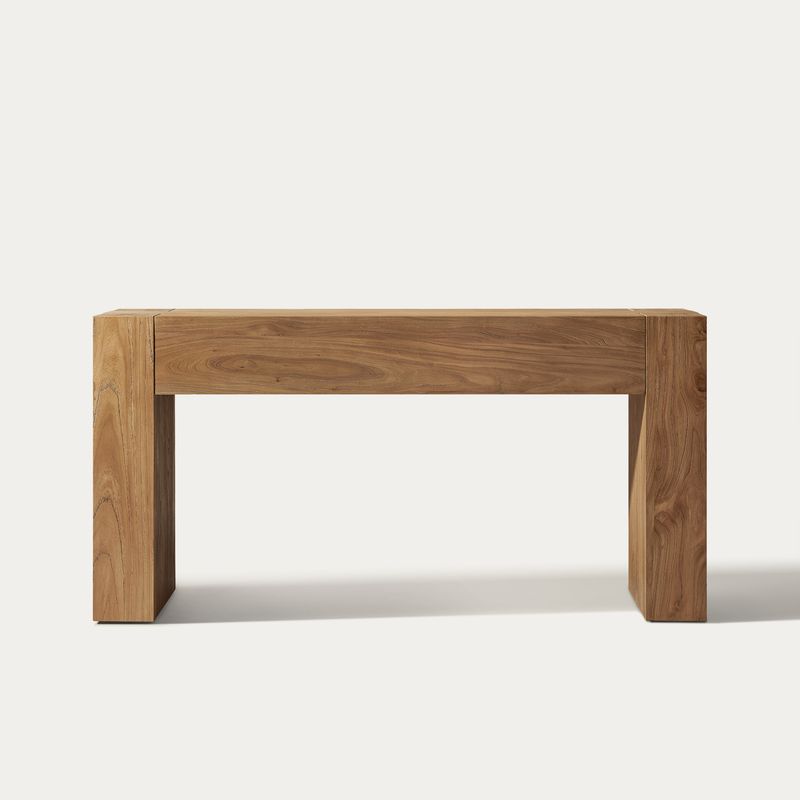
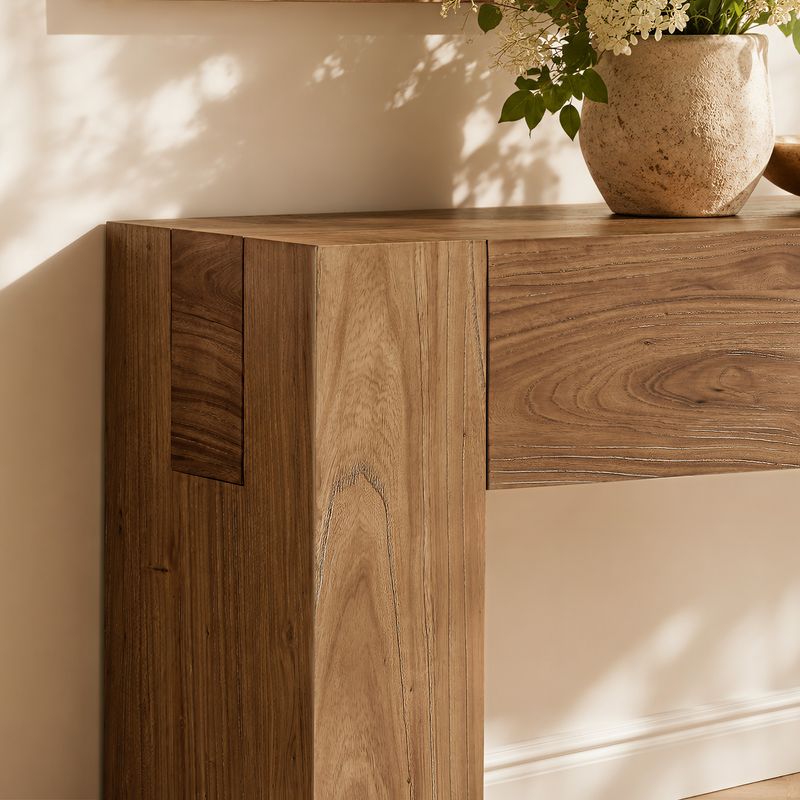
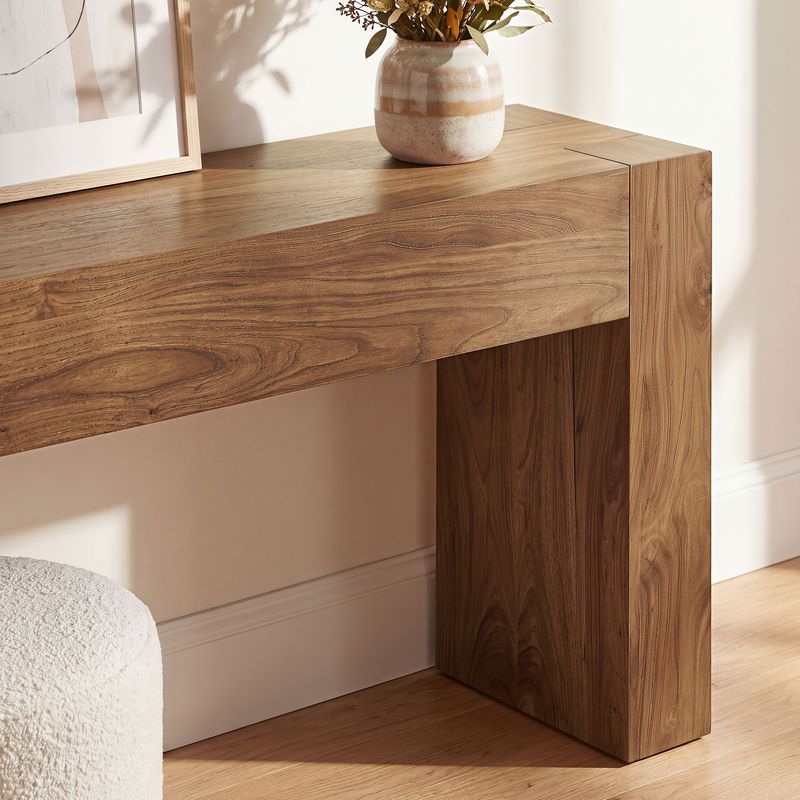
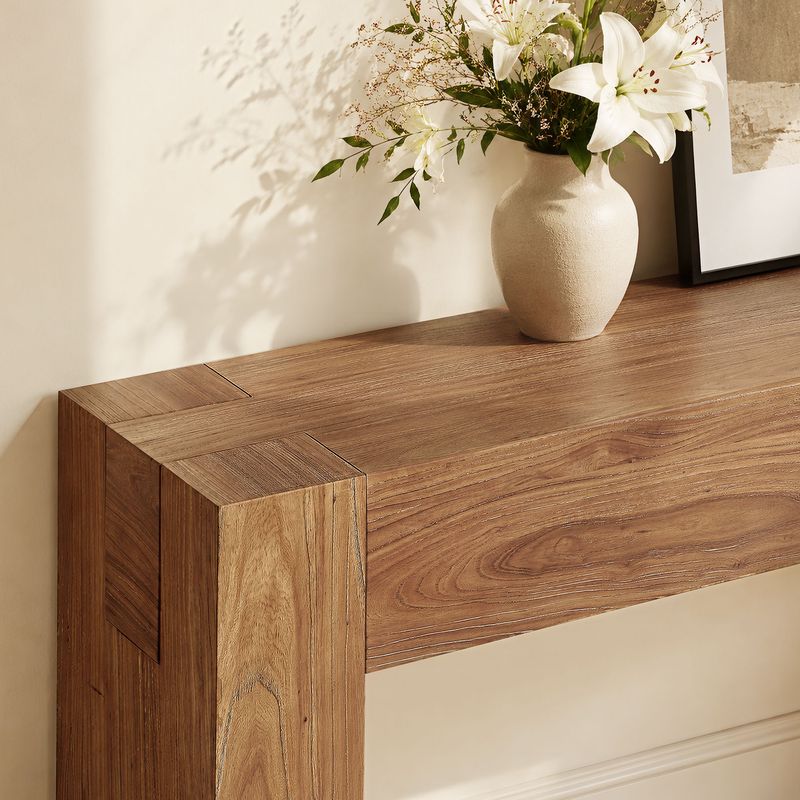
A wood console table can introduce warmth and texture to an entryway, hallway, or living room. Oak finishes work well with many neutral palettes, natural fabrics, and other wood furniture. However, an oak appearance does not necessarily mean a piece is made entirely from solid oak, so check the listed construction materials.
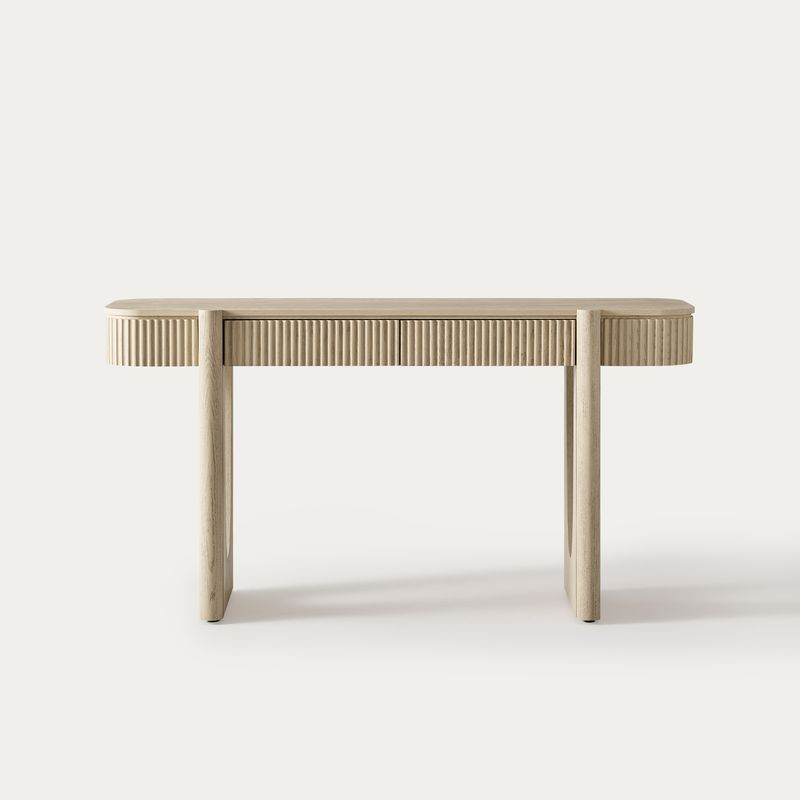
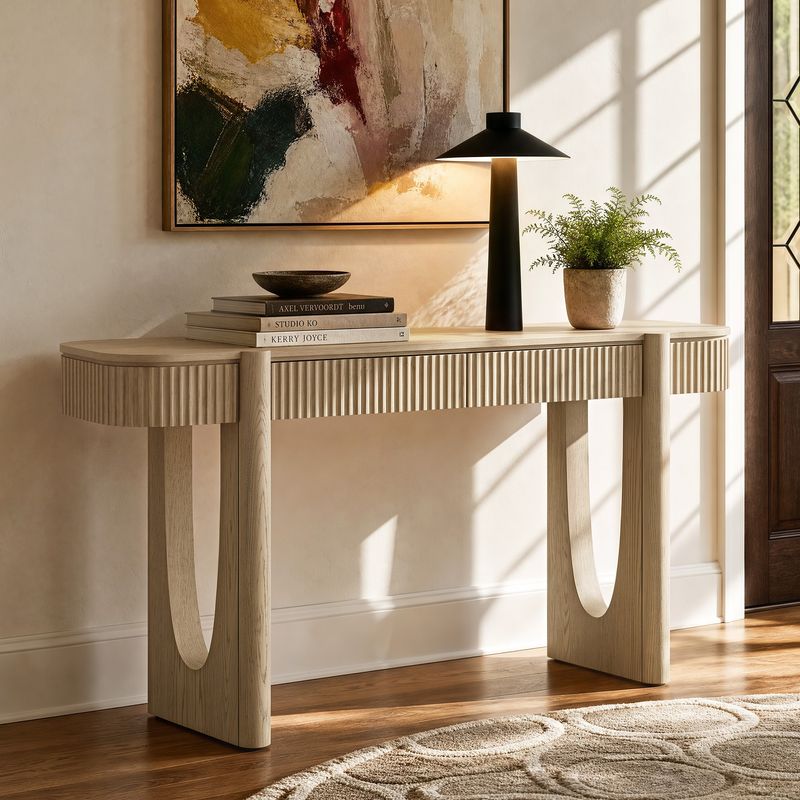
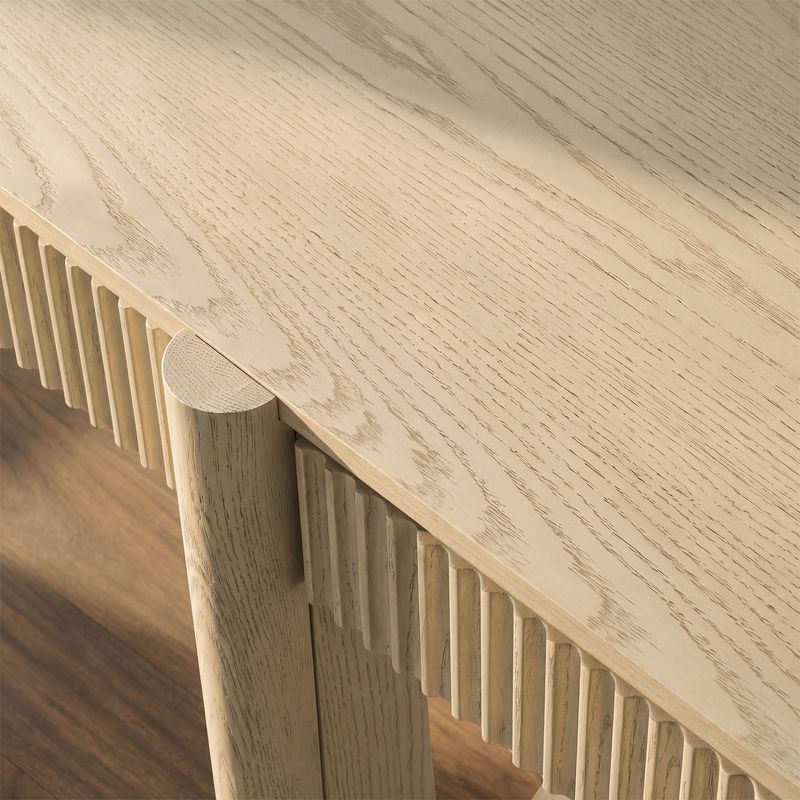
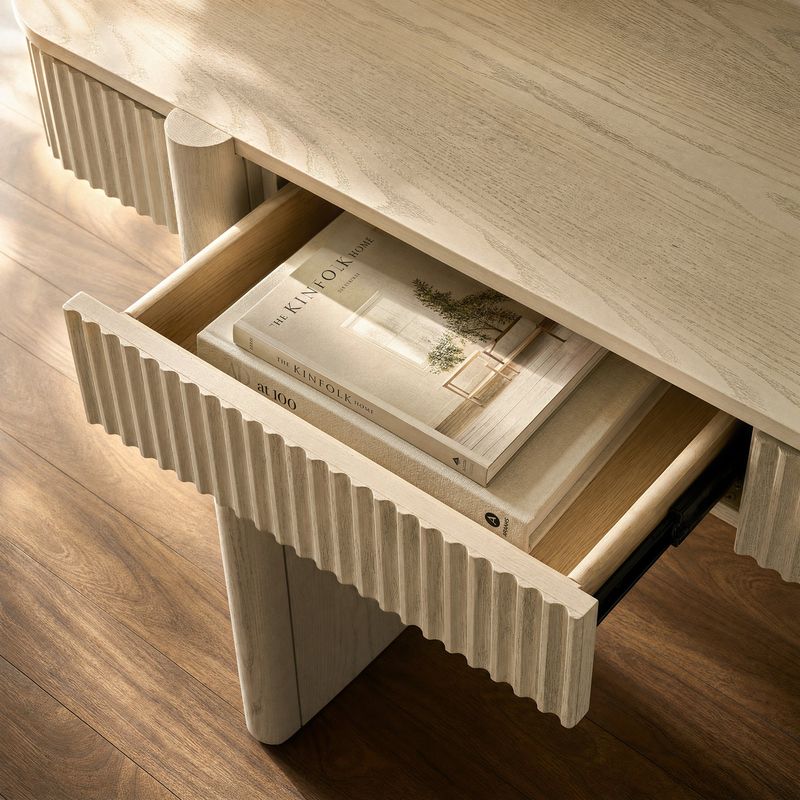
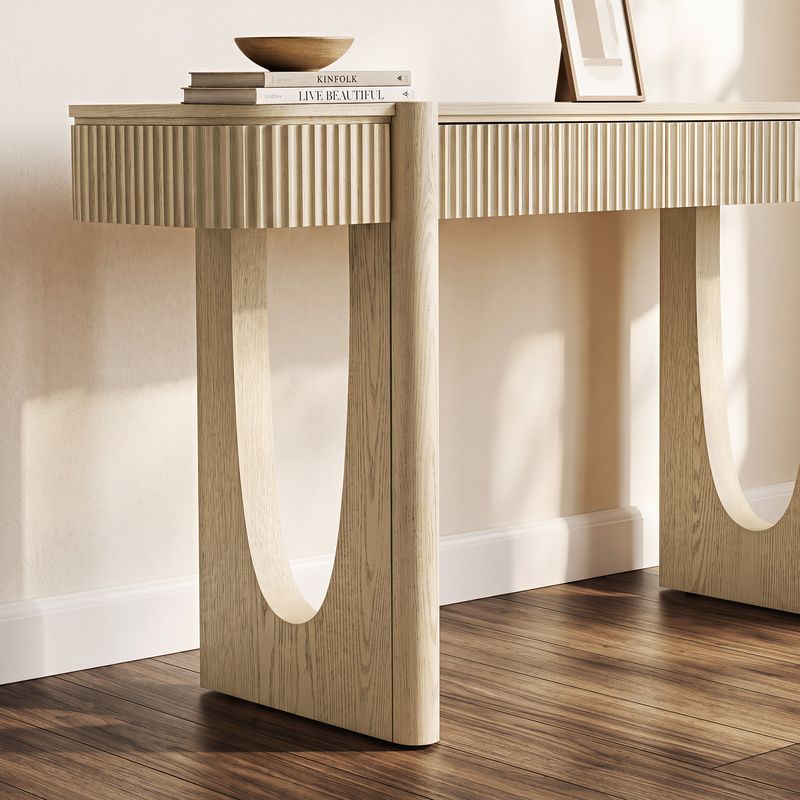
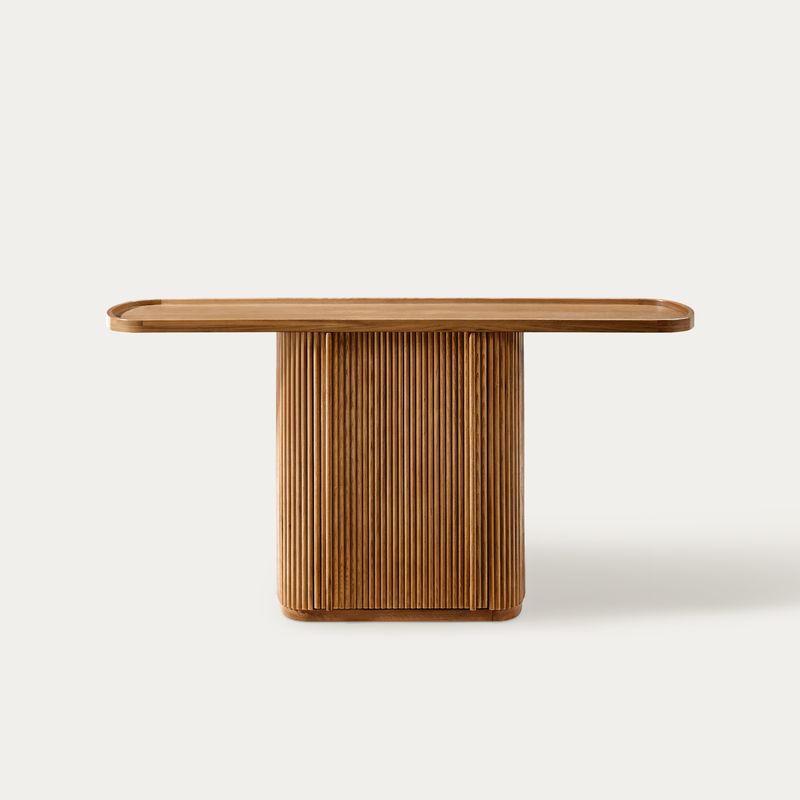
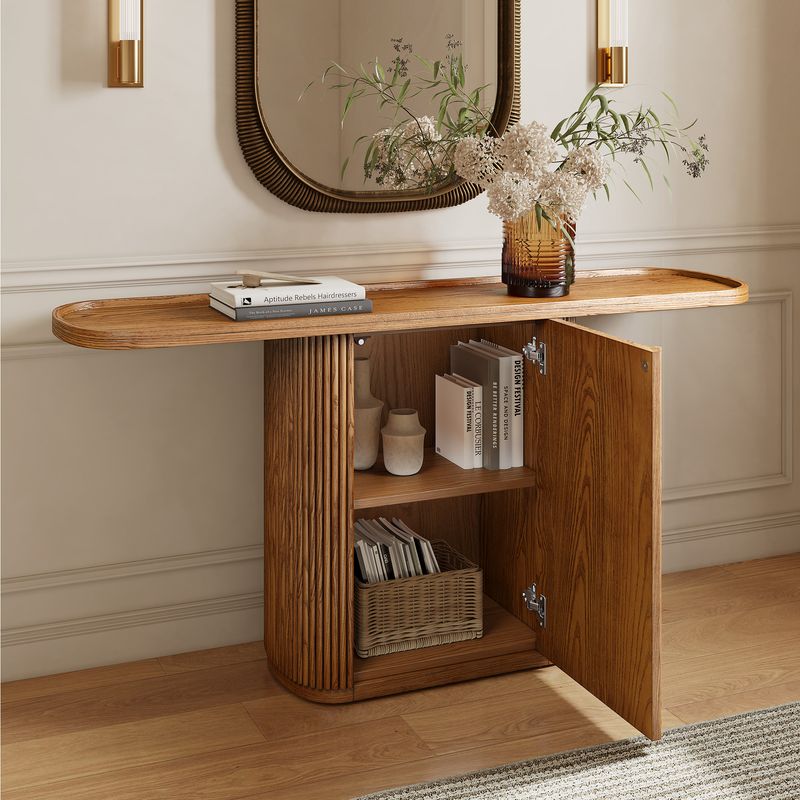
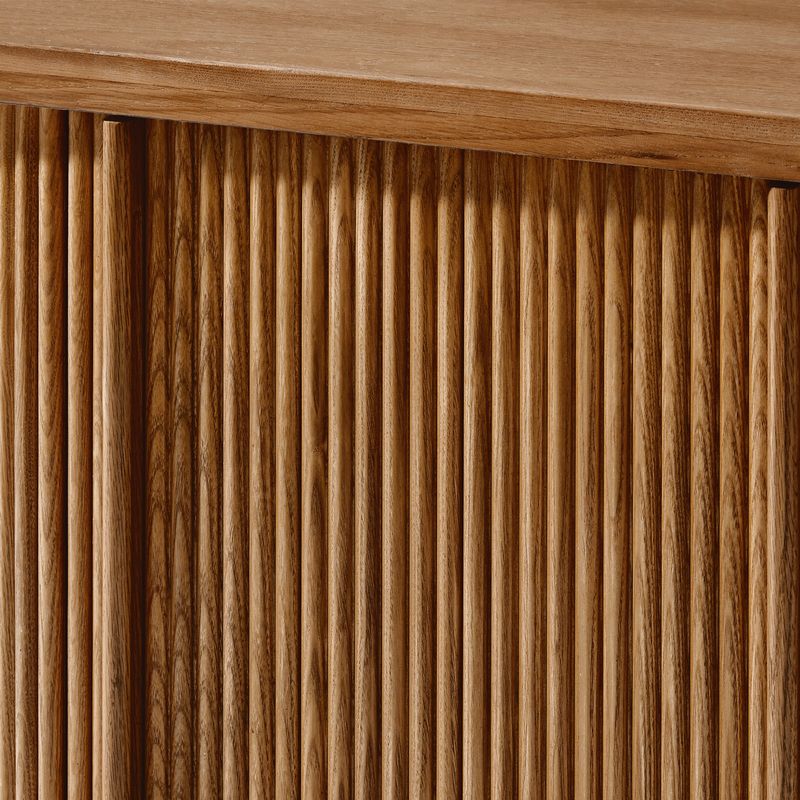
The Skimra 60-Inch Oak Console Table features a whitewashed oak finish and wave-inspired fluting. Measuring 60.2 inches wide, 16.9 inches deep, and 31.5 inches high, it provides a generous surface and concealed drawer storage.
Its construction combines American solid oak and engineered wood with oak veneers, with solid oak used for the fluted detailing. The combination creates visible texture while giving the table a more distinctive profile than a plain, flat-front design. Skimra is worth considering if you want an oak console that offers both storage and decorative detail.
Burl Finishes for Distinctive Character
If you want the table itself to stand out, a burl finish can bring visual depth through its varied grain pattern. Keep the accessories relatively restrained so the surface remains the focus.
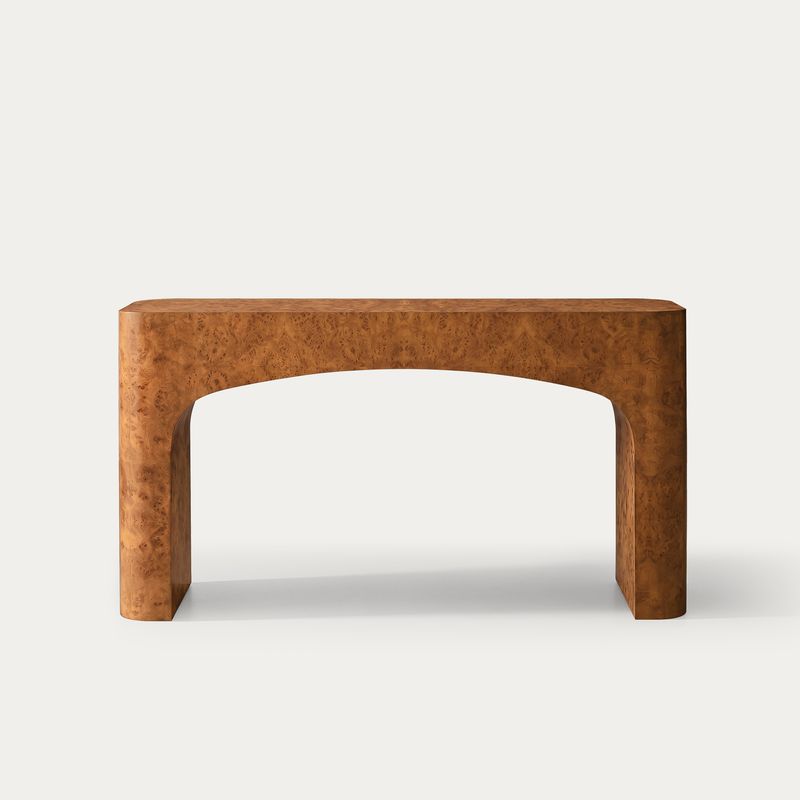
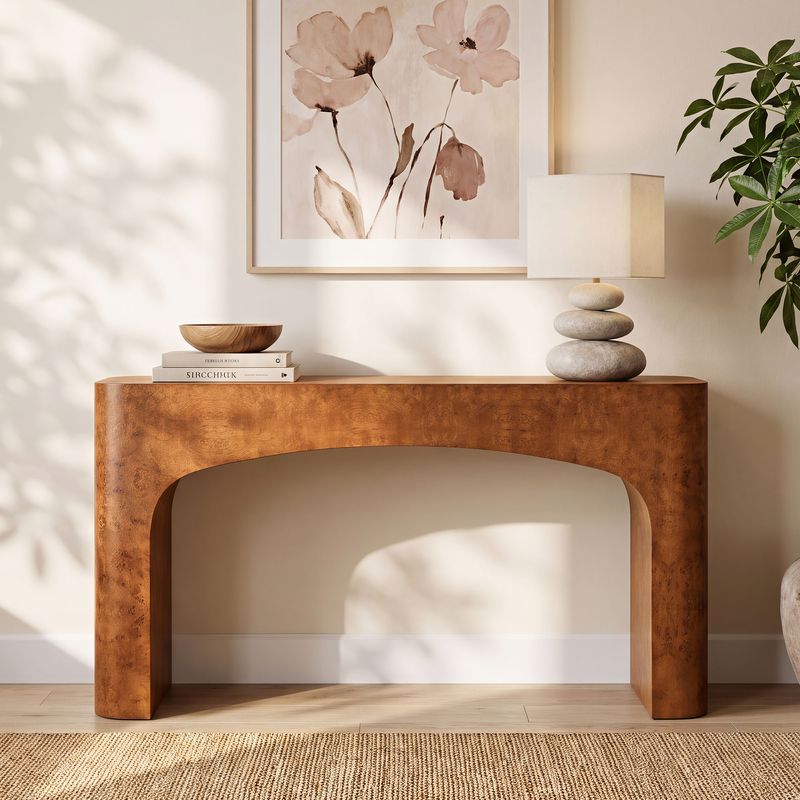
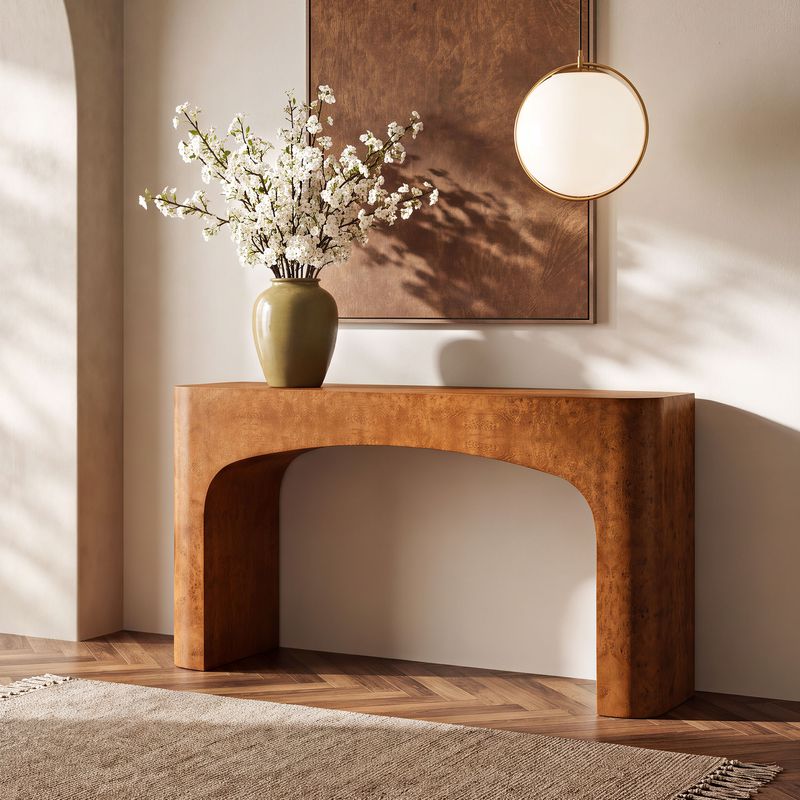
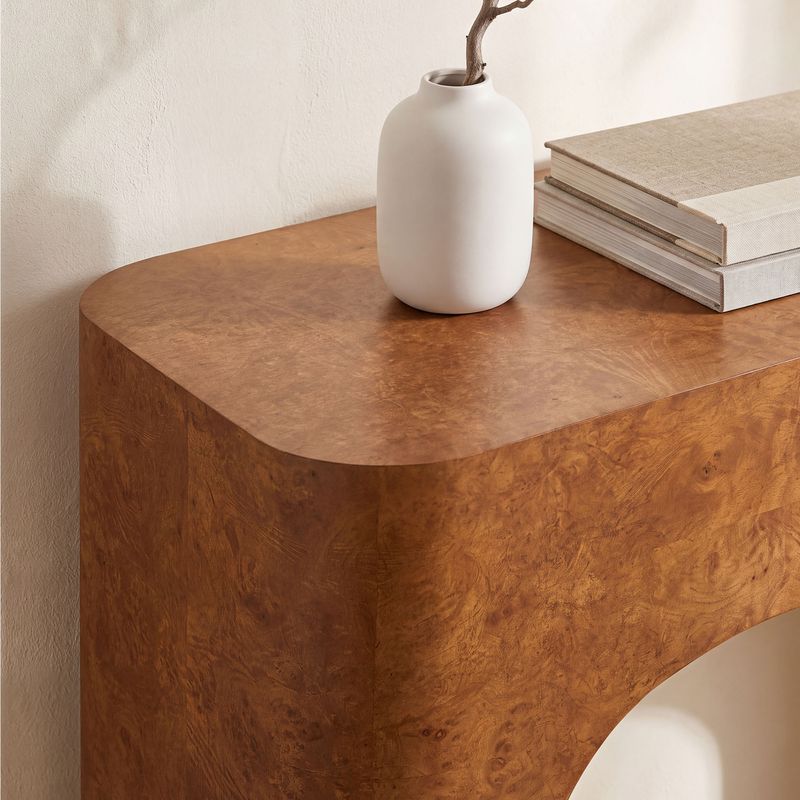
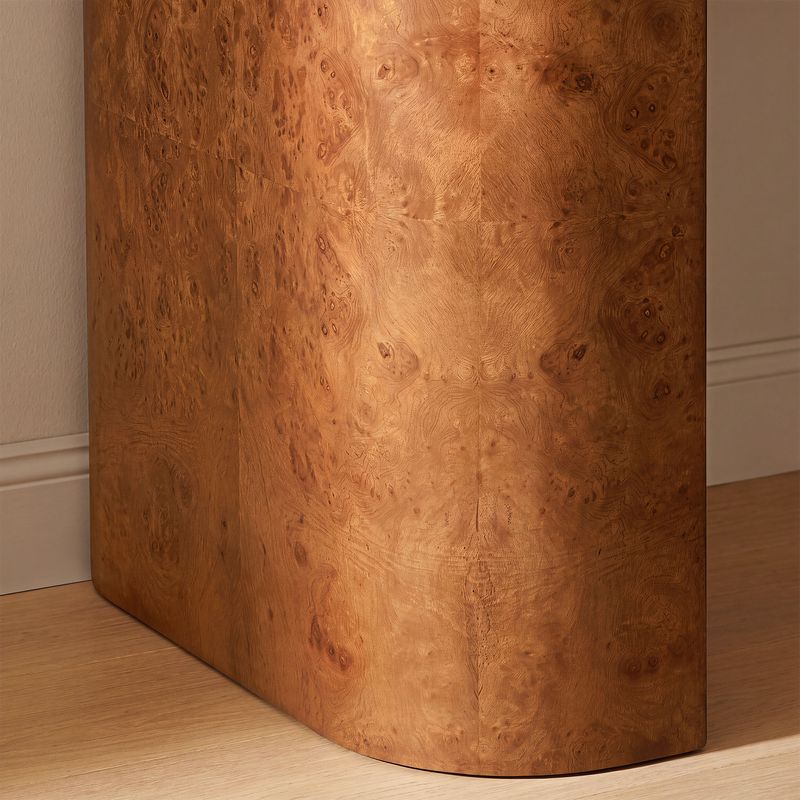
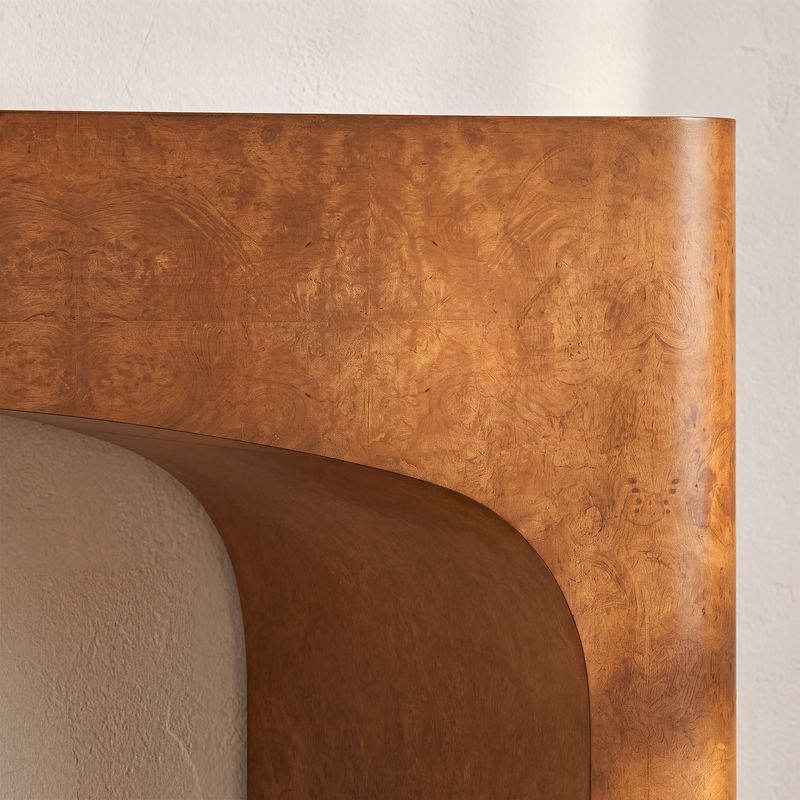
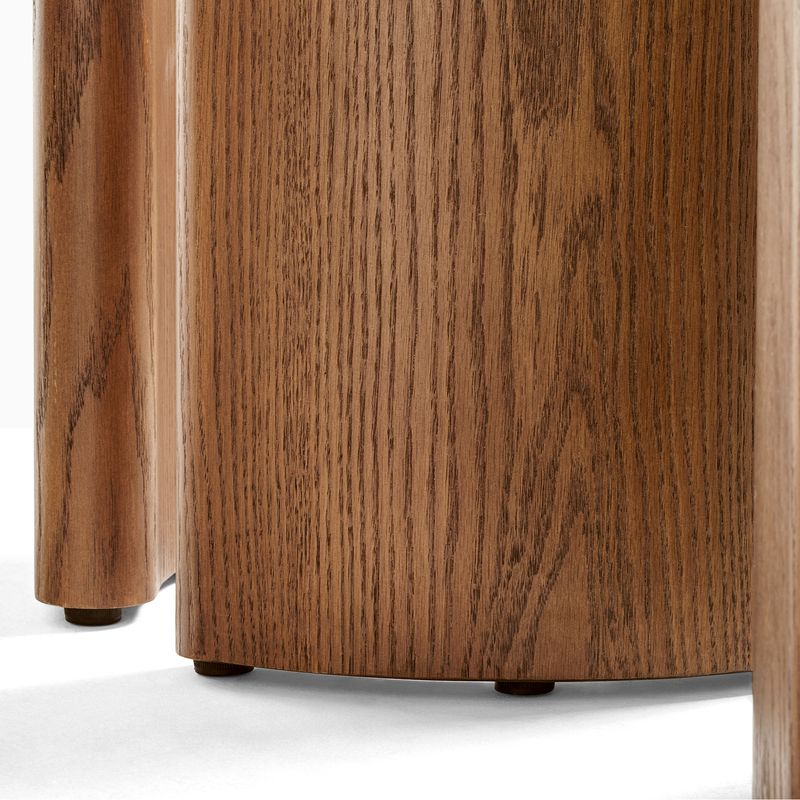
The Briar 60-Inch Burl Console Table features warm brown burl veneer that continues across the tabletop and curved legs. It measures 60 inches wide, 18.1 inches deep, and 32 inches high. Its rounded corners and flowing base create a sculptural look, while the continuous finish helps the design feel cohesive.
Architectural Details and Dark Finishes
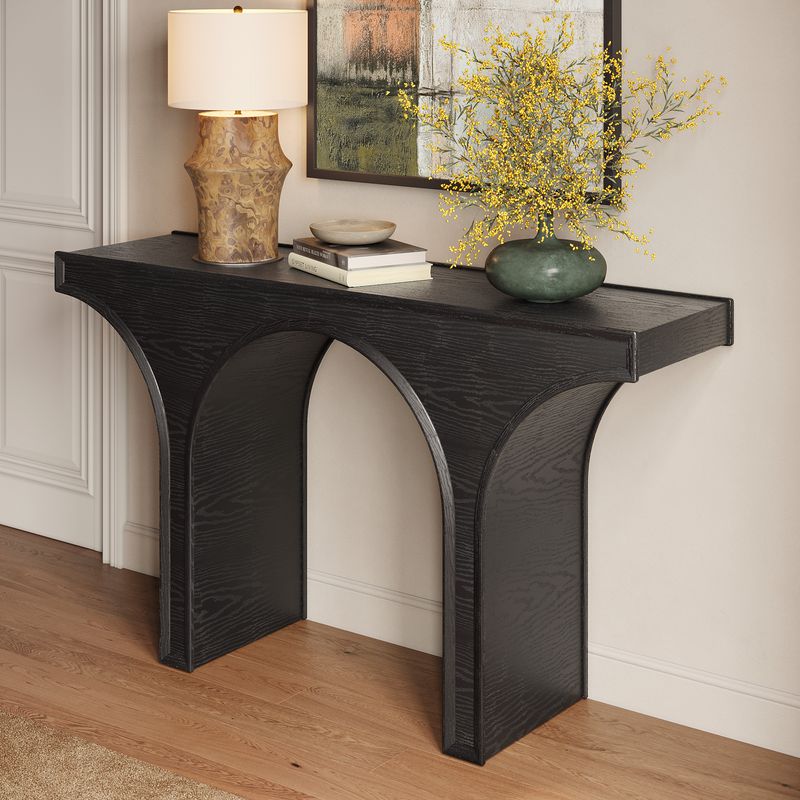
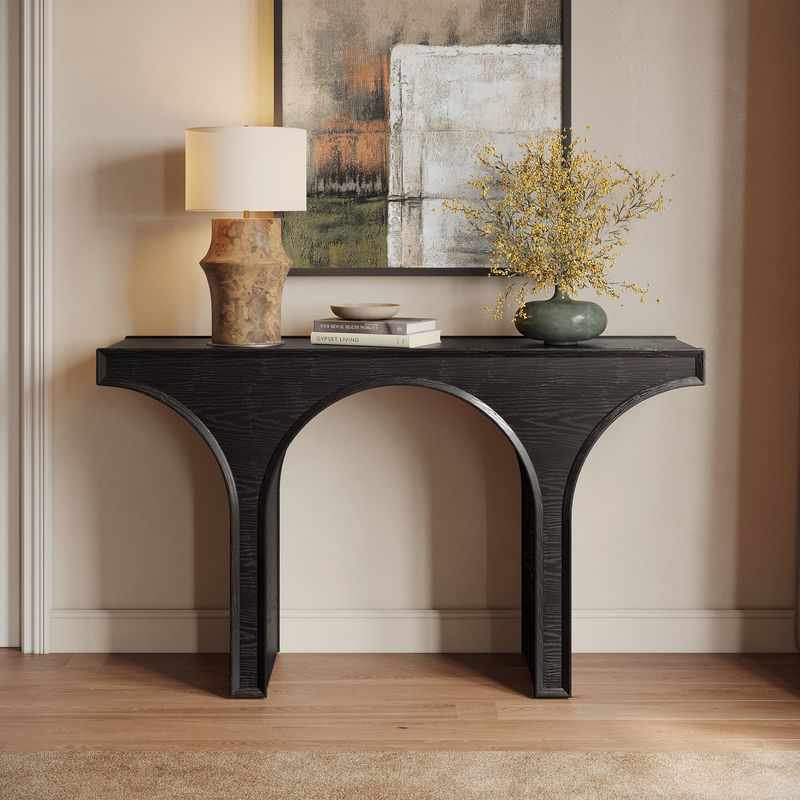
A dark finish and repeated geometric details can give a console more visual definition, particularly against a light wall or a restrained color palette.
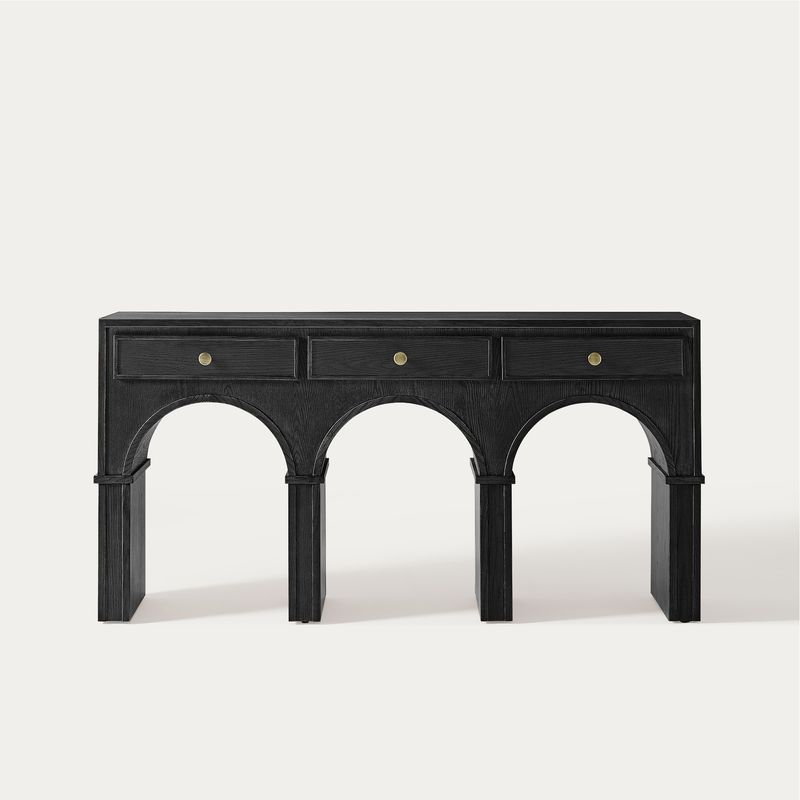
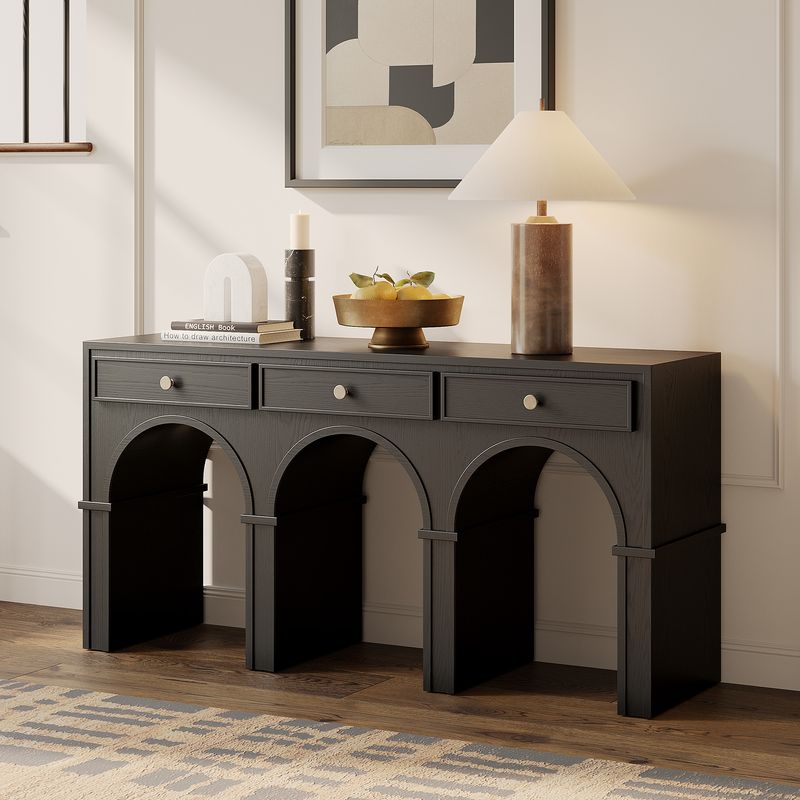
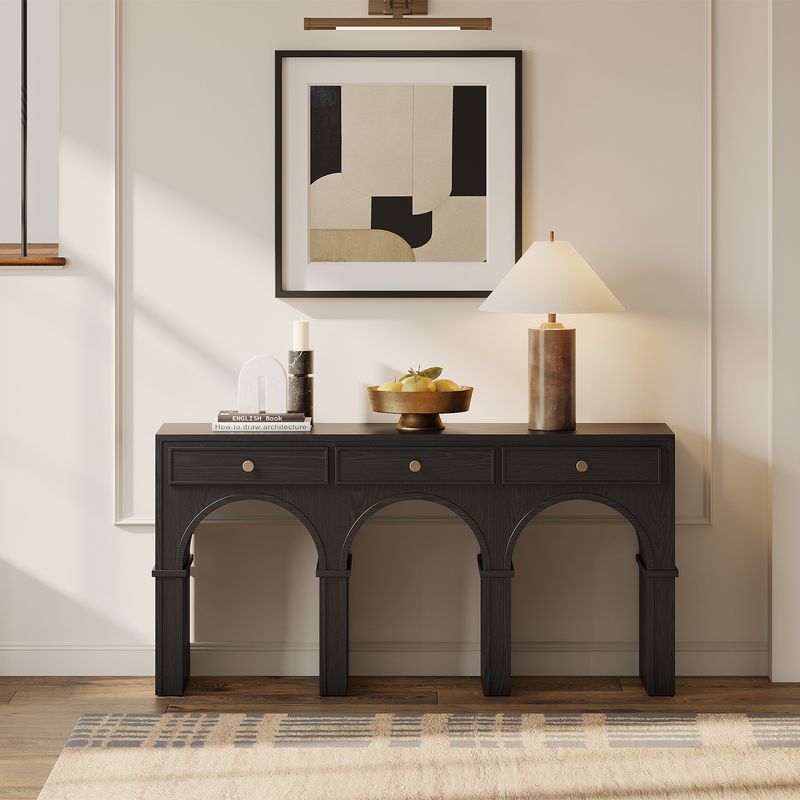
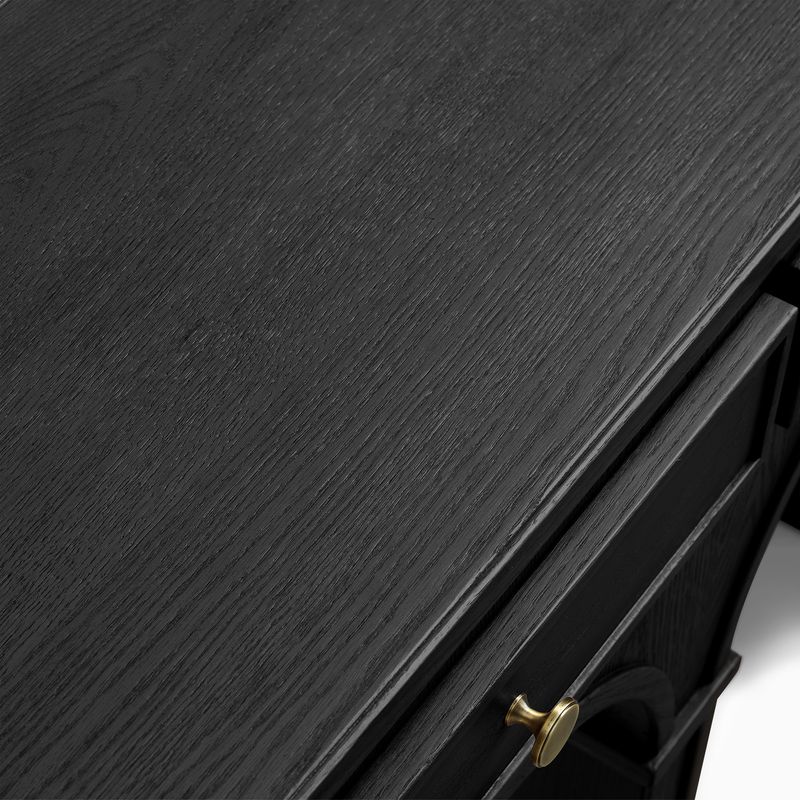
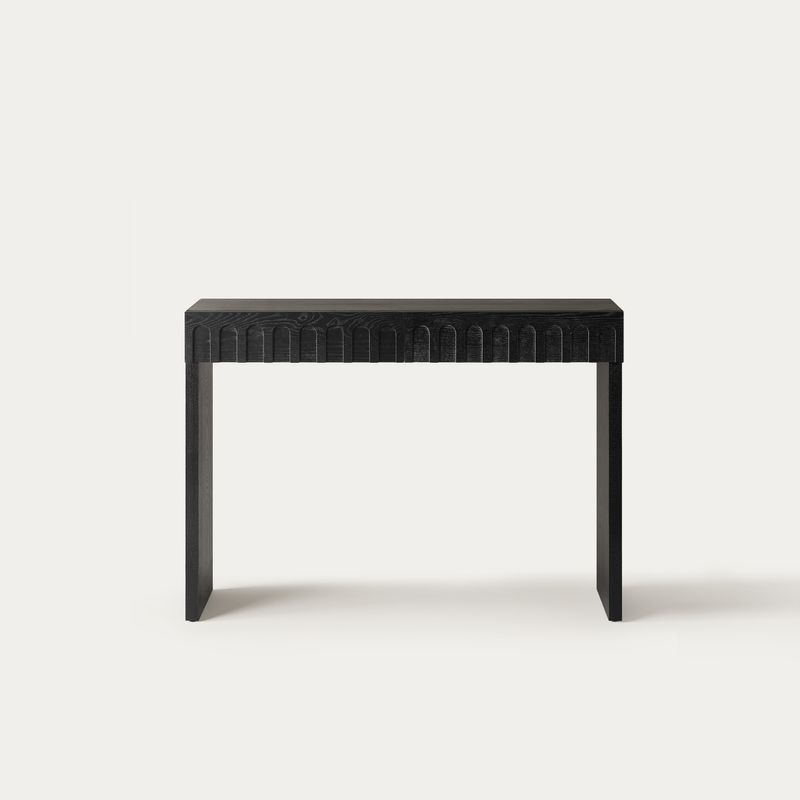
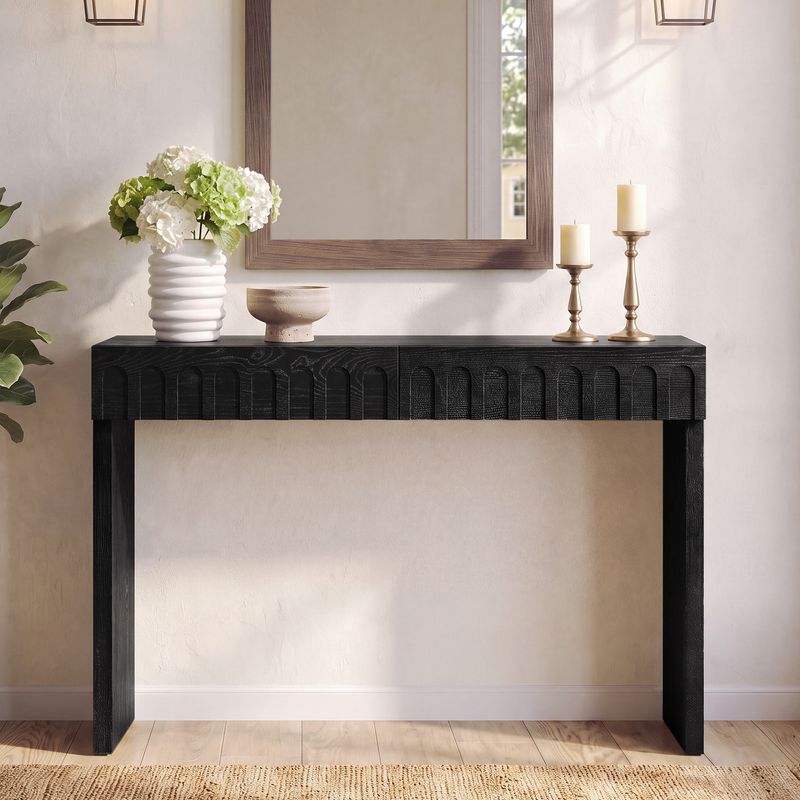
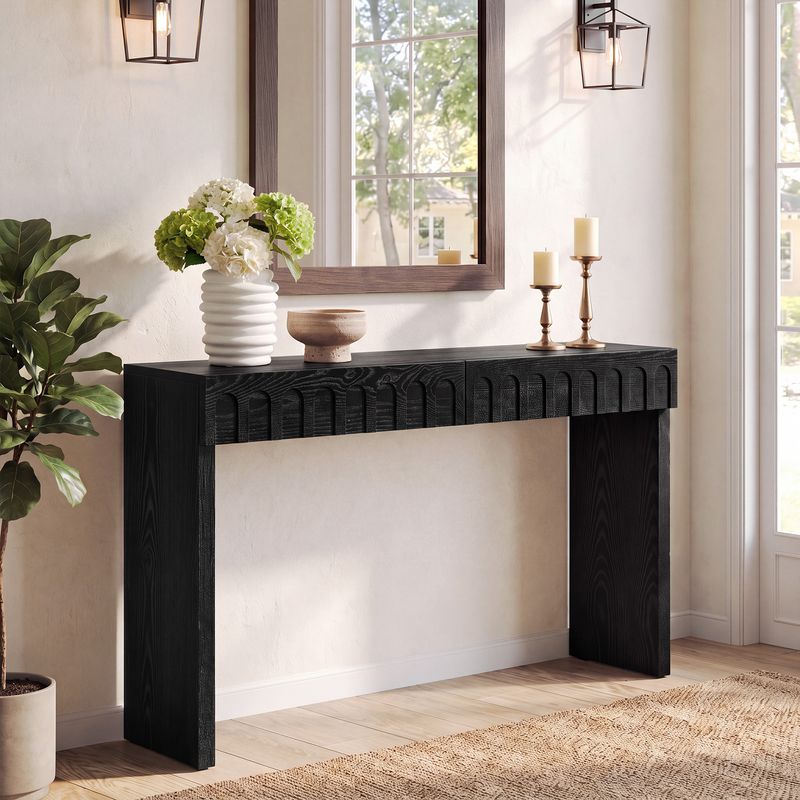
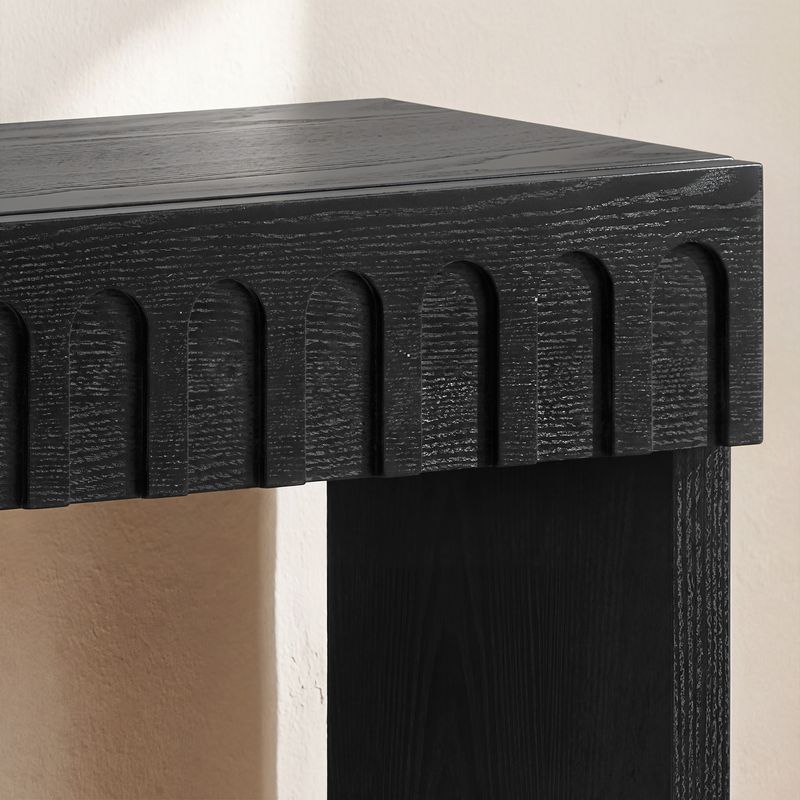
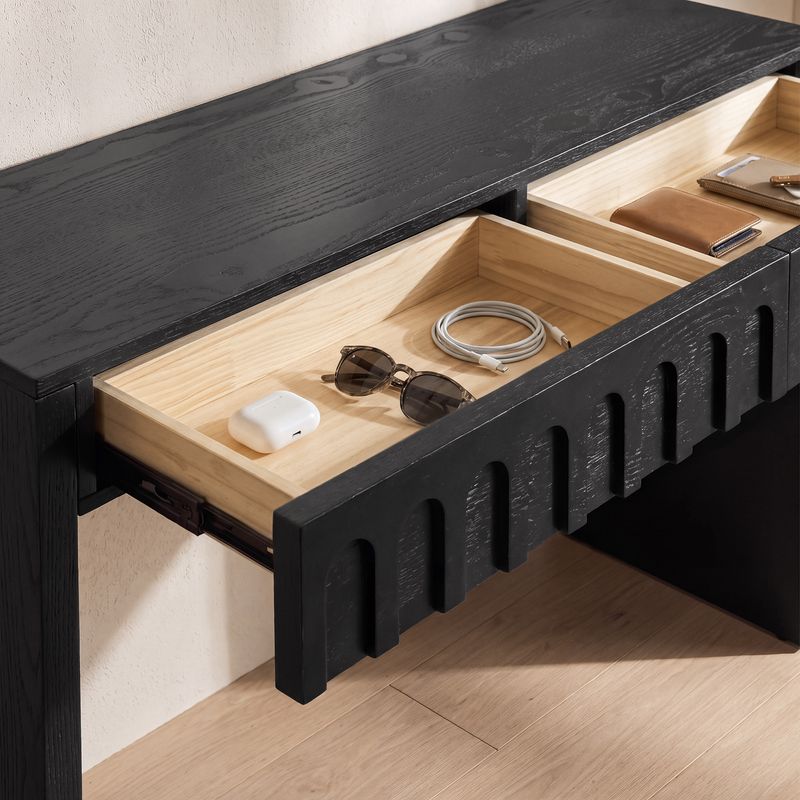
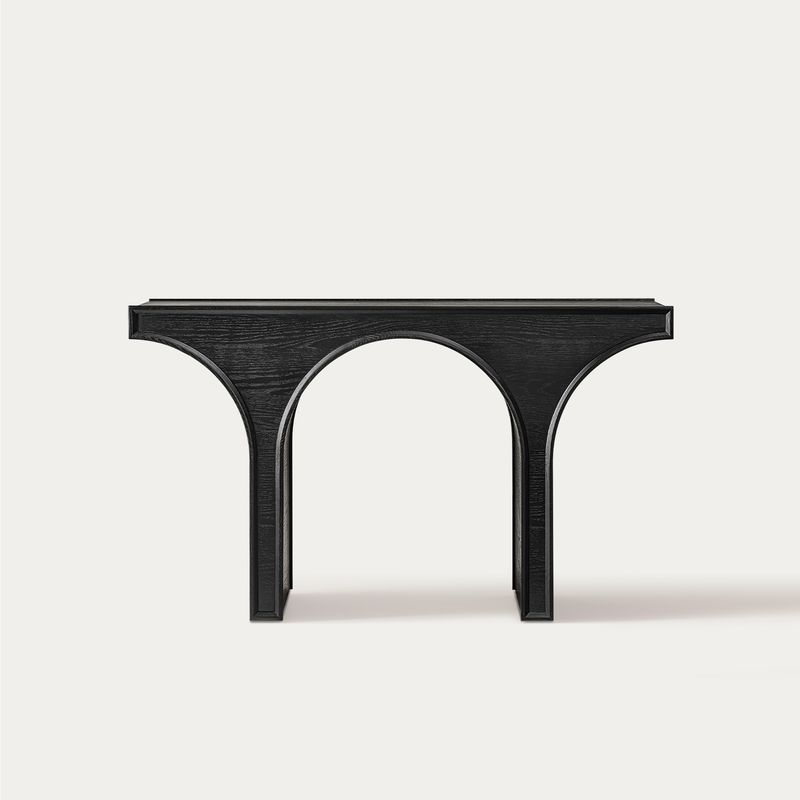
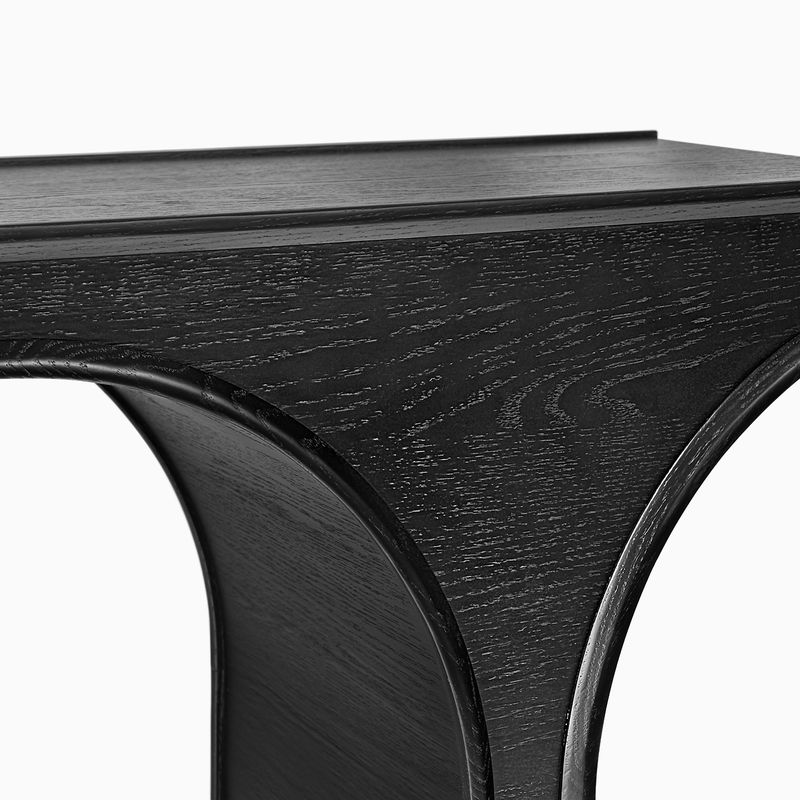
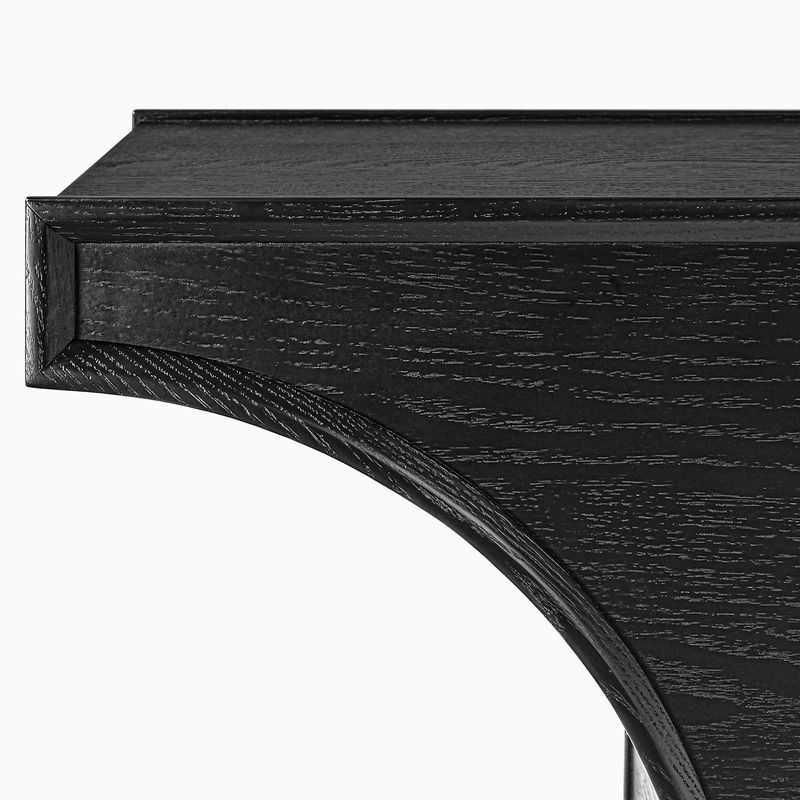
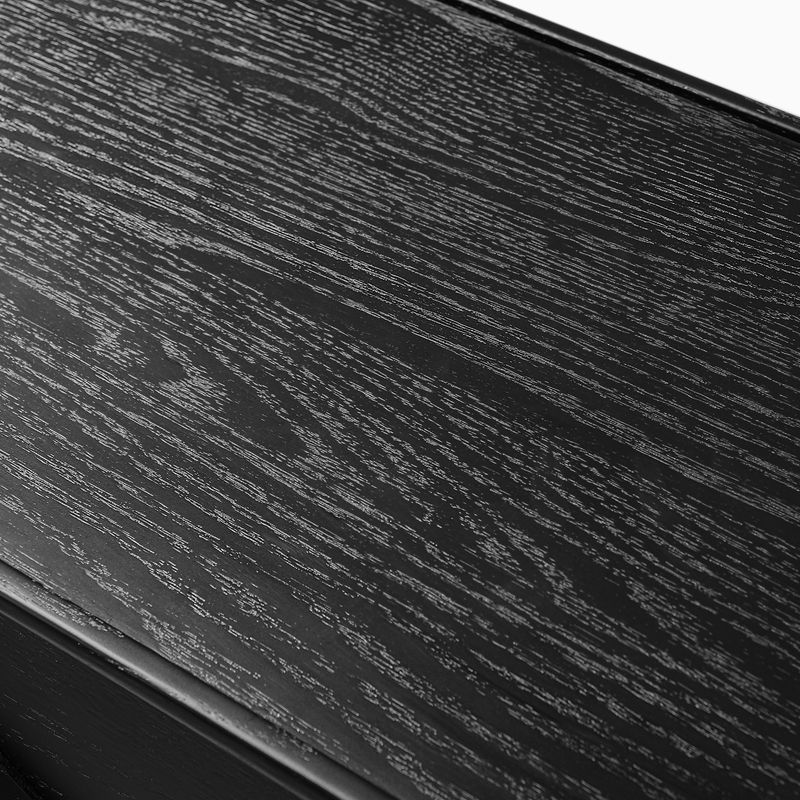
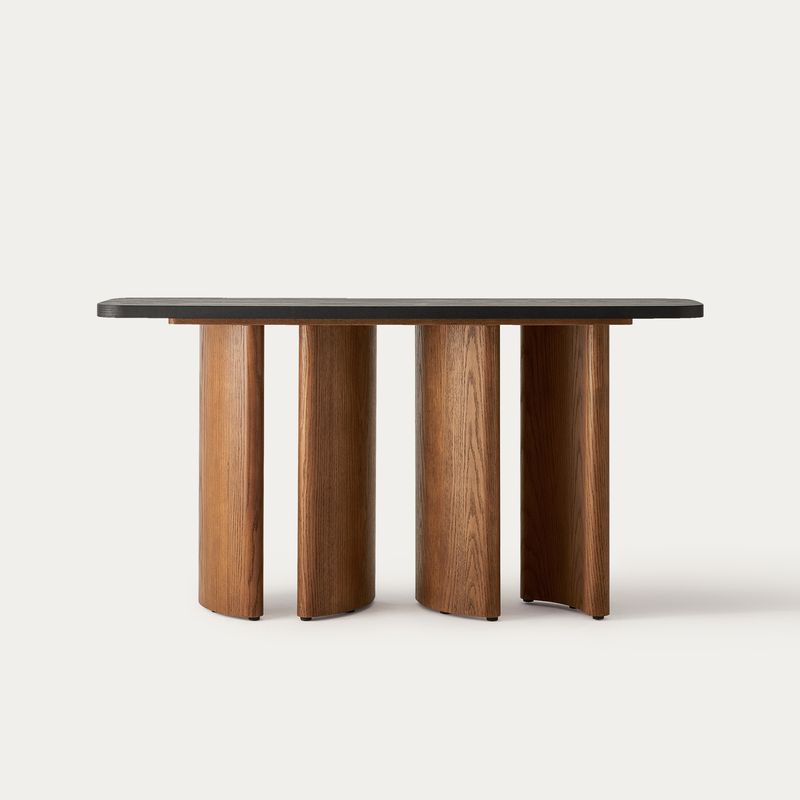
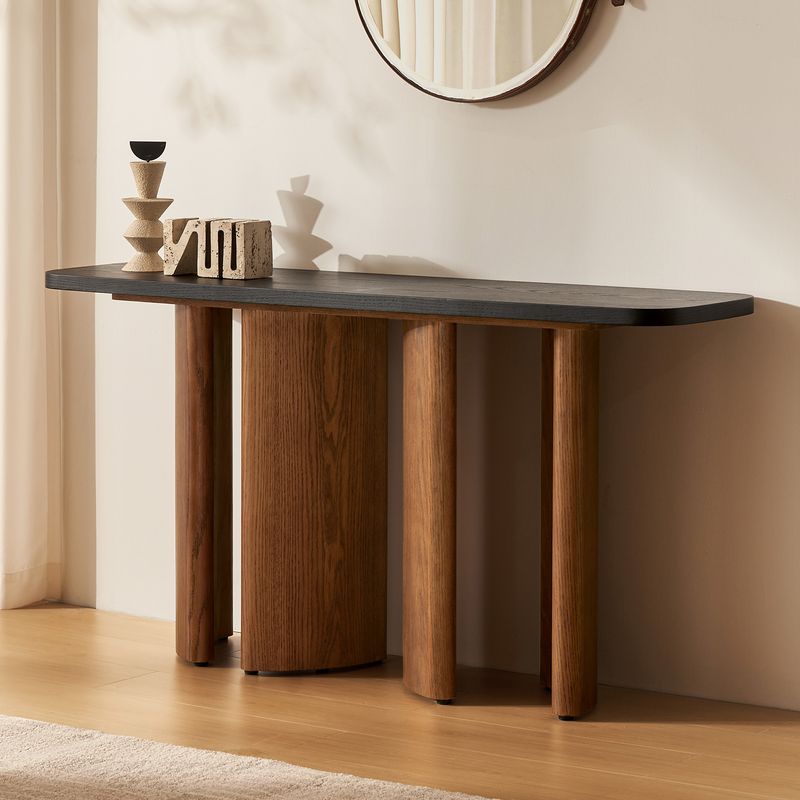
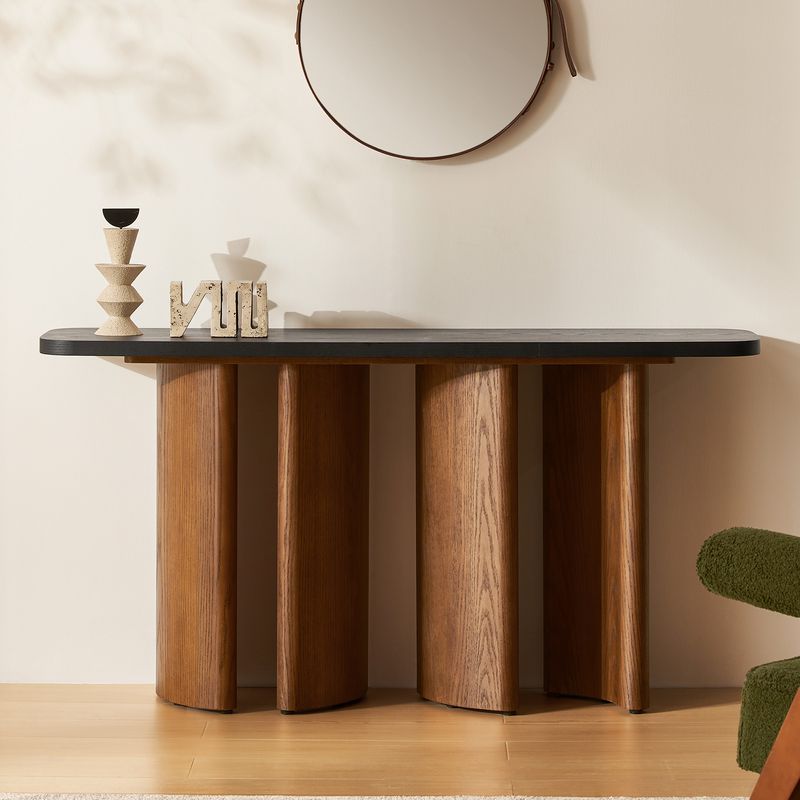
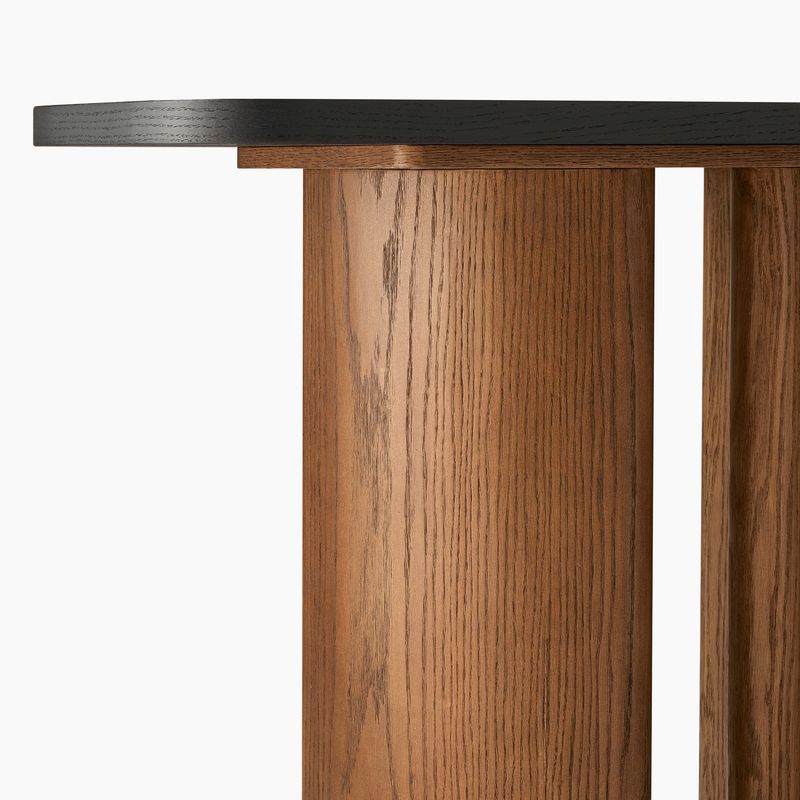
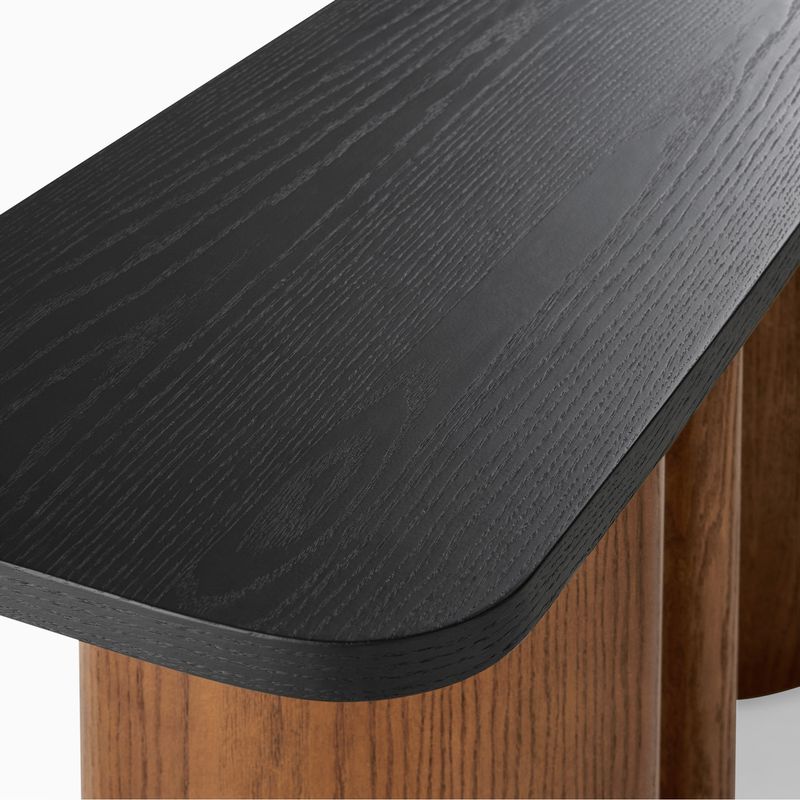
The Vidar 47-Inch Console Table features a deep black ash finish and repeated arch detailing along the front. It measures 47.2 inches wide, 15.9 inches deep, and 31.9 inches high. Its construction combines solid wood and engineered wood with American ash wood veneers.
Vidar also has concealed storage for everyday essentials, so its architectural appearance does not come at the expense of practical use. Consider it for an entryway or living room where you want a compact table with a darker, more defined look.
MCM Console Tables for Mid-Century Modern Interiors
An MCM console table can complement mid-century modern interiors through balanced proportions, warm wood tones, and considered detailing. Rather than matching every piece of furniture, look for a few common elements, such as similar wood tones, repeated curves, or clean geometric lines.
Skimra offers a lighter oak look with fluted detailing. Briar brings more pronounced grain and curved forms, while Vidar uses dark ash tones and repeated arches. Rolf provides another option when a floating design is more practical than a freestanding table.
Choose the silhouette that suits the room first, then use lighting, artwork, or a small decorative object to connect the table with the rest of the space.
Choose a Console Table With the Storage You Need
Think about what you plan to keep on the table before deciding whether you need drawers or an open surface. A decorative display and an everyday landing spot have different requirements.
When a Console Table With Drawers Makes Sense
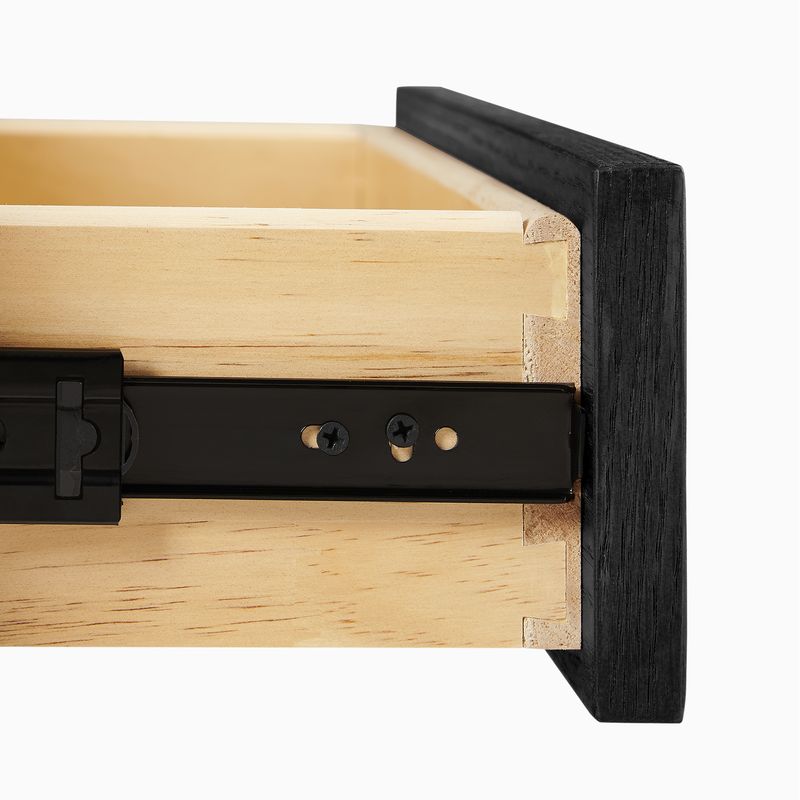
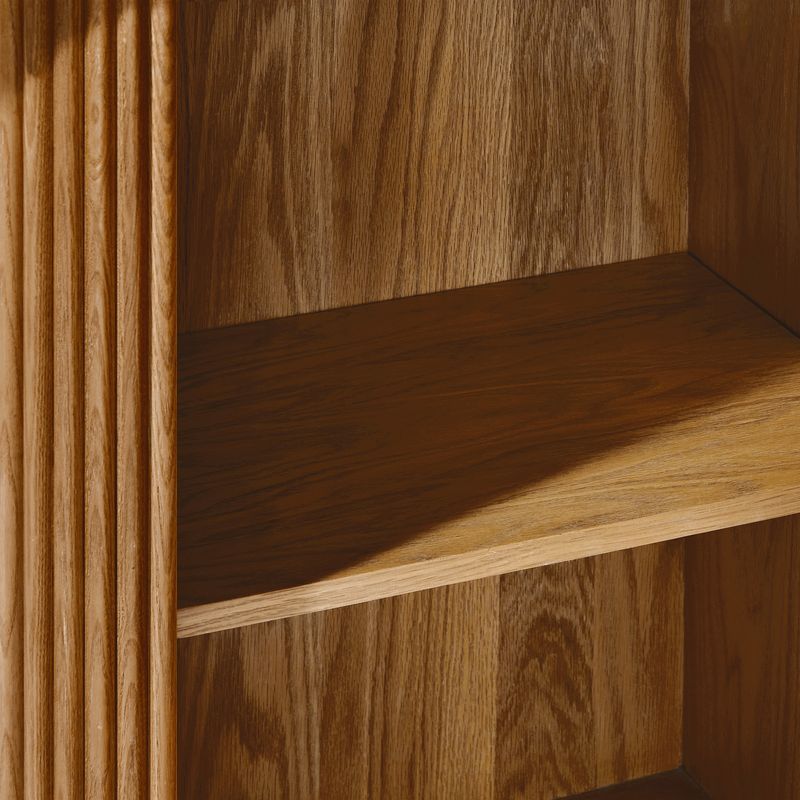
A console table with drawers can keep keys, stationery, charging accessories, and other small items out of sight. This is particularly useful in an entryway where loose belongings can quickly make the area look cluttered.
Skimra and Vidar all provide concealed storage, but their dimensions and configurations differ. Skimra offers drawers within a longer freestanding form; Vidar combines concealed storage with a compact width and a more architectural exterior.
Check the drawer's interior dimensions as well as the overall table size. A shallow drawer may be suitable for small accessories but not for bulkier items. Also check the installation and assembly instructions, particularly for a wall-mounted design.
When an Open Design Works Better
An open console can make a room feel less visually heavy and may leave space beneath the tabletop for a basket or a decorative object, depending on the base design. It is a good option when display space matters more than concealed storage.
Avoid filling every available area. A lamp, a small stack of books, and one decorative object can be enough to make the table feel considered while leaving the surface useful.
How to Style a Console Table
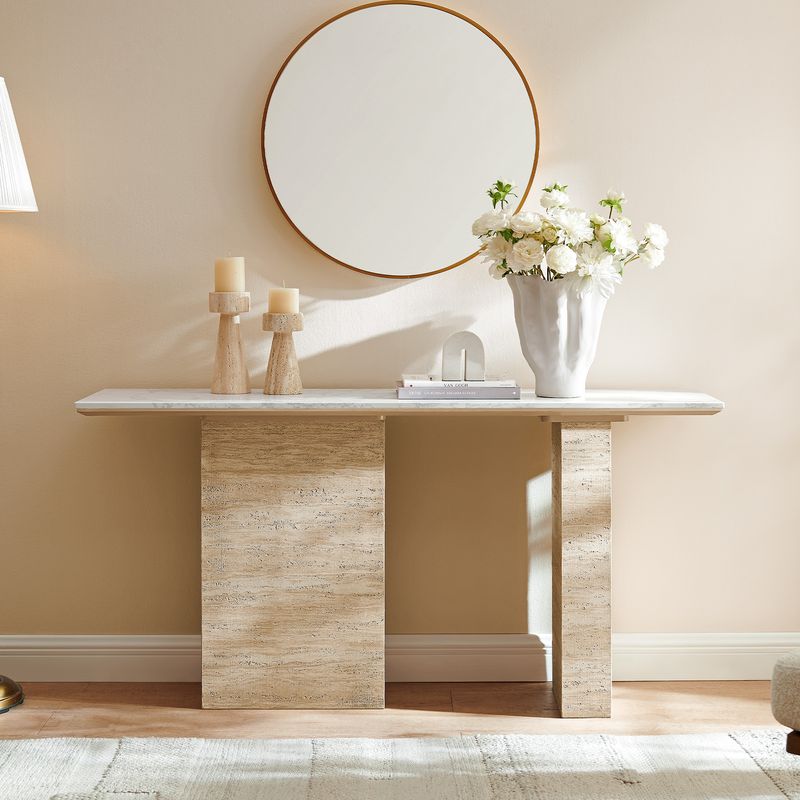
A few well-chosen pieces usually work better than a crowded arrangement. Start with a focal point above the table, such as a mirror or artwork, then add accessories of different heights.
● Add a taller element: A lamp or vase can provide height and help balance a long tabletop.
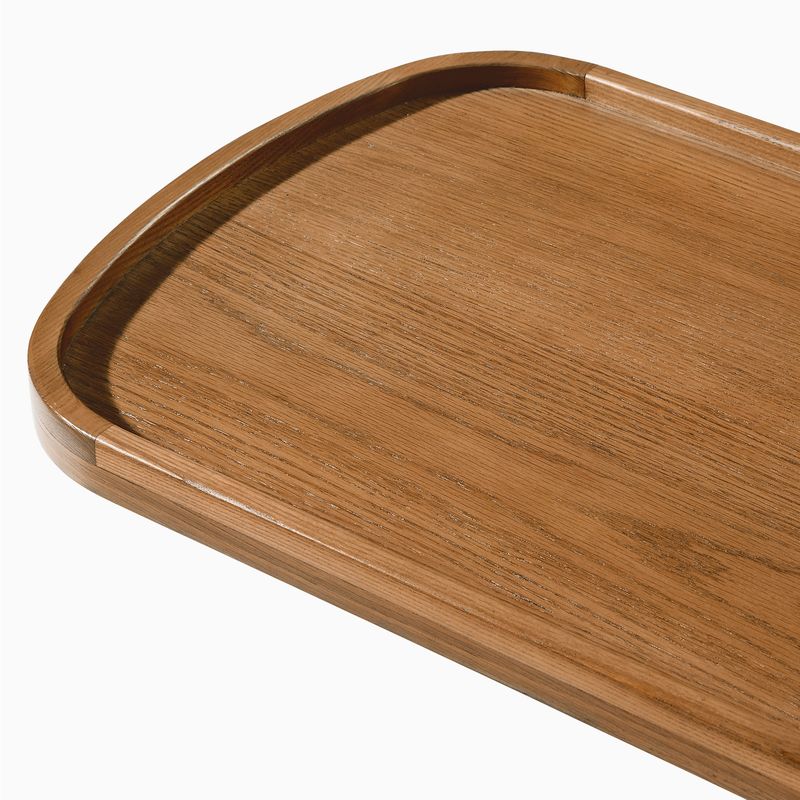
● Use a tray for everyday items: In an entryway, a tray keeps keys and small belongings together.
● Mix shapes and textures: Pair a simple ceramic object with books or a natural-texture accent.
● Leave open space: Let distinctive finishes, such as Briar's burl pattern or Vidar's arch detailing, remain visible.
● Keep circulation clear: Make sure accessories do not extend into the path people use to walk through the room.
For a wood console table, neutral accessories can complement the natural-looking finish without making the arrangement feel overly matched. For a darker design, lighter objects can create contrast. The best arrangement is one that looks intentional and still works for everyday use.
Find Your Console Table at Hernest
Choosing the right console starts with the space, not the styling. Measure the available area, decide whether you need concealed storage, and compare the dimensions and construction of the designs you like.
Explore Hernest console tables to compare the floating Rolf, the burl-finish Briar, the architectural Vidar, and the oak Skimra. Each offers a different combination of proportions, finish, and function, helping you find a table that works with your entryway, hallway, or living room.