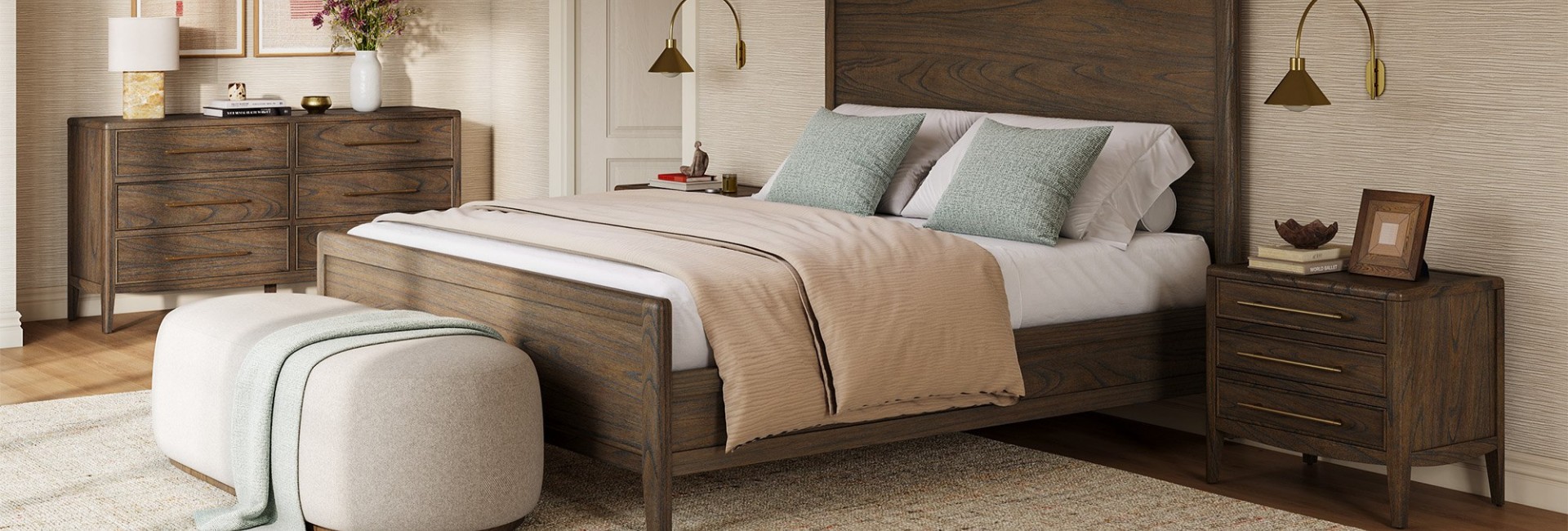
If you’ve ever stood in a furniture showroom—or scrolled endlessly online—trying to figure out the best types of dressers for your home, you’re not alone. The truth is, most people don’t struggle because there are too few options, but because there are too many overlapping definitions, sizes, and styles.
This guide breaks everything down like a real designer would explain it during a home consultation. You’ll understand the main types of dressers, how they function in real bedrooms, what actually matters when choosing wood dressers, and how to avoid costly mistakes that lead to cramped, mismatched spaces.
Whether you're furnishing a new apartment or redesigning a bedroom with dresser as your focal point, this is your practical, no-nonsense guide.
Table of Contents
- Why Choosing the Right Dresser Matters
- What Are the Different Types of Dressers?
- What Is a Double Dresser?
- What Are the Different Styles of Wood Dressers?
- What Are the Different Sizes of Wood Dressers?
- Best Wood Materials for Bedroom Dressers
- What Are the Benefits of Wood Dressers?
- How to Choose the Best Bedroom Dresser
- How to Design a Beautiful Bedroom With Dresser
- Common Mistakes to Avoid When Buying a Bedroom Dresser
- Expert Tips for Maintaining Wood Dressers
- Final Thoughts
- FAQs
- What are the different types of 6 drawer dressers?
- What are different types of dressers called?
- What are the different styles of wood dressers?
- What are the different sizes of wood dressers?
- What are the benefits of wood dressers?
- How to choose a wood dresser?
- How to care for and maintain wood dressers?
- What is a double vs triple dresser?
- Should you have a dresser in a bedroom?
Why Choosing the Right Dresser Matters
More than storage—how a dresser shapes your bedroom
A bedroom dresser isn’t just storage—it anchors the visual balance of your room. In many interior layouts, the dresser acts as a secondary focal point after the bed. Designers often treat it as a “visual weight stabilizer,” especially in medium to large bedrooms.
Among all types of dressers, the right one helps:
Balance empty wall space
Improve daily organization
Reinforce your room’s style direction
In fact, interior stylists often say: “A bedroom without proper storage furniture feels unfinished, no matter how expensive the bed is.”
That’s why selecting the right types of dressers matters more than most people realize.
Common problems people face when buying the wrong dresser
Choosing the wrong dresser leads to issues like:
Overcrowded walkways
Drawers that can’t fully open
Visual imbalance in the room
Insufficient storage for seasonal clothing
A poorly chosen bedroom dresser can also throw off proportion—especially in rooms where scale is everything.
What Are the Different Types of Dressers?
Understanding the main types of dressers helps you choose the right storage piece based on room size, lifestyle, and clothing needs. In general, dressers are categorized by layout, height, and storage capacity, especially in modern bedroom design where functionality matters as much as aesthetics.
Standard Dresser
A standard dresser is the most versatile option among all types of dressers. It typically features 5–9 drawers in a horizontal layout, making it ideal for everyday clothing storage. It works well in a balanced bedroom dresser setup, especially when placed opposite the bed or under a wall mirror. Example: a medium-width dresser used in a 12x12 bedroom provides enough storage without overwhelming the space.
Double Dresser
A double dresser is one of the most popular types of dressers, designed with two vertical columns of drawers. It offers wider surface space and better organization for shared storage. If you're wondering what is a double dresser, think of it as a couple-friendly bedroom dresser that separates “his and hers” storage efficiently.
Triple Dresser
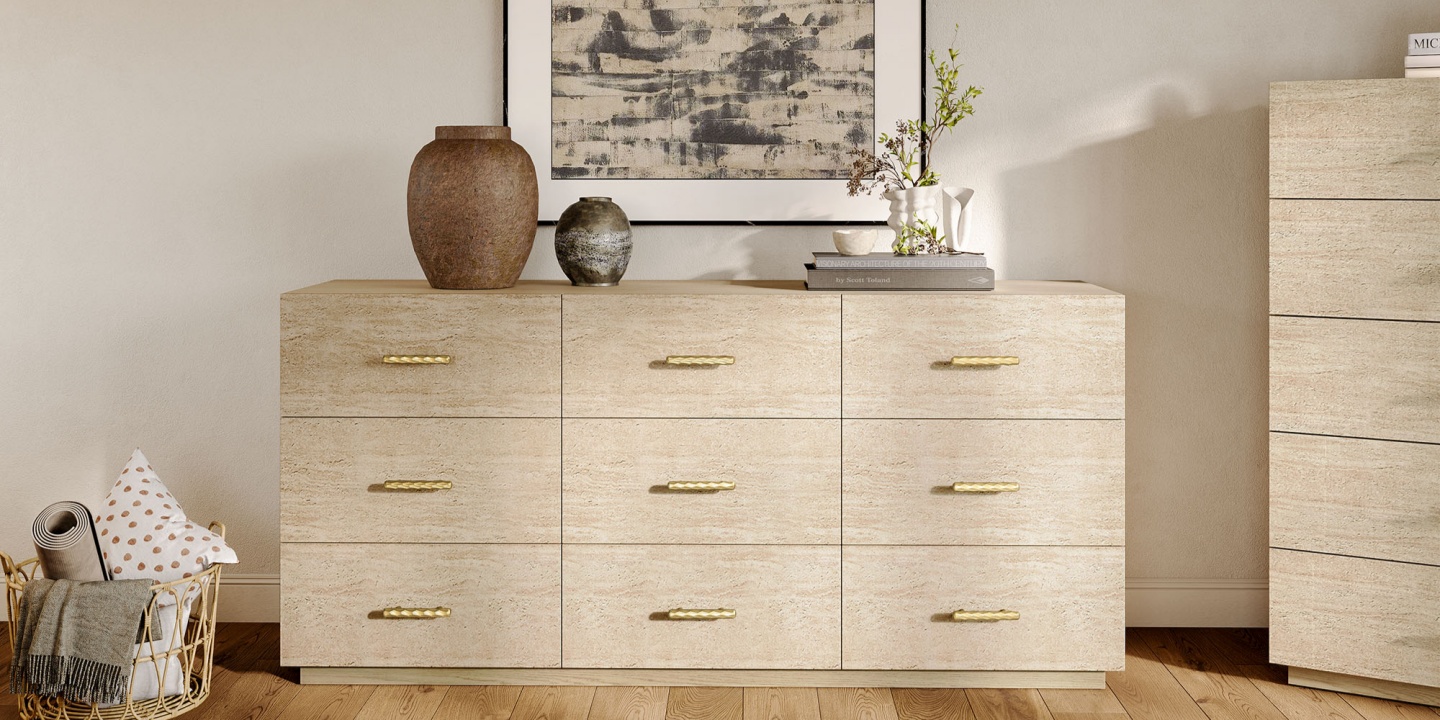
A triple dresser is the largest horizontal option among types of dressers, usually featuring three columns of drawers. It is ideal for master bedrooms or families needing maximum storage. In a spacious bedroom with dresser, it also serves as a strong visual anchor along a long wall.
Chest of Drawers (High Chest)
A chest of drawers is a vertical interpretation of types of dressers, built upward instead of outward. It saves floor space while still providing deep storage, making it ideal for compact apartments. This style of wood dressers is especially useful in narrow rooms where horizontal furniture would feel overwhelming.
What Is a Double Dresser?
A double dresser is one of the most practical and widely used types of dressers, especially in modern bedroom layouts where storage efficiency and visual balance are equally important. It is designed with two vertical columns of drawers, offering a wider footprint and more organized storage compared to narrower configurations.
What is a double dresser?
A double dresser is essentially a horizontal storage unit that typically features 6 drawers arranged in two equal sections. Among all types of dressers, it is considered the most “shared-use friendly” option because it naturally divides storage space. In real-world bedroom dresser setups, couples often use one side per person, which improves daily organization and reduces clutter.
A refined example is the Skugga 63" Oak 6-Drawer Dresser from Hernest, which reflects a modern interpretation of this category. With fluted oak detailing, dovetail drawer construction, and a lightweight lifted-leg design, it demonstrates how a double dresser can combine structure with visual softness in a bedroom with dresser layout.
Double dresser dimensions
Most double dressers fall within these practical ranges:
Width: 60–72 inches
Depth: 18–20 inches
Height: 30–36 inches
These proportions make them ideal for medium to large rooms, while still maintaining walkable clearance in a bedroom dresser arrangement.
Who should buy a double dresser?
A double dresser is best suited for:
Couples sharing storage space
Medium to large bedrooms
Homeowners who prefer clean, symmetrical furniture layouts
Anyone needing a balance between storage capacity and surface display
In short, it’s one of the most versatile types of dressers for everyday living.
Double dresser vs standard dresser
A standard dresser is usually narrower and more compact, while a double dresser offers wider storage and better division of space. Standard models fit smaller rooms, but double dressers provide stronger visual grounding in a bedroom with dresser design, especially when storage needs increase over time.
What Are the Different Styles of Wood Dressers?
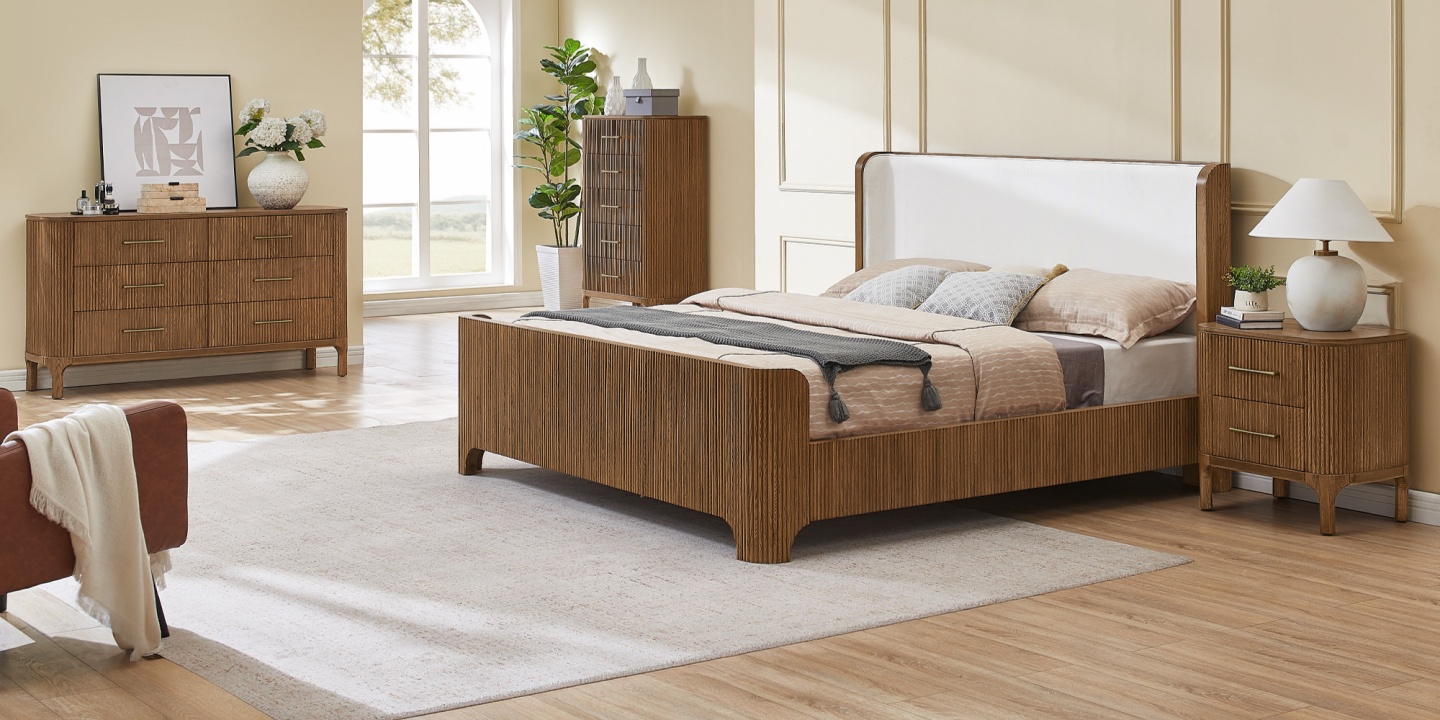
Wood dressers come in a variety of design languages, and each style reflects how people live, store, and interact with their bedroom dresser. Among all types of dressers, style determines not only aesthetics but also spatial perception and functionality in a bedroom with dresser layout.
Mid-Century Modern
This is the most influential style among all wood dressers. It features clean lines, tapered legs, and warm wood tones. The focus is simplicity with purpose—no excess ornamentation. In many modern homes, it remains the go-to choice because it visually lightens the room while still offering strong storage capacity.
Scandinavian
Scandinavian wood dressers emphasize light finishes, minimal hardware, and functional design.
Modern Contemporary
A flexible style among types of dressers, modern contemporary designs use flat panels, neutral colors, and subtle textures.
Farmhouse
Farmhouse wood dressers use rustic finishes and visible wood grain.
Traditional
Traditional styles are more decorative, with detailed molding and heavier proportions.
Japandi
Japandi blends Japanese restraint with Scandinavian warmth.
Quick comparison:
Among all types of dressers, Mid-Century Modern remains the most versatile and space-efficient choice.
What Are the Different Sizes of Wood Dressers?
The size of wood dressers plays a critical role in how well a bedroom functions. In real interior planning, especially for a bedroom dresser layout, size determines circulation space, storage efficiency, and visual balance. Among all types of dressers, Mid-Century Modern designs are often favored because they achieve strong storage capacity without overwhelming the room visually.
Small dressers
Small dressers typically range under 48 inches wide and are ideal for apartments or secondary bedrooms. They work well in tight bedroom with dresser layouts where floor space is limited. A narrow Mid-Century Modern dresser, for example, can still provide efficient storage while keeping the room visually light.
Medium dressers
Medium-sized wood dressers (48–60 inches) are the most versatile category. They balance storage and proportion, making them the most common choice among types of dressers for everyday bedrooms.
Large dressers
Large dressers (60–72 inches) offer expanded drawer capacity and work best in primary bedrooms. They also function as a visual anchor in a bedroom dresser setup.
Extra-wide dressers
Extra-wide units (72+ inches) maximize storage and suit spacious interiors. These wood dressers often act as statement pieces in open layouts.
How much clearance should you leave around a dresser?
For functional comfort, leave 24–36 inches of clearance in front of drawers. This ensures smooth movement and full drawer extension. Side clearance of at least 2–3 inches helps maintain airflow and prevents crowding in all types of dressers.
Best Wood Materials for Bedroom Dressers
The durability and feel of a bedroom dresser depend heavily on the material. In real-world furniture selection, especially across different types of dressers, wood choice affects lifespan, weight, maintenance, and overall aesthetic.
Solid Oak
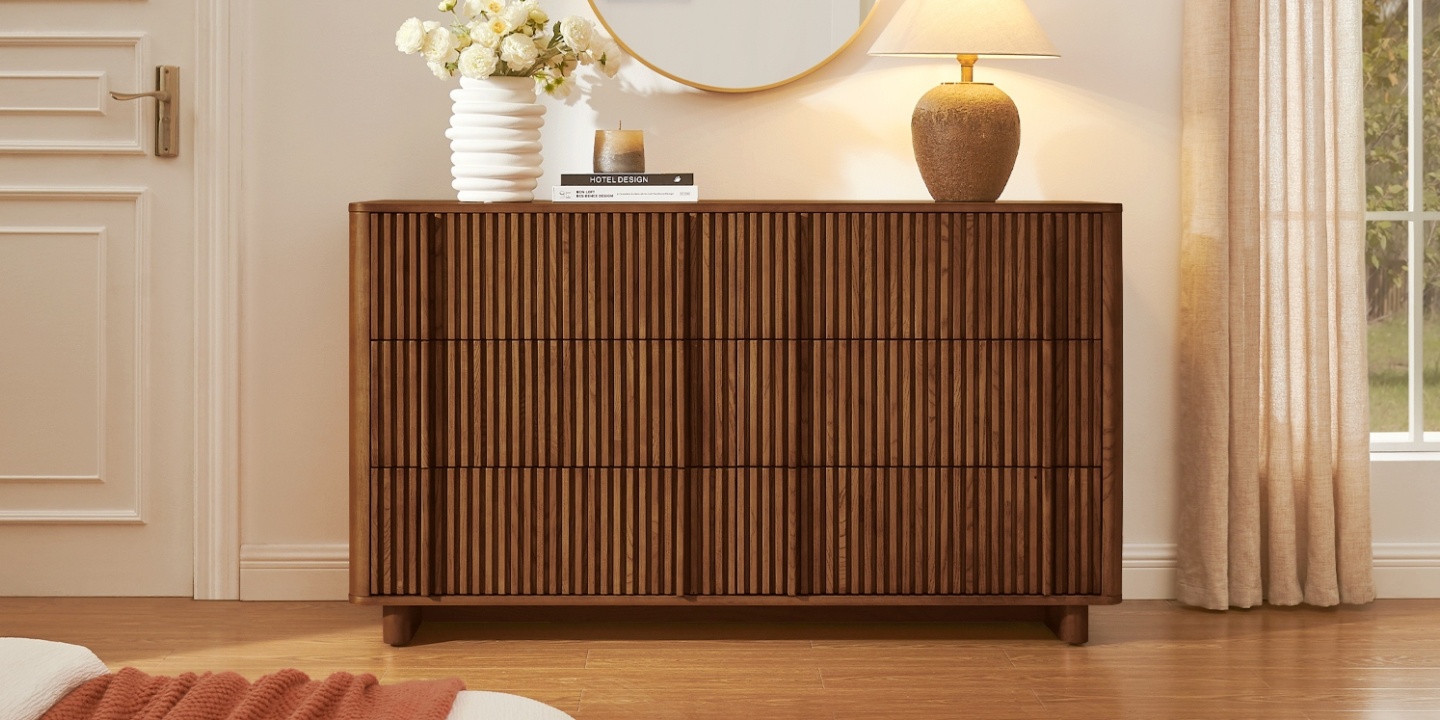
Solid oak is one of the most durable materials used in wood dressers. It has a strong grain structure that resists daily wear, making it ideal for long-term bedroom dresser use in busy households.
Walnut
Walnut is valued for its deep color and refined grain. It’s often used in premium types of dressers where visual richness is a priority.
Ash
Ash offers a lighter tone and strong flexibility, making it suitable for modern, clean-lined wood dressers, especially Mid-Century inspired designs.
Rubberwood
Rubberwood is an eco-conscious option, commonly used in mid-range types of dressers due to its stability and affordability.
Engineered Wood
Engineered wood provides structural consistency and resistance to warping, often paired with natural veneers in a bedroom with dresser setup.
Solid Wood vs Engineered Wood
When comparing materials in wood dressers, the choice between solid wood and engineered wood directly impacts durability, cost, and long-term performance in a bedroom dresser setup. Both are widely used across different types of dressers, but they serve slightly different needs.
Solid wood (such as oak or walnut) is valued for its natural strength, unique grain patterns, and long lifespan. It can be sanded and refinished multiple times, making it ideal for homeowners who see furniture as a long-term investment. In a real bedroom with dresser environment, solid wood tends to age gracefully and develop character over time.
Engineered wood, on the other hand, is made from layered wood fibers or veneers. It offers better resistance to warping and is more dimensionally stable in changing humidity—common in many US homes.
What Are the Benefits of Wood Dressers?
Wood dressers remain one of the most reliable choices for a bedroom dresser because they combine durability, aesthetics, and long-term usability. Across different types of dressers, wood consistently performs better in both structural stability and design longevity.
Exceptional durability
High-quality wood dressers resist daily wear, making them suitable for long-term bedroom use. Solid hardwood structures can support heavy loads without warping, especially in frequently used bedroom with dresser layouts.
Timeless appearance
Wood naturally adapts to evolving interior styles. Whether placed in modern or traditional types of dressers settings, it maintains visual relevance without feeling outdated.
Easy refinishing
Unlike synthetic materials, wood dressers can be sanded, stained, or refinished, allowing homeowners to refresh their bedroom dresser instead of replacing it.
Better long-term value
Although initial cost may be higher, wood furniture reduces replacement frequency, making it more cost-effective over time.
Natural warmth and texture
Wood introduces organic texture and warmth into a bedroom with dresser, softening hard architectural lines and improving spatial comfort.
Sustainable options when responsibly sourced
Responsibly harvested wood supports eco-friendly furnishing choices, especially in modern types of dressers that prioritize longevity over disposability.
How to Choose the Best Bedroom Dresser
Choosing the right bedroom dresser is not just about style—it’s about function, proportion, and long-term usability. Across different types of dressers, the best decision always comes from balancing space, storage needs, and room layout.
Measure your available space
Start by measuring wall length, walkway clearance, and nearby furniture. A common mistake is underestimating drawer depth when open. In a typical bedroom with dresser, leave at least 24–36 inches of clearance in front for comfortable movement.
Determine your storage needs
Think in terms of lifestyle: folded clothes, accessories, seasonal items. A single person may only need a medium dresser, while couples often require larger types of dressers with divided storage.
Match your bedroom style
Your bedroom dresser should visually align with the bed frame and nightstands. For example, Mid-Century Modern wood dressers work best in interiors that emphasize clean lines, balanced proportions, and a warm, structured visual flow.
Select quality construction
Look for solid joinery, smooth drawer slides, and stable frames. These details determine how well different types of dressers perform over time in daily use.
Choose the right finish
Finishes affect both durability and mood. Lighter finishes expand small spaces, while darker tones add depth in larger bedroom with dresser layouts.
Set your budget
A good approach is to prioritize structure first, then aesthetics. Investing in well-built wood dressers often reduces replacement costs in the long run, especially in frequently used types of dressers configurations.
How to Design a Beautiful Bedroom With Dresser
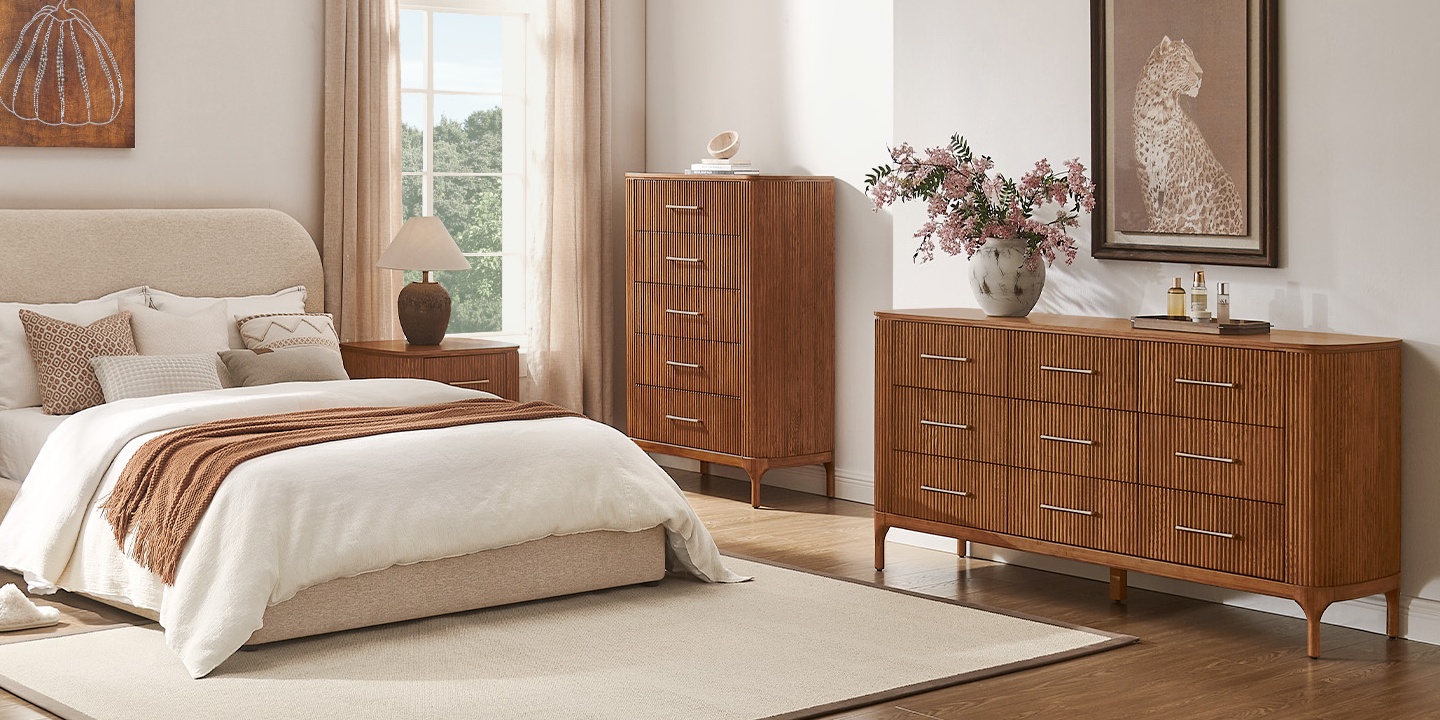
Designing a balanced bedroom dresser layout is about more than decoration—it’s about spatial flow, proportion, and daily usability. Across different types of dressers, placement and coordination determine how functional and visually cohesive a bedroom with dresser will feel.
Best dresser placement
Place the bedroom dresser against the longest unobstructed wall or opposite the bed to create visual balance. Avoid blocking natural walkways, and ensure drawers can fully open without obstruction. In smaller rooms, vertical alignment with windows or corners helps optimize space.
Pairing a dresser with mirrors
A mirror placed above or beside the dresser enhances light reflection and makes the room feel larger. This pairing works especially well with streamlined wood dressers, helping soften heavier furniture presence while maintaining functionality across different types of dressers.
Decorating the dresser top
Keep décor intentional: use 2–4 items such as a table lamp, a tray for essentials, and one decorative object. This prevents visual clutter and maintains balance in a bedroom with dresser setup. Neutral styling works best for most modern types of dressers.
Coordinating nightstands and dressers
To create a cohesive look, align materials, finishes, or tonal warmth between nightstands and the bedroom dresser. This doesn’t require exact matching—just visual harmony in height, texture, or wood tone for a unified bedroom composition.
Common Mistakes to Avoid When Buying a Bedroom Dresser
Choosing a bedroom dresser seems simple, but in practice, many issues come from overlooked details in space planning, material quality, and long-term usability. Across different types of dressers, these mistakes often lead to poor functionality and wasted investment in a bedroom with dresser layout.
Ignoring measurements
One of the most common mistakes is not measuring wall length, walkway space, and drawer extension depth. Even well-designed wood dressers can become impractical if they block movement or cannot fully open in tight bedroom dresser setups.
Choosing style over function
Many buyers focus only on appearance. However, among all types of dressers, functionality should come first. A visually appealing piece that lacks storage efficiency or proper drawer depth often fails in daily use, especially in shared bedrooms.
Buying poor-quality materials
Low-grade panels or weak joints reduce lifespan significantly. High-quality wood dressers—especially those using solid or reinforced construction—perform better over time and maintain stability in frequently used bedroom with dresser environments.
Overlooking drawer hardware
Drawer slides, joints, and handles directly impact usability. Weak hardware leads to sticking drawers or uneven movement, a common issue across lower-end types of dressers that look good but perform poorly.
Forgetting future storage needs
A bedroom dresser should not only fit current needs but also future wardrobe growth. Many homeowners underestimate seasonal clothing expansion, leading to early replacement. Planning ahead ensures your chosen wood dressers remain functional for years rather than months.
Expert Tips for Maintaining Wood Dressers
Proper care significantly extends the lifespan of wood dressers, especially in everyday bedroom dresser use where humidity, friction, and daily handling all play a role. Across different types of dressers, consistent maintenance ensures both structural stability and long-term visual quality in a bedroom with dresser setup.
Everyday cleaning
Dust regularly using a soft microfiber cloth to prevent buildup on wood surfaces. Avoid harsh cleaners that can strip natural oils. For most wood dressers, a dry or slightly damp cloth is sufficient for daily care.
Protecting wood finishes
Use coasters, trays, or felt pads to prevent direct contact between objects and the surface. This is especially important for frequently used types of dressers, where decorative items or personal essentials are placed on top of the bedroom dresser.
Preventing moisture damage
Wood is sensitive to humidity changes. Keep wood dressers away from direct AC vents or humidifiers. Wipe spills immediately to avoid surface swelling or staining.
Avoiding scratches
Do not drag objects across the surface. In a typical bedroom with dresser, even small decorative items can leave marks over time if not properly padded. Felt pads under lamps or décor help reduce friction damage.
Long-term maintenance schedule
A simple routine improves durability:
Weekly: dusting
Monthly: surface inspection and gentle cleaning
Seasonally: polish or conditioning (if recommended for the finish)
Consistent upkeep keeps all types of dressers functional and visually refined, ensuring your bedroom dresser remains a long-term, reliable part of your home.
Final Thoughts
Choosing among different types of dressers isn’t just a shopping decision—it’s a long-term investment in how your bedroom functions and feels every day.
Whether you prefer compact storage, wide double designs, or premium wood dressers, the right choice will transform your bedroom with dresser into a more organized, visually balanced, and comfortable space.
A well-chosen bedroom dresser doesn’t just hold clothes—it supports your lifestyle.
FAQs
What are the different types of 6 drawer dressers?
Six-drawer dressers are not a fixed category but a common configuration found in both standard dressers and double dressers. The structure depends more on layout than drawer count.
What are different types of dressers called?
Common types of dressers include standard dresser, double dresser, triple dresser, chest of drawers, tall chest, and combo dresser. Each name reflects differences in size, orientation, and storage capacity.
What are the different styles of wood dressers?
Popular styles of wood dressers include Mid-Century Modern, Scandinavian, Modern Contemporary, Farmhouse, Traditional, and Japandi. These styles differ in wood tone, silhouette, and detailing, allowing flexibility in any bedroom with dresser design.
What are the different sizes of wood dressers?
Wood dressers generally fall into four categories: small (under 48"), medium (48–60"), large (60–72"), and extra-wide (72"+). Each size corresponds to different types of dressers designed for specific room dimensions and storage needs.
What are the benefits of wood dressers?
Wood dressers offer durability, timeless design, easy refinishing, and long-term value. They also bring natural warmth into a bedroom dresser setup, making them suitable for both modern and traditional interiors.
How to choose a wood dresser?
Start by measuring your space, then evaluate storage needs, style preference, and build quality. Among all types of dressers, choose one that balances functionality, proportion, and material durability for long-term use.
How to care for and maintain wood dressers?
Clean regularly with a soft cloth, avoid excess moisture, and protect surfaces from scratches. Routine maintenance helps preserve both structure and finish across all wood dressers in daily use.
What is a double vs triple dresser?
A double dresser has two vertical drawer columns and offers balanced storage, while a triple dresser is wider with three columns, providing maximum capacity. Both are common types of dressers, but triple dressers are better suited for larger bedrooms.
Should you have a dresser in a bedroom?
Yes. A bedroom dresser improves storage organization, reduces clutter, and enhances room structure. In most layouts, it is considered one of the most functional types of dressers, especially when closet space is limited or shared.