
If you're furnishing a dining room or living space, you'll eventually run into three storage pieces that look surprisingly similar: the sideboard, the buffet, and the credenza. Many people use these terms interchangeably, but each piece has its own origins, design characteristics, and best-use scenarios. Understanding the difference helps you select a piece that not only fits your home but also enhances how you use the space every day. This guide breaks down what each piece is, how they differ, and how to choose the right one for your lifestyle.
What Is a Sideboard?
A sideboard is a long, low piece of furniture commonly used in dining rooms or living rooms. Traditionally, it was designed to store plates, linens, and serving items. Sideboards often include a combination of drawers, cabinets, and sometimes open shelving.

Key features:
Low, elongated profile
Multiple storage compartments
Versatile placement (dining room, hallway, living room)
Wide surface for decor or serving
Modern sideboards have become highly decorative pieces and frequently serve as accent furniture in open-concept living spaces. Because they are so multifunctional, many homeowners use them as entryway storage, dining room organizers, or even living room display pieces.
What Is a Buffet?
A buffet is extremely similar to a sideboard but is more closely tied to entertaining and serving. Historically, buffets were used as surfaces for laying out dishes, drinks, or desserts during gatherings. The name itself reflects this function.
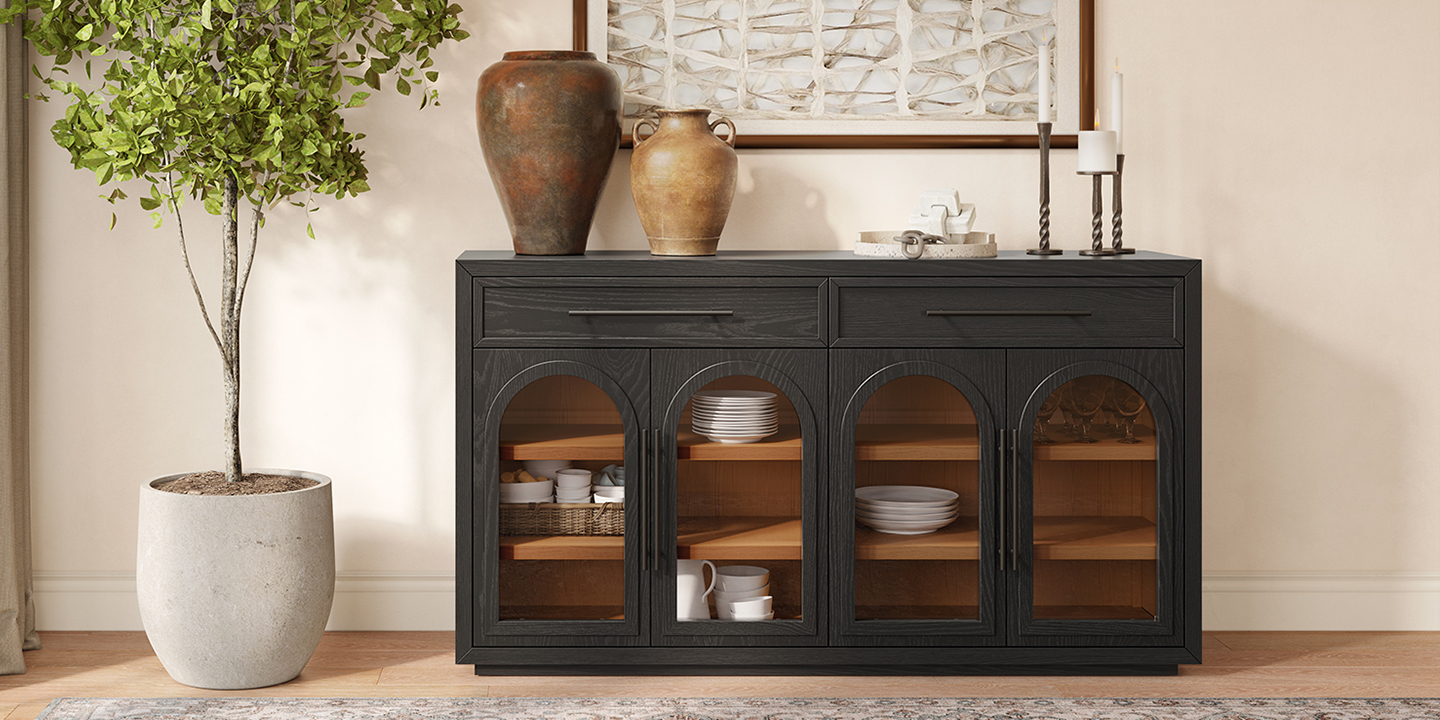
Key features:
Designed for hosting and serving food
Often slightly taller than sideboards
Typically placed in dining rooms
Spacious top surface for meal setups
In modern homes, buffets remain a practical choice for people who entertain often. They combine storage with functionality, making it easy to store dishware while also providing a ready-to-use serving station during meals or parties.
What Is a Credenza?
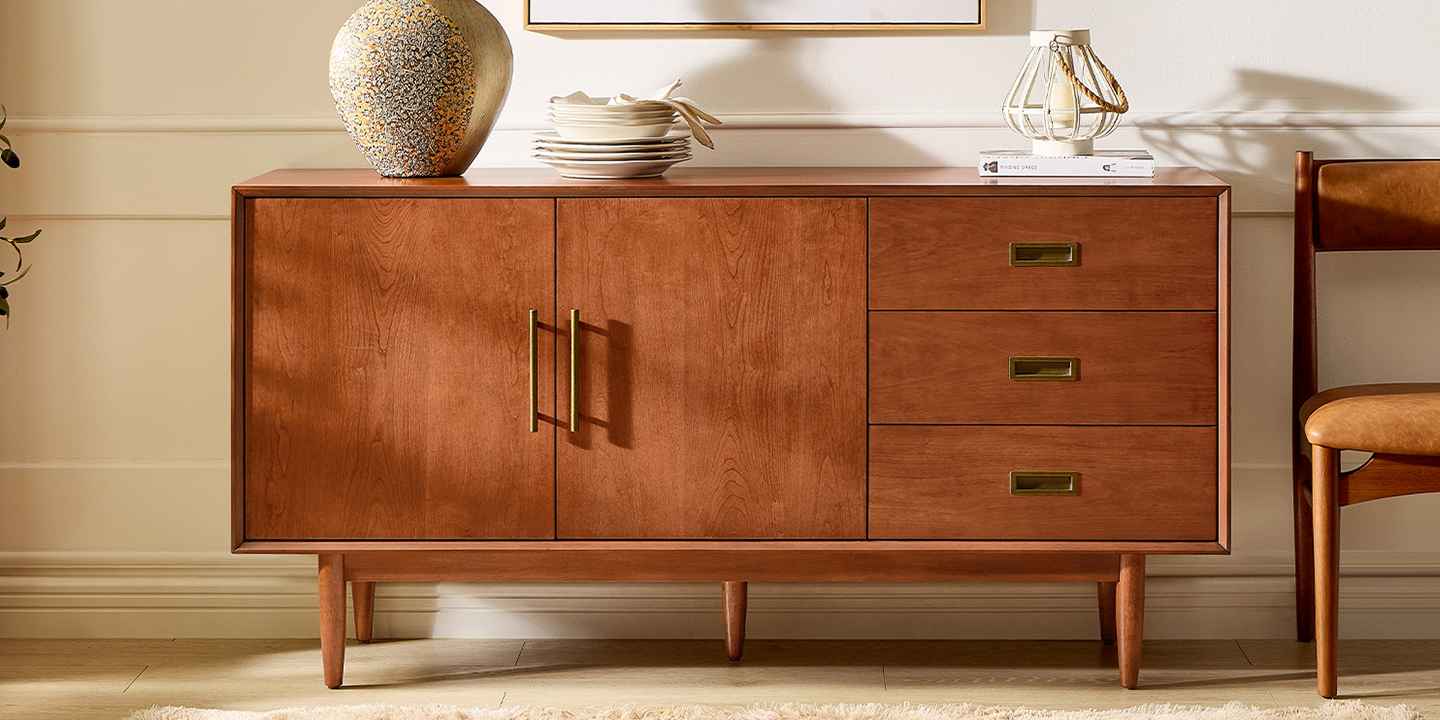
A credenza originated in Italy as a formal piece of furniture used in reception rooms and offices. Today, it is known for its sleek, minimalistic profile and long, low silhouette. Credenzas typically feature cabinet-style storage behind sliding or hinged doors.

Key features:
Clean, modern lines
Lower profile compared to buffets
Cabinet-forward design (few or no drawers)
Works well beyond the dining room—in offices or living rooms
Because of its streamlined look, a credenza often feels more architectural and less traditional. Many people also use credenzas as media consoles, especially if they prefer a clean, uncluttered aesthetic.
Sideboard vs Buffet vs Credenza: Key Differences at a Glance
Which One Should You Choose?
Here are practical guidelines to help you decide.
Choose a Sideboard if you need:
A versatile storage piece that can work in multiple rooms
A balance of hidden and visible storage
Extra surface space for decor, lamps, or plants
A design that complements both traditional and modern interiors
Choose a Buffet if you:
Host gatherings, parties, or family dinners frequently
Need a dedicated serving surface for food and drinks
Want a functional extension of your dining table
Prefer a piece that feels more formal and entertainment-focused
Choose a Credenza if you want:
A clean, modern, or minimalistic look
A lower profile furniture piece
Cabinet-based storage for files, electronics, or media
A flexible piece that can function as an office credenza or media console
Choosing Based on Room Layout
For a dining room
Buffet if you entertain frequently
Sideboard if storage matters more than serving
Credenza if you want a sleek, modern aesthetic
For a living room
Credenza works best as a media console or art display
Sideboard provides decorative storage for larger rooms
For open-concept homes
Sideboards tend to blend best because they function flexibly across zones—dining, living, and transitional spaces.
Common Mistakes to Avoid
Choosing based on looks only. Measure your room and check storage depth—you need space for plates, appliances, or electronics depending on use.
Ignoring height differences. A buffet's height is helpful for serving but may look tall in a cozy living room.
Overloading the surface. These pieces look best with intentional styling, not clutter.
Buying without considering flow. In dining rooms, leave enough clearance for seating and walkways.

FAQ
Q: Can a credenza be used as a media console?
Yes. Its long, low shape makes it a popular alternative to traditional TV stands.
Q: Are sideboards and buffets the same thing?
They are similar, but buffets are more associated with serving food, while sideboards are more general-purpose storage.
Q: Can any of these pieces work in an office?
A credenza is the most common choice for office storage due to its clean lines and cabinet-style design.
Q: What material should I choose?
Solid wood, engineered wood, and high-quality veneers are all popular. Choose based on your interior style and durability needs.
While these three pieces share similarities, they are distinct in how they function and how they shape a room. A sideboard offers versatility, a buffet supports hosting and entertaining, and a credenza brings streamlined, modern elegance. Understanding these differences makes it easier to choose the right piece for your space and lifestyle. HERNEST offers a curated selection of sideboards, buffets, and credenzas designed for modern homes with a warm, timeless aesthetic.