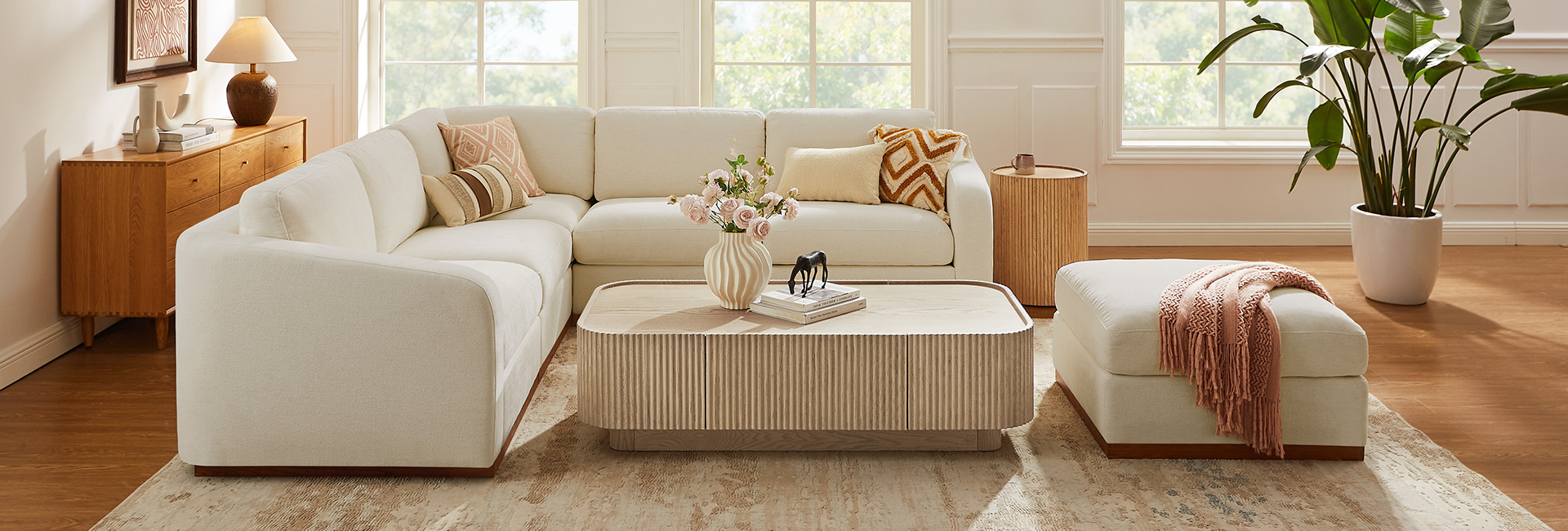
Sectional sofas have become a go-to choice for contemporary homes—especially for families, apartment dwellers, and anyone who values flexibility and comfort. But how do sectional sofas actually work, and how do you choose the right one for your space?
This guide breaks down everything you need to know: from understanding sectional sofa types and how they connect, to their pros and cons, and even how to separate and style them beautifully.
What Is a Sectional Sofa? Types and Shapes to Choose From
A sectional sofa is made up of two or more individual seating pieces (called modules) that connect to form one cohesive seating arrangement. Unlike traditional sofas, sectionals are designed to adapt to your room layout and lifestyle.
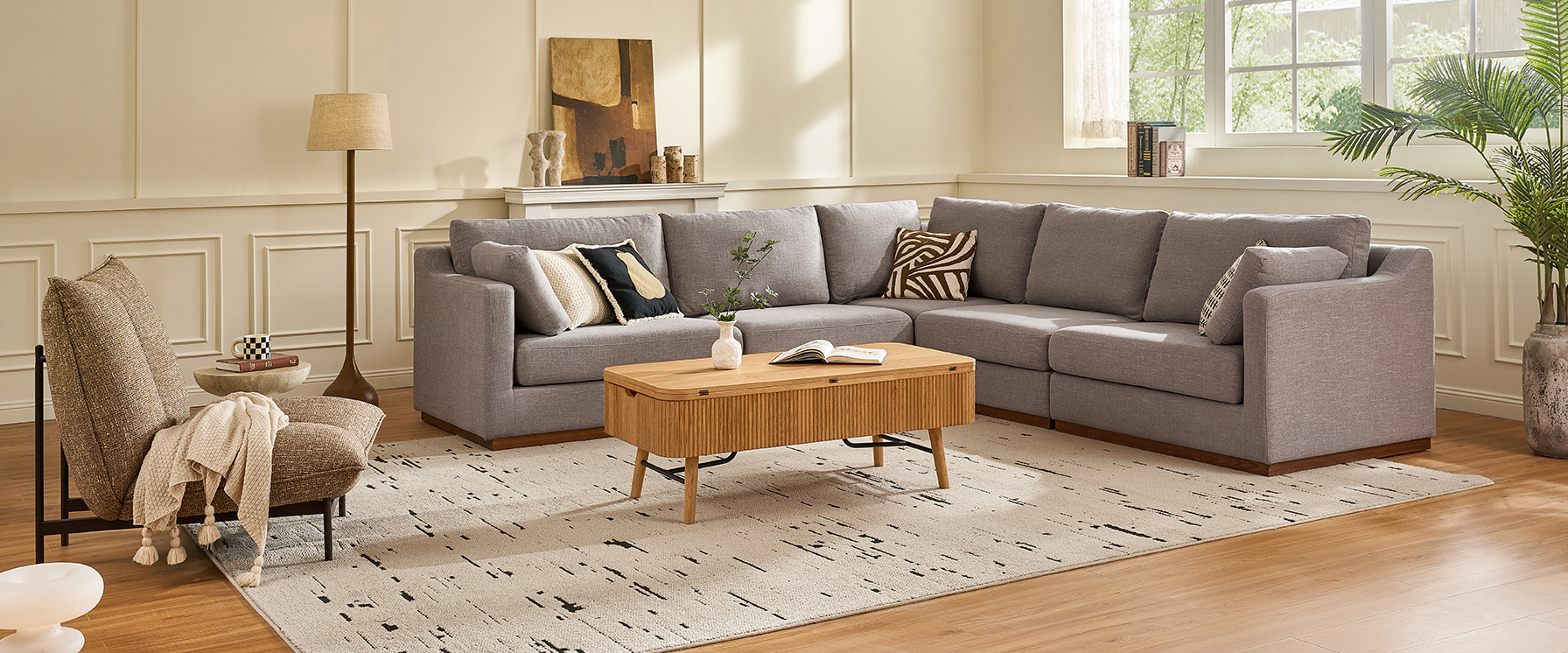 Living room featuring HERNEST's sectional sofa and coffee table
Common Sectional Sofa Shapes
L-Shaped Sectional
The most popular configuration
Ideal for living rooms, apartments, and open-plan spaces
Works well in corners or as a space divider
U-Shaped Sectional
Offers maximum seating
Great for large families or entertaining
Best suited for spacious living rooms
Some are formed in an L-shape with an ottoman
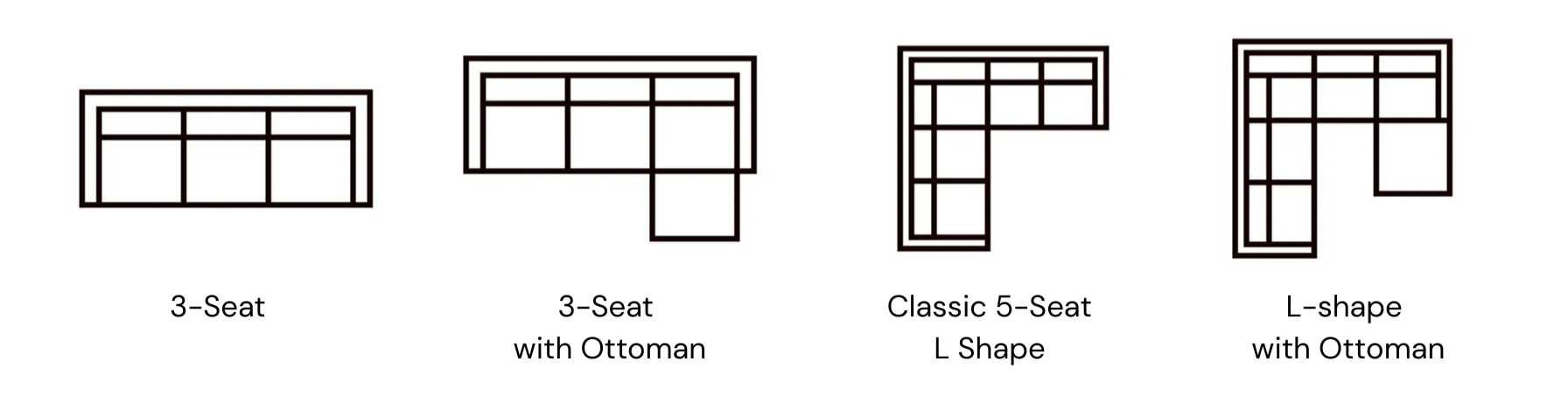
Chaise Sectional
Features an extended lounge on one side
Perfect for relaxing and everyday lounging
Modular Sectional
Individual pieces that can be rearranged
Ideal for evolving spaces or renters
When choosing a shape, consider your room size, traffic flow, and whether the sofa will anchor the space or float in the room.
How Do Sectional Sofas Connect?
Sectional sofas are designed to stay secure while remaining easy to assemble or rearrange.
Common Connection Methods
Metal Interlocking Brackets
Most common system
Pieces slide together and lock firmly
Hidden beneath the sofa for a clean look
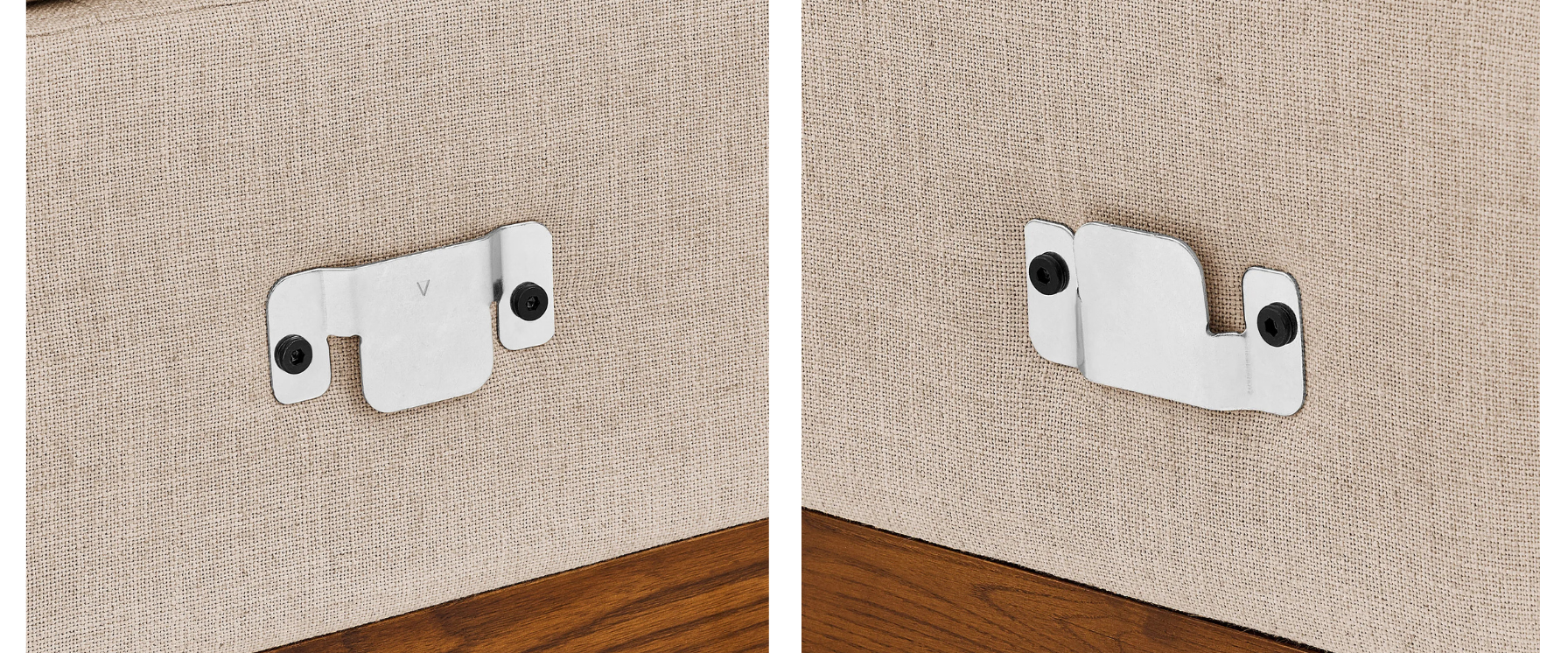 HERNEST's sectional sofas using quality metal interlocking brackets
Latch or Hook Systems
Simple and effective
Easy to detach when needed
Weight + Non-Slip Bases
Used in some modular designs
Relies on the sofa’s weight and grip to stay in place
These systems keep the sofa stable during everyday use while allowing flexibility when you want to reconfigure or move it.
Pros and Cons of Sectional Sofas
| Pros | Cons |
Maximizes seating without overcrowding | Requires planning to fit your space properly |
Flexible layouts for different room shapes | Large sectionals may overwhelm small spaces |
Comfort-forward for lounging, movie nights, and family time | Less flexible once assembled (non-modular designs) |
Can define zones in open-plan homes | Can be harder to move through narrow doorways or stairs |
How to Separate a Sectional Sofa—and Make It Look Good
One of the biggest advantages of a sectional sofa is versatility. Many designs can be separated and styled as standalone pieces.
Tips for Styling a Separated Sectional
Plan the Layout First
Think about traffic flow and how the room is used.
Use separated pieces to create clear seating zones for lounging, conversation, or reading.
Turn the chaise or corner piece into a reading nook
Separating a sectional works especially well in larger living rooms, lofts, or multi-purpose spaces
Keep Visual Balance
Add side or coffee tables between pieces for cohesion
Place sections around a focal point like a coffee table, window, or fireplace to maintain symmetry and cohesion
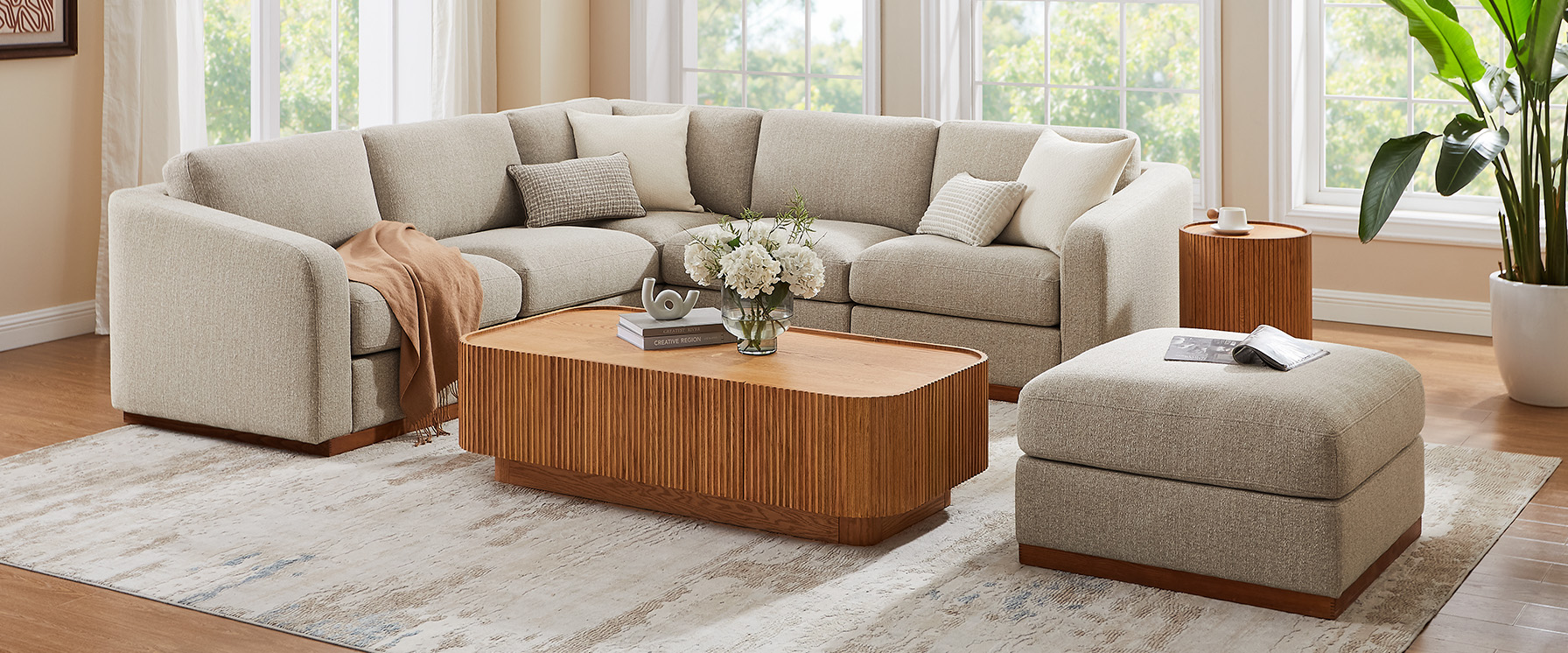
HERNEST's sectional sofa collection, Skimra Oak Coffee Table, and Rolf Fluted Solid Oak Side Table
Maintain Visual Flow
Keep fabrics, colors, and cushions consistent
Use throw pillows or blankets to tie the pieces together
Define zones with rugs and lighting. Area rugs and floor lamps help anchor each seating area and make the layout feel purposeful rather than broken up
When styled thoughtfully, separating a sectional can make your space feel more flexible, open, and tailored to how you live.
Frequently asked questions about sectional sofas
Does my sectional sofa arrive in one package?
Most sectionals arrive in several smaller packages to fit through doors and elevators. Assembly is quick and tool-free, with sections clicking together using interlocking brackets.
Are sectional sofas good for small spaces?
They can be. Compact L-shaped sectionals work well in apartments or small living rooms by using corner space efficiently. Choosing a sectional with slim arms or a chaise instead of bulky seats helps keep the room open.
What’s the difference between a sectional and a modular sofa?
A sectional sofa usually has a fixed layout, while a modular sofa is made of individual pieces that can be rearranged freely. Modular sofas offer more flexibility, while sectionals feel more unified and structured.
How do I choose the right sectional shape?
L-shaped sectionals work best for corners and medium-sized rooms, while U-shaped sectionals are ideal for larger spaces and families who need maximum seating.
Can you separate a sectional sofa and use the pieces separately?
Yes. Many people separate sectionals into a sofa and a chaise or accent seat. With proper placement, rugs, and lighting, the pieces can look intentional and well-styled.
Are sectional sofas comfortable for everyday use?
Yes. Sectional sofas are designed for lounging and everyday living, offering deeper seats and more space to stretch out compared to traditional sofas.
How long do sectional sofas last?
With proper care and quality construction, a sectional sofa can last 7–15 years or longer. Durability depends on frame material, upholstery fabric, and usage.