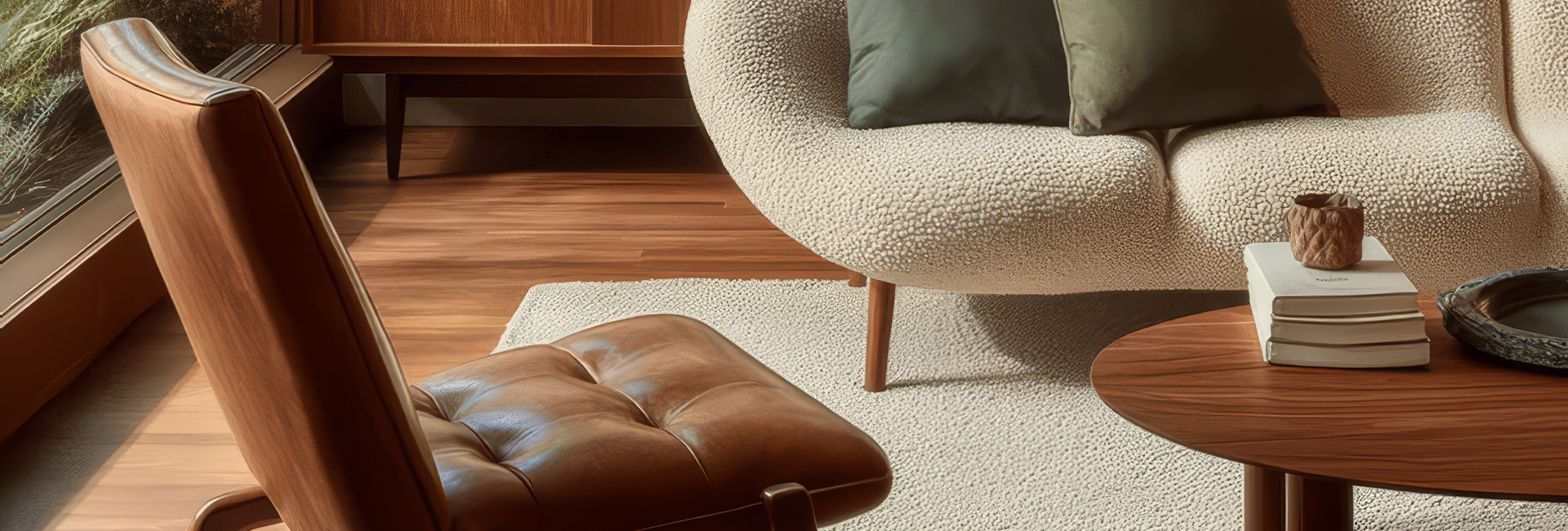
Mid-Century Modern design remains a timeless favorite in interior styling. Warm woods, clean lines, and iconic silhouettes come together to create a nostalgic yet modern aesthetic that feels both inviting and enduring. Paired with statement lighting, geometric art, and thoughtfully chosen accents, this style brings character and balance to any living space.
In this guide, we’ll break down how to select the perfect media console to create a mid century modern living room—from size considerations to wood tones and matching with existing furniture.
What Defines Mid Century Modern Style?
Key Elements of Mid Century Modern
Mid-Century Modern (MCM) furniture draws from the design innovation of the mid-20th century. It’s clean, functional, and timeless—a balanced blend of form and function. Nothing feels overly ornamented; instead, every detail is intentional. These qualities work beautifully in contemporary apartments, classic suburban homes, and transitional interiors alike.
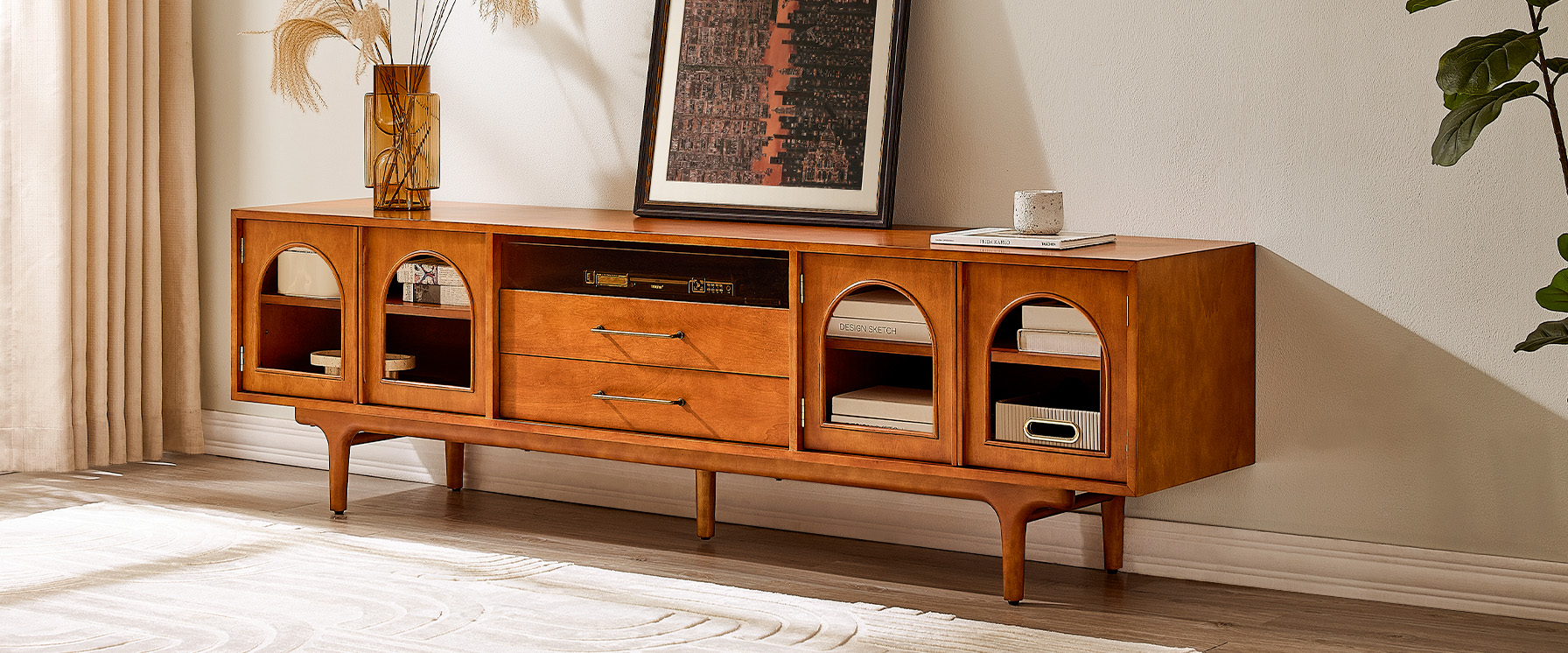 HERNEST's Julius MCM Media Console, classy and full with curves
Look for these signature features:
Clean Lines & Geometry: Uncluttered, sleek, linear profiles with simple geometric forms or balanced curves.
Functional Minimalism: Form follows function—practical storage, flat surfaces, and no unnecessary ornamentation.
Mixed Materials: Contrasting materials (wood/metal, wood/glass) add texture and visual contrast.
Tapered Legs: Slender, often tapered, legs create a light, "floating" look, common on tables and cabinets.
Mid Century Modern vs Scandinavian vs Danish Modern
These styles are closely related, but each has its own personality:
Mid-Century Modern: Defined by warm wood tones, iconic tapered legs, and slightly bolder silhouettes. Retro-inspired, but not themed.
Scandinavian: Lighter woods, softer lines, and an airy, minimalist feel. Bright, casual, and understated.
Danish Modern: A refined branch of MCM, known for exceptional craftsmanship, elegant joinery, and a more formal, premium look.
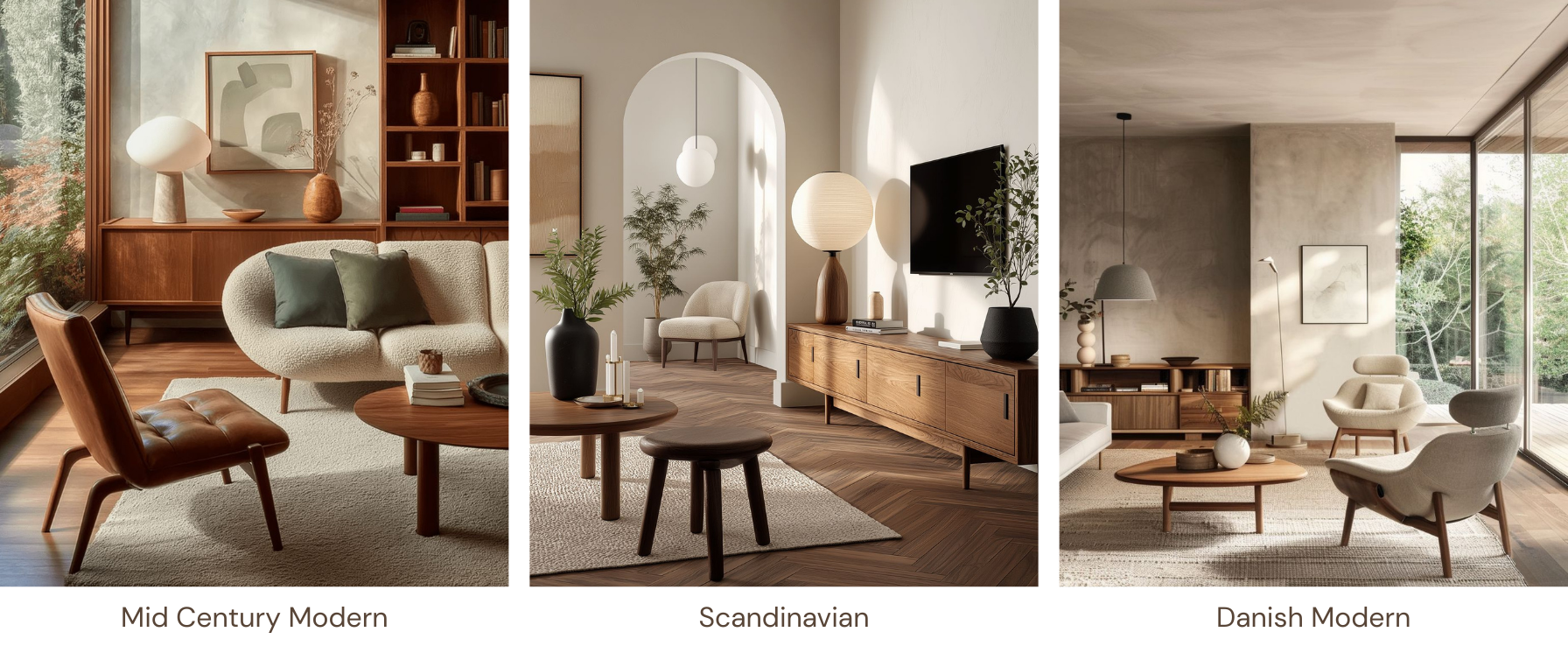
These styles can mix beautifully when you keep the palette cohesive. For example, a walnut Mid-Century media console can pair effortlessly with a light oak Scandinavian coffee table.
Wood Tones Compared: Choosing the Right Finish
The wood tone you choose affects not only the look of your media console, but also how it anchors your living room style.
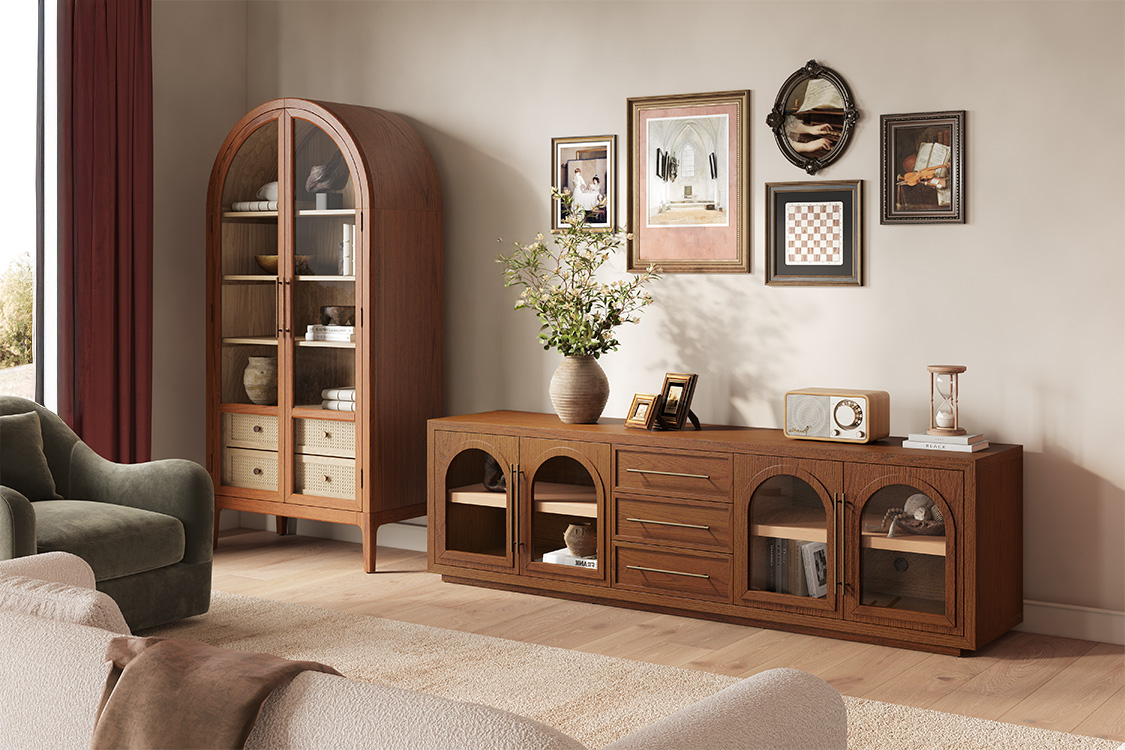
Brown — Rich & Classic
Deep, warm brown tones with expressive grain
Adds depth and sophistication to a space
Pairs well with leather sofas, jute rugs, and earthy color palettes
Best for: Cozy, refined living rooms with a classic Mid-Century feel.
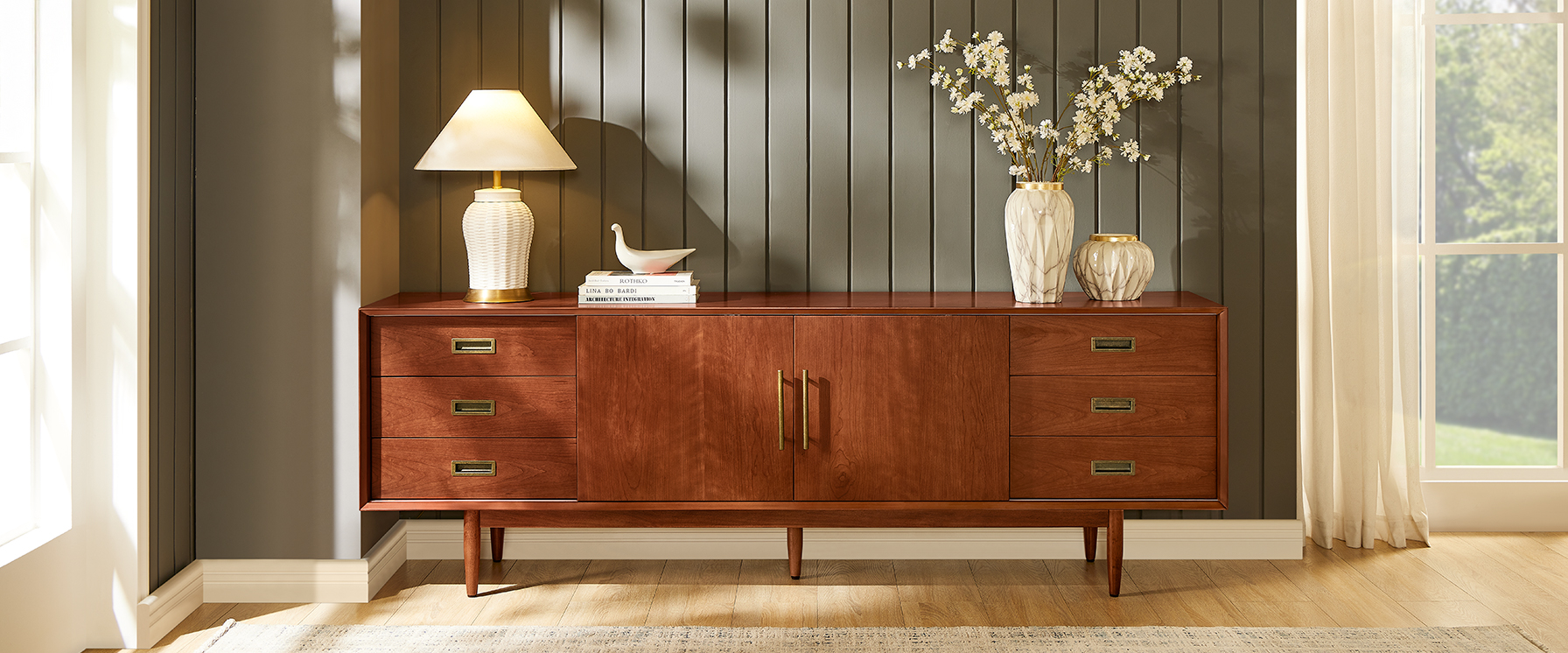 HERNEST's Kaden Mid-Century Media Console
Natural Oak — Light & Durable
Lighter, golden tones that brighten the room
Ideal for spaces with limited natural light
Durable and forgiving, helping disguise dust and everyday wear
Best for: Scandinavian-leaning interiors or light, neutral palettes.
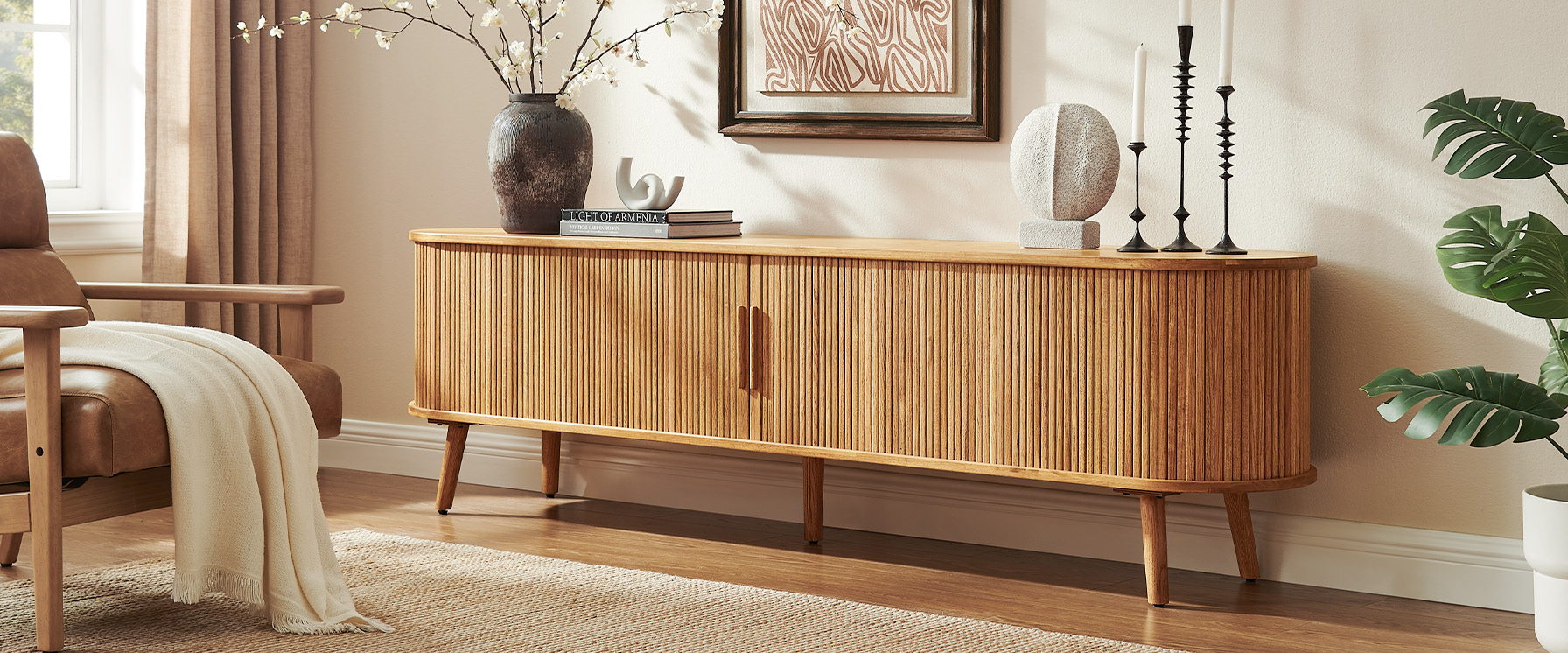 HERNEST's Valo Oak Media Console
Dark Brown — Warm & Elegant
Deep, saturated tones that feel grounded and timeless
Creates strong contrast against light walls or soft upholstery
Adds a more formal, elevated presence to the room
Best for: Sophisticated interiors, larger living rooms, or refined Mid-Century and transitional spaces.
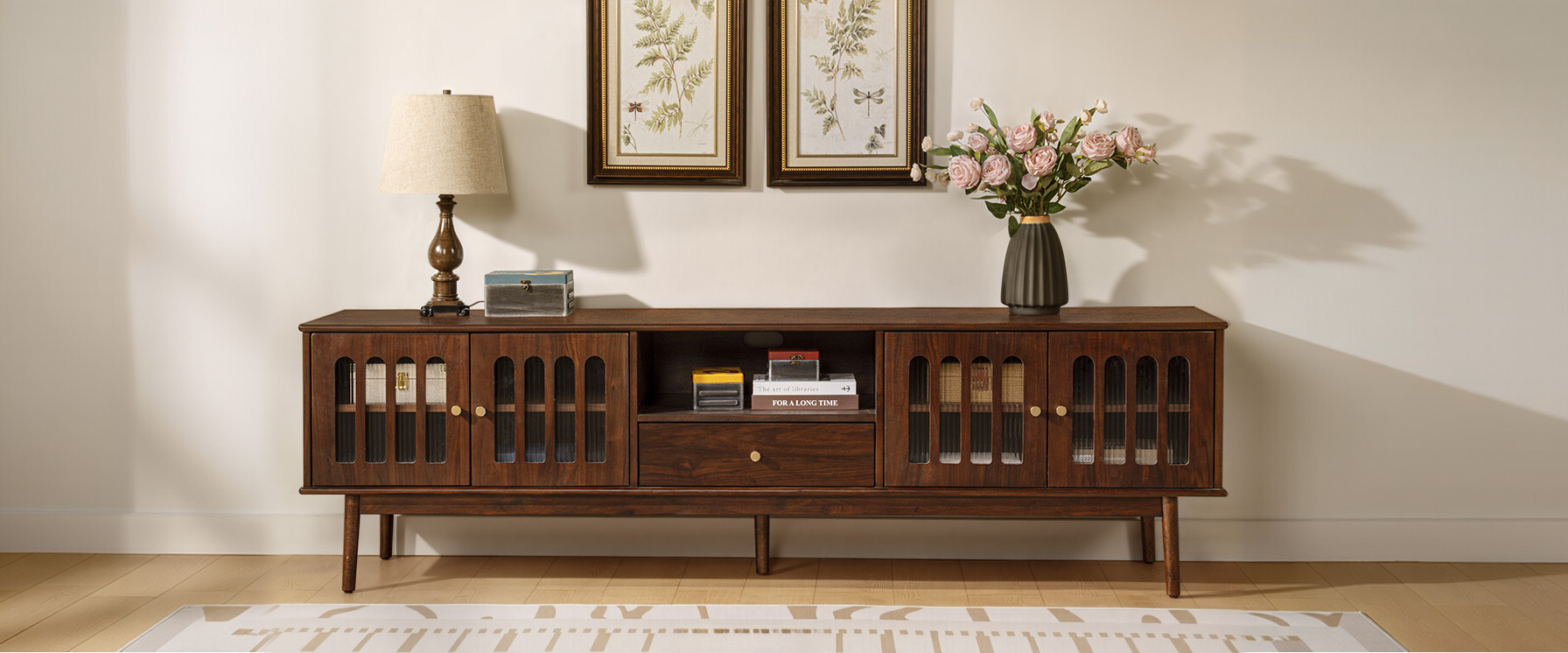 HERNEST's Aldric Media Console
Black — Clean & Contemporary
Sleek, bold finish with a modern edge
Creates a strong visual anchor and highlights clean silhouettes
Pairs beautifully with metal accents, stone, or textured upholstery
Best for: Modern or minimalist interiors that want a contemporary twist on Mid-Century forms.
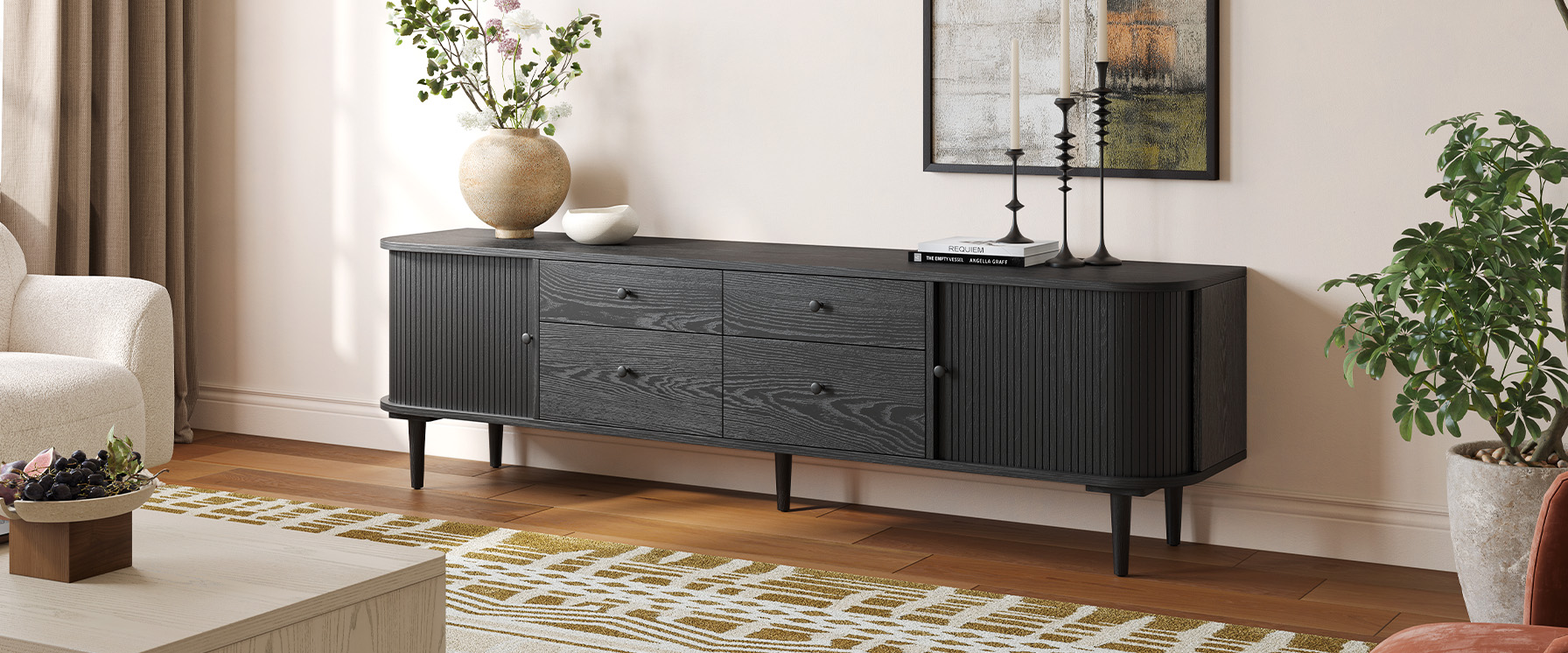 HERNEST's Tristan Oak Media Console
Style Matching Guide
A Mid-Century Modern living room doesn’t mean every piece needs to be strictly MCM. Mixing and layering styles helps create a space that feels personal and lived-in.
MCM Living Room Styling Tips
Pair the media console with a low-profile sofa or sectional
Choose a coffee table in a complementary wood tone
Add one or two statement lamps with wood or metal details
Introduce texture with rugs, baskets, or artwork that echoes the console’s finish
Mixing with Existing Furniture
Your current pieces don’t need to be era-perfect:
Modern sectional sofas pair well with classic MCM consoles when lines stay clean
Metal-accented furniture works best when the console has matching hardware or legs
Limit your palette to one or two main materials (for example, walnut and black metal)
Balance slim, leggy MCM furniture with bulkier pieces to create visual contrast
FAQs About Media Console
What’s the difference between a media console, TV console, and TV stand?
These terms are often used interchangeably, but there are subtle differences:
Media console usually refers to a wider, low-profile piece designed to store electronics, cables, and media accessories while supporting a TV. It’s the most common choice for modern living rooms.
TV console often emphasizes style and display, with a similar function but sometimes less storage.
TV stand is a more general term and can include simpler or smaller pieces with minimal storage.
For a Mid-Century Modern living room, a media console is typically the best option due to its balance of storage, scale, and clean-lined design.
How wide should a Mid-Century Modern TV stand be for my TV size?
As a general rule, your TV stand or media console should be at least 6–12 inches wider than your TV on each side. This creates visual balance and helps anchor the screen.
55-inch TV: Console width around 60–70 inches
65-inch TV: Console width around 70–80 inches
75-inch TV: Console width 80 inches or wider
This sizing works well for most U.S. living rooms and helps maintain proper proportions in a Mid-Century Modern setup.
Is solid wood better than veneer for a Mid-Century Modern TV stand?
Both options can be great—it depends on your priorities:
Solid wood offers long-term durability, natural grain variation, and ages beautifully over time, making it ideal for a premium, heirloom-quality piece. However, it is heavier and can be more susceptible to warping or cracking with changes in temperature and humidity, and it may require more ongoing care and maintenance.
Wood veneer provides the look of real wood with better stability, less warping, and often a more accessible price point. High-quality veneer is widely used in authentic Mid-Century Modern furniture.
For everyday use in modern homes, both solid wood and veneer can perform well when properly constructed.